
Spiaggia di Zoagli: Beach Below a Silk Village
Profile
Spiaggia di Zoagli: The Beach Beneath a Town That Dressed Kings
Italy | Liguria | Genoa | Tigullio Gulf
Henry VIII of England wore velvet woven in Zoagli, and the curtains hanging in Hampton Court Palace once came from the same small looms working in this village’s houses. Genoese weavers relocated here specifically to escape the strict guild rules governing their trade in the city itself, and by the nineteenth century Zoagli supported roughly twelve hundred looms, most of them worked from private homes, producing velour de Gênes that dressed popes, kings, and queens across Europe. I hadn’t expected a beach tucked beneath a railway viaduct to sit below a village with this kind of reach into royal wardrobes, but Zoagli has spent centuries being considerably more important to the wider world than its quiet, pebbled shoreline suggests.
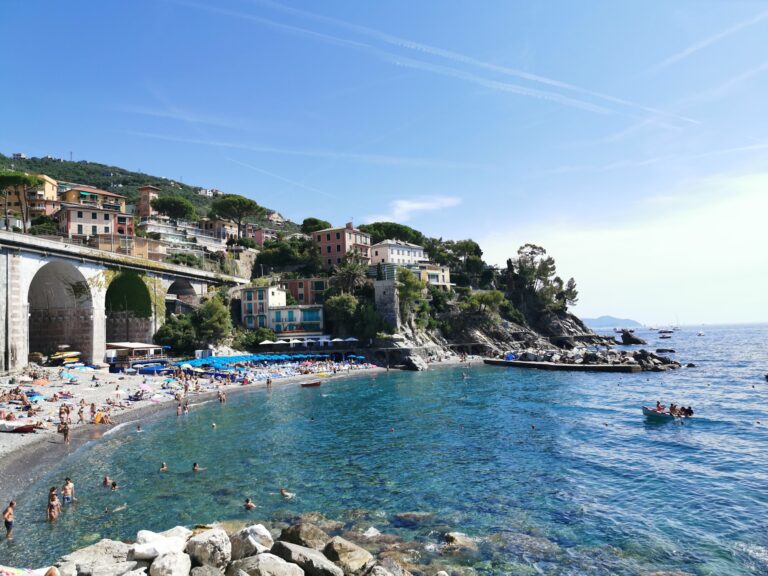
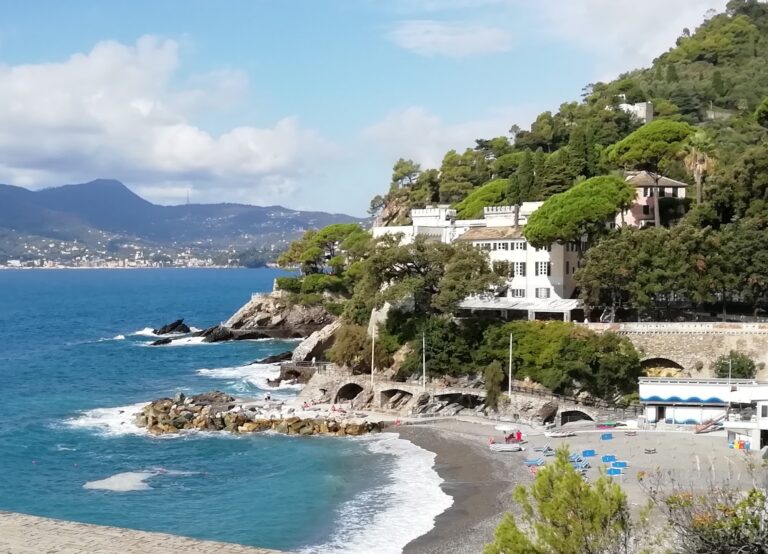
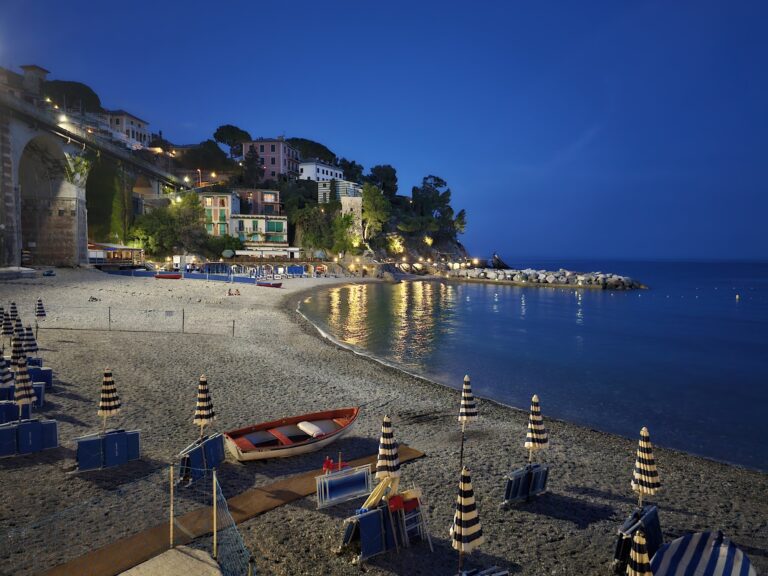
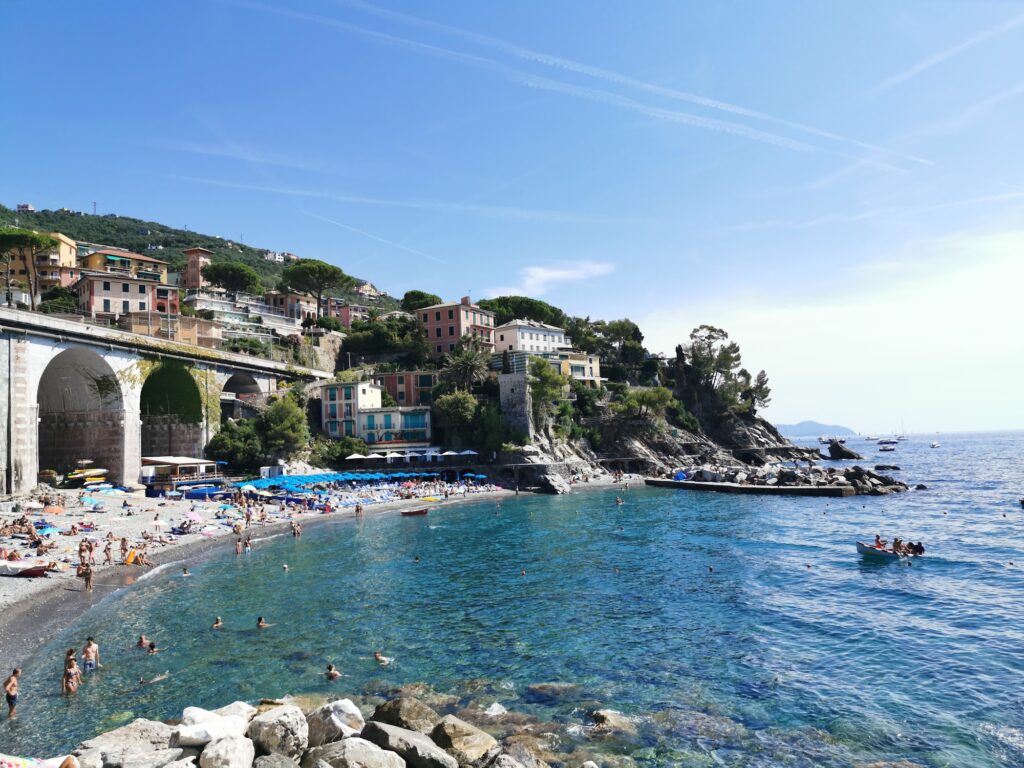
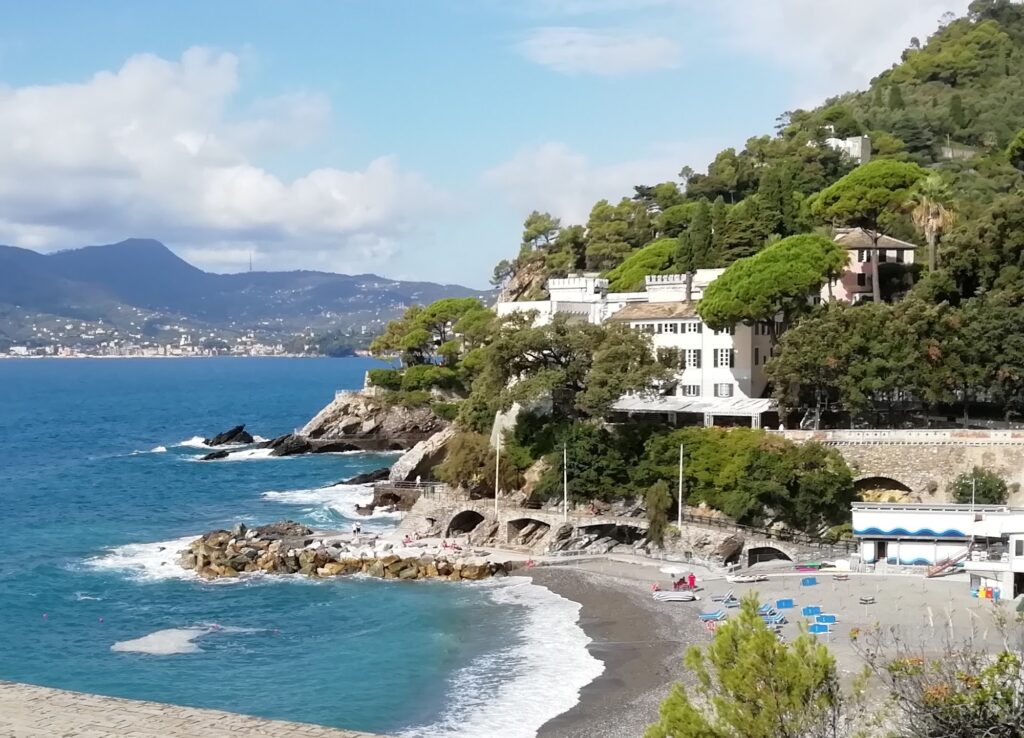
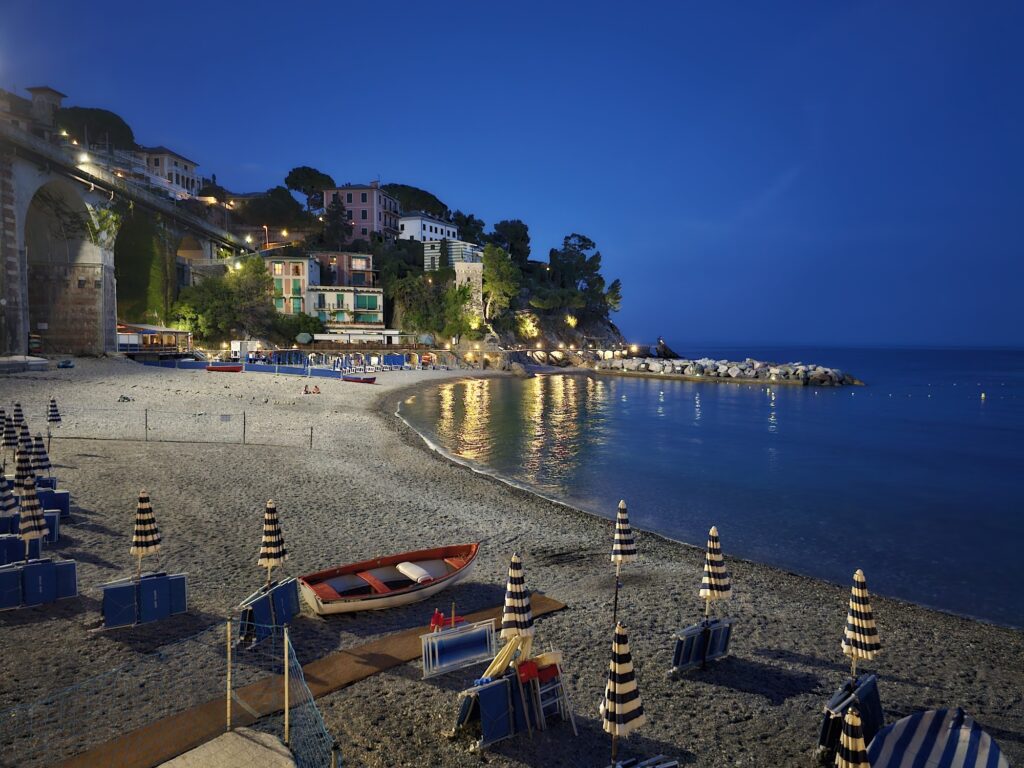
Spiaggia di Zoagli runs along the base of the village, framed by the Levante Tower on one side and Castello Canevaro on the other, train wheels echoing overhead on the stone viaduct arches whenever a service passes on the Genoa-La Spezia line.
Dark Pebbles and a Rapid Drop Into Emerald Water
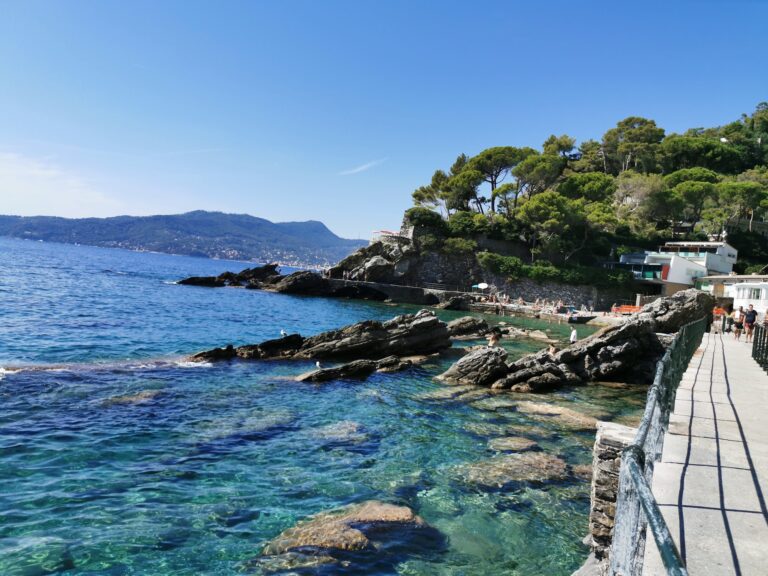
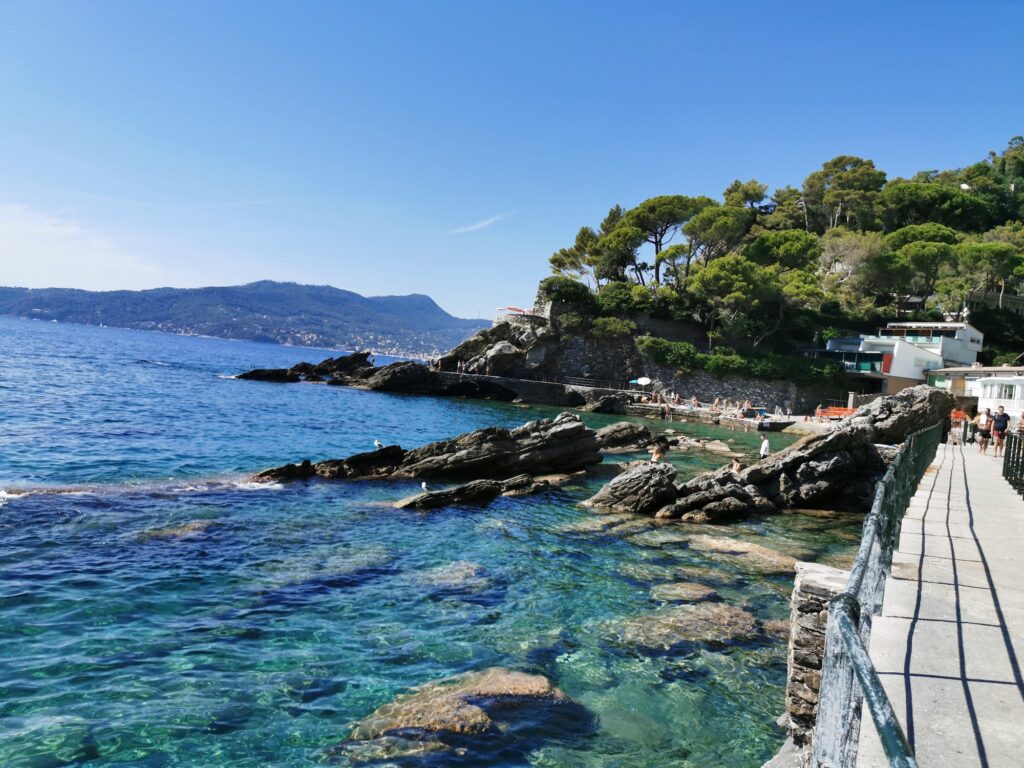
The shoreline here mixes smooth dark pebbles with fine shingle and concrete platforms built directly into the surrounding rock, and I found water shoes genuinely useful both for the pebbles and for the quick transition into deeper water. The bay shelters the sea from open-ocean swells, and because the shore gives way quickly to a rocky marine floor, the water holds a striking emerald-to-cobalt gradient almost from the water’s edge, some of the clearest I found anywhere on this stretch of the Tigullio Gulf. Snorkeling among the submerged boulders revealed a genuinely active pocket of Mediterranean marine life, and confident divers can swim out to see the Madonna del Mare, a bronze statue resting ten meters below the surface, honoring an annual diving tradition and, more broadly, the village’s long relationship with the sea.
A Split Between Managed Clubs and Genuinely Free Stone
Bagni Silvano and similar local establishments rent sunbeds and umbrellas along managed sections, while a substantial stretch of pebble shore remains completely free, open to anyone willing to lay a towel directly on the stones or the concrete platforms. Free public showers sit right on the beach, and seasonal lifeguards monitor the swimming area through peak summer, keeping a close eye on the deep drop-offs I’d flag clearly for families: the water turns deep almost immediately off the pebbles, and I wouldn’t recommend this beach for toddlers without very close supervision, given the lack of any shallow wading area. Older children and confident swimmers, though, found genuine appeal in the concrete walkways and rocky outcrops that serve as safe diving platforms, and I watched more than one teenager treat the whole setup as a natural playground. Given the mix of managed and free sections, I’d expect dogs to need explicit permission at the beach clubs specifically, with the free public stretch likely following Italy’s standard leash rule.
A Village Nearly Destroyed on a December Afternoon in 1943
Zoagli’s history carries real weight beyond its textile fame. On December 27, 1943, Allied bombing aimed at the railway bridge overhead killed fifty-three civilians and destroyed much of the village, along with half of Castello Canevaro itself. The Canevaro family later sold significant properties, including a palace in Florence, to help fund the reconstruction, and walking the promenade beneath that same viaduct today, rebuilt and quietly beautiful, gave me a very different sense of the place once I knew what had happened there less than a century ago.
Trofie, Octopus Salad, and a Piazza Behind the Tracks
Piazza XXVII Dicembre opens directly behind the railway arches, and I found genuinely good food within a short walk of the sand, trofie tossed in locally pounded pesto at Ristorante da Gemma and an octopus salad built from the morning’s catch that stood out even against a trip full of good Ligurian seafood. Focaccia from a local bakery made for an easy beach lunch, and as evening arrived, the bars along the shore filled with the usual Aperol Spritz crowd watching the sun drop over the gulf.
Getting There and Settling In
The Zoagli train station sits directly above the village on the Genoa-La Spezia line, and from the platform a steep, winding footpath leads down past villa gardens and under the stone viaduct to the shore in about five minutes, making the train genuinely the easiest way to arrive; driving means following the Via Aurelia’s cliffside curves between Rapallo and Chiavari before descending toward the station, where a small number of paid parking spots fill quickly, arriving before nine essential during summer, while anyone based nearby, including visitors staying closer to Spiaggia Libera Santa Margherita Ligure, can walk in via the Passeggiata dei Naviganti, a cliffside path carved directly into the rock offering steady sea views the whole way.
Listening to the Trains Overhead as the Light Fades
By the time I packed up on my last evening, another train had rattled across the viaduct high above, the sound briefly overtaking the waves before fading back into the ordinary rhythm of the bay, and I sat there a while longer thinking about the weavers who once worked silk fine enough for a king’s own wardrobe in houses just up the hill from where I was sitting, their trade largely gone now, the village itself rebuilt once already, still quietly getting on with an ordinary evening by the water.
Map
Sorry, no records were found. Please adjust your search criteria and try again.
Sorry, unable to load the Maps API.