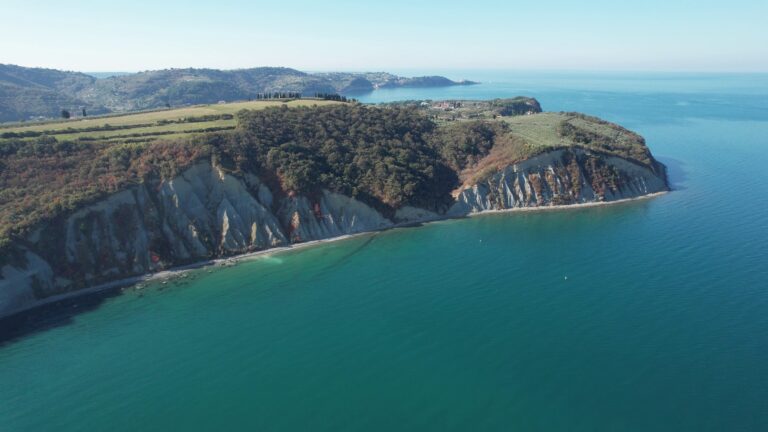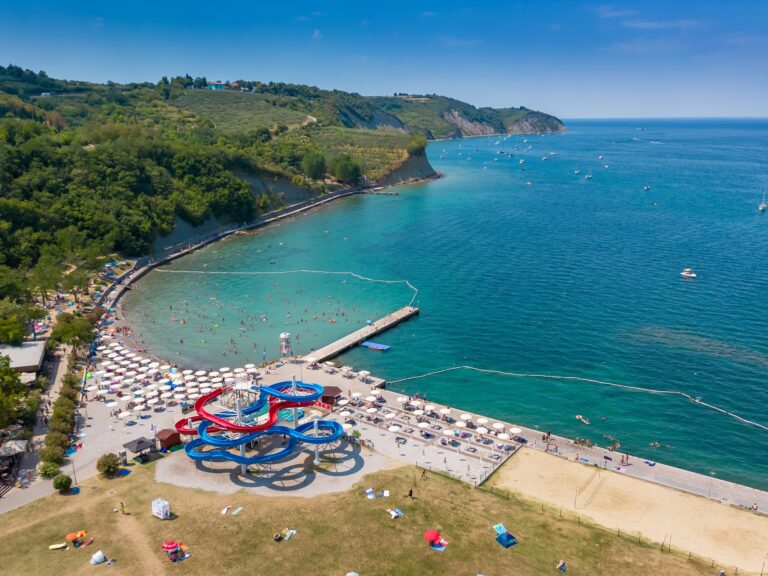
Svetilnik Beach Izola: Watch the Rocky Entry
Profile
Svetilnik Beach, Izola: A Town That Was Genuinely an Island Until the 1800s
Slovenia | Izola | Slovenian Istria, Slovenian Littoral
Izola’s name comes directly from the Italian word isola, meaning island — and the town genuinely was one, separated from the mainland until landfill connected it in the 19th century. The history layered onto that small piece of reclaimed land runs deep: Venice ruled here for more than four centuries, from 1280 to 1797, shaping the architecture and culture still visible in the old town’s Venetian-Gothic palaces, before control passed to the Habsburgs, then briefly France, then Italy under the 1920 Treaty of Rapallo, then German occupation during the Second World War, Yugoslav partisan liberation in 1945, and finally independence as part of modern Slovenia in 1991. Izola sat for decades afterward within the restricted Military Zone B of post-war Yugoslavia, a chapter of relatively recent history that’s easy to overlook walking the now-relaxed promenade today.
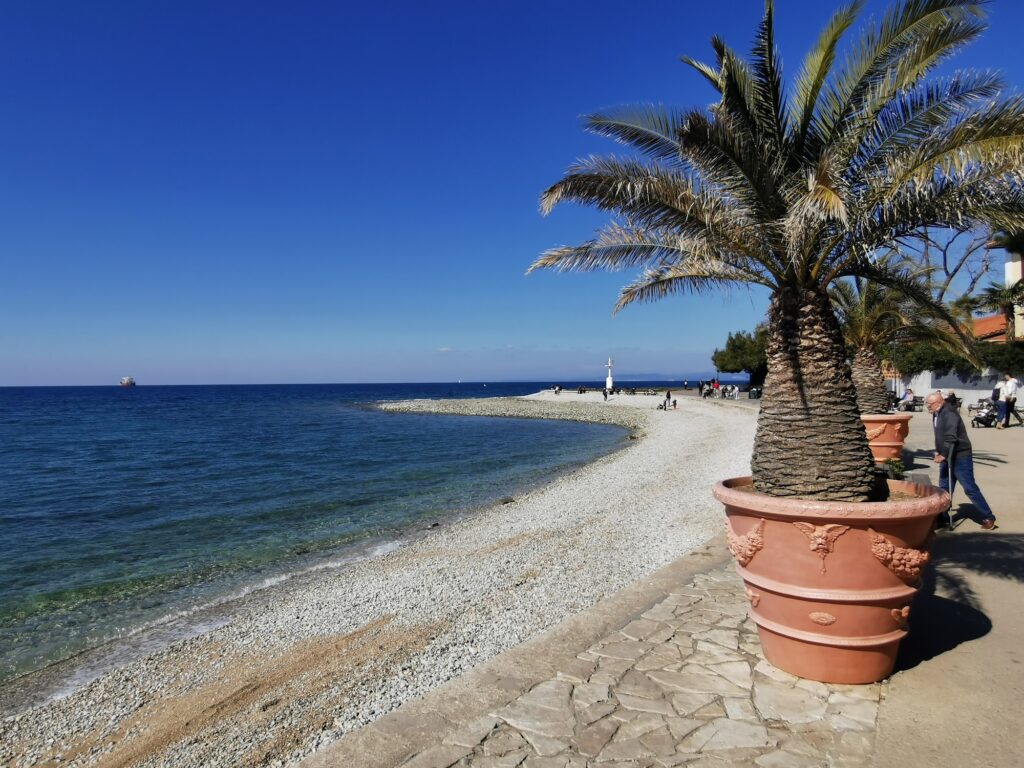
I want to correct an expectation worth setting before anyone goes looking for Svetilnik’s namesake lighthouse: it is not the dramatic red-and-white tower visitors might picture from somewhere like nearby Trieste. By more than one direct account, Izola’s lighthouses are modest pier-head lights, described affectionately by one visitor as “basically just glorified sticks” — still photogenic against the water, just not the romantic structure the name alone might suggest.
Getting There: A Five-to-Ten-Minute Walk From Manzioli Square, or via the H6 Highway
If staying in the old town, Svetilnik is a flat, scenic walk of five to ten minutes northwest from the main square, Manzioli Trg, through narrow Venetian streets toward the tip of the peninsula. By car, the H6 regional highway connects from Koper or Portorož, with paid public parking available at Izola Marina, roughly a ten-minute walk from the beach — I’d plan to arrive early during peak season, since spaces fill quickly. The regional coastal bus line connecting Piran, Izola, and Koper also stops at the central Izola terminal, a short walk from the water through the harbour.
The nearest international airport, Ljubljana Jože Pučnik, sits roughly 130 kilometres away, with car rental, taxi, or a train-and-local-bus connection via Koper covering the final stretch.
The Beach: Pebble and Stone, Genuinely Sharp Underfoot, Pine Shade and Wooden Decks
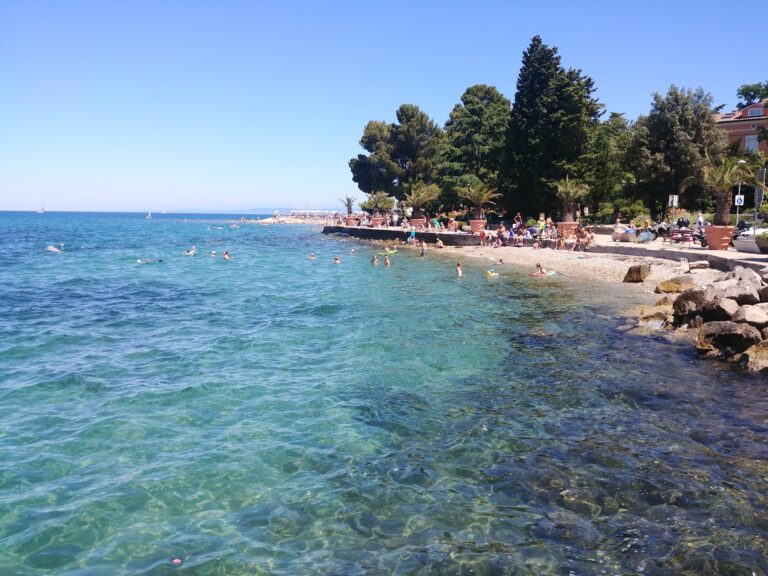
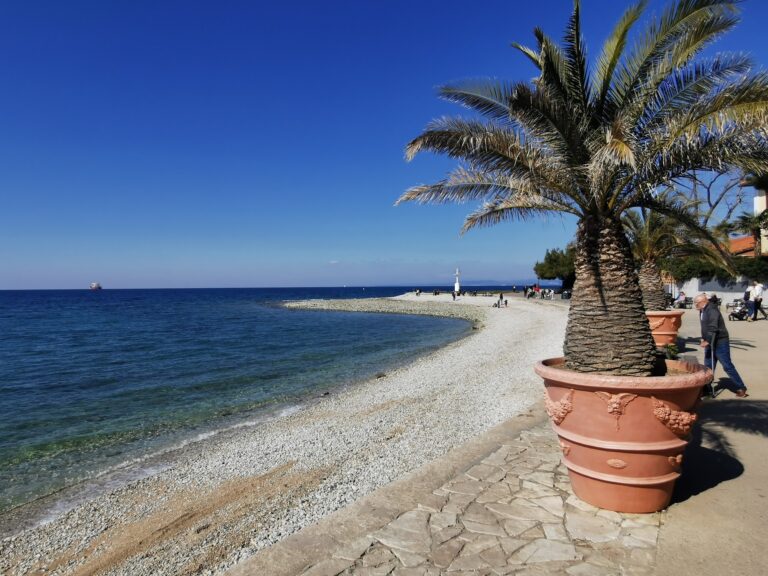
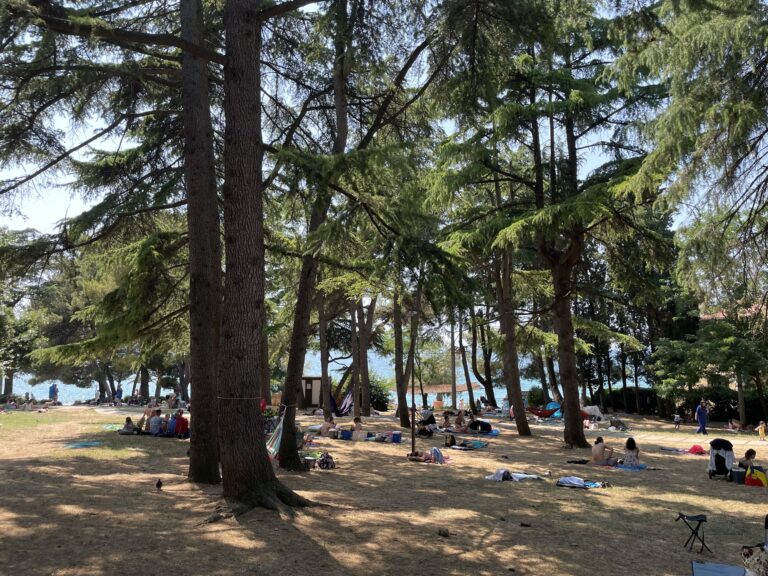
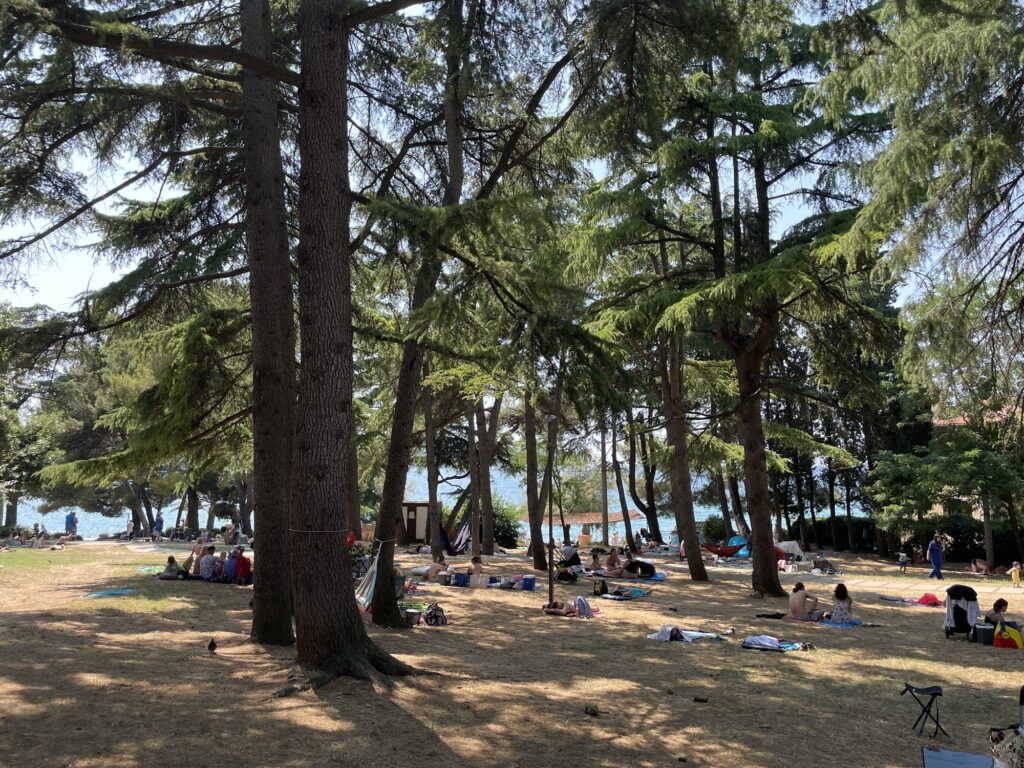
Svetilnik is a public, free pebble-and-stone beach, with grassy sunbathing areas, wooden sunbathing decks, and pine trees providing genuine natural shade — though I’d bring an umbrella regardless, since shaded spots fill quickly and rentals on site can be limited. A small playground serves children, and concrete platforms and steps provide the main access points into the water.
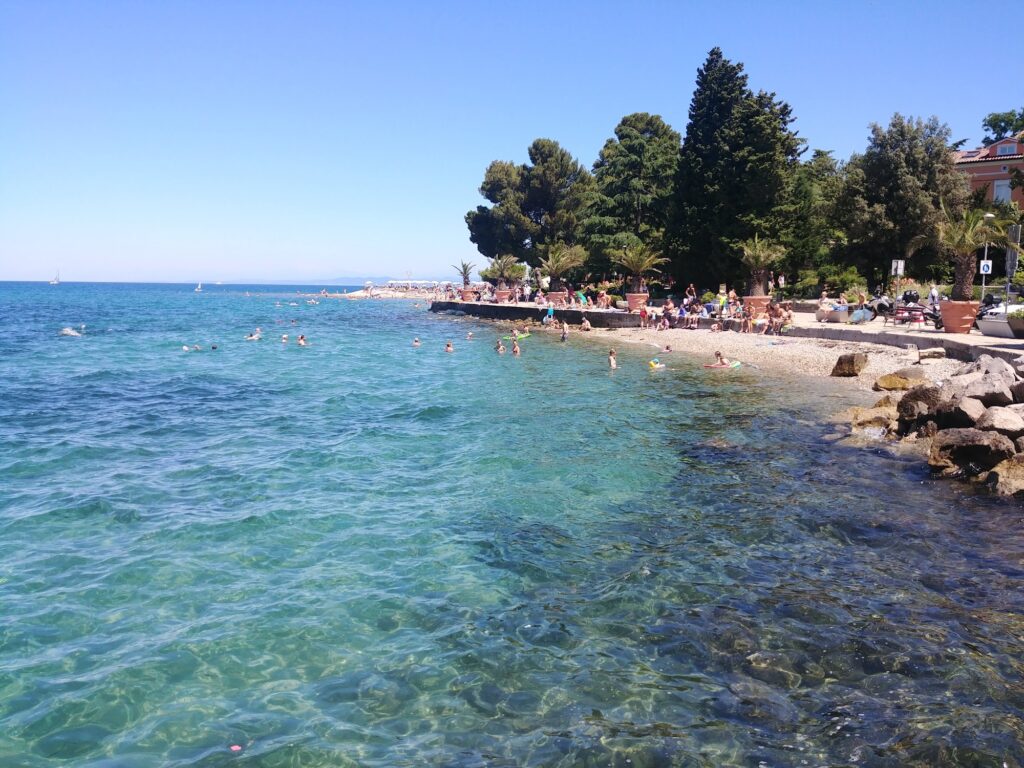
I want to flag something the more polished descriptions of this beach gloss over: the entry into the sea is genuinely rocky, and at least one detailed visitor account describes sharp stones and slippery, algae-covered rocks cutting both fingers and feet while swimming, recommending rubber water shoes specifically because of this. I’d take that warning seriously rather than assume the smooth, stable entry some accounts promise — and if a soft, sandy swim is the priority rather than the view, more than one local source suggests there are simply better beaches along this coast for that purpose.
The View and the Town: Trieste, the Julian Alps, and a Working Marina
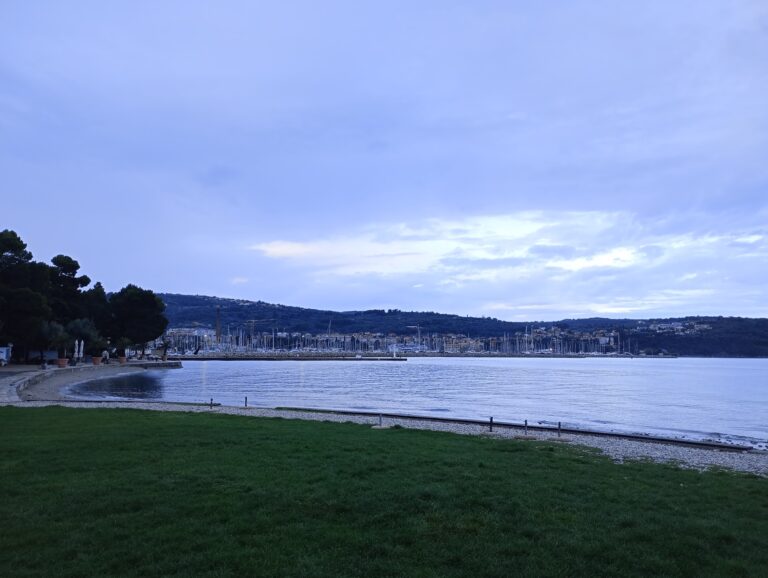
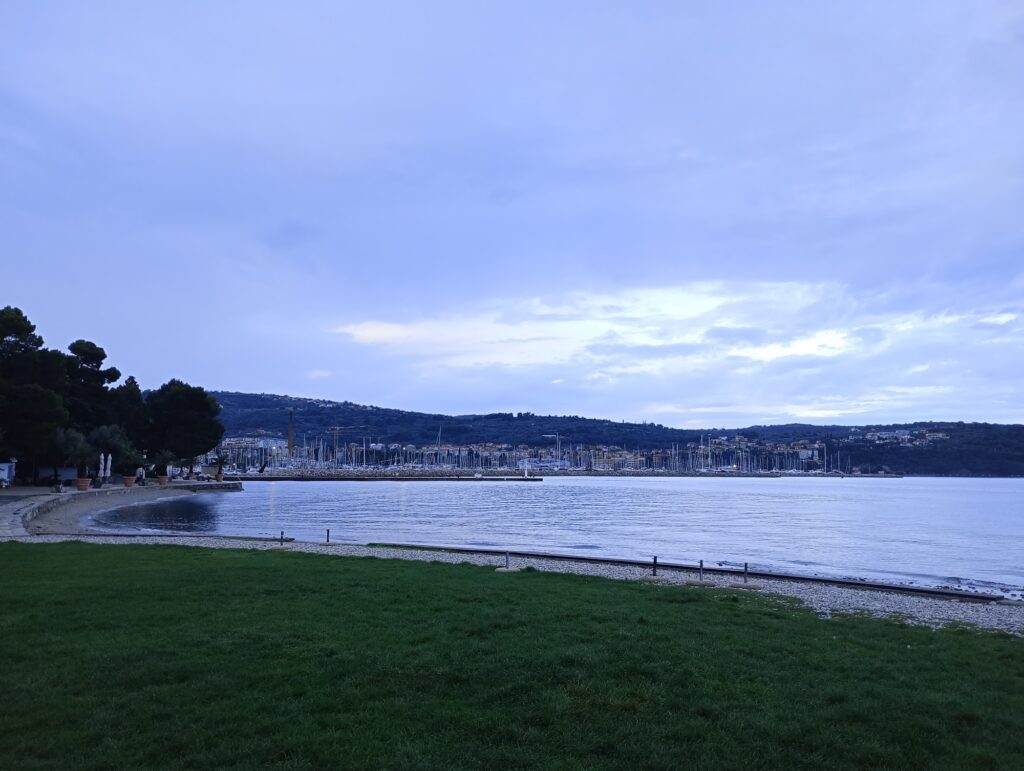
From the tip of the peninsula, the view stretches across the bay to Koper and Trieste in Italy, and on genuinely clear days, as far as the snow-capped Julian Alps — a combination of sea and mountains one local writer specifically notes is rarer to catch together than the postcards suggest. Izola Marina, one of the larger marinas on this stretch of coast with around a thousand boats, sits nearby, transitioning from a working daytime harbour into a quieter, romantic evening setting for a sunset walk. The old town itself, a short stroll back through pedestrian streets, holds the 15th-century Venetian-Gothic Manzioli Palace, the Baroque Besenghi degli Ughi Palace, and the Church of St. Maurus, whose bell tower rewards a climb of 99 steps with a panoramic view back over the rooftops to the sea.
Svetilnik Beach, at the tip of Izola — a town whose very name means island in Italian, and which was a genuine island until the 19th century — sits beneath a modest pier-head lighthouse rather than the dramatic tower its name might suggest. Izola’s layered political history runs through Venetian, Habsburg, Italian, German, and Yugoslav control before Slovenian independence in 1991. The beach itself is free, pebble and stone, shaded by pines and wooden decks, with a swimming entry genuinely sharp enough that water shoes are a sensible precaution rather than an excess. Views stretch to Trieste and, on clear days, the Julian Alps. Five to ten minutes on foot from Manzioli Square, or via the H6 highway and Izola Marina parking.
Walk from Manzioli Square, or park at the marina. Bring water shoes for the rocky entry. Stay for the view toward Trieste and the Alps if the day is clear.
Map
Sorry, no records were found. Please adjust your search criteria and try again.
Sorry, unable to load the Maps API.
Near by places: