Bele Skale, Izola: The Sea Has Risen Three Metres
Profile
Bele Skale, Izola: The Sea Has Risen Three Metres Here Since the Romans
Slovenia | Izola | Slovenian Istria
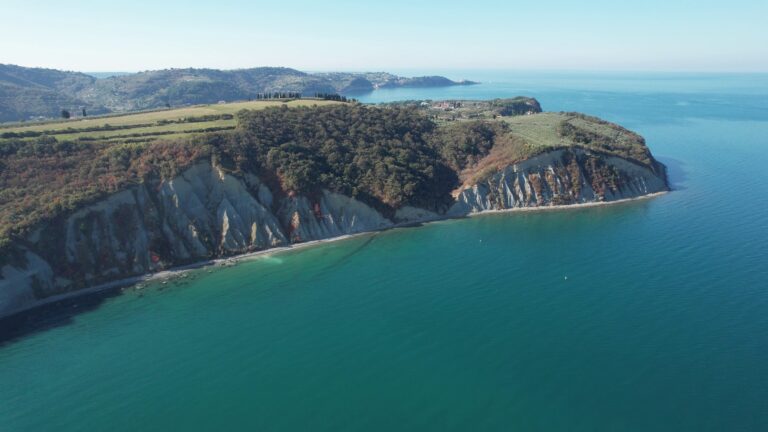
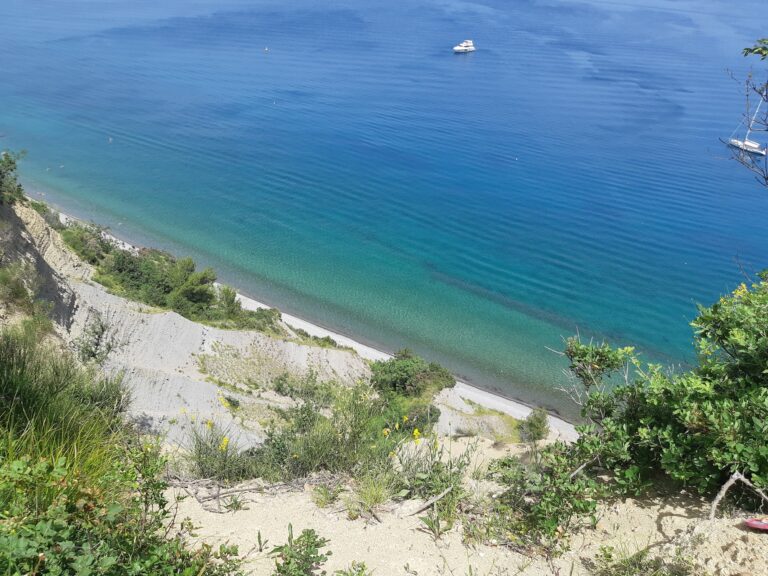
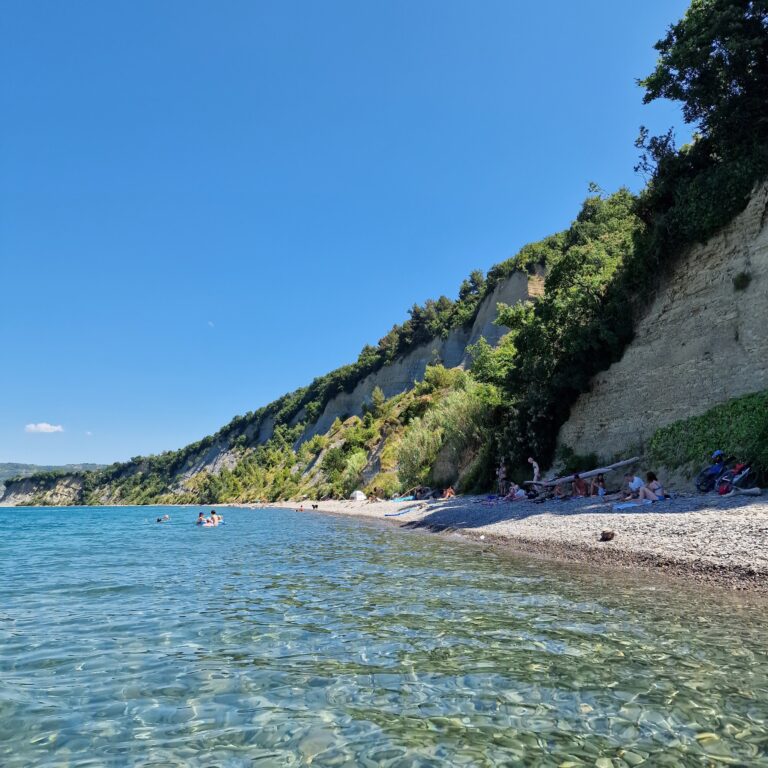
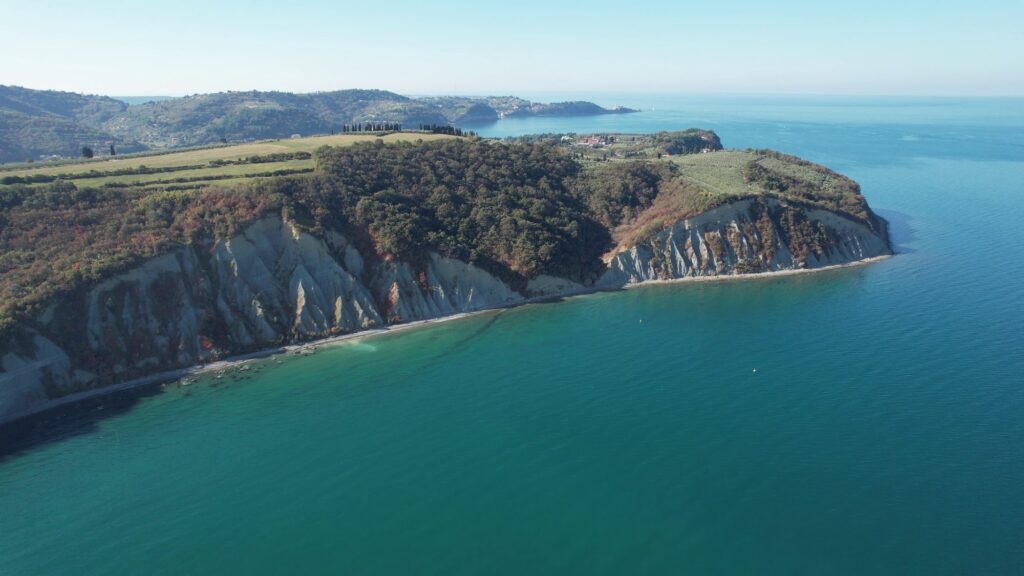
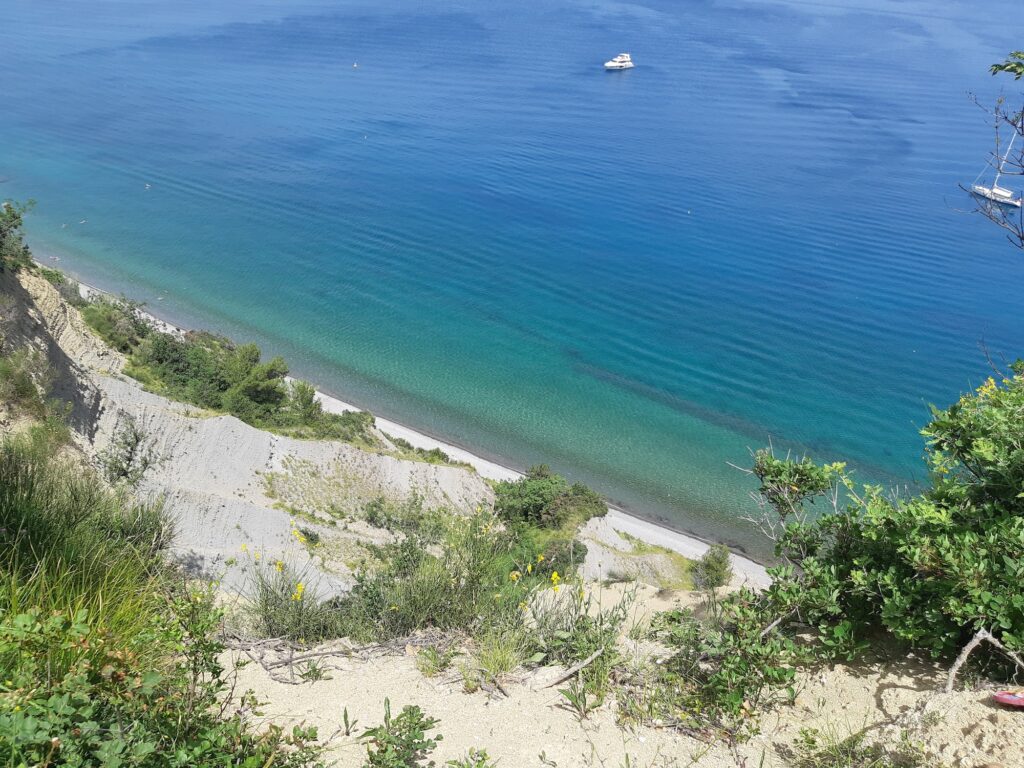
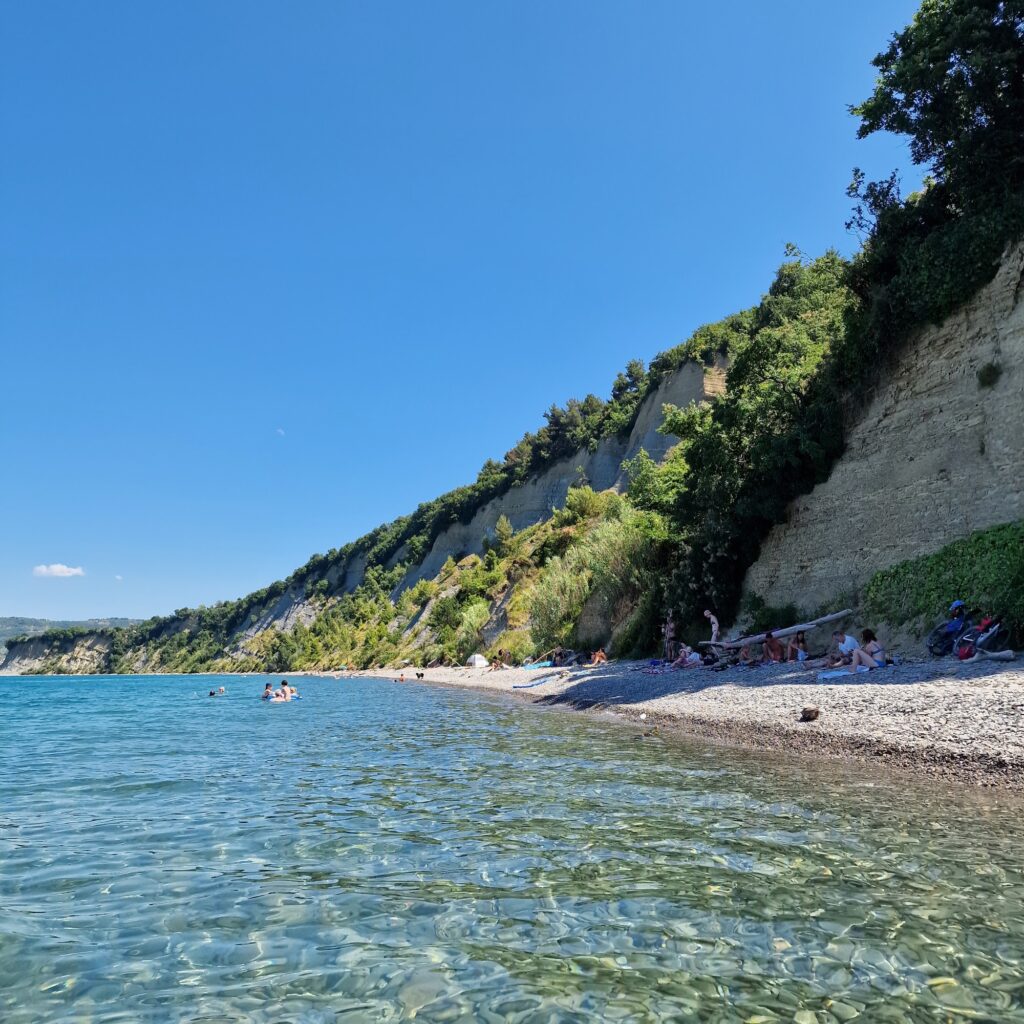
The Adriatic Sea in this exact stretch has risen almost three metres over the past two millennia, and I kept thinking about that the whole time I was picking my way over the pebbles. The white limestone cliffs towering above the beach are made of Eocene flysch — alternating layers of limestone, marlstone, and sandstone laid down some forty million years ago, then slowly eroding into the very pebbles I was walking on. The beach itself isn’t a fixed thing; it’s made of broken-off chunks of the cliff that have crashed down and settled at the base, which means the shoreline genuinely shifts over time as more of it comes loose. I found that thought more unsettling than romantic, if I’m honest, and I made a point of staying well back from the cliff face rather than treating the warning signs as decorative.
What struck me almost as much as the geology was a small, specific local custom I hadn’t read about anywhere beforehand: people build little sculptures out of the loose white stones along the shore — small cairns, balanced stacks, sometimes elaborate enough that I genuinely paused to look at one for a minute before realising what I was looking at. Nobody told me to do this, and I didn’t see any sign explaining it, but it seemed to be a quiet, consistent habit among the people who actually come here regularly rather than passing through once.
I should mention one thing I found genuinely contradictory in my own research and never fully resolved: one source states plainly that dogs aren’t allowed here, while everything else I read about the place — informal camping, a relaxed, unregulated atmosphere, no fences, no signage of any real authority — suggests a beach where that kind of rule, if it exists at all, isn’t seriously enforced. I’d ask locally rather than assume either way if you’re planning to bring a dog.
Getting There: Steep From Belvedere, Longer but Flatter From Simon Bay
I parked at the Camp Belvedere lot, just off the Izola–Portorož road in the Dobrava district, and paid close to three euros an hour — not cheap, and I’d heard from more than one source that the lot fills entirely by mid-morning in July and August, sometimes pushing the daily rate as high as fifteen euros if a different operator is running it that day. From there, an unmarked forest path descends steeply through the trees for somewhere between fifteen and twenty minutes, depending on how careful you are with your footing — steps in places, loose dirt in others, genuinely not something I’d want to attempt in flip-flops.
The flatter alternative starts at Plaza Simonov Zaliv San Simon Bay Izola Slovenia, and follows the rocky shoreline westward for around twenty-five minutes. It’s longer and the footing along the rocks demands more attention than a proper path would, but it avoids the steep climb back up that the Belvedere route requires at the end of the day, which I appreciated more on the way back than I expected to going in.
There’s no public transport directly to either access point. I’d treat a car, or a taxi from Izola town, as effectively necessary.
The Beach: White Pebbles, No Facilities, Bring Everything
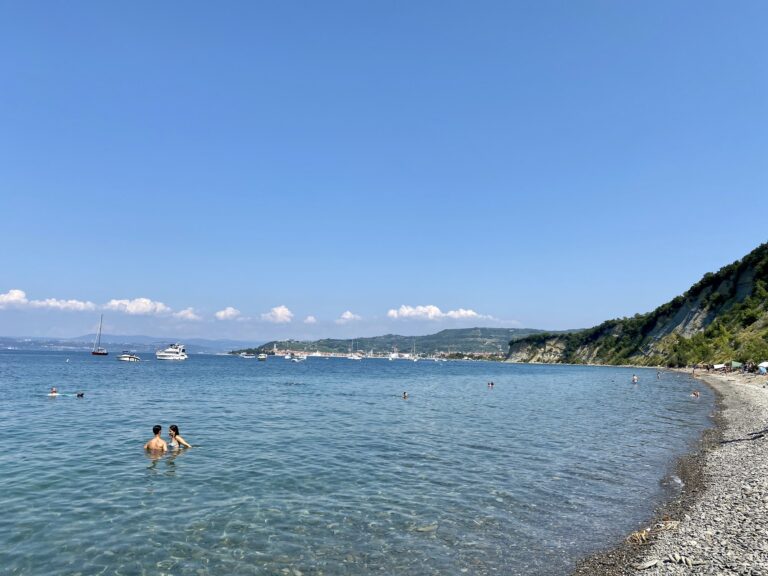
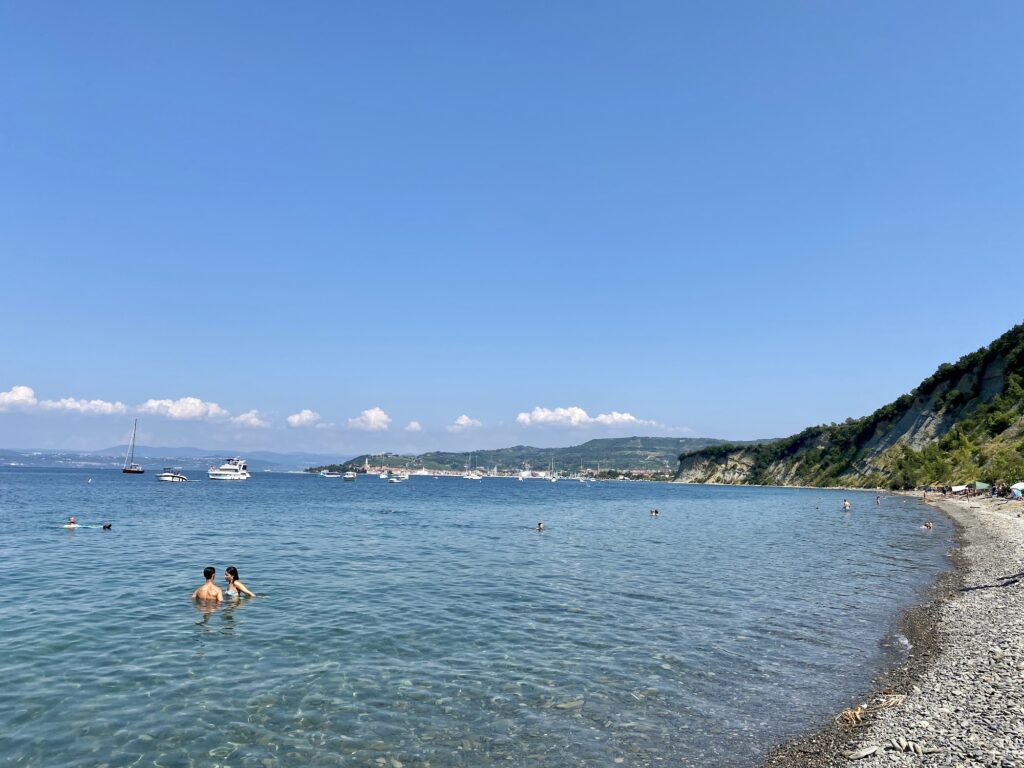
The beach itself runs roughly 200 metres, smooth white and grey pebbles ranging from marble-sized to fist-sized, no sand anywhere. I brought a padded mat rather than a flat towel and was glad of it almost immediately. There is genuinely nothing here — no rental sunbeds, no kiosk, no shower, no toilet, no lifeguard. I packed in everything I needed for the day and carried every scrap of it back out, the same rule every account of this place repeats and that the beach’s continued cleanliness clearly depends on.
The water itself was the clearest I found anywhere on this coast — I could see pebbles on the seabed several metres down without even putting a mask on, and snorkelling along the rocky edges turned up small fish and the occasional crab without much effort. I’d recommend water shoes specifically for the entry; the pebbles are smooth but uneven underfoot, and more than one account mentions sea urchins on the rockier sections, which I avoided mostly by luck rather than skill.
Moon Bay, a Short Walk Further Along
The same cliff path continues east toward Plaza Mesecev Zaliv Moon Bay Strunjan Slovenia — roughly 500 metres further along, with access that’s genuinely trickier still, more scrambling than walking. On the busiest days I’d visited Bele Skale, I found this connection useful: when one beach felt crowded, the other often wasn’t, and walking between the two rather than committing to just one made for a longer, more satisfying afternoon than either alone.
Bele Skale, between Izola and Strunjan, sits beneath white Eocene flysch cliffs that are actively, slowly crumbling into the very pebbles that make up the beach — a process tied to the same geological history that’s seen the Adriatic rise nearly three metres here over the past two thousand years. Reached by a steep fifteen-to-twenty-minute forest path from Camp Belvedere or a longer, flatter walk from Simon Bay, with no facilities of any kind once you arrive. The water is exceptionally clear, the pebbles genuinely sharp in places, and a small, quiet tradition of stone-sculpture building runs through the beach’s regular visitors. Moon Bay sits a short, trickier walk further along the same cliff path.
Park at Belvedere if you don’t mind the climb, or walk from Simon Bay for flatter, longer footing. Bring water shoes, a padded mat, and everything else you’ll need — there’s nothing to buy here. Stay back from the cliff base, and keep walking toward Moon Bay if this stretch feels too busy.
Map
Sorry, no records were found. Please adjust your search criteria and try again.
Sorry, unable to load the Maps API.
Near by places: