Nesebar South Beach Bulgaria: Below the UNESCO Old Town
Profile
Nesebar South Beach, Bulgaria: The Sandy Bay Below the UNESCO Peninsula Where the Concept of Money Was Invented 3,200 Years Ago
Bulgaria | Nesebar | Burgas Province, Southern Black Sea Coast
Nesebar was once an important trading city and part of the Delian League — an alliance of ancient Greek states. The very concept of money was invented here.
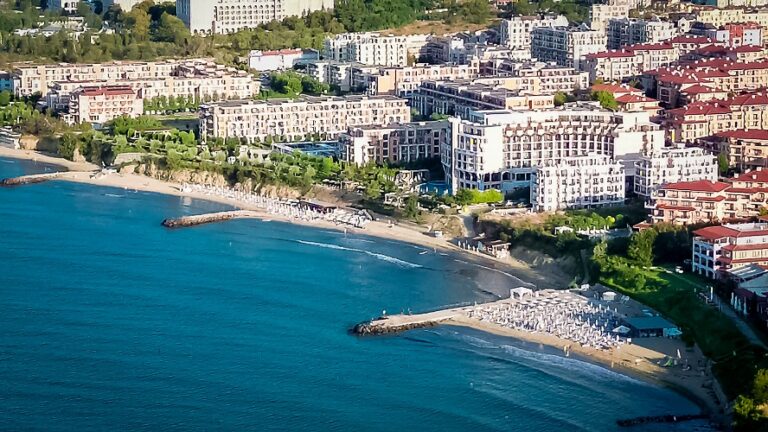
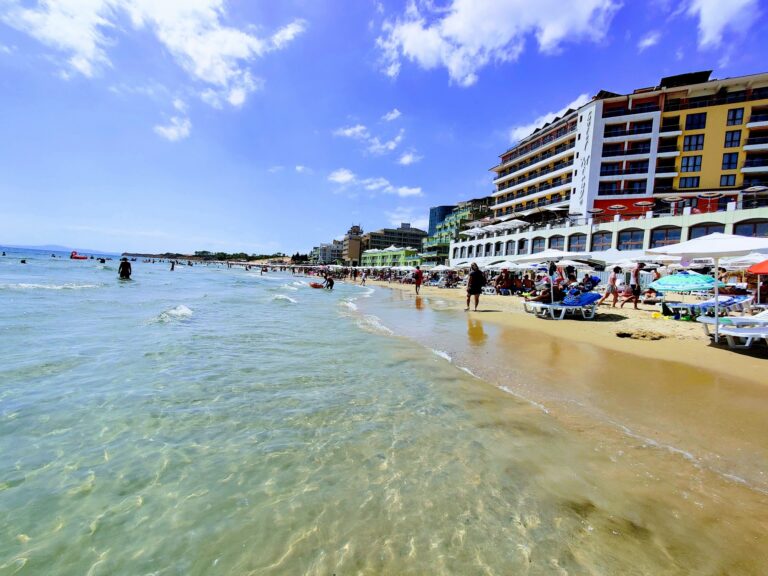
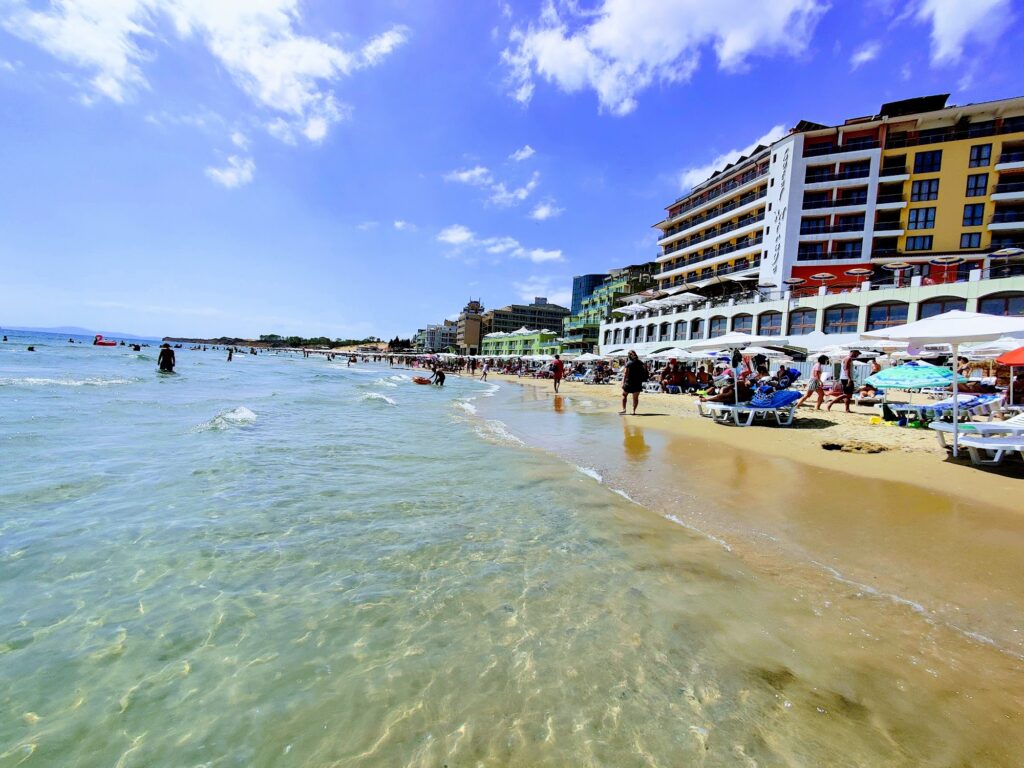
The beach’s context is specific: it sits immediately adjacent to the narrow isthmus that connects the New Town of Nesebar to the Old Town peninsula — the rocky outcrop that was an island until the narrow causeway was built, now an 850-metre-long UNESCO World Heritage site packed with 3,200 years of civilisation. The large hotels are located in the New Town, where both beaches of Nessebar — North and South — are located.
The Old Town was declared an architectural-historical reserve of national importance in 1956. In 1983, Old Nesebar was included in the UNESCO World Cultural Heritage list. Nesebar is one of the most ancient towns in Europe, founded 3,200 years ago.
The south beach is the one with the direct view back to the Old Town silhouette across the narrow water — the medieval churches, the Byzantine fortress walls, and the wooden 19th-century houses visible from the sand. The north beach is on the other side of the peninsula, adjacent to Sunny Beach resort. Both are organised, Blue Flag, family-suitable. The south beach is the culturally richer position.
Getting There: New Town Hotels 5–10 Minutes on Foot, Buses From Sunny Beach (10km) and Burgas (37km), Tourist Train, Car With Paid Parking
Nessebar is situated 37 km northeast of Burgas and 429 km east of Sofia.
From Sunny Beach (10 kilometres north), the city bus runs back and forth between Sunny Beach and Nesebar throughout the day. There is a city bus that goes back and forth from Nesebar in the south to the tip of Sunny Beach in the north — this is the most used public transport connection.
From Burgas, regular buses run throughout the year. The bus station is on a square just outside the city wall, near the town gate — a few hundred metres from the South Beach entrance.
The open-air tourist train connects the Old Town and the New Town/South Beach area. Parking is available in a large paid lot behind the dunes — arrive before 10am in July and August.
For visitors arriving by car, if arriving by car, the Old Town limits traffic. It’s best to park outside and walk.
The Beach: Wide Sandy Shore, Blue Flag, Shallow Gentle Entry, City Park Adjacent, Lifeguards 08:00–18:00
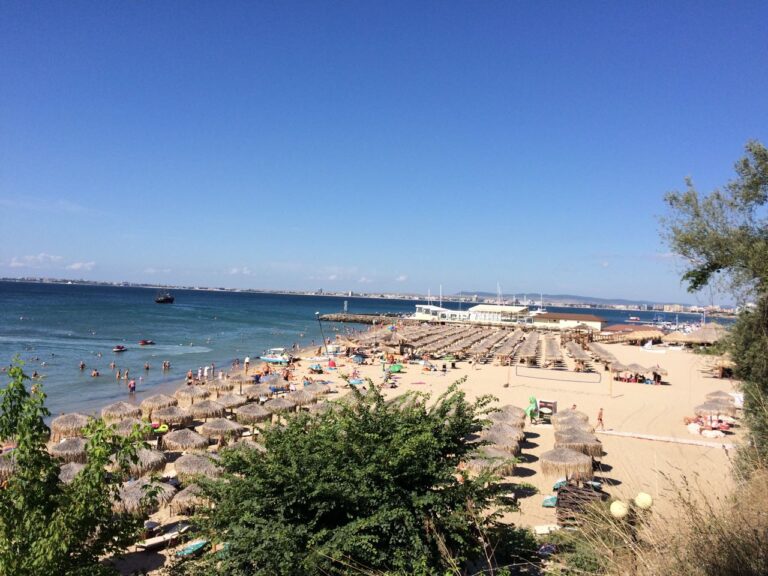
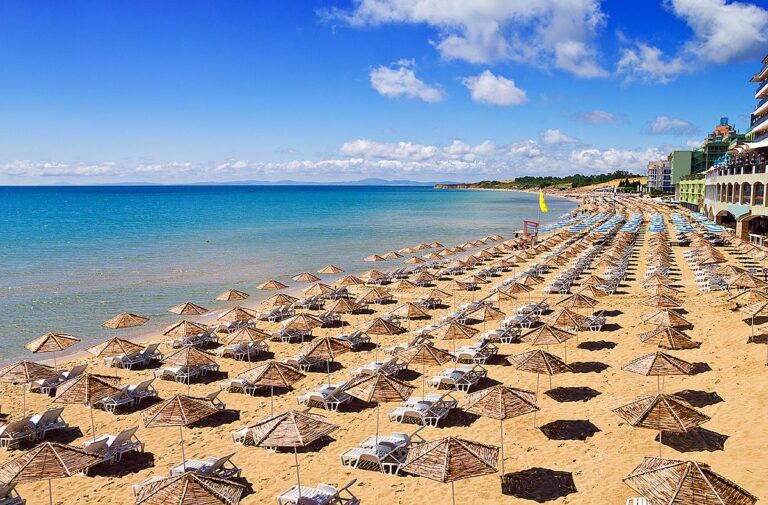
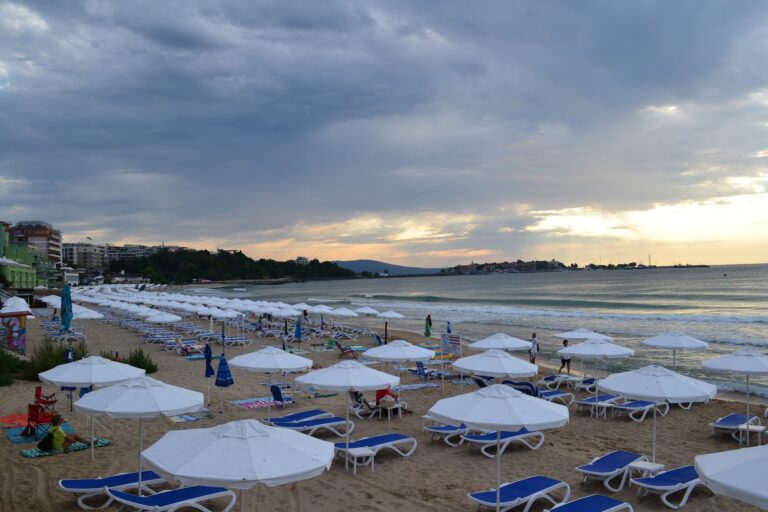
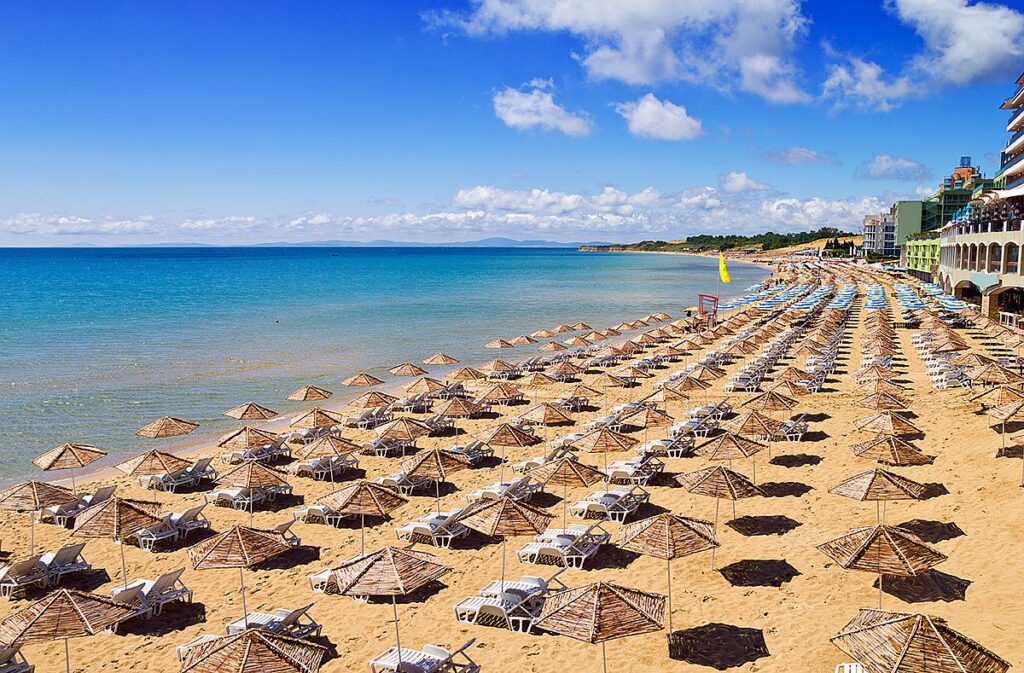
The shore is a sweeping expanse of fine golden sand, wide and deep, with a gentle sandy slope into the calm, sheltered bay. The water is shallow for a good distance from the waterline — the same shallow shelf that Harmanite in Sozopol and the other southern Bulgarian Black Sea bays produce. The Blue Flag is earned and maintained.
The city park adjacent to the beach is the specific provision that makes Nesebar South Beach the most family-complete beach in the Nesebar area: playgrounds, shaded benches, and green space immediately behind the sand for when the midday sun requires a break.
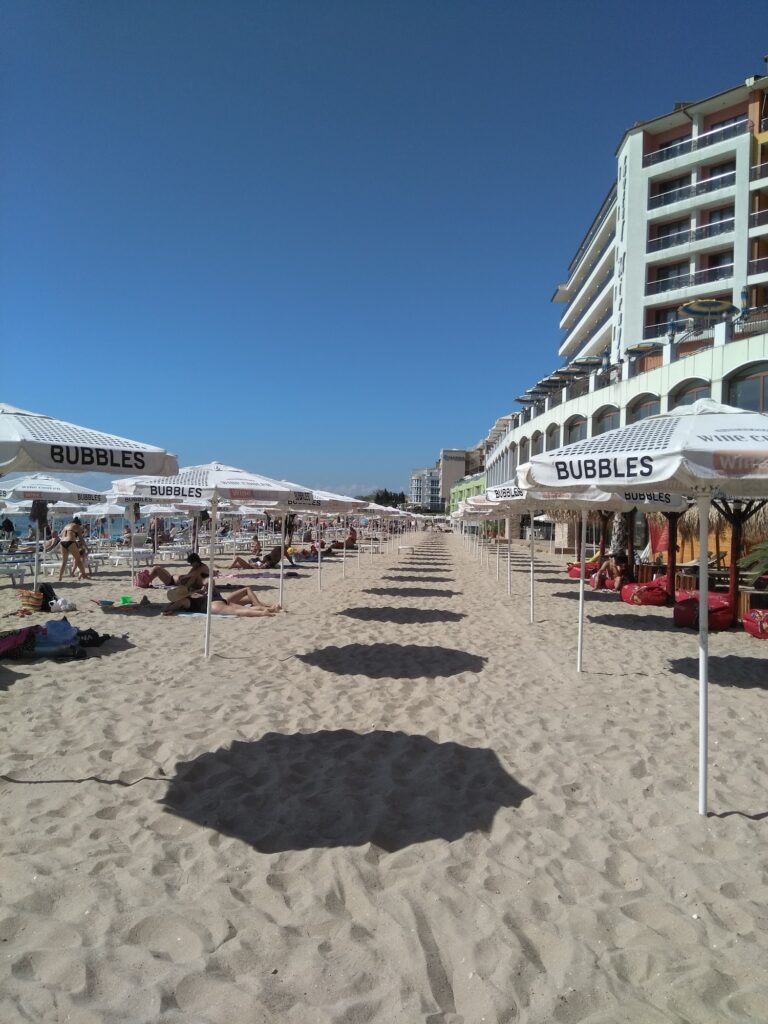
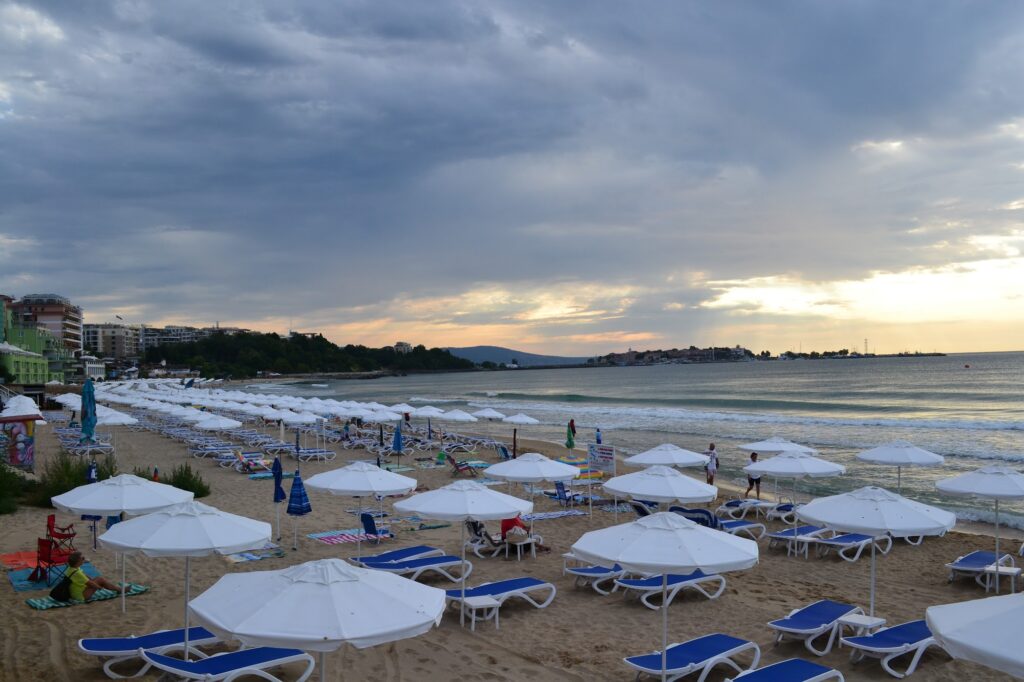
Sunbeds, umbrellas, water sports including jet skis and parasailing, dedicated beach volleyball areas, freshwater showers, changing cabins, and restrooms are all available.
The UNESCO Old Town: 40 Medieval Churches, the Apollo Temple Ruins, the Byzantine Walls
Once you enter the narrow gate in the ancient fortress wall, you’ll find yourself in a remarkable neighbourhood with memories from thousands of years of civilisation. The maze of cobblestone streets encourages aimless wandering.
The town has always been surrounded by fortification walls, some remains of which have survived to this day. According to some legends there used to be around 40 churches in Nesebar. Today there is information about 23 of them.
The Church of Christ Pantocrator (13th–14th century), the Church of Saint Stephen (11th century), and the Stara Mitropoliya Basilica (5th–6th century) are the three most visited. The ruins of the Temple of Apollo and the Roman baths are accessible on the peninsula. The Archaeological Museum at the gate entrance is the logical first stop for visitors who want the historical context before walking the cobblestones.
The Concept of Money: The Specific Claim
Nesebar was once an important trading city and part of the Delian League — an alliance of ancient Greek states. The very concept of money was invented here.
The claim that money was invented in Nesebar specifically needs nuance: the Lydian kingdom in modern Turkey issued the first coins approximately in the 7th century BC. Mesambria (Nesebar) did mint its own coins and was an important commercial city — the claim likely refers to its role in early monetary commerce in the Black Sea region rather than the literal invention of currency. It is the specific local pride claim rather than a verifiable historical absolute.
Sunny Beach: 10km North, the Contrast
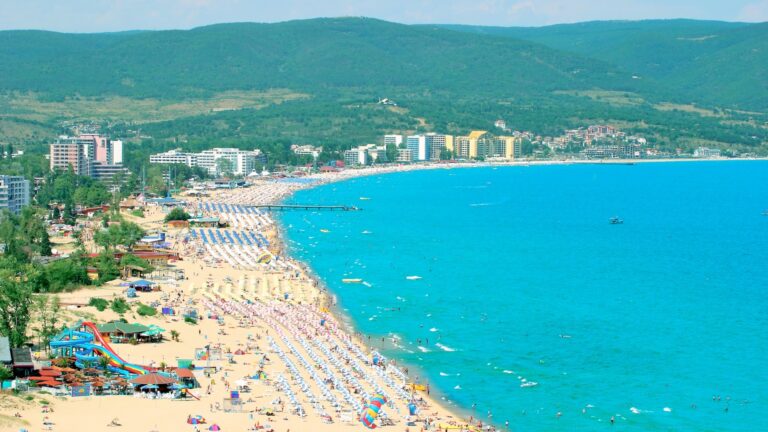
Sunny Beach is 10 km long. And off of the southern end of Sunny Beach is the UNESCO-certified town of Nessebar.
The specific Bulgarian Black Sea programme: base at Nesebar, use the South Beach for the morning swim, cross the isthmus to the Old Town for the afternoon, and take the bus to Sunny Beach in the evening if the nightlife is the programme. The reverse approach — based at Sunny Beach and visiting Nesebar as a day trip — is the most common, but Nesebar itself as a base provides the historic and the beach in the same location.
Nesebar South Beach in Bulgaria is the sandy bay below the UNESCO peninsula where the Thracian settlement of Menebria was founded 3,200 years ago — wide sandy Blue Flag shore, gentle shallow entry, city park with playgrounds adjacent, the Old Town silhouette of 40 medieval churches and Byzantine walls visible across the bay, 10 kilometres south of Sunny Beach by city bus, 37 kilometres northeast of Burgas, and the concept of money (or at least early Black Sea monetary commerce) originating on the peninsula above the sand.
Cross the isthmus. Enter through the Byzantine gate. The Archaeological Museum is first on the right.
Map
Sorry, no records were found. Please adjust your search criteria and try again.
Sorry, unable to load the Maps API.
Near by places: