Drymades Beach Albania: The Riviera's Preferred Shore
Profile
Drymades Beach, Dhërmi: The Albanian Riviera’s Most Beautiful Beach Is Named in Greek and Inhabited by Greeks
Albania | Dhërmi | Albanian Riviera
The name Drymades is Greek. So is the name Dhërmi — which is the Albanian rendering of Drimades, which is itself a variant of Drymades, which means “oak grove” in ancient Greek. The village above the beach has two names because it has two communities: the local inhabitants of Dhërmi are ethnic Greeks who mainly speak a variant of the Himariote Greek dialect, and the Albanian name is mainly used by those who use the Albanian language. Recorded in the Ottoman census of 1583 as a settlement with 50 households. The first Albanian school in Dhërmi was founded in 1632 by a Greek Cypriot missionary. In 1633 the same missionary founded a Greek-language school. The village has been culturally bilingual for longer than most European nations have existed.
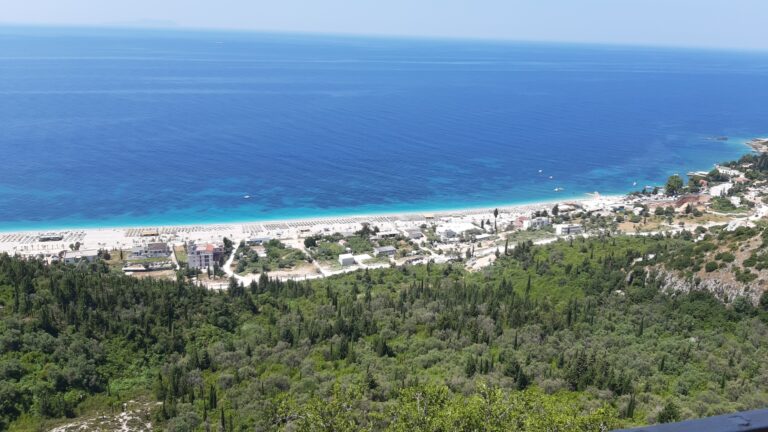
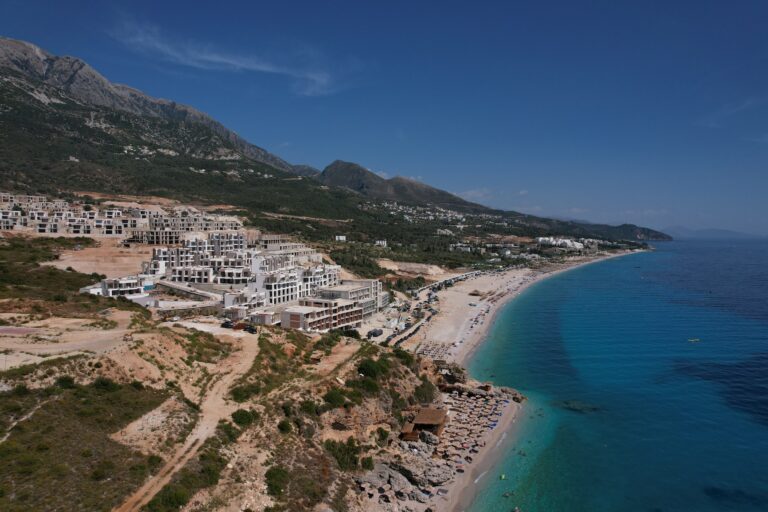
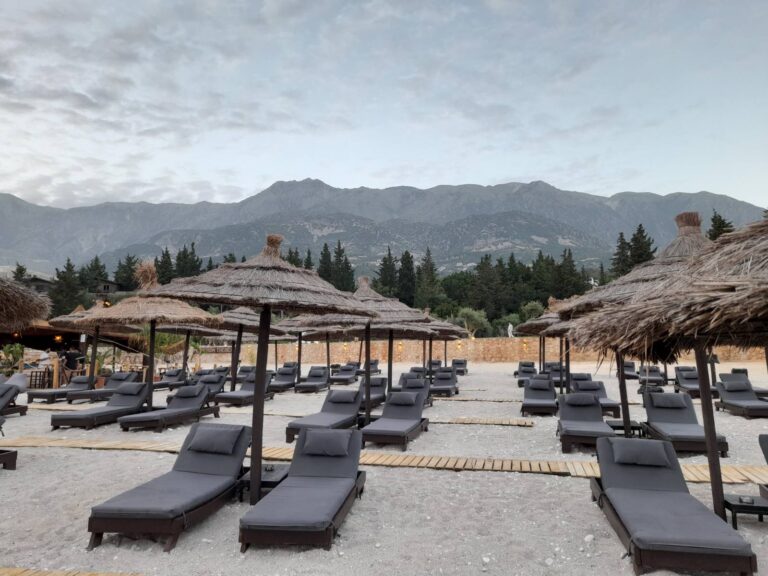
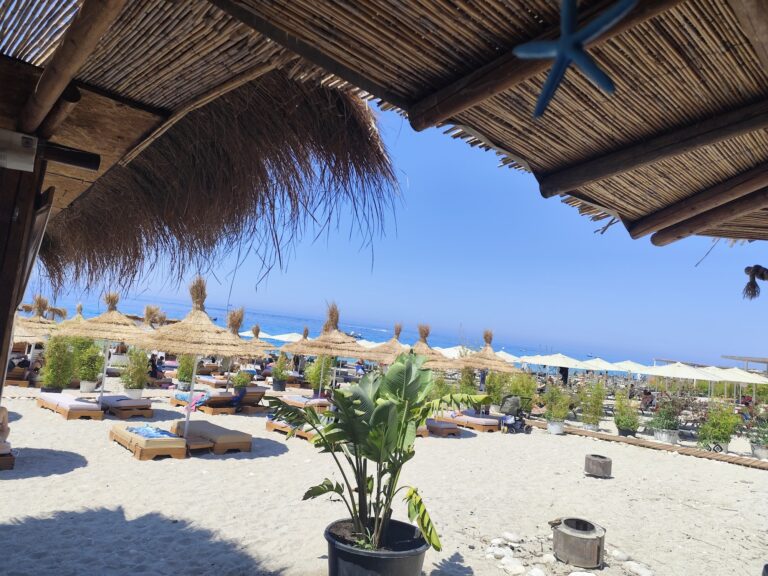
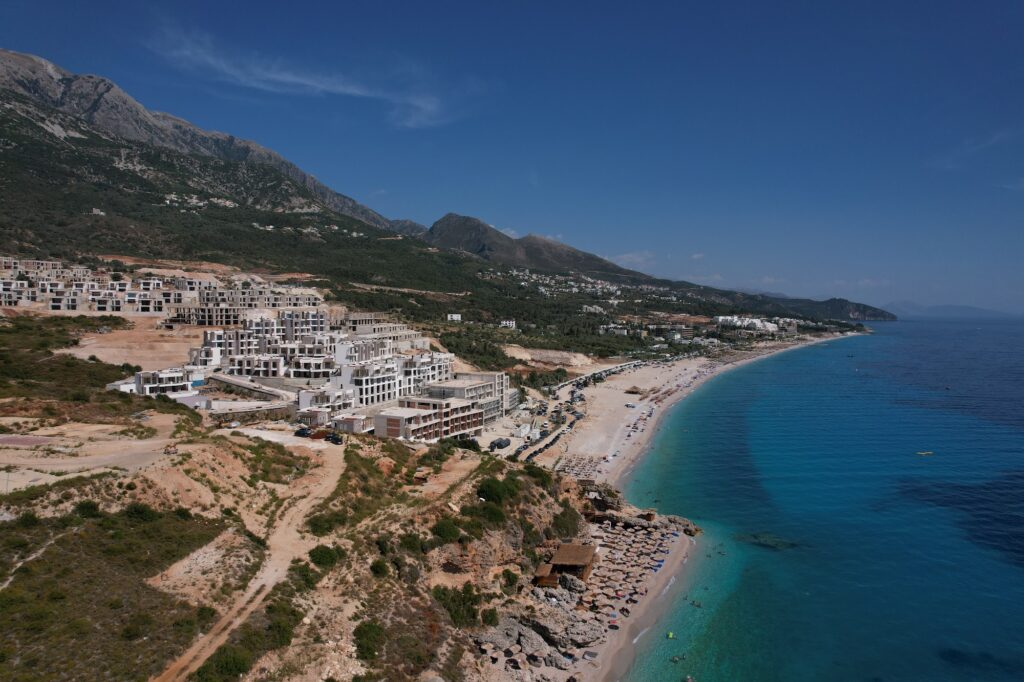
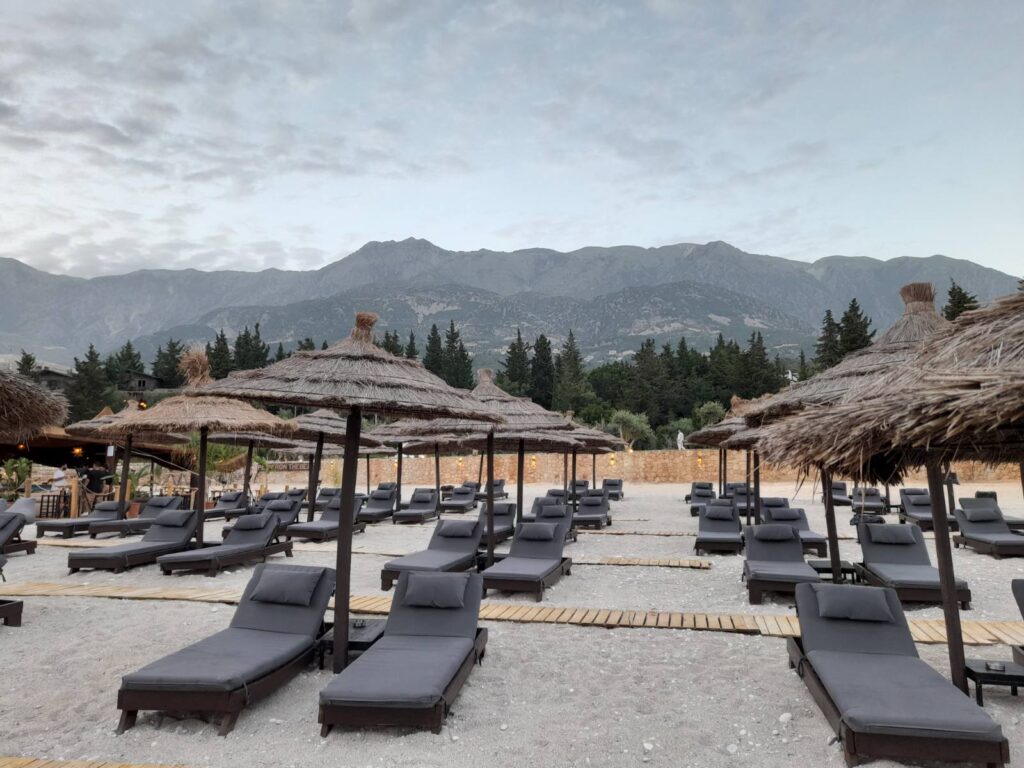
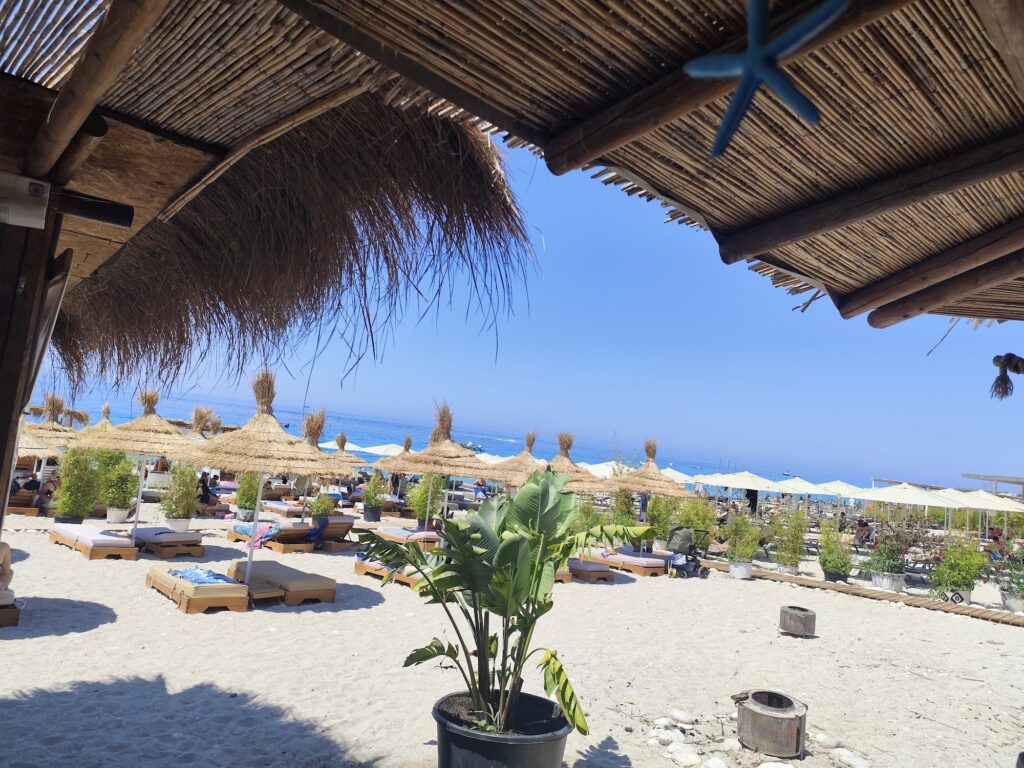
The beach bearing the Greek name of the village is 3 kilometres south of the main Dhërmi beach. It is the beach that serious Albanian Riviera travellers tend to prefer. The beach is longer than Dhërmi’s main beach, the headlands on either side are more dramatic, and the pebble-and-sand mix creates a cleaner shoreline. Several established beach clubs operate here, including some of the better-regarded venues on the Albanian Riviera. Drymades is the beach for those who want quality sunbed facilities, a good cocktail list, and an attractive social scene without the maximum-intensity club environment that Dhërmi main beach generates in peak season.
Getting There: Rough Track from Dhërmi or Coastal Road, Cash Only, No ATM, No Shop
From Dhërmi village, the beach is accessible by the rough track that descends 1 kilometre to the shore, or via the coastal SH8 road and the signed turn-off. A standard car can navigate the track in dry conditions; after rain it becomes more challenging. The SH8 approach is the more reliable option.
From the north (descending the Llogara Pass), the Dhërmi/Drymades turn-off is approximately 62 kilometres south of Vlorë — the dramatic descent from the 1,027-metre Llogara Pass that is one of the most impressive road descents in Europe, with the full Ionian coast visible below before the road hairpins down to the beach level.
No ATM functions reliably at Drymades or Dhërmi — the ATM in Dhërmi usually doesn’t work. Bring sufficient Albanian lek or euros in small denominations. The nearest reliable ATM is in a larger town.
There is no shop in Drymades — if you need bread, water, sunscreen, or any supplies, buy them in Dhërmi before descending to the beach. This detail appears in enough visitor accounts to warrant treating it as essential preparation.
The Greek Village Above: Olive Groves, the St. Mary Monastery, and the Dual Identity
The village of Dhërmi above the beach is built on the slope of the Ceraunian Mountains at approximately 200 metres altitude — the specific position that gives the village its commanding view of the Ionian Sea and the island of Corfu visible on the horizon to the south. The local olive oil produced from the olive groves on the hillsides above the coast is exceptional — the olive trees predate Ottoman rule, some of considerable age. Buying a bottle from a local producer to take home is the consistently recommended souvenir.
The Monastery of St. Mary on a hilltop above the village and the Orthodox Church of Saint Haralambos with its peaceful courtyard are the cultural sites that reward the walk up from the beach into the village. The destroyed and rebuilt Church of Saint Athanasius — demolished twice by state authorities, first under communism and again in 2015 in a controversy that sparked tensions between the Albanian government and the local Greek Orthodox community — is the specific contemporary conflict that the village’s dual identity has produced.
The Beach: 1km, Pebble and Sand Mix, Olive Grove Bungalows, Pirate’s Cave Restaurant
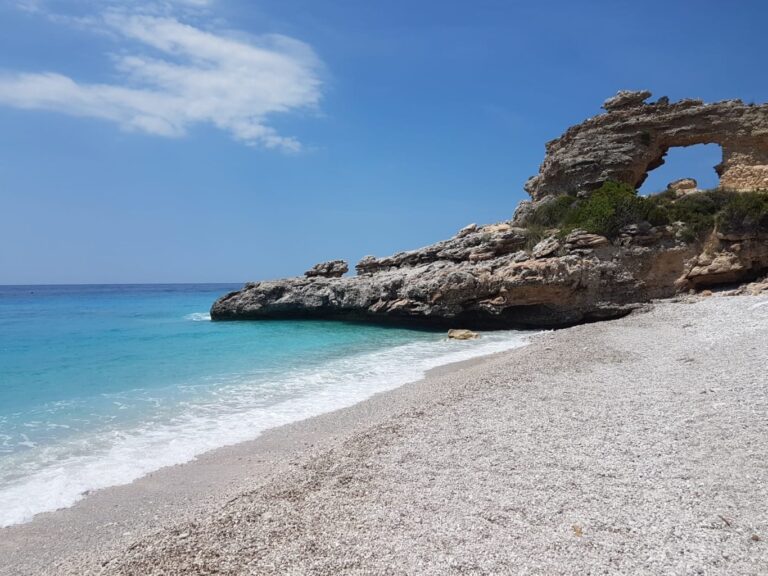
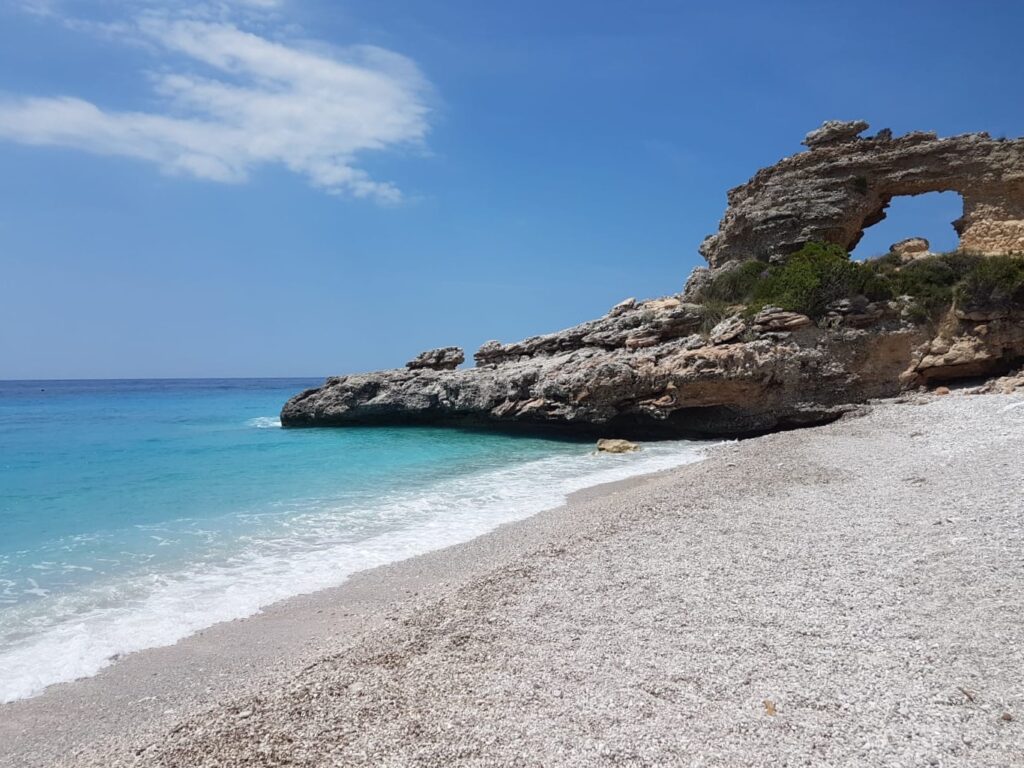
The beach is approximately 1 kilometre long, a mix of pebble and sand with a large rock separating the two sections, and surrounded by olive trees and pine forest. The combination of factors that makes Drymades special among the Albanian Riviera beaches: the mountains drop precipitously to the coast, the headlands on either side are dramatic, and the olive grove bungalow accommodation (Altea Beach Lodges, Royal Blue Hotel, and others) means that some guests wake up 30 metres from the sea in the shade of olive trees without turning on the air conditioning — the natural temperature control that the olive canopy in peak summer provides.
The Pirate’s Cave Restaurant — a restaurant inside a natural sea cave accessible from the beach — is the specific dining experience that several visitor accounts name as the most memorable meal on the riviera: fresh fish served in the literal cave, candlelit, with the sound of the sea at the entrance. Frozen fish is a sacrilege in Albania — the fresh catch, the good service, and the natural setting are the cave restaurant’s specific combination.
Drymades vs Dhërmi Main Beach: The Key Distinction
Dhërmi main beach is well and truly under the tourist trance in summer — expect booked-out accommodation, loud music and half of Tirana sprawled on the stones. Drymades is the alternative used by travellers who know the area: the same turquoise water, the same dramatic mountain backdrop, the same Ceraunian limestone scenery, but with the volume turned down and the olive grove between you and the highway.
The key practical distinctions: Drymades is 3 kilometres south on a rough track; Dhërmi main beach is directly off the coastal road. Dhërmi has shops, ATMs (sometimes working), and a full resort infrastructure. Drymades has none of these — olive bungalows, two or three beach clubs and restaurants, a natural cave dining venue, and the beach itself.
Visiting Drymades in early July before the peak arrives — when the beach is quiet, rooms available, and the price pressure yet to build — is the window that the accounts from repeat visitors consistently identify as the optimal programme.
The Gjipe Canyon Connection and the Boat Trips
Gjipe Beach Albanian Riviera is the canyon-mouth pebble cove reachable by a 2-kilometre hike from the trailhead between Dhërmi and Vuno — the specific wild beach that is most commonly combined with a Drymades base in the accounts of visitors who stay in the area for several days. The combination of the Drymades olive bungalow accommodation, the Gjipe canyon hike, and the boat tour to the Pirate’s Cave from the Dhërmi pier provides the full character range of what the Ceraunian coast offers.
Boat trips from Dhërmi cover the coastline north toward Grama Bay and Saint Andreas Bay, and south toward Himarë and Jale Beach. Organising these from the Dhërmi beach pier on arrival is the standard approach — most trips are not pre-bookable online and are arranged in person.
The Llogara Pass Descent: The Arrival That Prepares You for the Beach
The approach from the north — descending the Llogara Pass on the SH8 — is the arrival sequence that most visitors to Drymades describe as their first Albanian Riviera experience: the road from Vlorë climbs into the Llogara National Park pine forest, reaches 1,027 metres at the pass, and then the first white crescent-shaped beaches and azure waters come into view below. The descent is steep and winding, the views are dramatic, and Dhërmi and Drymades are among the first beach settlements visible from the road as the descent begins.
The combination of the Llogara Pass approach, the Drymades olive grove bungalow base, the Gjipe canyon hike, the Pirate’s Cave dinner, and the boat trip along the coastal caves is the specific Albanian Riviera week that the accounts of repeat visitors consistently describe as superior to a week spent moving between the more crowded and expensive riviera settlements.
Drymades Beach near Dhërmi on the Albanian Riviera is the 1-kilometre pebble-and-sand beach 3 kilometres south of the main beach — named in Greek, inhabited by ethnic Greek villagers, olive grove bungalows 30 metres from the sea, the Pirate’s Cave Restaurant inside a natural cave, no ATM that works reliably, no shop, cash only, 250+ sunny days, the Llogara Pass visible 1,027 metres above, and the Ceraunian limestone headlands on both sides.
Buy supplies in Dhërmi before descending. Bring cash.
Come in early July before the peak arrives. The olive trees will be providing the air conditioning.
Map
Sorry, no records were found. Please adjust your search criteria and try again.
Sorry, unable to load the Maps API.
Near by places: