Gjipe Beach Albanian Riviera: Canyon Pebble Paradise
Profile
Gjipe Beach, Albanian Riviera: The Canyon Mouth Beach with 750,000 Bunkers, a 14th-Century Monastery, and Prices Double What They Charge in Dhërmi
Albania | Albanian Riviera | Himarë District
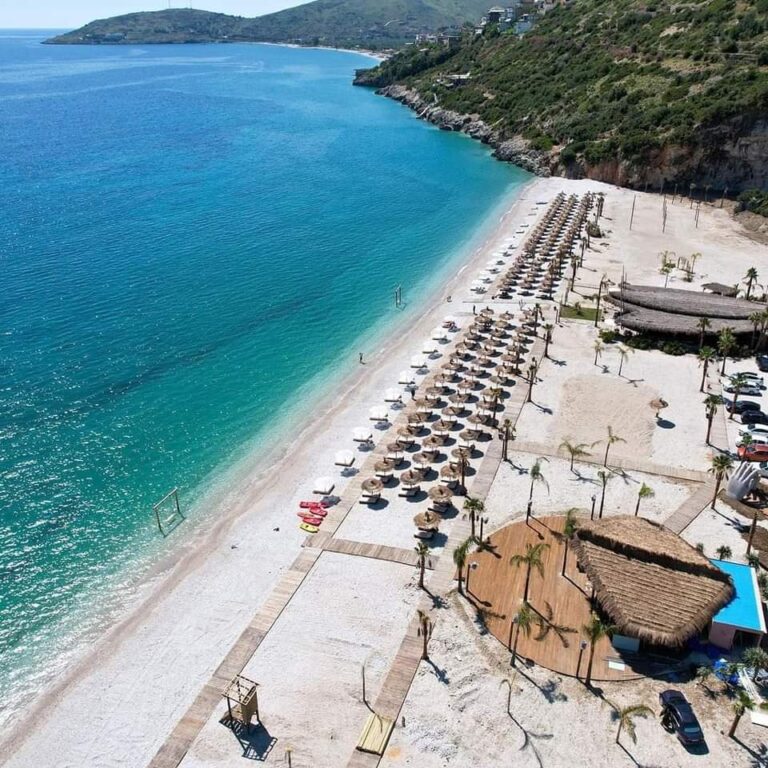
Gjipe Beach (pronounced gee-pay) is entirely free to enter. The parking at the trailhead costs 400 leks per day — approximately €3. Everything else on the beach costs roughly double what the same thing costs in Dhërmi or Himarë, because every item was carried down the same 2-kilometre track that you walked. There are no ATMs anywhere near the beach. Bring enough Albanian lek or euros in small bills.
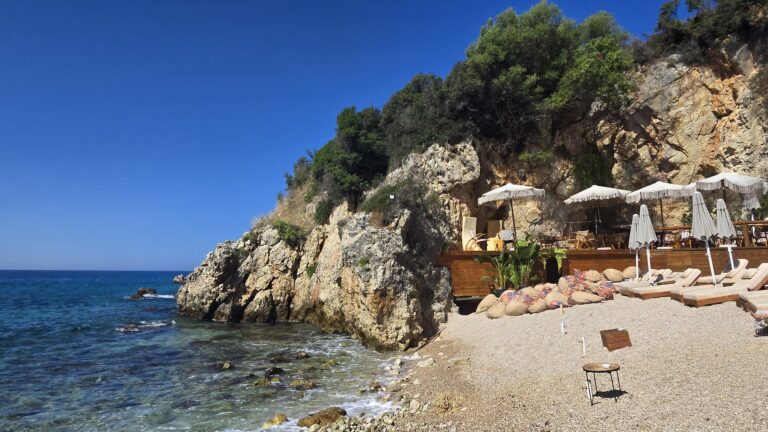
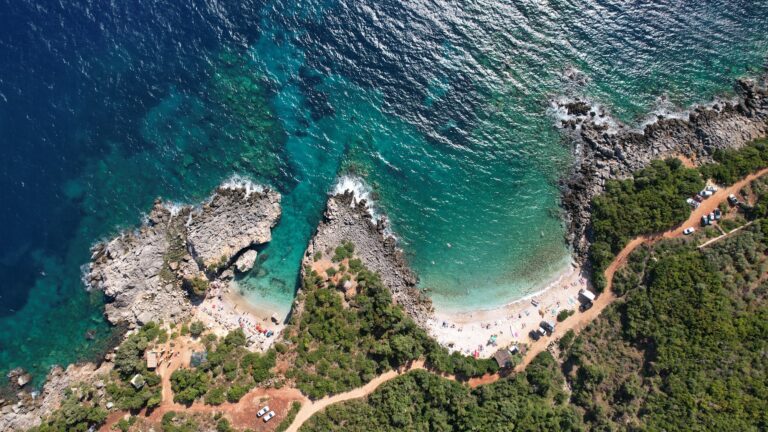
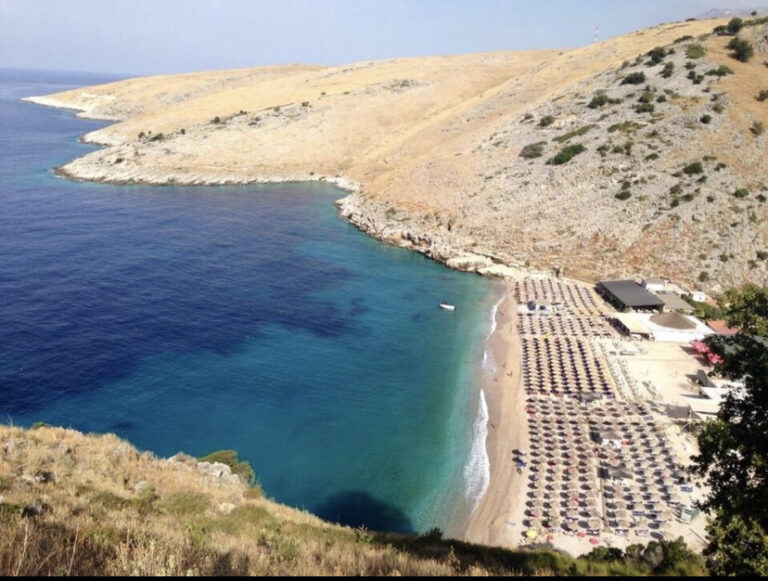
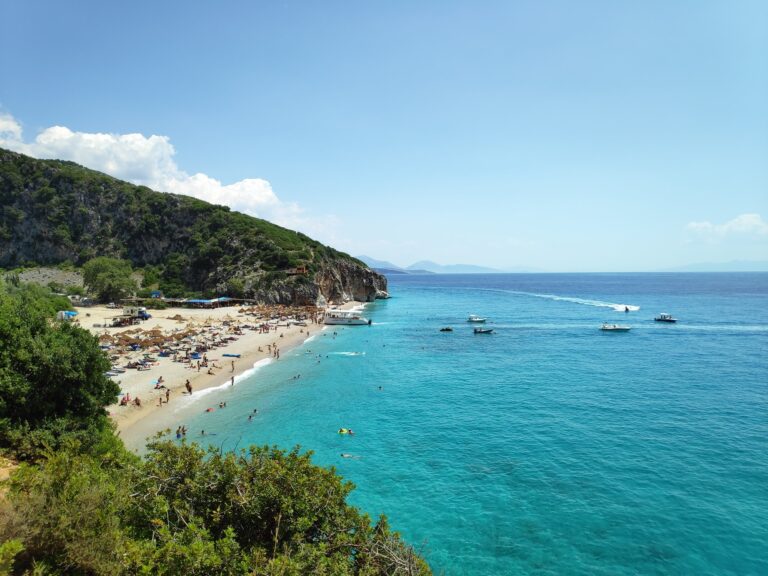
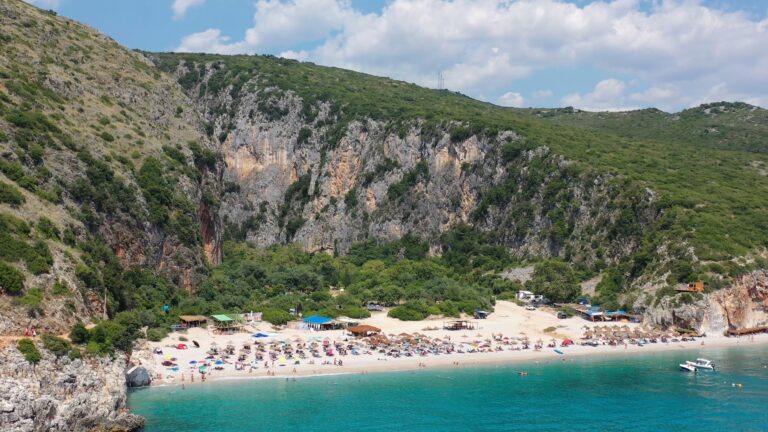
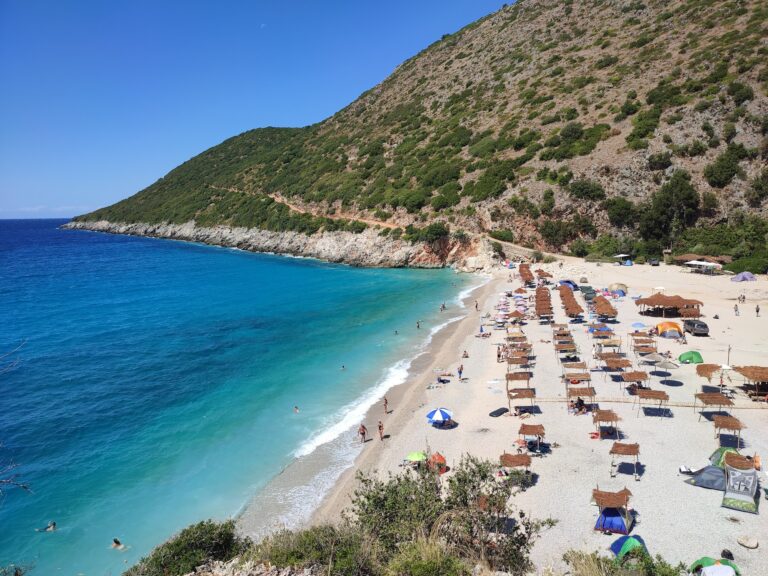
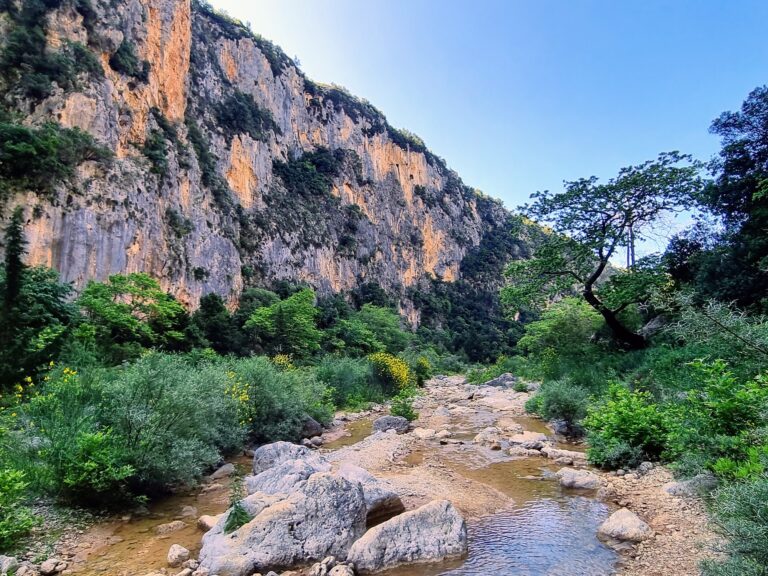
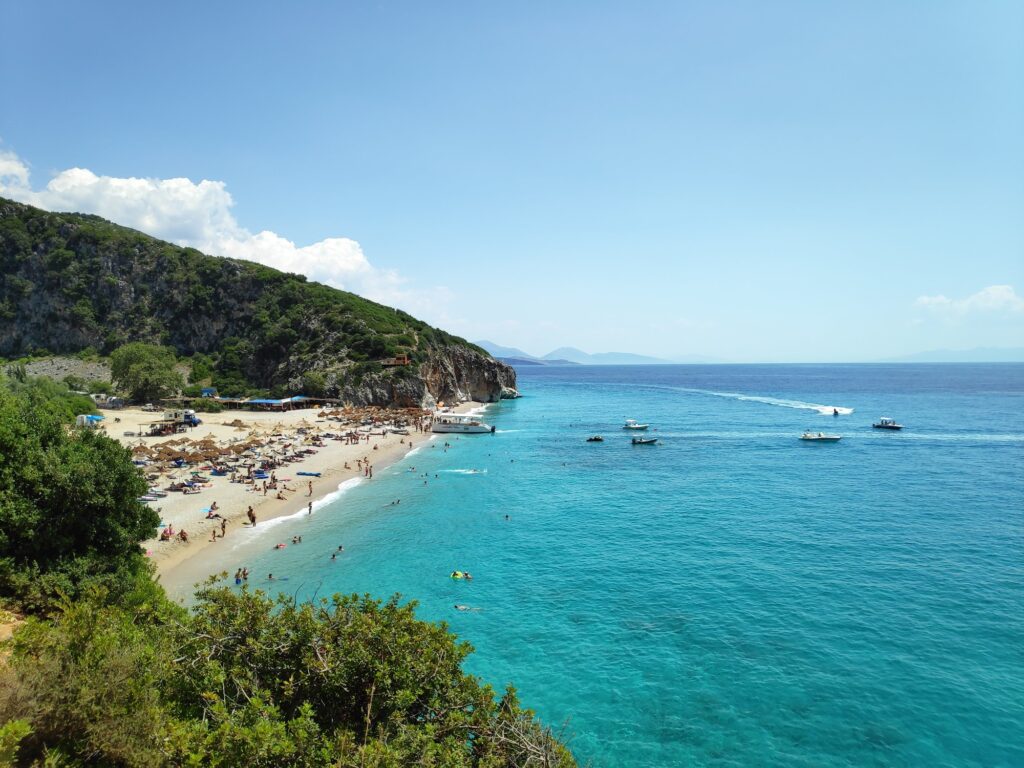
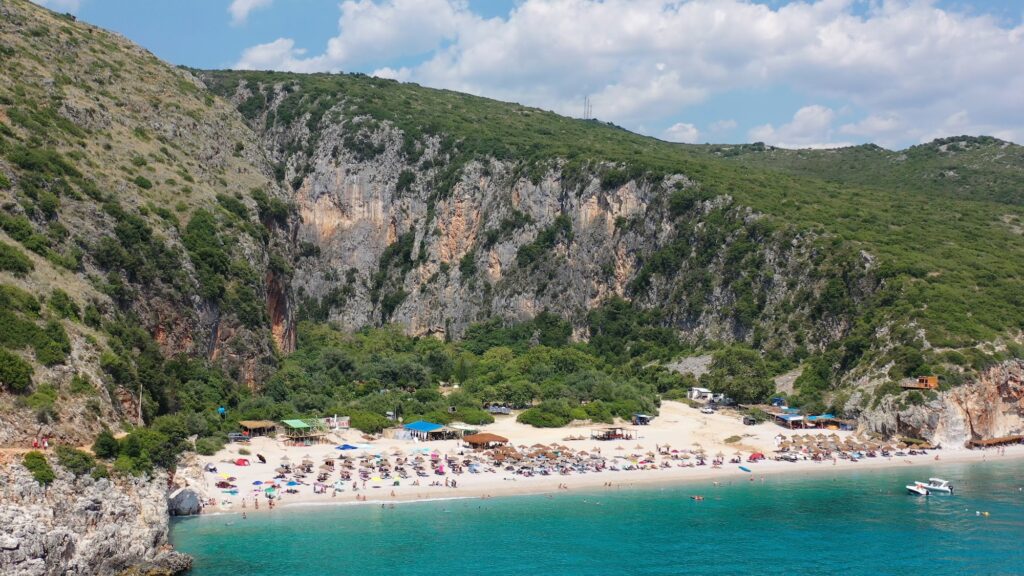
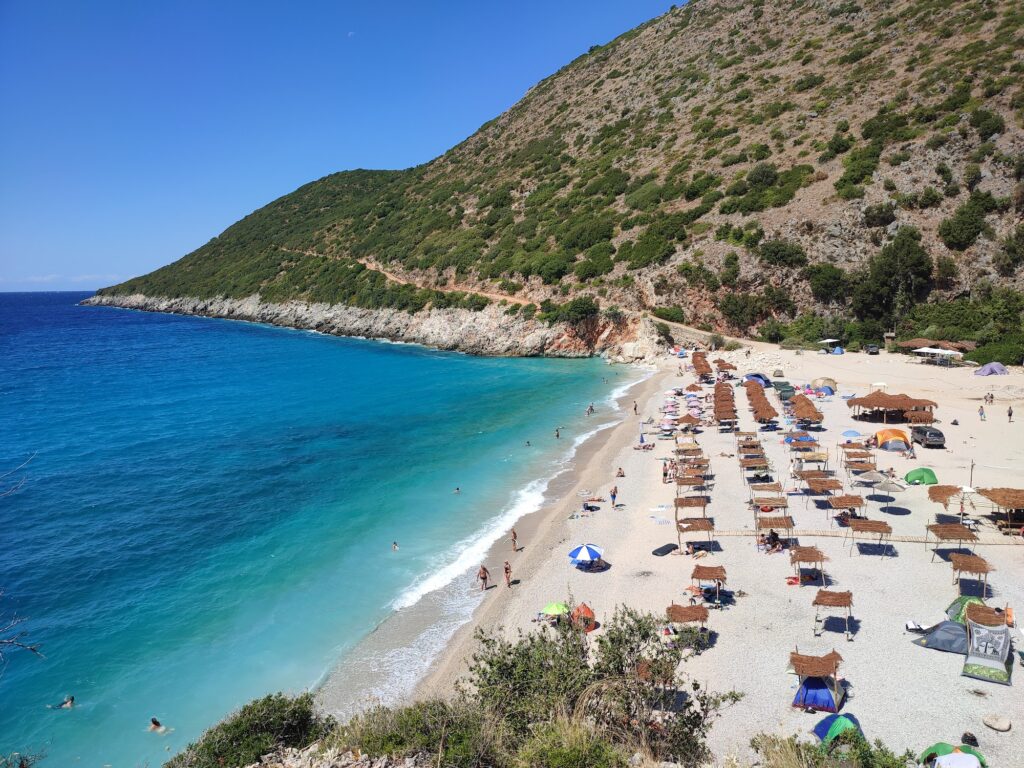
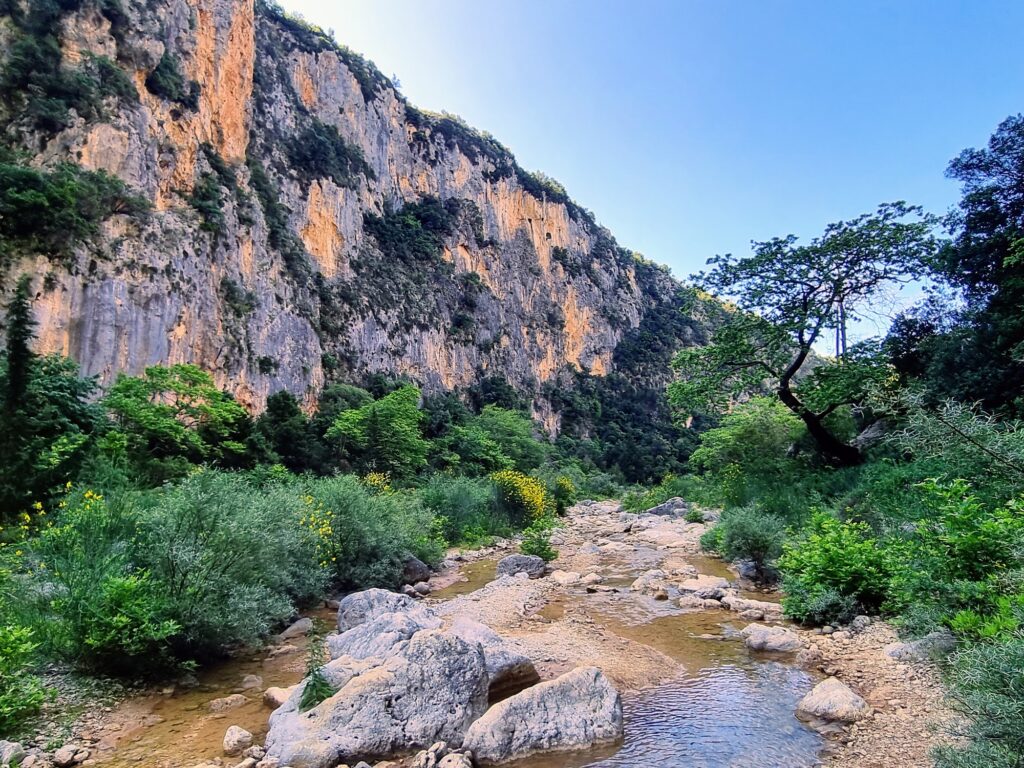
The beach is at the mouth of Gjipe Canyon, between Dhërmi (5 kilometres north) and Himarë (10 kilometres south) on the Albanian Riviera. The canyon walls rise up to 70 metres on both sides. The Ionian Sea fills the bay with the electric-blue clarity that the canyon’s rock-sheltered position, the absence of development, and the Albanian Riviera’s characteristic clean water produces. The canyon itself extends 800 metres inland before the terrain becomes impassable without climbing gear. The creek running through it is completely dry in summer. The canyon formed from Triassic dolomites and Jurassic-Cretaceous limestone carved by water over geological time, and people have been farming olives in the protected microclimate of the canyon valley for at least 2,000 years.
This is the beach that travel writers consistently call the most beautiful secret in Albania, the place they urge readers to visit before development finds it, the European beach that would be overrun if it were in Greece or Croatia. For the moment, the access difficulty — the 2-kilometre track, the cash-only economy, the absence of hotel infrastructure directly on the beach — has kept it from that fate.
Getting There: Park at the Trailhead, Walk 2km, 20 Minutes Down — or Take the Boat
The turn-off for Gjipe Beach is just after the tiny village of Ilias if coming from Dhërmi, on the right — if you reach Vuno, you have gone too far. The narrow asphalt road from Ilias descends to the trailhead parking lot. Parking costs 400 leks per day. A guesthouse is located next to the parking lot for visitors who want overnight accommodation above the beach.
From the car park, the path to the beach is 2 kilometres and takes approximately 20 minutes downhill — unshaded by the hot sun, on a rocky surface, requiring proper footwear. The uphill return in afternoon heat is the part visitor accounts mention as more demanding than the descent. Water, sunscreen, and footwear that grips loose rock are the three non-negotiable provisions.
By public transport, the furgon minibuses running between Himarë and Dhërmi will drop passengers at the main road turnoff — from there it is 2.5 kilometres to the trailhead parking lot on foot, plus the 2-kilometre beach path. Total walking from the main road: approximately 4.5 kilometres.
By boat, excursions depart from Dhërmi, Jalë, and Himarë throughout the season — the boat approach passes along the cliff coastline and enters the canyon mouth from the water, providing the sea-level view of the canyon walls that the land approach cannot give. The “Pirate’s Cave” is included on most boat tours from this area, a sea cave along the same coastal section accessible by swimming or kayak from the beach.
There is also a 4-kilometre coastal trail from Dhërmi — views are extraordinary, thorny vegetation, 90 minutes, not recommended in flip-flops.
The Canyon: 800 Metres from Beach to Impassable, Flash Flood Warning, Climbing Routes Established
The canyon begins directly behind the beach and extends approximately 800 metres inland before large boulders and a section requiring climbing gear stop the unequipped hiker. The lower section — 1 to 1.5 kilometres from the beach — is hikeable in an afternoon without technical equipment, though the rocky terrain requires appropriate footwear throughout.
The flash flood warning is the specific safety note that every comprehensive guide to Gjipe Canyon includes: the canyon floods without warning when it rains. Do not attempt the canyon if rain is forecast, if clouds are building over the mountains, or if there is any possibility of rain. Tourists have needed rescue from the canyon during flash floods. The dry summer creek bed that runs through the canyon in July provides no warning — the flood can arrive from rain falling kilometres away on the Llogara Pass above.
Dozens of climbing routes have been established in the canyon in recent years. The canyon is growing in reputation on the European climbing circuit. For visitors who want to explore the upper canyon sections or the more technical routes, guided expeditions with equipment are available from operators based in Dhërmi and Himarë.
The Hoxha Bunkers: 750,000 Across Albania, Built Between 1967 and 1986
The concrete bunkers on the cliff face above the beach and along the canyon approach are the most visible remnant of one of Cold War Europe’s most unusual civil engineering programmes. Enver Hoxha, the Albanian communist dictator who ruled from 1944 to 1985, was so convinced of imminent invasion — from NATO, from the Warsaw Pact, from Yugoslavia, from anyone — that he ordered the construction of over 750,000 mushroom-shaped concrete bunkers across the entire country between 1967 and 1986. That works out to approximately 14.7 bunkers per square mile, or roughly one bunker for every four Albanians. The chief military engineer Josif Zagali designed them to be indestructible — they were built from reinforced concrete with iron and steel specifications intended to survive direct artillery impact. Removing each one costs approximately €800, which is why most are still exactly where they were placed.
The bunkers around Gjipe are built directly into the cliff faces and along the coastal path — the specific strategic logic being that the beach was a potential amphibious landing point. They now serve as photo props and waypoints on the hiking trail. Walking toward a pristine Ionian beach past a series of indestructible concrete fortifications that Albania spent two decades building because it was convinced the rest of the world was coming to destroy it is the specific historical experience that distinguishes the Albanian Riviera from every other beach destination in Europe.
The Saint Theodore Monastery and the Olive Grove
On the cliff above the beach, the 14th-century Saint Theodore Monastery is perched on the site of an ancient temple to Zeus — because why waste a good foundation, as one account puts it. The monastery was built on top of the earlier Greek sacred site and expanded continuously for 500 years before World War II damage and the subsequent communist confiscation of religious properties halted the development.
The olive grove in the protected microclimate of the canyon’s lower sections is the agricultural legacy of the 2,000-year human presence in this specific valley — olives farmed in the sheltered terrain and the oil exported to Venice in the 17th and 18th centuries, the same trade route that made the entire Albanian Riviera commercially significant to the Venetian maritime empire.
Camping: Gjipe Eco Campground, Wild Camp on the Pebbles, No Water Without Paying
Gjipe Eco Campground charges approximately €24 per night and provides basic facilities including access to bathroom and shower. Wild camping on the beach is still permitted — no charge, no facilities, complete self-sufficiency required. The campsite also sells daily shower and toilet access passes to day visitors who need facilities.
The warning about camping near the canyon entrance is consistent across all visitor accounts: the creek bed floods in rain. Camp on the beach section away from the canyon mouth, not in the canyon itself.
The stars from the beach at night — the specific quality that wild camping accounts describe — are the consequence of zero light pollution from the surrounding empty coastline. The nearest settlement with significant artificial lighting is several kilometres away, and the canyon walls block any residual glow from the road above.
September Is the Sweet Spot
The water is still warm at around 22°C, the summer crowds have gone home, accommodation prices in Dhërmi and Himarë drop by 50%, and the walk to the beach is no longer in peak afternoon heat. May and June are good alternatives for avoiding crowds while the Kala Festival and Anjunadeep Explorations electronic music events bring a younger international crowd to nearby Dhërmi beach — the June festivals use the Dhërmi and occasionally the Gjipe setting for evening DJ sets with the canyon walls as the backdrop.
Gjipe Beach on the Albanian Riviera is the canyon-mouth pebble cove between Dhërmi and Himarë — 2 kilometres from the trailhead parking lot (400 leks, €3), 20 minutes downhill, cash only, double town prices, no ATM, Hoxha bunkers on the cliff face, the Saint Theodore Monastery above, flash floods in the canyon if it rains, the Ionian Sea electric blue between the walls, free to enter, and September the best month.
Bring water. Bring cash. Bring footwear that grips.
Don’t go into the canyon if it might rain.
Map
Sorry, no records were found. Please adjust your search criteria and try again.
Sorry, unable to load the Maps API.
Near by places: