Livadhi Beach Himarë: Albania's Longest Riviera Shore
Profile
Livadhi Beach, Himarë: The Albanian Riviera’s Longest Town Beach, Accessed by Mountain Road, Now Battling Its Own Development
Albania | Himarë | Albanian Riviera
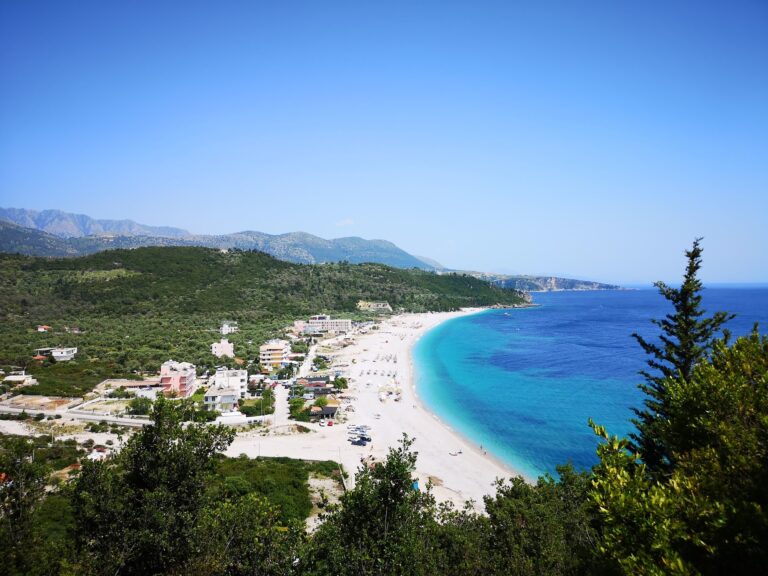
Lonely Planet describes Livadhi Beach as certainly very attractive but notes that development hasn’t been kind, with a slew of unsightly new buildings going up. This is the honest qualifier that begins the conversation about Livadhi — the beach that is Himarë’s longest and most accessible, the one that development has found first, and the one where the race between the Albanian Riviera’s genuine natural quality and the construction activity that quality attracts is most visibly underway.
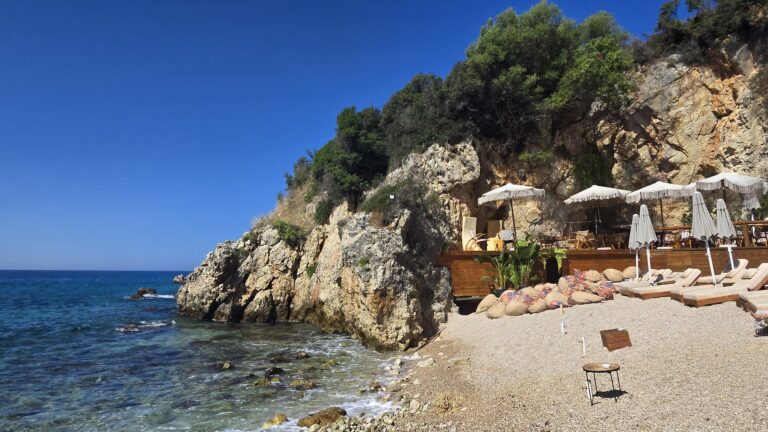
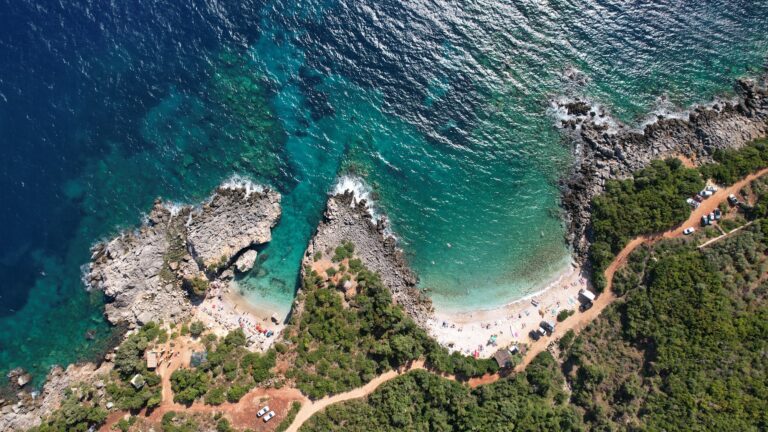
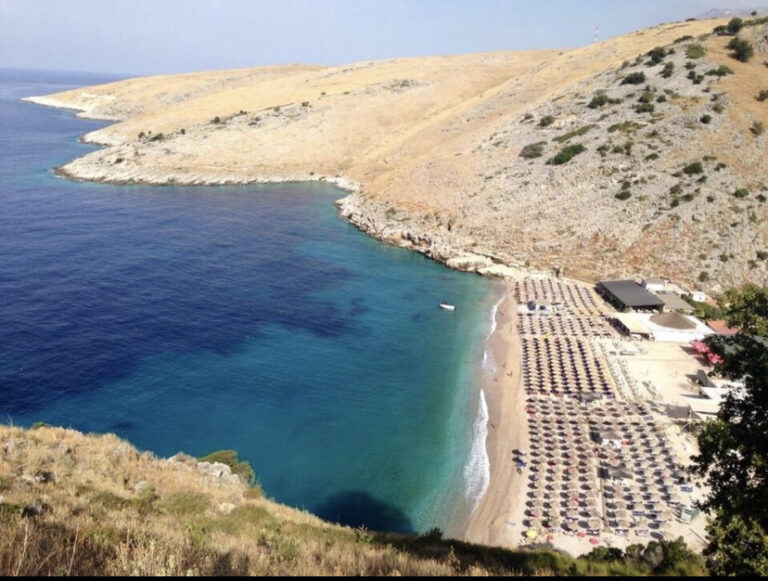
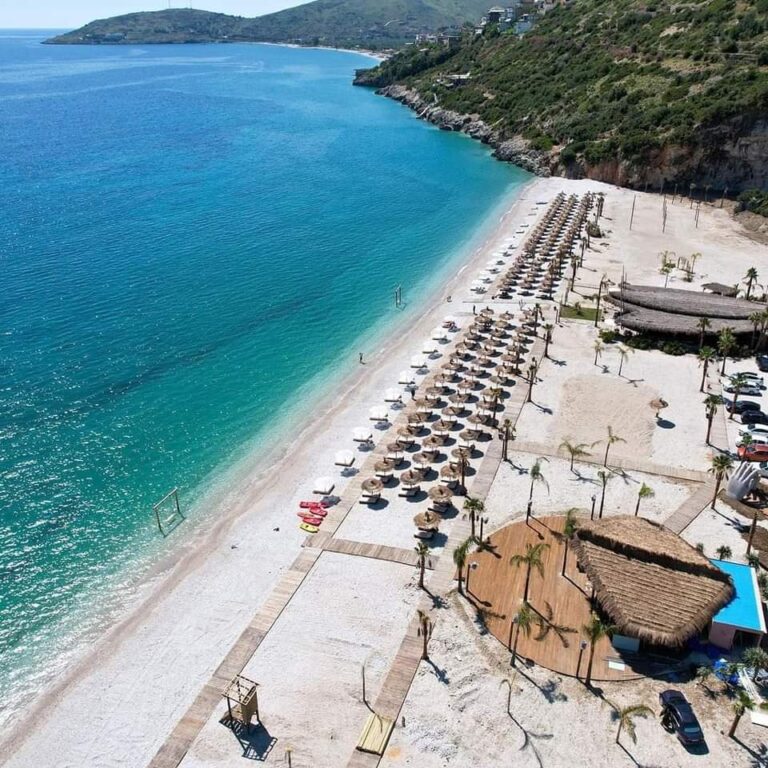
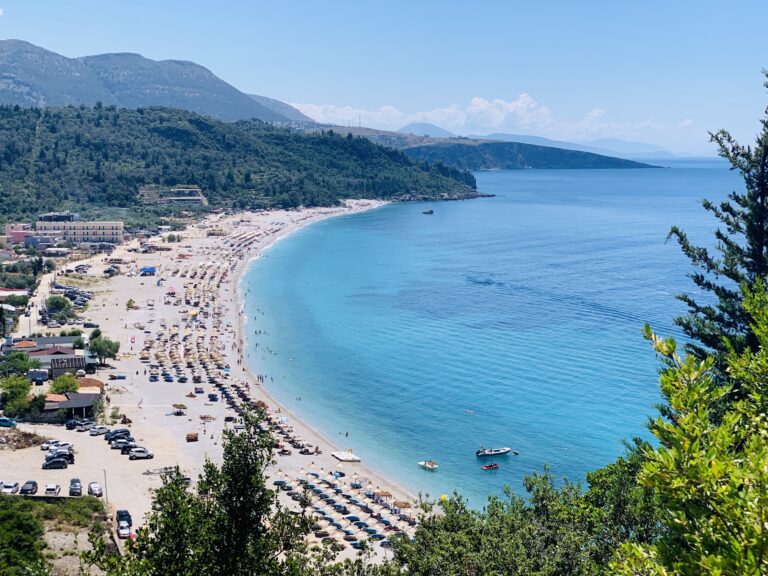
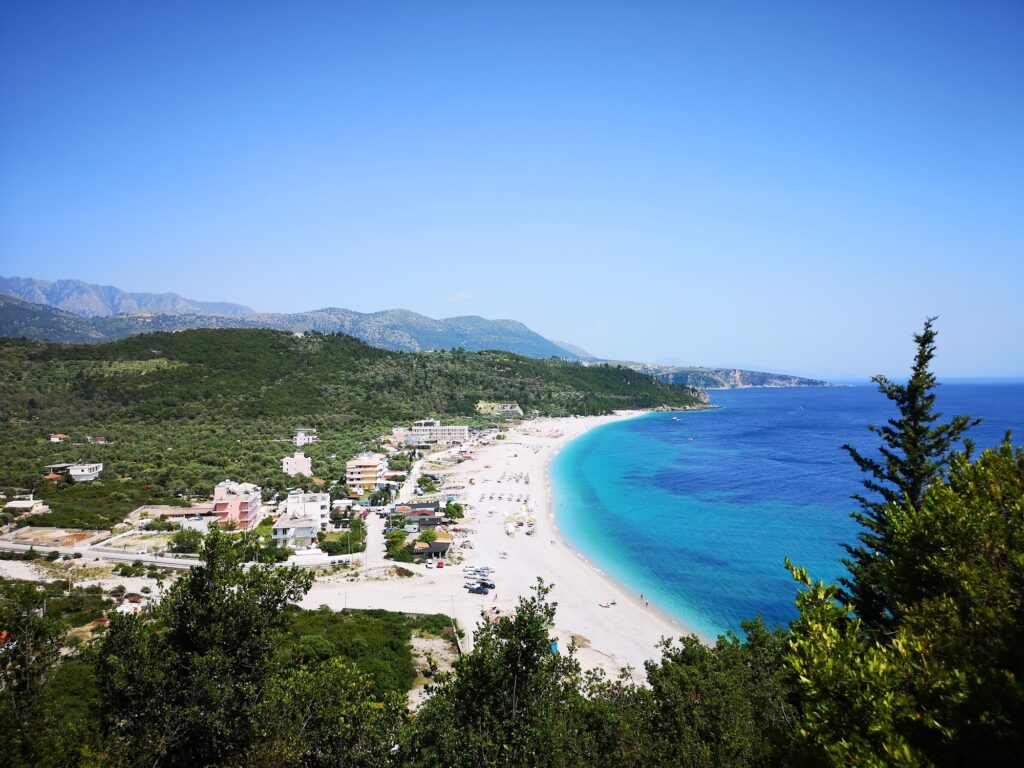
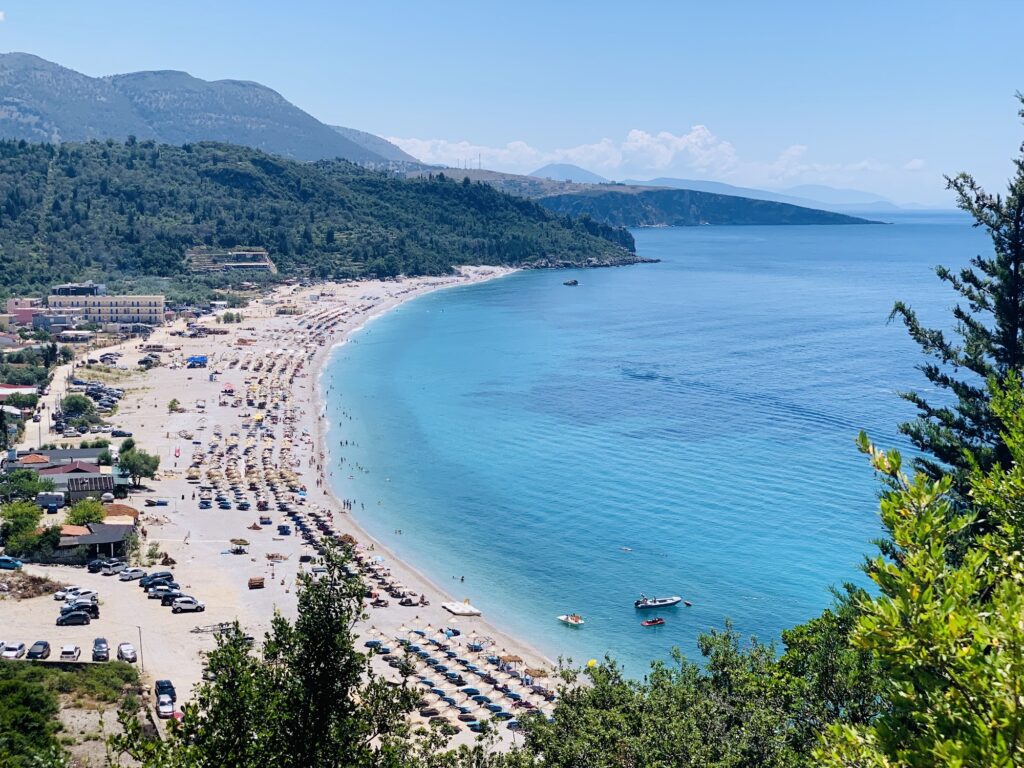
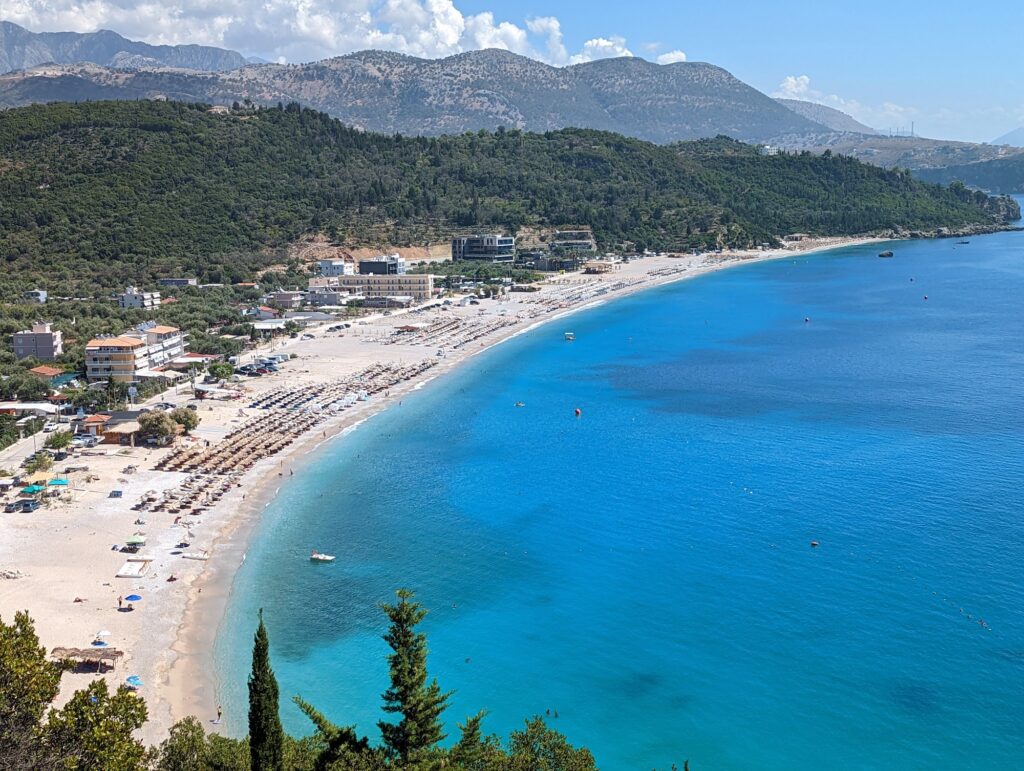
Livadhi Beach is just north of the town of Himarë, the longest stretch of beach in the Himarë area. It is a pebble beach — not the golden sand that some listing sites optimistically describe, but the smooth pebble and fine shingle characteristic of the Albanian Riviera’s coves, with the white and silver colour against the Ionian blue that photographs as dramatically as sand when the light is right. The entrance to the water is quite steep, which makes it less suitable for small children who cannot swim — the depth increases quickly from the shoreline. Umbrellas and loungers line the beach but there is also plenty of free space further down.
The water is clean. The view of the Ionian Sea from the bay — the open horizon to the southwest, the hills covered in olive groves descending to the shore on both sides — is the specific quality that makes the beach worth the mountain road drive. The Himarë Castle on the hill above the old town is visible from the beach’s southern end as the elevation rises between the beach zone and the town.
Getting There: Mountain Road from Himarë, Fully Asphalted, Parking Along the Shore
Livadhi Beach is approximately 3 kilometres north of Himarë town centre — the distance covered on the asphalted mountain road that winds down from the main coastal highway to the beach zone. The road is fully paved and accessible by standard car; the descent provides the progressive reveal of the bay below that the mountain road approach produces.
By public transport, buses on the Sarandë–Vlorë coastal route pass the Himarë area and can drop passengers at the main road exit for Livadhi, from where a 2-kilometre walk or a short taxi ride brings visitors to the beach. A taxi from Himarë centre takes approximately 5 minutes and costs 500 to 800 lek (approximately €5 to €8).
Parking is available along the beach-front road directly above the shore. Arriving early in peak season (July–August) for parking is the consistent practical advice — the road fills with parked cars and the access becomes restricted by mid-morning on the busiest days.
The Beach: Pebble, Not Sand, Steep Entry, Deep Fast, Sunbeds 1,000 Lek, Free Space Further Along
The beach surface is pebble and coarse shingle, not sand. Water shoes are the practical requirement both for the hot pebble surface in midday sun and for the steep sea entry, which transitions quickly from pebble to deeper water without the extended shallow zone that sandy-bottom beaches provide. The depth increases quickly — children who cannot yet swim need to be supervised constantly from the waterline.
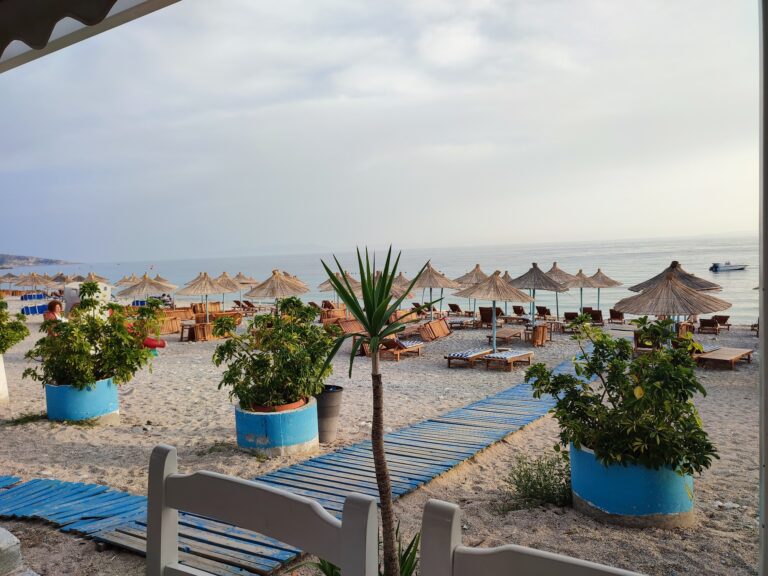
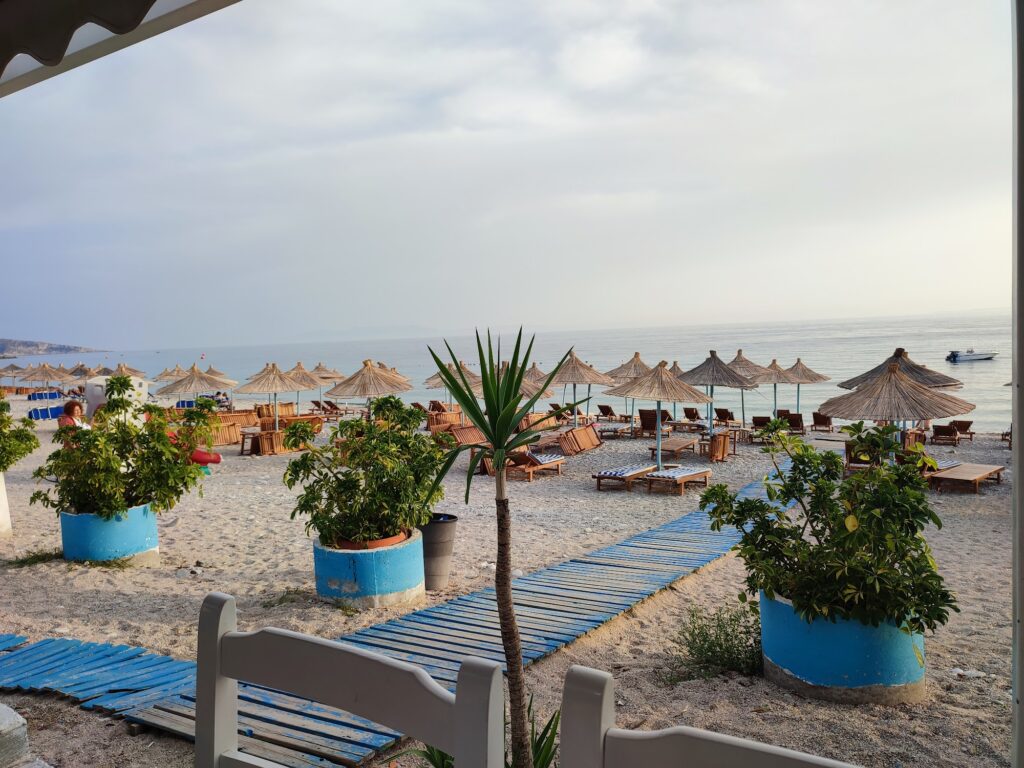
Sunbeds cost 1,000 lek per set (approximately €8 to €10) including umbrella — a consistent price across the beach bar operations. Cash is strongly recommended; card payment is accepted in some but not all establishments. The free space further along the beach — beyond the organised sunbed sections — is the public zone where visitors with their own towels can find position.
The water quality is the beach’s primary asset: clean, clear, deep Ionian blue, with the specific clarity that the open sea position and the pebble seabed (no sand suspension) produces. The small rock formation approximately 50 metres offshore in the southern section is the navigation landmark and the snorkelling spot.
The Development Question: Unsightly New Buildings, Prime Riviera Location, Time Pressure
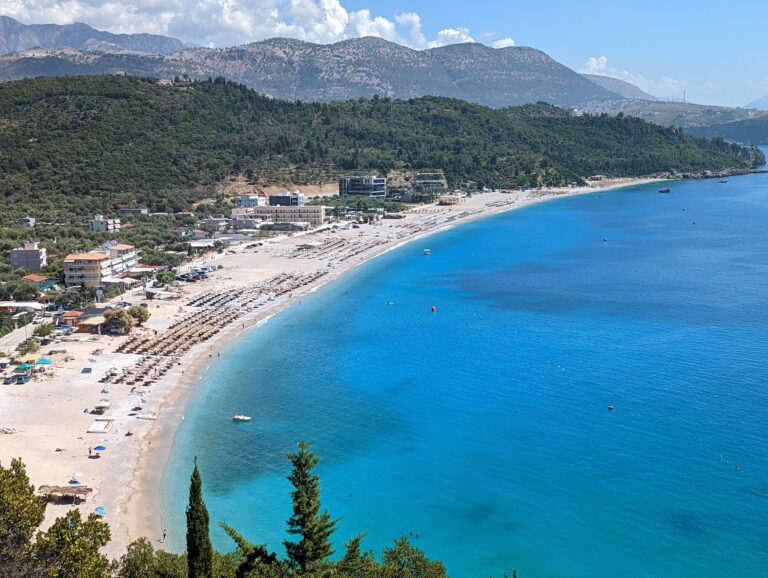
The honest account of Livadhi Beach acknowledges that development pressure is visible. This is not a criticism unique to Livadhi — it applies to the entire Albanian Riviera’s rapid transition from undiscovered to discovered coastline. The Albanian Riviera has been consistently identified by international travel media as one of Europe’s most significant emerging beach destinations, and the decade from 2015 to 2025 has seen construction activity across every major beach between Vlorë and Sarandë.
At Livadhi, the construction is closest to the beach and most visible from it. Several new hotel and apartment buildings have been completed or are under construction in the beach zone, and their visual impact on the olive grove and hillside setting is the specific problem that Lonely Planet documents. The advice to visit sooner rather than later is consistent across contemporary accounts.
Himarë Castle: The 2,000-Year Fortification Above the Town
Above Himarë old town, the Castle of Himarë is the most significant cultural site within easy reach of the beach. The fortress has a history spanning 2,000 years — from the Illyrian foundations through the Byzantine, Norman, Aragonese, Venetian, and Ottoman occupations that the Albanian Riviera’s strategic position on the Adriatic-Ionian transit route generated. The old town within and around the fortress walls is the intact historic settlement that has not been developed as extensively as the beach zone below — narrow stone lanes, traditional houses, the Church of All Saints with frescoes, and the view of the Ionian Sea from the fortress walls.
The fortifications at Himarë are large and important — the town’s history is intertwined with the Himariots, the community of Albanian and Greek Orthodox Christians who maintained a distinct cultural identity under the Ottoman Empire for centuries, contributing to both Albanian and Greek cultural and military history.
The Llogara Pass: The Mountain Road Above the Riviera
The Llogara National Park and Llogara Pass — approximately 40 kilometres north of Himarë along the SH8 coastal highway — is the specific mountain landscape that frames the Albanian Riviera from above. The pass reaches 1,027 metres above the coast, with the view from the peak looking down at the full coastline sweep from Vlorë Bay in the north to the coves and headlands of the southern riviera. The hairpin road descent from the pass to the riviera below is the dramatic arrival that the coastal road approach from Vlorë provides.
The pine forests of Llogara National Park above the pass transition to the olive and Mediterranean maquis of the riviera below — the vegetation gradient from mountain to coast covers the full range of Albanian highland and coastal ecology in a single descent.
Himarë Town: The Promenade, the Greek Community, and the Boat Trips
Himarë town has two beaches: the northern Livadhi (the longest) and the main town beach directly in the centre with its promenade of cafes and bars. The town is home to a significant Greek Orthodox community — Himarë is one of the main settlements in the Albanian Riviera’s traditionally Greek-speaking zone, and the dual Albanian–Greek identity of the area is expressed in the churches, the community institutions, and the cultural calendar.
Boat tours departing from Himarë cover the coastal coves, the Pirate’s Cave along the cliff coastline, and the approach to Gjipe Beach from the sea — the specific activity that makes the combination of a Livadhi beach day and an afternoon boat tour to Gjipe Beach Albanian Riviera the standard Himarë area programme.
Livadhi Beach near Himarë is Himarë’s longest beach — pebble, steep sea entry, deep fast, 1,000 lek sunbeds, cash recommended, free space further along, development pressure visible, clean Ionian water, the mountain road approach fully asphalted, the Himarë Castle above the old town on the hill, and the boat tour to Gjipe Canyon departing from the town pier.
Drive the mountain road down from Himarë. Arrive early for parking. Bring cash.
The water is clear. The buildings behind it are the problem.
Map
Sorry, no records were found. Please adjust your search criteria and try again.
Sorry, unable to load the Maps API.
Near by places: