Murići Beach Skadar Lake: Montenegro's Wild Freshwater Shore
Profile
Murići Beach, Skadar Lake: The 600-Metre Freshwater Shore Where Donkeys Rest on the Sand and Plastic Washes in from Albania
Montenegro | Donji Murići | Bar Municipality
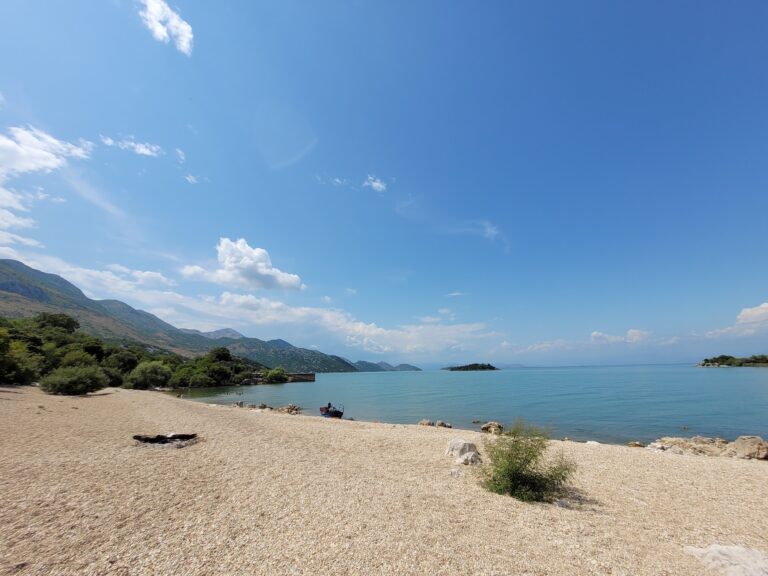
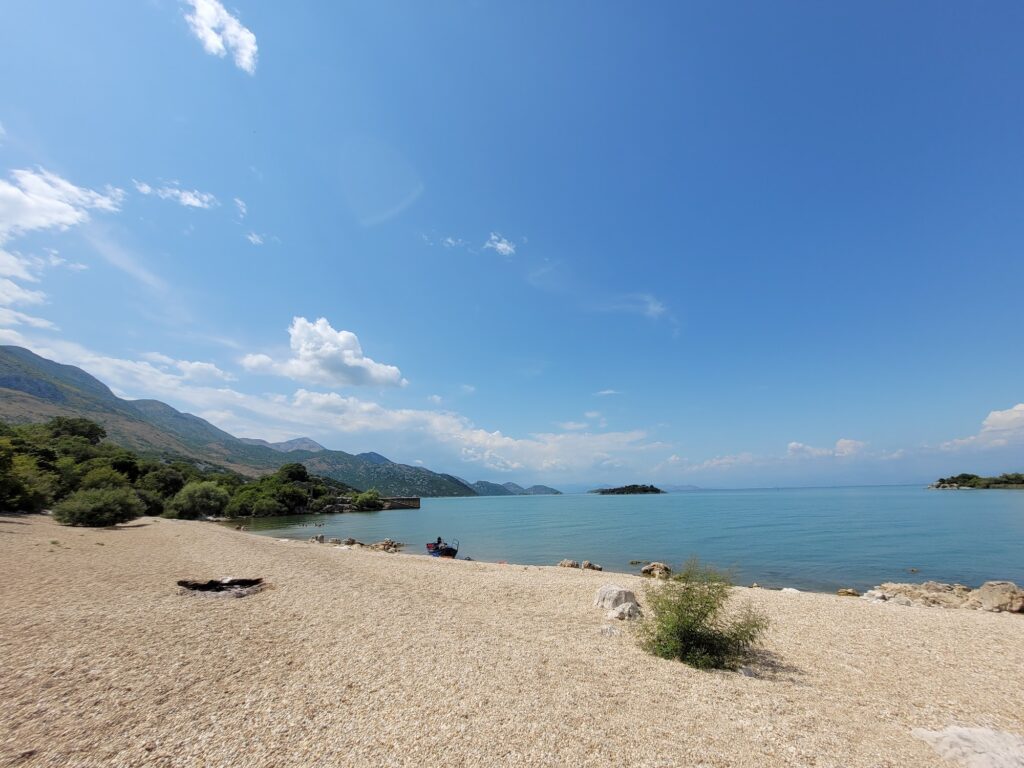
Murići Beach is best described as a wild and untouched beach without toilets, showers, and changing cabins. It is one of those beaches where the occasional donkey or goat lies next to you.
This is not a criticism of the beach. It is the specific description that separates Murići from every other beach covered in this series. The donkeys and cows that graze at the lake’s edge are residents of the village above, coming down to drink and rest in the shade of the old oak and chestnut trees. There are no toilets because the beach has not been developed for organised tourism. The water is clean and warm — reaching 30°C in the height of summer — because it is a protected national park lake with no industrial runoff. The freshwater well on the beach has served visitors for generations and provides the drinking water that visitors need because no refreshment kiosk exists here other than the restaurant.
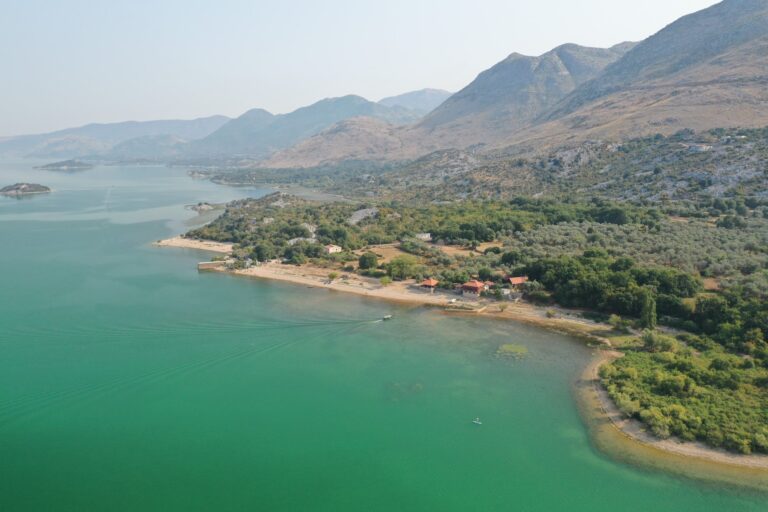
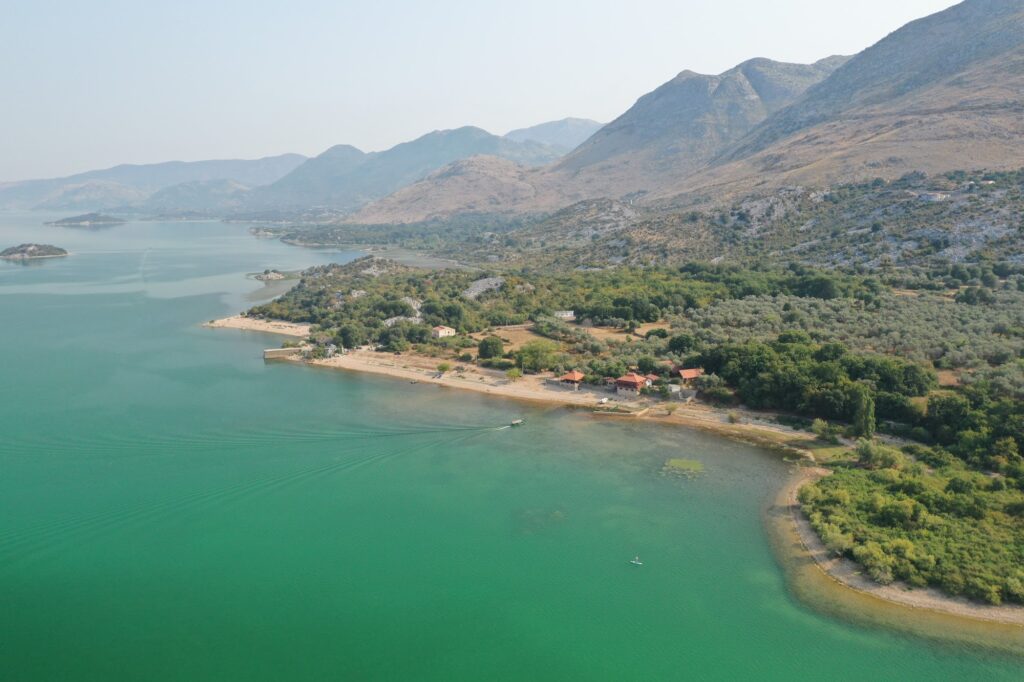
Murići Beach is the largest beach on the Montenegrin side of Skadar Lake — a 560 to 600-metre sandy shoreline beneath the village of Donji Murići on the lake’s southwestern shore. The shore consists of two sweeping crescents of beige pebbles and stones overlooking Beška Island and its ancient monasteries. The water is typically clean and reaches a bath-like 30°C during the peak of summer. The surrounding landscape — the forest of old oak and chestnut trees, the lake stretching toward the Albanian mountains, the island silhouettes offshore — is the landscape that exists because Skadar Lake National Park has kept the surrounding slopes undeveloped.
The one honest qualification: from autumn through spring, significant plastic waste washes onto the shores from Albania via the lake’s current system. The peak summer months of July and August are the best time to visit; the lake water reaches its warmest, the waste has been cleared, and the wildlife is at its most active. Off-season visits require accepting the plastic reality.
Getting There: Narrow Serpentine Road Only — Not for Beginners, No Public Transport, 22km from Virpazar
Murići Beach is 22 kilometres from Virpazar — the small lakeside town that serves as the national park’s gateway — along a narrow serpentine road that climbs into the Rumija massif before descending steeply to the lake’s edge. The road is tarmac but single-lane in many sections, with passing places carved into the rock face, and the serpentine sections descending to the lake require careful navigation in low gear.
Whether you approach from Virpazar or climb the mountain pass from Bar, the drive to Murići is breathtaking. This is a classic Montenegrin “serpentine” road: narrow, winding, and largely single-lane. It is a route that demands focus but rewards with views that are arguably the finest in the country. The Stegvaš viewpoint above the lake on the Bar approach offers a panorama from almost a kilometre above sea level across the full expanse of Skadar Lake.
Local warning: this route is not recommended for beginner drivers or those in large motorhomes.
There is no public transport to the beach. The options are car, taxi (approximately €25 to €35 from Bar, 45 minutes), private boat from Virpazar Marina (45-minute cruise through the lily pads), or kayak from Virpazar (a full-day paddling commitment). The boat from Virpazar is the most scenic arrival — passing the lake’s characteristic floating water lilies and the ruined Besac Fortress above the town before the open lake view opens toward the southern shores.
The Water: 26°C Average, 30°C Peak, Clear, Freshwater, No Jellyfish, No Salt
The water temperature at Murići averages 26°C through the summer months, reaching 30°C at peak. This is the specific quality of Skadar Lake swimming that no Adriatic beach provides: warm, still, freshwater with no salt, no jellyfish, no sea urchins, and no waves. The water is warmer than the Adriatic in June and remains warm into September. The clarity — where rare waves stir no sediment — means the visibility is excellent close to shore, with freshwater plants and fish visible under the surface.
The lake is a protected national park and the water quality is maintained to the standards that the UNESCO nomination process (the lake was nominated for World Heritage status in 2011) and the national park management require. Mosquitoes are present and active in the evening and early morning — the specific practical issue that the lake’s reed beds and still water produce, and for which repellent is necessary rather than optional.
Water snakes are present in the lake shallows — the grass snake (Natrix natrix) and the dice snake (Natrix tessellata) are both common in Skadar Lake and are harmless to humans, but encounter with them in the water is common and should be anticipated.
The Freshwater Well and the Restaurant
A freshwater well on the beach provides clean drinking water — a genuine practical utility at a location without any commercial infrastructure, and the source of the water that visitor accounts recommend bringing bottles to fill.
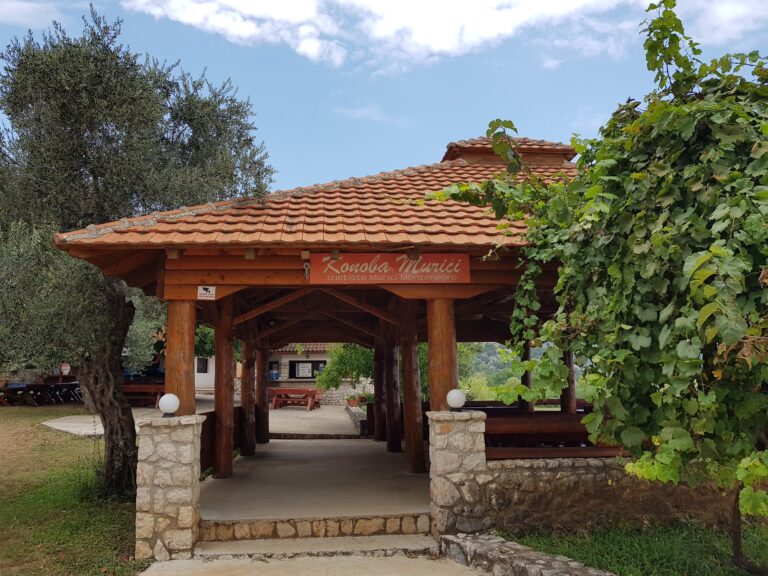
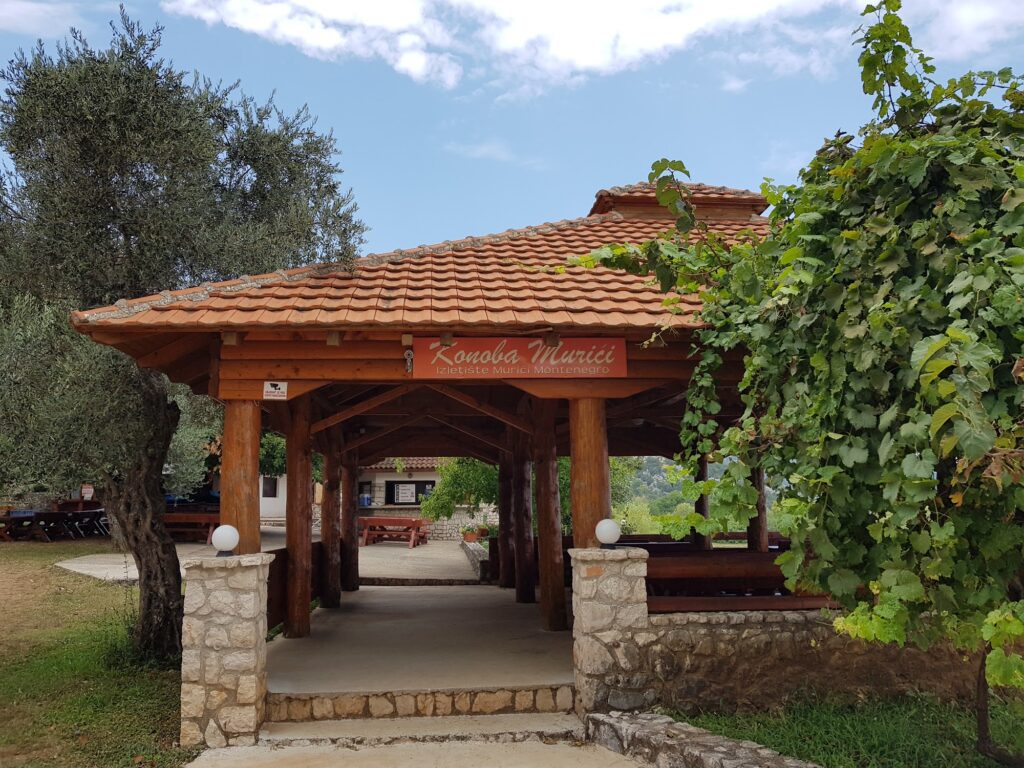
The Murići Restaurant — a rustic stone establishment perched above the sand — is the one commercial presence at the beach. It serves the specialties of the lake: smoked carp, lake fish tava (a slow-cooked dish of lake fish with onions and paprika), eel prepared in the Montenegrin lakeside tradition, and the local wines of the Crmnica wine region that surrounds the lake’s northern and western shores. The terrace view across the water to Beška Island is the dining position that the restaurant’s location provides and that no coastal restaurant can replicate — the lake horizon, the island monastery silhouette, the reed beds in the foreground.
Beška Island and the 14th-Century Orthodox Monasteries
Beška Island is visible directly from the beach — two 14th and 15th-century Orthodox churches on the island, the Church of St. George (dating from 1440, founded by Đurađ Branković, the last Serbian despot) and the Church of the Holy Trinity (15th century), both still intact and accessible by the boat tours that depart from Virpazar and from the beach’s small port.
The island is one of the most significant medieval religious sites on Skadar Lake — less visited than the more famous Vranjina and Kom monasteries but more distinctively positioned, sitting in the open water with the Albanian mountains behind it and the reed beds between the island and the shore framing the view from the beach.
Skadar Lake: The Balkans’ Largest Lake, Shared with Albania, a UNESCO Candidate
Lake Skadar is the largest lake in the Balkans, divided between Montenegro (approximately one-third) and Albania (two-thirds). It was part of the ancient Slavic kingdom of Zeta in the 13th century and was nominated for UNESCO World Heritage status in 2011. It is a Ramsar-listed wetland of international importance — the lake holds Europe’s largest breeding colonies of the Dalmatian pelican and the pygmy cormorant, and the surrounding reed beds and karst terrain support hundreds of bird species across the annual migration calendar.
The pelicans are the most immediately striking species from the beach — large, white, and distinctive in flight, present throughout the summer and visible from the shore on most mornings. The Dalmatian pelican is critically endangered globally; Skadar Lake is one of its last significant breeding sites.
The Virpazar Context: Boat Cruises, Wine, and the Besac Fortress
Virpazar is the national park gateway — a small village of stone houses and a waterfront café strip at the point where the Bar–Podgorica railway crosses the lake. Boat tours depart from the marina, covering the monasteries, the pelican colony, the water lily channels, and the southern lake shore that includes the Murići approach. The restaurants serve the same lake fish specialties as the Murići restaurant — carp, eel, bleak — alongside the Vranac red wines from the surrounding Crmnica region.
The Besac Fortress above Virpazar is the specific overland hiking destination that the boat-cruise alternative bypasses — the 15-minute climb from the village to the fortress produces the elevated view of the lake that the serpentine road to Murići also provides from a different angle.
Murići Beach on Skadar Lake is the 600-metre freshwater shore 22km from Virpazar — the largest beach on the Montenegrin side of the Balkans’ largest lake, no toilets, no showers, no changing cabins, donkeys and cows at the water’s edge, 30°C lake water in peak summer, mosquitoes and water snakes in the shallows, off-season plastic from Albania, a freshwater well, a restaurant with smoked carp and lake tava, and Beška Island’s 14th-century monastery on the horizon.
Drive the serpentine road carefully. Fill your bottles at the well.
Visit in July or August. The water will be bath-warm and the plastic will be gone.
Map
Sorry, no records were found. Please adjust your search criteria and try again.
Sorry, unable to load the Maps API.
Near by places: