Žukotrlica Beach Bar: Pine Shade on the Šušanj Shore
Profile
Žukotrlica Beach, Šušanj, Bar: The 1km Pine-Shaded Pebble Shore Named for a Weaving Plant
Montenegro | Šušanj | Bar Municipality
The name Žukotrlica requires unpacking. The beach was named from two words: žukva — the Spanish broom, a bushy Mediterranean plant with small yellow flowers — and trlili — meaning to soak or submerge. The Spanish broom was submerged in the seawater on this beach to soften it, and then prepared for weaving. The practice of soaking plant fibres in seawater to soften them for basket and textile weaving was a common domestic industry throughout the Mediterranean coastal settlements, and the particular spot on this shore where the weavers of Šušanj worked gave the beach its name. The plant is gone from the process — no one soaks broom on the beach for weaving now — but the name remains, carrying the specific domestic history of a coastal settlement in a single compound word.
Šušanj is a small town of 2,630 people, the northern suburb of Bar, adjacent to it from the north. The town is protected on all sides by the forested slopes of Mount Rumija, which means the Adriatic coast here warms up much earlier in the year than more exposed coastlines, and the little wind that the surrounding hills produce makes it attractive from early spring to late autumn.
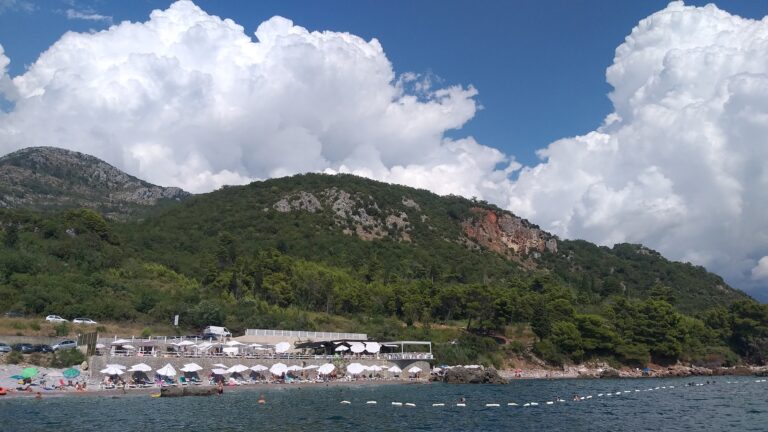
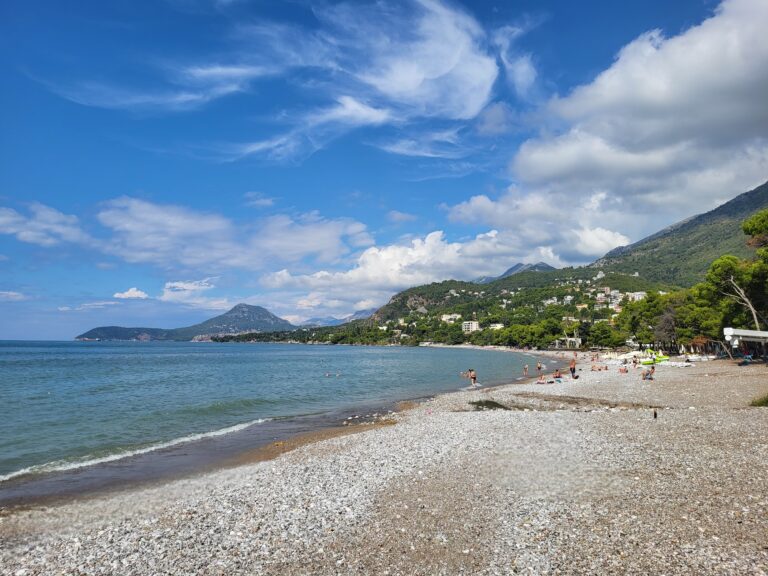
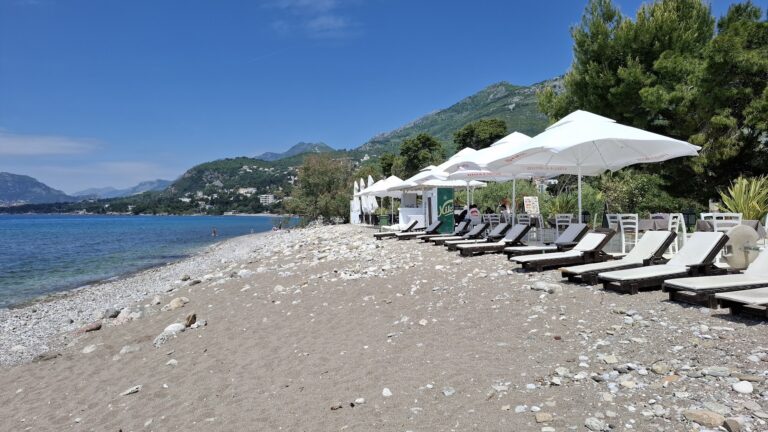
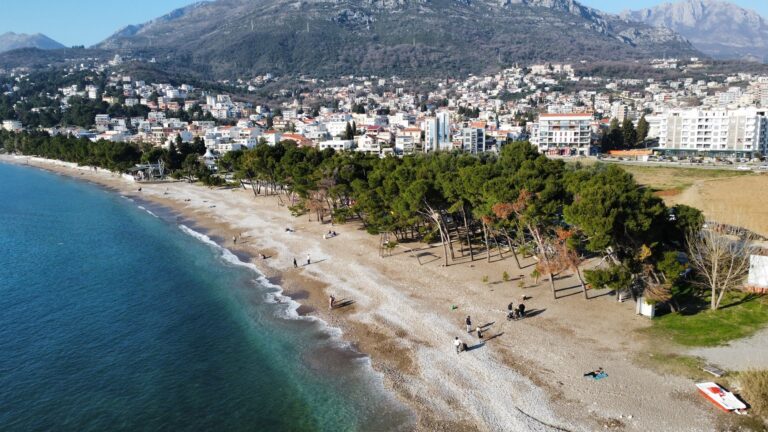
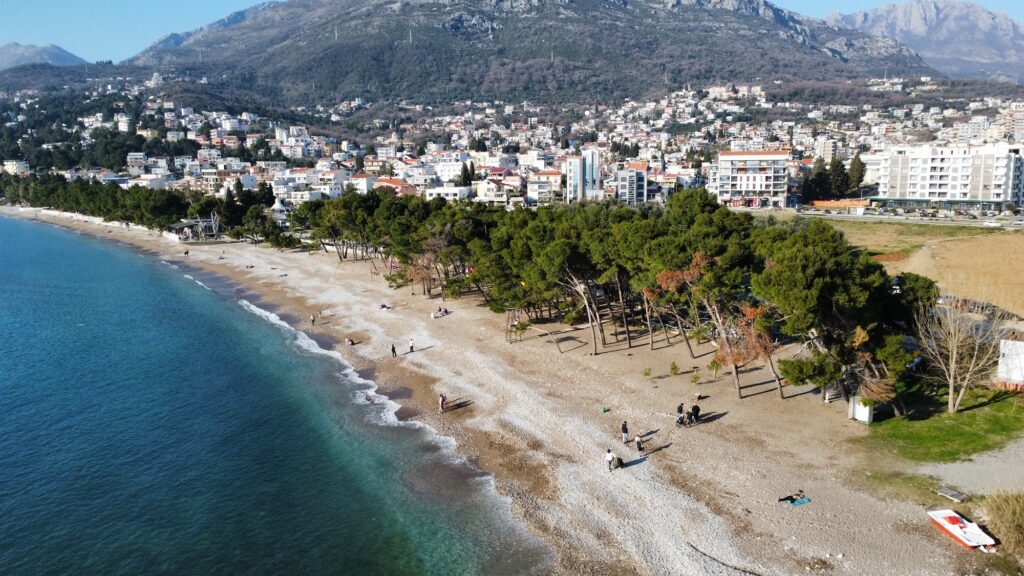
Žukotrlica Beach is approximately 1 kilometre long, composed of shingle and pebbles with a background of pine forest that provides natural shade — the quality that makes it Bar’s premier family beach for all-day swimming without the heat. Young Aleppo pines were recently planted to supplement the existing forest, extending the shade canopy that the original pine grove provides.
Getting There: Train to Šušanj Stop, by Car with Large Free Parking, or 15-20 Minutes on Foot from Bar
The Bar–Podgorica railway — the spectacular mountain line that descends through the Morača canyon, crosses the Mala Rijeka viaduct (the highest railway viaduct in the world at the time of its construction), and arrives at the Bar coast — has a stop at Šušanj. The station is a five-minute walk from the beach. This is the specific transport provision that makes Žukotrlica accessible from Podgorica and from the north without a car — a practical option for visitors arriving by train or wishing to avoid the Bar town parking.
By car, a large free parking lot is located directly behind the beach next to the highway — one of the most practically arranged parking facilities on the Bar Riviera, noted consistently in visitor accounts as a major convenience advantage. The beach is also accessible from Bar town centre by the coastal promenade walk: 15 to 20 minutes northward along the waterfront from the main Bar city beach.
By local bus, the routes connecting Bar and Sutomore pass through Šušanj and serve the beach area.
The Beach: Pebbles, Rocky Seabed, Pine Shade to the Water’s Edge, 1km Long
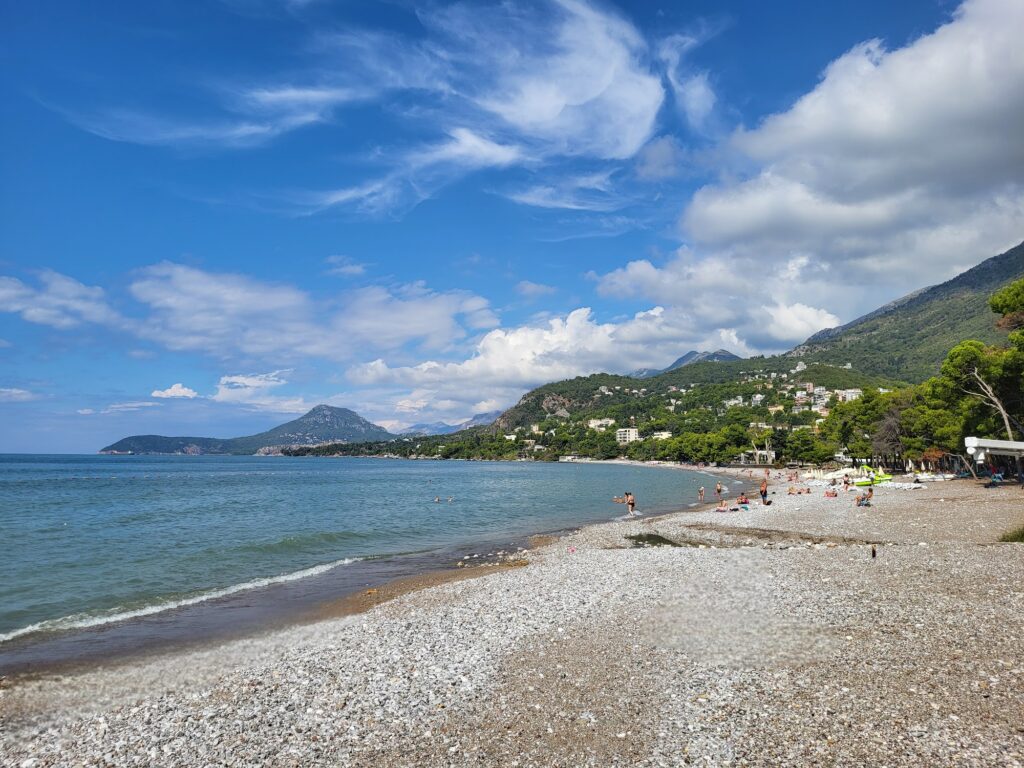
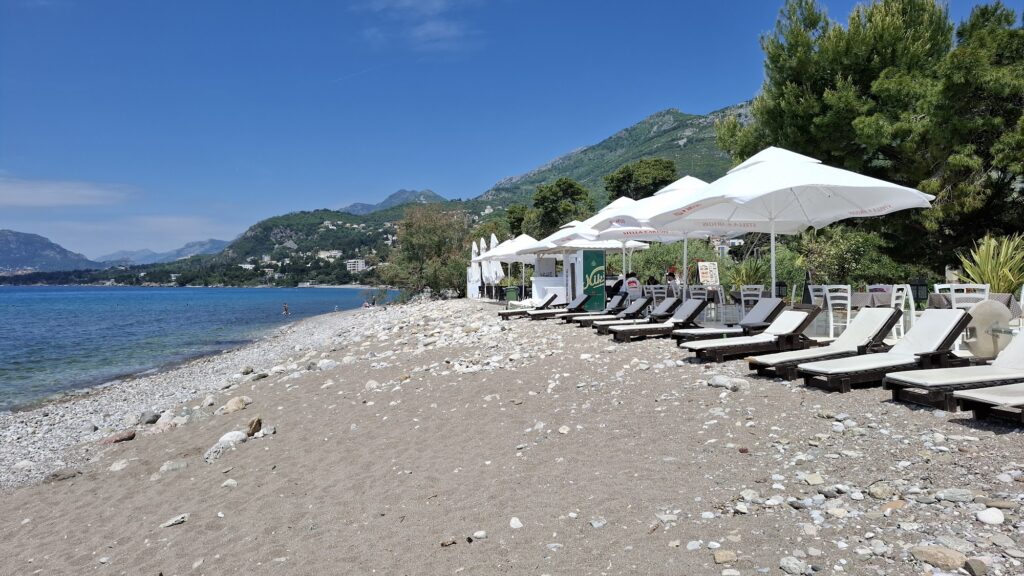
Žukotrlica is covered with rocky pebbles and its background is overgrown with Mediterranean vegetation and pine forest. The seabed is rocky, interspersed with some sizeable boulders — water shoes with thick rubber soles are the specific practical requirement, available to purchase at the beach shop or the local market. The sea floor slope is gentle, providing a smooth transition into the crystal-clear water.
The pine forest’s proximity to the water’s edge is the specific character of the beach. Unlike the majority of Adriatic beaches where any shade requires umbrella hire and the forest or park is some distance behind the sand, at Žukotrlica the pines reach close to the water, providing free natural shade through the hottest part of the day. The beach is up to 20 metres wide and approximately 1 kilometre long — a contained, shaded strip rather than an exposed expanse.
The water entry is clean and the swimming quality is clear. The rocky seabed requires water shoes but the transparency that the pebble base and the minimal boat traffic produce makes the beach consistently described as one of the cleaner and clearer of the Bar Riviera’s urban beaches.
Mount Rumija and the Wind-Protected Microclimate
The forested slopes of Mount Rumija that surround Šušanj on three sides produce the specific microclimate that the local tourism board describes as one of the settlement’s primary natural assets. The hills block the bora (northeast wind) and the sirocco (south wind) that affect more exposed sections of the Adriatic coast, producing the low-wind conditions that allow the sea to warm earlier in the year — as early as April in good years — and extend the viable swimming season into October and November.
Mount Rumija is a significant natural and cultural landmark of the Bar hinterland. At 1,595 metres, it dominates the landscape between Bar and Skadar Lake, and its peak is the site of the Church of the Most Holy Theotokos — the pilgrimage church where King Nikola I prayed before the First Balkan War in 1912. The view from Rumija’s peak encompasses the Adriatic coast from Albania to the Budva Riviera, and Skadar Lake filling the valley below on the inland side.
The Promenade Connecting Žukotrlica to Bar City Beach
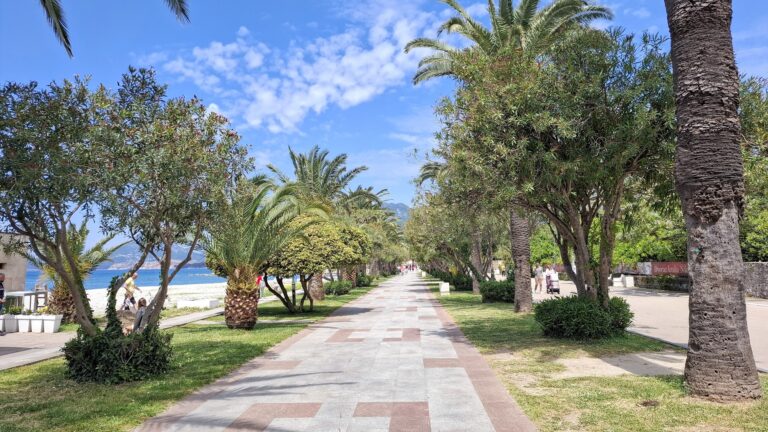
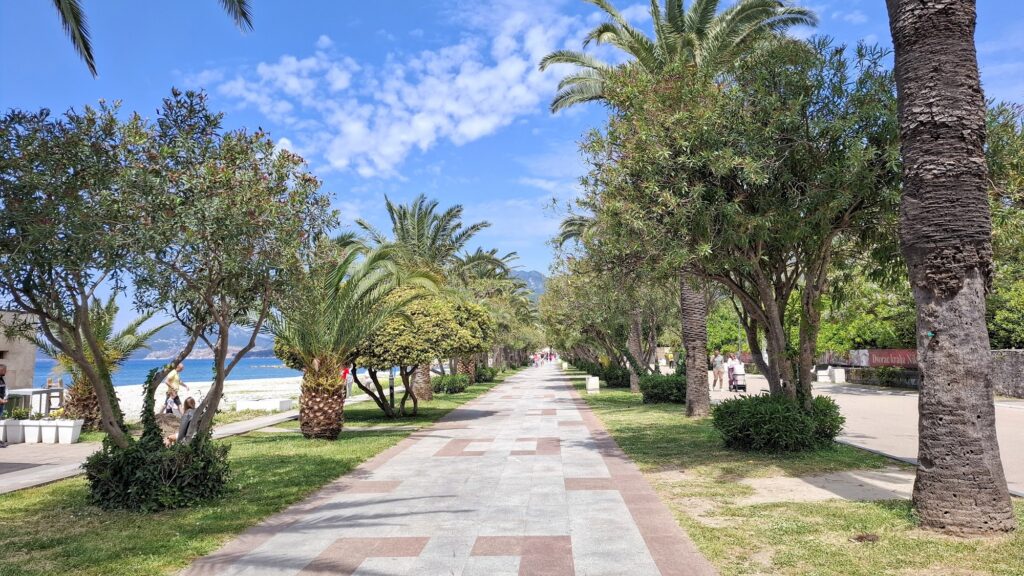
From Žukotrlica beach in Šušanj, a beautifully landscaped promenade leads southward to the beaches of Bar, the port, and the city centre. The promenade is a favourite destination of both tourists and locals.
The promenade between Žukotrlica and Bar city centre is the specific connective infrastructure that makes the beach accessible on foot from Bar town’s accommodation — a 15 to 20-minute flat coastal walk with the sea on one side and the cafés and restaurants of Šušanj’s waterfront on the other. The promenade ends at Bar city beach (Topolica — 300 metres long, more central, accessible but affected by the proximity of the port) and continues through to the town centre and the port area.
The promenade also connects to the main parking lot behind the beach — visitors who park and walk along the sea have the promenade as their return route.
Bar: The Old Town, the Olive Tree, and the Railway
Bar is not only a beach town. The Stari Bar (Old Bar) — the abandoned medieval fortress town 4 kilometres inland from the modern city — is one of the most atmospheric archaeological sites in Montenegro: the ruined cathedral, the mosque, the olive oil press, the stone lanes, and the fortification walls crumbling into the olive groves. Stari Bar was abandoned in 1878 after the Ottoman forces burned it during the Montenegrin–Ottoman War, and it has not been continuously inhabited since.
In an olive grove near Stari Bar grows the 2,000-year-old olive tree of Bar — one of the oldest known olive trees in the Mediterranean, still productive, still bearing fruit that is pressed each autumn. The tree is a registered natural monument and is the single most ancient living organism in Montenegro.
The Bar–Belgrade railway — the line that terminates at Bar and connects the coast to Podgorica, Kolašin, Mojkovac, and Serbia — is the most dramatic approach to Bar from the interior: the route through the Morača canyon and over the Mala Rijeka viaduct (108 metres high, 498 metres long) is among the most spectacular railway journeys in Europe.
Žukotrlica Beach in Šušanj near Bar is the 1-kilometre pebble shore with pine shade close to the water — named for the Spanish broom soaked there for weaving, the train stop adjacent, the Mount Rumija wind protection making it warm from early spring, the rocky seabed requiring water shoes, and the promenade connecting the beach to Bar city centre in 15 to 20 minutes on foot.
Take the train to Šušanj or park free behind the beach. Bring water shoes.
The pine shade is free. The broom is no longer being woven.
Map
Sorry, no records were found. Please adjust your search criteria and try again.
Sorry, unable to load the Maps API.
Near by places: