Buljarica Beach Montenegro: The Riviera's Longest Shore
Profile
Buljarica Beach, Montenegro: The Longest Beach on the Budva Riviera, the Ramsar Wetland Behind It, and the Saint Christopher with a Donkey Head
Montenegro | Buljarica | Budva Municipality
The icon of Saint Christopher in the Church of Saint Nicholas at Gradište Monastery shows the saint with the head of a donkey. This iconographic anomaly — the dog-headed or donkey-headed Christopher is a specific tradition in the hagiographic art of the eastern Mediterranean and the Balkans, found in a handful of churches across Greece, Cyprus, and the former Yugoslav republics — is the specific cultural curiosity that sits on the hill above Buljarica Beach, visible from the northern section of the pebble shore on a clear day. The monastery itself dates from the 11th century. Three churches occupy the compound. The views from the hilltop down to the bay below are the elevated perspective that the beach’s scale can only suggest from the sand level.
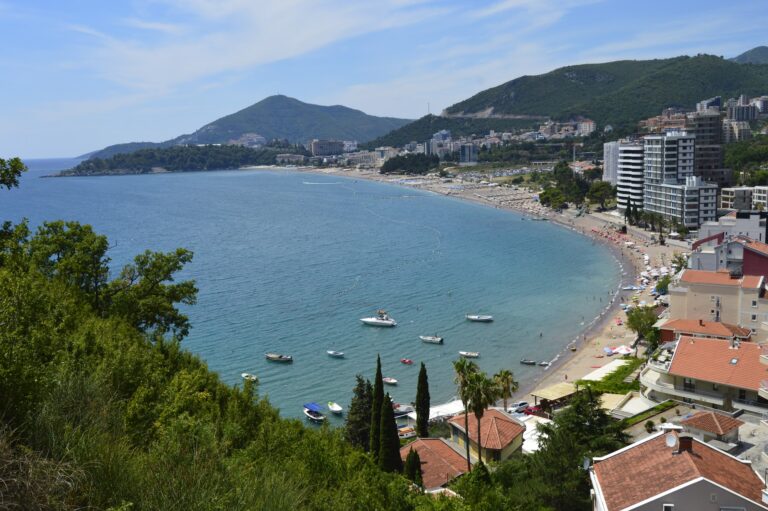
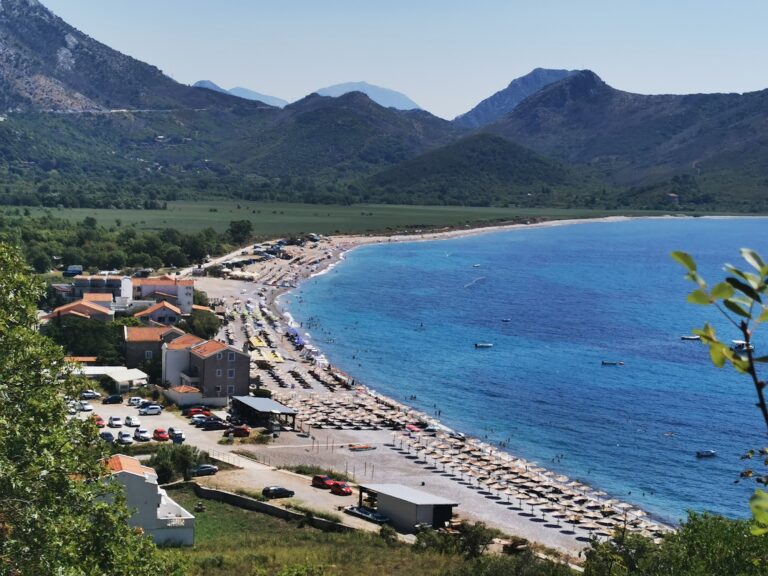
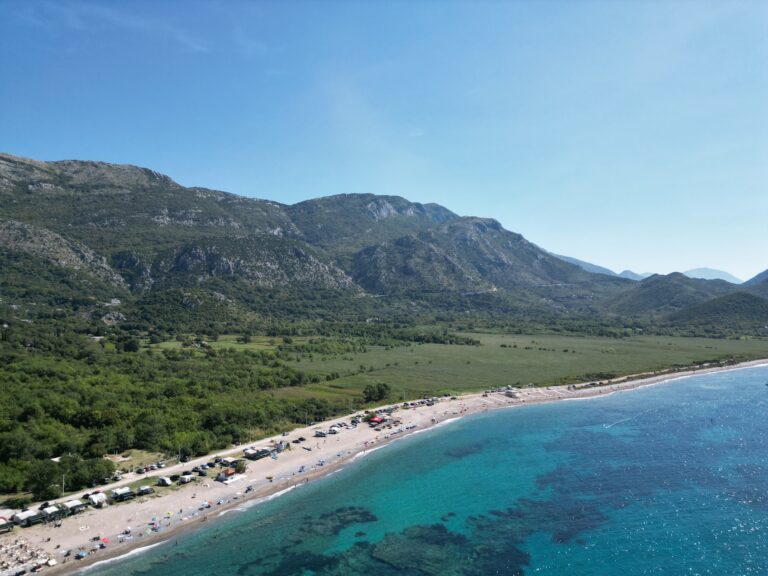
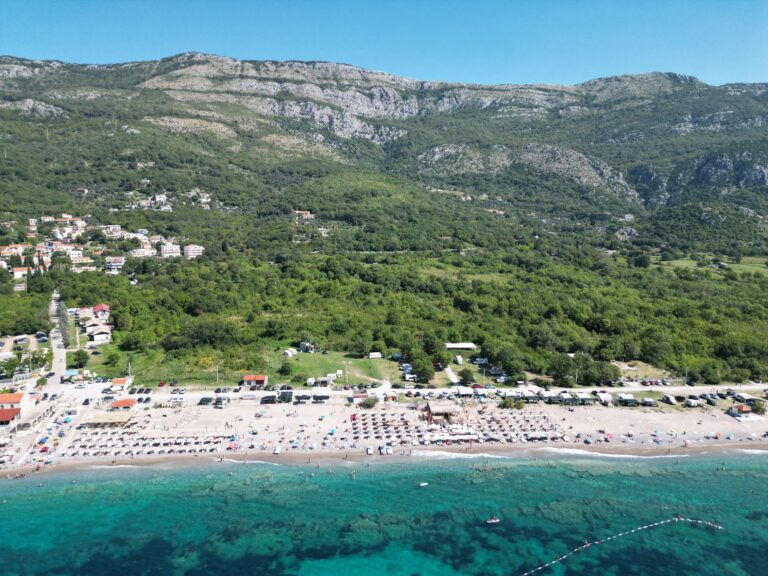
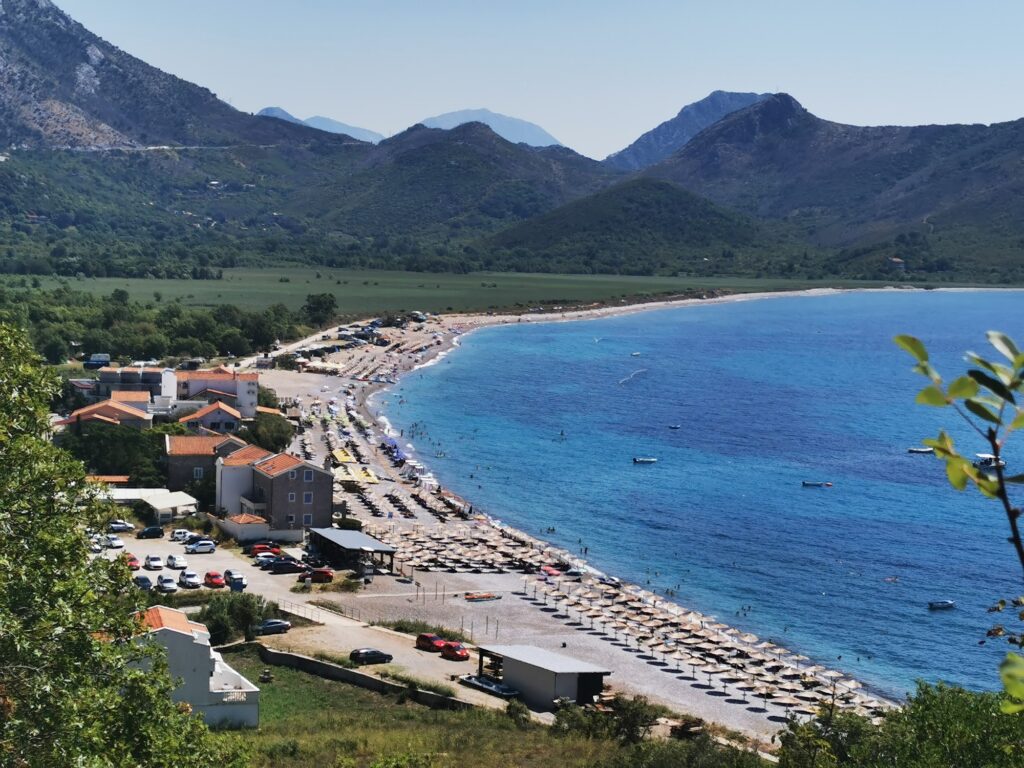
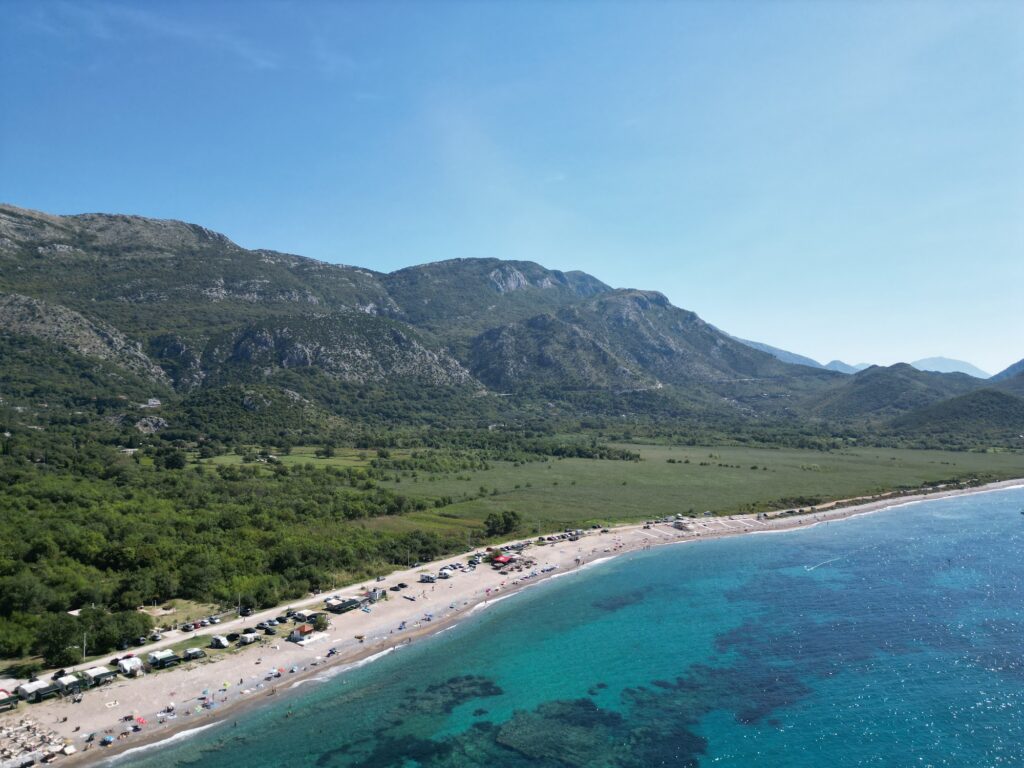
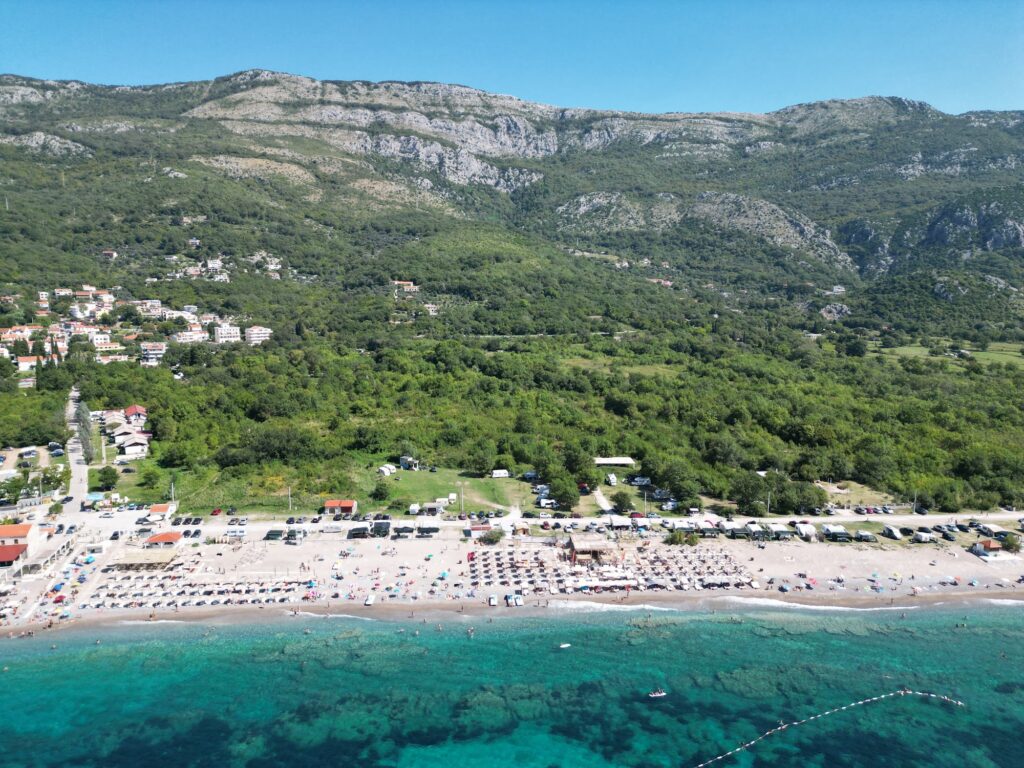
Buljarica is the longest beach on the Budva Riviera, 2,200 metres long, with a wetland directly behind it. The higher parts of the hinterland contain one of the last native Mediterranean forests of oak and ash. The coastal wetland meets three of nine conditions of the Ramsar Convention — qualifying as a unique, rare, and representative wetland on the eastern Adriatic coast, and a key habitat for endangered seabirds and migratory species.
The beach’s ecological significance and its tourism character are in tension — the Ramsar qualification reflects the richness of the ecosystem, while the development pressure that the beach’s length and beauty generate is the “apparent danger” that the ecological surveys identify. For the present, the southern two-thirds of the beach remains largely undeveloped, and the pebble shore with the wetland and the mountain behind it is the specific Budva Riviera beach that feels furthest from the riviera’s resort identity.
Getting There: €2 Boat Taxi from Petrovac, 30-Minute Coastal Walk, or by Car with Free Parking
From Petrovac, the two practical approaches are the coastal hiking trail (30 minutes through the Mediterranean landscape, well-maintained, with the panoramic view of the bay before the descent) and the small boat taxi from Petrovac harbour — €2 each way, running several times daily in summer. The boat approach is the most scenic and the most practical for visitors without a car.
By car from Petrovac, the drive is 5 minutes south on the road toward Bar. Abundant free parking is available directly behind the northern beach section. From the main E65 Adriatic Highway, Buljarica is clearly signposted.
By bus from Budva or Bar, the main coastal bus stops at the Buljarica intersection, from which a 10-minute walk brings visitors to the beach. The bus from Budva takes approximately 40 minutes; from Bar approximately 25 minutes.
The Beach: North-to-South Gradient, Organised to Wild, Nudist Southern End
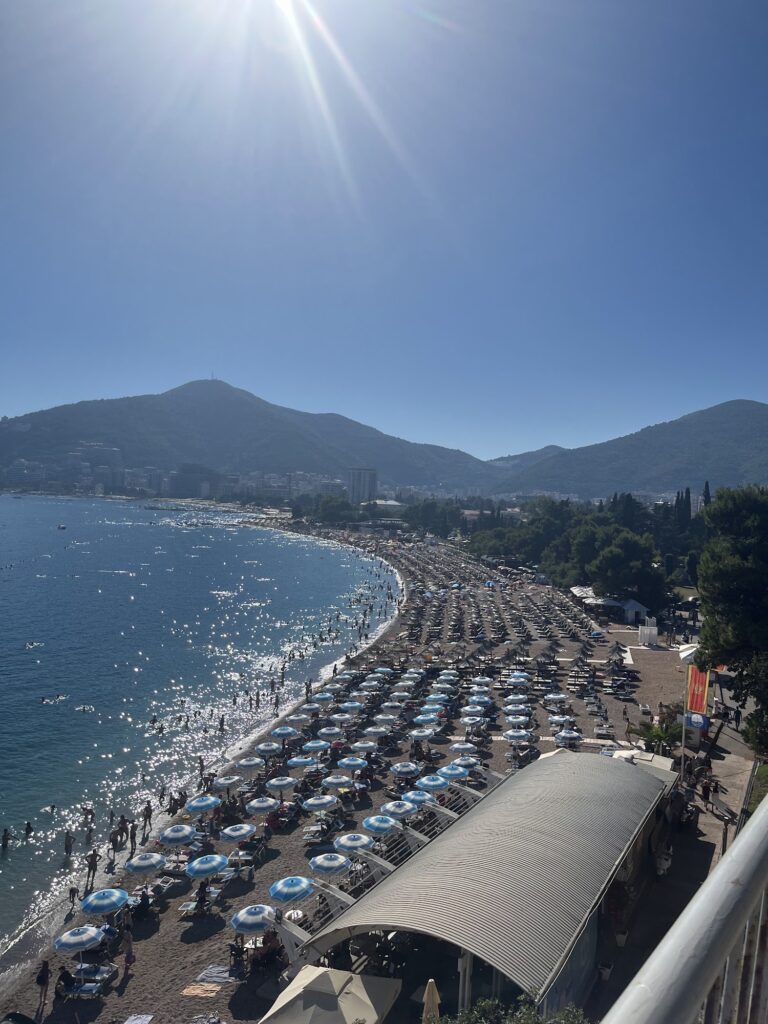
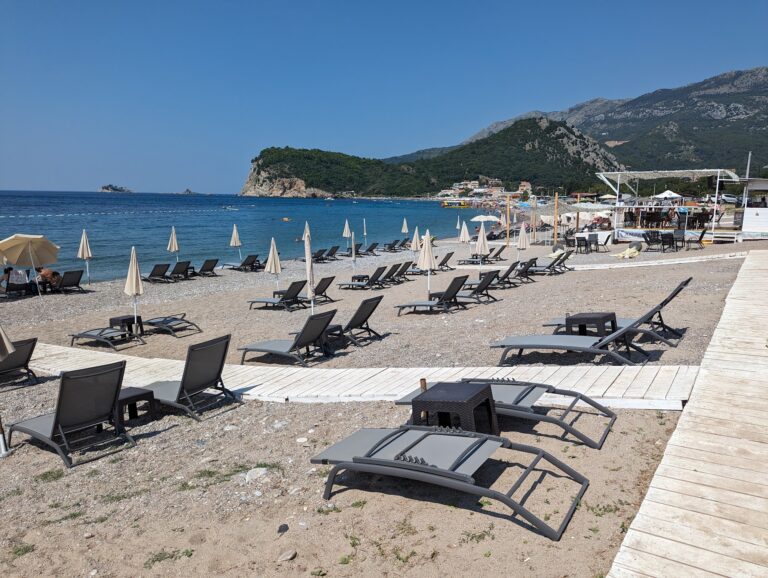
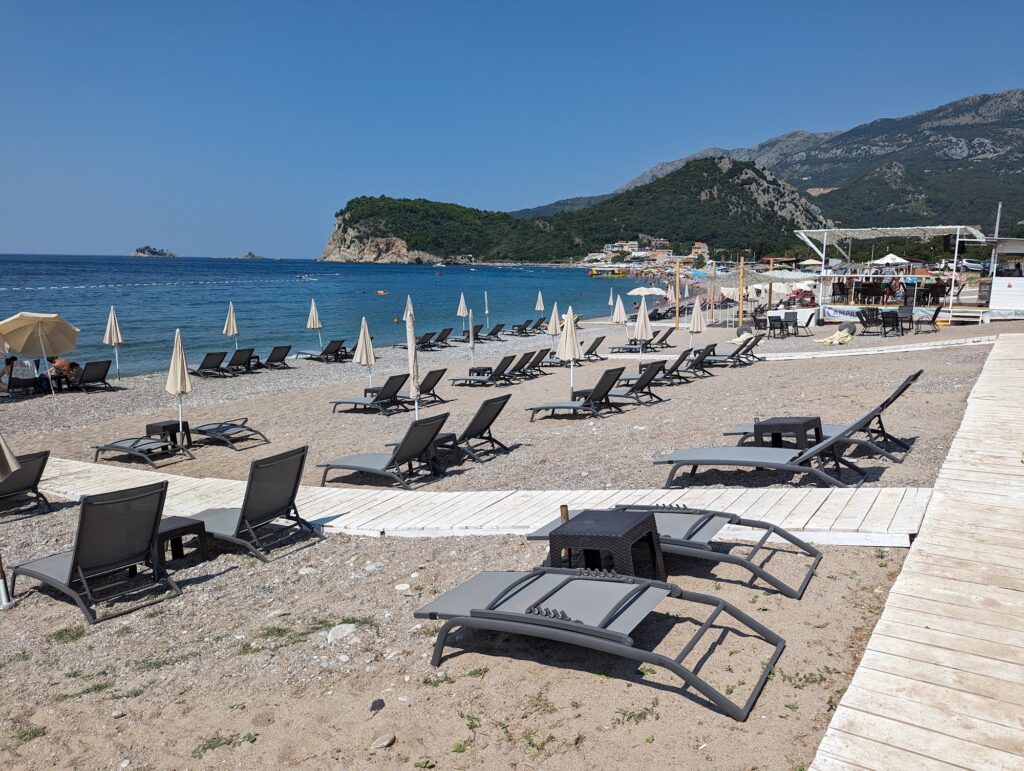
The northern section of Buljarica Beach, where most amenities are located — sunbeds, parasols for rent, cafés and restaurants — is more crowded. For peace and quiet, continue walking further east toward the southern end.
The beach is mostly pebble, with the central section having a sandy patch that is the most sought-after surface for families. The contrast between the two ends of the beach is a consistent theme in visitor accounts: the northern end with its beach bar activity, sunbed rows, and the boat taxi pier; the southern end progressively wilder, more pebbly, less visited, and with the naturist section at the far southern extent.
At one end there is a buzzing beach scene around the bars and cafés where you can also rent sunbeds and umbrellas. On the other part of the beach you can find a peaceful spot to relax. There is also a nudist area at the far end. No jet skis or speed boats operate at Buljarica.
The no-jet-ski, no-speedboat character is the specific peace quality that distinguishes Buljarica from the more organised Budva Riviera beaches. The water is clear without the boat traffic that the more accessible beaches generate, and the sound environment is the ambient sea rather than the combined noise of water sports machinery.
The Ramsar Wetland: Cormorants, Falcons, Kingfishers, and the Marsh Behind the Sand
Buljarica is one of the largest ecological complexes on the Adriatic coast, unique because of the untouched nature and indigenous species. The coast wetlands, where the mixing of salty and fresh water occurs, are one of the rarest habitats in the Mediterranean. The site is recommended for protection for its value as a habitat and stopover for large numbers of endangered seabirds: cormorant, Phalacrocorax pygmeus; levant sparrow hawk; sea falcon (Falco eleonorae); lanner falcon; kestrel; as well as songbirds including great reed warbler, kingfisher, middle spotted woodpecker, rock nuthatch, and sombre tit.
The wetland immediately behind the beach is the habitat that the Ramsar assessment documents — the reed beds, the shallow ponds, the drainage canals, and the swamp ash and oak forest that separate the beach from the agricultural plain behind. The habitat diversity is the ecological wealth: the coast beach, the wetland, the Mediterranean maquis on the surrounding slopes, and the cultivated olive groves of the valley all within walking distance of the same beach.
Birdwatching from the beach fringe — particularly in the morning before the beach day visitors arrive — is the specific activity that the wetland habitat makes possible. The kingfisher is the most immediately rewarding species for visitors with no specific ornithological equipment; the falcons require patience and a clear morning on the surrounding ridge.
Gradište Monastery: 11th Century, Three Churches, the Donkey-Headed Saint Christopher
The Gradište Monastery sits on a hilltop overlooking Buljarica Bay. This 11th-century compound is home to three churches, most notably the Church of Saint Nicholas. Inside, visitors find vibrant frescoes and the famous icon of Saint Christopher with a donkey head — a fascinating glimpse into the region’s unique hagiographic traditions.
The monastery is accessible from the Buljarica valley floor by the path that leads up through the olive groves and Mediterranean maquis to the hilltop. The view from the monastery back down to the 2.2-kilometre beach and the wetland behind it is the elevated panorama that gives the bay’s scale its full visual impact. The monastery is actively used by the local community and is open to visitors outside of services.
The donkey-headed Saint Christopher icon belongs to a specific iconographic tradition: the saint’s monstrous appearance in certain Byzantine and post-Byzantine traditions represents his pre-Christian identity as a giant or a cynocephalus (dog-headed being) who was baptised by Christ and transformed. The tradition is rare and the Gradište example is among the most accessible instances in Montenegro.
Paragliding from Paštrovska Gora: Landing Directly on the Beach
The Paštrovska Gora ridge looms 700 metres above the bay and serves as a premier launch point for tandem paragliding. A descent into Buljarica offers a long-form glide over the Adriatic’s widest horizon, with thermals rising from the Mediterranean grasslands before a soft touchdown directly on the wide pebbled northern beach.
The combination of the 700-metre ridge directly above the beach and the open water approach of the bay below makes Buljarica one of the more dramatically positioned paragliding landing zones on the Montenegrin coast. The tandem flight from the ridge to the beach covers the full ecological sequence of the landscape — mountain, maquis, olive grove, wetland, beach, sea — in a single descent.
Lučice, Petrovac, and the Connected Beach Sequence
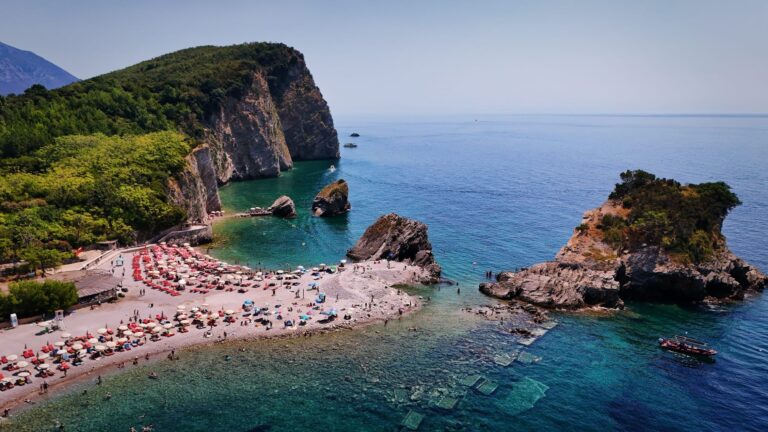
Lučice Beach — the small sandy cove between Petrovac town and Buljarica — is 500 metres from the Buljarica beach at the western end, accessible by the 25-minute coastal path that connects the two. Lučice is the intimate sandy alternative to Buljarica’s vast pebble — a pine forest cove with the two Katič and Sveta Nedelja islands visible offshore.
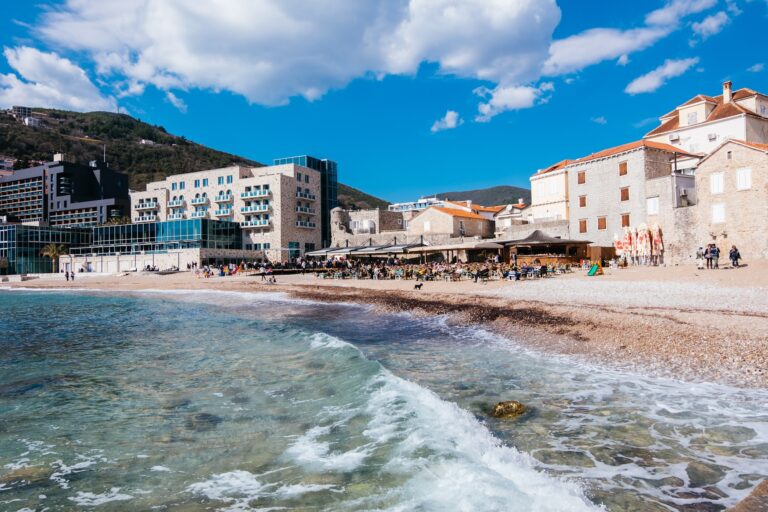
Petrovac town itself — the oldest-established resort on the southern Budva Riviera, with its 600-metre reddish pebble beach and the Lazzaretto island offshore — is the nearest service centre, 2 kilometres north by path or 5 minutes by car.
Buljarica Beach is the longest beach on the Budva Riviera — 2.2 kilometres of pebble cove between the Paštrovska Gora ridge above and the Ramsar-qualifying wetland behind, the 11th-century monastery with its donkey-headed saint on the hilltop, no jet skis, a nudist section at the far southern end, €2 boat taxi from Petrovac, and the paragliding descent from 700 metres.
Take the €2 boat from Petrovac. Walk south past the sunbeds.
The wetland is behind the reeds at the beach edge. The monastery is visible on the hill above.
Map
Sorry, no records were found. Please adjust your search criteria and try again.
Sorry, unable to load the Maps API.
Near by places: