Plaža Lučica Drašnice: Quiet Makarska Riviera Beach
Profile
Plaža Lučica, Drašnice, Makarska Riviera: The Pebble Beach Below Biokovo in a 330-Person Village
Croatia | Drašnice | Makarska Riviera
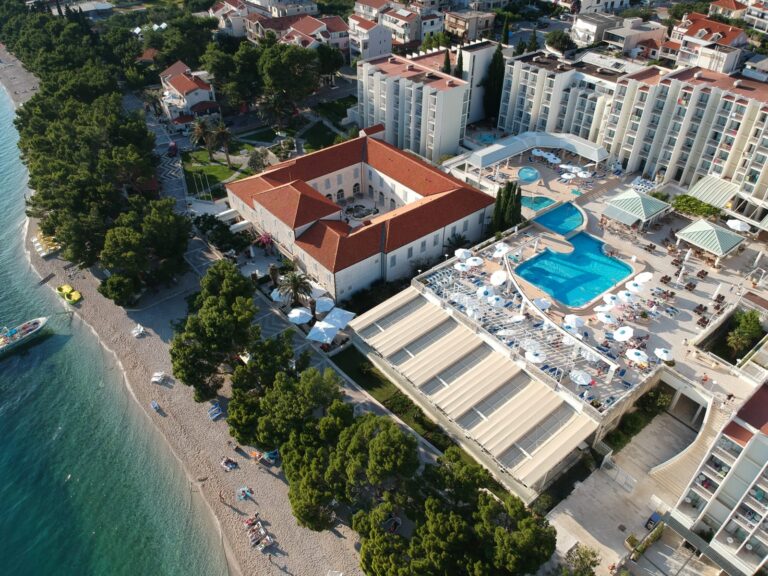
Drašnice has a population of 330 people. It is 12 kilometres southeast of Makarska along the D8 coastal road — the Adriatic Highway that runs the full length of the Makarska Riviera between Split and Dubrovnik. The village sits on the lower slopes of Biokovo mountain, with the stone houses of the settlement above the coastal road and the pebble beach below it. The specific character of Drašnice is the character of the Makarska Riviera’s smaller settlements rather than its resort towns: no nightlife infrastructure, no large hotel complex (the Beach Hotel Plaža is directly on the beach and is the accommodation of the village), and the working landscape of the olive groves and vineyards that the residents maintain above the tourist zone.
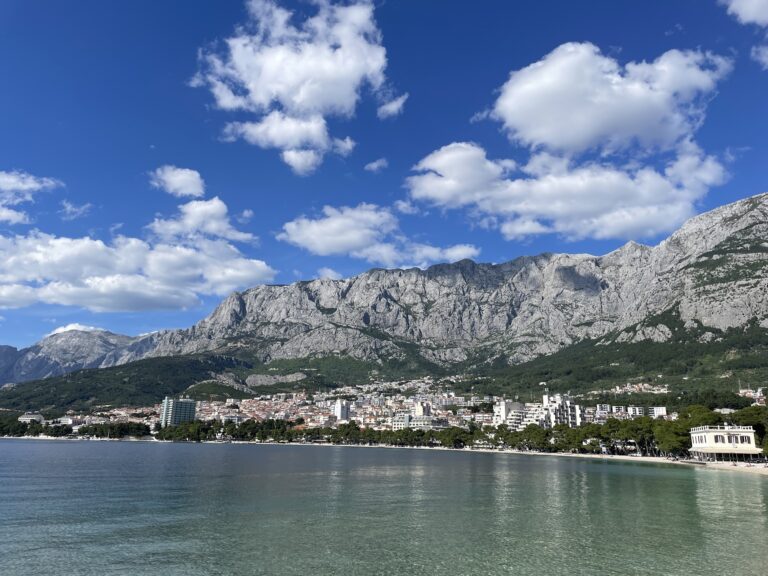
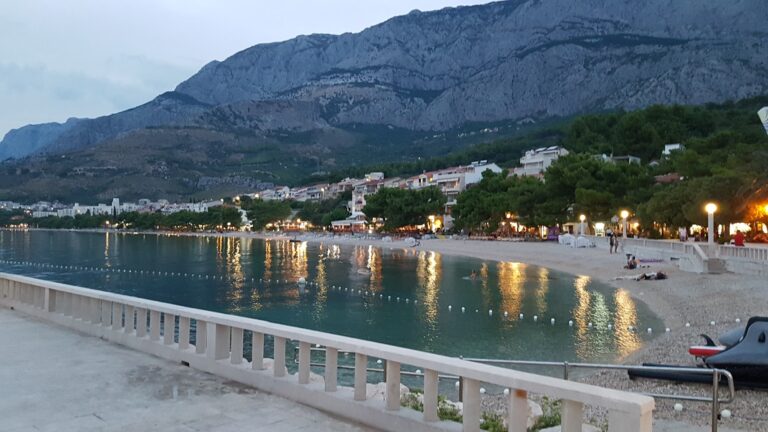
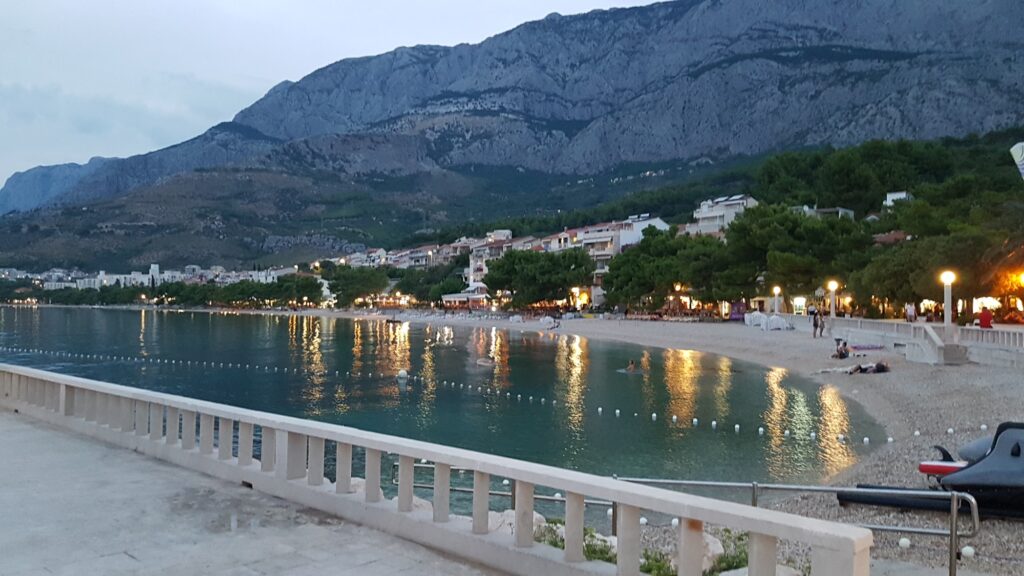
Where the cliffs of the majestic Biokovo mountain gently turn into pebble beaches lies the small village Drašnice, set in the Podbiokovo region. Ancient tumuli and forts testify to the presence of the Illyrians in ancient times. The picturesque stone houses are a reflection of autochthonous Dalmatian architecture that has preserved the true Mediterranean spirit. The Biokovo Nature Park — directly above the village — is visible from the beach throughout the day: the mountain rises steeply from the coast to 1,762 metres, and the Skywalk Biokovo glass platform at 1,228 metres is accessible by the park road from the coastal highway.
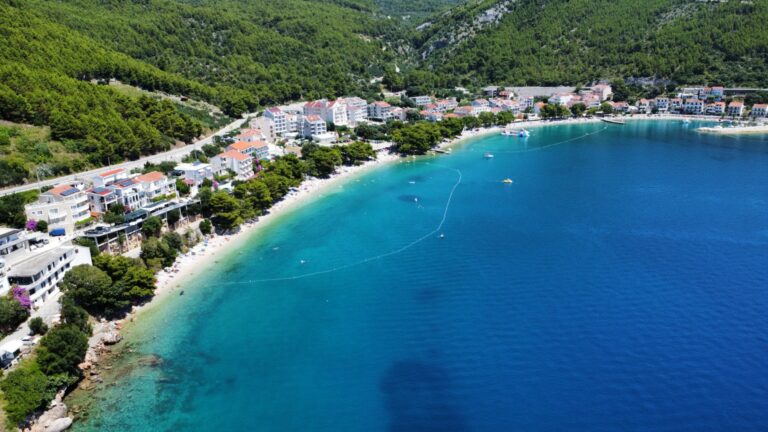
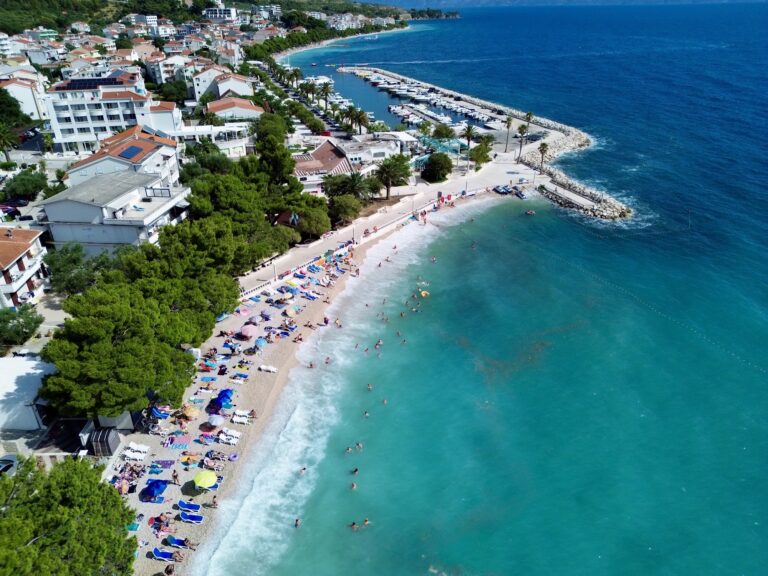
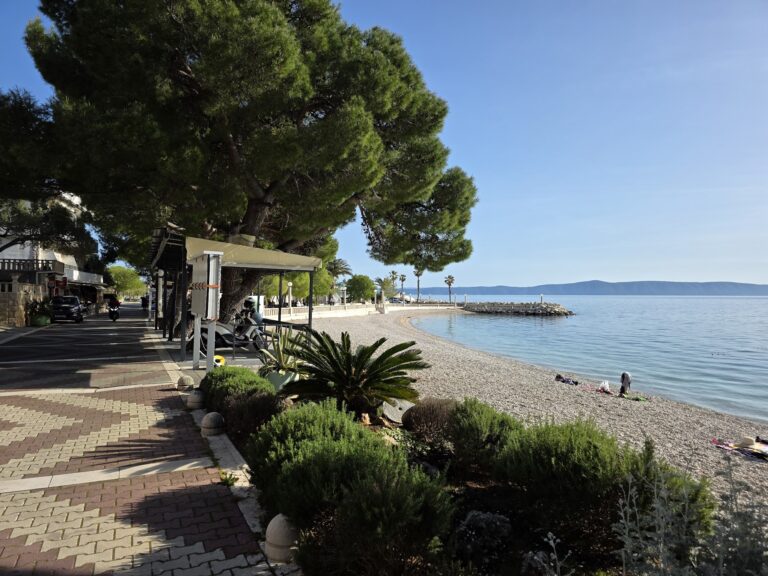
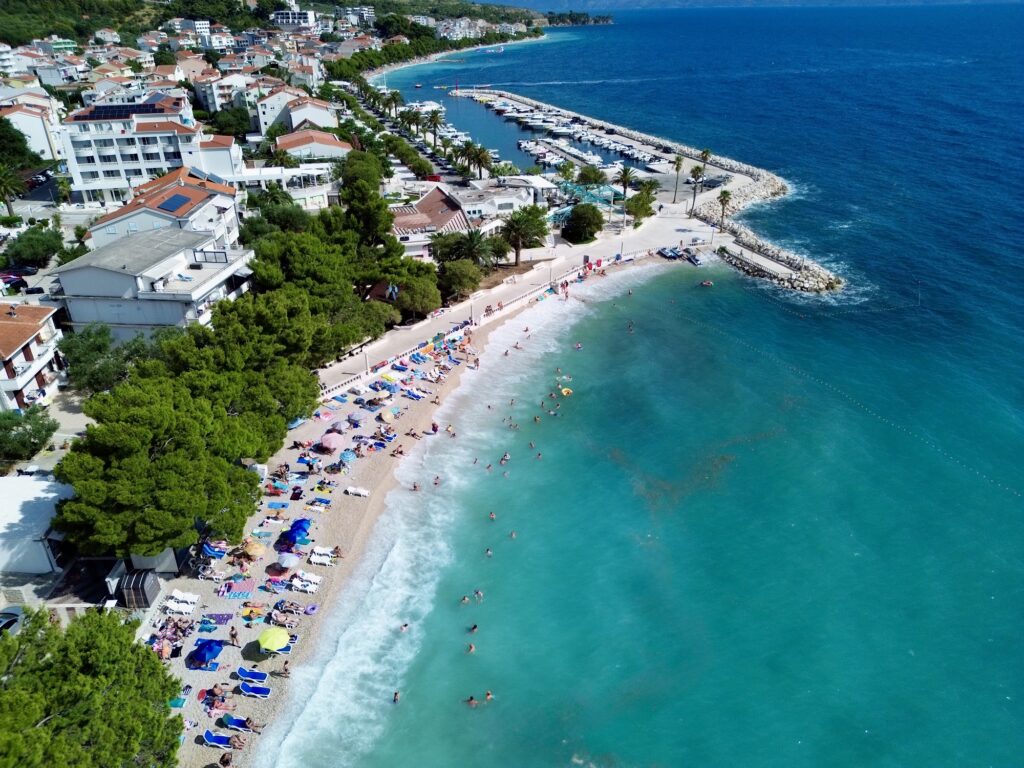
Plaža Lučica in Drašnice is the main beach of the village — pebble and gravel, with the tamarisk shade that the riviera’s beaches characteristically provide, and the small harbour (lučica — small harbour, which gives the beach its name) adjacent to the swimming zone.
Getting There: 12km Southeast of Makarska on the D8, by Regional Bus, or by Boat
From Makarska town centre, Drašnice is 12 kilometres southeast along the D8 coastal highway — approximately 15 to 20 minutes by car, following the road through Podgora and continuing south. The turnoff for Drašnice is signposted from the highway. Parking is available in the village and near the beach.
By regional bus, the service from Makarska toward Gradac stops at or near Drašnice — a 15 to 20-minute ride from the Makarska main station. The bus is the practical option for visitors staying in Makarska who want a quieter beach day at one of the smaller riviera villages without car rental.
By boat, the approach from Tučepi (north) or Podgora (northwest) by small rented motor boat is the sea-level arrival that provides the specific coastal view: the village above the road, the beach below, the Biokovo cliffs directly behind, and the Hvar island profile visible across the channel on the southern horizon.
The Beach: Pebble and Gravel, Tamarisk Shade, Freshwater Springs Seeping Through, the Small Harbour
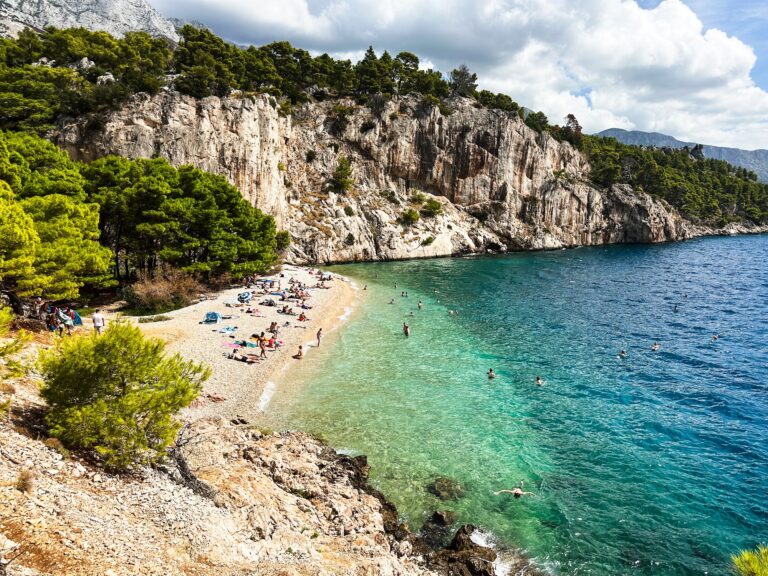
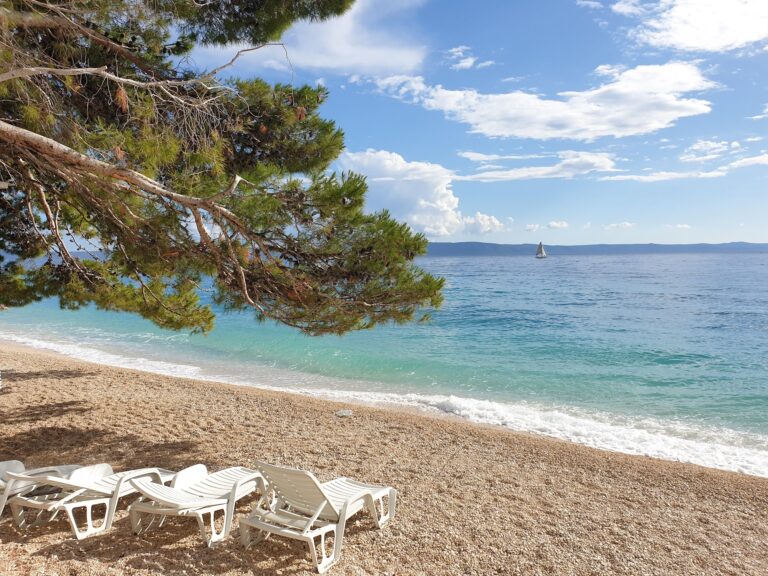
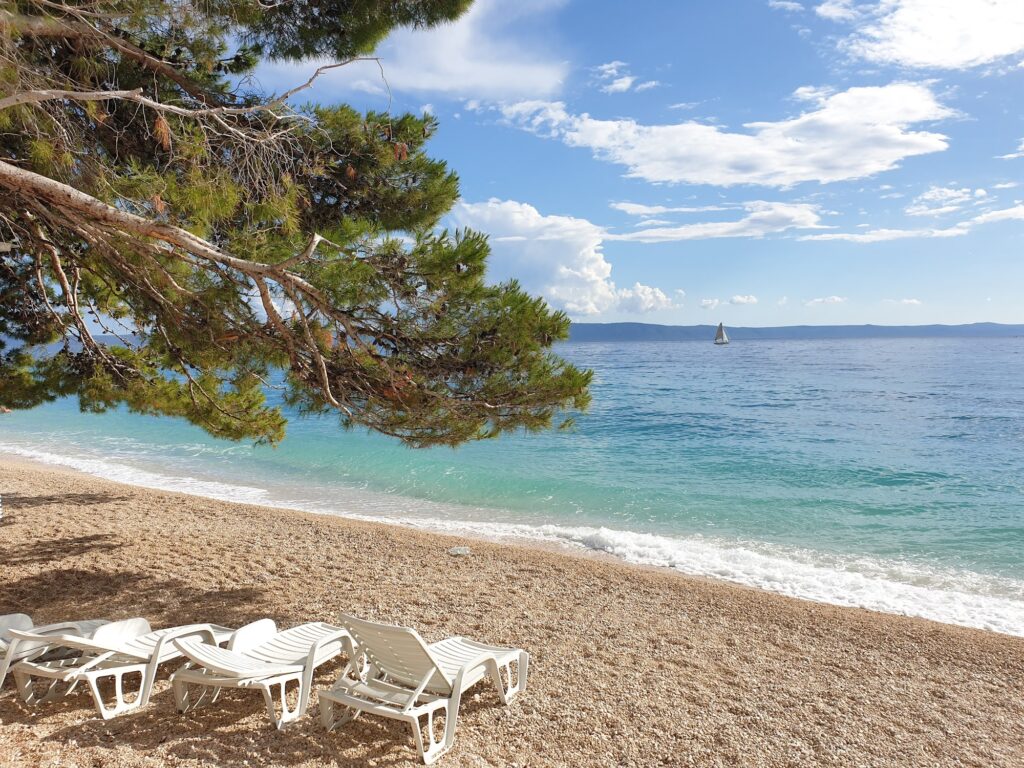
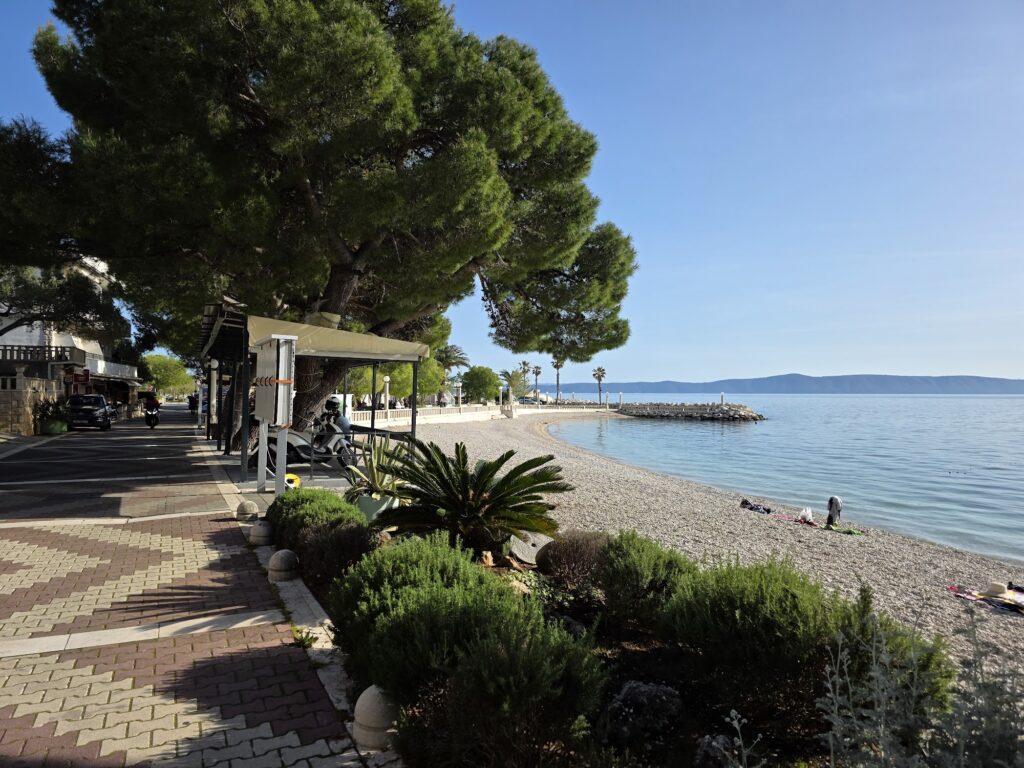
Plaža Lučica in Drašnice is the gravel and pebble beach that the village’s coastal zone offers — typical of the Makarska Riviera character in which the pebble beaches and the clear water are the consistent quality, and the specific identity of each beach is defined by its immediate setting rather than its surface. The tamarisk (tamarix) trees provide the shade that the beach’s sun exposure makes necessary — tamarisk is the characteristic coastal shade tree of the southern Dalmatian riviera, salt-tolerant, feathery-leaved, and providing the filtered shade that the dense pine canopy of the northern riviera villages does not.
The freshwater springs that the source article identifies as seeping through the seabed are consistent with the broader Biokovo geology: the mountain’s limestone channels water from the high-rainfall hinterland toward the coast, and the freshwater emerges at or below sea level in multiple points along the Makarska Riviera shoreline. The most famous of these vrulja springs on this part of the riviera is at Vruja Beach near Brela — a cold freshwater spring emerging directly into the sea at a beach that can only be reached on foot or by boat. The springs at Drašnice are smaller-scale expressions of the same geology.
The small harbour adjacent to the beach is the lučica — the protected anchorage for the village’s small boats, from which the beach takes its name. The harbour is the activity point for the fishing boats that Drašnice residents still use, and the sight of the fishing equipment and the small boats is the specific working maritime detail that gives the beach its village character relative to the resort beaches of the larger riviera towns.
The Biokovo Mountain Backdrop
Biokovo is the most dramatic feature of the Makarska Riviera — a limestone massif that rises from sea level to 1,762 metres within a horizontal distance of approximately 5 kilometres from the coast. The wall effect is visible from every beach on the riviera, and from Drašnice specifically the mountain is close enough that the lower slopes, the scrub oak and the cliff faces, and the occasional eagle circling above the karst ridgeline are visible without binoculars.
The Biokovo Nature Park was declared in 1981 and covers 196 square kilometres of the mountain above the coastal villages. The Skywalk Biokovo — a glass platform extending 12 metres horizontally from the cliff face at 1,228 metres — is the specific attraction that draws visitors from the beach zone to the mountain zone within the same day: the drive from the coastal highway up the park road provides a complete reversal of the view, from the mountain looking down at the sea and the islands to the mountain looking at the sea from below.
The park road from Makarska to the Skywalk takes approximately 40 minutes — accessible as the morning programme before the beach, or as the afternoon programme in the cooler hours when the beach heat becomes uncomfortable.
Drašnice Village: Gothic Church, Roman Inscriptions, and 15th-Century Tombstones
The village above the beach is the specific dimension of Drašnice that distinguishes it from the resort beaches of the riviera: a Gothic church, St. Stjepan’s, stands above the village, in which a Roman inscription from the 2nd century was found, as well as an inscription from 1446 that mentions duke Stjepan. Tombstones from the 15th to 18th century are set around the newer church of St. Jure and the Immaculate Conception, which incorporates Baroque elements of the older structure.
The tumuli — prehistoric burial mounds — and the Illyrian fort remains above the village extend the archaeological timeline further: the Drašnice coastal position, where the Biokovo mountain descends to the sea and the Hvar channel provides a natural water route, was inhabited and defended by multiple successive cultures from prehistory through the Ottoman period. The beach day in Drašnice is the surface of a settlement with 2,000 years of continuous use.
The Riviera Context: Between Podgora and Igrane
Drašnice sits between Podgora to the northwest and Igrane to the southeast — two similarly small settlements on the same riviera coast. The stretch between Igrane and Drašnice includes a beach area referred to locally as Plaža Djevičanska (Virgin Beach), described in riviera beach guides as one of the beautiful and calm beaches between the two villages. The coastal path that connects the riviera settlements is one of the standard walking programmes of the Makarska Riviera — the walk from Drašnice south toward Igrane and back, passing the coves between the villages, provides the full coastal landscape sequence of that section of the riviera.
Gornja Vala Beach Drvenik — the beach at Drvenik, further south on the same riviera — is connected to Drašnice by the same D8 coastal road, approximately 15 kilometres further south, where the riviera transitions into the Drvenik peninsula zone and the ferry connection to Hvar island.
Plaža Lučica in Drašnice is the pebble beach below the 330-person village on the Makarska Riviera, 12 kilometres southeast of Makarska — tamarisk shade, the small harbour adjacent, the Biokovo mountain directly above, the Skywalk platform at 1,228 metres visible from the water, and the Gothic church above the village with its Roman inscription and 15th-century tombstones.
Drive southeast from Makarska on the D8. Turn at the Drašnice sign.
The mountain will be the same size from the beach as it appears in every photograph of this coast.
Map
Sorry, no records were found. Please adjust your search criteria and try again.
Sorry, unable to load the Maps API.
Near by places: