Makarska Beach: Pebble Shore Beneath the Biokovo Mountains
Profile
Makarska Beach: Pebble Shore, Pine Forest, and the Biokovo Wall Above the Town
Croatia | Makarska Riviera | Dalmatia
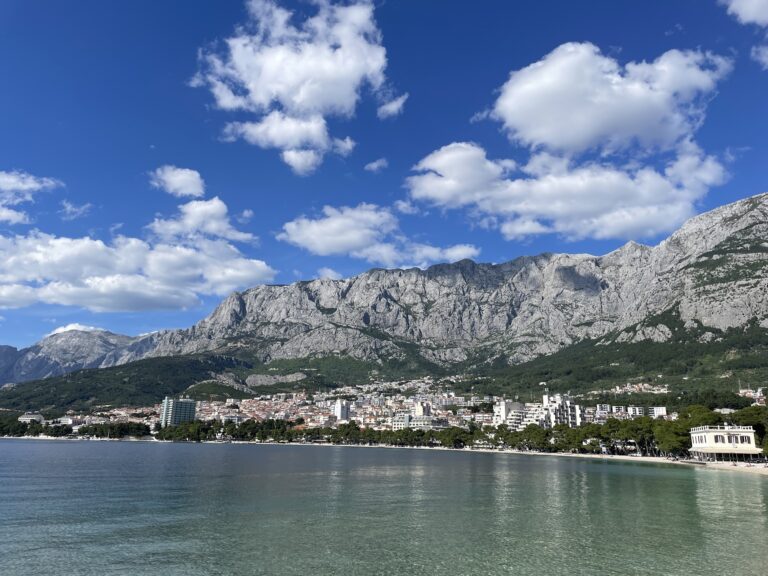
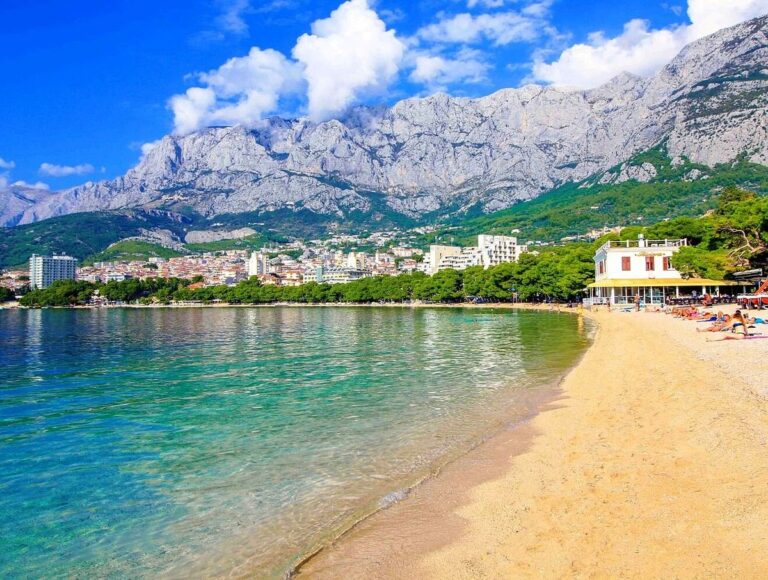
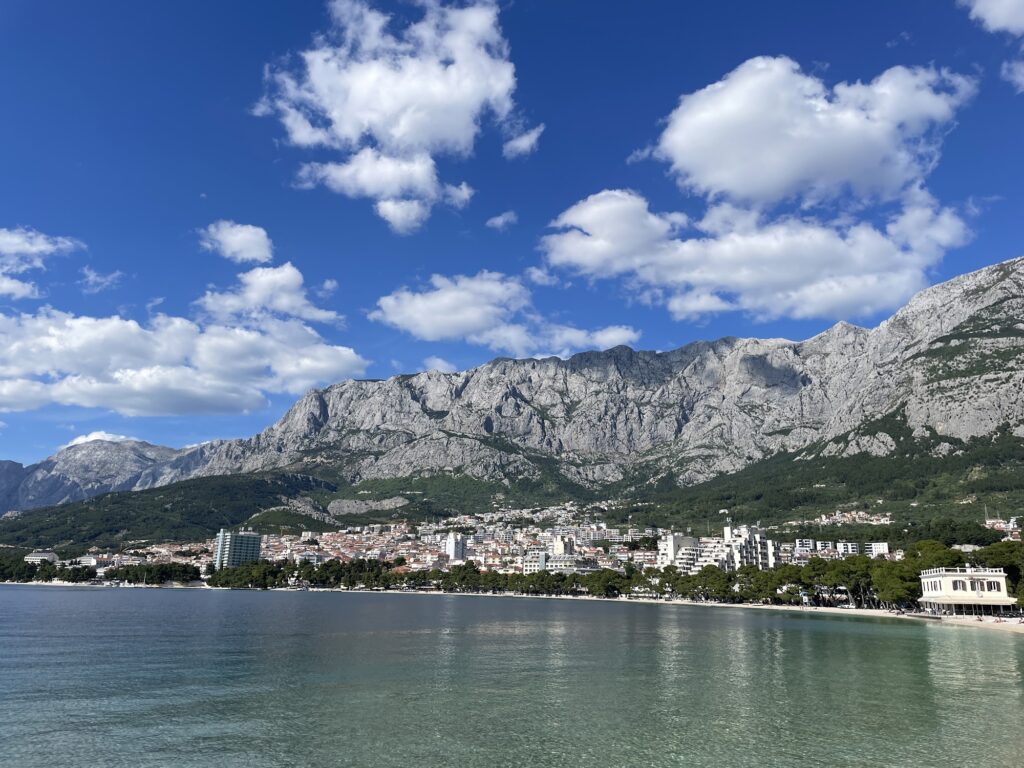
There are few places on the Dalmatian coast where the relationship between mountain and sea is as immediate and as physically present as it is at Makarska. The Biokovo massif rises directly behind the town to over 1,700 metres — not a distant backdrop but a wall of pale limestone that defines the horizon to the east and that the town sits beneath in a way that makes the scale of the landscape felt from the beach. That combination, the mountain directly above and the Adriatic directly in front, gives Makarska Beach a setting that is specific to this point on the Makarska Riviera and that no amount of resort development alters.
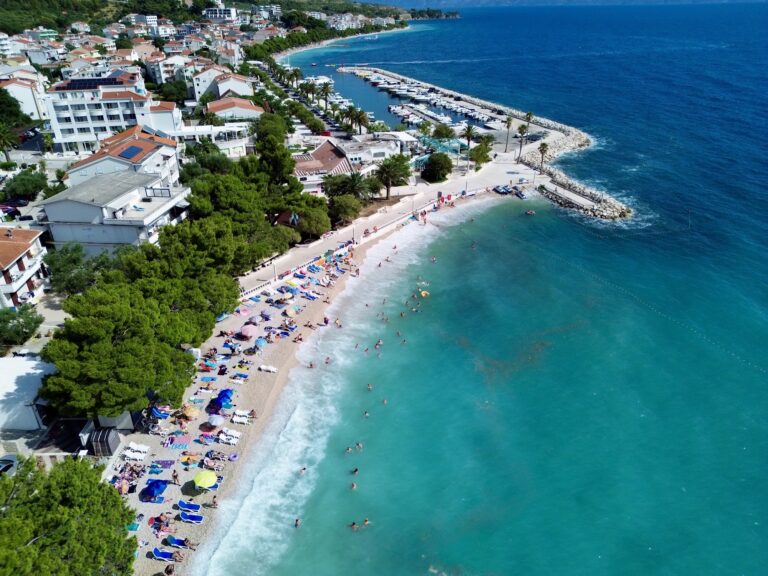
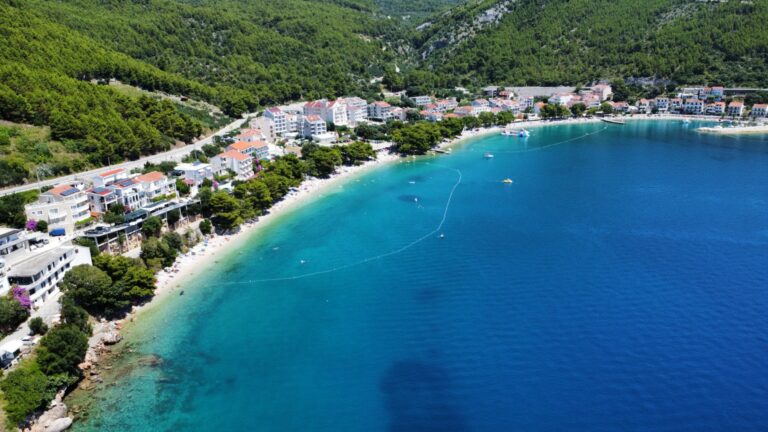
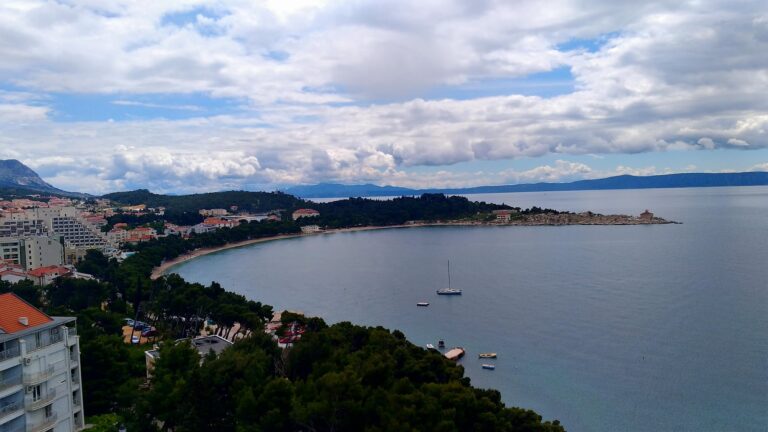
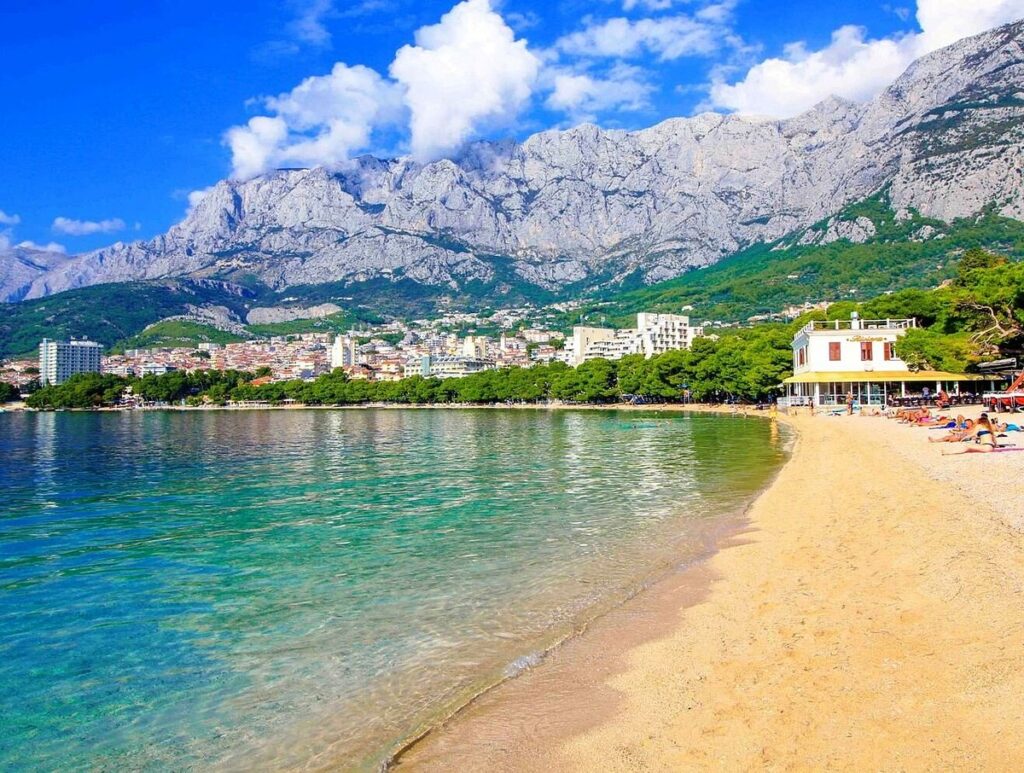
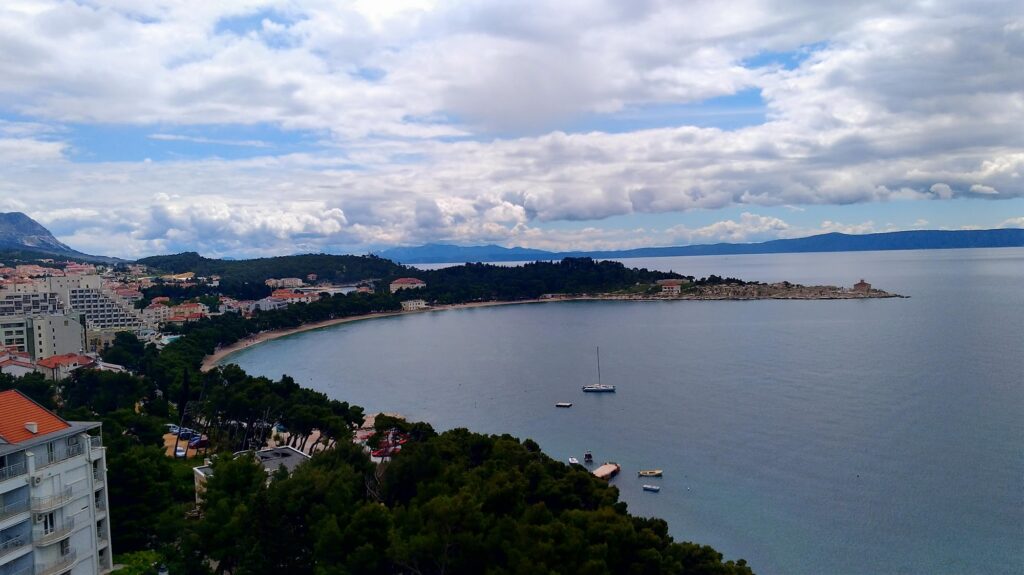
Makarska Beach occupies the deep, horseshoe-shaped bay that the town wraps around, sheltered at its northern and southern ends by the Sveti Petar and Osejava peninsulas. Those headlands block the open sea swell and create the calm, clean water conditions that the bay maintains even at the height of summer when visitor numbers are at their peak. The pine forest that backs the shore for most of its nearly two-kilometre length provides shade that is a practical necessity in July and August and an atmospheric feature in the quieter shoulder months, and its resin scent — mixed with the salt air off the water — is the specific sensory signature of the beach that anyone who has spent time here will recognise.
Getting There: On Foot from the Main Square, by Car on the D8, or by Bus from Split
Makarska Beach is one of the most directly accessible town beaches on the Dalmatian coast. From Makarska’s main square, the sea is a five-minute walk heading toward the waterfront and turning right along the promenade — no transport required, no navigation needed. The beach begins within that walking distance and continues south along the bay for nearly two kilometres.
By car, the D8 coastal road passes through Makarska and connects the town to Split to the north and Ploče to the south. Paid parking areas are located immediately behind the pine forest that borders the beach — close enough to be convenient, positioned so that the forest acts as a buffer between the car parks and the shore. During peak season in July and August, those car parks fill early and the approach from Split on the D8 can be slow; arriving before ten in the morning or after five in the afternoon changes that calculation significantly.
Frequent bus services connect Makarska to Split and Dubrovnik, with the central bus station a ten-minute walk from the shore. For visitors without a car, the bus connection to Split makes Makarska a viable day trip from the city as well as a destination in its own right.
The Bay: Biokovo Above, Peninsulas Either Side, Pine Forest Behind
The geography of Makarska Bay determines everything about the experience of the beach. The Sveti Petar peninsula to the north and the Osejava peninsula to the south enclose the bay on its seaward sides, reducing the fetch across which wind and swell can build and maintaining the calm surface conditions that the bay is known for. The result is water that stays clear and relatively undisturbed even when the open Adriatic beyond the peninsulas is rougher — a practical advantage for families with young children and for swimmers who prefer predictable conditions.
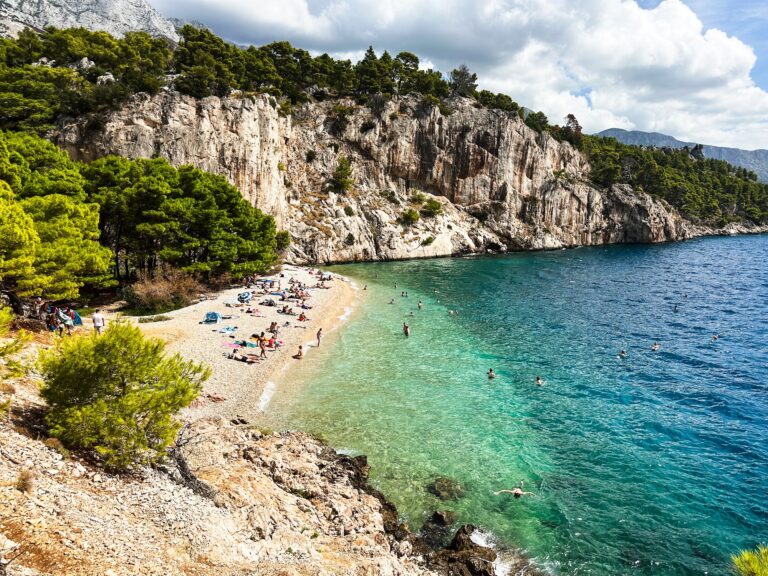
The Biokovo mountains above the town are the visual constant from every point on the beach. The massif reaches 1,762 metres at its highest point and drops almost vertically toward the coast across a horizontal distance that gives the wall of limestone an imposing presence from sea level. The light on those mountains changes through the day — sharp and pale in the morning, warming through the afternoon, turning the rock purple and amber as the sun moves toward the sea in the evening — and that progression of colour is the backdrop against which the beach day unfolds from the first swim to the last coffee on the promenade.
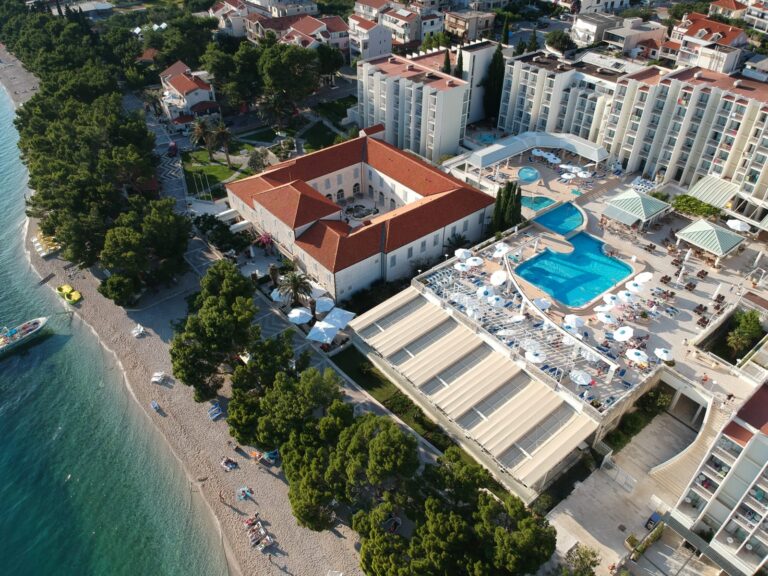
The pine forest between the promenade and the upper shore is the third defining element. The trees are old enough and dense enough to produce real shade across the upper beach through the middle of the day, and the combination of pine resin and sea salt that the heat produces is the specific atmospheric detail that distinguishes Makarska Beach from the open, unshaded pebble shores that characterise much of the Dalmatian coast further south.
The Shore and Water Quality at Makarska Beach
The shore is smooth, sun-bleached pebble along its full nearly two-kilometre length — white stones worn to a uniform roundness that reflects sunlight and produces the luminous quality the beach has in direct afternoon light. The pebble surface transitions to a sandy seafloor as the water deepens, making the entry comfortable and the shallow swimming zone clear enough to see the bottom throughout. Water shoes are not essential but are worth having for the initial entry, particularly for children who find the pebble surface difficult on bare feet until they reach the waterline.
The water quality at Makarska Beach reflects both the natural shelter of the bay and the management of the site. The water is consistently clear, with visibility sufficient for snorkelling in the shallower sections near the peninsulas at either end of the bay. Schools of silver fish are visible through the clear water column above the seabed — a detail that rewards looking down as much as looking out across the channel.
The bay’s sheltered position means the water warms earlier in the season and holds its temperature later into autumn than the more exposed stretches of the Dalmatian coast. By July the sea is warm enough for sustained swimming without adjustment, and it remains so through September — the month when Makarska arguably offers its best conditions, with the summer heat moderated and the visitor numbers significantly reduced.
Facilities at Makarska Beach
The facilities along Makarska Beach are organised across the full promenade length rather than concentrated at a single service point — a practical arrangement for a beach of this scale that receives the visitor numbers the town generates through the summer season. Freshwater showers, changing cabins, and public restrooms are distributed at regular intervals. Sunbed and umbrella rental is available throughout, though the pine shade above the upper shore provides a natural alternative for those who position themselves at the back of the beach.
Water sports provisions include parasailing, jet ski rental, and inflatable aqua park sections — the range of active recreation that a beach of this prominence and visitor volume supports. Lifeguards are stationed in elevated positions along the beach through the peak season. The promenade is fully paved, which makes it accessible for prams and wheelchairs and gives it a different quality from beach promenades that are partly gravel or informal path.
Makarska Beach with Families and Young Children
The gradual entry into the sea in the central sections of the bay, the pine shade across the upper beach, and the promenade infrastructure directly behind the shore make Makarska Beach well-suited to families across a broad age range. The calm bay water keeps swimming conditions predictable, and the shallow zone in the central bay extends far enough from the shore for toddlers to move freely in the warm shallows.
The promenade carries playgrounds, trampolines, and ice cream provision alongside the restaurants and bars — the full complement of town beach infrastructure that makes a long day here logistically straightforward for parents. Pharmacies and shops are within the town centre, a short walk from the beach. That proximity to the full infrastructure of a functioning town is one of the practical advantages of Makarska Beach over more remote beach destinations on the Riviera — everything the day might require is accessible without a car journey.
For visitors exploring the broader Makarska Riviera, Glavna Plaža Baška Voda to the northwest offers a comparable pebble and pine setting in a smaller, quieter town context, and Plaža Oseka Baška Voda provides an alternative bay configuration within the same stretch of coast — both worth knowing for days when Makarska’s peak-season crowds make a quieter option preferable.
Food and Drink: Dalmatian Fish, Pašticada, and the Promenade at Sunset
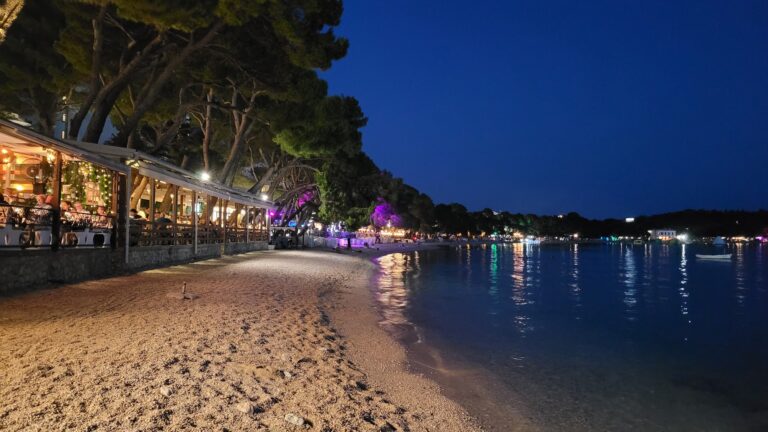
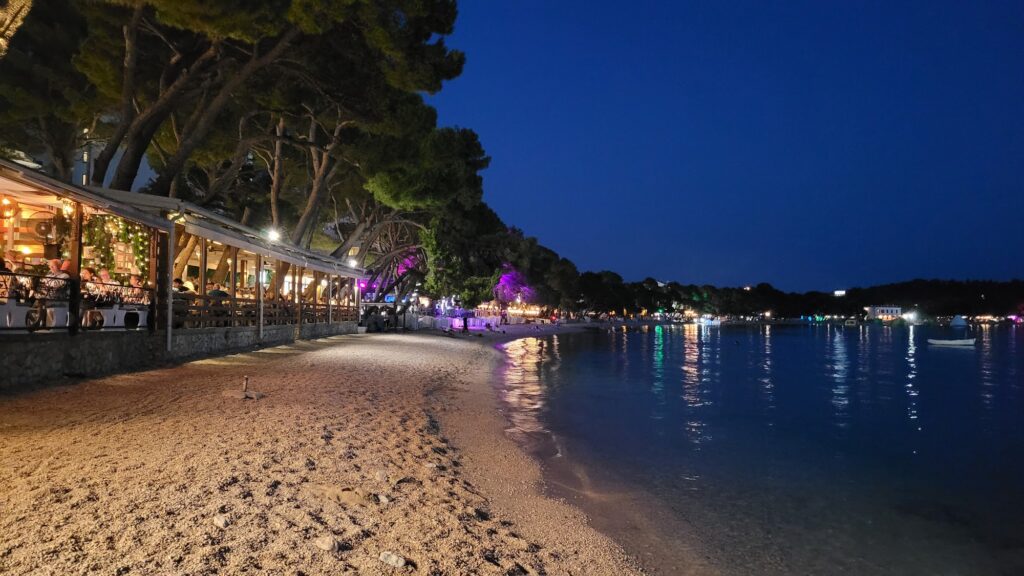
The restaurants and bars along Makarska’s promenade represent the full range of Dalmatian coastal food in a setting that faces the bay and catches the evening light across the water toward the Pelješac peninsula on the southern horizon. Fresh grilled fish — the daily catch from the Adriatic prepared simply and finished with local olive oil — is the standard-bearer of the menus here, and the quality reflects the town’s position on a coast where the fishing tradition is as old as the settlement.
Pašticada — the slow-braised beef dish that is the signature preparation of formal Dalmatian cooking, marinated in wine and vinegar and served with gnocchi — appears on the menus of the town’s more established restaurants as a marker of seriousness about the regional kitchen. It is a dish that requires time and care to produce correctly, and finding a version worth eating is one of the rewards of spending enough time in Makarska to move beyond the promenade bars into the town’s side streets.
Coffee on the promenade as the Biokovo mountains catch the last direct sun — the rock turning from pale grey to amber to purple as the light falls — is the specific and repeatable pleasure of a beach day in Makarska that the combination of mountain, sea, and well-positioned terrace makes available every clear evening through the season.
Seasonal Timing at Makarska Beach
Makarska is one of the busiest destinations on the Dalmatian coast through July and August, and the beach reflects that. The combination of road accessibility on the D8, bus connections to Split, and the town’s own accommodation capacity brings visitor numbers that fill the promenade and the beach to capacity during peak weeks. Arriving early in the morning — before ten — secures a position on the shore and in the pine shade before the midday pressure builds.
September is when Makarska Beach offers its most comfortable conditions: sea temperature still high, crowds reduced, the promenade restaurants operating without the peak-season wait times, and the Biokovo light in the lower angle of early autumn producing a different quality of view than the flat brightness of high summer. The bus connections to Split remain frequent through September, making the shoulder season as accessible as the peak.
The D8 coastal road that connects Makarska to Split passes through the full length of the Makarska Riviera — a stretch of coast with a consistent pebble and pine character that Makarska Beach exemplifies at its most developed and most connected to urban infrastructure.
Makarska Beach is defined by the specificity of its setting — the Biokovo wall directly above, the pine forest directly behind, the sheltered bay in front — and by the completeness of the town infrastructure that backs it. It is a beach where the mountain is as present as the sea, and where the transition from morning swim to promenade lunch to evening coffee under the Biokovo light requires nothing more than walking along the shore.
Come for the water. Stay for the moment the mountains turn purple.
Map
Sorry, no records were found. Please adjust your search criteria and try again.
Sorry, unable to load the Maps API.
Near by places: