St Nicholas Beach Šibenik: Wild Shore Below the Fortress
Profile
St. Nicholas Beach, Šibenik: Wild Pebble Shore Below the UNESCO Fortress That Was Never Attacked
Croatia | Šibenik | Central Dalmatia
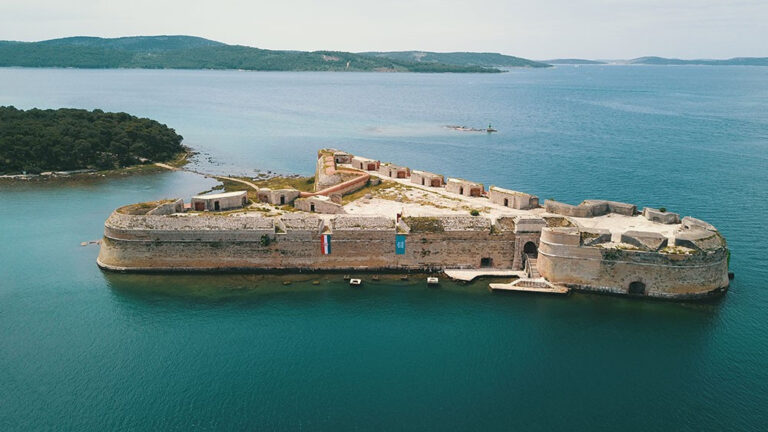
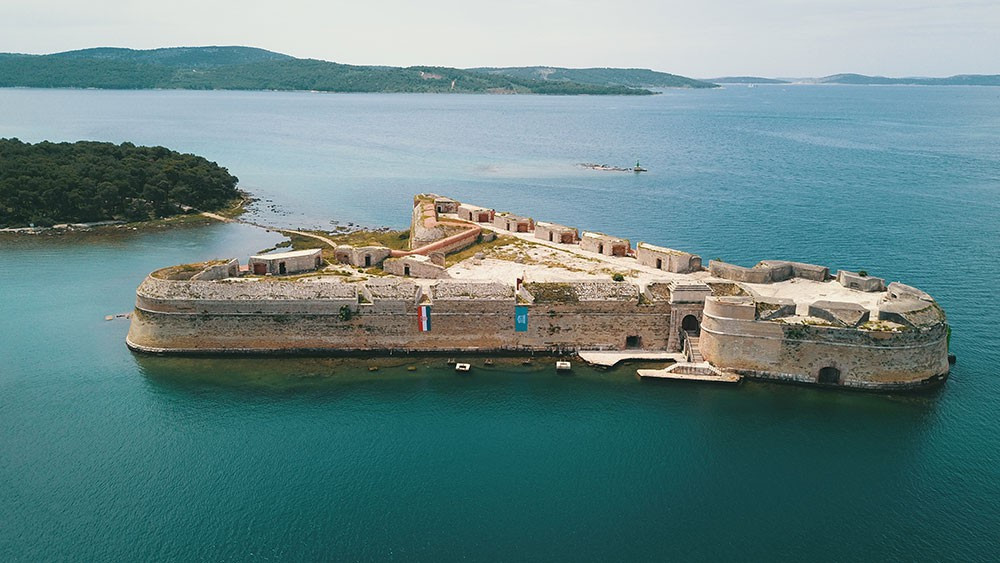
St. Nicholas Fortress was designed in 1525 at the request of the Croatian population of Šibenik, who petitioned the Venetian captain Alvise Canal for a sea-facing fortification to defend the channel against Ottoman naval advance. The architect was Giangirolamo Sanmicheli, nephew of the Venetian military engineer Michele Sanmicheli. The fortress was armed with 32 cannons. It was never attacked — its appearance was so imposing that enemies were deterred from attacking Šibenik from the sea. It stood at the entrance to the St. Anthony Channel for nearly five centuries, watching the shipping pass through the only natural sea-way to Šibenik, and in 2017 it was inscribed on the UNESCO World Heritage List as part of the Venetian Works of Defence between the 16th and 17th centuries: Stato da Terra – western Stato da Mar.
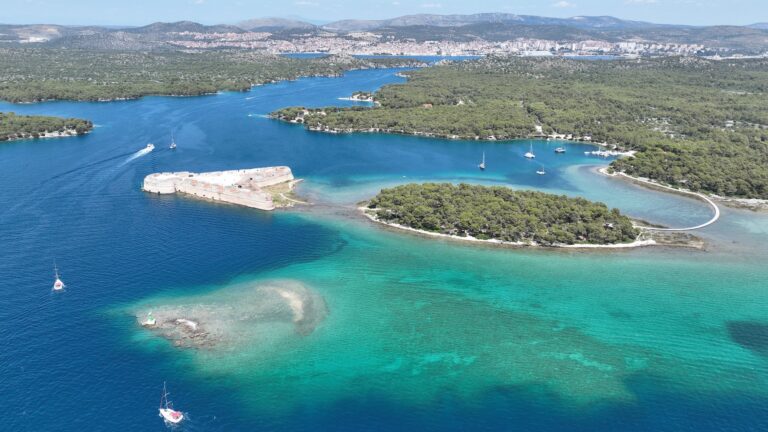
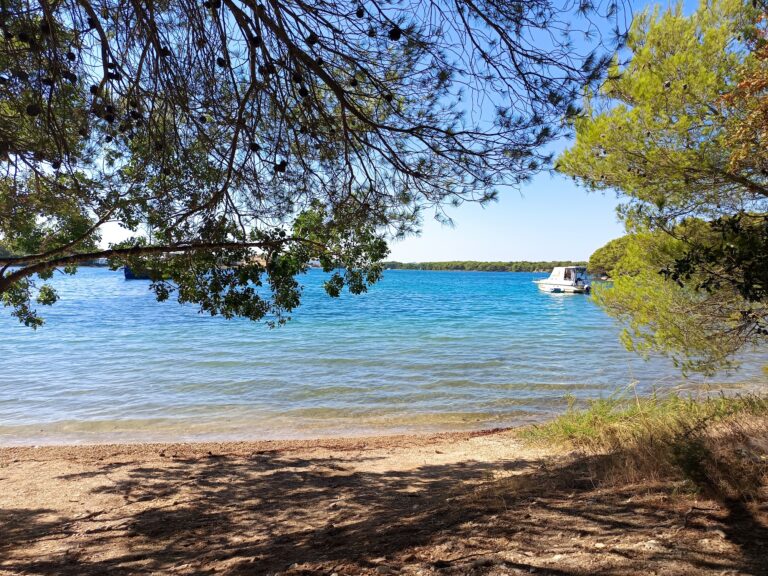
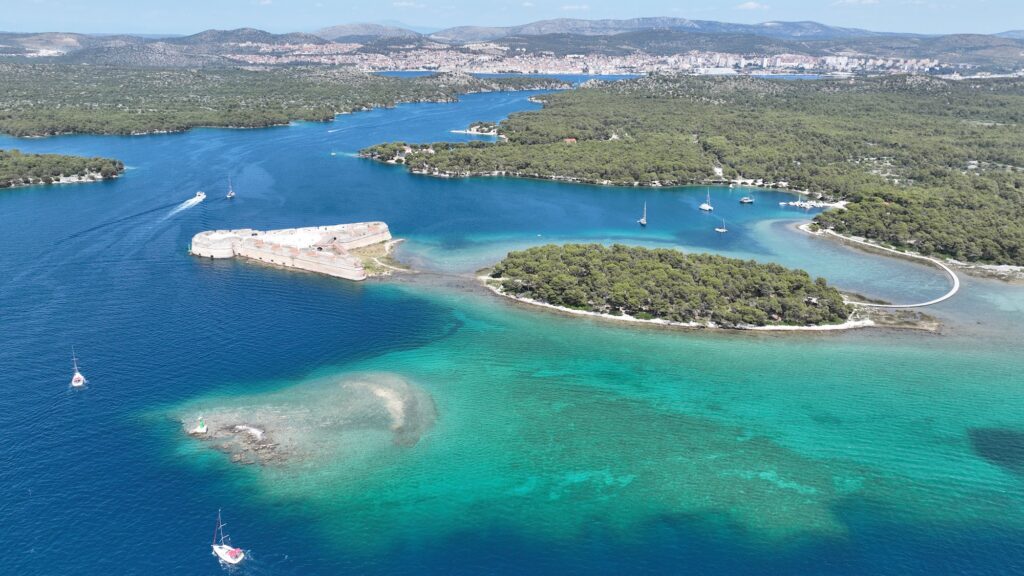
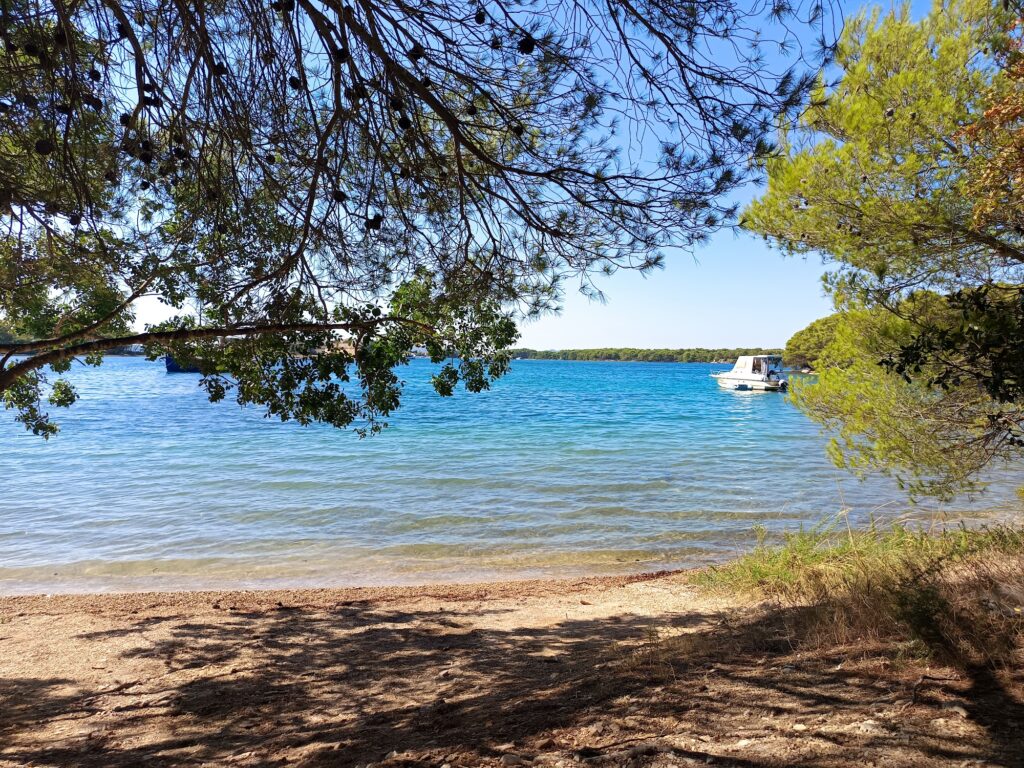
The beach below the fortress — referred to locally and in tourism listings as St. Nicholas Beach — is not a beach in the organised resort sense of that word. It is a bit wild and bordered by lower Mediterranean vegetation — a pebble beach with a gentle entrance to the sea, above which runs the St. Anthony Channel Promenade. There are no additional facilities on the beach; visitors must bring everything they need. No showers. No bar. No shade structures. No lifeguard. The entire appeal of St. Nicholas Beach is the specific experience of swimming below a 16th-century UNESCO-listed fortress in the clear water of a protected channel, in a landscape that the Venetian military engineers of the 1520s chose precisely because of its strategic position and natural drama.
Getting There: The St. Anthony Channel Promenade, by Boat from Šibenik, or by Car to Zablaće
The St. Anthony Channel Promenade is the primary land approach — a marked walking and cycling trail along the channel’s edge from Šibenik (starting near Banj Beach on the Šibenik side) for approximately 4 kilometres to the fortress area. The trail passes the St. Anthony Cave, the Hitler’s Eyes bunker complex, the Minerska Cove visitor centre, and the Škar Beach cove before reaching the point on the eastern bank of the channel closest to the fortress. The 4-kilometre walk takes approximately one hour at a comfortable pace and is one of the more scenic walks in the Šibenik area — the channel narrowing and widening, the cliffs on one side and the open Adriatic view developing as you approach the fortress end.
By car, the Zablaće road leads to a small free car park on the western side of the channel, from which a circular walk to the fortress approaches via the promenade on the southern bank. The walk from the car park takes approximately 10 minutes through the Mediterranean vegetation.
By boat from Šibenik, the official guided tour departs from the Šibenik waterfront at the Krka berth (junction of Obala hrvatske mornarice and Obala Dr. Franje Tuđmana), with tickets for adults approximately €21 and for children €16. The boat tour includes a guided visit to the interior of the fortress and provides the sea-approach view of the structure that the land approaches cannot. The fortress was opened to visitors in July 2019 after two years of reconstruction work. Sea kayak tours also use the channel, passing through the underwater tunnel and stopping at the beach near the caves.
The Fortress: 500 Years, 32 Cannons, and the Only Venetian Fortification Completely Surrounded by Sea
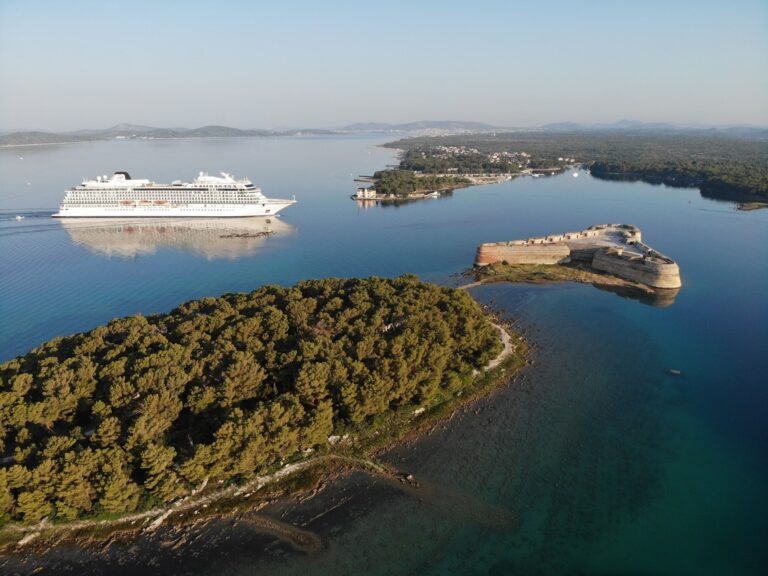
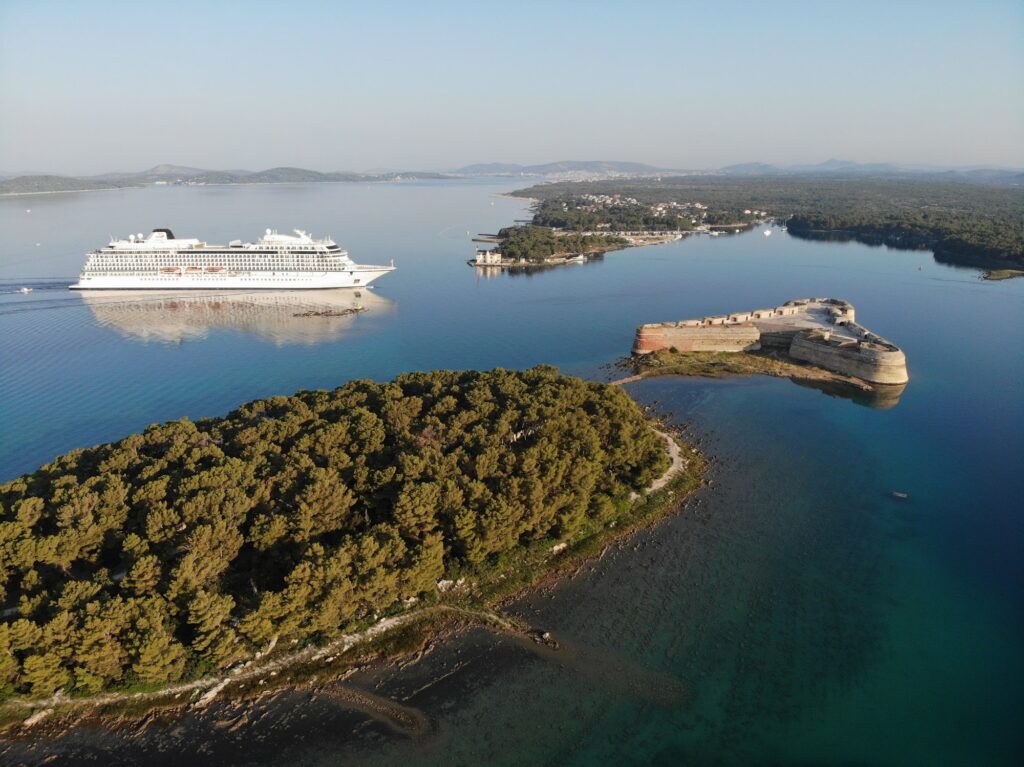
The specific architectural significance of St. Nicholas Fortress within the Venetian defensive system is the one that makes its UNESCO listing meaningful rather than merely ceremonial. St. Nicholas Fortress is one of the most important Venetian fortifications outside of Venice as well as one of the most beautiful fortresses in the Adriatic. The islet of Ljuljevac on which it stands is surrounded by water on all sides, making it the only Venetian military fortification completely surrounded by the sea — a position chosen because the channel entrance at that point was the single natural sea-way to the Šibenik port and the Krka river delta, and therefore the only point that required naval defence.
The fortress was never needed in the military sense it was built for. The Ottoman navy never engaged it. Five centuries after construction, the 32 cannon positions remain, the stone walls remain, and the fortress sits at the entrance to the channel in the same position as in 1525 — now admitting guided visitors rather than repelling naval advances.
The St. Anthony Channel: Hitler’s Eyes, the Underwater Tunnel, and Minerska Cove
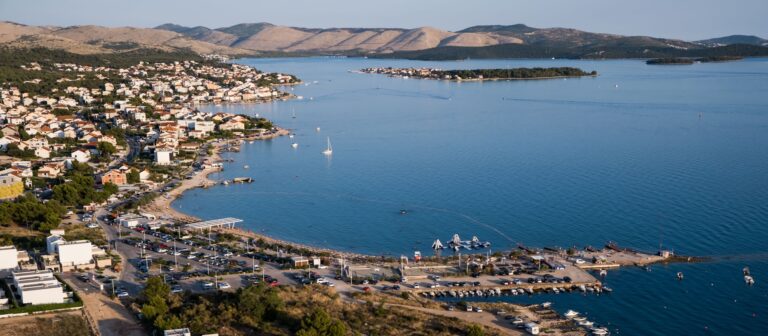
The St. Anthony Channel is the landscape context in which both the fortress and the beach exist. It was protected as a significant landscape in 1974. Over 2,000 metres long and between 140 and 220 metres wide, the channel is perfect for biking, walking, swimming, and sightseeing. Its attractions include St. Nicholas Fortress at the entrance, St. Anthony Cave in the middle of the channel, and the nearby “Hitler’s Eyes” bunker.
The “Hitler’s Eyes” bunker — the name given to a pair of reinforced observation windows cut through the cliff face at strategic angle, allowing sighting along the channel without direct exposure — was constructed by the German forces during World War II and continued in use under the Yugoslav Army, which also dug the underwater tunnel several hundred metres into the rock beneath the channel. The tunnel and the military complex on the eastern bank were inaccessible to Šibenik residents until approximately twenty years ago. The bunker and the tunnel are now accessible on the channel promenade walk and are part of the standard visitor programme.
Towards the exit of the channel the steep cliffs are replaced with some beautiful coves inviting you for a swim and relaxation — Minerska Cove seems to be an ideal place for such activities. Škar Beach cove became clean and suitable for swimming after the construction of a waste-water collector in the area. These coves are the swimming spots for visitors who walk the full channel trail — the beach near the fortress itself is the most historically dramatic, but the Minerska and Škar coves provide more comfortable swimming infrastructure.
Swimming at St. Nicholas Beach: What to Expect
The beach at the St. Nicholas Fortress approach is a pebble cove with Mediterranean scrub above — a wild, unmanaged shore that sits below the fortress walls on the Ljuljevac islet side. The view from the water is direct and unobstructed: the complete fortress profile, the islet, the channel entrance, and on clear days the open Adriatic beyond. Water shoes are necessary for the rocky entry. The water is clear — the channel’s constant circulation maintains the quality that has made the swim here a popular kayak tour stop — and the sea entry is described by visitor accounts as gentle despite the rocky character of the surrounding coastline.
The absence of facilities is the defining practical reality: bring water, food, and sun protection. The nearest cafes and restaurants are at the start of the promenade in Šibenik or in the Zablaće area. Plan the visit as a self-sufficient half-day excursion — the walk along the full channel promenade, the swim at the fortress beach, and the return — rather than as a casual beach day with on-site provisions.
Šibenik’s UNESCO Context: Four Fortresses and the Cathedral
Šibenik has four fortresses — St. Nicholas (at sea), St. Michael’s (town centre hilltop, open-air summer stage), St. John’s, and Šubićevac (Barone) — and the Cathedral of St. James, the UNESCO World Heritage cathedral built entirely in stone between 1431 and 1536 without the wooden framework that medieval cathedral construction typically required. The Cathedral was inscribed on the UNESCO list in 2000; the fortresses of the Venetian defensive system followed in 2017. The concentration of UNESCO World Heritage Sites within a single small city is unusual on the Adriatic coast, and St. Nicholas Beach is the one point where a visitor can swim in a UNESCO buffer zone while viewing a UNESCO World Heritage structure from the water.
Banj Beach Šibenik — the city’s central beach — is the conventional starting point for the promenade walk that leads to St. Nicholas Beach. The combination of the Banj city beach, the promenade walk, and the fortress beach visit covers the full Šibenik coastal experience in a single active day.
St. Nicholas Beach below the Šibenik fortress is the pebble cove where a 16th-century UNESCO-listed fortification that was armed with 32 cannons and never needed to fire them looks down on the Adriatic water while you swim. No facilities. Bring everything you need.
Walk the St. Anthony Channel Promenade from Šibenik or drive to Zablaće.
The fortress will be where it has been since 1525.
Map
Sorry, no records were found. Please adjust your search criteria and try again.
Sorry, unable to load the Maps API.
Near by places: