Plaža Balota Rovinj: The Old Town Rock Waterfront
Profile
Plaža Balota, Rovinj: The Rocky Old Town Waterfront Where the City Walls Meet the Sea
Croatia | Rovinj | Istrian Peninsula
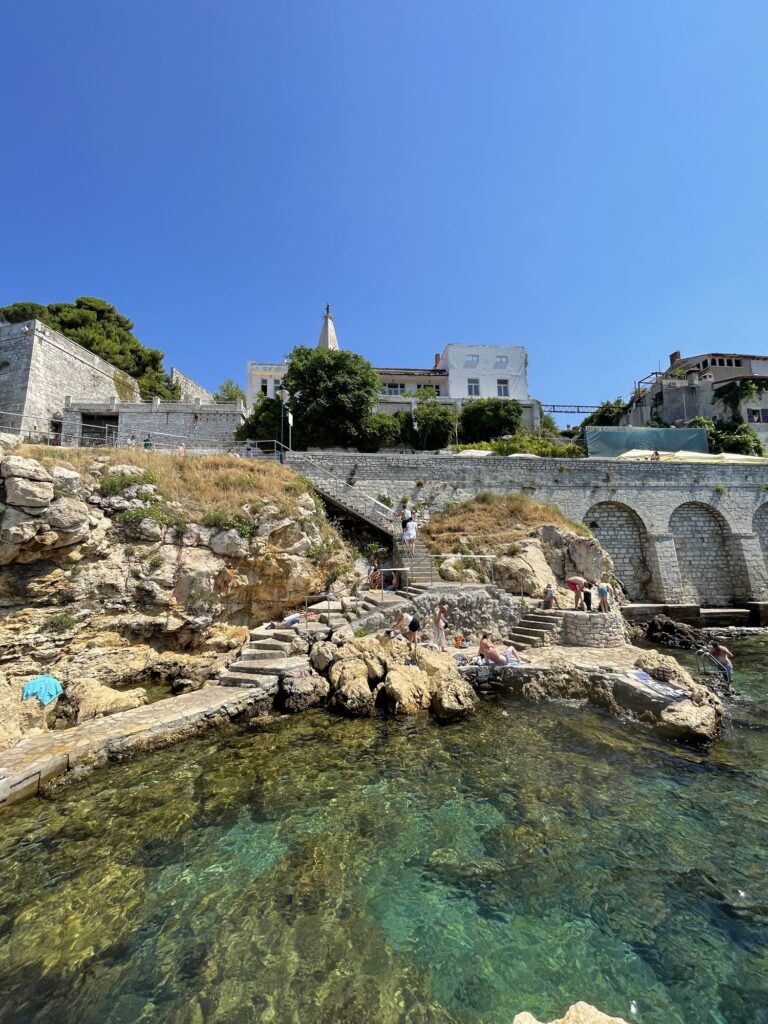
Every town on the Adriatic coast has its relationship with the sea, but Rovinj’s is more direct than most. The old town is built on a former island — connected to the mainland by a filled causeway — and the stone walls of its lowest houses descend to limestone rock platforms that drop directly into the water. The swimming happens from those platforms. The sunbathing happens on those platforms. The evening cliff-jumping and music and shared picnics happen on those platforms. Plaža Balota is the collective name for the rocky waterfront on the western and southwestern face of the old town peninsula — the swimming zone that the residents of the coloured houses above have been using for generations, directly accessible from the lanes of the old town without any resort infrastructure between the city fabric and the sea.
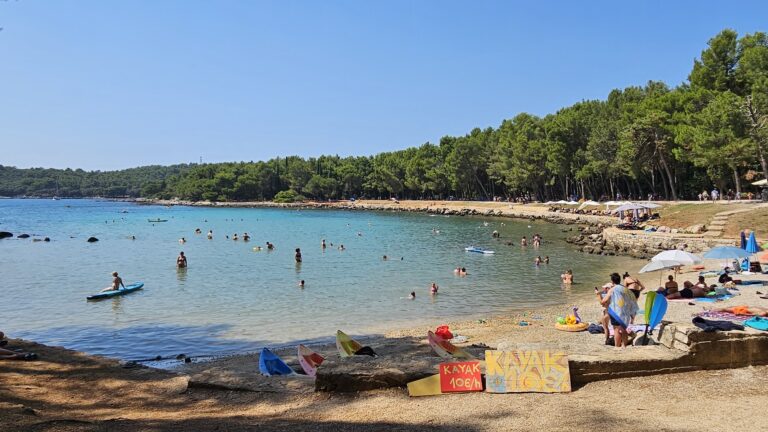
The beach stretches approximately 150–200 metres and is divided into sections including Big Guguliera, Little Guguliera, Baluota, and Lanterna — with the Guguliera sections more suitable for families with children and the Baluota and Lanterna sections intended for experienced swimmers due to their rocky and steep sea entries. The different sections reflect different depths and entry difficulties along the same continuous rocky waterfront. There are no trees and no natural shade anywhere on the beach, so visitors must bring their own sun protection. No beach bar operates directly on the rock surface, though the bars and restaurants of the old town are a very short climb above.
Getting There: Through the Old Town on Foot, Following the Peninsula to the Sea
Plaža Balota is reached on foot through the old town — there is no other way. The Rovinj old town is a pedestrian zone of narrow cobblestone lanes that rise toward the Church of St. Euphemia at the summit and then descend again toward the western waterfront. From the main square (Trg Maršala Tita) at the base of the old town, following any of the lanes upward and then bearing toward the western sea face brings you to the rocky waterfront within ten minutes.
The approach via Ulica Grisia — the gallery street that climbs through the old town toward the church — is the most photographed route, passing the painters’ studios and small galleries that have operated there since the 1960s when Rovinj established itself as an artists’ town. The descent from the lane system to the waterfront rock is sometimes steep and requires attention, particularly in flip flops on worn stone. Water shoes are advisable throughout the visit — both for the descent and for the sea entry, where the rocks are sharp in places and sea urchins occupy the underwater crevices near the base of the walls.
Car access is not possible directly to the beach. Parking is available in the lots at the base of the old town, from which the walk up through the town and down to the waterfront takes 15 to 20 minutes.
The Shore: Flat Rock Slabs, Metal Ladders, and the Guguliera Section Distinction
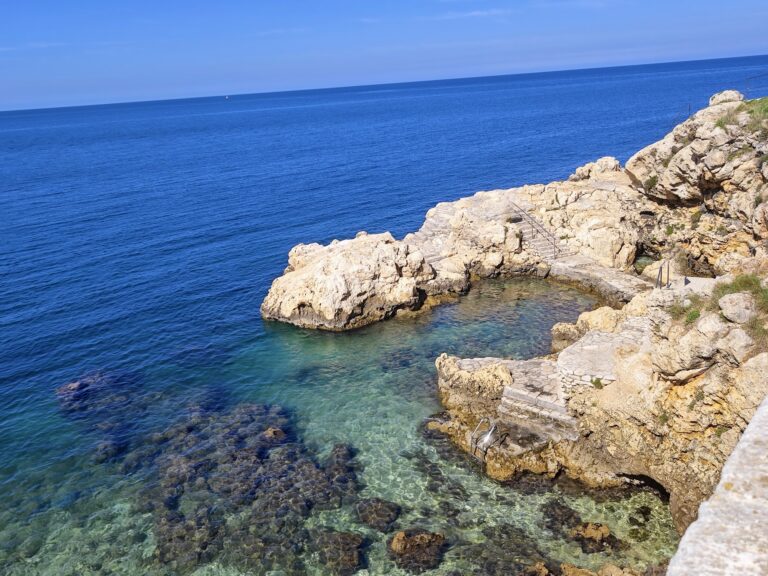
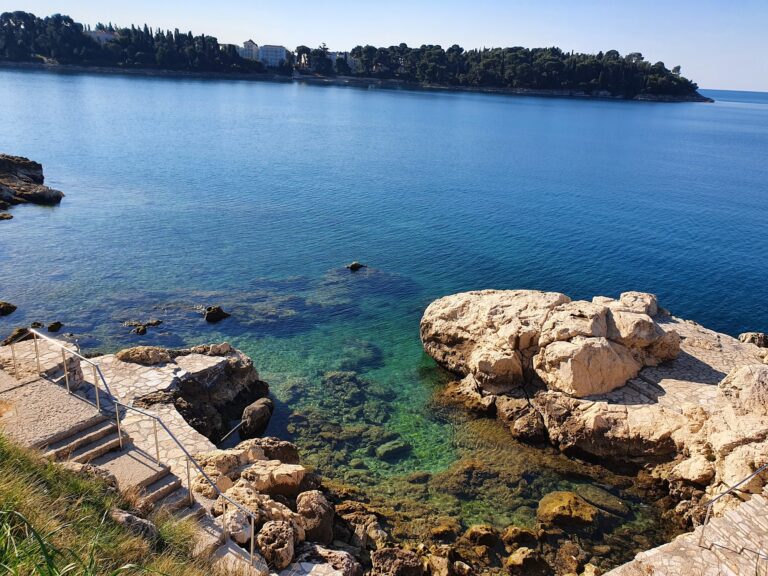
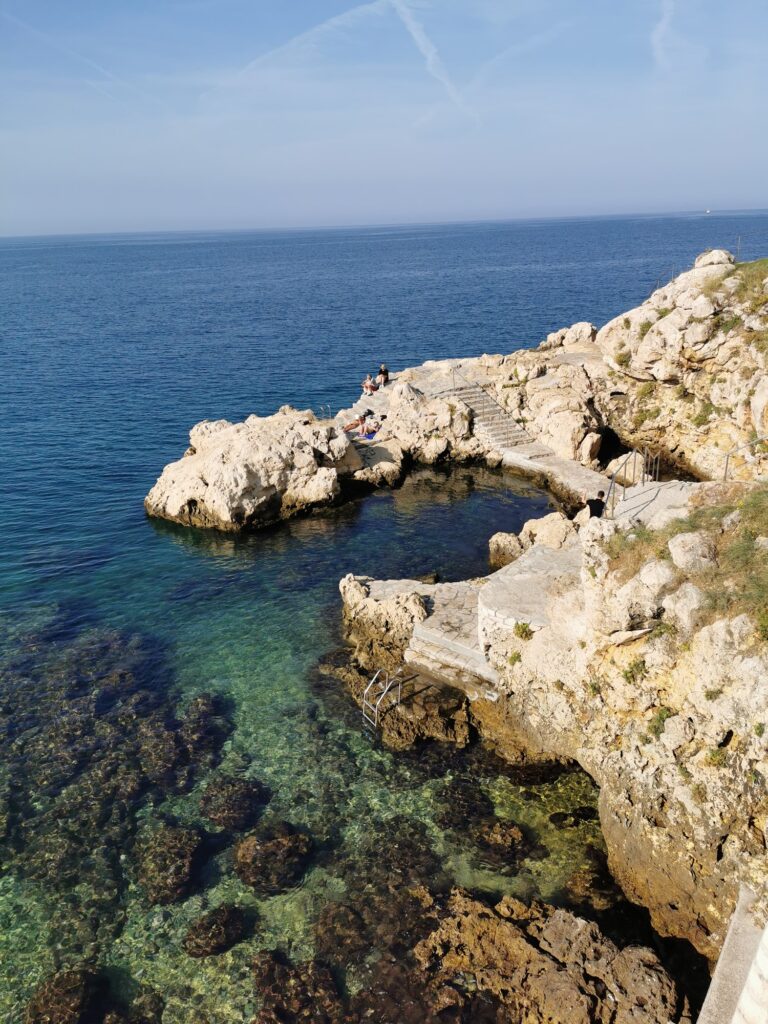
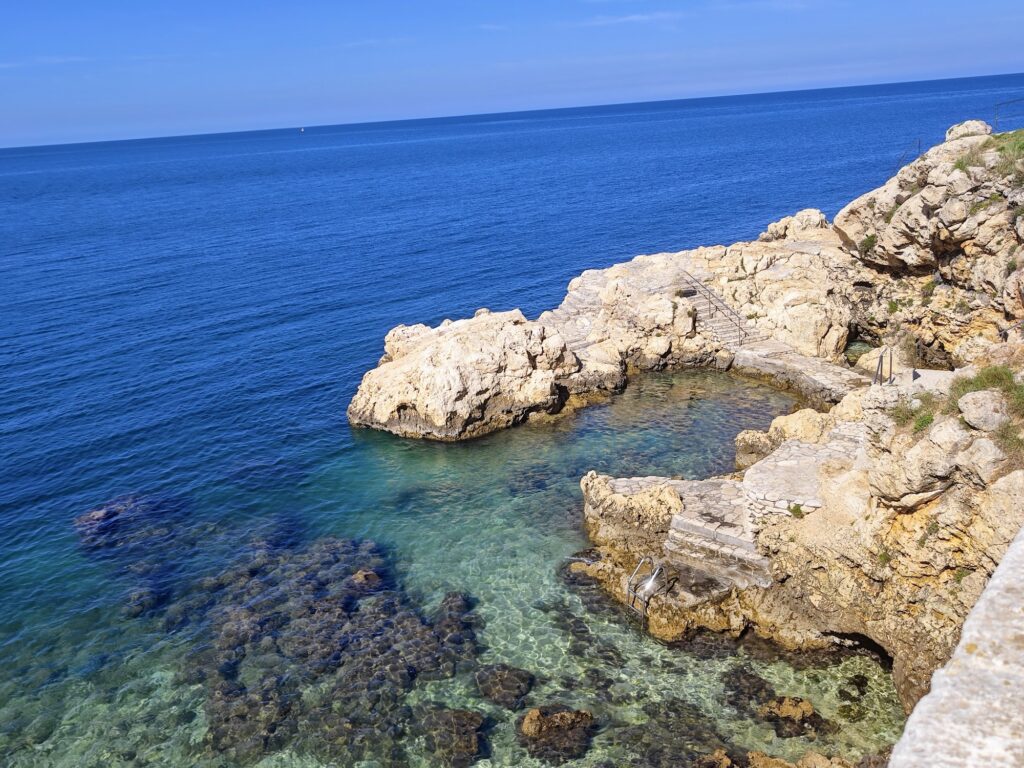
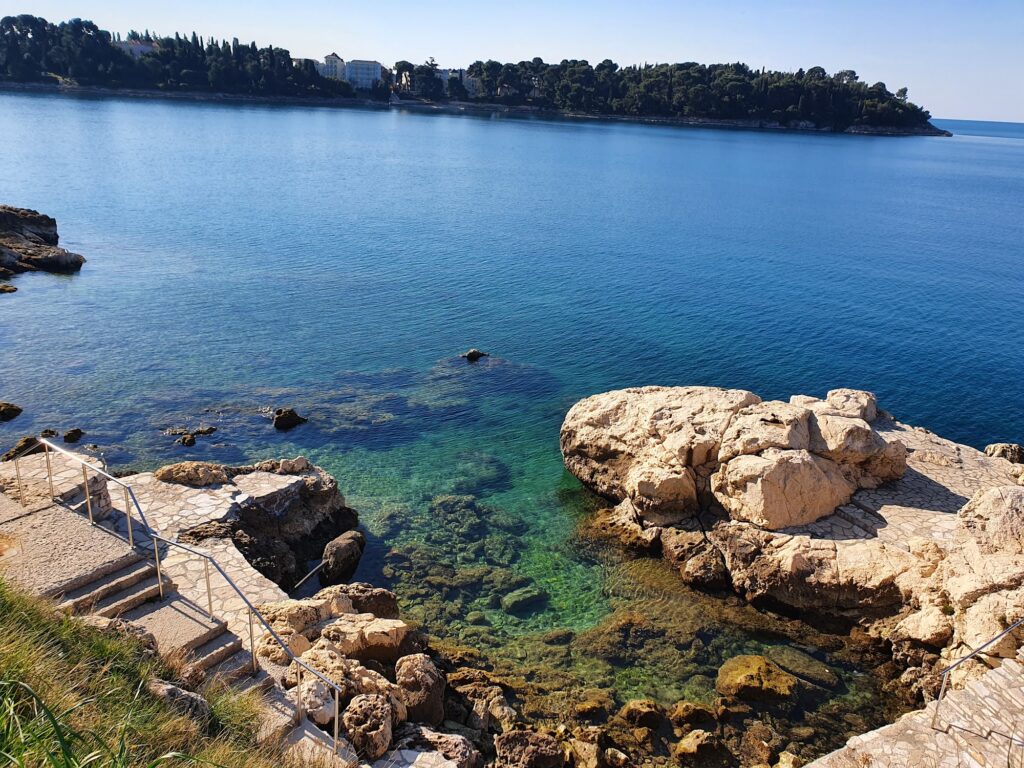
The Balota waterfront is limestone rock — the same stone as the old town walls above, the same stone as the seabed visible through the clear water below. The flat rock platforms at the water’s edge are the sunbathing surface, smoothed by weathering and use, warm to the touch in the afternoon sun, entirely exposed. The metal ladders bolted into the rock at specific entry points are the sea access — a few per section, enough for the number of swimmers the rock can accommodate, though visitor accounts note that the limited number of ladders can create a queue effect when the beach is busy.
The Big Guguliera and Little Guguliera sections at the northern end of the waterfront are the sections where the entry is more gradual and more suitable for children — steps into the water rather than a direct drop, and a slightly less exposed position that makes the swimming more manageable for less confident swimmers. The Baluota and Lanterna sections further south are the sections the name refers to primarily — the deeper, rockier entry, the immediate depth off the platform edge, and the cliff-jumping positions that the higher sections of the wall provide for those willing to use them.
It feels authentically Croatian with no daybeds or beach bars — just locals enjoying summer fun: playing music, eating picnics, and jumping off the cliffs. That account captures the specific social character of Balota that distinguishes it from the hotel beach zone south of the old town: nobody is performing luxury here. People bring their own food, their own speakers, their own towels, and occupy the rock in the way that residents of a Mediterranean coastal town have used their local waterfront since before organised tourism existed.
The Church of St. Euphemia and the Old Town as Beach Architecture
The Basilica of St. Euphemia — the largest Baroque church in Istria, built in the early 1700s on the ruins of earlier structures — sits at the summit of the Rovinj peninsula and provides the dominant vertical element above the beach. The bell tower, which contains the rotating copper statue of St. Euphemia that turns with the wind, is visible from the rock platforms below and from the water. The church’s bell tower is climbable for a fee, with a famously vertiginous staircase that feels more like a ship’s ladder than a stair — the views from the top cover the entire Rovinj bay, the surrounding islands, and the coastal approach from Poreč to the north.
For visitors combining a morning swim at Balota with a climb to the church tower, the physical experience of the two things — descending from the sun-baked rock into the cold deep sea, then climbing through the narrow stone tower to the open air at the top — captures the specifically vertical quality of Rovinj old town as a place built on height and water simultaneously.
No Shade, Sea Urchins, and the Practical Truth About Balota
The source article’s observation that Balota is less suitable for young children than the pebble bays of Zlatni Rt to the south is accurate and worth stating directly. The rocky entry deepens immediately, the ladders require physical confidence to use, the sea urchins occupy the crevices near the base of the rock and below the water surface, and there is no shade anywhere on the platform. For families with toddlers who need gradual shallow wading and sun shelter, Mulini Beach Rovinj in the Lone Bay zone to the south — with its gradual pebble entry, organised facilities, and pine shade above — is the beach for that specific requirement.
Balota is for the swimmer who wants the deep clear Adriatic directly from the old town walls — cold, immediate, and completely without resort mediation. Bring water shoes. Bring your own food and drink. Arrive before 10am in July and August for a space on the platform. Expect sunburn if you stay through the middle of the day without shade.
The beach is dog-friendly — one of the specific practical qualities that local residents value and that organised hotel beaches typically prohibit.
The Cliff-Side Bars and the Old Town Evening Atmosphere
The bars and restaurants of the Rovinj old town built into the cliff-side above the waterfront — some with terrace seating directly overlooking the Balota platforms and the sea — are the food and drink infrastructure for the beach, a few dozen steps above the water level. The combination of an afternoon swim on the rock and an evening drink at one of the terrace bars above, watching the sunset over the Adriatic and the islands to the west, is the specific Rovinj old town programme that the Balota waterfront enables.
The La Puntulina restaurant — a Michelin Guide recommendation built directly into the rocks at the base of the old town walls, with outdoor seating over the sea — is the specific dining context that makes the distinction between Balota as a swimming spot and the broader old town waterfront as an evening destination most clear. The restaurant’s position on the rock, with the sea below and the old town walls above, is the architectural quality that most completely represents what the Balota zone achieves as a place: the city and the sea occupying the same space at the same level.
Plaža Balota in Rovinj is the limestone rock waterfront below the old town walls — flat sun platforms, metal ladders into deep clear water, no shade, no bar on site, sea urchins in the crevices, dog-friendly, and the Church of St. Euphemia visible from the water.
Walk up through the old town. Follow the lanes toward the western sea face.
Bring water shoes and your own food. The rock will be warm. The water will be cold and clear.
Map
Sorry, no records were found. Please adjust your search criteria and try again.
Sorry, unable to load the Maps API.
Near by places: