Velika Plaža Omiš: Sandy Blue Flag Beach at the Cetina
Profile
Velika Plaža, Omiš: The Sandy Town Beach Where the Cetina Meets the Adriatic
Croatia | Omiš | Central Dalmatia
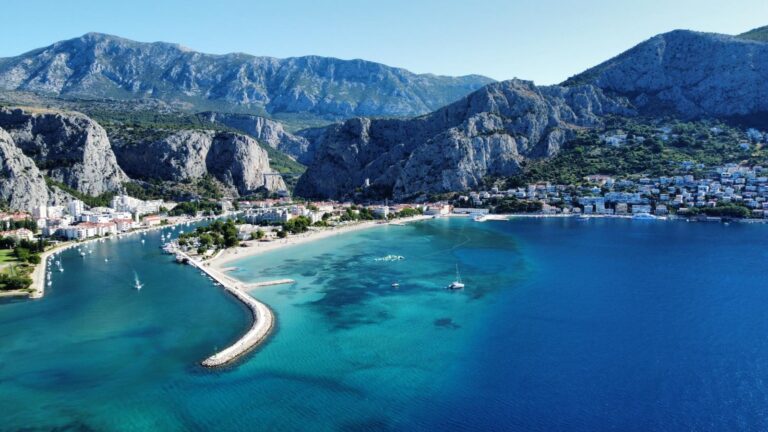
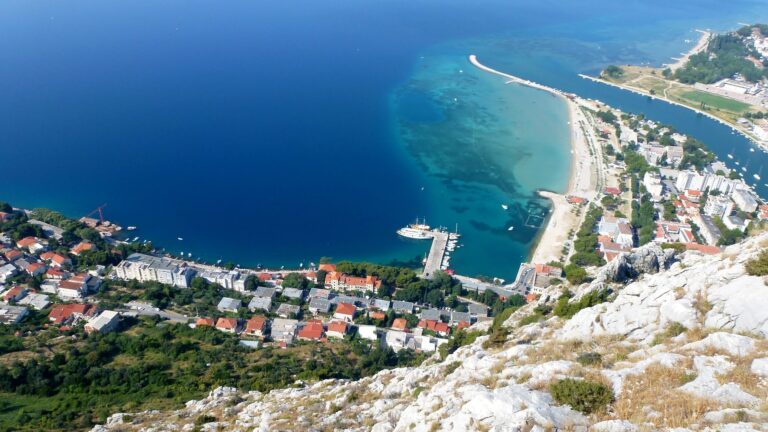
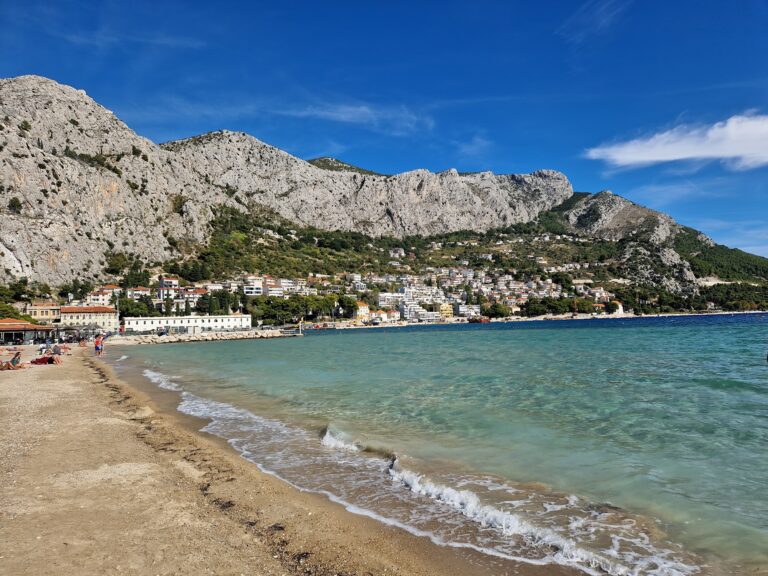
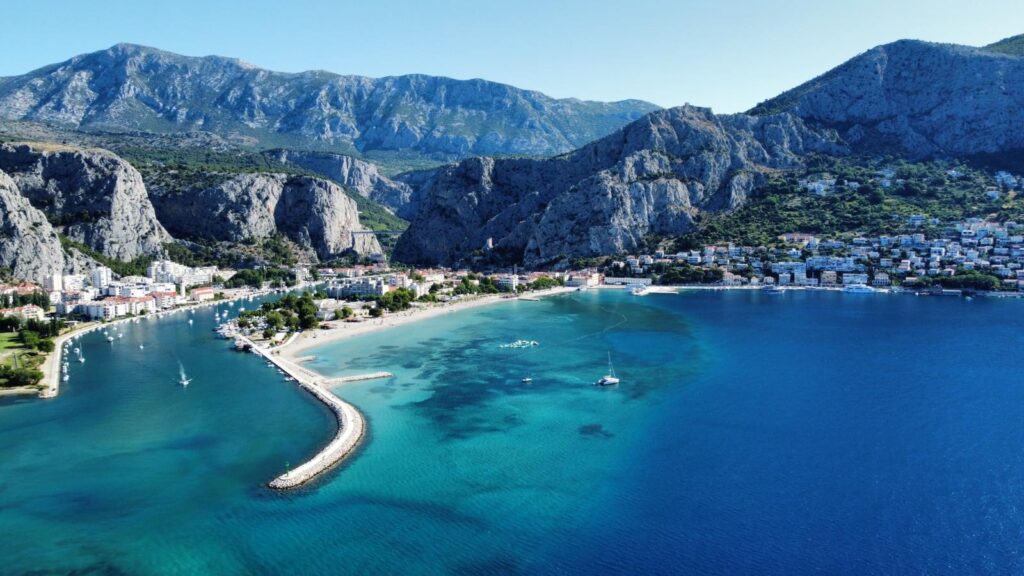
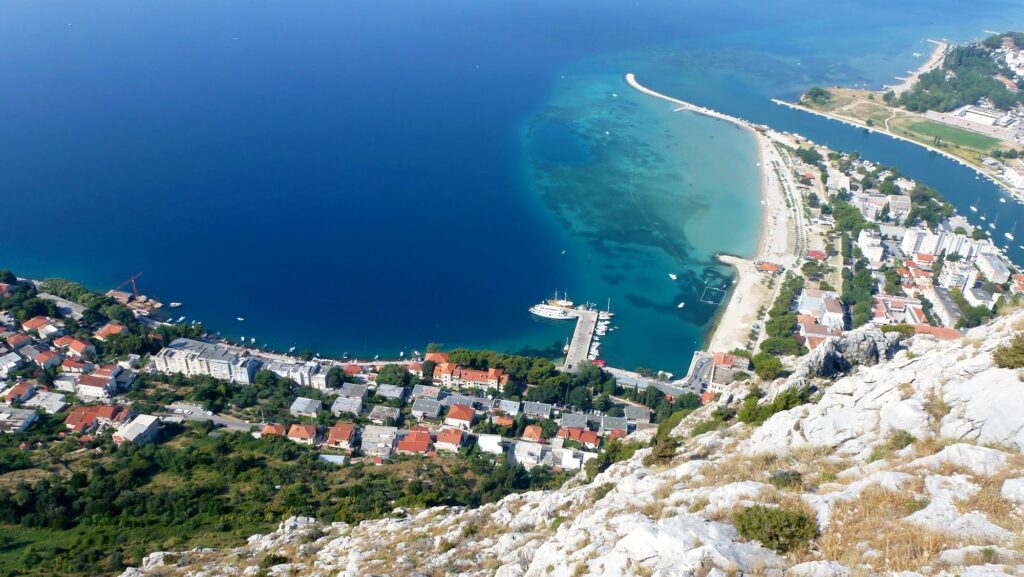
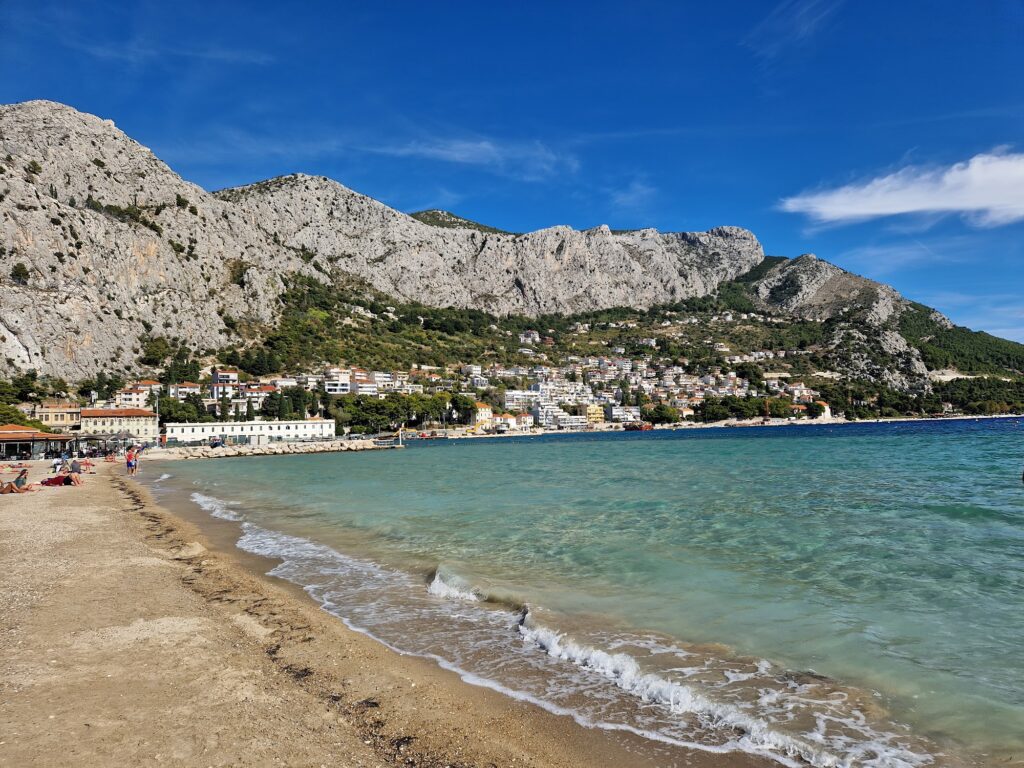
Omiš is a town that announces itself with a canyon. The Cetina river cuts through the Mosor mountain range in a gorge whose vertical limestone walls rise several hundred metres from the river below, and the town sits at the point where the canyon opens and the river reaches the sea. That specific geography — the mountain gorge delivering a river to the Adriatic, the Mirabela fortress perched on the rock above the river mouth, the old town tucked between cliff and water — is the visual condition of Omiš in every direction. Velika Plaža sits directly south of that river mouth, and it owes its existence entirely to the geology: the Cetina’s fluvial sediments, deposited at the river mouth over centuries, have created the sandy beach that the Dalmatian coast almost never provides elsewhere.
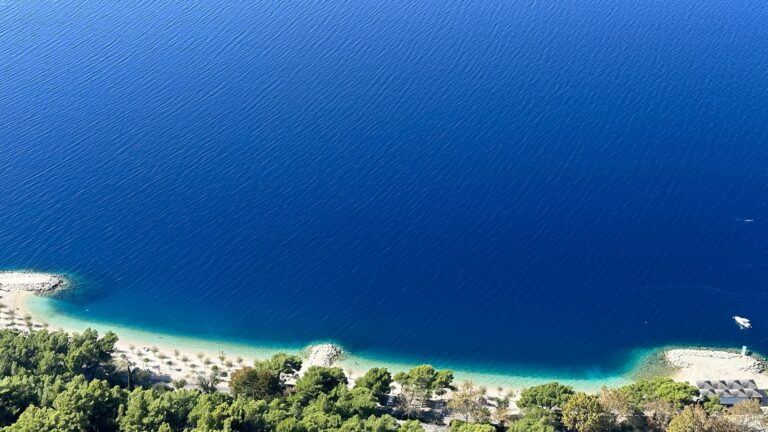
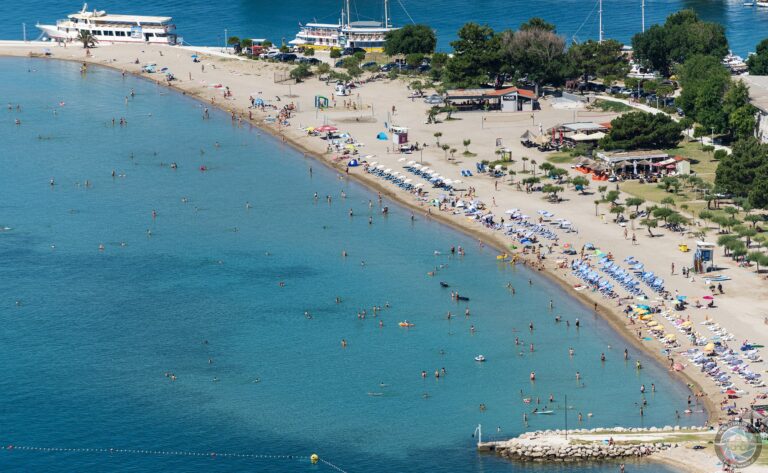
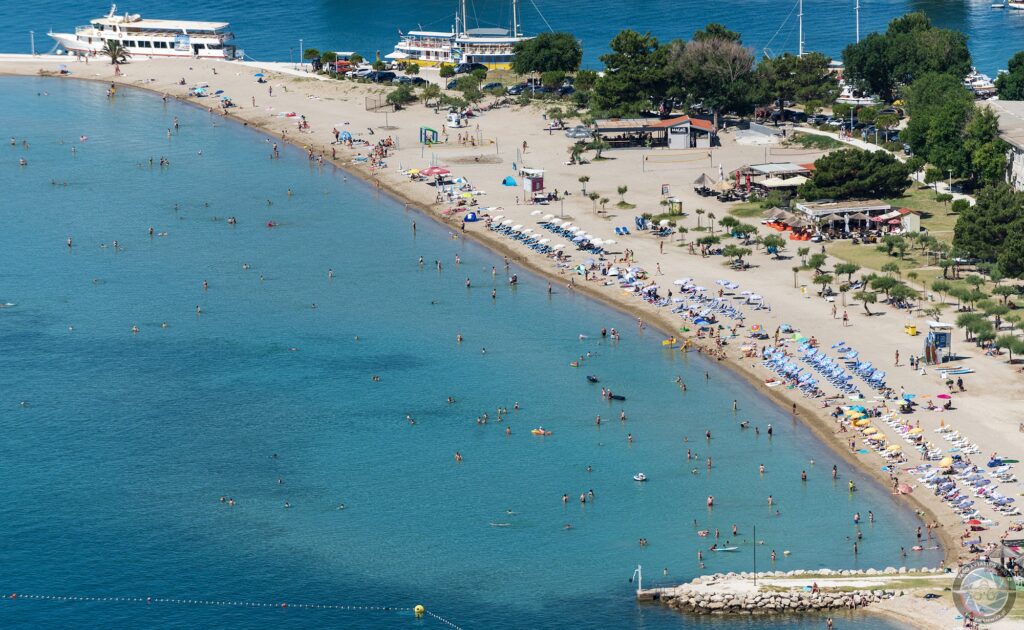
Velika plaža — the Big Beach — is the biggest sandy beach between Split and Makarska, holds the Blue Flag, and stretches approximately 700 metres through the Punta area of the Omiš town centre. It is shallow enough to walk 100 to 200 metres from the shore and still have the water below waist height. The Mosor mountains rise directly to the north. The Cetina river enters the sea at the western end of the beach, and the temperature differential between the cold river water and the warm sea is immediately detectable when swimming toward that end — one of the more specific and physically memorable features of a beach day at Omiš.
Getting There: D8 from Split, Bus Line 60, or by Boat
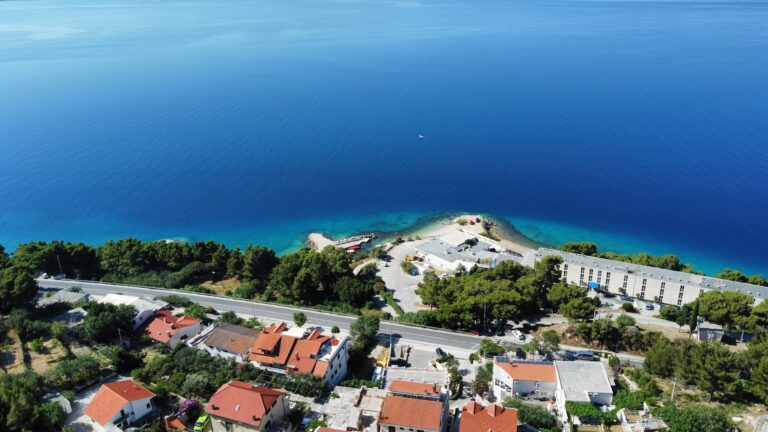
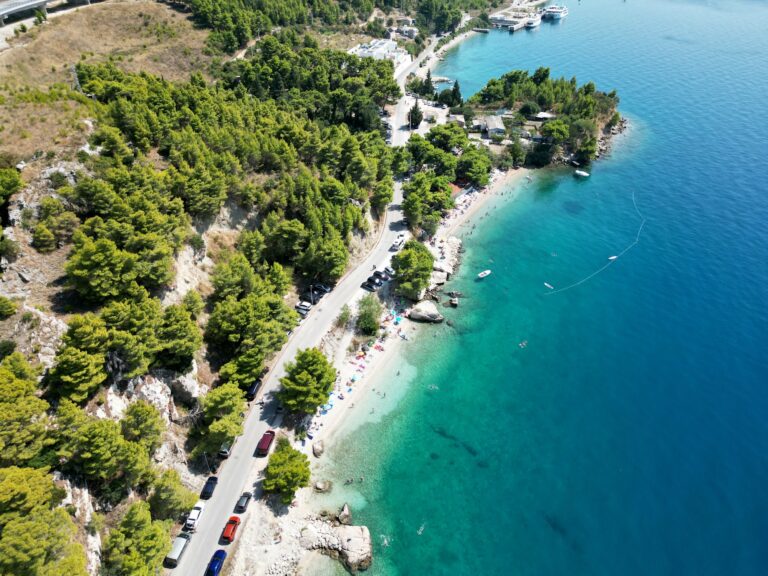
From Split, the drive south along the D8 coastal road to Omiš covers approximately 25 kilometres and takes around 30 minutes under normal conditions. The road follows the coast and is one of the scenic driving routes of central Dalmatia — the Brač channel visible to the right throughout, the Mosor foothills rising to the left. Paid parking is available immediately adjacent to the beach in the Punta area, and the town centre is a few minutes’ walk from the beach entrance.
By bus, Bus Line 60 from Split main station runs every 30 minutes to Omiš and deposits passengers within a five-minute walk of the shore. The journey takes approximately 45 minutes. For visitors staying in Split who want a sandy beach day without renting a car, the bus connection makes Velika plaža a practical choice — it is the closest significant sandy beach to Split on the Dalmatian coast.
By boat, excursions from Split and Trogir reach the Omiš harbour, with the Cetina river mouth and the beach visible from the water on arrival. The approach from the sea shows the specific geography of Omiš — the canyon opening above the town, the Mirabela fortress, the river mouth, and the sandy beach stretching south — in the configuration that the land approach through the town reverses.
The Shore: Sand from the Cetina, Tamarisk Shade, and the Seawall Pier
Velika plaža is sandy because of the Cetina. The river brings sediment from the Mosor range and the limestone karst inland, and centuries of deposition at the river mouth have created the sandy beach that the predominantly pebble and rock coastline of central Dalmatia does not naturally produce. The sand is coarse enough to build sandcastles — the specific grain size that provides the right combination of texture and structure for the purpose — and the shore faces directly south into the Brač channel, catching sun from early morning through the late afternoon.
Tamarisk trees line the beach throughout its length, providing the specific shade structure that is uncommon on the open sandy beaches of the Adriatic — the tamarisk canopy is dense enough to be genuinely useful at midday, and the trees frame the beach visually against the mountain backdrop in a way that makes the setting distinctive even at the height of summer crowds. Pine trees are also present in sections. The disability access lift on a small pier at the eastern end of the beach provides the sea entry for visitors with mobility challenges — a specific infrastructure provision that the official beach listing notes and that is absent at most comparable sandy beaches in the region.
The stone seawall pier at the western end of the beach — running between the Cetina river mouth and the Adriatic — is a specific and unusual feature. It creates a walkable boundary between the fresh river water and the salt sea, and the evening promenade along its length, with the canyon entrance visible to the north and the Brač channel opening to the south, is the specific Omiš evening activity that the beach’s geography makes available.
The Cetina River Temperature Differential
The western section of Velika plaža, near the point where the Cetina enters the Adriatic, is consistently several degrees cooler than the main beach. The cold groundwater and snowmelt that feeds the Cetina from the Mosor karst system delivers water to the sea at a temperature that does not match the sun-warmed shallows of the main sandy beach, and the mixing zone at the river mouth is perceptible to any swimmer who moves in that direction.
This temperature differential is a feature rather than a deficiency — on the hottest Dalmatian summer days in July and August, the cooler western section of Velika plaža provides a refreshing contrast to the warm main shallows and draws swimmers specifically for that reason. The visual effect at the boundary — where the slightly turbid river sediment meets the clear sea — is also visible from the surface, and the transition zone is one of the more geologically readable features of any Croatian beach.
Water Quality: Blue Flag and the Cetina Sediment Context
Velika plaža holds the Blue Flag — the annual water quality and beach management certification — which confirms that the monitored water quality at the main swimming area meets the international environmental standards the certification requires. The sandy seabed below the main shallow zone is visible through the water column in calm conditions, and the natural fish and shellfish population that the Cetina river mouth ecosystem supports makes snorkelling in the area more productive than at pure sandy beaches without a river nutrient source.
It is worth noting honestly what the geology produces alongside the sandy beach: the Cetina delivers sediment continuously, and after heavy rainfall in the catchment the river water’s turbidity can temporarily affect visibility in the western section near the mouth. This is a seasonal and weather-dependent condition rather than a chronic water quality issue, and the Blue Flag certification reflects the beach’s overall management standard rather than a guarantee of constant tropical clarity. The main beach shallows are reliably clear on calm summer days.
Facilities at Velika Plaža
The facilities at Velika plaža are comprehensive and consistent with a Blue Flag town beach that serves both residents and the significant visitor numbers the beach draws through the summer. Freshwater showers, changing cabins, and public restrooms are distributed along the beach length. Sunbed and umbrella hire is available at multiple points. Lifeguards are stationed through the peak season in elevated positions above the swimming zone.
Active recreation: jet ski rental, boat and kayak hire, sea trampolines, a Wibit aqua park in the water, beach volleyball courts, football courts, and playground equipment. The Wibit floating water playground is the structured active provision for older children and teenagers. The playground equipment serves the younger age group. The walking path and seating benches along the eastern edge of the beach and the seawall pier provide the passive recreation and evening promenade option.
Paid parking is immediately adjacent to the beach, which is a practical advantage for families arriving by car with equipment. The town centre of Omiš — with its restaurants, the old town pirate history, and the Mirabela fortress accessible by a short steep climb — is within walking distance of the beach, making the combination of a beach morning and an old town afternoon the natural structure of a day in Omiš.
Soparnik and the Omiš Culinary Context
The one specifically local food item worth knowing before visiting Omiš is soparnik — the flat pastry filled with Swiss chard, olive oil, and garlic that originated in the Poljica area immediately north of Omiš and that holds UNESCO intangible cultural heritage status. It is a simple preparation — unleavened dough, chard filling, olive oil finish — but it is the specific culinary identity of this section of central Dalmatia and is available in the Omiš restaurants and market stands in a way it is not widely available elsewhere. The restaurants along the Cetina river — particularly Radmanove Mlinice, a converted watermill upstream from the town — serve the full range of Dalmatian river and sea cooking in the canyon setting that the beach itself does not provide.
Omiš Beyond the Beach: the Cetina Canyon and Pirate History
Omiš is one of the more historically specific towns on the Dalmatian coast. Its medieval identity as a pirate base — the Omiš pirates controlled this section of the Adriatic for centuries, operating from the canyon and the fortified cliffs that made the town nearly impregnable from the sea — is commemorated in the summer Pirate Nights festival and the cannon fired from the Mirabela fortress at noon during the summer season.
The Cetina canyon above the town is the other dimension of the Omiš experience that the beach alone does not provide. Rafting and kayaking on the river, zip-line tours above the canyon, hiking to the waterfall of Velika Gubavica (48 metres), and the boat trips into the lower canyon from the river mouth are all available through operators based in the town. The combination of a morning on Velika plaža and an afternoon on the Cetina covers the full range of what Omiš offers in a single day without requiring additional travel.
Velika plaža in Omiš is the sandy beach that the Cetina river made — centuries of sediment delivered to the Adriatic at the foot of the Mosor canyon, accumulated into a 700-metre sandy shore that is the biggest of its kind between Split and Makarska and the reason families from across central Dalmatia drive to Omiš when they want sand rather than pebble.
Drive the D8 from Split. Park at Punta. Walk west toward the river mouth in the afternoon.
The cooler water at the Cetina end is the specific pleasure that no other beach on this coast provides.
Map
Sorry, no records were found. Please adjust your search criteria and try again.
Sorry, unable to load the Maps API.
Near by places: