Ruskamen Beach Lokva Rogoznica: Windsurf and Dive
Profile
Ruskamen Beach, Lokva Rogoznica: Windsurfing, Ancient Amphorae, and the Oldest Nudist Shore on the Omiš Riviera
Croatia | Lokva Rogoznica | Omiš Riviera
Ruskamen Beach in Lokva Rogoznica carries more distinct identities than most beaches on the Omiš Riviera manage to accumulate. It is one of the most recognised windsurfing destinations in Dalmatia, the location of one of the oldest nudist beaches on the entire Adriatic, and the point from which the diving centre organises excursions to an amphorae site at 30 metres depth — ancient vessels from approximately 100 BC discovered on the seabed offshore. Those three identities coexist on the same stretch of pine-backed pebble shore in Lokva Rogoznica, 6 kilometres south of Omiš on the D8 coastal road, and their coexistence is what makes the beach the specific destination it has been for decades rather than a generic pebble cove on the Dalmatian coast.
The windsurfing is the function of the Maestral — the reliable northwest afternoon thermal wind that develops over the Brač channel through the summer months and that the specific topography of the Ruskamen bay concentrates and amplifies into the conditions that draw windsurfers from across Croatia and from the wider Adriatic destination market. The nudist tradition is the longest-established of the beach’s identities, preceding the windsurfing infrastructure and the diving programme. The amphorae dive is the most unusual — the ancient commercial vessels that sank in these waters in the last century BC and that remain at depth as a protected dive site are as specific a connection to the pre-Roman Mediterranean world as any beach in central Dalmatia carries.
Getting There: South on the D8 from Omiš, by Bus, or on Foot
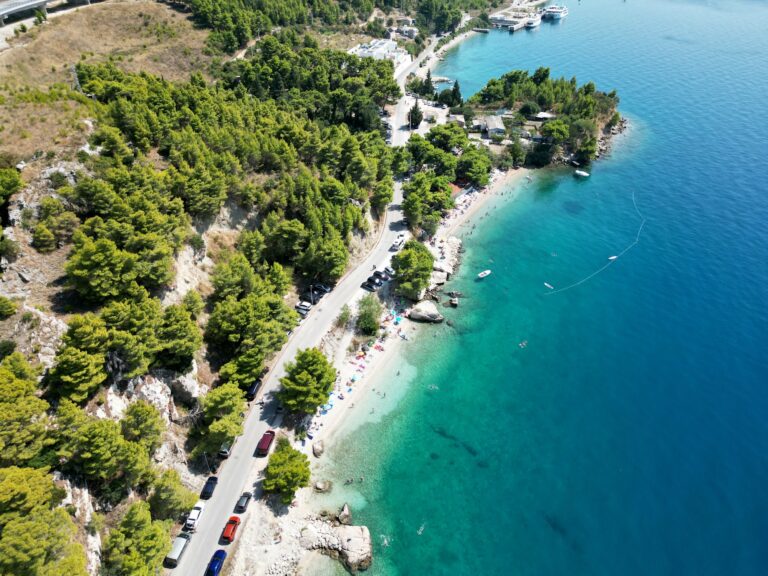
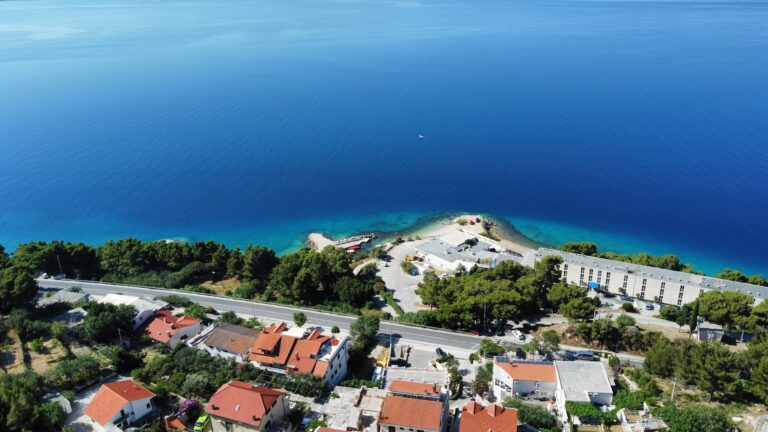
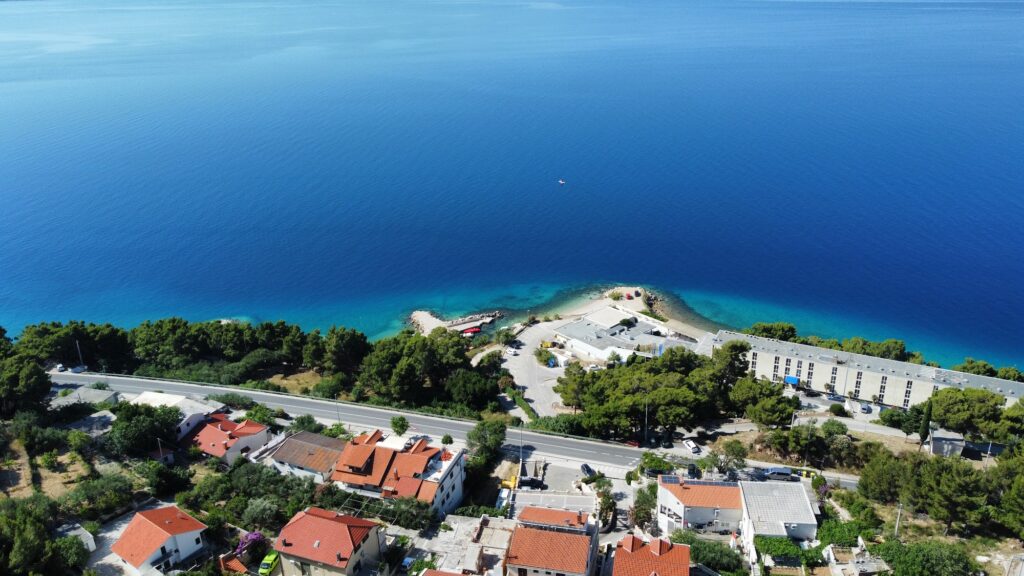
From Omiš, Ruskamen is approximately 6 kilometres south along the D8 coastal road — a drive of around ten minutes that follows the riviera coast through the succession of small settlements and coves that define the lower Omiš Riviera. The Ruskamen settlement and beach are signposted from the road, with free parking available adjacent to the beach area. The D8 runs directly above the beach in sections, and the accessibility that the road-level position provides is the specific advantage of the Lokva Rogoznica beaches — the official tourist board notes that they are among the most accessible on the riviera, with the road running directly above the shore and parking available literally at beach level.
By bus, any intercity bus between Split and Makarska stops at Ruskamen on request, depositing passengers within metres of the sea. The bus connection makes the beach accessible from both Split (approximately 35 minutes) and Makarska (approximately 25 minutes) without a car, which is practical for visitors based in either city who want to spend a day on the quieter lower riviera.
For visitors staying in Lokva Rogoznica accommodation, the beach is typically accessible on foot through the settlement paths and stone steps that lead from the village to the shore — the walking time varies with the specific accommodation location but is generally under ten minutes.
Windsurfing at Ruskamen: The Maestral and the Afternoon Thermal
The windsurfing reputation of Ruskamen is built on the Maestral — the northwestern thermal wind that develops over the Adriatic on summer afternoons as the temperature differential between the sea and the heated land creates the onshore breeze that generates reliable sailing and surfing conditions. The Maestral builds from around noon and reaches its peak strength through the mid-afternoon, producing the conditions that experienced windsurfers seek and that the windsurfing school at the beach is designed around for learners.
The Brač channel is the body of water that the wind crosses on approach to the Ruskamen bay, and the specific geometry of the bay and the surrounding coastline concentrates the wind in the direction most useful for the sport. The Omiš tourist board identifies Ruskamen as one of two locations on the riviera with a windsurfing school — the other being the campsite at the Omiš town beach — and the Ruskamen school is the one with the longer established reputation among serious windsurfers.
The afternoon wind conditions that make Ruskamen a windsurfing destination are the same conditions that make the morning hours the preferred swimming and snorkelling time for visitors who are not there for the sport. The calm morning water is distinctly different from the wind-driven afternoon sea, and planning the day around that transition — swimming in the calm, watching the sails in the afternoon, and dining as the wind drops — is the natural structure of a full day at Ruskamen.
The Nudist Tradition at Ruskamen
Ruskamen holds the distinction of hosting one of the oldest nudist beaches on the Adriatic — a tradition that predates most of the organised naturist infrastructure of the Croatian coast and that has been a part of the beach’s identity for generations. The naturist section of the beach coexists with the main beach area without formal separation — the clothing-optional tradition is observed by convention rather than enforced by fencing — and the beach’s long history with naturism means it has a settled and matter-of-fact approach to the practice that newer nudist designations do not always have.
The beach’s naturist reputation draws a specific visitor demographic alongside the windsurfing and diving communities, and the combination of all three gives Ruskamen a distinct identity from the more conventional family resort beaches of the upper Omiš Riviera. Visitors who are unfamiliar with the naturist context should be aware of it before arriving; visitors who want the naturist option will find it well-established and without the ambiguity that more casually designated beaches sometimes carry.
Diving at Ruskamen: the Mala Luca Amphorae and Vruja
The diving centre at Ruskamen organises excursions to two specific sites that give the underwater offer here a character unusual for a beach at this scale. The Mala Luca amphorae site is the first — the ancient commercial vessels from approximately 100 BC that were discovered at 30 metres depth offshore. The amphorae are a protected site, which means the dive is observational rather than retrieval-oriented, but the visual impact of ancient maritime commerce sitting undisturbed on the sea floor at depth is a specific underwater experience that the standard reef and fish-watching dives of the Dalmatian coast do not provide. The depth rating makes this an excursion for experienced divers rather than beginners.
The Vruja diving site is the second destination that the centre includes in its programme — a location between Pisak and Brela where freshwater springs emerge from the sea floor in the channel, creating the surreal visual of cold freshwater ascending through warm salt water and the specific ecosystem that the nutrient-rich spring water supports. Vruja is consistently rated among the most distinctive dive experiences on the entire Croatian coast by diving publications.
The Shore: Pine Forest, Pebble, and the Brač Channel View
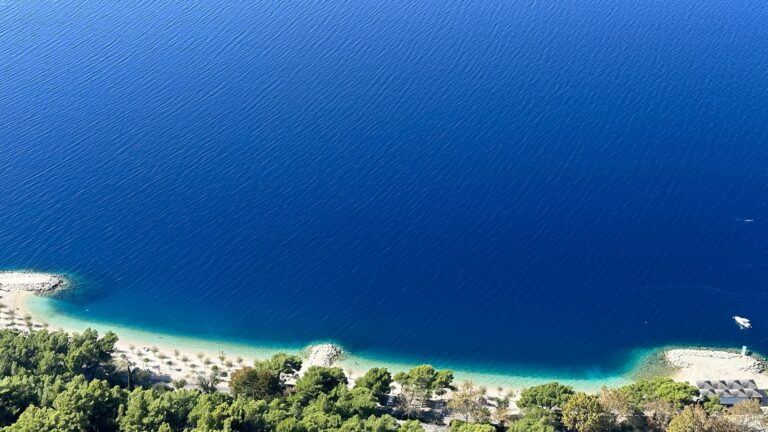
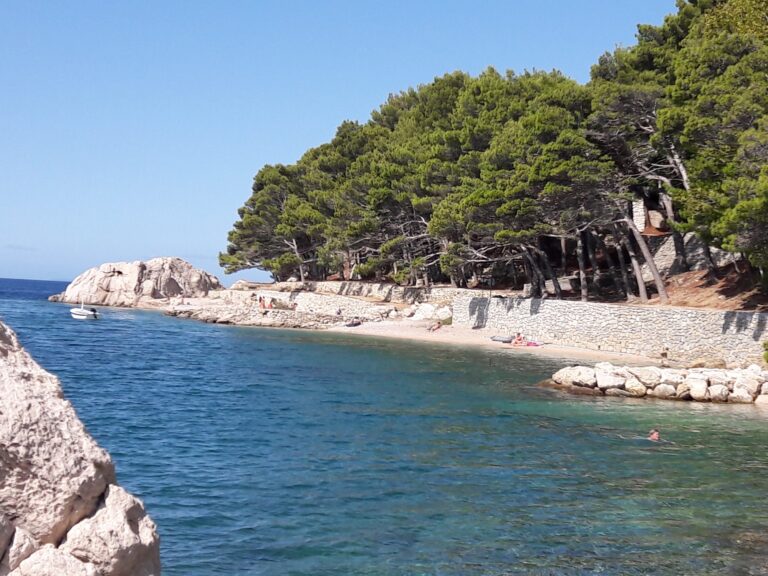
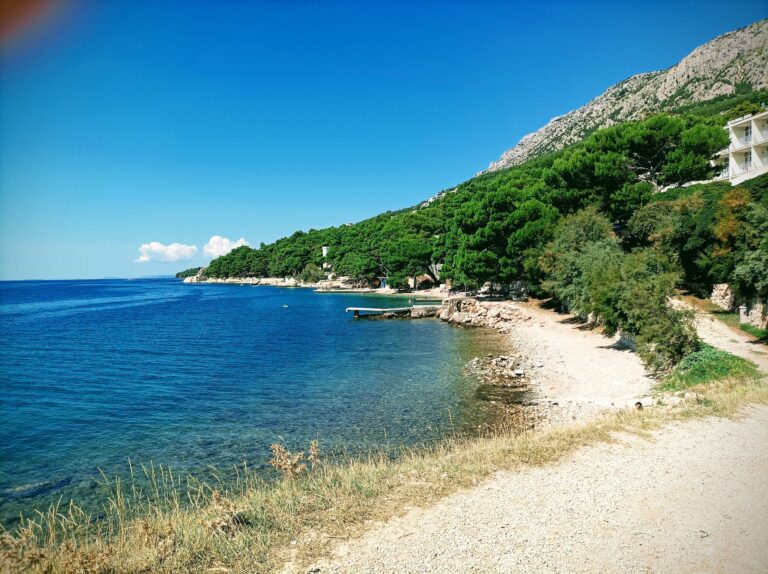
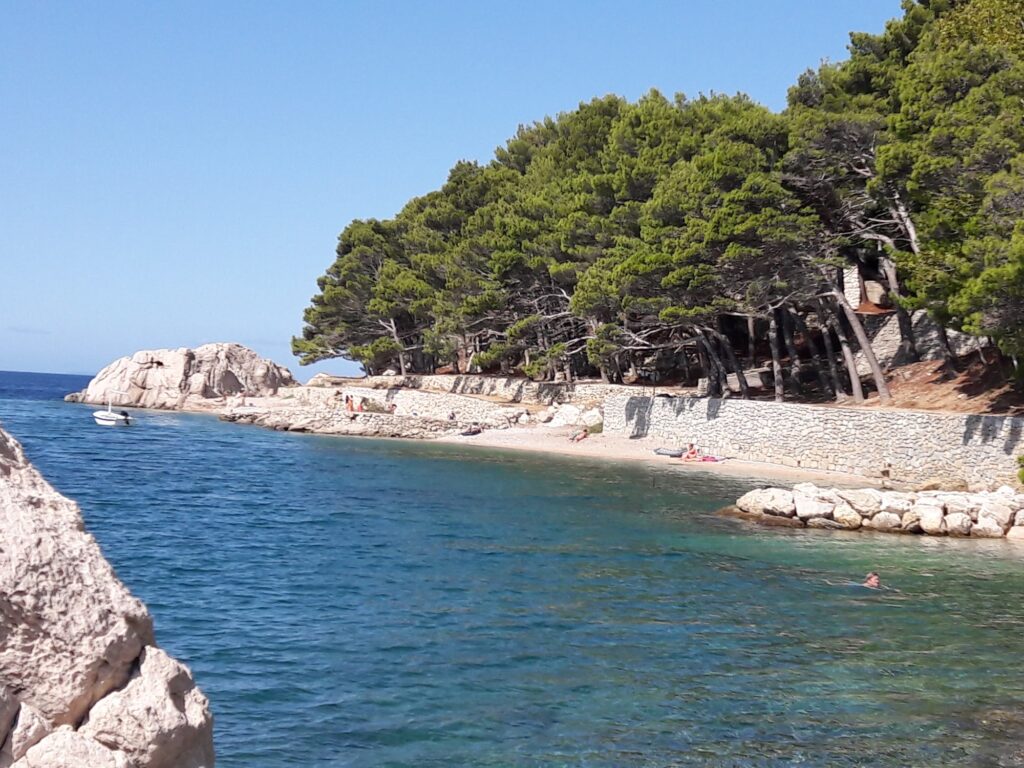
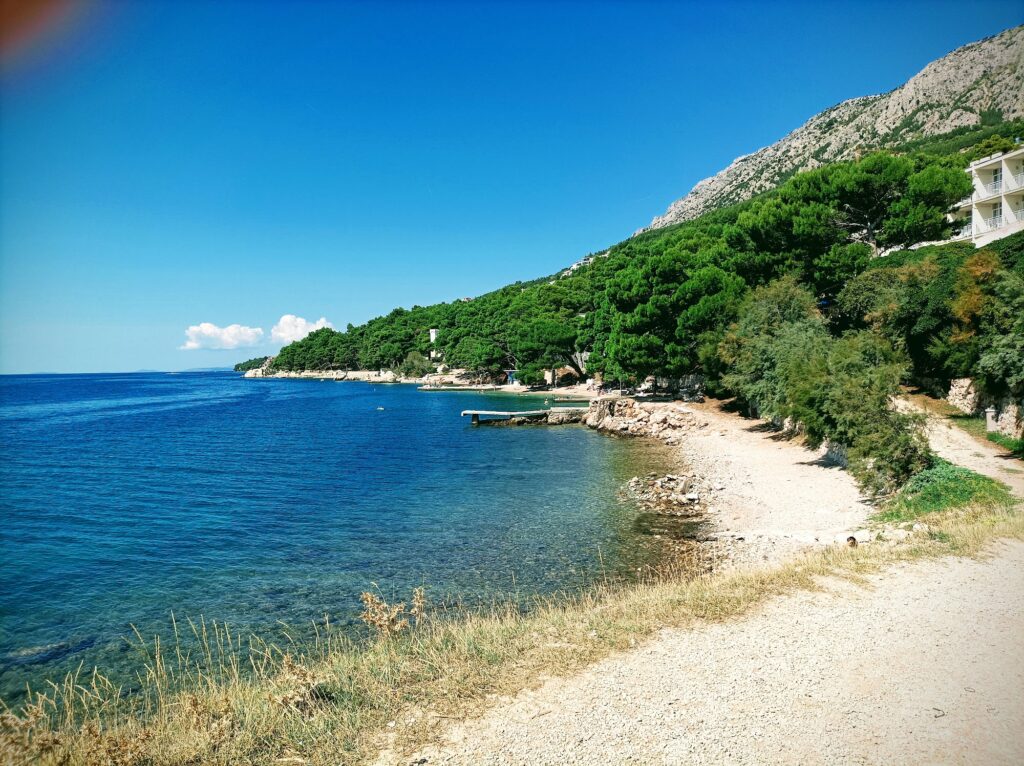
The Ruskamen pebble beach is backed by pine forest that reaches close to the waterline in sections — the same centuries-old pine cover that characterises the best Omiš Riviera beaches — and divided into smaller bays by rock formations along the shore’s length. The pebbles are fine and smooth. The water entry is gradual rather than abrupt in the central sections. The pine shade is functional through the morning hours and in the late afternoon, providing the natural relief from the midday sun that the beaches at this latitude require for comfortable extended visits.
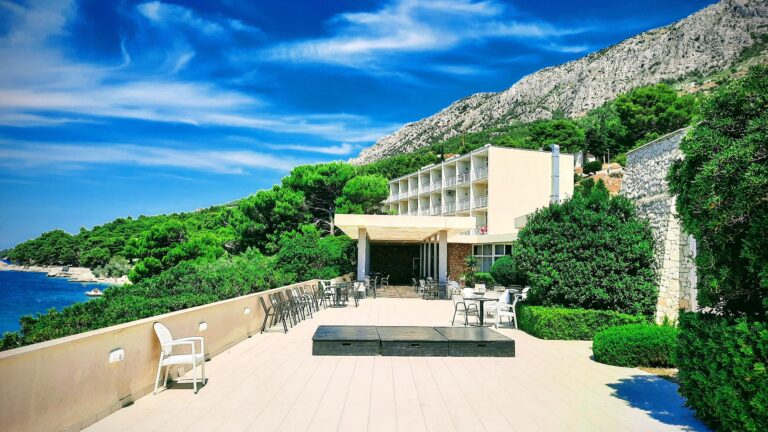
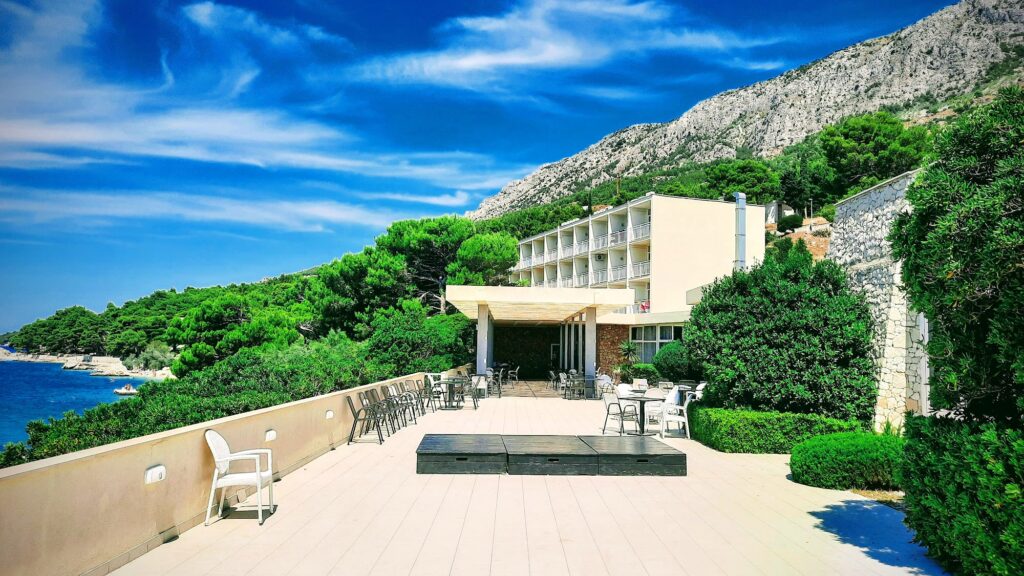
The Brač channel faces the beach from the west and southwest, and the island of Brač is directly visible across the water — the same view shared by Plaža Brzet Omiš and the other west-facing beaches of the riviera, here from the 6-kilometre-south position that gives the vista a slightly different perspective from the Omiš town beach angle. Showers and restaurant provision are available at the beach in the hotel complex and campsite section. Tennis courts, volleyball, and a bowling facility provide the land-based activity infrastructure for the accommodation guests and day visitors alike.
Ruskamen in the Omiš Riviera Context
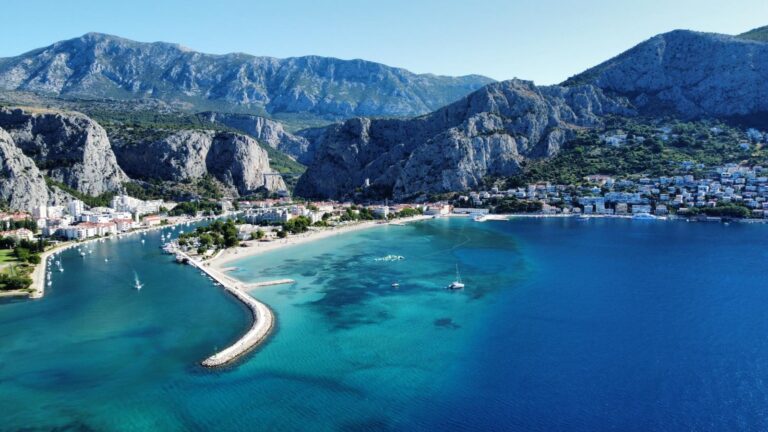
The Omiš Riviera south of the town runs through settlements of increasing distance from the Split infrastructure — Brzet, Nemira, Stanići, Lokva Rogoznica, Medići, Marušići, and Pisak — each with its own beach and character. Ruskamen in Lokva Rogoznica represents the point in that progression where the beach’s identity has been shaped by specific sporting and recreational traditions over decades rather than by resort development or proximity to the town centre.
For visitors choosing between Ruskamen and the Velika Plaža Omiš town beach to the north, the practical comparison is between a sandy, shallow, fully facilitated town beach within walking distance of the old town and a pebble pine-backed sports and naturist beach 6 kilometres south with its own specific windsurfing, diving, and naturist history. Both are legitimate and worthwhile; they serve different purposes and attract different visitor profiles along the same 20-kilometre riviera.
Ruskamen Beach in Lokva Rogoznica is a beach defined by what it has been for a long time — one of the Adriatic’s oldest nudist shores, one of Dalmatia’s most respected windsurfing locations, and the access point to an amphorae dive that connects the swimming water directly to the ancient Mediterranean trade routes that the Brač channel carried two thousand years ago.
Drive south on the D8 from Omiš. Turn at the Ruskamen sign. Park at the shore.
Swim in the morning. Watch the sails in the afternoon.
Map
Sorry, no records were found. Please adjust your search criteria and try again.
Sorry, unable to load the Maps API.
Near by places: