Potovošće Strand Krk Island: Eastern Coast Beach Vrbnik
Profile
Potovošće Strand, Krk Island: The Eastern Coast Beach That the Vineyards Lead You To
Croatia | Krk Island | Kvarner Gulf
The road from Vrbnik to Potovošće passes through the vineyards that produce Žlahtina — the white wine that is one of Krk Island’s most specific and most celebrated products — and the transition from vineyard to sea is abrupt enough to feel deliberate. One moment the air carries the warm, slightly sweet quality of the vines in summer heat. The next, as the road descends toward the eastern coast and the Vinodol Channel opens ahead, it shifts to the sharper, colder quality of open-sea air coming off water that is not enclosed by any bay or sheltered by any island.
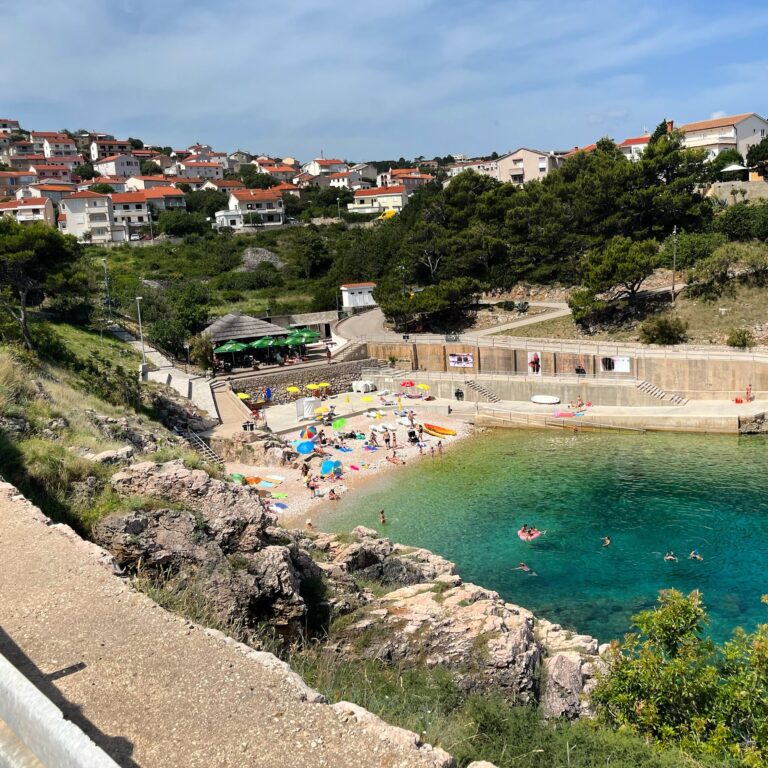
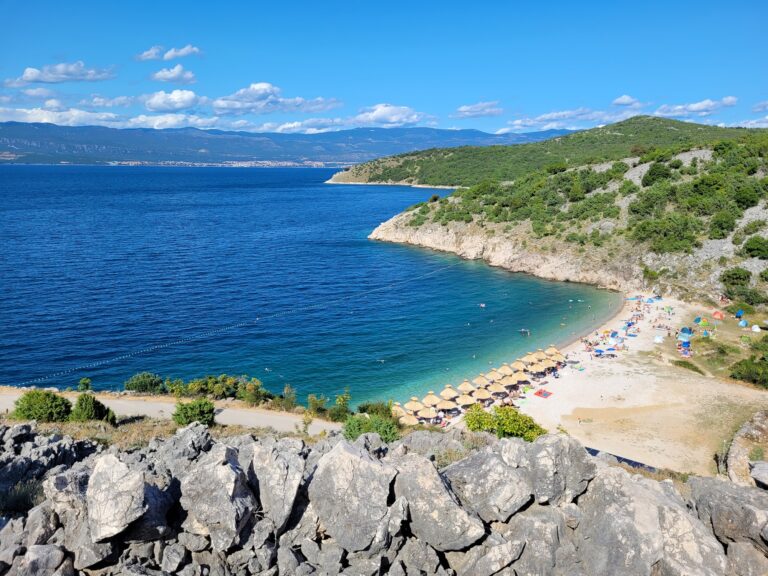
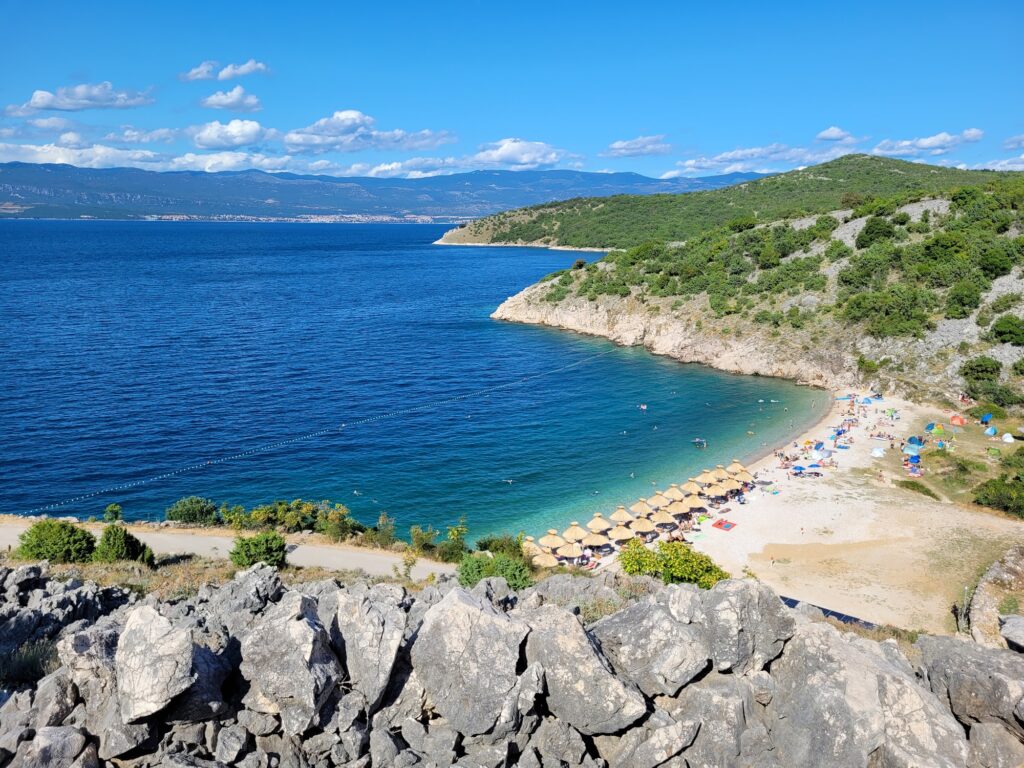
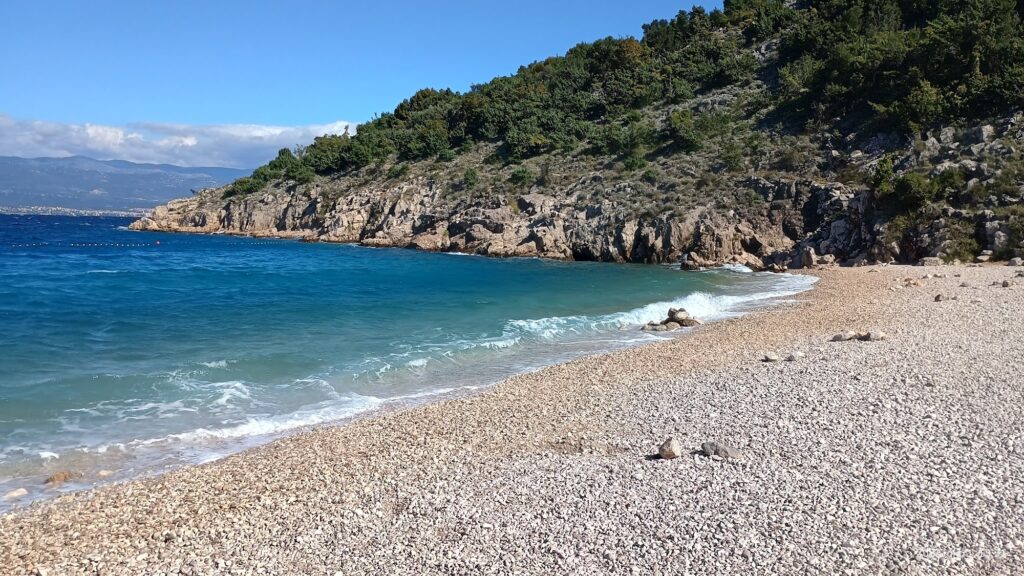
Potovošće Strand sits at the base of that descent, below the limestone cliffs of the eastern Krk coast and facing the open channel with the directness of a beach that has no geographic shelter between it and the Adriatic currents moving through. The water is cooler here than on the island’s sheltered western shores. The transparency is extraordinary. The view across the channel toward the Velebit mountains on the mainland is, on a clear day, the most dramatic continental backdrop available from any beach on Krk Island.
I found it by following directions from a winemaker in Vrbnik who described it with the characteristically brief enthusiasm of a local who assumes the place is already known to everyone. It was not known to me, and the discovery — arriving at the organised parking area behind the beach and descending to the shore with no particular expectation — produced the specific satisfaction of a beach that earns its setting rather than merely occupying it.
Getting There: The Vineyard Road from Vrbnik
How to get to Potovošće Strand from Vrbnik is a ten-minute drive that is worth taking slowly enough to appreciate what it passes through.
From Vrbnik centre — the medieval cliff-top town that sits dramatically above the eastern coast of the island — signs for Potovošće direct the route through the vineyard landscape that characterises this part of Krk’s interior. The road is paved throughout and the descent to the coast is gradual, the Vinodol Channel and the Velebit mountains becoming progressively more visible through the vineyard rows as the elevation drops.
A large organised parking area sits directly behind the beach — a provision that is, as the original description notes, genuinely rare for a beach of this natural character on Krk Island. The scale of the parking reflects the beach’s drawing power among visitors who know the eastern coast, and arriving before mid-morning on peak summer days is the standard practical advice.
By taxi boat from Vrbnik harbour, the approach from the sea delivers the limestone cliff formations of the eastern coast in their full scale — the vertical rock faces, the hidden coves and sea caves that punctuate the coastline, and the beach itself appearing as a break in the cliff wall at the base of the descent. It is the more visually dramatic introduction to the setting and worth taking on at least one direction of the journey.
The Setting: Eastern Coast, Open Channel, Velebit Horizon
The eastern coast of Krk Island operates at a different register from the western and southern shores that the island’s main tourist traffic gravitates toward, and Potovošće exemplifies that difference most completely.
The beach faces east across the Vinodol Channel toward the Dalmatian hinterland — the Velebit mountain range visible on the mainland horizon with a clarity that the enclosed bays and channels elsewhere on the island do not provide. The mountains rise to over 1,700 metres above the coastline visible from the beach, and on a clear day their profile is dramatic enough to constitute a view independently of the water, the cliffs, and everything else the beach provides.
The limestone cliffs that frame the beach on its northern and southern sides are the specific geological feature that gives the eastern Krk coast its character — steep, pale, fractured in the way of exposed Adriatic limestone, and providing the structural complexity both above and below the waterline that makes this stretch of coast more interesting to look at and to explore than the flatter, more uniformly pebbled western shores.
The medieval town of Vrbnik is visible on the clifftop above and slightly north of the beach — its stone buildings and the church tower perched at the cliff edge in a position that has historically served as both a defensive vantage point and an involuntary theatrical element in the view from the shore below. Looking up from the water at the Vrbnik cliffs with the town above them is one of the more striking perspectives available on Krk Island and one that the beach’s position makes available from a vantage point that the town’s own viewpoints cannot reciprocate.
The Shore and Water Quality
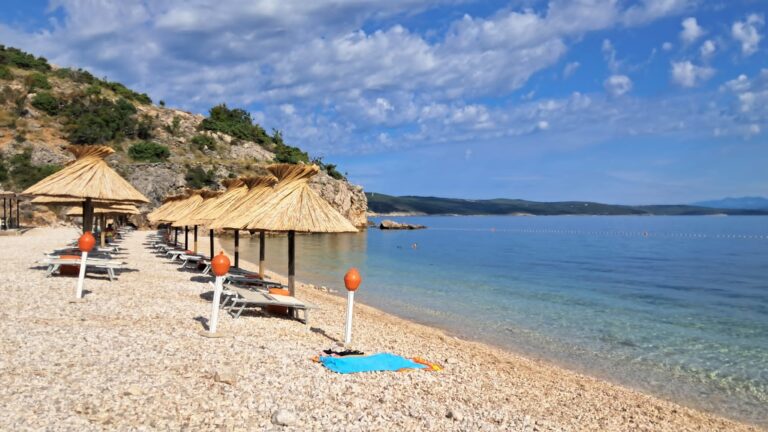
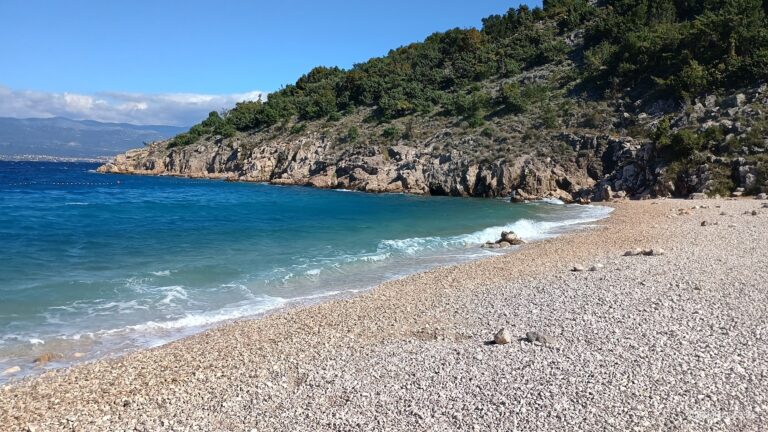
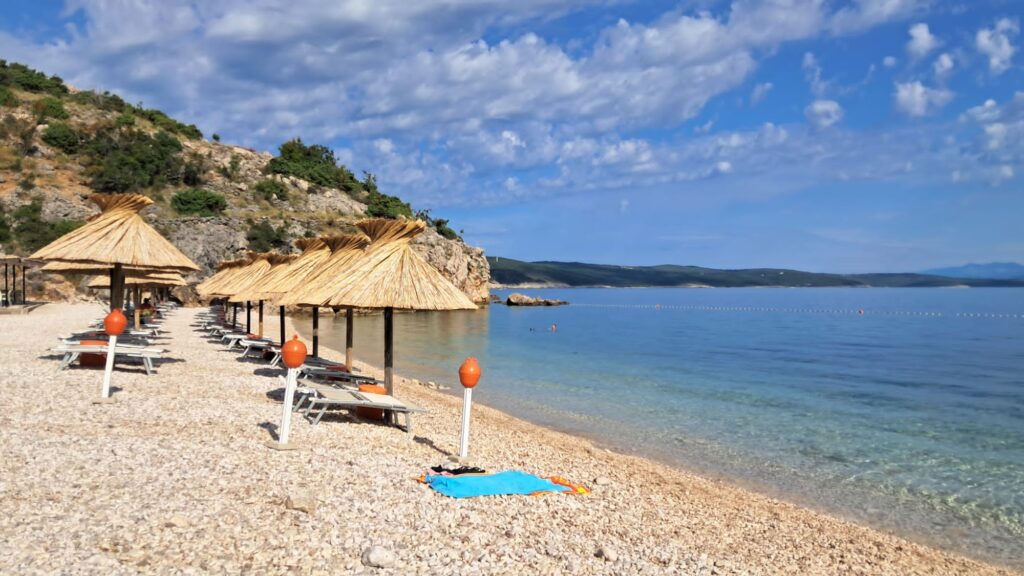
The shoreline at Potovošće Strand is smooth, sun-bleached pebbles — the characteristic surface of the eastern Krk coast — clean, well-maintained, and giving the water in front of them the reflected brightness that pale pebble shores produce when the light quality is as direct and unfiltered as the open-channel position provides.
The water quality at Potovošće Strand is the quality that most immediately and most memorably distinguishes it from the island’s sheltered bay beaches. The open Vinodol Channel position means that Potovošće receives the full circulation of unenclosed Adriatic water — clean, oxygenated, and at a temperature several degrees cooler than the enclosed bay beaches on the island’s western coast experience in high summer. That temperature difference is not a limitation; it is, on a hot July afternoon, one of the most specifically appreciated qualities the beach provides. Entering the water at Potovošće is an experience of genuine invigoration rather than the gradual warm-water acclimatisation that sheltered bays require.
The transparency is exceptional — the seabed clearly readable from the surface, the light refracting off the rocky bottom in the particular way it does only in clean, deep, well-circulated water, the colour shifting from pale turquoise in the shallows to a deep cobalt at depth. The visibility is among the finest on the island’s eastern coast.
Snorkeling at Potovošće Strand is the activity that the water quality most richly rewards. The rocky seabed and the cliff base formations provide the structural complexity that supports varied and clearly healthy marine life — the open-channel water sustaining the kind of biodiversity that enclosed bay beaches, with their reduced circulation, tend not to achieve. Sea caves are visible along the cliff edges from the water, accessible by swimming under calm conditions and providing the specific and memorable underwater experience that the beach’s geological setting makes naturally available.
Sea kayaking from Potovošće along the eastern cliff coast is the way to access the full character of this stretch of coastline. The hidden coves, the sea cave entrances, and the vertical cliff faces are read from a kayak at a completely different scale from the shore view, and the morning hours — before any wind develops in the channel — provide the flat water conditions that make the paddle both easy and visually absorbing. Pedalo rentals are available for those who want to explore the bay at a more relaxed pace.
Facilities
Potovošće Strand facilities are well-considered for a beach of this natural character — present and sufficient without generating the commercial density that would alter the cove’s atmosphere or its ecological standing.
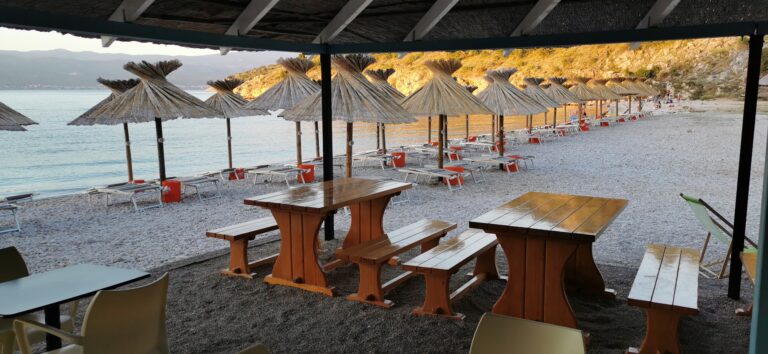
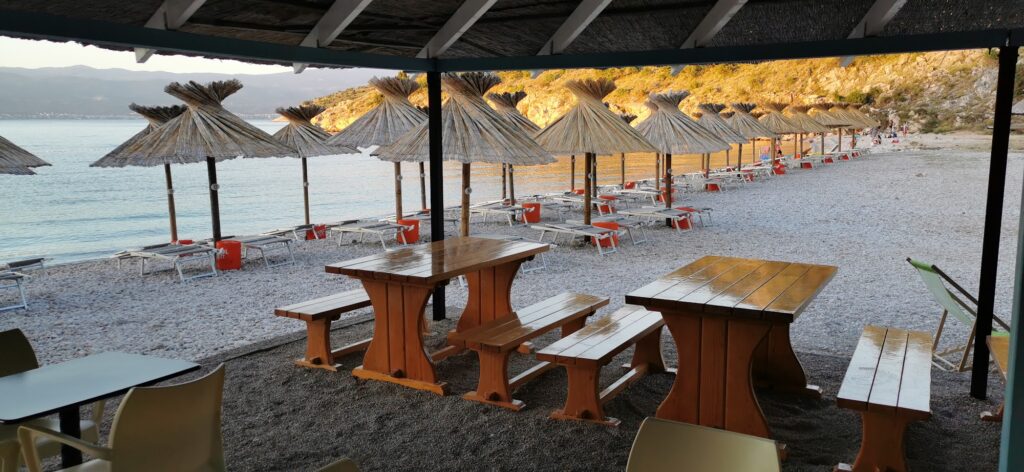
Modern freshwater showers and changing cabins are located at the edge of the pebble line — the basic infrastructure of a well-maintained public beach, positioned unobtrusively and maintained consistently. Sunbed and umbrella rental is available for visitors who want organised comfort, and a small beach kiosk provides cold drinks, sunscreen, and snacks — sufficient to extend the practical independence of the day without requiring the return to Vrbnik for basic supplies.
There is no permanent lifeguard at Potovošće. The beach’s open-channel position means that conditions are generally calm within the bay area, but the open-sea exposure requires the awareness appropriate to an unmonitored location — confident swimmers in settled conditions will find the water entirely safe; less experienced swimmers should remain within the sheltered sections of the bay. The kiosk and the organised parking indicate a beach that is actively managed rather than simply occurring, and the overall level of maintenance reflects care rather than commercial investment.
For Families
Potovošće Strand with children is well-suited to families with older children and teenagers who are confident swimmers, interested in snorkeling and kayaking, and engaged by a natural setting that offers genuine discovery rather than organised entertainment.
The protected character of the bay — the cliff faces on either side reducing the wave energy and keeping the water relatively calm within the beach area despite the open-channel position — provides safer conditions than the beach’s open-sea orientation might suggest. The sea caves and the underwater formations along the cliff base provide the kind of specific, absorbing natural discovery that curious young swimmers find genuinely engaging rather than passively accepting.
Water shoes are essential for children navigating the pebble shore and the rocky sections of the entry — the pebbles are smooth but the transition from pebble to rocky seabed requires footwear protection for small feet. Natural shade is limited during the midday hours, and the umbrella rental is the practical solution for families with younger children who cannot manage extended sun exposure.
For families with very young children or pushchair requirements, the organised parking behind the beach eliminates one logistical challenge, but the pebble surface and the limited shade make the beach less naturally suited to the youngest swimmers than the island’s enclosed bay beaches. Baška Beach on the southern coast or Pesja Beach Omišalj at the northern tip offer the gentler entry and more extensive facilities that those requirements demand.
Vrbnik and the Žlahtina Wine: The Inland Dimension
Vrbnik is the specific and entirely appropriate destination for the evening after a full day at Potovošće, and the connection between the beach and the town above it is one of the more satisfying geographical pairings available on Krk Island.
The town sits on a clifftop above the eastern coast, its medieval stone lanes and the wine cellars that occupy its ground floors and courtyards containing the product that the vineyards between the town and the beach produce. Žlahtina — the white wine variety specific to Krk Island and most densely planted in the territory around Vrbnik — is one of Croatia’s more distinctive indigenous varieties, its flavour profile reflecting the limestone terrain and the maritime exposure of the vineyard in ways that no other location on the island reproduces with the same concentration.
Dinner in Vrbnik after a day at Potovošće — fresh seafood from the Kvarner Gulf, the local white wine from the cellar below the restaurant, the view of the channel and the mainland mountains from a terrace on the cliff edge — is the specific and entirely satisfying conclusion to a day that began with the same view from the water level of the beach below.
The two experiences — beach and town, water and wine, open channel and medieval stone — are more complete together than either is separately, and the ten-minute drive between them is one of the shorter connections between a beach and an evening that this coast provides.
Potovošće in the Context of Krk Island Beaches
With several Krk Island beaches now covered in this series — Baška Beach, Golden Bay Beach, Zaljev Oprna, and Pesja Beach Omišalj — the specific position that Potovošće Strand occupies within the island’s coastal offering is worth placing clearly.
Baška Beach is the iconic two-kilometre crescent — the mountain backdrop, the Blue Flag water, the full resort infrastructure, the definitive southern Krk experience.
Golden Bay Beach is the boat-only cliff cove — golden limestone, sea caves, extreme seclusion, no facilities.
Zaljev Oprna is the steep path descent — wild, minimally facilitated, extraordinary snorkeling.
Pesja Beach Omišalj is the Blue Flag pine-backed cove at the northern tip — sheltered, family-oriented, close to the mainland bridge.
Potovošće Strand is the eastern coast option — open-channel water quality, Velebit mountain horizon, Vrbnik cliff town above, Žlahtina wine waiting at the end of the day. A different register from all of the others, and one that rewards visitors who take the vineyard road from the clifftop town rather than following the main tourist circuit south.
Potovošće Strand on Krk Island is the beach that the island’s eastern coast deserves — a location of genuine natural quality and specific character that the island’s southern beaches attract visitors away from without ever quite replacing. The open-channel water, the Velebit horizon, the sea caves and cliff faces, the Vrbnik town above, and the vineyard road that connects them: all of these are specific to this beach and this section of the island in a way that makes a day at Potovošće categorically different from a day elsewhere on Krk.
Drive south from Vrbnik through the vineyards. Descend to the shore. Get in the water.
Have dinner in the town above as the light fails over the channel.
The wine will be from the vineyards you drove through to get there.
Map
Sorry, no records were found. Please adjust your search criteria and try again.
Sorry, unable to load the Maps API.
Near by places: