Plaža Banje Dubrovnik: Beach Beside the UNESCO Walls
Profile
Plaža Banje, Dubrovnik: Swimming at the Foot of the World’s Most Photographed City Walls
Croatia | Dalmatia | Dubrovnik
Every city that sits beside the sea has one beach that belongs to the city in a way that the others do not — not the most secluded, not the most ecologically pristine, not the one that locals use when they want to escape the summer crowds, but the one that is inseparable from the identity of the place itself. For Dubrovnik, that beach is Plaža Banje.
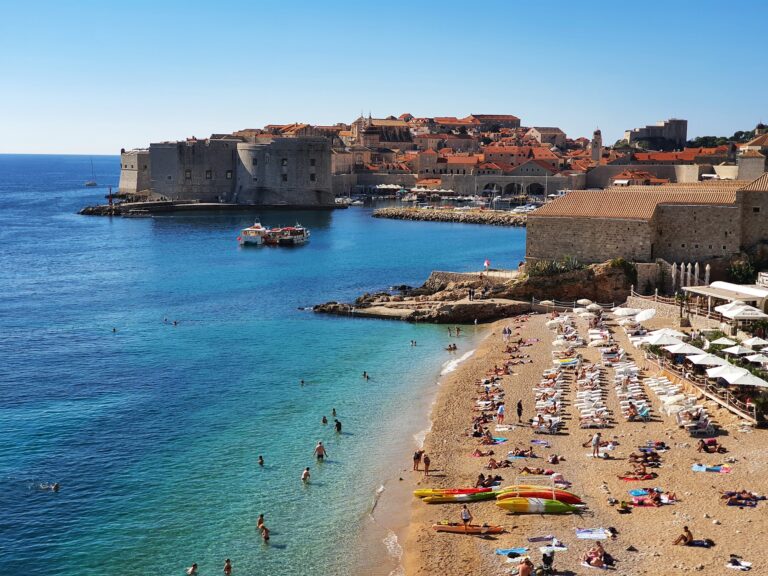
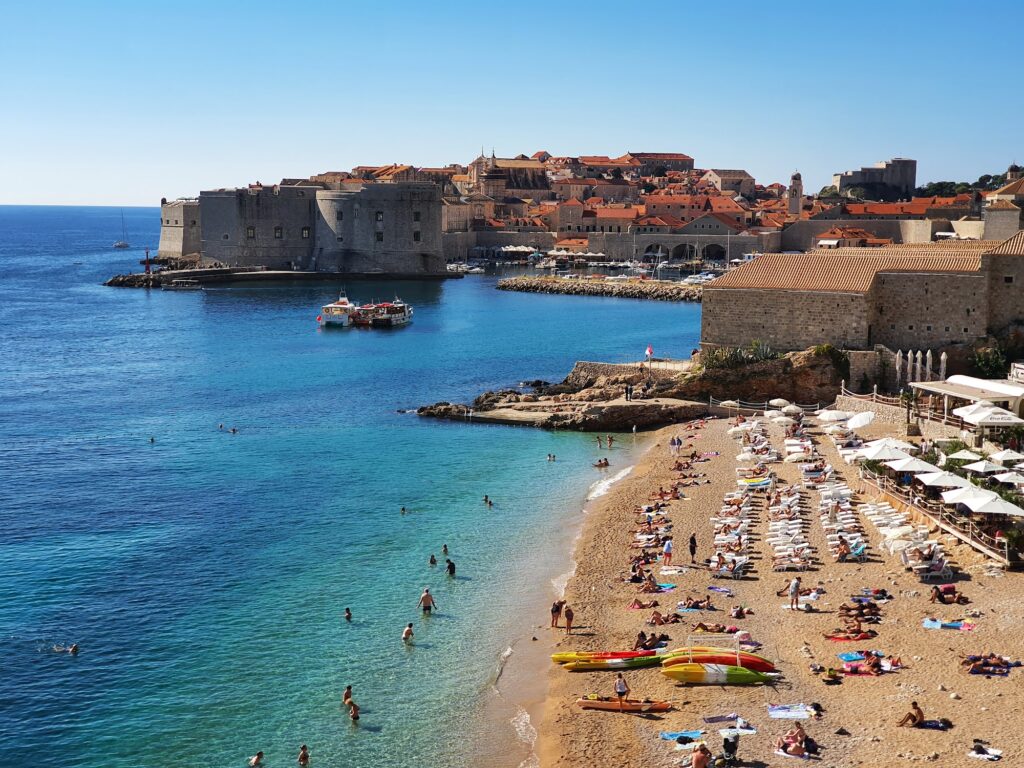
It sits three to five minutes east of the Ploče Gate on foot — close enough to the Old Town that the walk feels like an extension of the city rather than a departure from it. The descent to the shore via the stone stairs reveals the view progressively, and by the time you reach the pebbles and turn to look back westward, the full profile of the Dubrovnik walls is in front of you — the medieval fortifications running along the clifftop above the water, the Fort of St. John at the harbour entrance, the dome of the cathedral, the terracotta rooftops of the city below the battlements — all of it reflected in the water on calm mornings in a way that makes the already extraordinary view function as two versions of itself simultaneously.
I have visited Plaža Banje on every trip I have made to Dubrovnik and I have never found a reason to miss it. It is not always the most peaceful option, and it is not always the most practical choice for every kind of day. What it is, consistently and without qualification, is the most visually extraordinary beach setting in Croatia — and that is not a claim I make lightly having spent considerable time on this coast.
Getting There: The Shortest Beach Walk from Any City Gate in Croatia
How to get to Plaža Banje from Dubrovnik Old Town is the simplest logistics in this entire series.
On foot from the Ploče Gate — the eastern entrance to the Old Town — the walk east along Frana Supila street takes three to five minutes before the clearly marked entrance stairs appear on the right. This is the most natural approach and the one that most visitors take instinctively — a continuation of the walk through the Old Town that requires almost no additional navigation or planning.
By bus, lines 1, 3, 4, 6, and 8 stop near the Old Town perimeter, from which the walk to the beach is short. By taxi boat or private excursion from the harbour, the small pier at Banje provides direct water access — the arrival by sea giving you the full wall profile and the beach below it in a single view as the boat rounds the harbour entrance, which is one of the more cinematically satisfying arrivals available in Dubrovnik.
The accessibility note worth making clearly: the beach involves a flight of stairs from the street level above, which is manageable for fit adults and older children but is not suitable for pushchairs or visitors with significant mobility limitations. For those requirements, Copacabana Beach in Babin Kuk — with its ramps and beach access lifts — is the more practical option.
The View: Why This Beach Exists in a Category of Its Own
Before the shore, before the water, before the facilities — the view deserves the first and most substantial attention, because it is the quality that places Plaža Banje in a category that no other beach in Croatia occupies.
The Dubrovnik city walls, recognised as a UNESCO World Heritage Site and widely described as among the finest surviving medieval fortifications in the world, run along the clifftop directly above and to the west of the beach. From the pebbles at Banje, looking back toward the city, the walls are not merely visible in the distance — they are the immediate foreground of the view, rising above the waterline at a distance close enough to make the architectural detail of the stone and the battlements clearly legible from the beach.
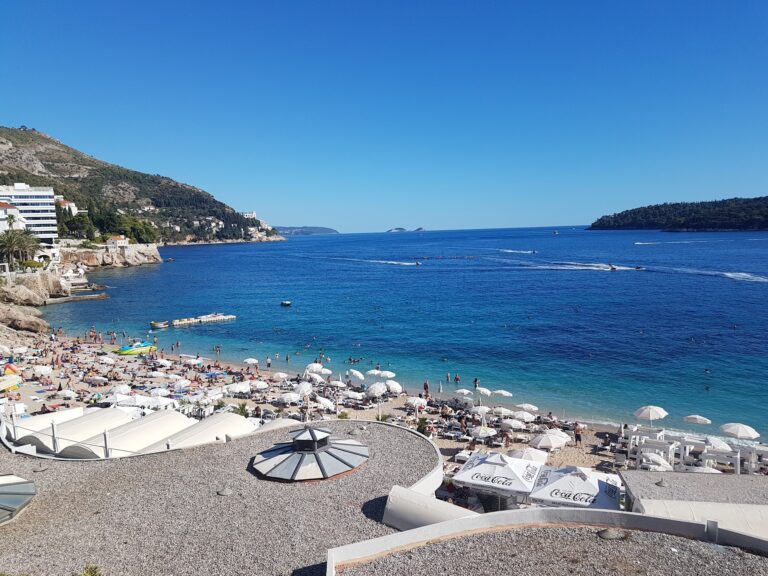
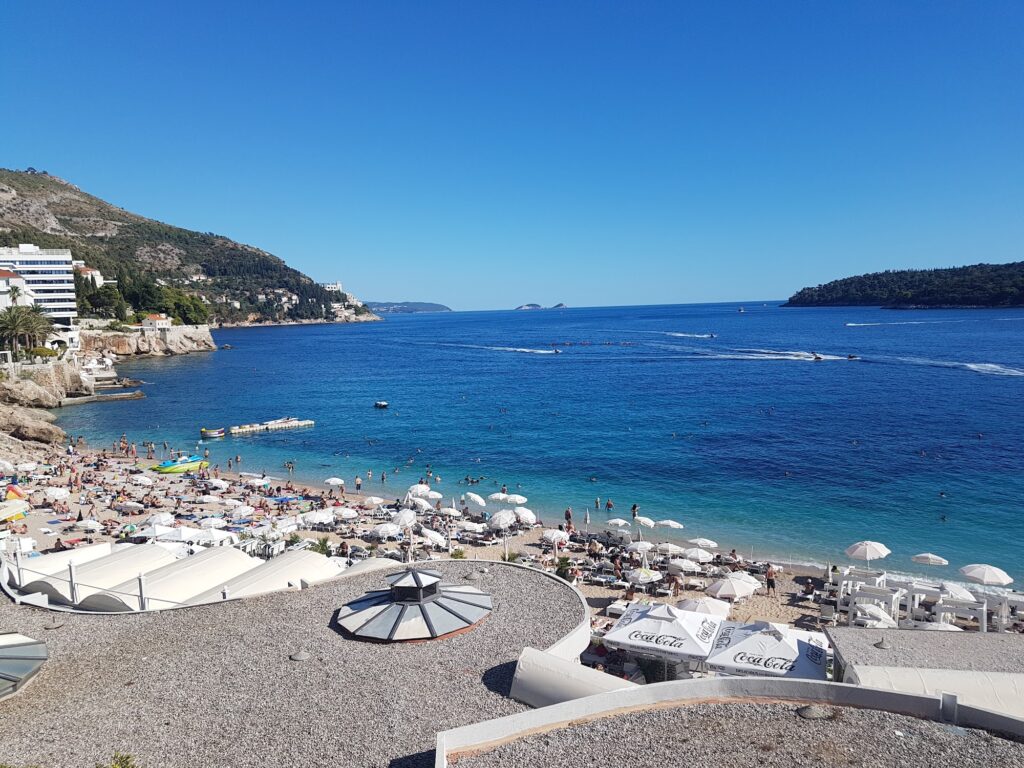
Lokrum Island sits in the water to the south, its dense vegetation and the Fort Royal on its hilltop providing the view’s middle distance. The open Adriatic extends beyond both, its depth of colour varying through the day from the pale turquoise of the shallows to the deep blue of the open sea on the horizon.
The combination of the walls, the island, and the open sea — seen from the water or from the pebbles at sea level — is a composition that is genuinely, verifiably unlike any other beach view in Croatia. I have swum at Banje specifically to achieve the perspective of looking back at the walls from the water, and I would recommend it as one of the most specifically worthwhile activities available to any visitor spending more than a single day in Dubrovnik. The city seen from the sea, at the level of the water, is a different Dubrovnik from the one inside the walls or on top of them.
The Shore and Water Quality
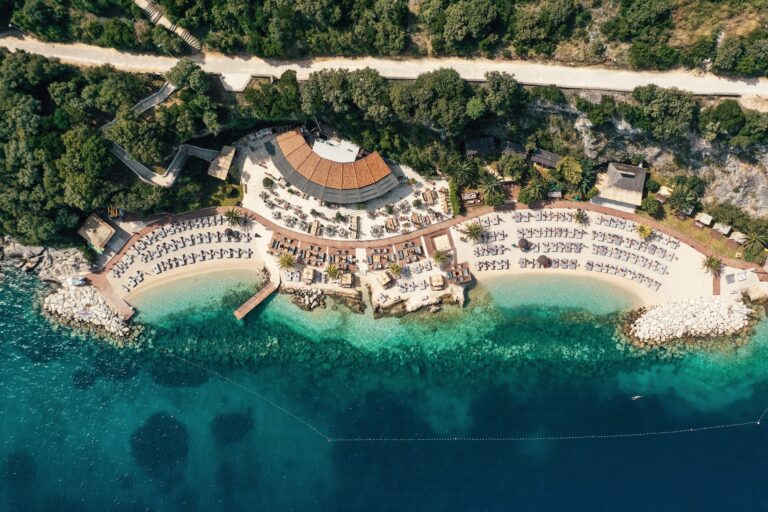
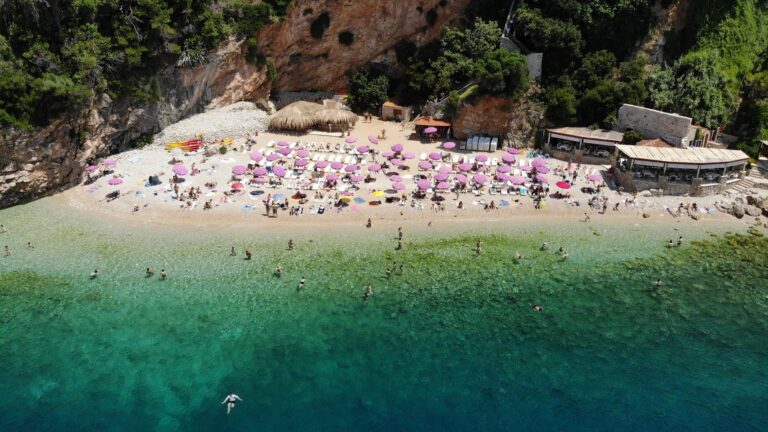
The shoreline at Plaža Banje is fine pebbles and golden gravel — well-maintained and remarkably clean given the visitor volumes the beach handles at peak season, which reflects both the attentiveness of the management and the general standard of visitor behaviour that a beach of this visibility and reputation tends to attract.
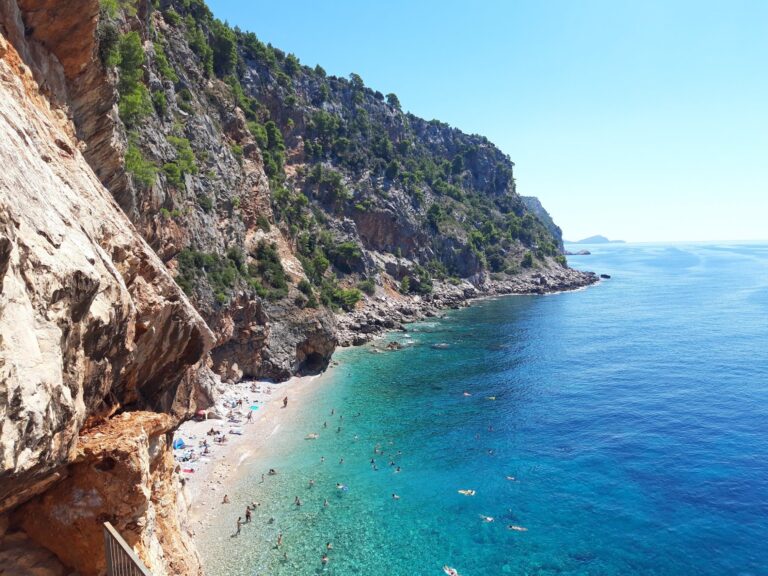
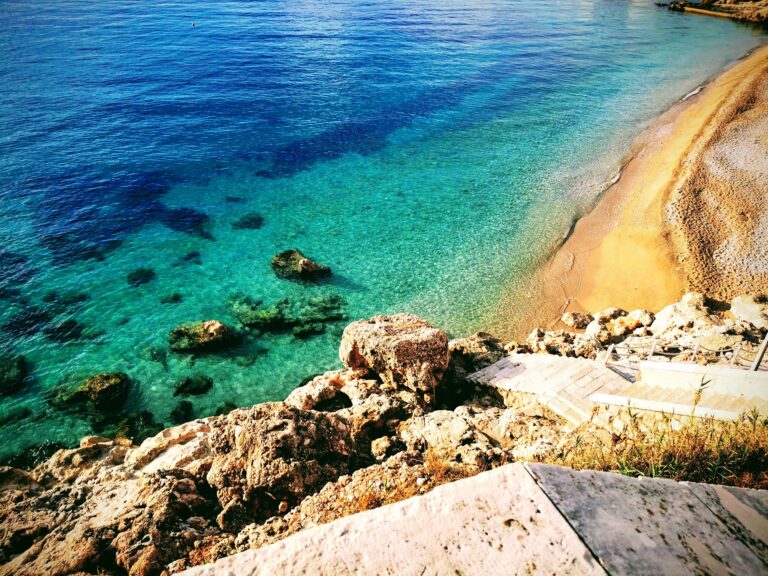
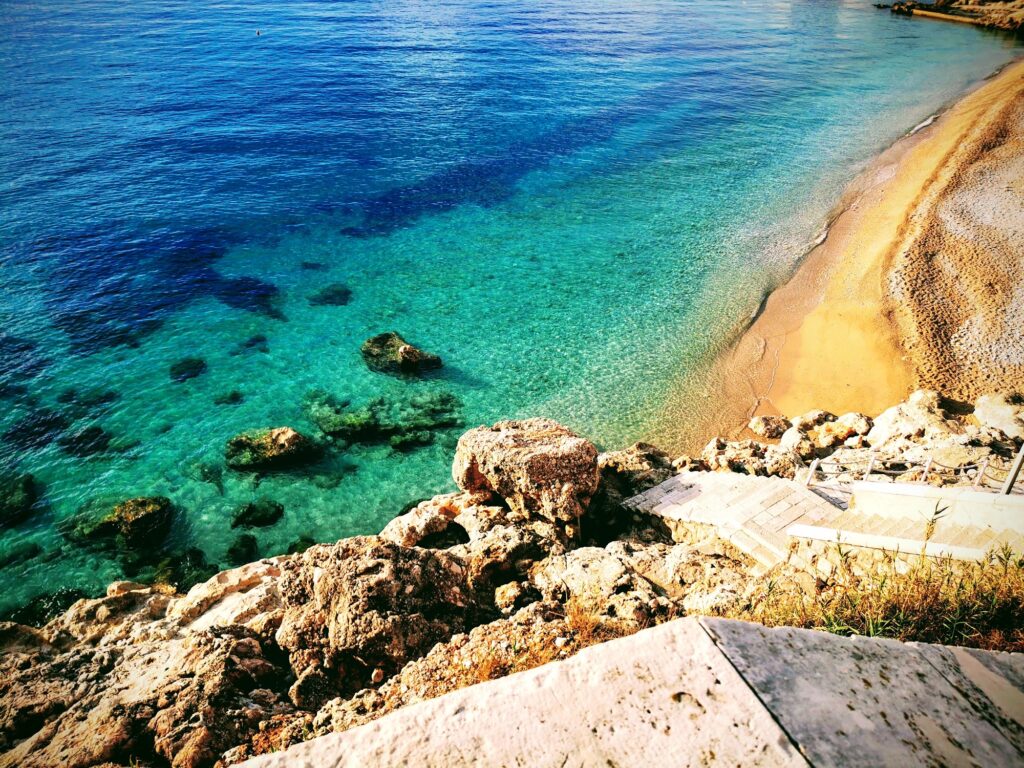
The water quality at Plaža Banje is excellent and benefits directly from the open-sea exposure that the beach’s position facing Lokrum Island and the open Adriatic provides. The clean, oxygenated currents that move past the harbour entrance keep the sea fresh and transparent — the seabed clearly visible from the surface in the characteristic Adriatic manner, the colour shifting from pale turquoise close to the shore to a progressively deeper blue as the depth increases.
The entry is relatively gradual in the main section of the beach, making the water accessible for children and less confident swimmers, though the entry becomes rockier toward the edges of the bay where the underwater topography changes. Snorkeling at Plaža Banje along the rocky sections at the bay’s margins produces the most varied underwater environment the beach offers — the rock formations supporting fish populations that the more open pebble seabed of the central section does not sustain.
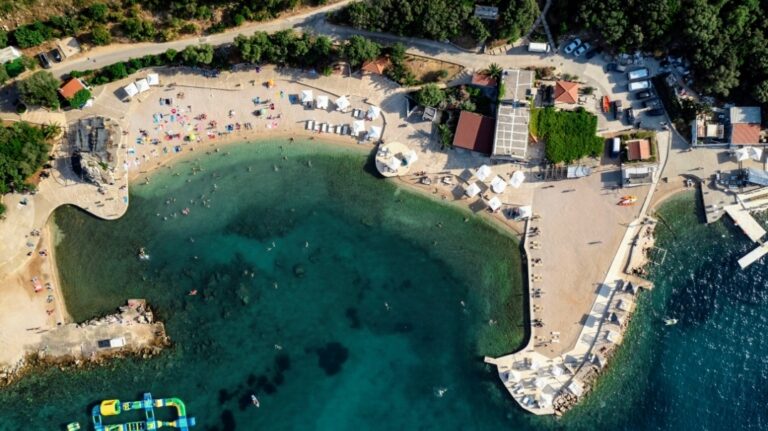
The water sports available from the beach — jet skiing, parasailing, sea kayaking, banana boat rides — operate from the shore with the organised energy of a well-run beach club in a prime location, and the calm conditions in the bay make the active programme consistently available through most summer days.
The Beach Club: Banje After Dark
Banje Beach Club Dubrovnik is one of the more specifically well-positioned beach club operations on the Dalmatian coast, and its transition from a daytime lounge to an evening venue is worth noting for visitors who want to extend their time at the beach beyond the swimming hours.
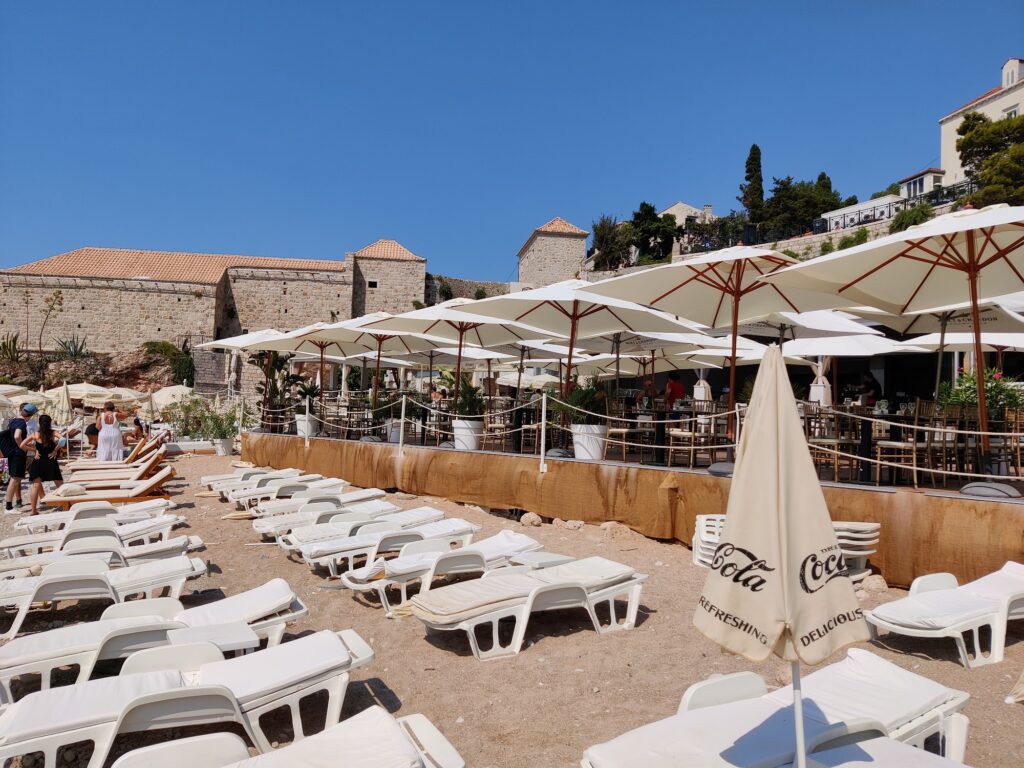
The terrace of the restaurant and bar faces the city walls directly — a positioning that makes the sunset over the Old Town from this terrace one of the more specific and genuinely extraordinary dining views available in the city. The walls are illuminated after dark, and the combination of the lit fortifications reflected in the water and a table on the Banje terrace is a version of Dubrovnik that the interior of the Old Town at the same hour, however atmospheric, does not replicate.
The food is contemporary Mediterranean rather than traditional Dalmatian — fresh Adriatic calamari, salads with premium olive oil, the kind of cooking that a beach club restaurant at this location pitches at an international clientele with the expectation of quality and the willingness to price accordingly. It is consistently good for what it is, and the view from the terrace is worth the premium that the location commands.
Atmosphere: The Centre of Gravity of the Dubrovnik Beach Experience
The atmosphere at Plaža Banje is the most cosmopolitan of any beach in the city — a direct consequence of its proximity to the Old Town and its position at the intersection of the city’s historical identity and its contemporary tourism infrastructure. The visitors who fill the beach at peak season are drawn from a wider international range than Uvala Lapad’s family crowd, Plaža Sveti Jakov’s local swimmers, or Copacabana’s resort guests — and the social energy of the beach reflects that diversity.
It is not the quietest beach in Dubrovnik. The water sports, the beach club music, and the consistent presence of a large and varied crowd give the place an animation that the cliff-enclosed coves elsewhere in the city do not generate. For visitors who want the full, high-energy version of a Dubrovnik beach day — the best view, the most facilities, the most activity, the most people, and the most direct connection between the city above and the sea below — Banje is the unambiguous answer.
For those who want something quieter and more removed from the city’s tourist infrastructure, Plaža Sveti Jakov to the east offers a comparable Old Town view at a lower temperature, and Bellevue Beach to the west offers a completely different register entirely.
For Families
Plaža Banje with children works well for families whose day in Dubrovnik combines beach time with Old Town exploration — the five-minute walk between the Ploče Gate and the beach making the transition between the two environments effortless and natural.
The relatively gradual entry into the calm bay water makes the shallows accessible for younger swimmers. The water sports and boat activity visible from the shore — the jet skis, the kayaks, the banana boats — provide the visual interest and the activity aspiration that keeps older children engaged beyond conventional beach time. The proximity of the city means that practical necessities are never more than a few minutes away.
The stairs are the consideration for families with pushchairs or very young children, as noted — not a serious obstacle for families with older children, but a genuine logistical challenge with a loaded pushchair. For those configurations, Uvala Lapad Beach or Copacabana Beach in Babin Kuk are the more practically accessible alternatives with full family infrastructure.
Food and Drink: The Terrace With the Best View in the City
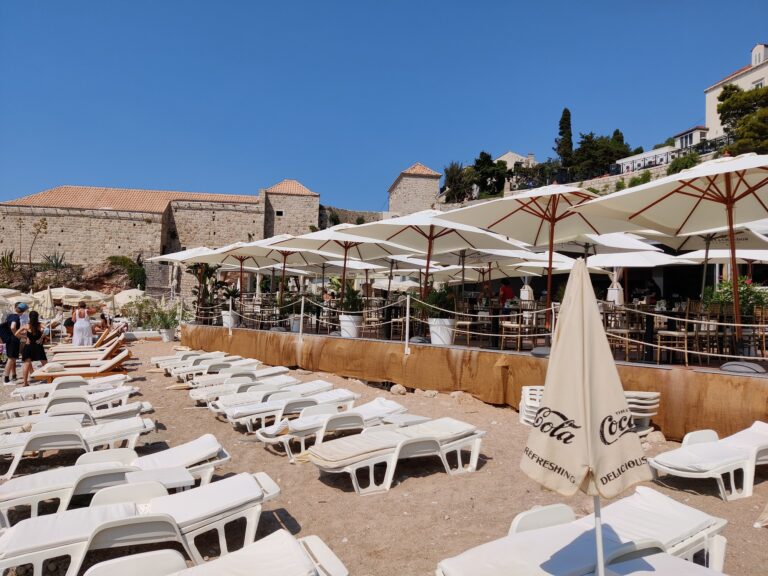
The Banje Beach restaurant and lounge operates at the intersection of beach club comfort and genuine culinary ambition — a combination that the location demands and that the management has invested in delivering. The terrace, facing the walls at water level, is in my view the single finest dining position in Dubrovnik for the specific quality of the view it provides — not the elevated perspective of the wall walk or the historical immersion of a konoba inside the Old Town, but the sea-level view of the fortifications that only this beach provides.
Morning coffee at that terrace — arriving early enough to find the walls in the quality of light that the morning sun from the east produces before the beach fills — is one of the rituals I repeat on every visit to Dubrovnik that time allows. The coffee is good. The walls are very good. The combination of the two, with the Adriatic in front and the city behind, is better than either alone.
For lunch, the menu covers the contemporary Mediterranean range — Adriatic calamari, fresh salads, the food of a beach restaurant that takes its position seriously enough to source well and prepare carefully. The prices reflect the location, which is to say they are Dubrovnik prices — entirely expected and not a reason to avoid the terrace.
Banje Within the Dubrovnik Beach Landscape
With four Dubrovnik beaches now covered in this series — Bellevue Beach, Uvala Lapad Beach, Plaža Sveti Jakov, Copacabana Beach, and now Plaža Banje — the distinct position each occupies in the city’s coastal offering is worth summarising clearly.
Bellevue Beach — western cliff cove, sea cave, local atmosphere, minimal facilities, best for swimmers and snorkelers willing to negotiate stairs.
Uvala Lapad Beach — sandy family bay, car-free promenade, aqua park, sunset strip, best for families with young children and full organised days.
Plaža Sveti Jakov — eastern cliff stairs, extraordinary Old Town panorama from the water, local character, open-sea water quality, best for those who want the view and the swim without the beach club.
Copacabana Beach — northern Lapad shore, beach club aesthetic, full accessibility, best for organised comfort, water sports, and visitors with mobility requirements.
Plaža Banje — the central, iconic option — closest to the Old Town, most direct wall view, highest energy, most comprehensive active offer, best for visitors who want the quintessential Dubrovnik beach day in the city’s most historically charged setting.
Plaža Banje in Dubrovnik is the beach that the city deserves and that it has — the most visible, the most accessible, the most directly connected to the historical identity that makes Dubrovnik one of the most visited places in the Mediterranean. The walls above the beach are extraordinary. The water in front of them is extraordinary. The view from the water looking back at the walls is extraordinary in a way that the two separately are not.
Three to five minutes east of the Ploče Gate. Turn right at the marked stairs. Descend.
Everything else — the water, the walls, the view — is already waiting.
Map
Sorry, no records were found. Please adjust your search criteria and try again.
Sorry, unable to load the Maps API.
Near by places: