Pasjača Beach Konavle: Cliff Tunnel Beach Near Dubrovnik
Profile
Pasjača Beach, Konavle: The Cliff Path, the Tunnel, and the Most Dramatic Beach near Dubrovnik
Croatia | Dalmatia | Konavle Coast
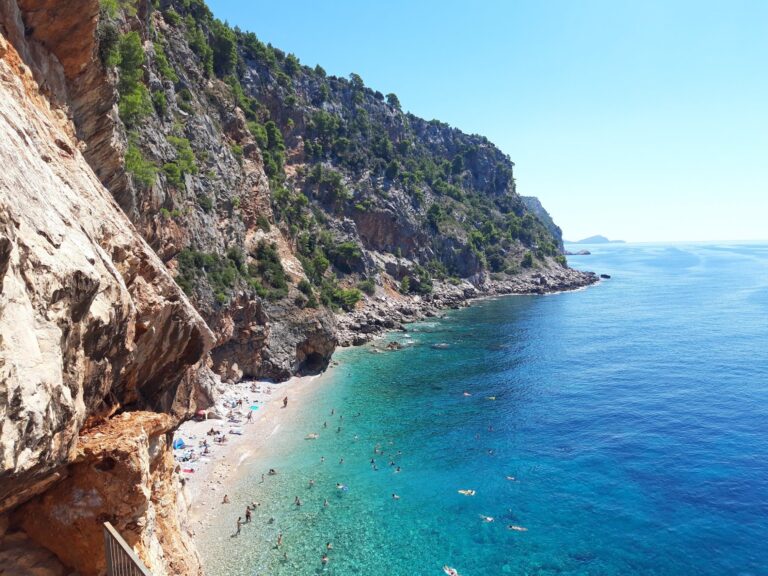
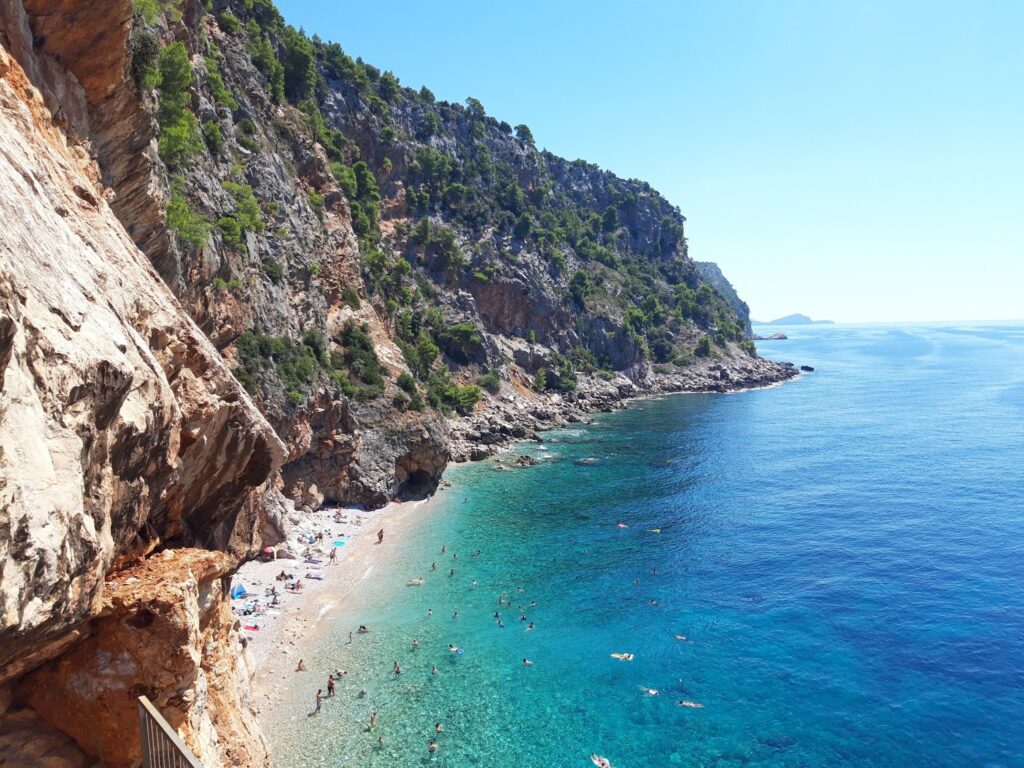
There is a moment, about halfway down the cliffside path at Pasjača Beach, when the tunnel carved through the limestone opens onto a section of exposed stairway and the full scale of what you are descending becomes visible for the first time. The cliff face drops vertically below you. The Adriatic is at the bottom of it, a colour so vivid at that angle and in that light that it looks like something a screen produces rather than something that exists in nature. The narrow strip of pale sand and pebbles is barely visible between the base of the cliff and the waterline.
I stopped moving at that point on my first visit and stood there for perhaps a minute, looking down at the beach below and the open sea beyond it, trying to calibrate the relationship between where I was standing and where I was intending to go. It is one of the more specifically compelling moments available on the southern Dalmatian coast — not because the view is the finest you can find in the region, but because the combination of the engineering of the path, the scale of the cliff, and the quality of what is at the bottom of it produces a response that no photograph of the beach from above had quite prepared me for.
Pasjača Beach near the village of Popovići in the Konavle region, south of Dubrovnik, is the most dramatically accessed beach on this stretch of coast. It owes its existence, in its current form, to tunnelling work carried out during the Second World War — the rock debris from that excavation eventually polished by decades of sea movement into the beach that now occupies the cliff base. The path and tunnel that provide the only land access are carved directly into the limestone, and the descent through them is as much the experience as the beach at the bottom.
Getting There: The Path Is Not a Formality
How to get to Pasjača Beach from Dubrovnik requires a car — or a taxi with a prearranged return — and a descent that the word “path” does not fully describe.
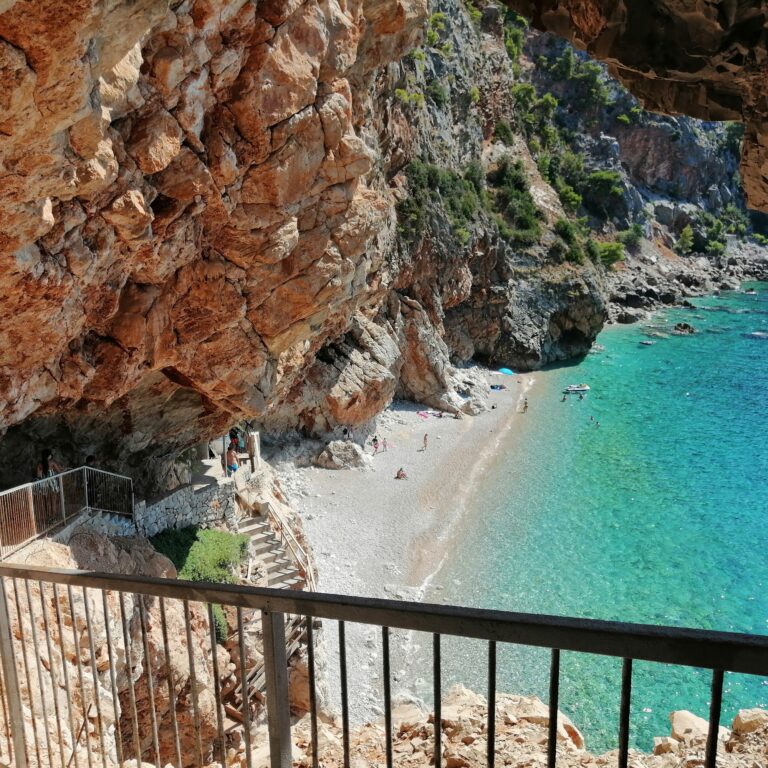
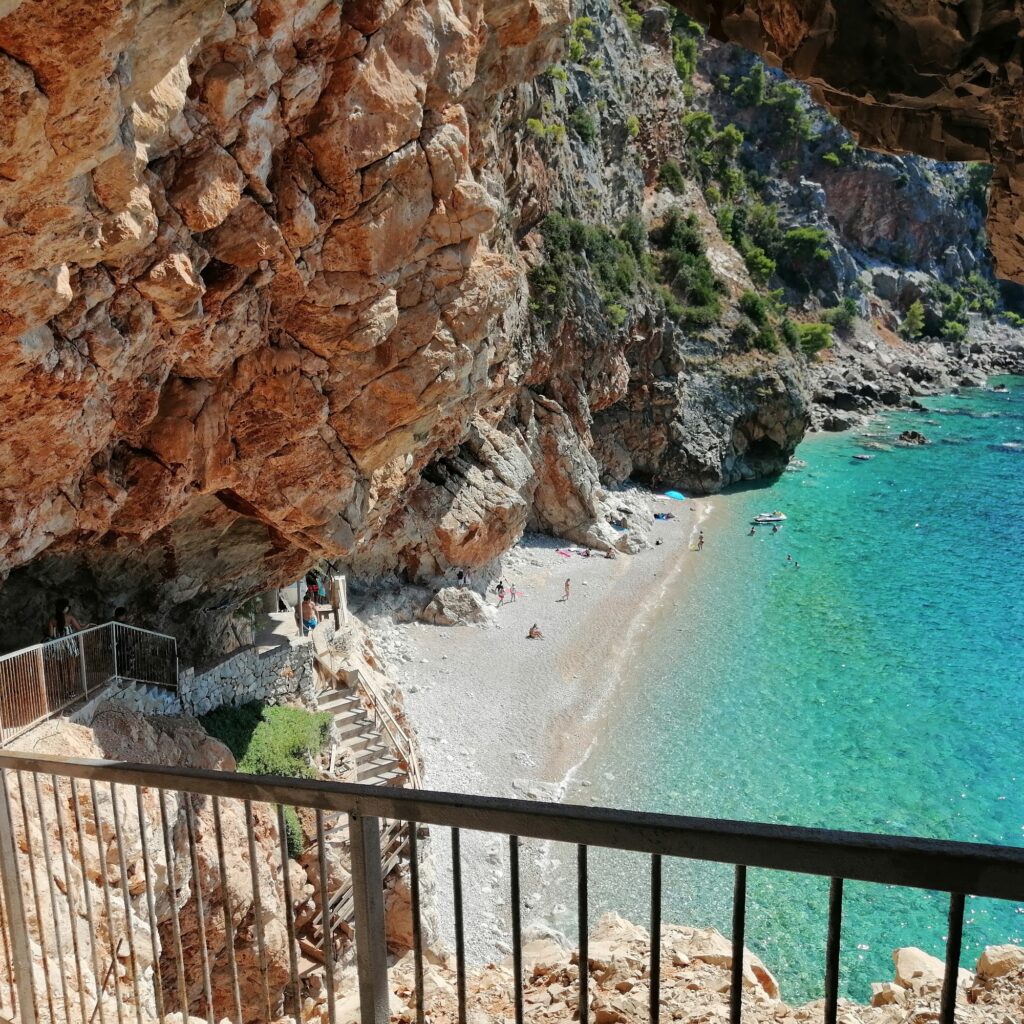
By car, the route south from Dubrovnik toward the airport continues past Čilipi and into the Konavle valley before a turn toward the village of Popovići. A small organised parking area sits at the end of a narrow road above the cliff — limited in capacity and filling early on peak summer days in a way that makes an early morning arrival not merely advisable but practically necessary. From the parking area, the cliffside path descends to the beach through a tunnel section and several flights of stone stairs carved directly into the rock face.
The descent takes approximately fifteen to twenty minutes at a careful pace. The path is maintained and the tunnel is navigable without specialist equipment, but it is steep, the stone surface requires attention, and the return climb — in the afternoon heat, after a full day at the beach — is the physical commitment that honest pre-visit information about Pasjača always mentions and that anyone planning the trip should assess realistically before committing.
By taxi from Dubrovnik or from Cavtat, the journey is straightforward but requires arranging a pickup time before descending — the area is sufficiently remote that an unplanned return by taxi is not a reliable option, and arriving at the parking area without a confirmed return is a more stressful version of the day than the beach deserves.
The Cliff and the Beach: What the Descent Delivers
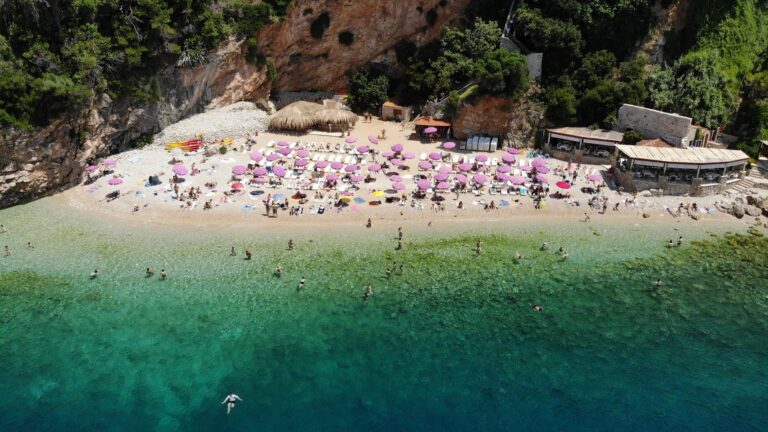
The cliff face above Pasjača is vertical, grey limestone — the same formation that characterises the Konavle coastline and that gives this stretch of the southern Dalmatian coast its specific and dramatic character. The cliff rises to a height that makes the beach below feel genuinely enclosed — held between the rock face and the open sea in a way that the conventional vocabulary of “secluded cove” does not adequately describe. It is more completely enclosed than a cove, more directly accessed than a cave, and more specifically itself than either comparison suggests.
The beach at the base of the cliff is narrow — a strip of fine pebbles and sand squeezed between the cliff face and the waterline, expanding and contracting with the tide and the season. The narrowness is not a limitation; it is part of the specific character of the place and part of what makes the experience of being there feel like an arrival at something genuinely apart from the ordinary circuits of coastal tourism. There is room on the beach, and there is not an excess of it, and both of those facts are appropriate.
The absence of any commercial infrastructure on the beach — no sunbeds, no beach bar, no showers, no changing facilities of any kind — is total and intentional. Pasjača is a “pack in, pack out” beach in the fullest sense: everything you need for the day arrives with you and leaves with you. Sufficient water and food for the duration, sun protection applied before the descent rather than after arriving on a beach with no natural shade, footwear appropriate for the path — these are the non-negotiable preparations that the beach’s character requires.
The Water
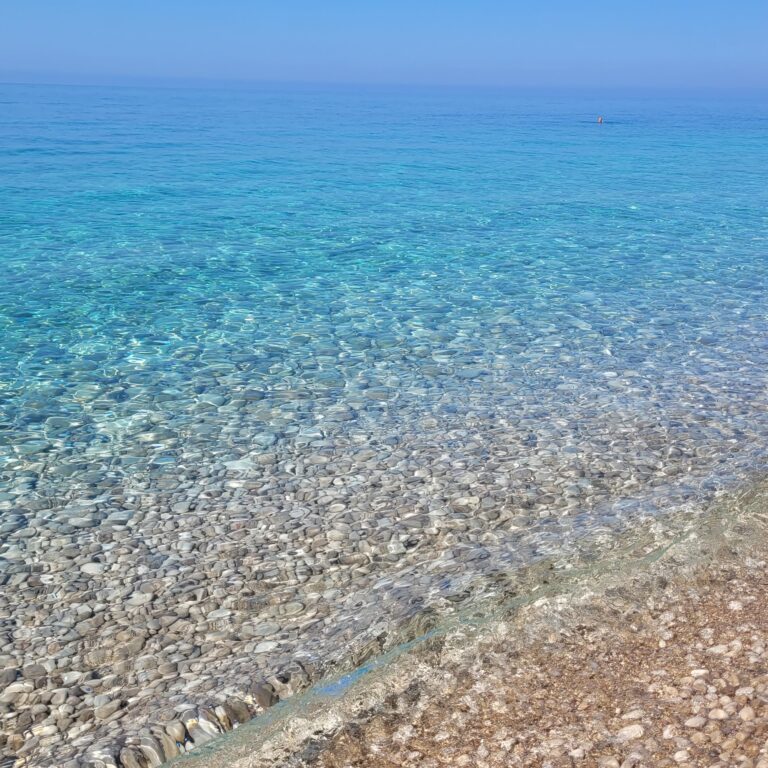
The water quality at Pasjača Beach is the quality that the dramatic approach delivers and that fully justifies the effort of getting there.
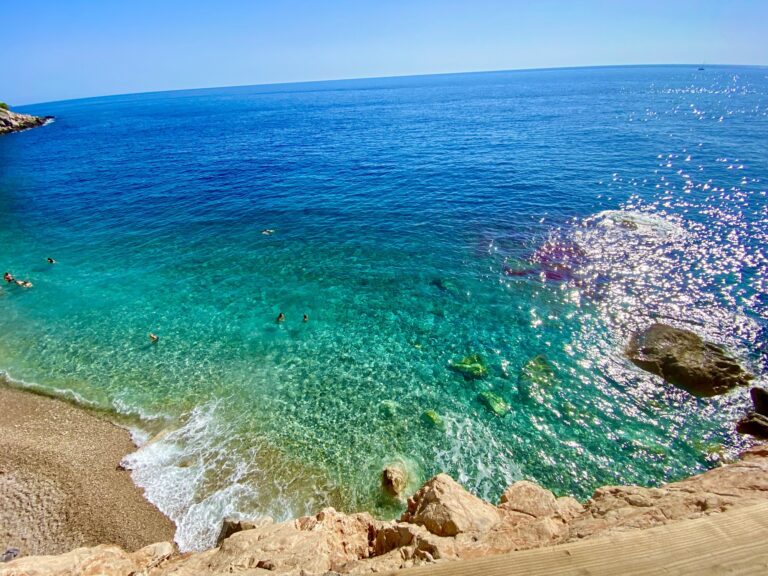
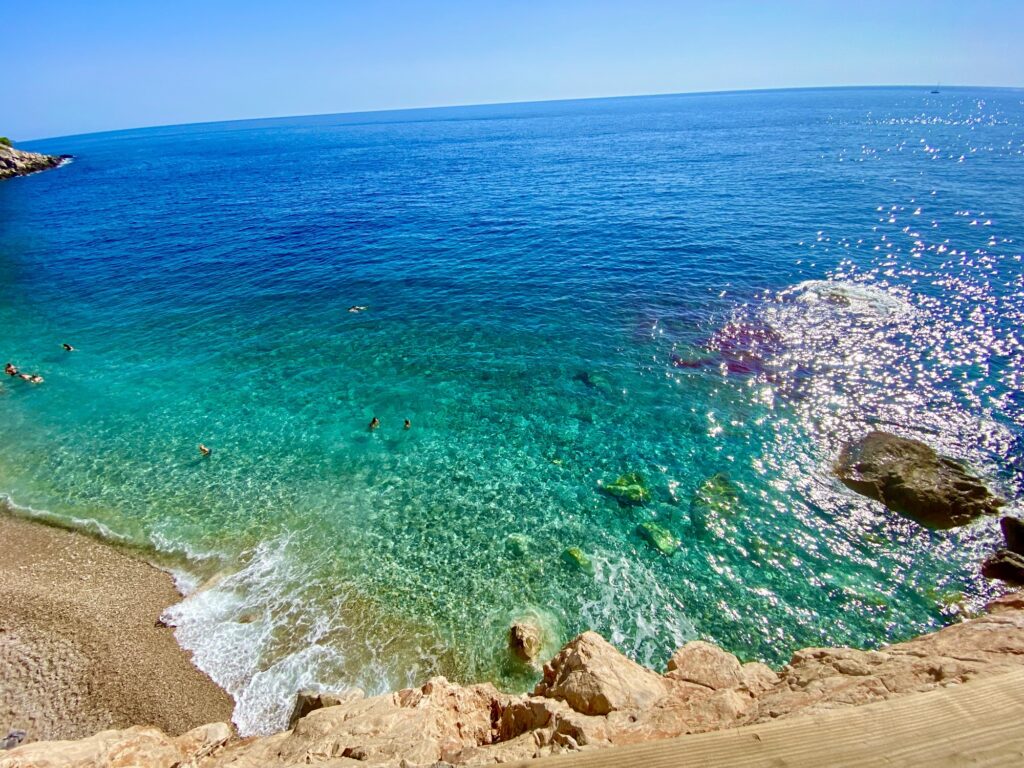
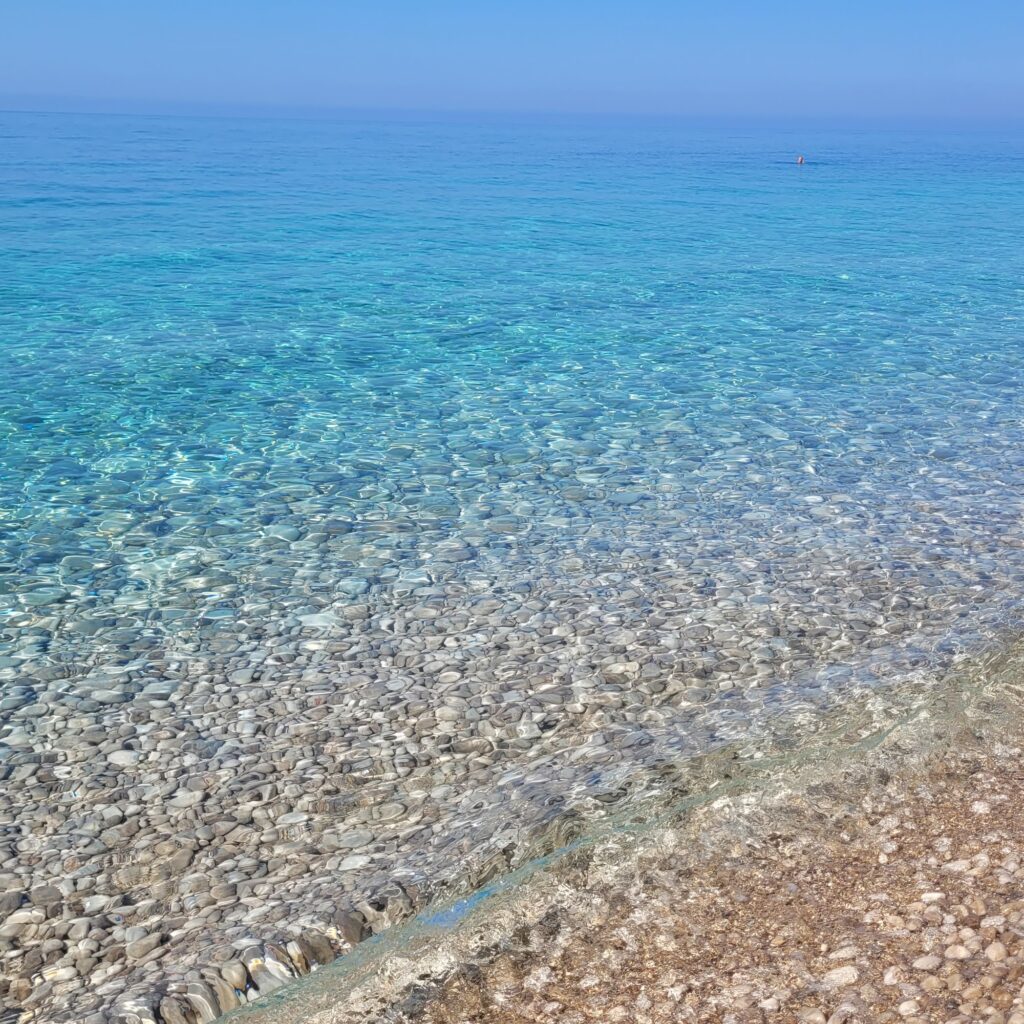
The beach faces the open Adriatic directly — no bay enclosure, no channel filtering, no maritime traffic. The deep-sea currents that circulate along the southern Dalmatian coast reach Pasjača at full strength, keeping the water clean and oxygenated to a standard that the transparency makes immediately and consistently evident. The colour shifts from a pale, almost iridescent turquoise in the shallows to a deep cobalt within a very short distance from the shore — the depth dropping away quickly from the cliff base in a way that gives the water an unusual and vivid quality of contrast.
Snorkeling at Pasjača Beach along the cliff base is the underwater experience that the quality and character of the water most richly supports. The cliff face continues below the surface in the same vertical and varied geology as above it — formations, crevices, and overhangs that provide the structural complexity supporting the varied marine life that the open-sea circulation and the undisturbed character of the site sustain. I spent a long and productive session along the eastern cliff section on my most recent visit, and the underwater environment was among the most varied and clearly healthy I have encountered on the southern Dalmatian coast.
Swimming at Pasjača requires the awareness appropriate to an open-sea, unmonitored beach — the depth increases quickly from the shore, conditions can change, and there is no lifeguard and no designated swimming zone. For confident swimmers in reasonable conditions, the water is extraordinary. For less experienced swimmers or for visits in conditions of wind or swell, the assessment of the open-sea exposure is a genuine consideration rather than a formality.
The Tunnel: The Historical Dimension
The Pasjača tunnel — the passage through the cliff that forms the central section of the descent path — is not merely a practical access route but the historical artefact that explains the beach’s existence in its current form.
The tunnelling was carried out during the Second World War, and the rock debris from that work was deposited at the cliff base where the sea has subsequently worked it over decades into the mixed pebble and sand surface that now constitutes the beach. The tunnel itself is modest in scale — navigable without specialist equipment, well-maintained by the local municipality, and lit naturally at either end with a darker central section that reinforces the sense of passage between the world above the cliff and the world below it.
Walking through the tunnel on the descent — the temperature dropping, the sound of the sea becoming more present, the light at the far end gradually widening — is one of those transitional experiences that frames the arrival at the beach with a specificity that a conventional path cannot match. It is part of the reason that Pasjača is not merely a very good beach but a complete and specifically characterised experience — the history of the access route is inseparable from the quality of what it leads to.
For Families
Pasjača Beach with children is an experience that suits a narrow and specific family configuration — one with teenagers or older children who are strong swimmers, physically capable of the descent and return, and engaged by a setting that makes genuine demands rather than providing passive entertainment.
For that family, the beach is exceptional. The sandy entry into exceptionally clear open-sea water is genuinely rare on this coast. The tunnel descent provides the kind of specific, historically grounded adventure that teenagers engage with seriously rather than performatively. The snorkeling along the cliff base is among the finest available on the southern Dalmatian coast. The complete absence of commercial infrastructure and organised activity means that what the beach offers is the natural environment itself — and for young people capable of appreciating that, the impression it makes tends to be lasting.
For families with toddlers, pushchairs, or children who require shade, restrooms, and proximity to food and drink, Pasjača is the wrong choice at every practical level, and knowing that clearly before committing to the descent — with young children in tow — is considerably more useful than discovering it at the parking area. Uvala Lapad Beach and Copacabana Beach in Babin Kuk are the appropriate alternatives for those family configurations within the broader Dubrovnik area.
Food and Drink: The Konavle Valley
There is nothing to eat or drink at Pasjača Beach and nothing at the top of the cliff. This is the most completely self-sufficient beach in this series — everything consumed during the day at the beach arrives in the bag you carry down the path, and the planning of those provisions is the practical skill that a good day at Pasjača most directly rewards.
I have settled into a routine across my visits: a substantial early breakfast in Dubrovnik before the drive south, a packed lunch with more water than I think I need, and the immediate objective of the Konavle valley restaurants on the return from the beach. The restaurants in the villages of Popovići and Čilipi serve Konavle regional cooking — meat prepared under the peka bell, lamb from the valley’s pasture, local wines from the vineyards that cover the hillsides above the coast. It is cooking with a specific regional identity that the coastal resort restaurants of Dubrovnik do not replicate, and the appetite that a full day at Pasjača builds — the descent, the hours in the sea, the return climb — makes the meal that follows it one of the more straightforwardly satisfying eating experiences the region offers.
The contrast between the ascetic conditions of the beach — bring everything, leave nothing — and the generous, place-specific hospitality of a Konavle konoba in the early evening is one of the more complete day arcs available on the southern Dalmatian coast.
Pasjača in the Context of the Dubrovnik Beach Landscape
Pasjača Beach sits at the furthest remove from the city of any beach covered in this series set around Dubrovnik. While Plaža Banje is three minutes from the Ploče Gate, Plaža Sveti Jakov is twenty minutes east, Bellevue Beach is fifteen minutes west, Uvala Lapad is a bus ride across the peninsula, and Copacabana Beach is in the Babin Kuk resort zone — Pasjača is south of the airport, beyond the Konavle valley, accessed by a cliff tunnel, and entirely without commercial infrastructure.
That distance and that character are the point. Pasjača is the beach for the day when the city has been fully explored and what remains is the need for something completely outside the tourist circuit — raw landscape, extraordinary water, physical effort rewarded by natural quality that the city’s more accessible beaches, however good, do not match on those specific terms.
It requires more of the visitor than any other beach in this series. It returns more than most of them on the terms it operates on.
Pasjača Beach in Konavle is the most demanding and the most specifically extraordinary beach within reach of Dubrovnik — the cliff tunnel, the vertical descent, the open-sea water, the complete absence of commercial infrastructure, and the particular satisfaction of arriving somewhere that has earned its beauty by keeping it difficult to reach.
The parking area fills early. The descent takes twenty minutes. The return climb is harder than it looks from the bottom. The water is worth every step of both.
Drive south past the airport. Follow the signs to Popovići. Bring enough water.
What is at the bottom of the cliff path is unlike anything else on this coast.
Map
Sorry, no records were found. Please adjust your search criteria and try again.
Sorry, unable to load the Maps API.
Near by places: