Apollonas Beach Naxos: Kouros, Beard, and the Village
Profile
Apollonas Beach, Naxos: The Fishing Village 36km From Chora Where a 10.7-Metre Unfinished Kouros Lies in the Quarry Above — Believed to Be Apollo Until the 1930s When Archaeologists Found the Beard
Greece | Apollonas | Naxos, Cyclades
Until the 1930s, everyone assumed the giant statue above Apollonas was a depiction of Apollo. The village was named Apollonas, the statue was called the Kouros of Apollonas, and the connection between the god and the place seemed obvious. Then archaeologists took a closer look at the figure’s face and noticed the beard. Apollo was depicted as eternally young and beardless. A beard meant Dionysus — the god of wine, festivity, and transformation. The statue was reclassified as the Colossus of Dionysus. The village kept its name. Everyone still calls the statue the Kouros of Apollonas.
It lies in the ancient marble quarry just above the village, exactly where the people who carved it left it approximately 2,500 years ago. It is 10.7 metres long and weighs approximately 80 tonnes — the largest kouros in Greece, and the earliest known example of monumental sculpture in the country. It was never finished, never raised, never transported. The most plausible explanation is that flaws were discovered in the marble during carving, making completion impossible. The statue is free to visit, open 24 hours, and a 5-minute walk uphill from the beach.
Standing next to it recalibrates scale. Ten metres is the height of a three-storey building. The figure is lying on its back, its arms seemingly fused to its sides in the early Archaic kouros convention, its left leg slightly longer than its right, its beard now clearly visible on close inspection. Visitors in photographs next to it look small. It has been lying in this position since before Athens was Athens.
Getting There: 36km From Naxos Town, 1 Hour by Car, Bus in Peak Season, Coastal Road or Mountain Interior Route
From Naxos Town (Chora), the coastal road north takes approximately one hour for 36 kilometres. The road hugs the northeast coastline from a certain point, offering sea views and passing through several small villages before the descent into the Apollonas bay. Alternatively, the mountain interior route goes through Skado and the villages of the Naxos highlands — a different landscape entirely: olive groves, terraced fields, the island interior that the coastal road misses.
By bus, the KTEL service from Naxos Town runs to Apollonas in peak summer season. Frequency is limited — checking the current schedule before depending on it is the consistent local advice.
Parking is available at the village entrance and near the harbour.
The Beach: Sandy Section Plus Larger Pebble Section, No Organised Sunbeds, Meltemi Warning
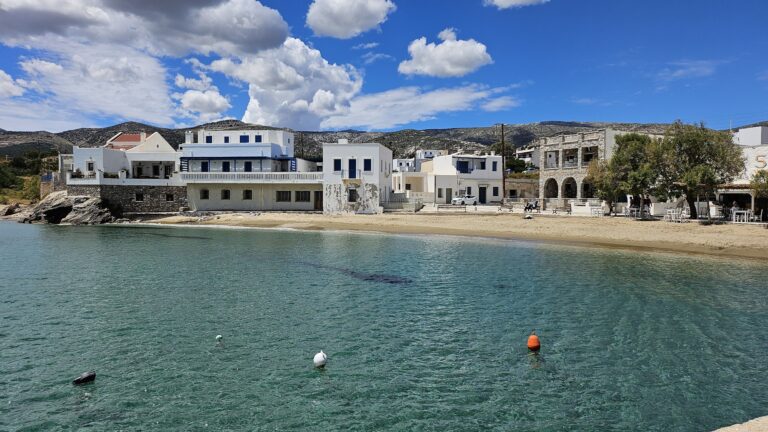
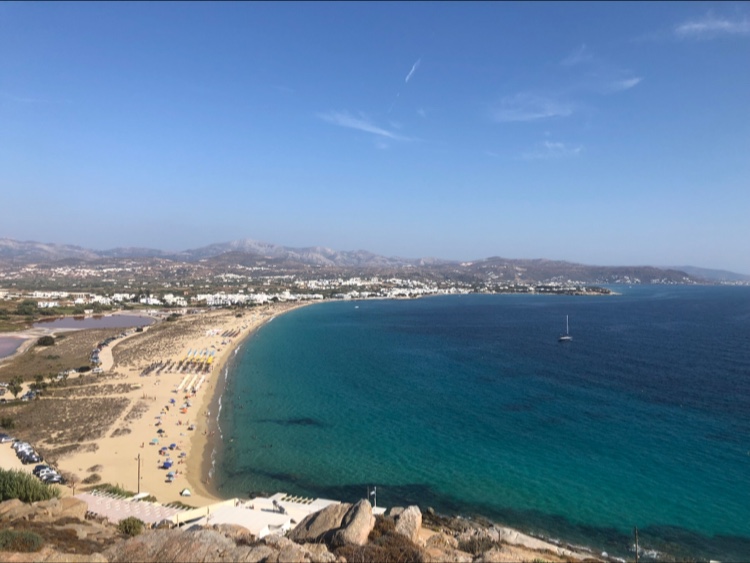
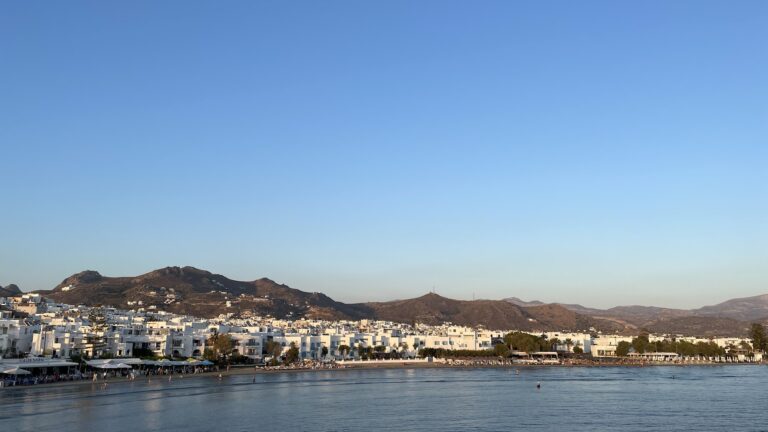
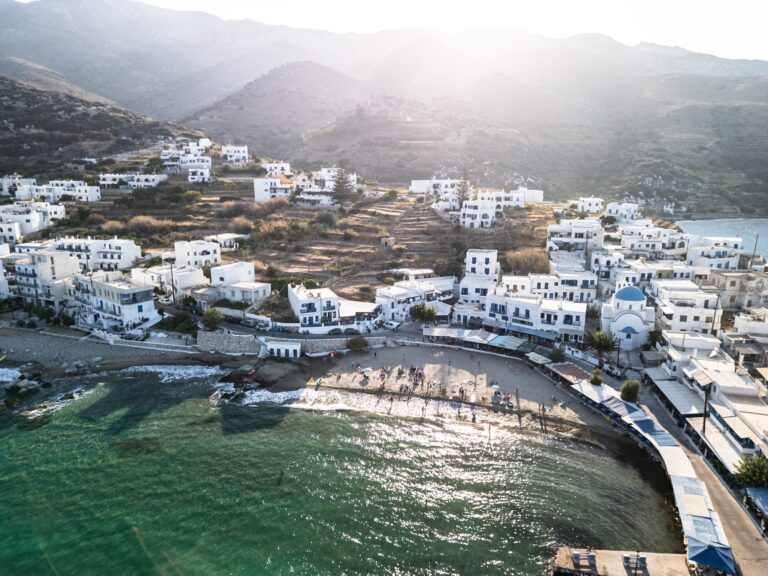
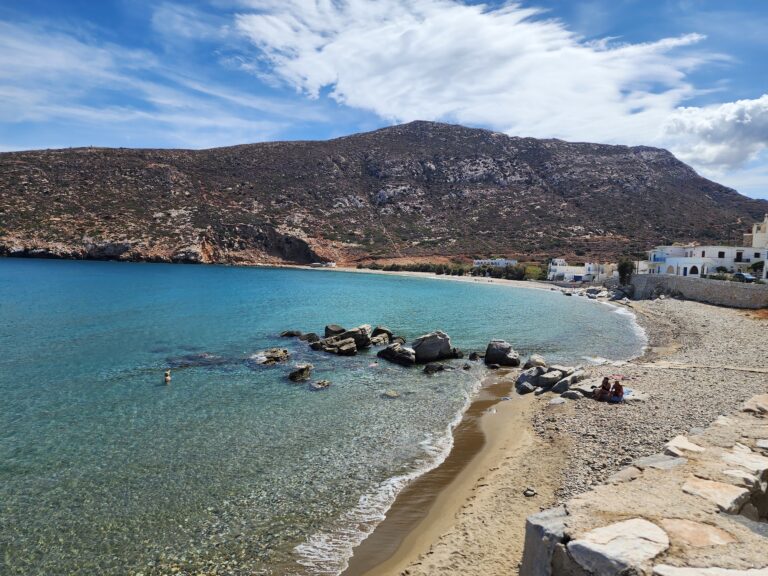
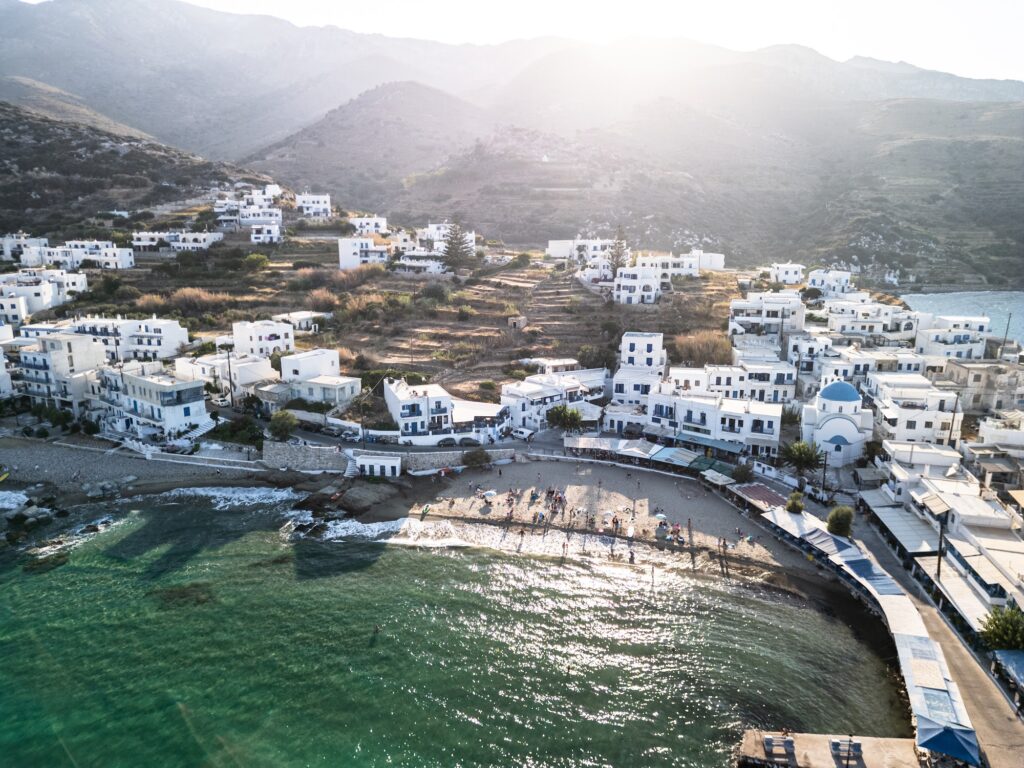
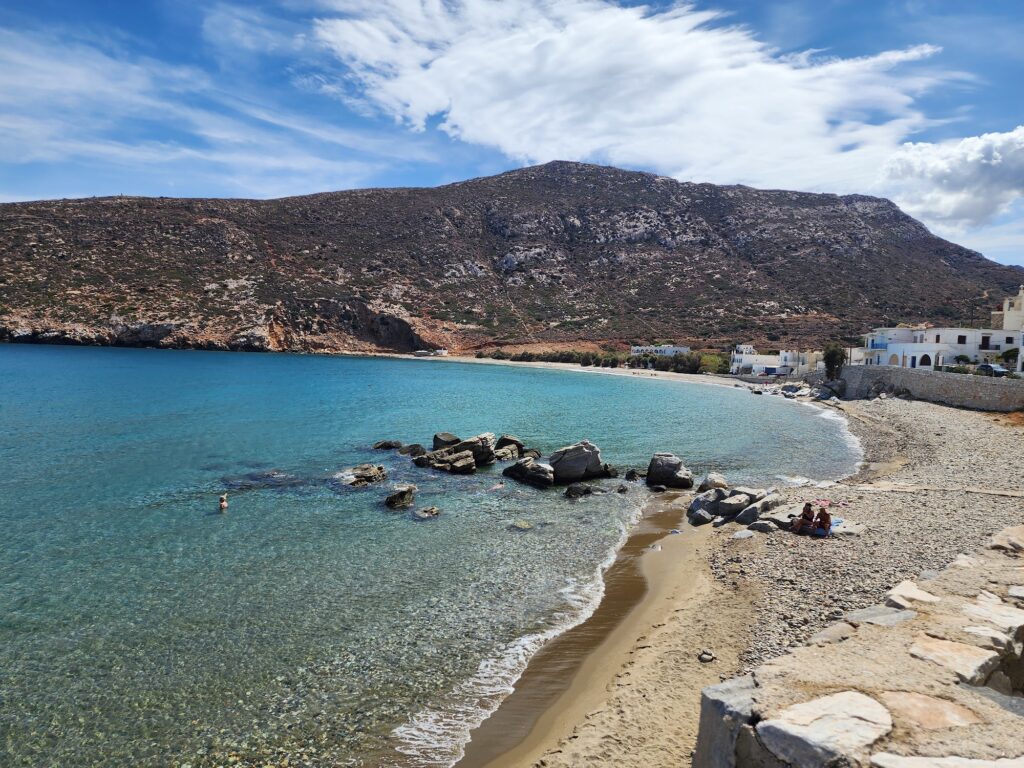
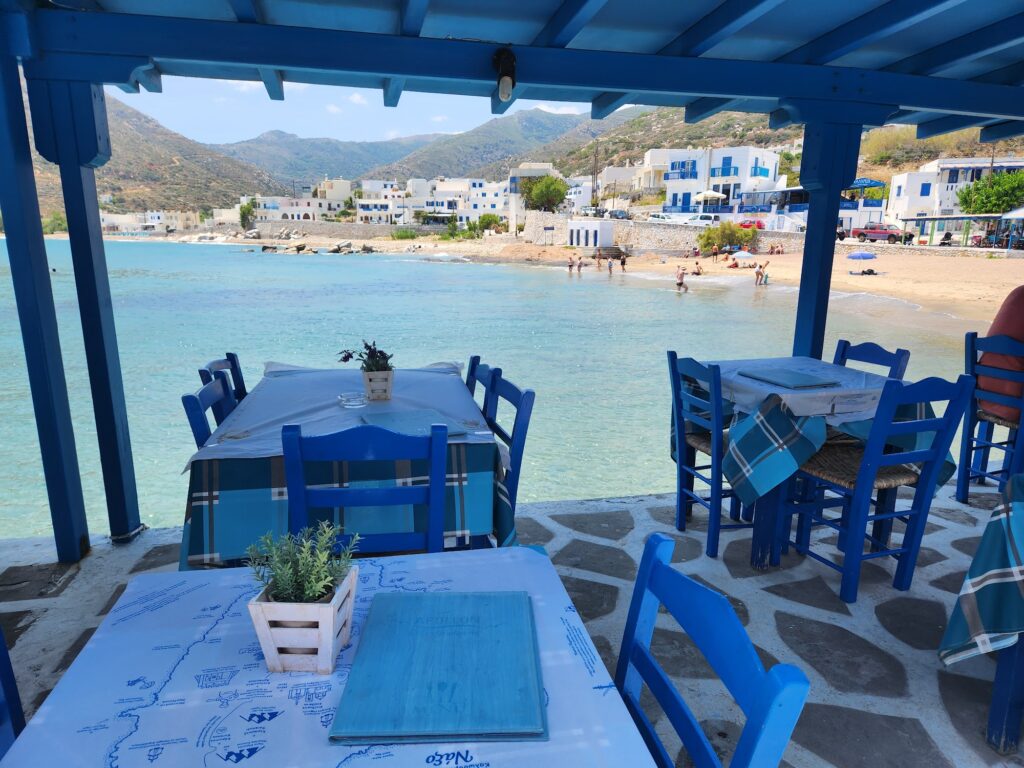
The Apollonas waterfront has two distinct sections: a smaller sandy beach and a larger section of white egg-like pebbles. The combination of colours — the golden sand, the white pebbles, and the blue sea — is described by the Naxos.net guide as “all characteristically Greek colours.” No sunbeds are available for hire. The beach is unorganised; visitors lay towels on the sand or the pebbles.
The beach faces north into the open Aegean. When the Meltemi — the strong northerly wind that blows regularly across the Cyclades in summer — is active, the Apollonas bay gets waves and wind-chop. The beach is not suitable for swimming on rough Meltemi days. Checking conditions before making the 1-hour drive from Chora is the specific practical advice. The sheltered west-facing beaches such as Agkali Beach Folegandros Greece provide the contrast in terms of wind protection.
The Kouros: 10.7 Metres, 80 Tonnes, Free, 24 Hours, Five Minutes Uphill From the Beach
The path to the Kouros starts at the entrance to the village, follows the signs uphill for approximately 5 minutes, and arrives at the ancient quarry. The statue is immediately visible — lying on its back in the quarry floor, the scale unmissable from the first moment. A low fence surrounds it; visitors can approach closely. No fee. No hours. No tour required.
The quarry context is important: this is not a statue moved to a museum setting. It is in the exact location where it was being carved, surrounded by the rock from which it came, with the marks of the ancient quarry work visible in the stone walls around it. The marble is light grey — Naxian marble, the same material used for the Temple of Demeter and the Portara gateway at Naxos Town.
Two smaller kouros statues lie near Melanes village (Flerio), approximately 10 kilometres from Naxos Town — a 6th-century BC figure 4.7 metres long in a village garden, and a second in a quarry nearby. The Apollonas kouros at 10.7 metres is more than twice the size.
The Beard Reclassification: What Changed in the 1930s
Before the 1930s, the statue’s identity was assumed from the village name. The examination that changed the identification was straightforward: Archaic kouros statues depicting Apollo are beardless because Apollo was eternally young. The beard on the Apollonas figure is a specific Dionysus attribute. Once the beard was identified and documented, the reclassification was immediate. The statue became the Colossus of Dionysus.
The complexity is that some scholarly sources still debate the identification — the iconography of early Archaic Greek sculpture is not always definitive, and some argue the statue could represent Dionysus, Apollo, or a heroised mortal. The village name, the tourism infrastructure, and the general visitor experience have not changed. The beard is real. The debate continues.
The Fisherman’s Feast (28 June) and Agios Ioannis (29 August)
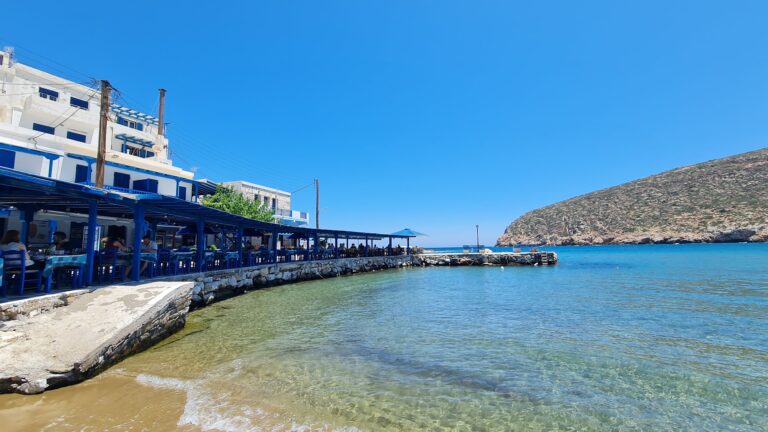
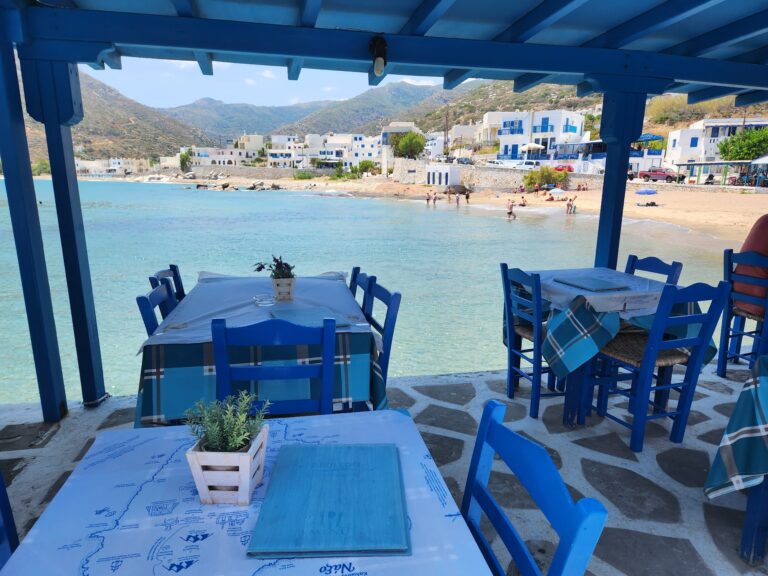
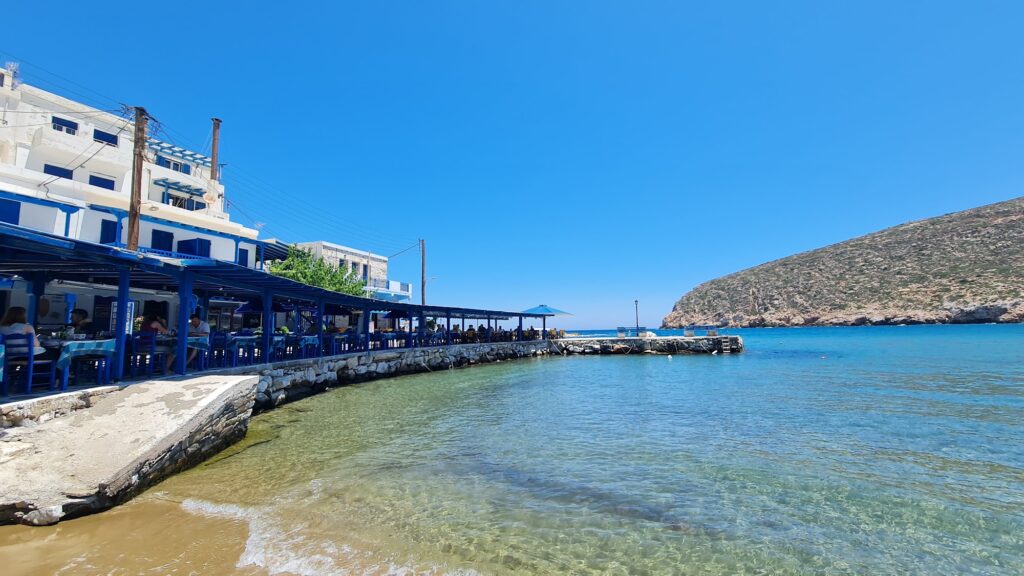
Apollonas celebrates the Fisherman’s Feast on 28 June — the blessing of the waters and the boats, followed by a traditional feast in the waterfront tavernas. The celebration has the specific character of a fishing village feast: working boats in the harbour, the priest, the water, the community gathered. The Feast of Agios Ioannis (Saint John) on 29 August is the patron saint festival of the village, beginning with vespers and an icon procession and continuing to a traditional feast.
Both dates are the specific calendar moments when the village reveals its working identity beneath the summer tourist layer. Visiting on either date is a categorically different experience from a regular beach day.
The Prehistoric Fort of Kalogeros
The ruins of the prehistoric fort at Kalogeros occupy a hilltop above the Apollonas inlet, visible from the village below. The ruins are accessible on foot — a walk that extends the archaeological dimension of the visit beyond the kouros in the quarry to the prehistoric settlement above the bay. The fort dates to before the kouros by several centuries.
The Drive: 36km of Northeast Naxos, Villages and Cliffs
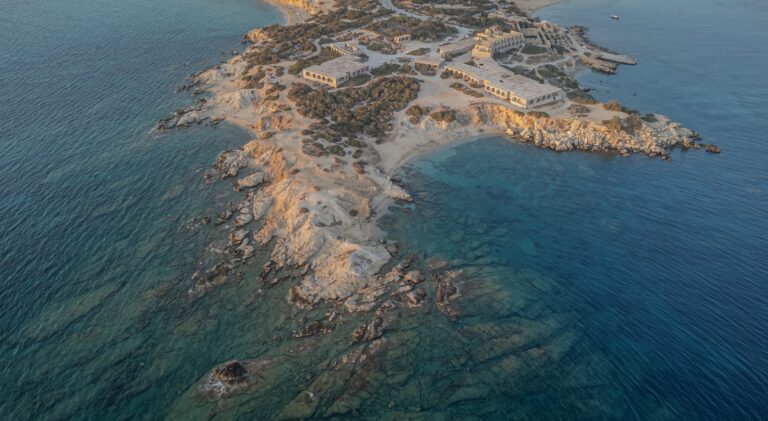
The drive from Naxos Town to Apollonas is specifically described in multiple guides as one of the most spectacular on the island. The coastal road section passes through the landscape that the west coast tourist infrastructure conceals: the northeast coast of Naxos is relatively undeveloped, with dramatic cliffs, the Small Cyclades visible on the horizon, and the specific Aegean light quality that the northern exposure produces in the afternoon. Moutsouna Beach Naxos Greece and its industrial kouros of a different kind — the cable railway pylons of the old emery port — is on the same northeast coast road, between Naxos Town and Apollonas.
Apollonas Beach on Naxos is the fishing village 36 kilometres from Chora where the largest kouros in Greece — 10.7 metres, 80 tonnes, 6th century BC — lies unfinished in the quarry above (free, open 24 hours, 5 minutes uphill), believed to depict Apollo until the 1930s when archaeologists identified the beard and reclassified it as Dionysus, sandy section plus large white pebble section (no organised sunbeds), Meltemi warning for the north-facing bay (check conditions before driving), the Fisherman’s Feast on 28 June and Agios Ioannis on 29 August, the prehistoric Kalogeros fort above the bay, bus from Naxos Town in peak season, the drive itself one of the most spectacular on the island.
Drive the coastal road from Chora. Walk to the quarry first. Then swim.
Map
Sorry, no records were found. Please adjust your search criteria and try again.
Sorry, unable to load the Maps API.
Near by places: