Agios Prokopios Beach Naxos: Top-10 Europe Blue Flag
Profile
Agios Prokopios Beach, Naxos: The 1.5km Blue Flag Shore Ranked Among Europe’s Top Ten, Protected From the Meltemi, With Paros Visible on Clear Days and Herons Resting in the Red Lake Behind
Greece | Agios Prokopios | Naxos, Cyclades
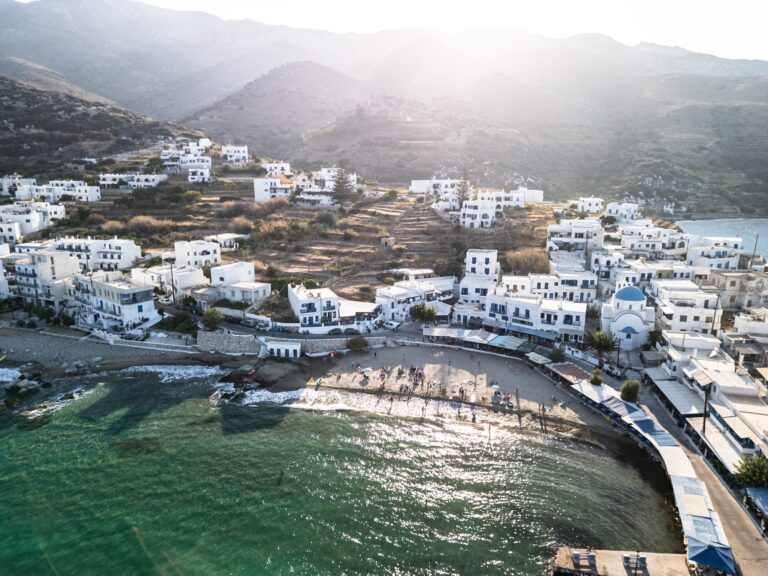
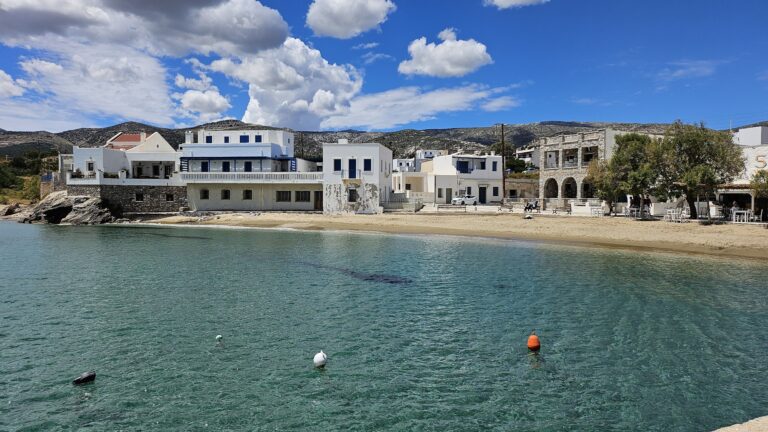
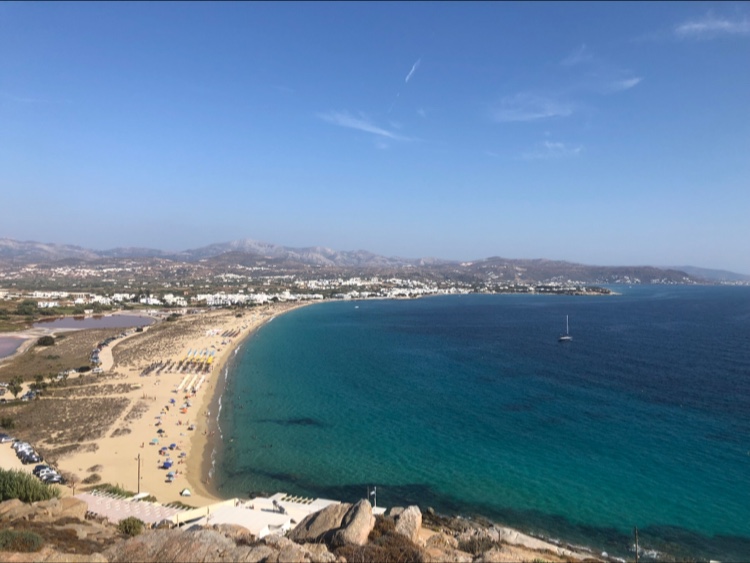
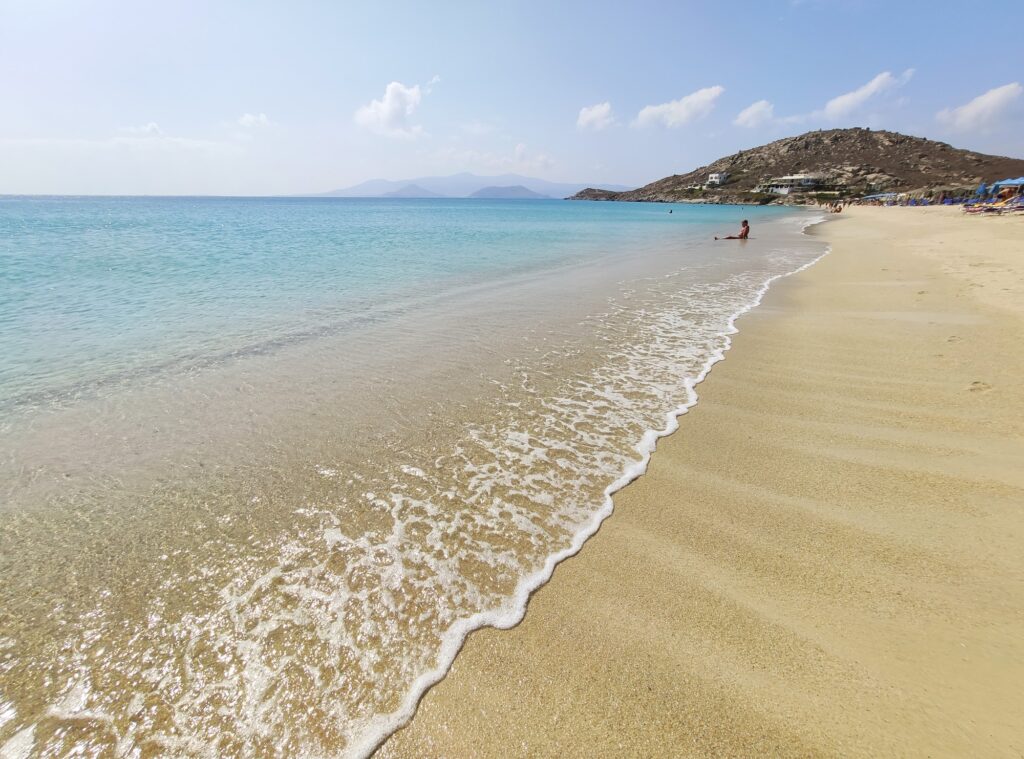
Agios Prokopios beach in Naxos has won the most Greek and international distinctions. It is just 4 km from the island’s port — huge, with coarse-grained sand that ends in a series of dunes and crystal-clear waters. With a colour that alternates from blue to deep blue and turquoise, it is rightly considered the third best beach in Greece and one of the ten most beautiful in Europe.
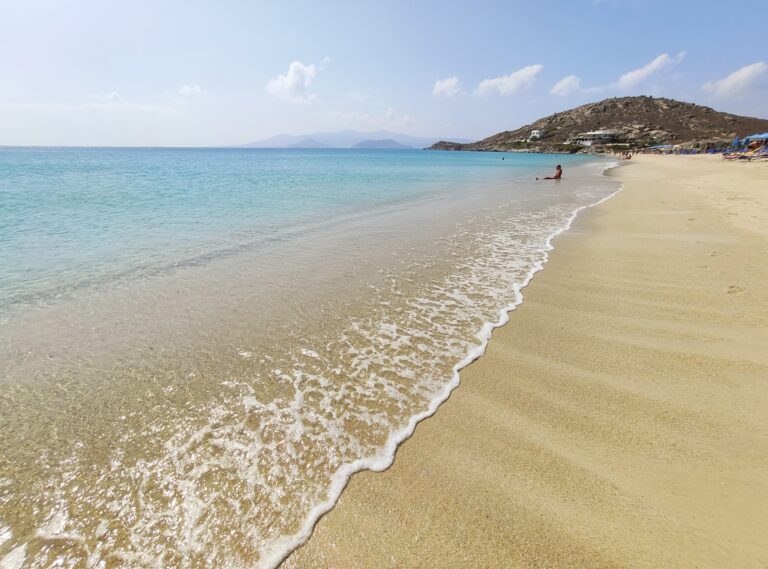
The first thing many visitors notice about Agios Prokopios is the clarity of the water. The seabed is largely sandy with some pebbly patches. The sea is generally calm in early summer mornings and evenings, though like all Cycladic islands, Naxos is exposed to the Meltemi, the strong north wind that can pick up in July and August, especially in the afternoon.
Agios Prokopios is a seaside village on the island of Naxos. At the 2021 census it numbered 182 residents. The village supports the beach — behind the sand dunes, the small village offers a variety of accommodation, eateries, cafés, mini markets, and bars.
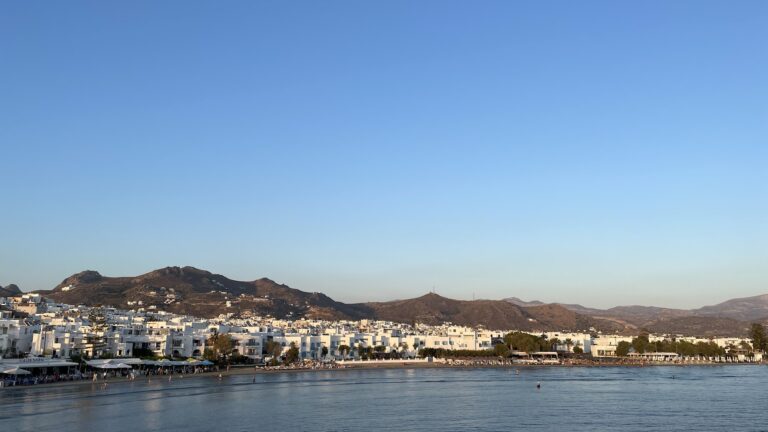
The beach runs in a soft, gentle curve with views across the water to Paros on a clear day. Paros is roughly 30 kilometres southwest — close enough to identify the island on a clear morning, before the afternoon Meltemi builds and the horizon haze thickens.
Getting There: 5km From Chora, KTEL Bus Every 20–30 Minutes in Summer, 3.5km From the Airport, Ample Parking
The beach of Agios Prokopios is located on the western side of the island, 5 km from the centre of Naxos Town, between the beaches of Agia Anna and Agios Georgios. The beach can easily be reached by car, but you can also get there by bus from Naxos Town.
During summer, KTEL buses depart from Naxos Town (Chora) every 20 to 30 minutes. The journey takes approximately 15 minutes. The bus stop is steps from the beach. The airport is just 3.5 kilometres away. Ample unpaved parking is available at the northern and southern entrances — though arriving before 11am is the August advice.
The Beach: 1.5km, Coarse Golden Sand, Organised North, Unorganised Near the Chapel, Meltemi Afternoons
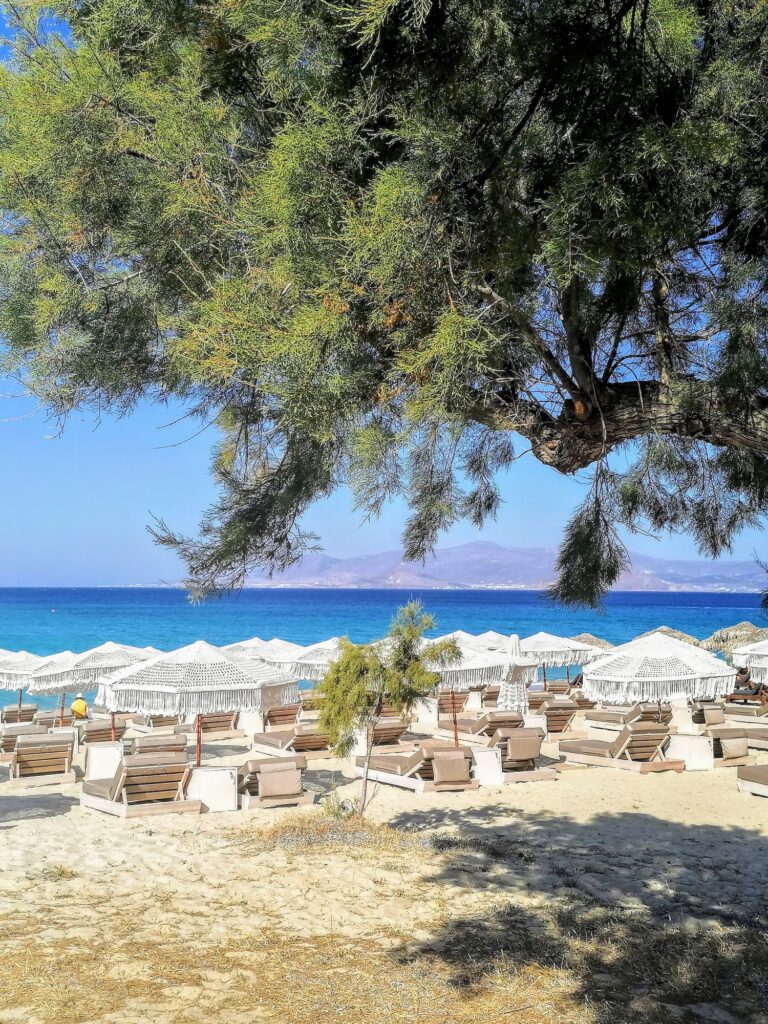
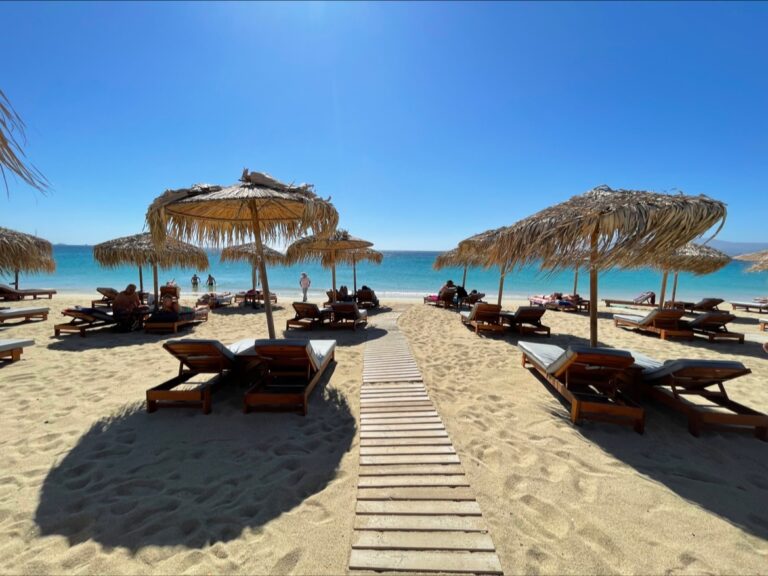
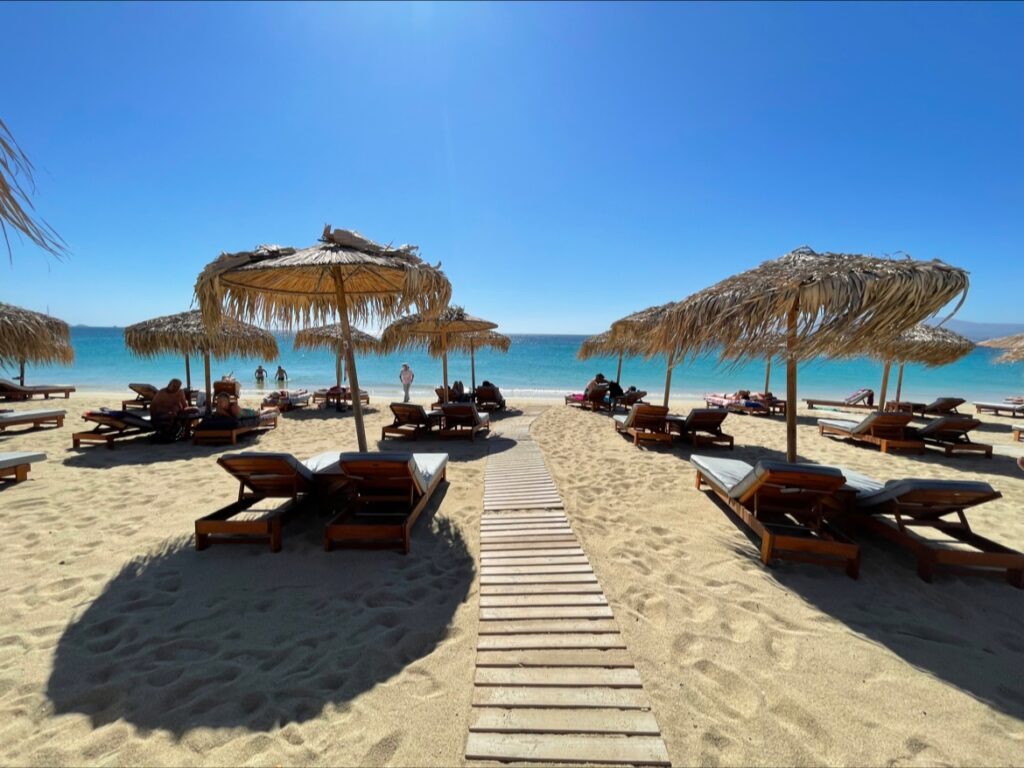
Its location offers protection from the island’s strong winds, and the waters are almost always calm. The beach is organised for the most part, with sunbeds and sun umbrellas.
Near the chapel at the northern end, the coastline remains unorganised, allowing visitors to enjoy its untouched natural charm. On the southern side, visitors will find vibrant beach bars and options for watersports.
The entry into the water is gentle for much of the bay, making it suitable for less confident swimmers and children under supervision. In places, the seabed shelves a bit more quickly, so it is worth wading in slowly the first time to get a feel for the depth profile.
The honest Meltemi note: Agios Prokopios is naturally sheltered from the strong northern winds known as the Meltemi, which are a common feature of the Cyclades during July and August. While other beaches on the island might experience choppy waters and blowing sand, Agios Prokopios typically remains an oasis of calm. The protection is significant but not total — mornings are reliably calmer.
The Red Lake: Heron Resting Ground on the Africa Migration Route
The Red Lake is another attraction near the village — flocks of herons are known to use the spot as a resting place before continuing their migratory flight to Africa.
The Red Lake behind the beach dune system is the specific ecological detail that most beach guides to Agios Prokopios omit. The lagoon-wetland area is seasonally visited by herons on the African migration route — a birdwatching note that gives the beach village a dimension beyond the organised sunbeds and the tavernas.
Portara and Naxos Chora: The 5km Programme
Naxos is the largest island in the Cyclades — significantly larger than Mykonos or Santorini — and its hinterland has marble quarries that still produce, medieval Venetian towers in the mountains, the Kouros of Apollonas (an unfinished 6th-century BC marble statue abandoned in a quarry), and Chora (the island capital) with the Portara — the marble gateway of an unfinished temple to Apollo that has stood on the promontory since 530 BC and is the first thing visible from the ferry approach.
From Agios Prokopios, Chora and the Portara are 5 kilometres north — the specific afternoon programme from the beach base.
Agia Anna and the Naxos Beach Sequence
Directly south of Agios Prokopios, a coastal boardwalk connects to Agia Anna Beach in approximately 10 minutes — the next beach in the western Naxos sequence that continues south to Plaka (long, less organised), Mikri Vigla (windsurfers’ beach), and beyond.
Agios Prokopios Beach on Naxos is the 1.5-kilometre Blue Flag shore ranked third best in Greece and top-10 in Europe — coarse golden sand ending in dunes, naturally sheltered from the Meltemi (mornings calmer than afternoons), Paros visible on clear days, the Red Lake behind the dunes where herons rest before continuing to Africa, the unorganised section near the northern chapel, Agia Anna 10 minutes south by coastal boardwalk, and Chora with the Portara 5 kilometres north.
Take the bus from Chora in the morning. Swim before the wind builds in the afternoon.
Map
Sorry, no records were found. Please adjust your search criteria and try again.
Sorry, unable to load the Maps API.
Near by places: