
Louros Beach Messolonghi: 17km Dunes, Wild Horses
Profile
Louros Beach, Messolonghi: One of Greece’s Longest Sandy Beaches at 17km, With Sand Dunes (Rare in Greece), Wild Horses in the Wetland Behind, and the Ramsar Convention Protecting It Since 1974
Greece | Neochori Area | Messolonghi, Aetolia-Acarnania, Western Greece
Messolonghi produces approximately 60 percent of Greece’s salt. The salt marshes between the town and the sea — the alykes — extend for miles along the lagoon coastline, their rectangular pools visible from above and from the roads that cross between them. Salt has been produced here since antiquity; the specific chemistry of the Messolonghi lagoon water, its salinity and temperature, creates the conditions for natural solar salt evaporation that the industry has exploited continuously. The region’s salt production is the economic foundation that underlies the fishing, the avgotaraho, and the specific character of a town that has always been defined by the relationship between land and water.
Louros beach is the outer coast of this wetland system — the seaward side of the narrow strip of land that separates the Messolonghi-Aitoliko Lagoon complex from the Ionian Sea. The lagoon is on one side; the 17-kilometre sandy beach is on the other. The strip is narrow enough that the two worlds are accessible in a few minutes’ walk from each other.
The beach is one of the longest continuous sandy beaches in Greece and one of a very small number with genuine sand dunes. Sand dunes require the specific combination of consistent wind direction, a supply of fine sand, and the stabilising vegetation (marram grass, tamarisk, cedar) to accumulate and hold their shape. Most Greek beaches do not have the conditions; Louros does. The dune vegetation includes sand lilies (Pancratium maritimum) — the same protected species that blooms at Vathi Beach on Sifnos in mid-August.
The Ramsar Convention protection dates to 1974 — one of the earliest Ramsar designations in Greece, reflecting the ecological significance of the entire Messolonghi-Aitoliko lagoon complex, of which Louros is the outer coastal edge.
Getting There: Via Aitoliko and Neochori, 35km From Messolonghi, 16km Dirt and Provincial Road From Neochori — Drive Slowly and Follow Local Signs
From Messolonghi, drive north toward Aitoliko (approximately 12km). Aitoliko — the “water city” built on an island in the lagoon, connected to the mainland by two bridges — is the en-route landmark. Continue through or past Aitoliko north to Neochori. From Neochori, follow local signs for Louros on the provincial road — 16km through the flat plain of salt marshes and wetland. The road passes water channels, salt pans, and the landscape of the Messolonghi national park. The total journey from Messolonghi is approximately 35 kilometres and 20 to 25 minutes from Aitoliko.
The road is provincial rather than paved motorway standard — follow signs and ask at the first opportunity. The parking area at the beach is large and free, directly at the sand.
By bus, summer routes are occasional — a private car or taxi is the practical choice for the beach’s remote location.
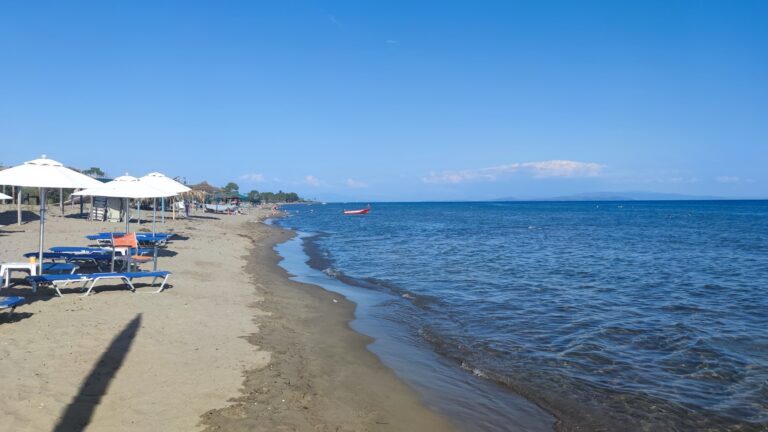
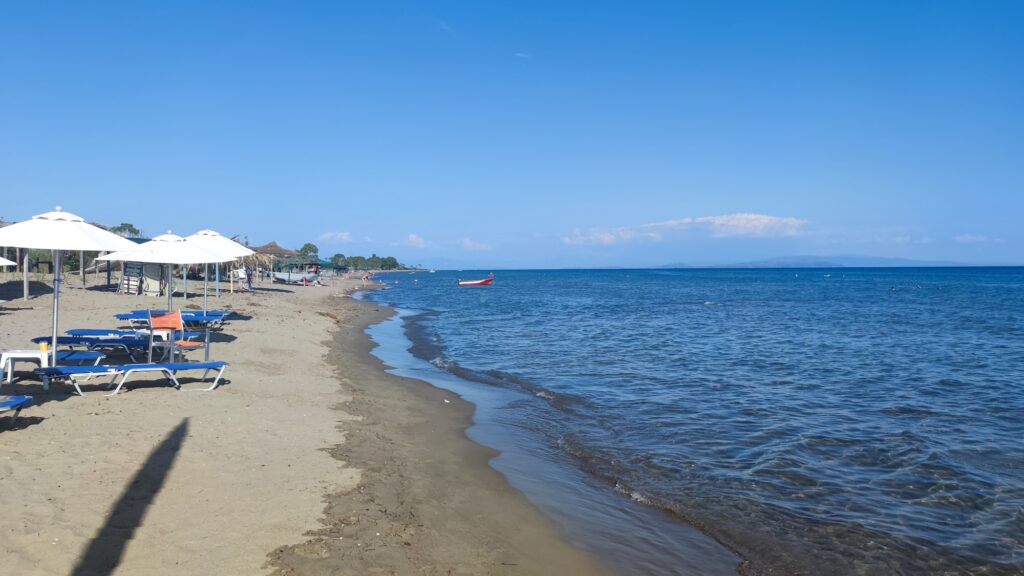
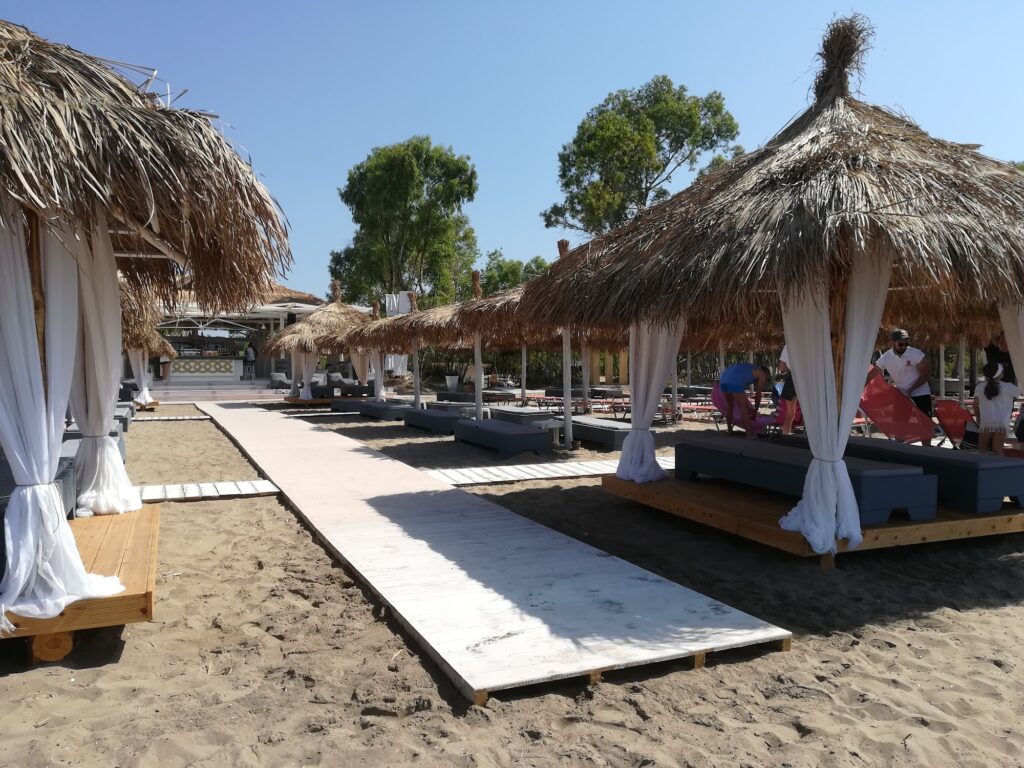
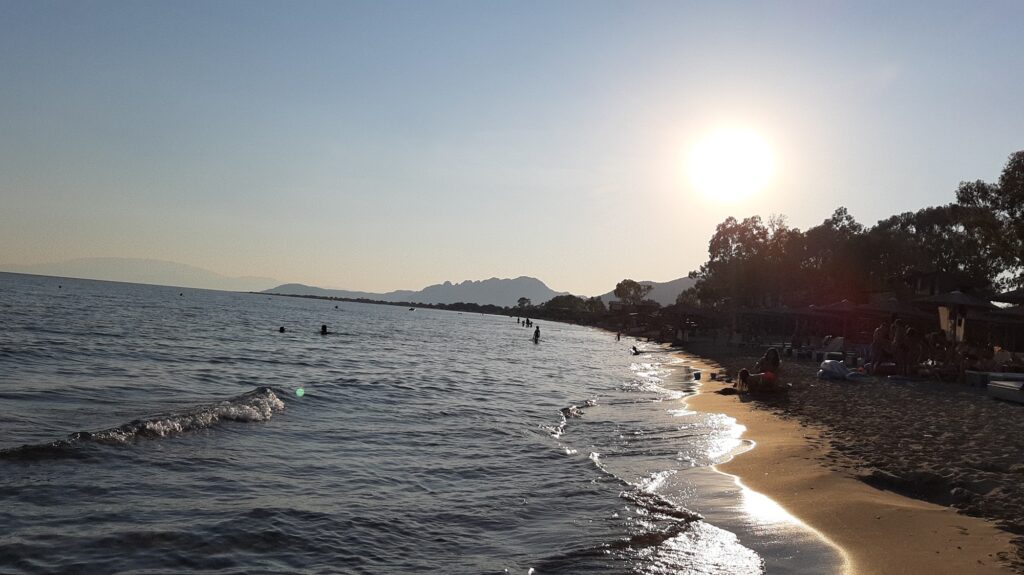
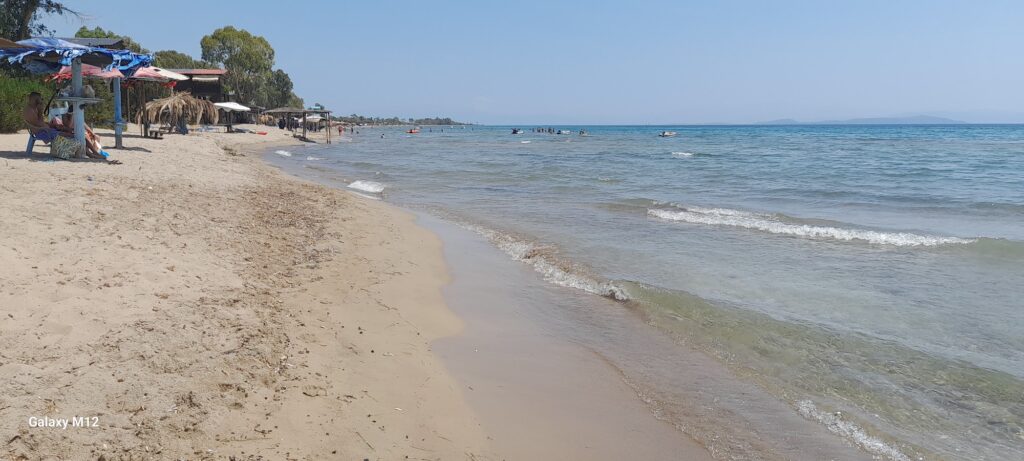
The Beach: 17km, Fine Powder Sand, Sand Dunes (Among Very Few in Greece), Cedar and Tamarisk Forest, Organised Central Section, Wild and Empty Beyond
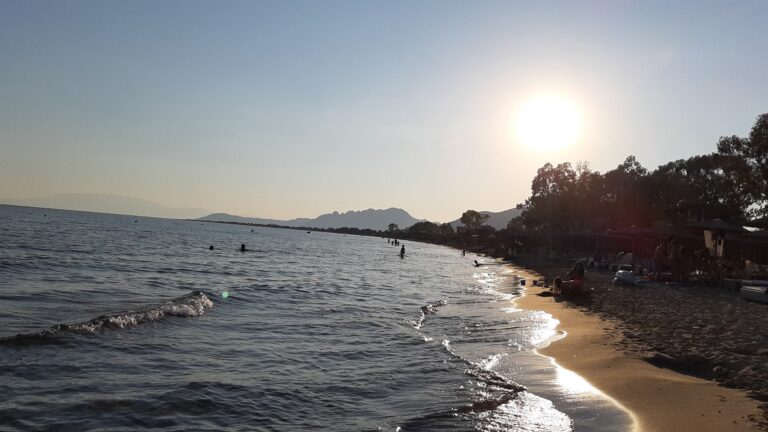
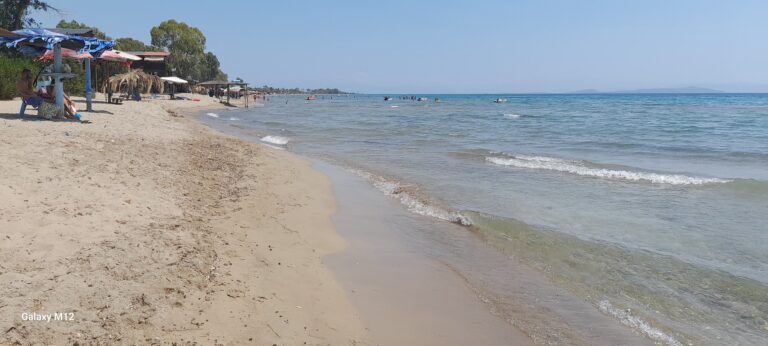
The sand at Louros is the specific quality that visitors describe first: very fine, silty, powder-like, the texture that produces the sensation of sand between toes at its most pleasurable. The beach is 17km long and wide — it does not fill even in August because the scale exceeds the visitor volume that the remote access road delivers.
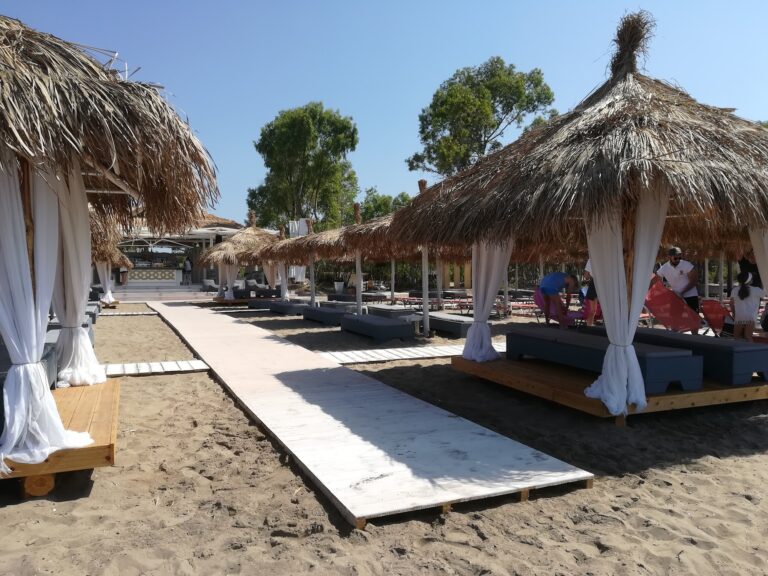
The central section near the parking area has beach bars, organised sunbeds, and basic facilities. The sections north and south of the central hub are progressively less organised and progressively quieter. Walking 1km in either direction from the organised hub reaches undeveloped sand. Walking 5km reaches the beginning of genuine solitude.
The dunes are the specific landscape feature — the accumulations of windblown fine sand held by the marram grass and the tamarisk and cedar vegetation. The dune forest behind the beach provides natural shade and the specific scent of resin and salt that the coastal pine-and-cedar forest environment produces.
The Wildlife: Wild Horses, Flamingos (Winter), Pelicans, Storks, Spotted Eagles, 300+ Bird Species
The wetland behind the beach supports one of the most diverse bird populations in the Mediterranean. The 300+ bird species recorded in the Messolonghi-Aitoliko lagoon complex reflect the ecological richness of the area. Flamingos are present in large numbers in winter — thousands, according to birdwatcher accounts from the lagoon dikes. In summer, most birds are in the deeper lagoons away from the beach area, but herons, egrets, and pelicans are regularly visible from the beach access road.
Wild horses inhabit the wetland. The specific sighting conditions vary with season and location within the wetland, but the presence of feral horses in this landscape is unusual in Greece and part of the specific ecological character of Louros.
Aitoliko: The Water City Built on a Lagoon Island, En Route to Louros
Aitoliko — officially Aetoloakarnania’s “water city” — is a town of approximately 5,000 built entirely on a single island in the lagoon, connected to the mainland by two bridges. The bridges, the waterfront, and the view of the town surrounded by water from the northern bridge have earned it the comparison to Venice — an overstatement, but the physical character is specific: a compact urban settlement surrounded by lagoon water with its own quays and fishing boats. Driving through Aitoliko on the way to Louros is a 5-minute transit through this unusual geography.
The lagoon around Aitoliko is 28 metres deep in parts — unusual for a lagoon, most of which are shallow. This depth creates the specific ecology of the Aitoliko lagoon section, distinct from the shallower Messolonghi central lagoon.
Messolonghi: The Avgotaraho, the Byron Connection, the Tourlida Causeway
Messolonghi town’s specific products and connections were covered in the Tourlida Beach Messolonghi Greece article — the avgotaraho (cured mullet roe, the world-renowned Messolonghi product), the Tourlida stilt houses, the Salt Museum that won the 2024 European Museum of the Year Award, the Garden of Heroes where Lord Byron’s heart is buried. Louros beach and Tourlida island are the outer and inner edges of the same lagoon complex — one faces the open sea, the other faces the lagoon.
Louros Beach near Messolonghi in Aetolia-Acarnania is one of Greece’s longest sandy beaches at 17 kilometres — powder-fine sand, sand dunes (among very few in Greece), the cedar and tamarisk dune forest, Ramsar Convention protection since 1974, wild horses in the wetland, flamingos in winter (thousands, in the lagoons behind), 300+ bird species, Messolonghi producing 60% of Greece’s salt in the marshes nearby, Aitoliko “water city” on the lagoon island en route, the provincial road from Neochori requiring patience and local sign-following, 35km from Messolonghi, 20–25 minutes from Aitoliko.
Drive through Aitoliko. Follow the signs. Park at the sand. Walk until the beach empties.
Map
Sorry, no records were found. Please adjust your search criteria and try again.
Sorry, unable to load the Maps API.