Psarolakas Beach Platamonas: Pebble Shore Below the Castle
Profile
Psarolakas Beach, Platamonas, Pieria: The Small Pebble Hidden Gem Between the Crusader Castle and Neoi Poroi, Pet-Friendly, Not Crowded, With the Olympus Festival Running in the Fortress Above All Summer
Greece | Psarolakas | Platamonas, Pieria, Central Macedonia
The Castle of Platamonas is visible from the beach. It was built in 1204 by Lombard Crusaders — members of the Fourth Crusade who stayed in Greece rather than continuing east, carving out feudal territories in the aftermath of the sacking of Constantinople. The specific military purpose was control of the passage between Macedonia and Thessaly, which runs through the narrow coastal strip at the base of Mount Olympus — the same strip where the E75 motorway now runs, where the railway line passes, and where the beach at Psarolakas sits below the castle hill.
The castle is one of the best-preserved medieval fortresses in Greece — octagonal tower rising 16 metres, walls nearly a metre thick, the whole structure illuminated at night from the road. In summer, the Olympus Festival takes place within the castle walls — open-air concerts and cultural events running from June to September, using the castle as a venue. The combination of a castle with summer concerts visible from the beach below is the specific Platamonas detail that most beach descriptions omit.
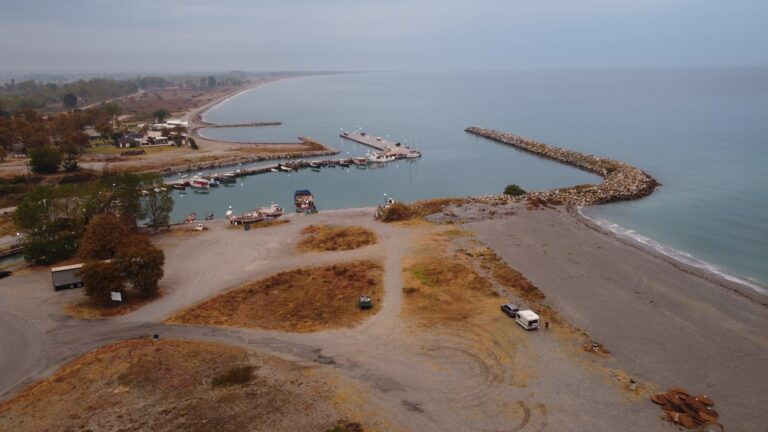
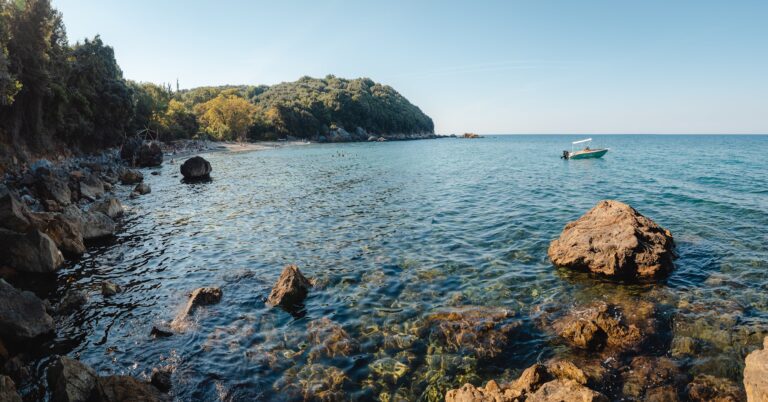
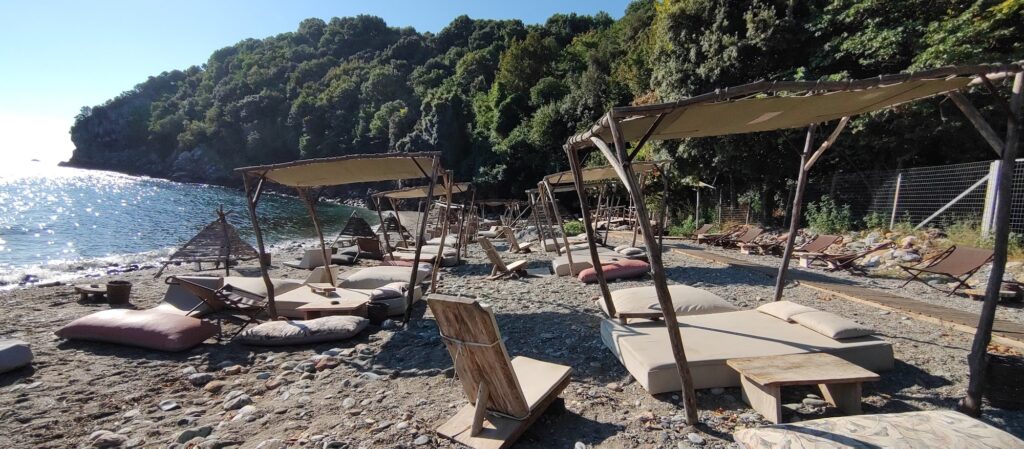
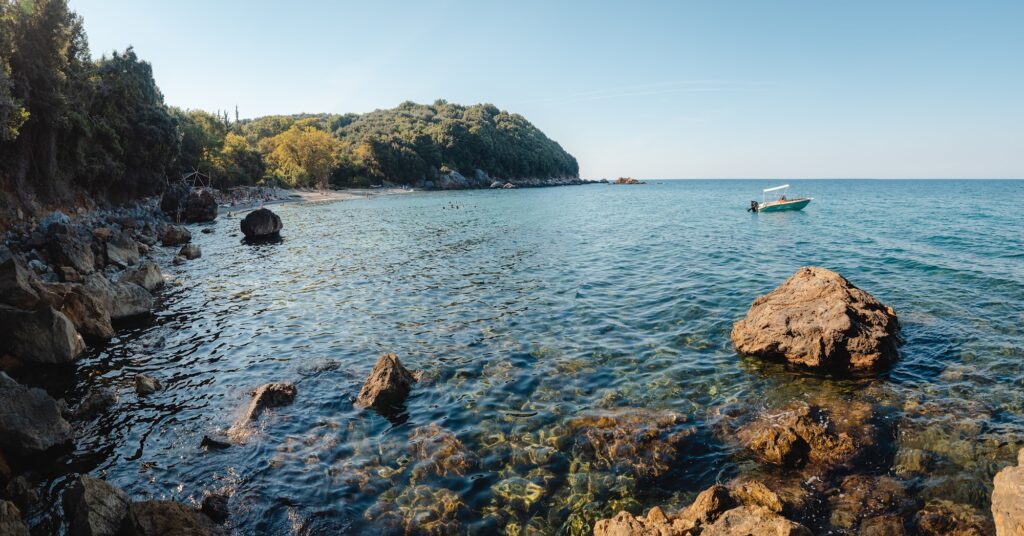
Psarolakas Beach is the small, mostly pebble shore immediately south of the castle, between Platamonas and Neoi Poroi. It is not the main Platamonas beach — that is the longer sandy beach to the north of the castle. Psarolakas is smaller, quieter, less organised, and has the specific character of a beach that locals know and visitors stumble upon. Reviews describe it consistently as clean, beautiful, not crowded, and with clear water — alongside the honest note that the seabed is pebble throughout, including the swimming section, which some visitors expecting sand find disappointing.
Getting There: 38km From Katerini, E75 Exit for Platamonas, Coastal Road South to Psarolakas, Parking Near the Road
Platamonas is 38 kilometres south of Katerini and 90 kilometres south of Thessaloniki on the E75 Athens–Thessaloniki motorway. Take the Platamonas exit and follow the coastal road south. Psarolakas is between Platamonas village and Neoi Poroi — a few kilometres south of the castle.
Parking is available near the beach and additional spaces near the main road for visitors who prefer not to navigate the hill down to the beach. The path to the beach requires some descent — comfortable shoes are recommended for visitors arriving on foot from the road.
By train, the Platamonas station is on the main Athens–Thessaloniki line. From the station, a short taxi or walk reaches the beach. The Proastiakos suburban service from Thessaloniki and regional trains from Larissa both stop here.
The Beach: Small, Pebble Throughout Including the Seabed, Clear Water, Beach Bar (Card Accepted), Pet-Friendly, Not Crowded
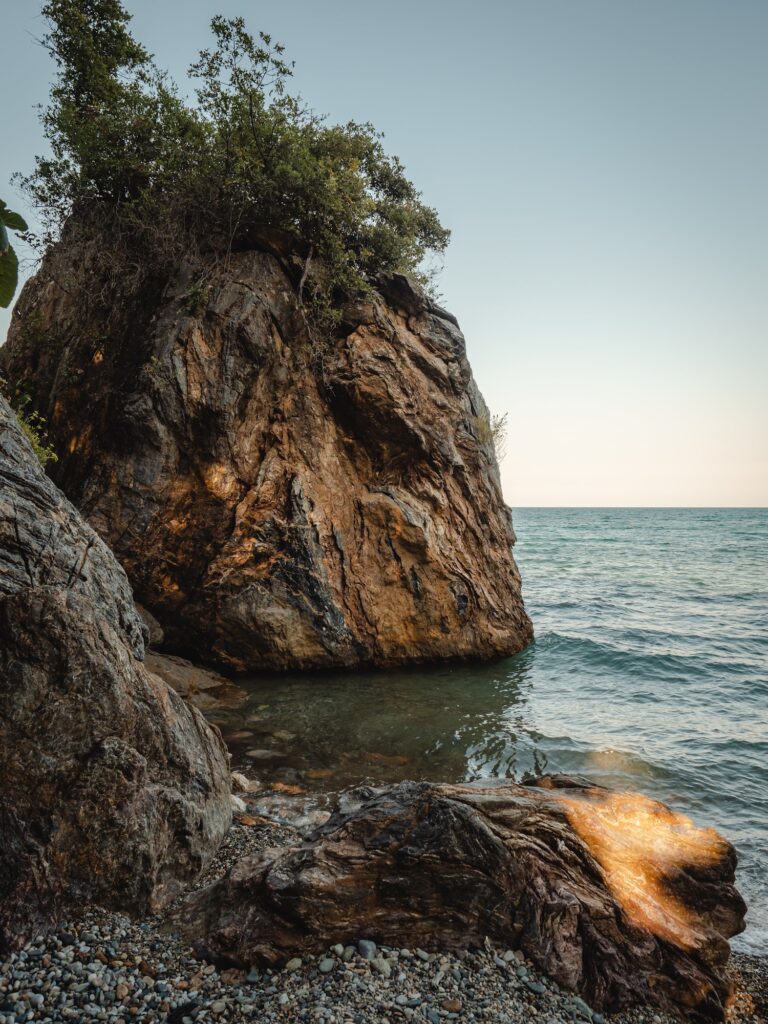
Psarolakas is characterised by tiny stones, sand, and rocks. The seabed is pebble throughout — this is the specific honest note that distinguishes it from the sandy-seabed beaches of the area. Visitors who expect sand in the water will not find it here. Visitors who specifically want pebble and clear water will find exactly that.
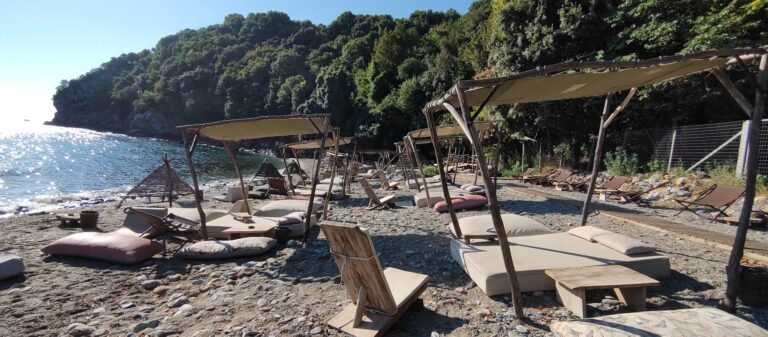
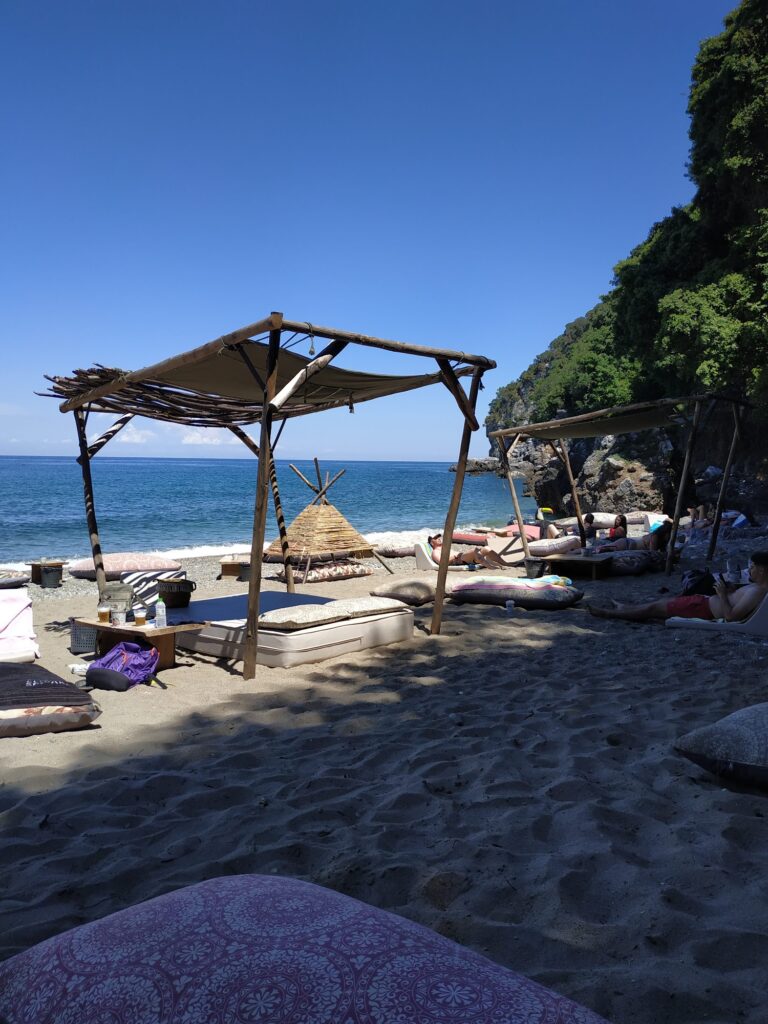
The beach bar provides shade and sun beds (card payment accepted, which is specifically mentioned in reviews as a useful feature). Parking is directly adjacent. Dogs are welcome — the beach is confirmed pet-friendly. The overall visitor experience is described as uncrowded and relaxed, with the specific quality of a place that is genuinely not on the main tourist circuit.
Water shoes are recommended for entry and movement in the water given the pebble seabed. Snorkelling along the rocky areas at the edges is the activity the clear water supports best.
The Castle of Platamonas: Built 1204 by Lombard Crusaders, the Best-Preserved Medieval Castle in Greece, the Olympus Festival in Summer
The Castle of Platamonas stands on the hill above the coast between the main Platamonas beach to the north and Psarolakas to the south. Its walls are up to 9.5 metres high; the octagonal tower on the northeast side is 16 metres. Entry costs €2.
The Olympus Festival runs within the castle from June to September — the specific summer cultural programme that the castle hosts under the auspices of the 9th Ephorate of Byzantine Antiquities. Concerts and theatrical performances take place in the castle courtyard, with the Aegean visible beyond the walls. The programme includes classical music, contemporary performances, and events connected to the wider Pieria cultural calendar.
The castle was built on the site of the ancient city of Herakleia — a settlement that controlled the same coastal passage two thousand years before the Crusaders arrived.
The Platamonas Main Beach: Sandy, to the North of the Castle, Different Character
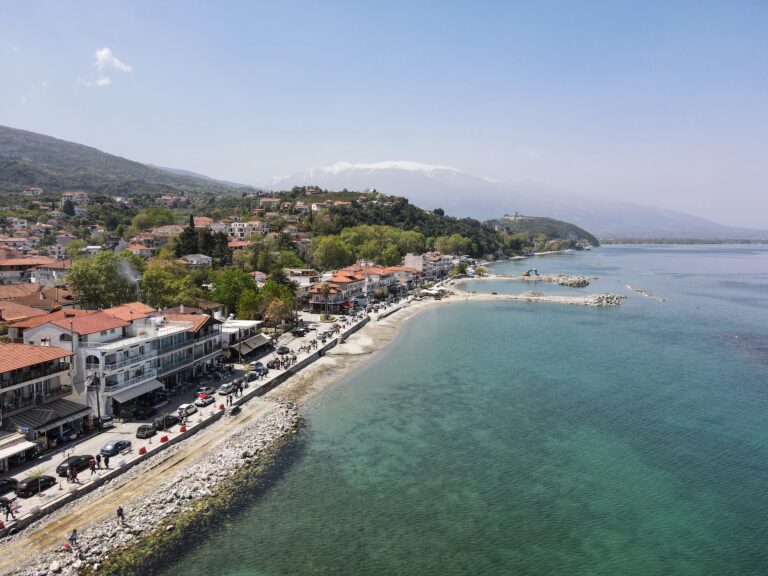
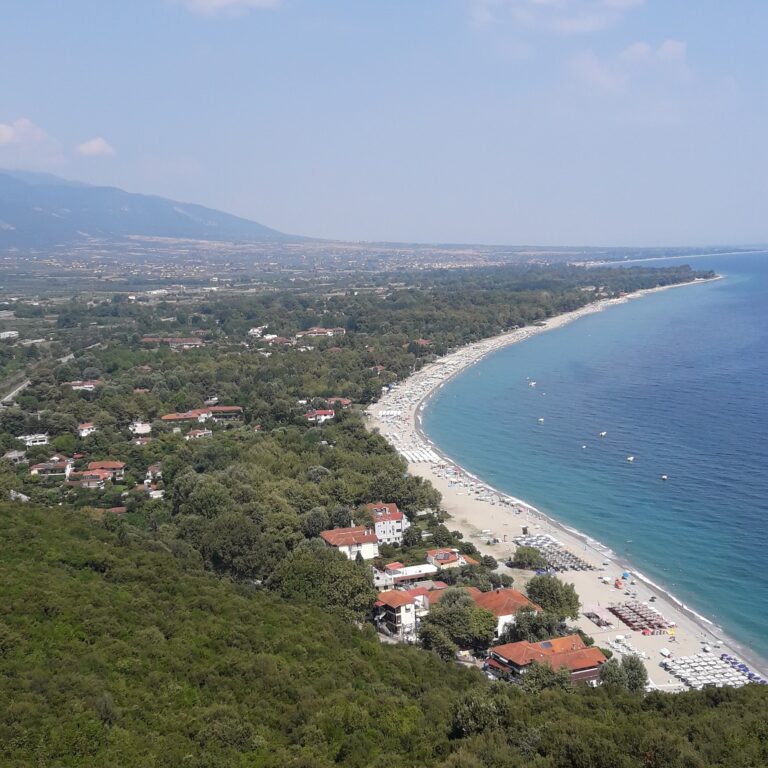
The main Platamonas beach is to the north of the castle, on the other side of the hill from Psarolakas. It is sandy rather than pebble, longer, and more organised with the standard infrastructure of a busy summer resort. Akti Platamona is described as one of the longest beaches in Greece in some sources. The comparison is the specific Platamonas decision: the main sandy beach to the north with full resort infrastructure, or Psarolakas to the south for pebble, clarity, and quiet.
Neoi Poroi: The Village Immediately South of Psarolakas
Neoi Poroi is the settlement immediately south of Psarolakas — a small coastal resort village with its own beach and the full range of summer facilities. It is part of the same stretch of the Pieria coast that runs from Platamonas south to Leptokaria and eventually to Litochoro and Gritsa Beach.
Gritsa Beach Litochoro Greece — the Blue Flag beach at the port of Litochoro, covered in this series — is the next significant beach south, approximately 8 kilometres from Platamonas along the same coast road. The specific Pieria coastal sequence connecting Platamonas, Neoi Poroi, Leptokaria, Litochoro, and Gritsa runs through the base of Mount Olympus continuously.
The Tempi Valley: 15km South, the Peneus Gorge Between Olympus and Ossa
The Tempi Valley — the gorge where the Peneus river flows between Mount Olympus to the west and Mount Ossa to the east — is approximately 15 kilometres south of Platamonas on the E75. In Greek mythology, Tempi was where Apollo pursued Daphne and where she was transformed into a laurel tree. The gorge, 10 kilometres long, has the Chapel of Agia Paraskevi built into the cliff face, accessible by footbridge over the river. The combination of the castle, the beach, and the Tempi gorge is the specific day circuit from a Platamonas base.
Psarolakas Beach at Platamonas, Pieria is the small pebble shore between the Crusader castle and Neoi Poroi — not crowded, pet-friendly, card payment at the beach bar, clear water with a pebble seabed throughout (no sand — honest expectation setting), water shoes recommended, the 1204 Lombard Crusader castle directly above on the hill (€2 entry), the Olympus Festival concerts in the castle courtyard from June to September, Gritsa Beach Litochoro 8km south on the same coast road, and the Tempi Valley gorge 15km south.
Take the E75 exit for Platamonas. Drive south past the castle. Park near the road.
Map
Sorry, no records were found. Please adjust your search criteria and try again.
Sorry, unable to load the Maps API.
Near by places: