Rethymno Beach Crete: 13km Shore With 300 Turtle Nests
Profile
Rethymno Beach, Crete: The 13km Sandy Strip With 300+ Sea Turtle Nests Per Year, the Venetian Fortezza on the Skyline, and Barbarossa the Pirate in the Harbour History
Greece | Rethymno | Rethymno Regional Unit, Crete
The Rethymno area in northern Crete is the third largest nesting habitat of the loggerhead sea turtle (Caretta caretta) in Greece and the largest on the island. The beach extends for 12 kilometres. Based on statistics collected by ARCHELON volunteers since 1989, there is an average of 300 sea turtle nests per year on Rethymno beaches.
Rethymno Gulf is one of Greece’s three critical habitats for Caretta caretta, with over 400 nests documented annually.
These are the two facts about Rethymno Beach that most beach guides omit in favour of describing the Venetian architecture and the water colour. The beach is a significant active Caretta caretta nesting ground. The marked enclosures with metal cages are not decorative — they are protecting live nests. Don’t be surprised to encounter roped-off areas; these are spots where eggs have been discovered and are safeguarded from swimmers.
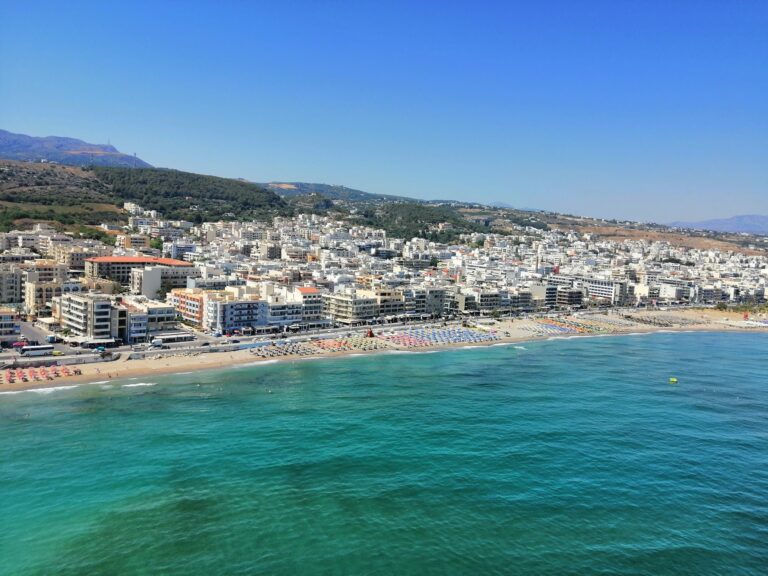
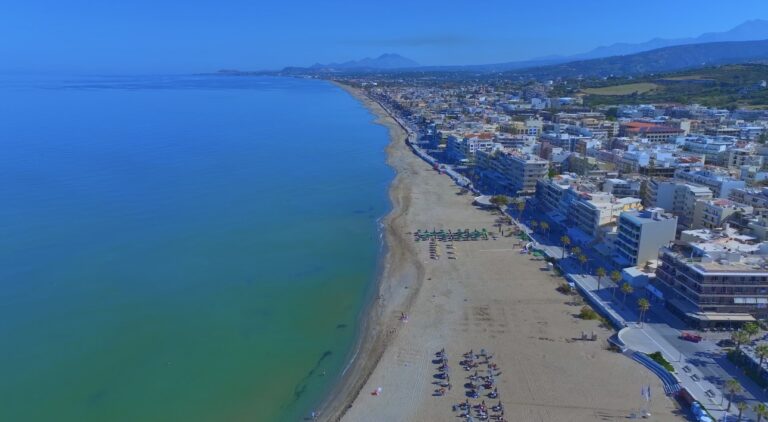
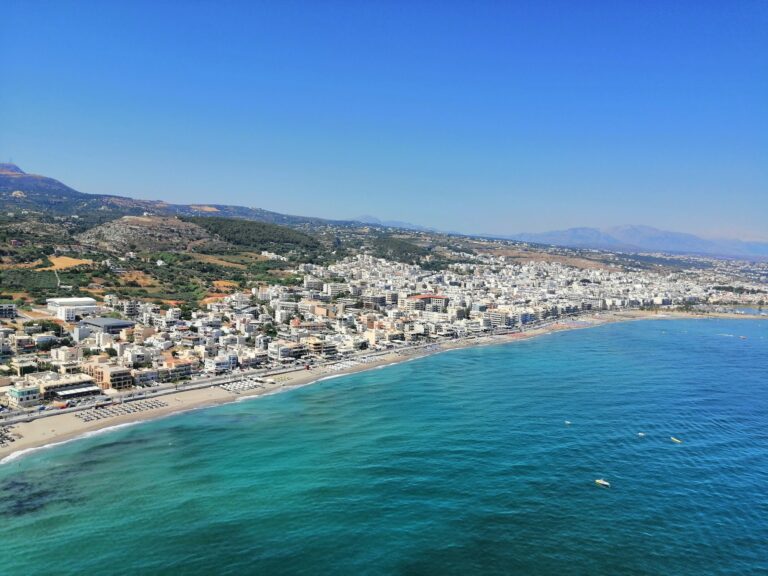
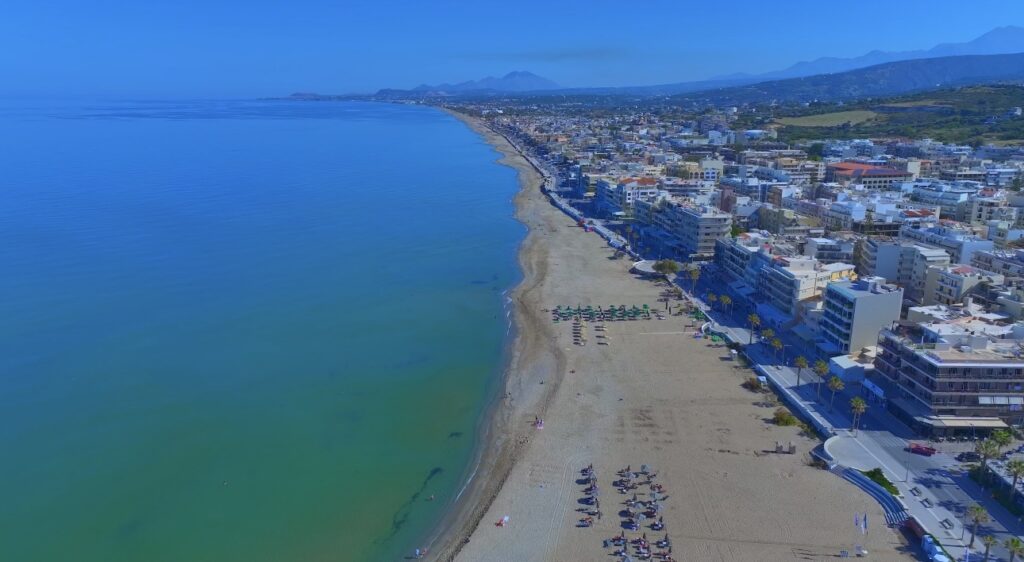
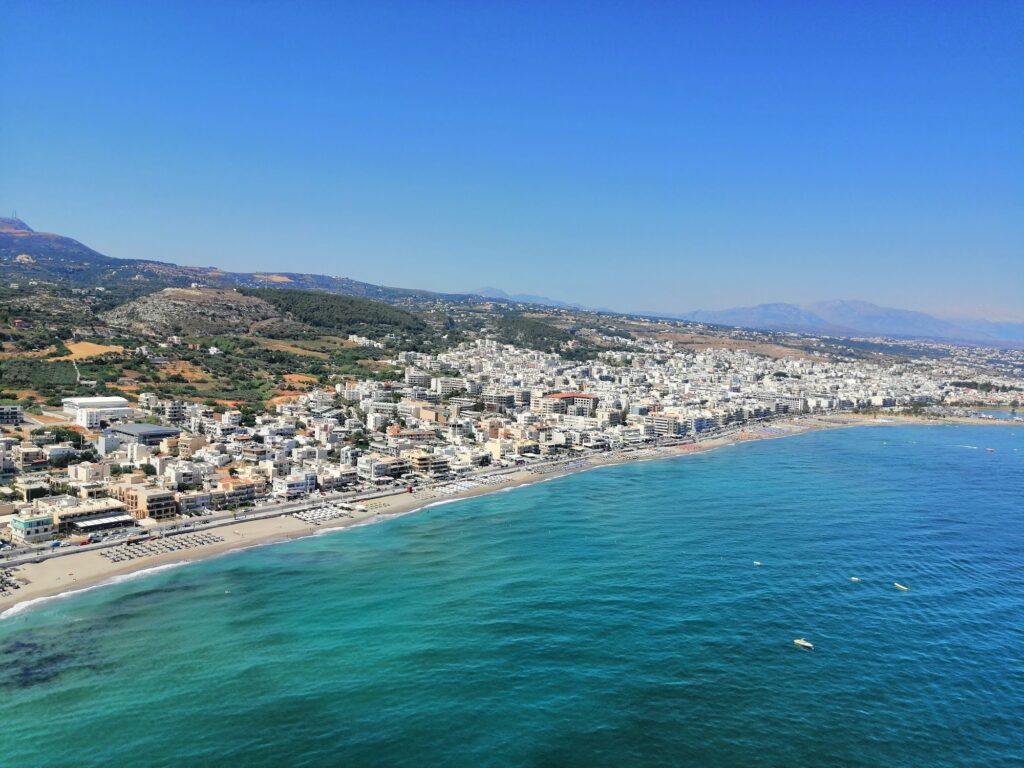
This beautiful beach stretches for 13 km and is lined with hotels, apartments and resorts. With views across the bay to the old town with its small harbour and ruined Venetian Fortezza atop a small hill overlooking the Cretan Sea, and the old lighthouse, this wide sandy beach is ideal for holidays combining sea and history, sun and cultural experiences.
Getting There: 65km from Chania, 82km from Heraklion, Frequent KTEL Buses, Beach Starts 500m East of the Old Town
Rethymnon town is 65 km from Chania and 82 km from Heraklion. Both cities have international airports — Chania is slightly closer. From either airport, take a hire car or the KTEL intercity bus.
The beach starts approximately 500 metres east of the city centre and the Venetian harbour, running east for 13 kilometres to Skaleta. For visitors staying in the Old Town, the beach is a short walk east along the esplanade. For those staying in hotels on the beach strip, the Old Town is a 1.5 to 2-kilometre walk west.
The bus station is in the east of the city, approximately 2 kilometres from the start of the beach. A taxi from the bus station to your beach destination costs approximately €10.
Local city buses run the entire length of the 13-kilometre strip, stopping at various points for different beach sections.
The Beach: 13km of Sandy Shore, Three Sections, Meltemi Wind Waves Possible, Shallow for Families
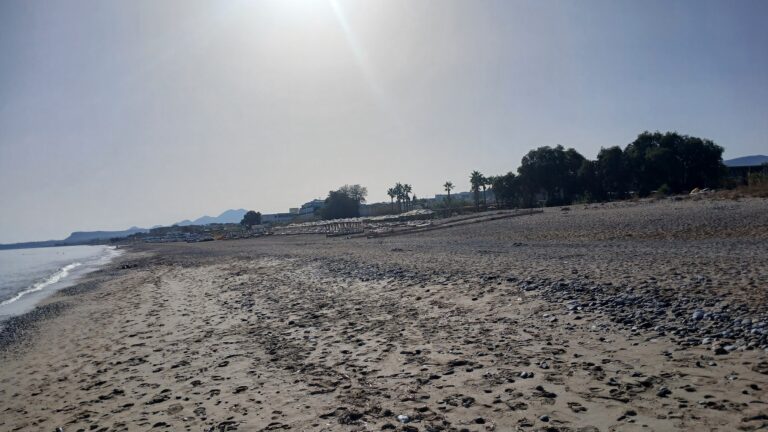
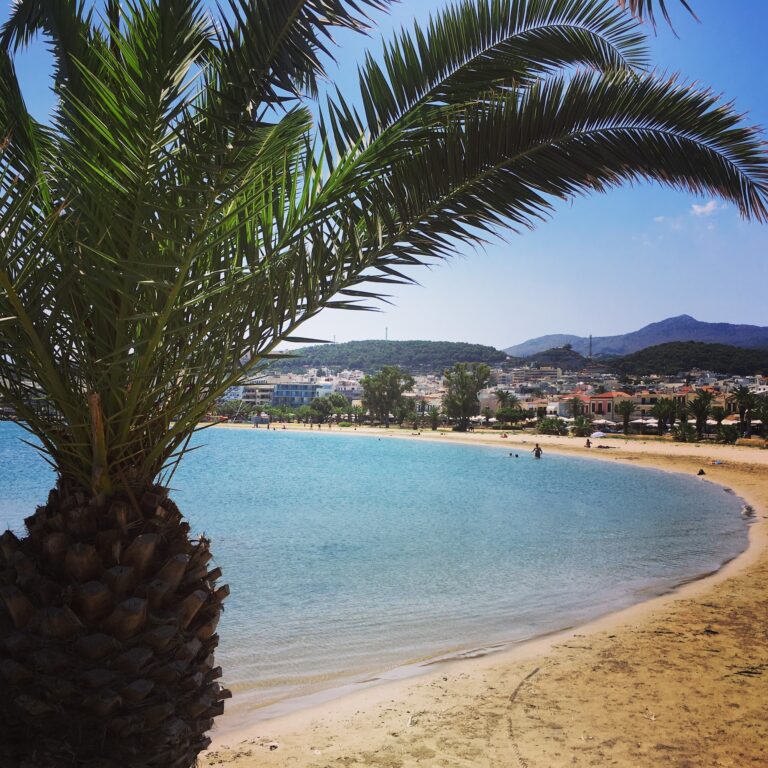
Rethymno is a beautiful sandy beach with crystal-clear water. The gradual access into the sea and the pleasant width of the beach attracts families with children, despite there are sometimes waves occurring here because the bay is often being affected by northern winds, also known as Meltemi.
The Meltemi warning is the specific honest caveat for the north Cretan coast: unlike the south coast beaches of Agia Galini and the Libyan Sea which are sheltered from the north wind, the Rethymno bay faces the Cretan Sea and the full Meltemi direction. On high-wind days, the waves are genuinely present. Morning conditions are generally calmer before the afternoon wind builds.
The further east you go, the quieter the beach becomes. The shore is shallow, making it ideal for families.
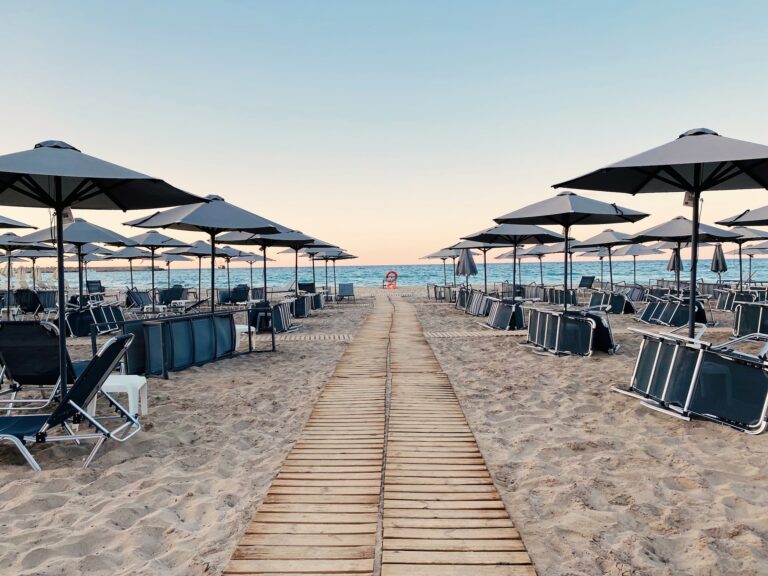
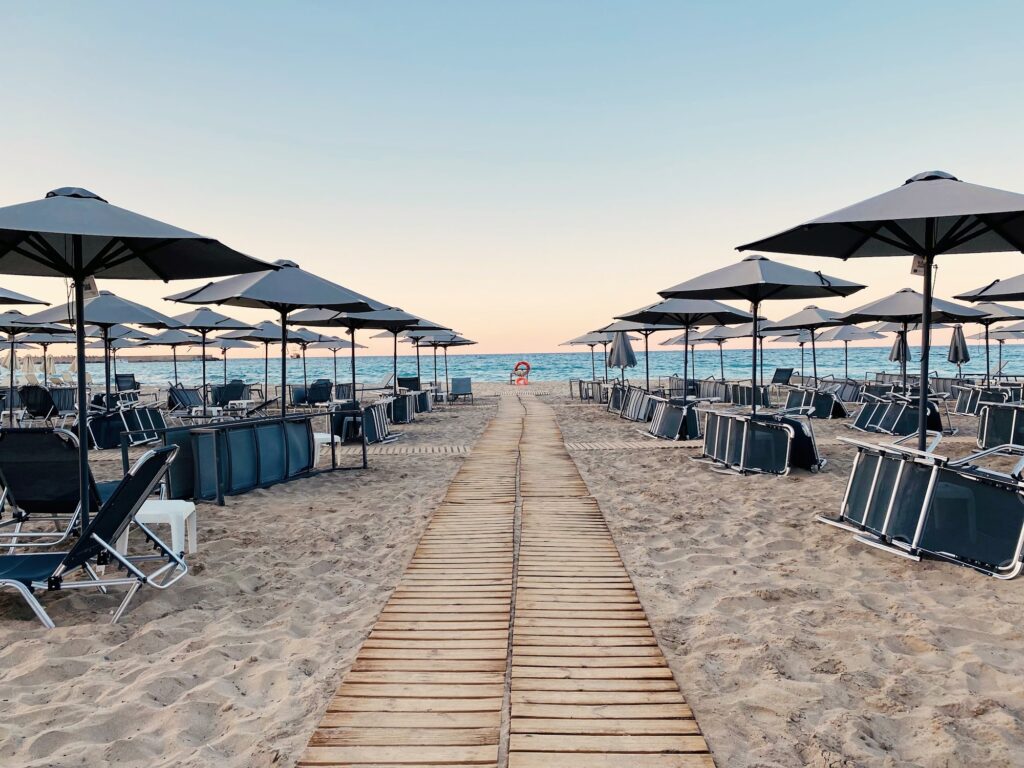
The city beach section (westernmost, adjacent to the harbour) is the most organised and busiest. Moving east, the beach gradually loses density — the beach bars are still present but spaced further apart. By the time the beach reaches the Platanes (Platanias) section 3–5 kilometres east, the character shifts from city beach to resort beach strip.
The Venetian Fortezza and the Old Town: 500m West of the Beach
The Fortezza — the Venetian fortress built in the 16th century on the Paleokastro hill above the old harbour — is the specific architectural landmark visible from the beach’s western end. Fortezza was built by the Venetians in the 16th century in an exposed position on the Paleokastro hill. On the spacious grounds, in addition to the massive fortress walls and their bastions, you can see the Sultan Ibrahim Mosque on the highest point of the castle.
The Old Town of Rethymno — the Venetian loggia, the Rimondi Fountain, the Neratze Mosque (converted from a Franciscan church under Ottoman rule), and the narrow streets of the medieval quarter — is 500 metres from the beach entrance. The specific urban-coastal combination that makes Rethymno unusual: walking from a sunbed on the beach into a completely intact Venetian old town in 10 minutes.
Barbarossa the Pirate and the Historical Harbour
The legendary pirate Barbarossa was active in these seas long ago. Today you can take a ride on the Black Rose pirate ship, which is just like a real Spanish galleon, and cruise and snorkel on the beautiful local beaches.
Hayreddin Barbarossa — the Ottoman admiral and former pirate, born Aruj Barbarossa — sacked Rethymno in 1538, an event that is historically documented and is part of the city’s layered history of Venetian, Ottoman, and Greek periods. The pirate ship tour from the harbour maintains the connection between the beach, the harbour, and the maritime history.
Caretta Caretta Conservation: ARCHELON Kiosk, Night Restrictions, 300 Nests Per Year
There is also an ARCHELON kiosk on site, which cares for the sea turtles Caretta caretta for animal welfare purposes. The first beach at the harbour may not be entered in summer, as the endangered sea turtle Caretta caretta temporarily lays its eggs here.
From early May to the middle of October, volunteers of all ages and backgrounds from all over the world participate in ARCHELON’s sea turtle conservation programme in Rethymno.
The practical beach behaviour during nesting season (May–September): do not use lights on the beach at night, do not walk on the beach at night, give distance to any roped nesting area, and do not obstruct hatchlings if you see them making their way to the sea. The hatchlings use the moonlight reflecting on the water to navigate — artificial lights on the beach disorient them.
The Sofokli Venizelou Esplanade: Palm-Lined Promenade, Cycling, Evening Stroll
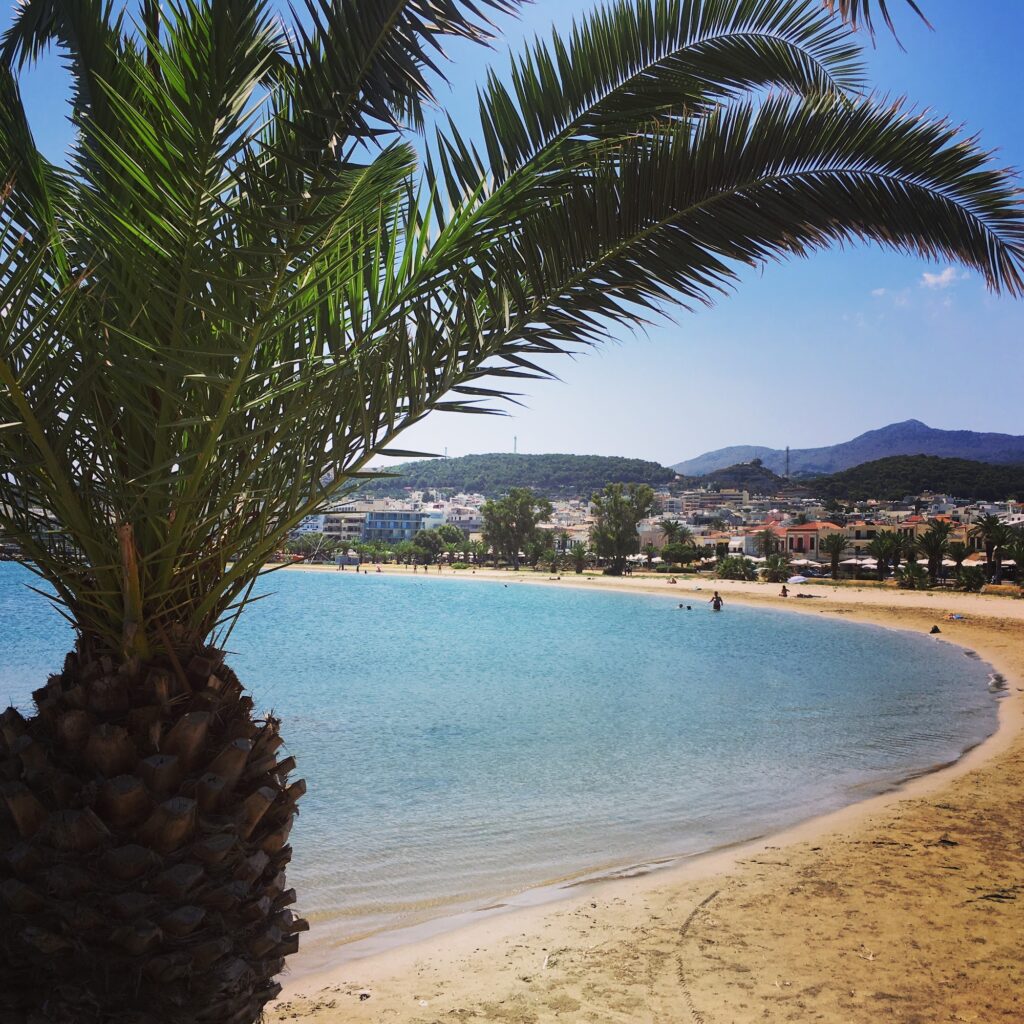
From the old harbour you walk along the Eleftheria Venizelou waterfront through a magnificent palm tree avenue (Marina Beach Park) to the city beach of Rethymno. There is a Miami vibe in the Cretan air at this place.
The palm-lined esplanade is the social infrastructure of Rethymno beach — the cycling path, the evening promenade, the restaurant terrace row, and the beach bar entrance points all run parallel along it. The “Miami vibe” observation accurately describes the combination of wide palm promenade, golden beach, and blue sea, which is a specifically North Cretan urban beach aesthetic.
Rethymno Beach in Crete is the 13-kilometre sandy strip with 300 sea turtle nests per year — the third largest Caretta caretta nesting site in Greece, metal cage enclosures marking live nests on the sand, the Venetian Fortezza visible on the western skyline, the Old Town 500 metres from the beach entrance, Meltemi wind waves possible on the north coast, quieter and shallower further east, the ARCHELON kiosk at the harbour section, and Barbarossa the pirate in the harbour history.
Walk west from the beach to the Old Town. Read the rules at the ARCHELON kiosk. No lights, no walking, no noise on the beach at night in nesting season.
Map
Sorry, no records were found. Please adjust your search criteria and try again.
Sorry, unable to load the Maps API.
Near by places: