Galani Beach: Sand on an Ancient River Border
Profile
Galani Beach: Sand on a River That Once Divided Two Ancient Nations
Greece | East Macedonia and Thrace | Xanthi | Nestos River
The Nestos River, which widens into a genuine sandy beach at Galani, served as the formal boundary between ancient Macedonia and Thrace, a demarcation established during the reigns of Philip II and later confirmed by his son Alexander the Great, and recorded by the geographer Strabo in the first century BC. The Romans kept the same division after conquering the region, and even centuries later, the Treaty of Bucharest in 1913 used this same river system to help settle the modern border between Bulgaria and Greece. Standing at Galani, looking across water that’s marked essentially the same geographic line for over two thousand years, gave me a genuinely different sense of what a simple river crossing can represent.
Greek mythology treats the river with a weight to match that political history. Nestos, the river god, was said to have been born at the very beginning of time, before humans existed at all, one of twelve thousand rivers fathered by Oceanus and Tethys according to Hesiod’s Theogony, a lineage that places this particular stretch of water among the oldest deities in the entire Greek pantheon.
Sand and Sky Where a River Slows Down
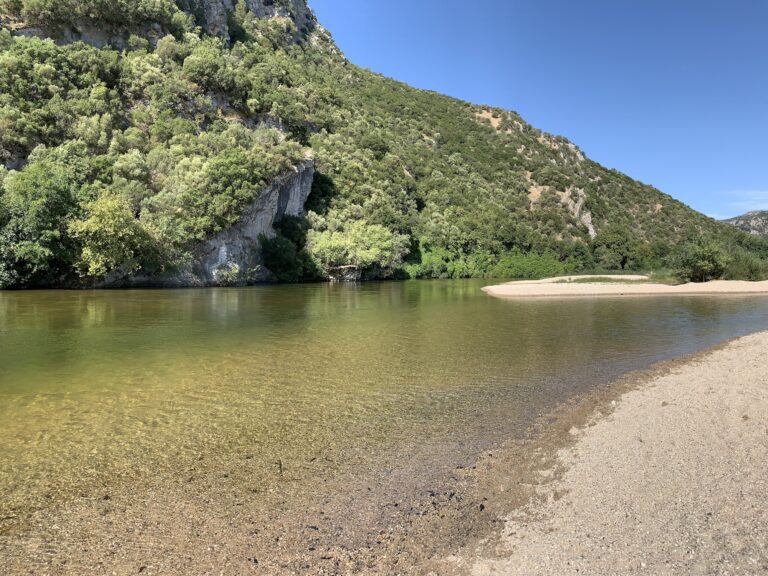
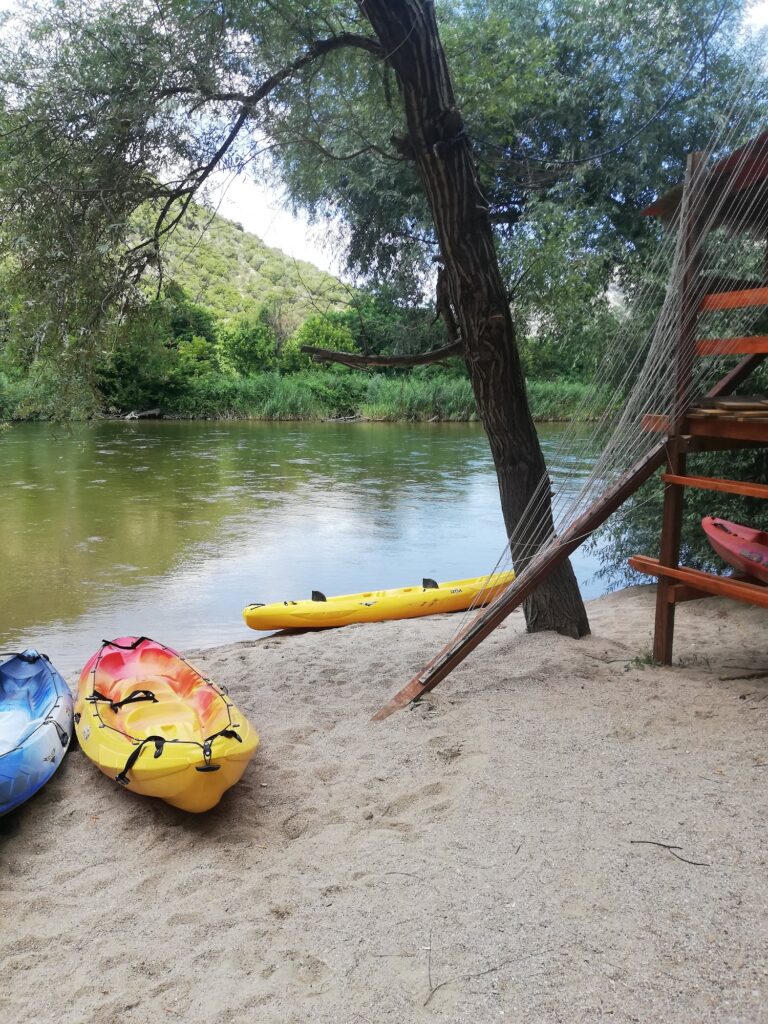
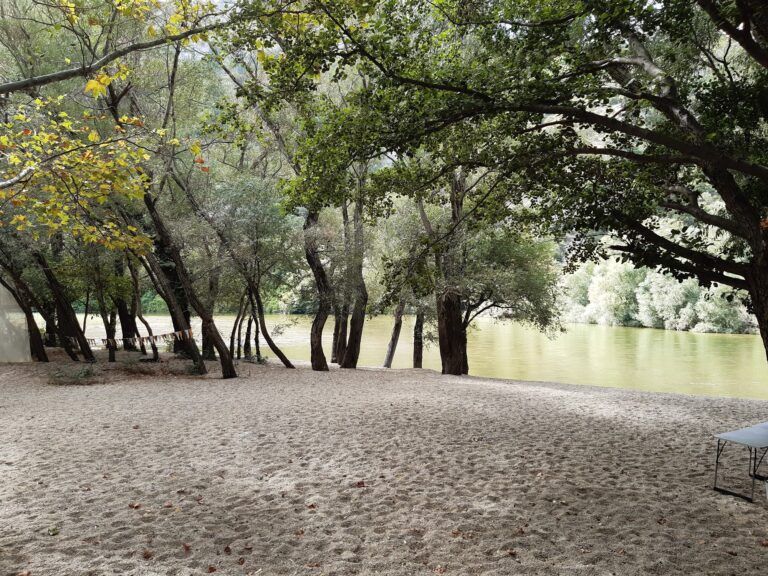
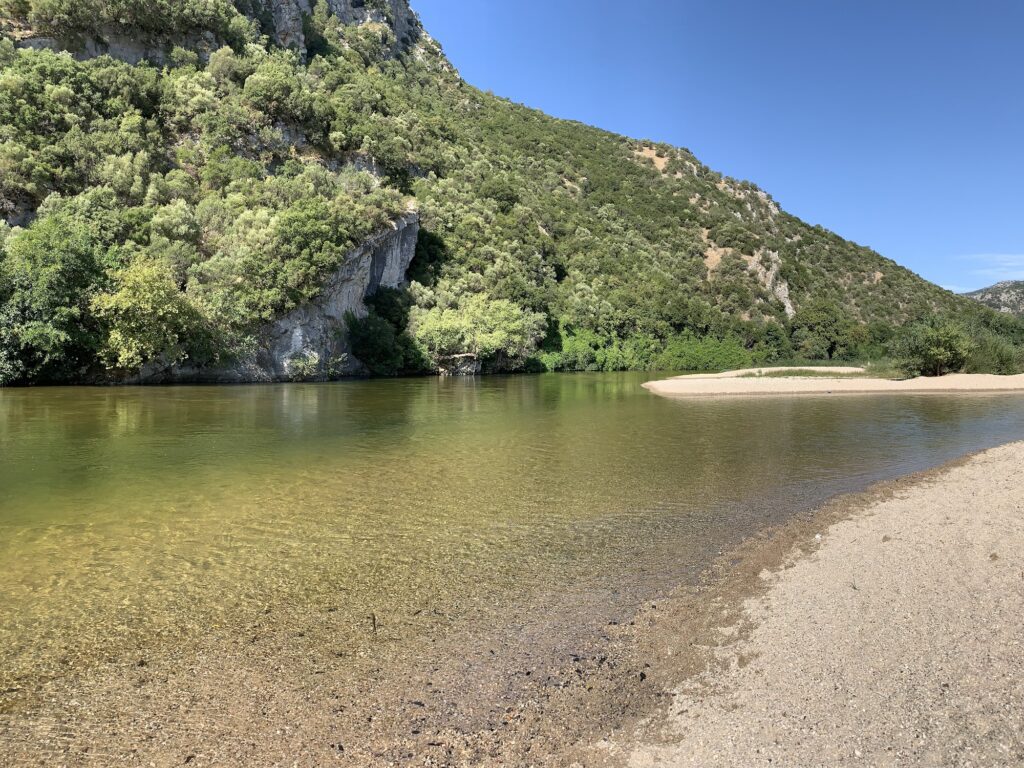
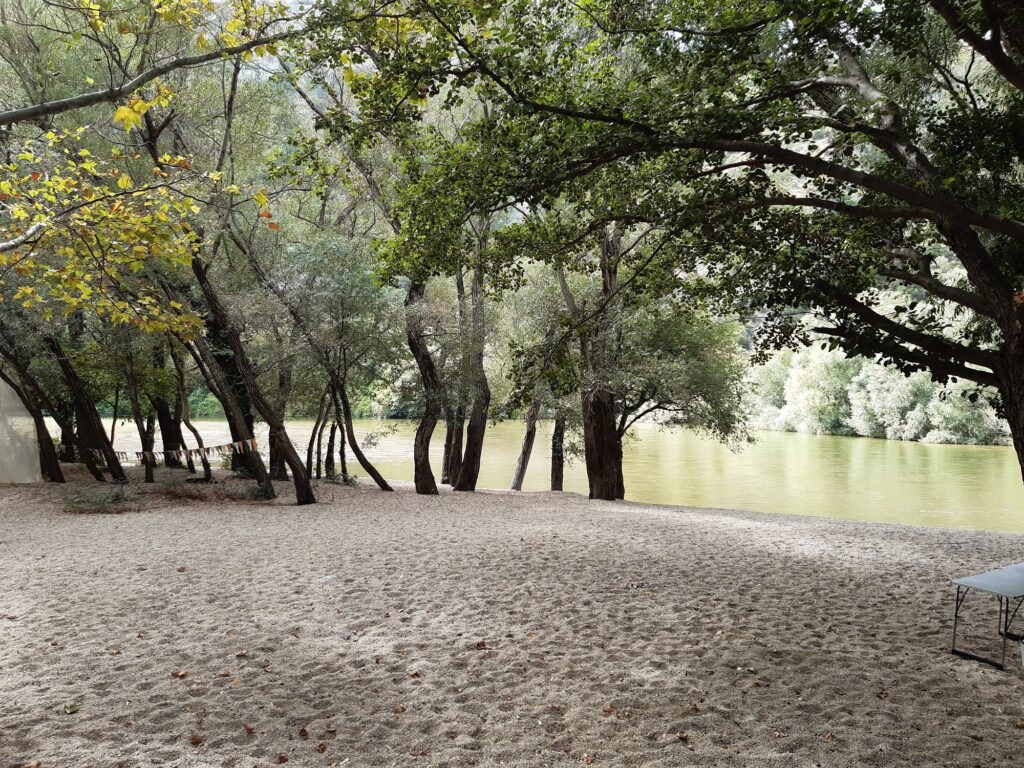
Galani offers something genuinely unusual for this part of Greece, a wide, soft sandy shore built entirely by freshwater rather than the sea, framed by colossal limestone cliffs rising hundreds of meters on either side. I found the water exceptionally clean and invigoratingly cool, the current gentle enough here, where the river widens before entering its gorge, to make for a genuinely relaxed swim rather than anything demanding. Griffon vultures circled the cliffs above during more than one visit, and I found the whole setting carried a considerably wilder, more alpine feel than any coastal beach I’d visited elsewhere in Greece.
A Beach Best Suited to Confident Swimmers
Given that this is a genuine river rather than a sheltered sea cove, I’d recommend caution for families with very young children, the current, however gentle it looks from shore, still moving with real force in places, and I’d keep close supervision on anyone unfamiliar with river swimming specifically. Given how naturally this beach sits within a protected reserve rather than any commercially organized resort, dogs would likely be fine here on a leash following the standard rule for Greek natural areas, though I’d check current signage given the site’s ecological sensitivity.
The Village of Archers and a Train Ride Through the Gorge
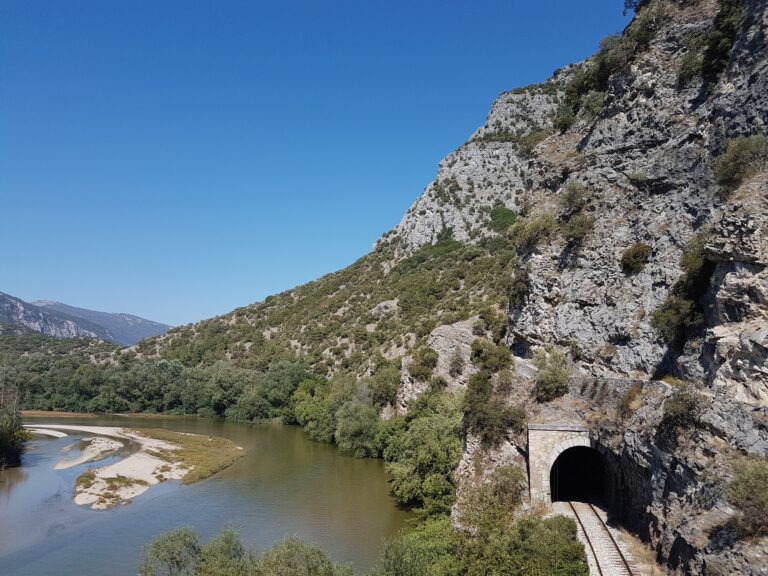
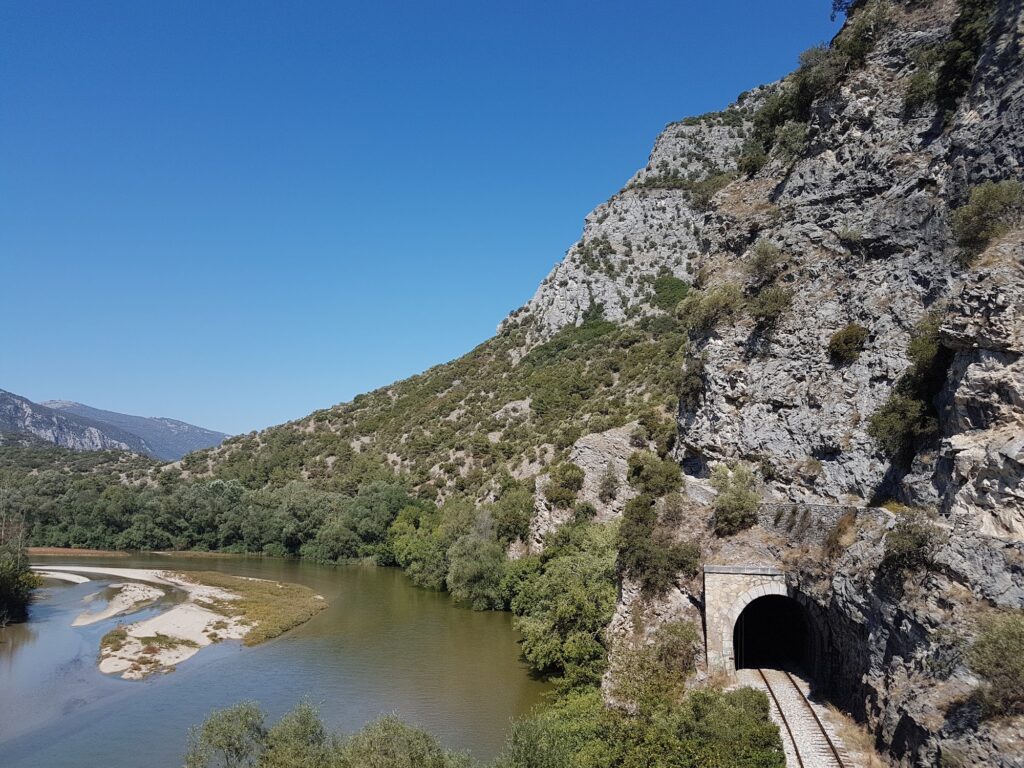
The nearest village, Toxotes, takes its name from the Greek word for archers, and from its small station a rail line runs parallel to the river directly through the Nestos gorge, a route regularly described as among the most beautiful train journeys in the Balkans. I made the trip once purely for the scenery, watching the cliffs and forest slide past close enough to the water that the whole ride felt like an extension of the beach experience itself rather than simply transport.
Getting There Along the Road to Toxotes
Galani sits roughly fourteen kilometers from Xanthi, a drive of fifteen to twenty minutes following the road toward Toxotes, with clear signage from the village directing traffic the rest of the way to the river and the beach itself; the train from Xanthi or Drama to Toxotes station offers a genuinely scenic alternative, running parallel to the river through the gorge before a short, pleasant walk from the station to the sand, and a large organized parking area sits directly at the beach entrance, spacious enough to handle busy weekend crowds without much difficulty.
Standing at a Border That’s Outlasted Every Empire That Drew It
By the time I left Galani on my last visit, the cliffs above had caught the day’s last light, and I thought about how many different governments have used this exact river to mark where one territory ended and another began, Macedonian kings, Roman administrators, modern treaty negotiators, the water itself simply continuing to do what it’s always done, indifferent to whichever side of the current happened to belong to whom that particular century.
Map
Sorry, no records were found. Please adjust your search criteria and try again.
Sorry, unable to load the Maps API.
Near by places: