Kallithea Springs Beach Rhodes: The 1929 Italian Spa
Profile
Kallithea Springs Beach, Rhodes: The 1929 Italian Spa Complex Where the Thermal Waters Have Dried Up
Greece | Rhodes | Dodecanese
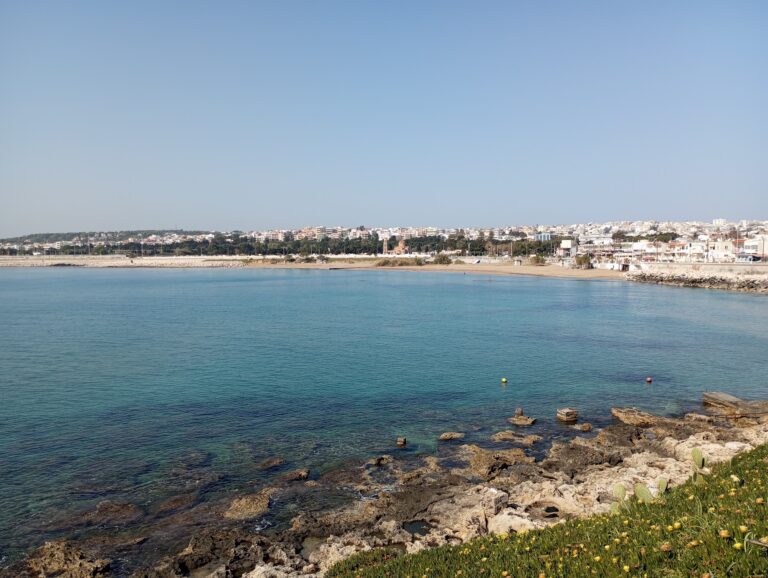
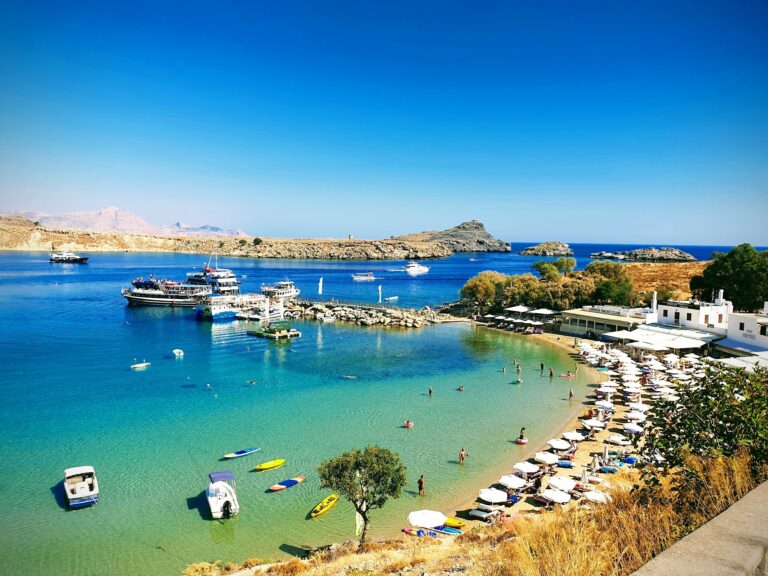
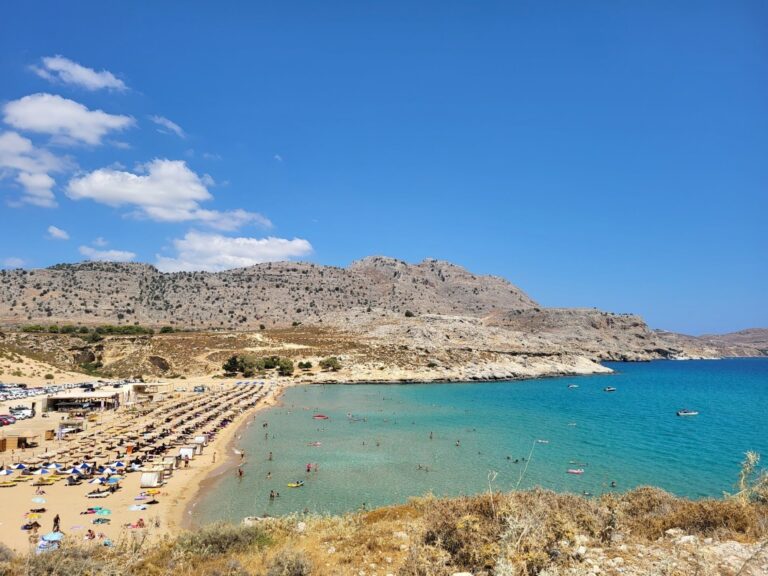
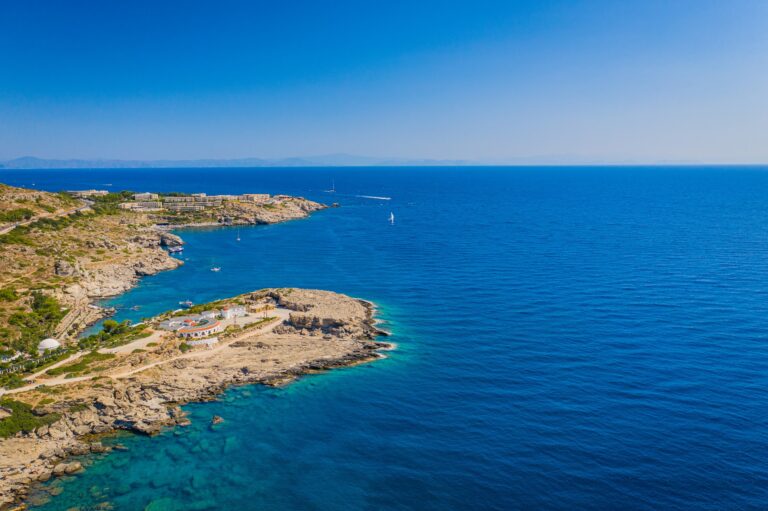
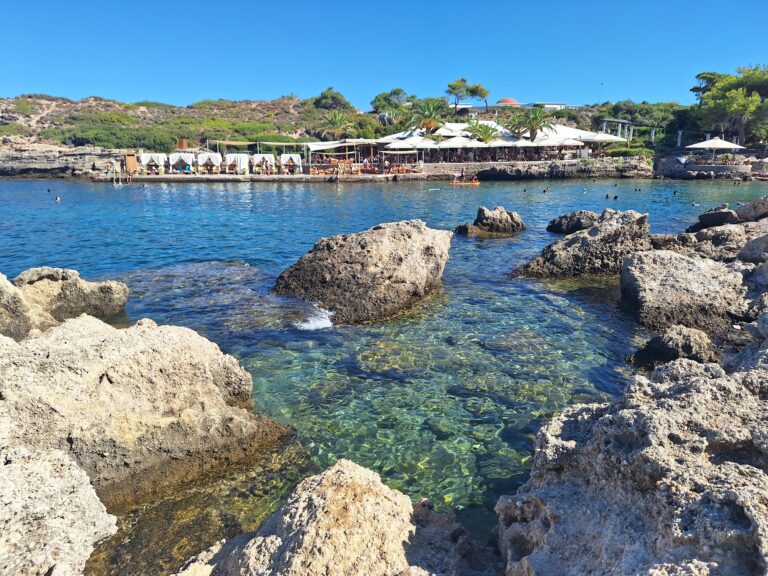
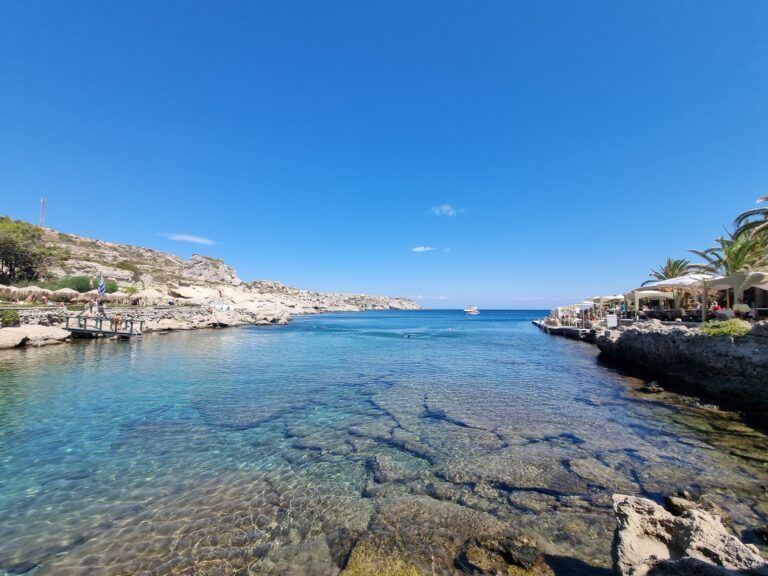
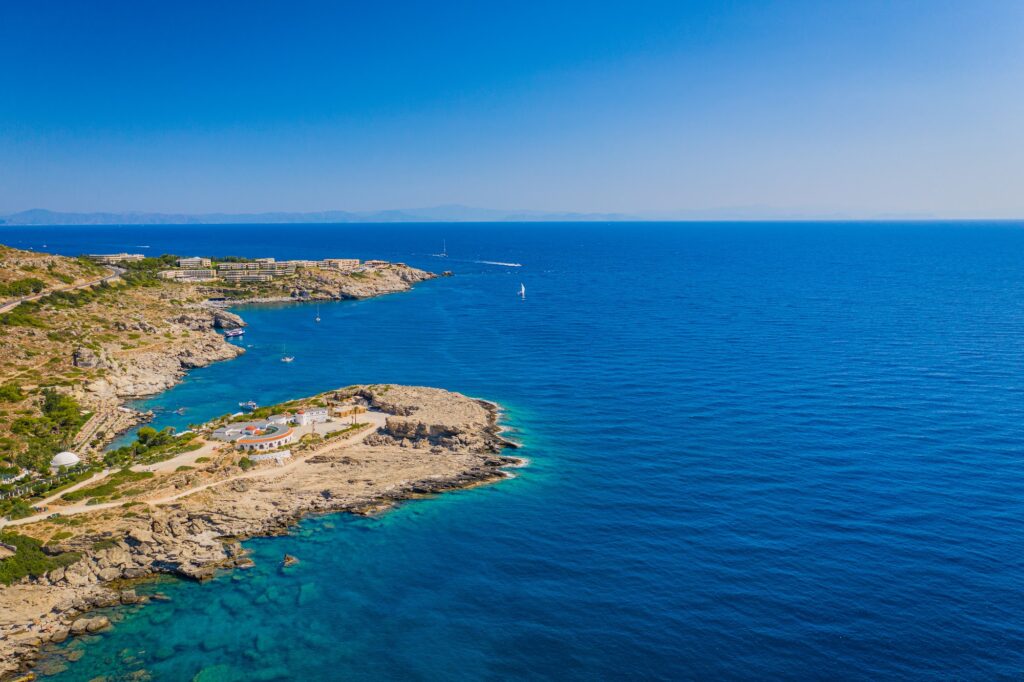
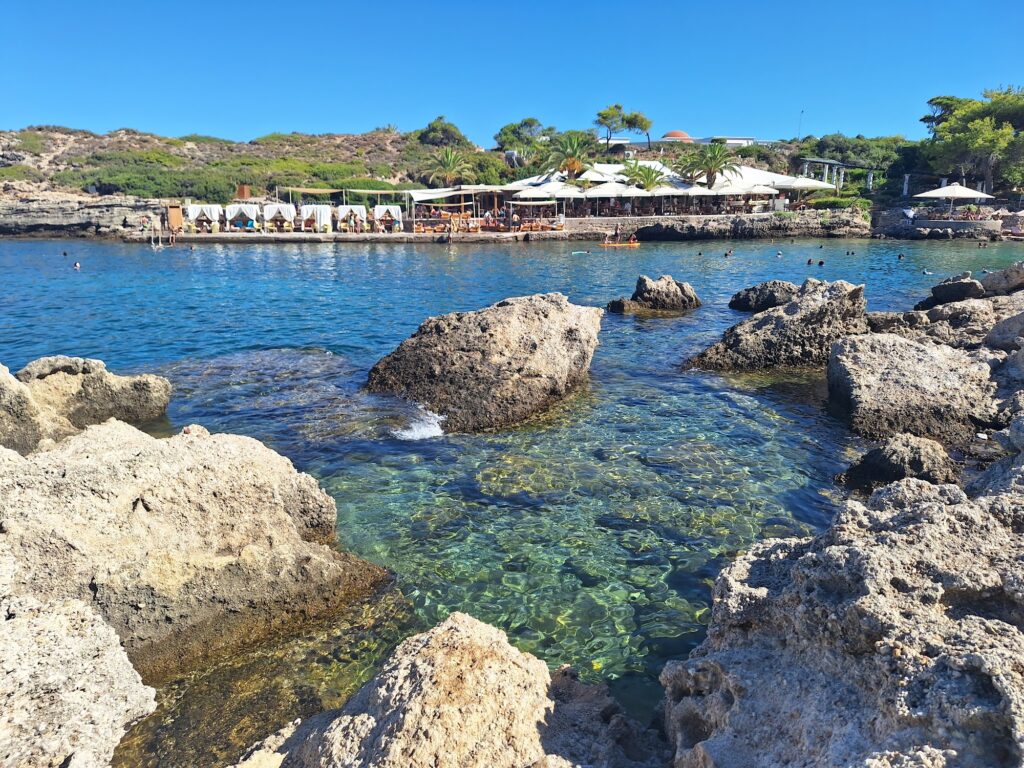
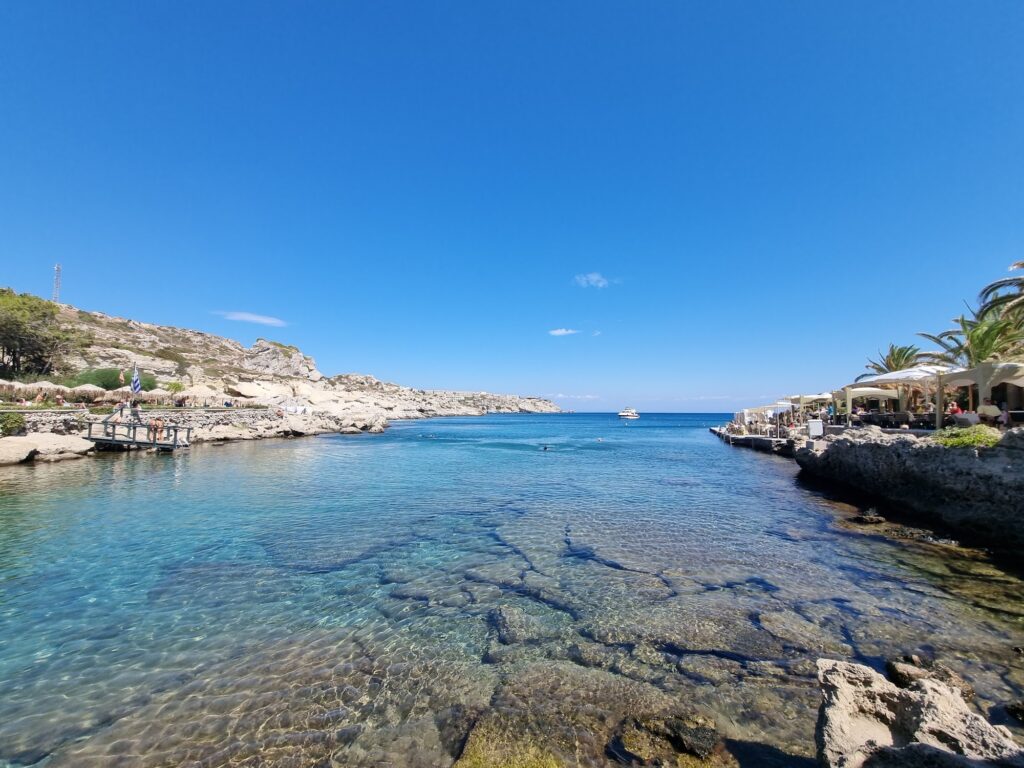
The name Kallithea means “beautiful view” in Greek, and the naming is straightforwardly accurate — the site on the northeastern coast of Rhodes, 9 kilometres from Rhodes Town and 2 kilometres from Faliraki, has one of the more arresting architectural-and-sea combinations in the Dodecanese: the restored 1929 Italian spa complex of domed pavilions, Moorish arches, pebble mosaics, and palm-lined gardens descending to a rocky bay whose water is emerald-to-turquoise, clear to a significant depth, and consistently identified as one of the best snorkelling environments on Rhodes.
The thermal springs that made the site famous from antiquity through the early 20th century have dried up. The original springs no longer serve their therapeutic purpose, but visitors can still explore the beautifully preserved spa pavilions, the landscaped seaside promenade, and the crystal-clear sea. What Hippocrates is said to have visited, what the ancient Greeks and Romans used for treating arthritis, skin conditions, and respiratory ailments, and what the Italian engineers built the domed complex above in 1929 — none of it gushes anymore. The architecture remains. The swimming remains. The Hippocrates connection remains as a historical note rather than a live therapeutic claim.
The spa was officially inaugurated on July 1, 1929, in a ceremony attended by King Vittorio Emanuele of Italy — a symbol of its prestige and promise. During the German occupation of Rhodes, Kallithea was turned into a penitentiary surrounded by barbed wire and minefields. After Rhodes joined Greece, the complex fell silent for decades under time and neglect. In 1999, a decade-long restoration project began, and on July 1, 2007 — exactly 78 years after its first inauguration — Kallithea Springs reopened.
Getting There: 9km from Rhodes Town, KTEL Bus Stop F16, by Car, or by Boat Excursion
From Rhodes Town, the drive to Kallithea Springs takes approximately 15 minutes south on the eastern coastal road, past the resort strip of Faliraki. The turnoff is clearly signed. Free parking is available at the large lot at the entrance of the complex.
KTEL Rhodou runs a frequent bus service — several times an hour from both Rhodes Town and Faliraki — to the stop marked F16 at Kallithea Springs. Direct buses also continue further south to Kolymbia and Lindos. Fares range from €2.50 to €5.50 depending on distance, paid in cash to the driver.
By boat, excursion vessels from Mandraki Harbour include Kallithea as a stop on the eastern coast tours — a 20 to 30-minute cruise from the harbour, docking at the complex’s pier. The sea approach is the most cinematic arrival: the white domes and arches visible from the water before the bay itself appears.
Entry Fees: €5 for the Bay, Free After 7pm, and a Free Beach 150m Away
The beaches lying directly in the bay with the historic baths area have an entrance fee of €5 per person (free after 7pm). The beach below the car park approximately 150 metres from the Kallithea Baths is accessible free of charge throughout the day.
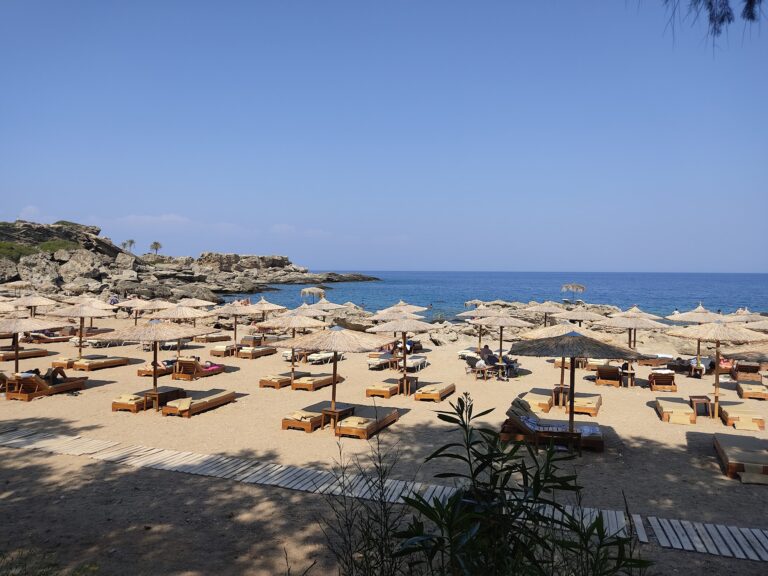
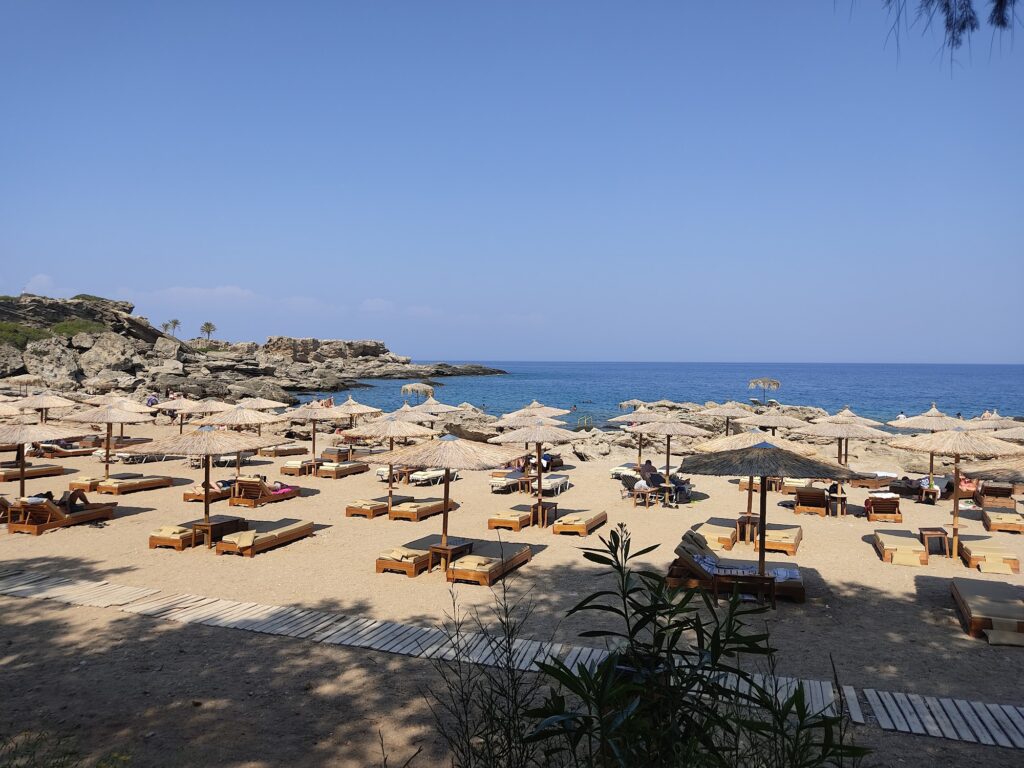
The €5 entry covers access to the historic complex buildings and the main bay — the rotunda, the pebble mosaic paths, the gardens, and the organised beach sections with their sunbed hire. The free beach 150 metres away uses the same bay water and has the same snorkelling quality without the architectural setting or the organised sunbed provision. Sunbeds within the paid complex cost approximately €20 for a standard set (two sunbeds and an umbrella) and up to €60 for the more comfortable lounger sets with table service.
The evening entry — free after 7pm — is the specific programme that visitor accounts consistently identify as the most atmospheric version of the Kallithea visit: the complex lit at sunset, the gardens cooling in the evening air, the sea at its calmest as the day-trip boats have gone.
The Architecture: Pietro Lombardi, 1929, Moorish-Italian Fusion
The Kallithea Springs complex was designed by Pietro Lombardi — the Italian architect working under the Fascist administration of Rhodes — in collaboration with Armando Bernabiti. The style is a fusion of early 20th-century Italian rationalism, Moorish domed forms, and the Art Deco influence that the 1929 date reflects. The white domed pavilions, the arched colonnades, the black-and-white pebble stone mosaics forming geometric and floral patterns, the ornate fountain, the palm and aromatic herb garden paths: all designed to express the prestige and therapeutic seriousness of an international health resort under Italian colonial patronage.
The Rotonda — the main domed hall where the thermal springs once gushed — now houses an art gallery organised by the local municipality. The outer walls of the complex carry representations inspired by the sea. The terrace above the bay provides the elevated view of the cove and the surrounding coastline that gives the site its name.
The complex is consistently used as a wedding venue — the combination of the arched architecture and the sea backdrop making it one of the most photographed wedding settings in the Dodecanese. Visitor accounts mention arriving to find the site closed for a private wedding, which is worth checking before visiting.
Escape to Athena (1979): The Film Shot on Location at Kallithea
The 1979 war-film Escape to Athena — starring Roger Moore, Telly Savalas, David Niven, Elliott Gould, and Claudia Cardinale, set in a German prisoner-of-war camp on a Greek island during World War II — was filmed at Kallithea Springs, using the complex’s architecture as the backdrop for scenes that required a Mediterranean wartime setting. The film’s production notes identify Kallithea as a location specifically because the complex’s wartime history as an actual German penitentiary gave the filming location an authenticity that a purpose-built set could not have provided.
The historical irony of using the place where prisoners were actually held to film a story about prisoners being held is not lost on visitor accounts who know the location’s wartime use. The connection to the film is noted in the official site literature.
The Snorkelling: Rocky Seabed, Multiple Coves, Marine Life Abundance
The snorkelling at Kallithea is consistently rated among the best on Rhodes in visitor accounts and in diving operator recommendations. The specific combination of factors — clear bay water, rocky volcanic seabed with crevices, multiple small coves within the same bay, and the relative shelter from strong winds that the bay position provides — creates the productive snorkelling environment that the dive schools operating on-site and nearby exploit as their primary business.
The marine life visible without scuba equipment includes multiple species of fish in the rock crevices, sea urchins, octopus on rocky outcrops, and the variety of fauna that undisturbed rocky Mediterranean coast consistently supports. The clarity of the water — regularly described as “turquoise-to-emerald” in the bay — makes the snorkelling visually rewarding even at shallow depths accessible to beginners.
The diving schools operating at and near Kallithea offer PADI-certified courses and guided underwater tours, including cave dives for certified divers. The bay is a reference site on the Rhodes diving circuit.
Anthony Quinn Bay: 9km Further South, Named for a Hollywood Moment
Nine kilometres south of Kallithea, the bay known as Anthony Quinn Bay (Vagies) is named for the actor who fell in love with the location during the filming of The Guns of Navarone on Rhodes in 1960-61 — bought land on the island and reportedly attempted to buy the bay itself. The turquoise water, the pine-covered rocks, and the dramatic cliff framing make it the secondary snorkelling stop on the same eastern coastal day trip that Kallithea begins.
Kallithea Springs Beach on Rhodes is the rocky bay next to the 1929 Italian spa complex that was opened by a king, turned into a prison, neglected for decades, restored for ten years, and reopened in 2007 exactly 78 years after it first opened. The thermal springs have dried up. The mosaic paths remain. The bay is clear and excellent for snorkelling. Entry is €5, free after 7pm, with a free beach 150 metres away.
Drive or take bus F16 from Rhodes Town. Arrive at sunset if you can.
The rotunda looks better in the evening light.
Map
Sorry, no records were found. Please adjust your search criteria and try again.
Sorry, unable to load the Maps API.
Near by places: