Zephyros Beach Rhodes Town: The Locals' Eastern Shore
Profile
Zephyros Beach, Rhodes Town: The 300-Metre Local Beach 1.5km South of the Medieval Walls
Greece | Rhodes Town | Dodecanese
Zephyros is not the beach that the brochures feature. Elli Beach — on the northern tip of the Rhodes peninsula, 50 metres from Mandraki Harbour, facing northwest toward the open Aegean — is the beach of the tourist postcards, the beach that Rhodes Town hotels walk to, the beach that in July becomes what most popular city beaches become. Zephyros is 1.5 kilometres south of the Medieval City walls, around the eastern cape of the peninsula, in a triangular bay where the wind doesn’t reach and where approximately 90% of the people on any given beach day are from Rhodes Town itself.
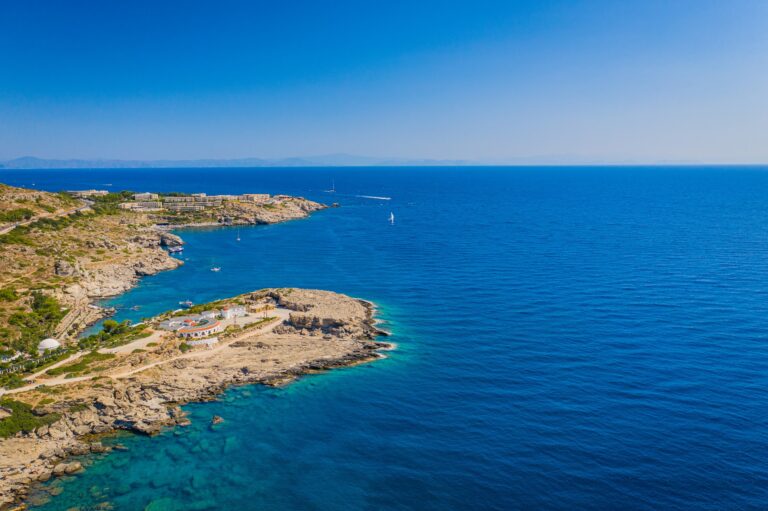
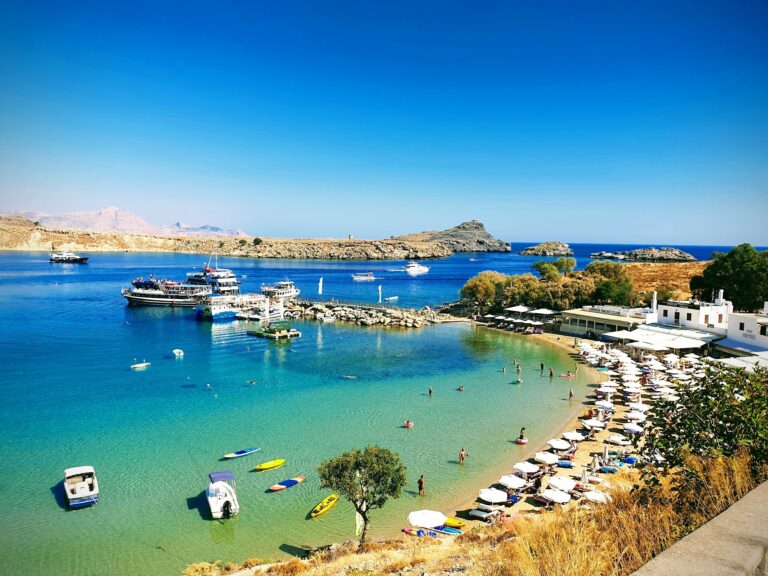
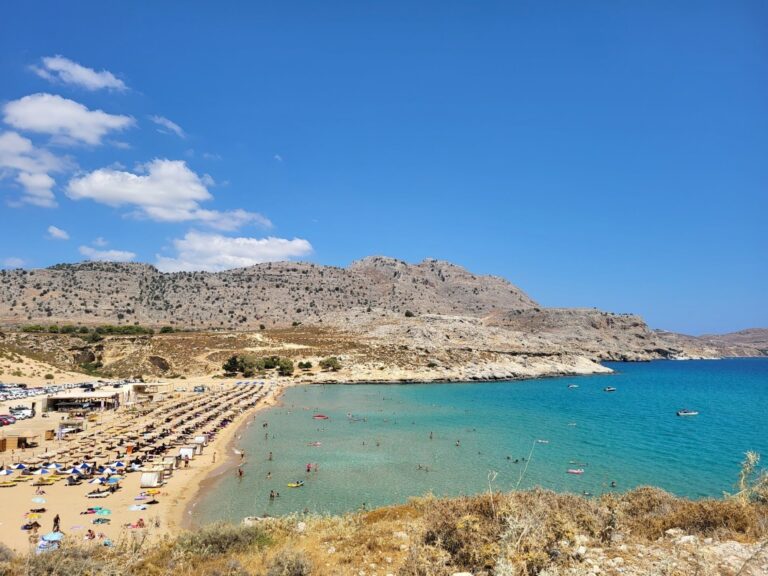
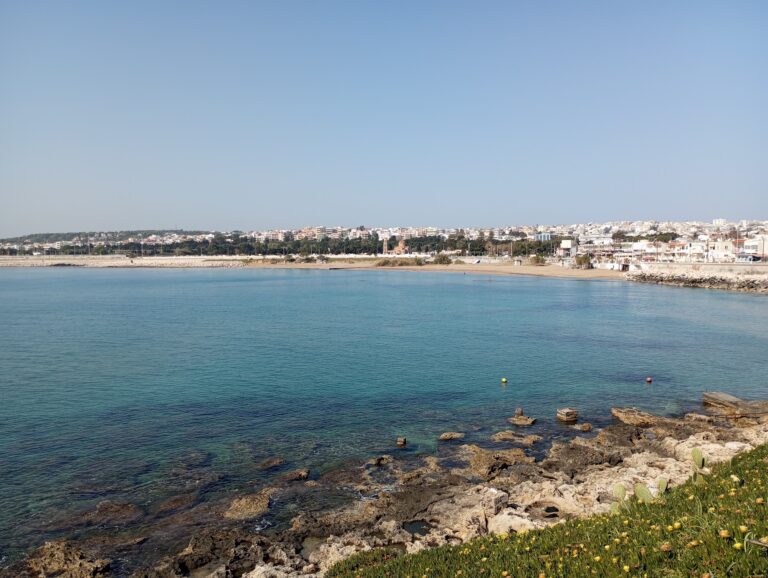
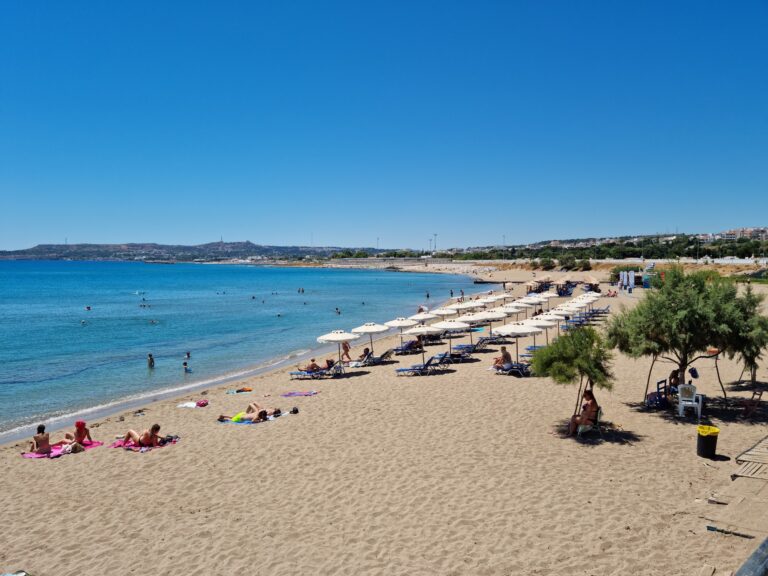
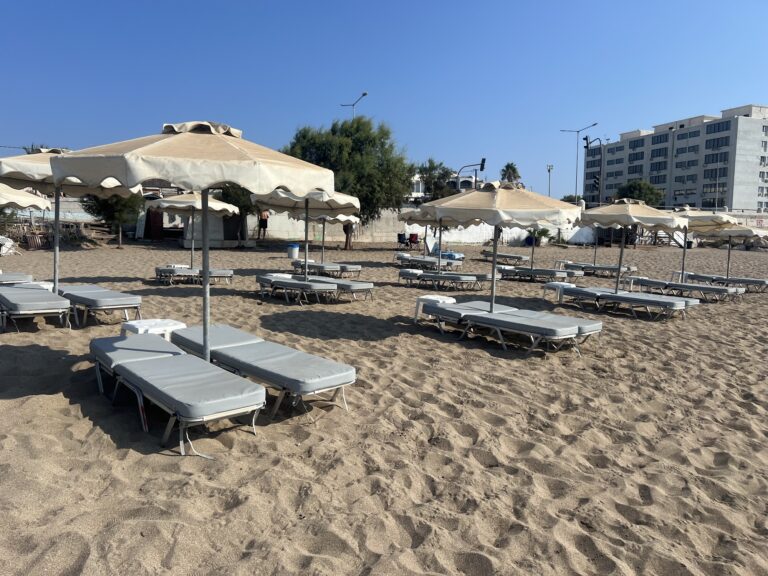
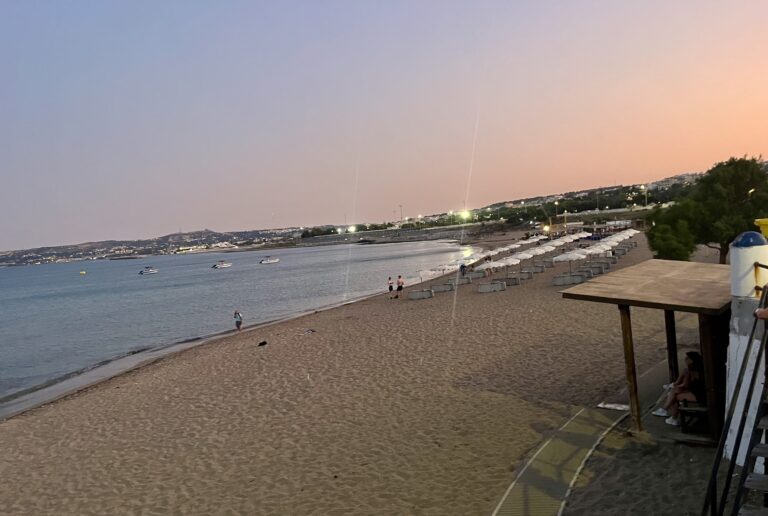
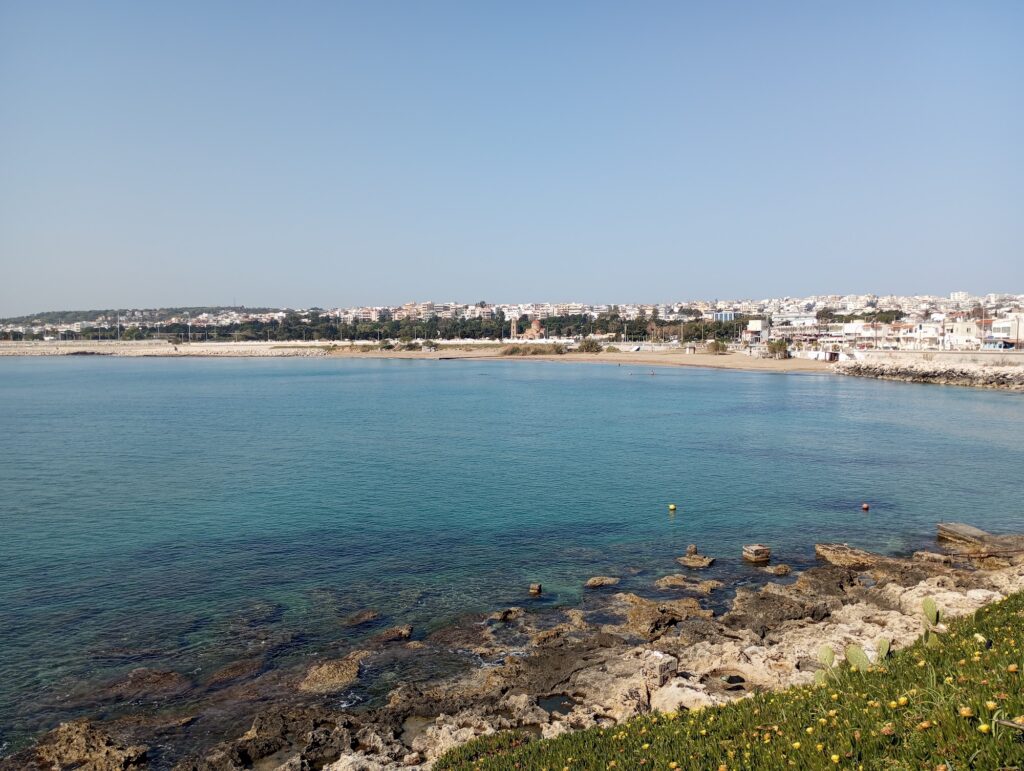
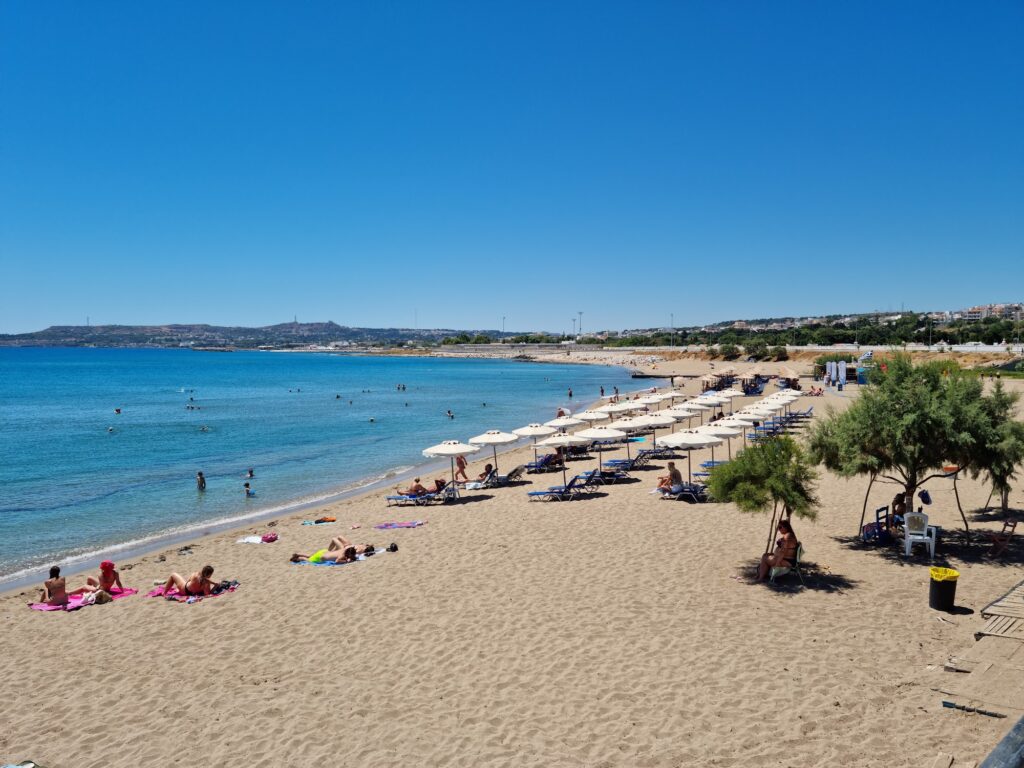
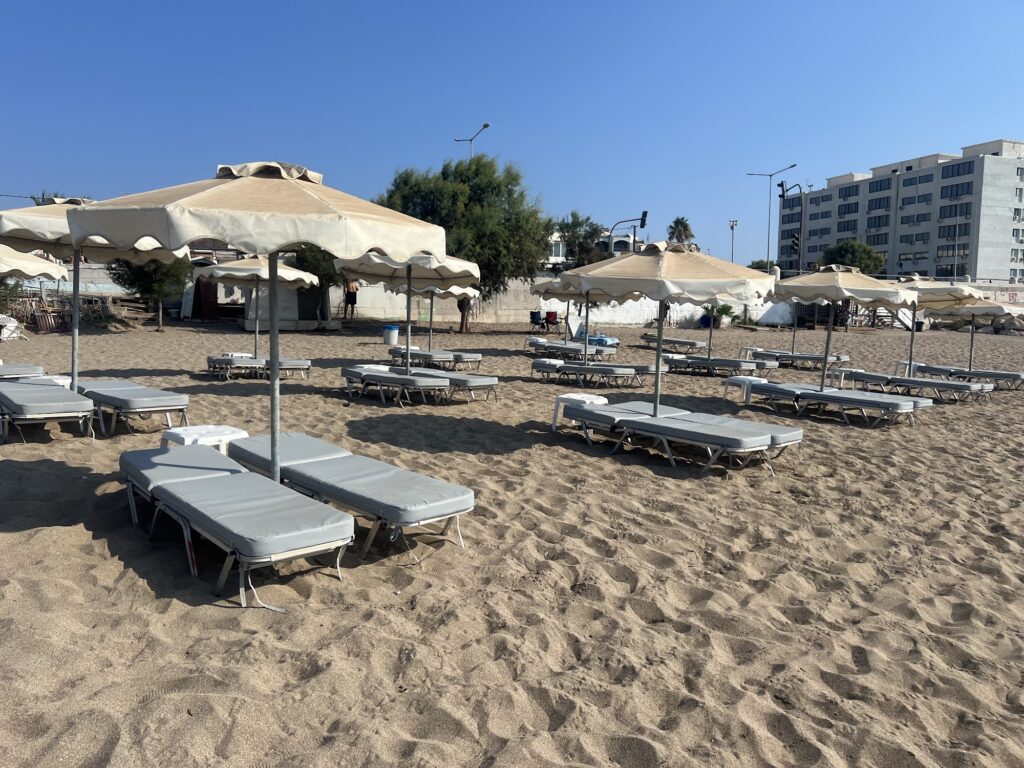
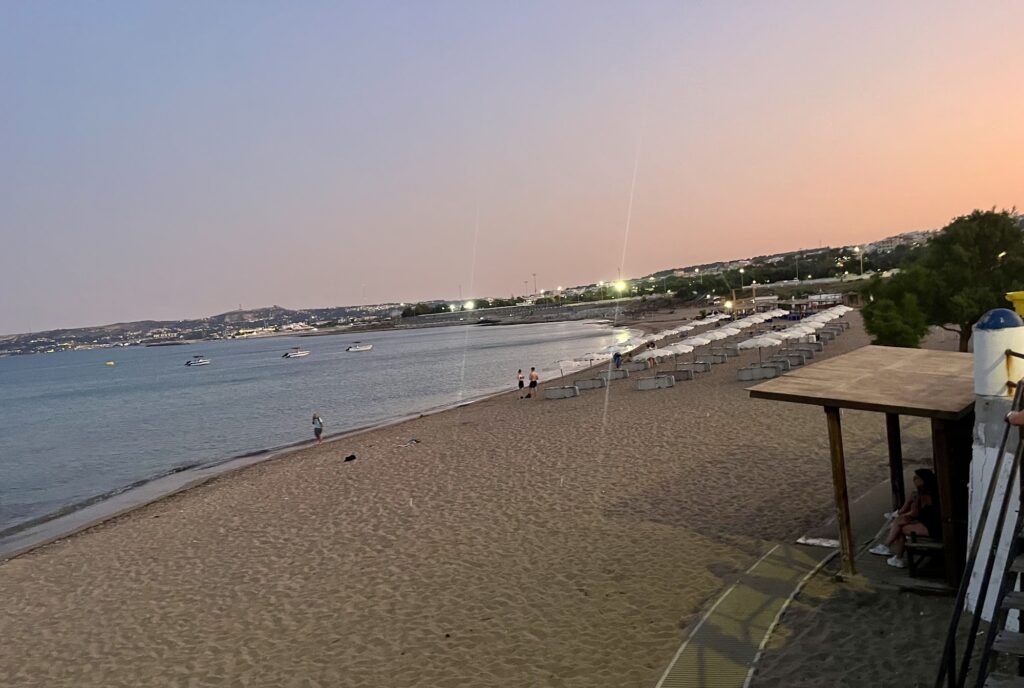
Zephyros is a small beach about 1.5km south of Rhodes old town — triangular in shape, wider in the centre and tapering at the edges, a little over 300 metres long with slightly coarse grey sand and clean, shallow water. There are just 3 rows of sunbeds in the middle of the beach, leaving plenty of space for beach games. A snack van operates on the beach and several restaurants are across the main coastal road that runs behind the beach. Showers and changing cubicles are available but there are no toilets.
The absence of toilets is the practical note worth leading with, because visitor accounts consistently mention it — the nearest toilets are in the restaurants across the road. The restaurant strip across the coastal road is the specific reason many Rhodes Town residents choose Zephyros over the other options: the fish tavernas and ouzeries that serve the local population rather than the tourist trade, with prices and menus calibrated to the neighbourhood rather than to visitors who will never return.
Getting There: 1.5km on Foot from the Old Town, by Car, or by City Bus
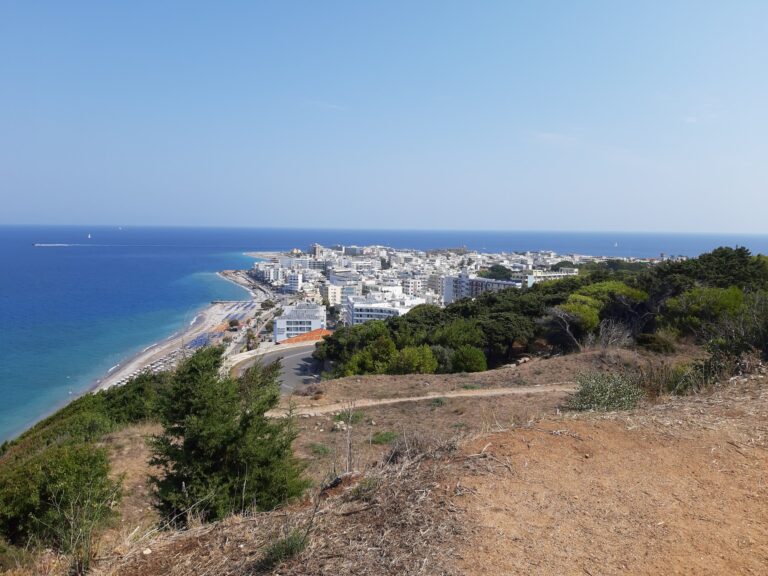
Zephyros is close enough to the Rhodes old town that walking is the standard arrival mode for visitors staying in or near the Medieval City. The walk from the Saint John Gate of the medieval walls takes 15 to 20 minutes on the coastal path heading south — the path passes the landward side of the fortification, then rounds the southeastern cape and descends to the beach zone where the New Marina and the eastern residential districts begin.
Zephyros is easily accessible by car, public transport, and on foot from the adjacent districts. The beach is located on the eastern coast of the capital city, near the town’s new harbour. The New Marina — Rhodes marina for private boats and yachts, distinct from Mandraki Harbour which handles ferries and excursion boats — is directly adjacent to the beach, and the combination of the marina café culture and the beach creates the specific late-afternoon social atmosphere of the Zephyros zone: boat owners, residents, and the fish restaurant crowd gathering after the working day.
By city bus (RODA), the routes serving the southern residential districts of Rhodes Town pass near the beach. By car, parking is available in the open lots across from the beach and along the service roads behind it.
The Beach: 300 Metres, Grey Sand, Triangular, Wind-Protected, Shallow
The triangular shape — wider in the middle, tapering at the ends — gives Zephyros more usable surface area than its 300-metre length suggests. The sand is slightly coarse and grey rather than the fine golden sand of the resort beaches; the seabed has a gradual slope that makes the entry safe for young children and the shallow zone extends sufficiently for the extended wading play that the beach’s family character produces.
The beach is small and calm, with nice sea, well protected from the northern and western winds. The protection from the prevailing Meltemi wind is the specific quality that makes Zephyros comfortable on days when Elli Beach on the northern tip is windy and choppy — the eastern orientation and the cape shelter maintaining the calm that the northern and western exposure cannot guarantee. On a Meltemi day, Zephyros can be almost mirror-flat while the tourist beach a kilometre north has whitecaps.
The floating inflatable playground anchored offshore during the summer season is the children’s focal point — the specific provision that gives the beach its family-with-younger-children character alongside the shallow entry. No water sports or pedalo hire is available otherwise.
The Fish Restaurant Strip Across the Road
The restaurants and ouzeries along the coastal road directly behind Zephyros beach are the local dining context that makes the beach a full-day destination rather than simply a swim stop. This area of Rhodes is famous for its excellent fish and meat restaurants, which are favoured by locals and found just across the street from the beach. You can also visit the Marina, where you will find excellent cafés.
An ouzerie is the specific Greek dining format that the local strip represents: a fish-and-mezze establishment where the ordering convention is small dishes — grilled octopus, marinated anchovies, taramasalata, fried calamari, fresh fish by weight — shared across the table with ouzo or tsipouro. It is the dining culture that the tourist promenades of Rhodes Town offer a version of, but the Zephyros street versions are calibrated to the local resident market: lower prices, simpler presentation, and the specific social character of a neighbourhood restaurant where the same families occupy the same tables on the same evenings throughout the summer.
TakisTaste Zefyros at 130 metres from the beach is the nearest named restaurant in the listings, but the general characteristic of the strip is the consistent, locally-used fish restaurant format rather than any single flagship venue.
The Colossus, Mandraki, and the Medieval City Context
From Zephyros Beach, the northern skyline of Rhodes Town includes the windmills of Mandraki Harbour and the Fort of St. Nicholas at the harbour entrance — the specific structures that stand where the Colossus of Rhodes (one of the Seven Wonders of the Ancient World) is believed to have stood in antiquity. The exact position of the statue is debated — it stood at the entrance to the ancient harbour and toppled in the 226 BC earthquake — but the visual axis from Zephyros looking north toward the harbour provides the geographic context for the city’s ancient significance.
The Medieval City of Rhodes — the UNESCO World Heritage walled city occupied by the Knights of Saint John from 1309 to 1522 — is the 1.5-kilometre walk that connects the beach day to the cultural programme. The Palace of the Grand Master, the Street of the Knights, and the Archaeological Museum of Rhodes are all within the walled city and accessible on the same half-day that includes the beach.
Zephyros vs. Elli: The Local’s Beach vs. the Tourist’s Beach
Elli Beach — on the northern tip of the Rhodes peninsula — is the contrast that every Zephyros description invokes. Elli Beach is one of the most famous beaches in Rhodes Town, popular with tourists and locals alike. It is easily accessible, with a long stretch of shoreline. Elli faces northwest, catches the full Meltemi in windy conditions, and in peak season fills with the international visitor crowd that Rhodes Town hotels serve.
Zephyros is not better or worse than Elli — it is a different kind of beach day. Elli is the town beach of an international resort. Zephyros is the town beach of the residents who live in Rhodes Town rather than visit it.
Zephyros Beach in Rhodes Town is the 300-metre triangular grey-sand beach 1.5km south of the medieval walls — wind-protected eastern position, mostly local crowd, shallow family-friendly water, no toilets on the beach, and the fish restaurant strip across the coastal road where the neighbourhood eats.
Walk south from the old town along the eastern coast. The marina will be on your right.
The restaurants are the reason the locals come. The wind protection is the reason they stay when Elli is rough.
Map
Sorry, no records were found. Please adjust your search criteria and try again.
Sorry, unable to load the Maps API.
Near by places: