Lindos Beach Rhodes: Golden Sand Below the Acropolis
Profile
Lindos Beach (Megali Paralia), Rhodes: The Golden Bay Watched Over by 4,000 Years of Fortification
Greece | Rhodes | Dodecanese
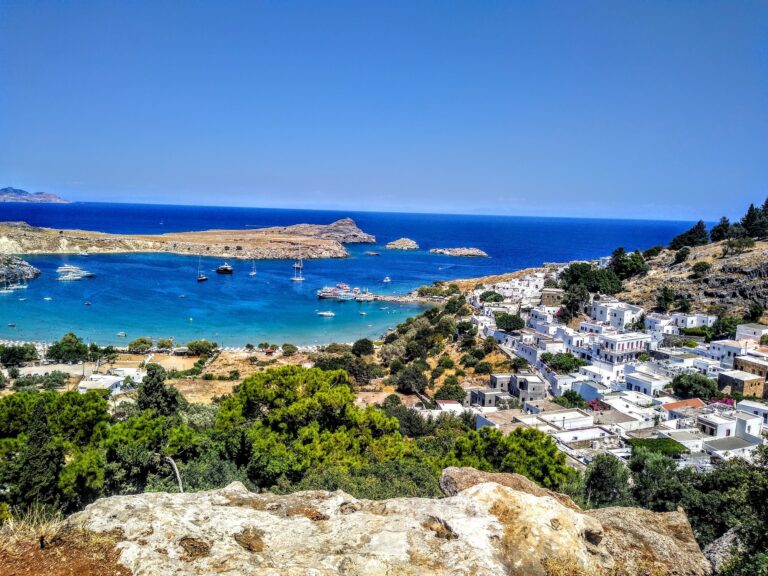
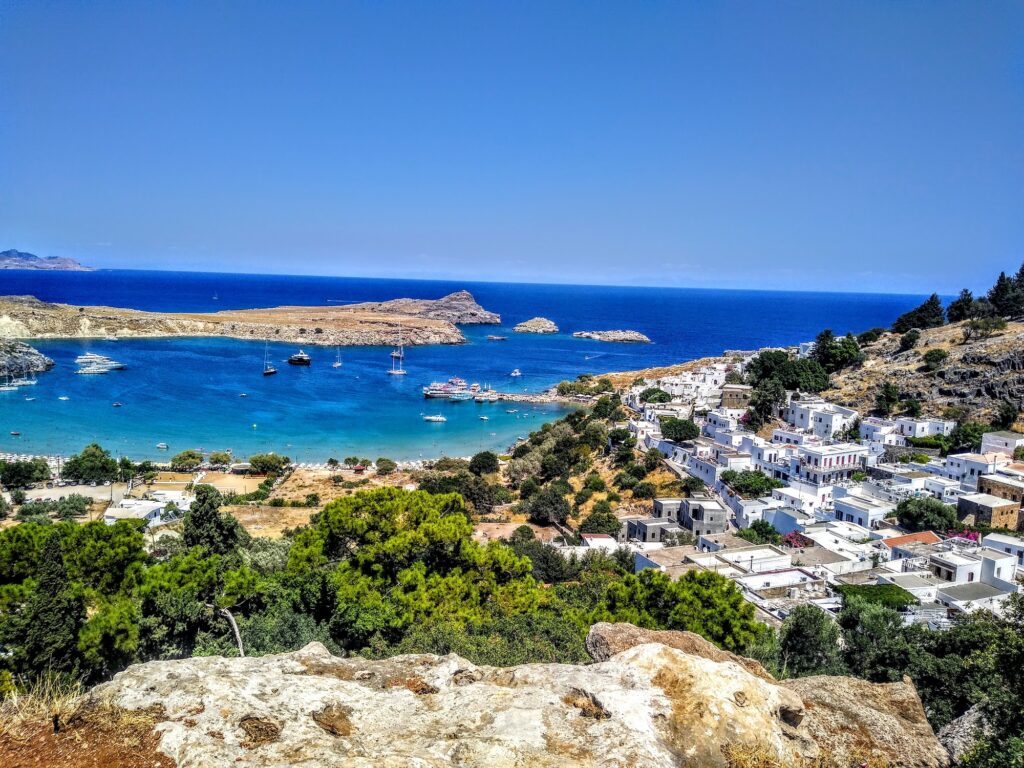
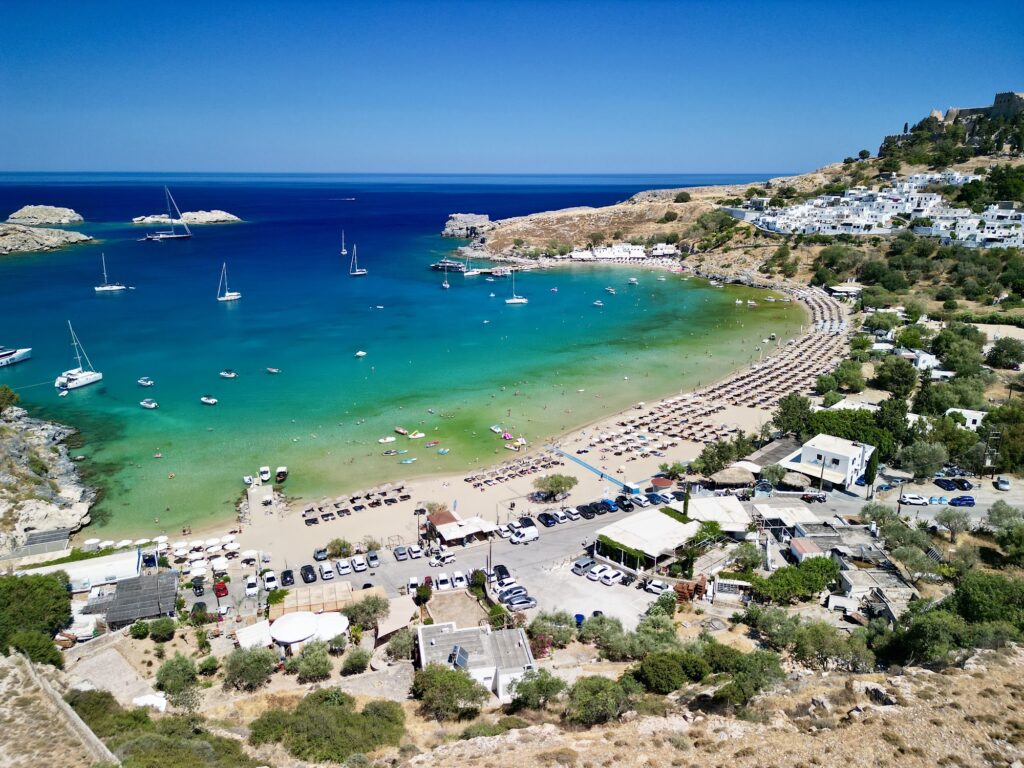
Every beach on Rhodes has the island’s characteristic clear water and summer sun. Lindos Beach has something else: the Acropolis of Lindos visible from the water, its white columns and medieval battlements on a 116-metre cliff that rises directly above the bay. The view from the sea looking toward the shore — the amphitheatrically arranged white houses of the village climbing the hillside, the Doric columns of the 4th-century Temple of Athena Lindia at the summit, the Knights of Saint John’s 14th-century castle walls encircling the whole — is the specific visual composition that makes Lindos Beach the most photographed beach on Rhodes and one of the most recognisable beach views in the Dodecanese.
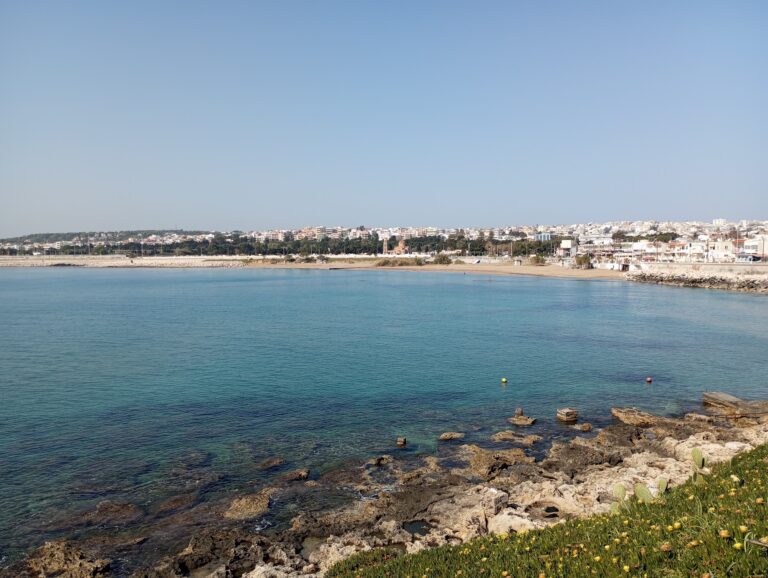
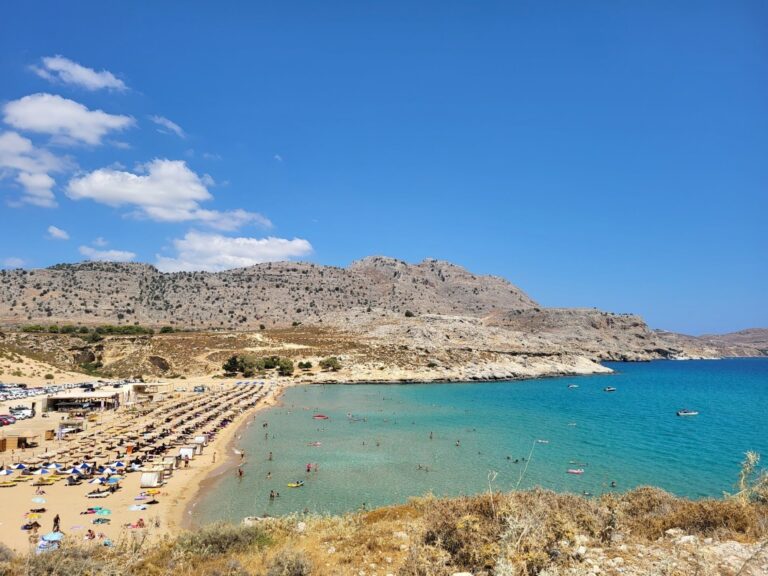
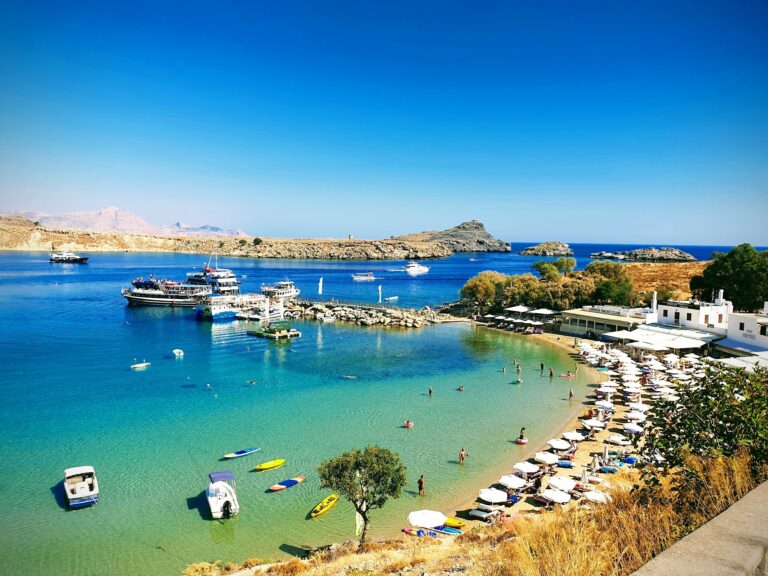
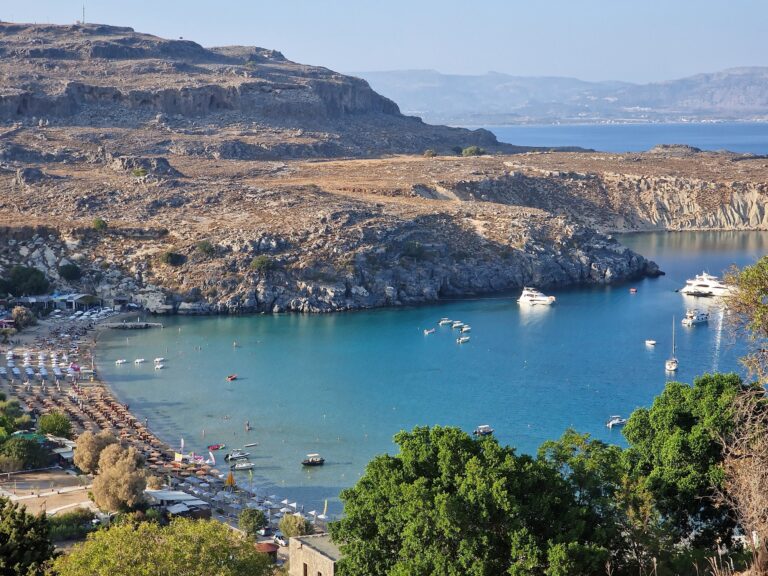
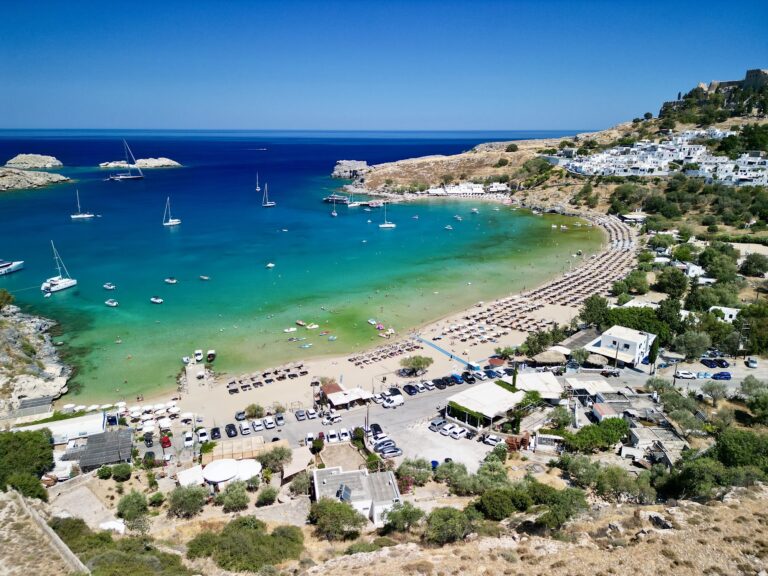
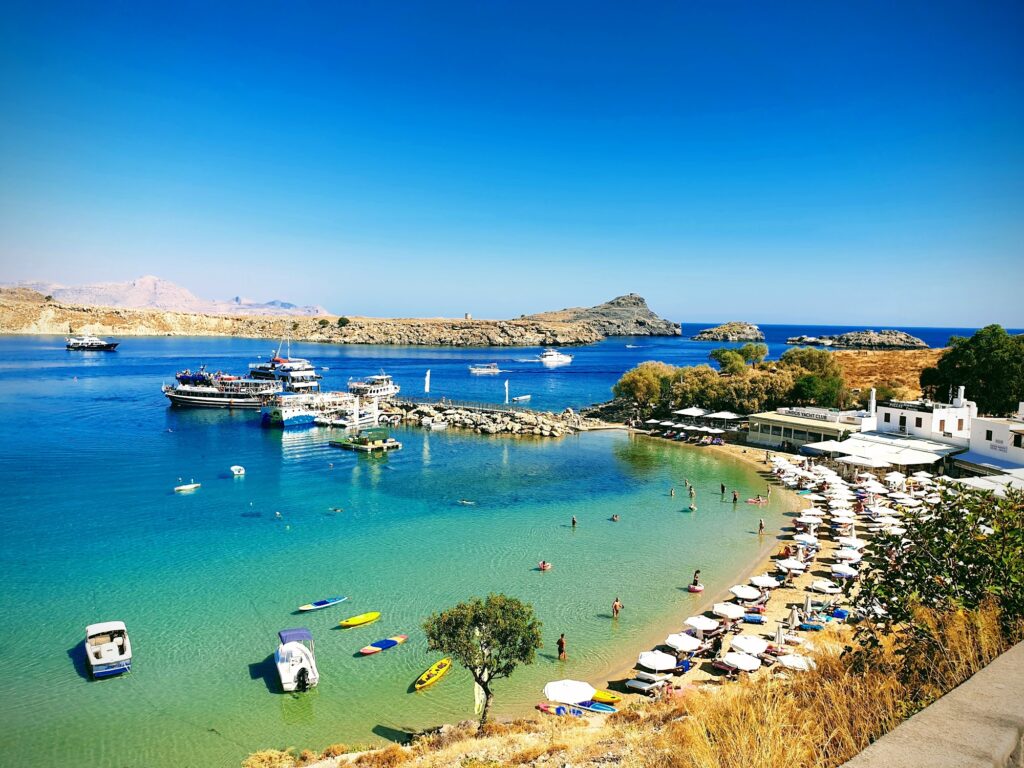
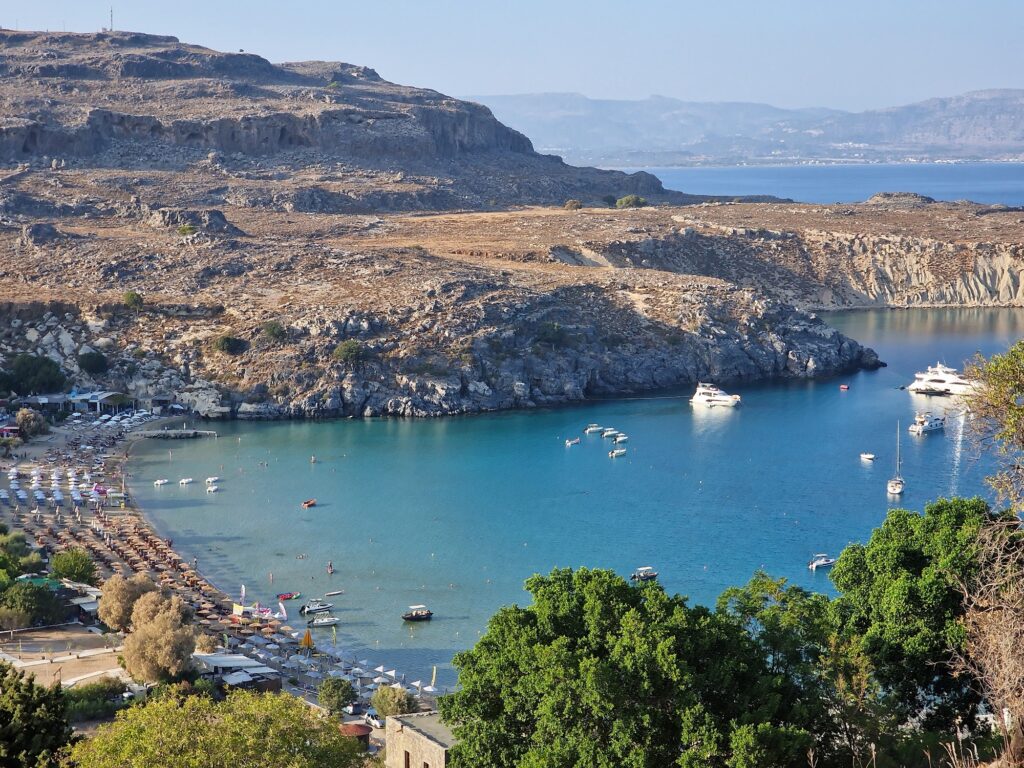
The beach itself is Megali Paralia — the name means Big Beach, a practical description of the largest beach in the Lindos area. It stretches approximately 400 metres along the village’s northern coastline, separated from the adjacent Pallas Beach by a short section of natural rock. It is the most famous and easily accessible shore in the area, a long stretch of soft golden sand with calm, shallow turquoise waters — ideal for sunbathing, swimming, and families with young children. The bay is sheltered by the headland geometry, protected from the strong northern Aegean winds that affect the open eastern coast, and the water stays calm in conditions that make the exposed beaches uncomfortable.
Getting There: KTEL Bus 1h25 from Rhodes Town, by Boat 1 Hour, or by Car 50km
From Rhodes Town, the main options are the KTEL bus or a hired car or scooter. KTEL buses run every 30 to 60 minutes from Rhodes Town station from 06:15 to 22:15, with the journey taking 1 hour and 25 minutes. The 2026 fare is approximately €5.50 per person one way. The bus is the practical and affordable choice for visitors without a vehicle, and the schedule is frequent enough to make a full day trip straightforward without tight timing.
By car or scooter, the 50-kilometre drive southeast from Rhodes Town follows the eastern coast road — a well-maintained route with sea views throughout and the distinctive Rhodian landscape of rocky hillsides and occasional sandy coves along the way. Paid parking is available at the Kranas car park at the top of the village and in smaller lots near the beach approach. Arriving before 10am is the consistent advice for securing parking in July and August.
By boat, excursion vessels from Mandraki Harbour in Rhodes Town take approximately one hour and offer the coastal view of the island’s eastern shore before docking at the Lindos pier. The boat approach provides the first view of the Acropolis from the sea — the most dramatic single moment of the Lindos arrival experience.
The Acropolis of Lindos: 116 Metres Above the Bay, €20 Entry, 20-Minute Walk from the Beach
The Acropolis of Lindos is the specific reason that this beach is different from every other sandy bay in the Dodecanese. The site is not merely a viewpoint landmark — it is one of the most significant archaeological complexes in the Aegean, occupied continuously from the Mycenaean period through the Byzantine and medieval eras. The Acropolis of Lindos stands on a 116-metre cliff. The archaeological remains inside reveal the wealth of the ancient town. Part of its collection is the Doric 4th-century Temple of Athena Lindia, built on the remains of an earlier temple. There is also a Roman temple dedicated to the emperor Diocletian, a Hellenistic wall surrounding the site, and a Medieval Castle built in the early 14th century by the Knights of Saint John.
The approach to the Acropolis from the village main square is a 20-minute climb on the stone path — or by donkey, which is the traditional and still-operating transport for the ascent and which visitor accounts note as the option for those who cannot make the climb on foot. Acropolis admission is €20 per person in 2026. Arriving before 10:00am in summer avoids peak crowds and the intense midday heat. The view from the eastern edge of the Acropolis platform looks directly down to St. Paul’s Bay — the heart-shaped cove to the south where the apostle is said to have landed in 51 AD and which is the most visited secondary beach in Lindos.
The Three Lindos Beaches: Megali Paralia, Pallas Beach, and St. Paul’s Bay
Lindos has three distinct beaches within easy reach of the village. Megali Paralia (Main Beach) is 500 metres north of the village with broader beach space and more moderate pricing. The beach is fully organised with sunbeds and umbrellas, tavernas and beach bars, water sports rentals, glass-bottom boat tours, and changing rooms.
Pallas Beach is in the same bay as the main beach, separated by the rocky promontory — slightly smaller, with the main jetty for day-trip boats and the Lindos Watersports centre. It is the commercial and nautical hub end of the same bay, busier and with more direct boat traffic.
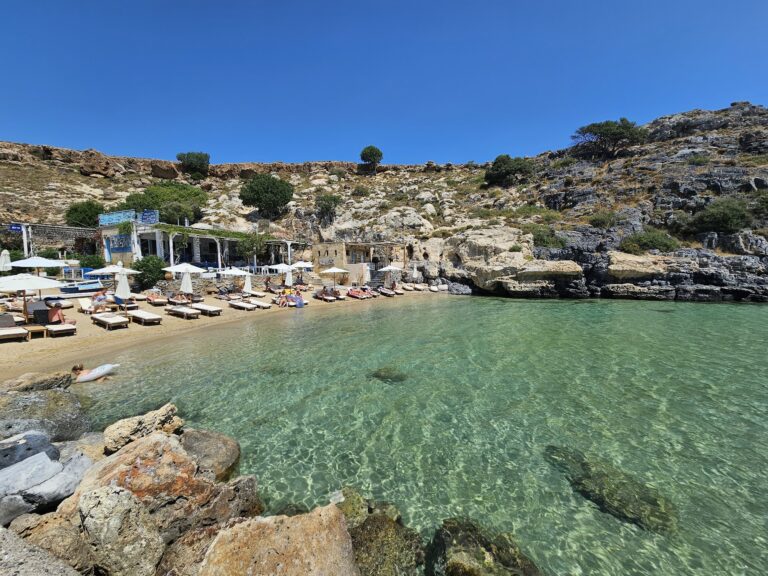
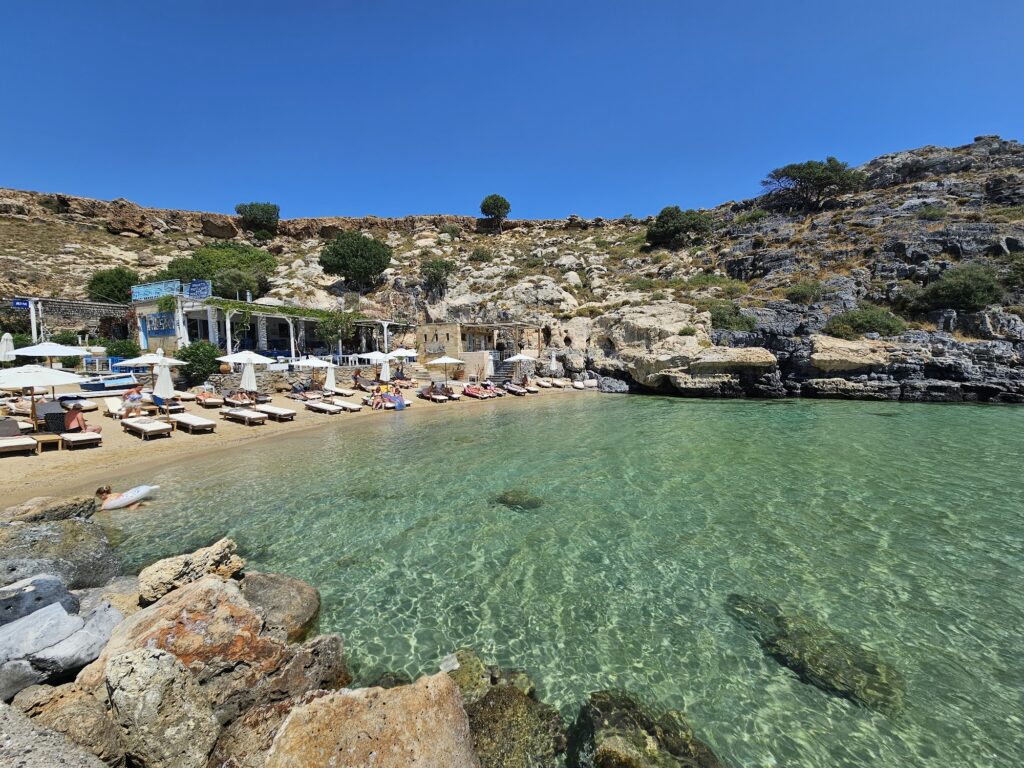
St. Paul’s Bay is a separate heart-shaped cove south of the village, enclosed by dramatic cliffs, with the white chapel of Agiou Pavlou at the shoreline and the reputation of the cove as the apostle Paul’s landing site. Weddings are frequently held in the chapel during the season. The bay has a small free beach section in the northwestern corner and a more private, organised section. It is significantly quieter than Megali Paralia in most conditions and is the romantic-evening and intimate-swimming alternative to the main beach’s activity level.
The Village: Cobblestone Lanes, Captain’s Houses, and the Rooftop Cafés
Lindos village is a specifically Rhodian architectural form — the whitewashed cubic houses, the cobblestone lanes too narrow for vehicles, the carved stone facades of the Captain’s Houses (the mansions built by wealthy 16th and 17th-century sea captains whose decorative ceilings and painted walls survive in some private interiors), and the village market along the main alley running from the car park to the beach.
The Captain’s Houses are the most distinctive vernacular architecture on the island and the reason that Lindos is designated as a UNESCO protected settlement alongside the fortified town of Rhodes. Several are open as restaurants or accommodation; the ceiling painting tradition — geometric patterns, narrative scenes, and the multi-lobed rosette forms that became the Lindos trademark — is visible in the interiors of buildings where access is available.
Rooftop café terraces in the upper village provide the panoramic positions for Acropolis photography — the angle looking across the village rooftops toward the cliff is the specific composition that travel photographers and Instagram accounts reproduce most consistently, and which no lower position on the beach or in the village can replicate.
Lindos in July and August: Capacity Warnings and Early Morning Strategy
Lindos is at or beyond comfortable capacity on the busiest July and August days. The main beach fills to the point where finding a free towel position outside the sunbed section is difficult by mid-morning. The narrow village lanes become congested with day-trip visitor volume that the cruise ship excursion programme brings from Rhodes Town and the various port stops on the eastern coast. The Acropolis queues can be significant by 10am.
The strategies that experienced visitors employ: arrive at the beach by 8am for the choice of sunbed positions; visit the Acropolis as the first activity of the morning before the heat builds; use the beach in the afternoon when the day-trip crowds have thinned; consider visiting in late September or October when the water is still warm and the crowds are a fraction of the summer peak.
Lindos Beach (Megali Paralia) on Rhodes is 400 metres of golden sand below the Acropolis — the 4th-century Temple of Athena Lindia, the 14th-century Knights’ Castle, and 4,000 years of continuous occupation on the 116-metre cliff directly above the sunbeds, the glass-bottom boat tours, and the Freddo espresso on the taverna terrace.
Take the KTEL bus from Rhodes Town at 8am. Arrive before the Acropolis opens. Pay the €20 entry and climb before the heat.
The view from the eastern edge of the site looking down to St. Paul’s Bay is the specific photograph that Rhodes produces and that no other beach in the Aegean can replicate.
Map
Sorry, no records were found. Please adjust your search criteria and try again.
Sorry, unable to load the Maps API.
Near by places: