
Santa Maria del Focallo: Below Ancient Ispica
Profile
Santa Maria del Focallo: Sand Where Ulysses Reportedly Landed
Italy | Sicily | Ragusa | Val di Noto Coast
Local legend holds that Ulysses himself landed on these beaches during his long wandering across the Mediterranean, a fitting story for a stretch of coast whose inland neighbor, Ispica, has genuinely ancient roots of its own. The nearby canyon of Cava d’Ispica supported continuous human habitation from the Bronze Age Castelluccio culture around 2200 BC through Byzantine, Arab, and Norman periods, its rock walls eventually honeycombed with troglodyte dwellings, churches, olive mills, and tanneries housing as many as six thousand people at the settlement’s height. That entire community, then called Spaccaforno, was leveled on January 11, 1693, by one of the largest earthquakes ever recorded in Italy, a disaster that killed an estimated sixty thousand people and destroyed nearly fifty towns across the region. Rather than rebuild in the same vulnerable valley, survivors relocated to higher, flatter ground and laid out an unusually forward-thinking grid of wide, straight streets, work that eventually earned Ispica UNESCO recognition in 2002 for its late Baroque architecture. The town didn’t take its current name until 1934, having carried Spaccaforno for centuries beforehand.
I found something genuinely moving about swimming below a town that absorbed a genuine catastrophe and rebuilt itself with such deliberate, forward-looking care, the beach itself carrying none of that history directly but benefiting from every decision that eventually led people back to this coast.
Eight Kilometers of Golden Sand and Rolling Dunes
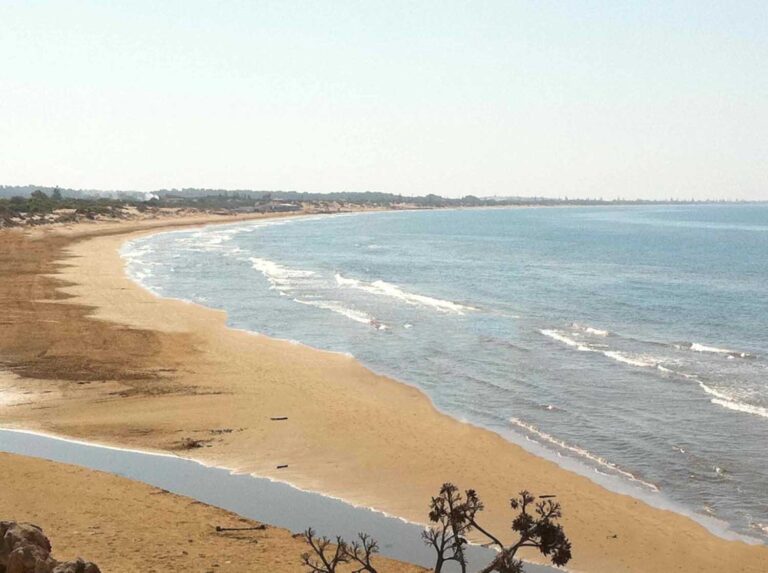
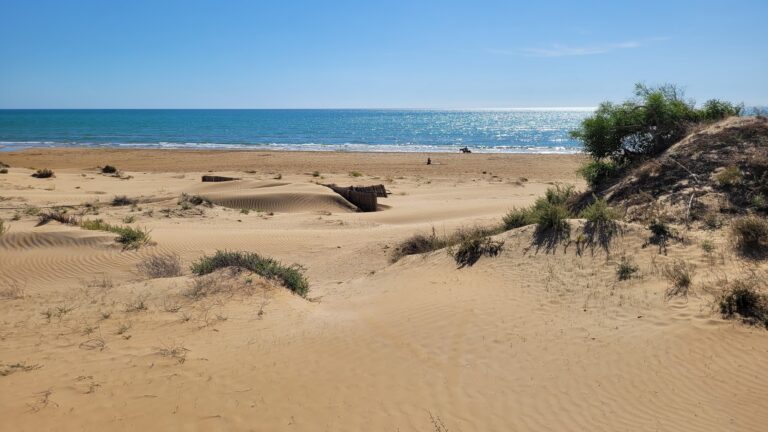
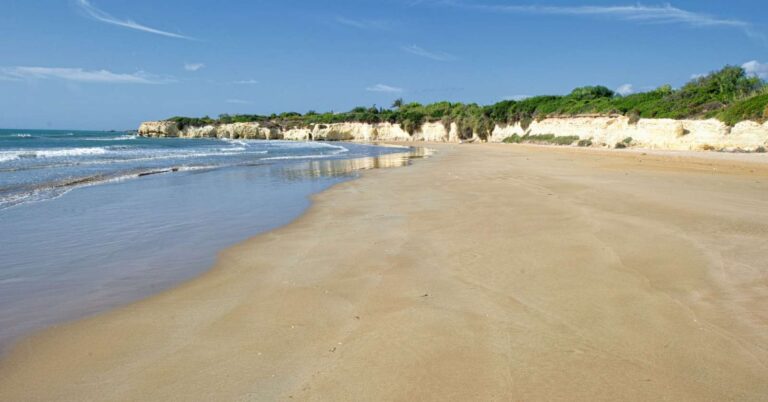
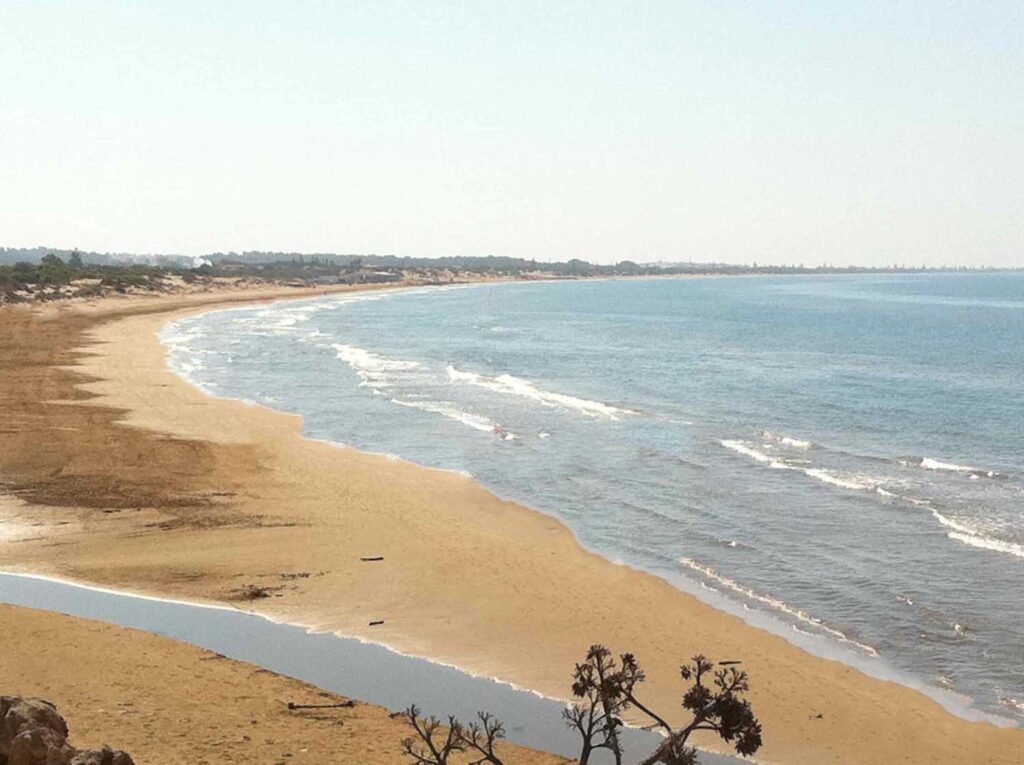
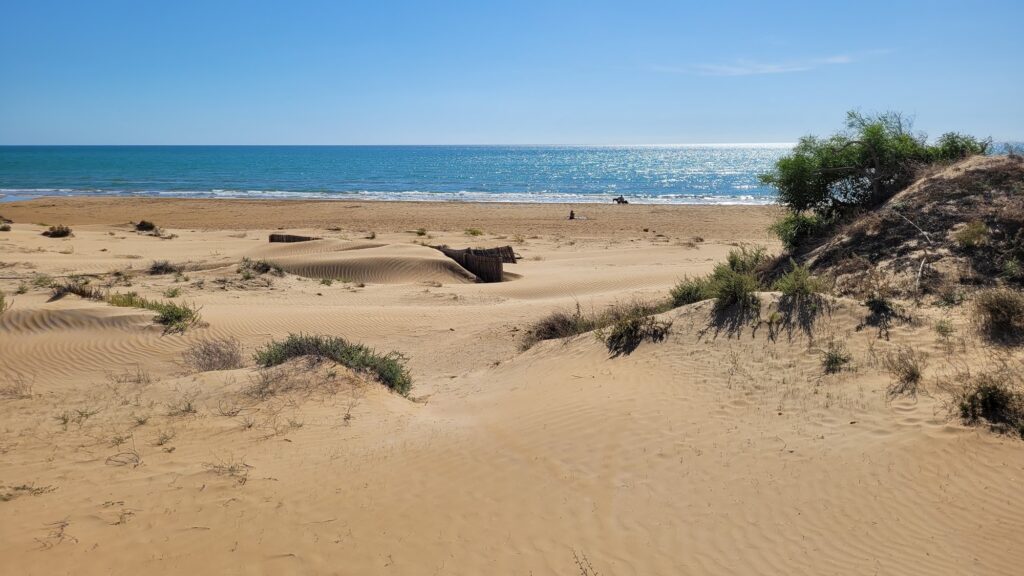
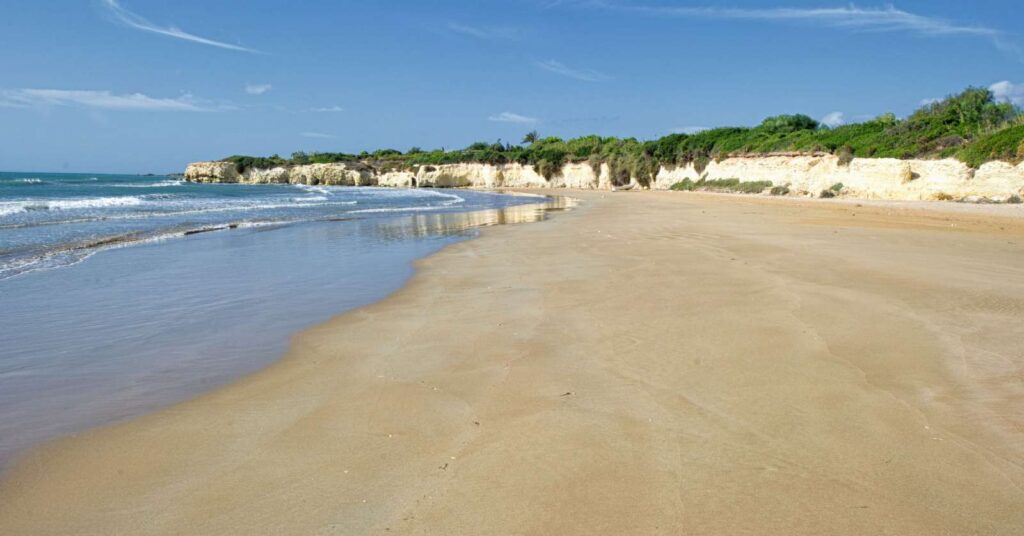
Santa Maria del Focallo stretches for over eight kilometers, fine, velvety golden sand backed by natural dunes dotted with sea lavender, wild acacias, and Mediterranean scrub, and I found the sheer scale here meant the beach never felt crowded even during a busy summer stretch. The sand stayed soft and smooth enough underfoot that I never once reached for water shoes, and the beach’s consistent Blue Flag certification reflected genuinely well-maintained water quality throughout my visits.
A Gentle Slope Built for Long, Easy Swims
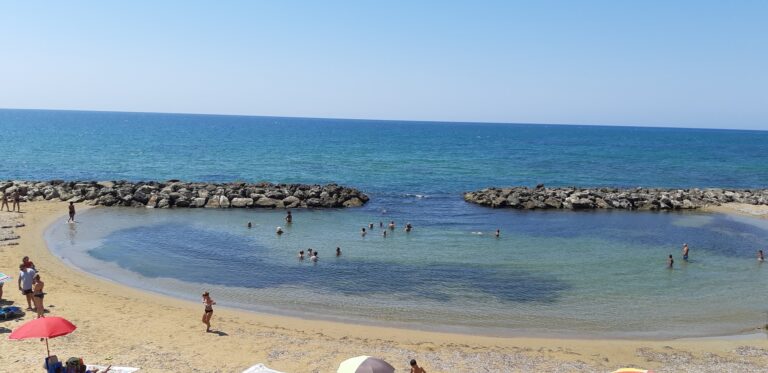
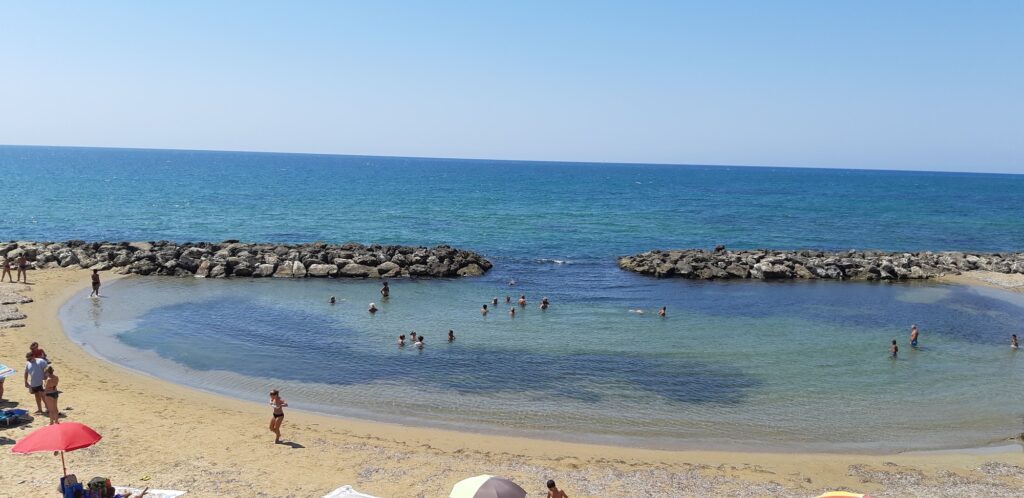
The seabed here descends gradually, keeping the nearshore water calm, warm, and exceptionally clear, pale turquoise in the shallows deepening into rich cobalt further out. I found this genuinely well suited to leisurely swimming and open-water wading rather than anything demanding, and given how gentle the whole approach stays, I’d call this a reasonably safe choice for families with children, though I’d still keep closer supervision on younger swimmers given the beach’s largely unorganized, open character.
Arancini and Almond Granita Along the Coastal Road
Wooden beach bars and casual trattorias scattered along the coastal road served genuinely good Sicilian street food, crispy arancini and almond granita with warm brioche standing out among the lighter options, while sit-down spots offered fresh clam spaghetti and grilled swordfish paired with local Nero d’Avola. As golden hour arrived, the same bars shifted into aperitivo mode, the sunset painting the sea in warm orange and gold.
Getting There and Settling In
Santa Maria del Focallo sits within Ispica’s municipality, reachable by driving south along the SP67 or coastal SP46 from either Ispica or Pozzallo for ten to fifteen minutes, or via the A18 highway or SS115 toward Rosolini and Ispica from Catania or Comiso Airport in under an hour; ample free and paid parking runs along the coastal avenue behind the dunes, and seasonal regional buses connect Ispica and Pozzallo directly to the beach during summer.
Standing Where a Legend and a Real Catastrophe Both Left Their Mark
By the time I left Santa Maria del Focallo on my last evening, I found myself thinking about that old story of Ulysses making landfall somewhere along this exact stretch of coast, a myth considerably gentler than the genuine disaster that later reshaped the town just inland, both stories somehow settling into the same quiet, sun-warmed sand.
Map
Sorry, no records were found. Please adjust your search criteria and try again.
Sorry, unable to load the Maps API.