
Spiagge Bianche: The Beach a Factory Built
Profile
Spiagge Bianche: The Beach a Belgian Chemical Company Built
Italy | Tuscany | Livorno | Etruscan Coast
Rosignano Solvay didn’t exist before 1912. The land here was open countryside until the Belgian brothers Ernest and Alfred Solvay chose this exact stretch of coast to build a soda ash factory, drawn by nearby salt deposits, local limestone quarries, and easy access to both the sea and the coastal railway. Belgian engineers built the town from scratch alongside the plant, a brick kiln going up first specifically to supply the millions of bricks needed for the housing, schools, and theater that followed within just a few years, all in a distinctly Northern European architectural style that still marks the town’s older quarters today. Originally called Paese Novo, “New Country,” the settlement formally took the name Rosignano Solvay in 1917, and residents still celebrate the town’s founding every August 20th, a rare example of a genuine company town where the bond between industry and community has never really faded.
The beach’s famous white sand is a direct byproduct of that same factory, calcium carbonate and limestone waste from the Solvay production process discharged into the sea for decades and gradually reshaping the once-dark shoreline into its current tropical appearance. I found it worth being genuinely honest about the fuller picture here: a 1999 United Nations Environment Programme report listed this stretch among the more polluted coastal sites on the Mediterranean, citing heavy metals including mercury, arsenic, and cadmium mixed into the industrial discharge alongside the visible white limestone. Official Italian environmental monitoring does continue to test and approve the water for swimming today, and millions of visitors swim here every year without incident, but I’d encourage anyone genuinely concerned about water quality here to look into current monitoring reports directly before deciding for themselves.
Four Kilometers of Genuinely Striking White Sand
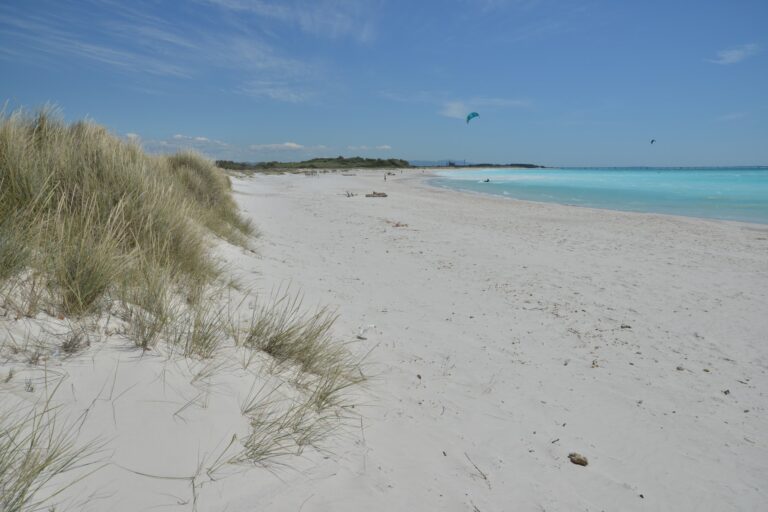
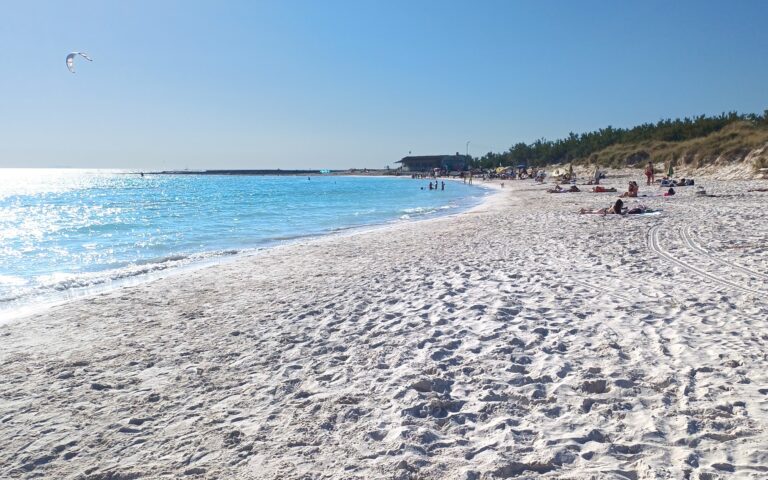
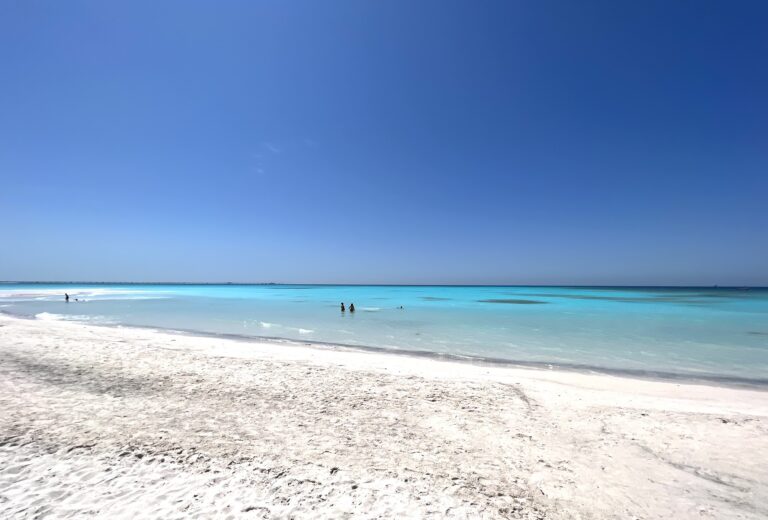
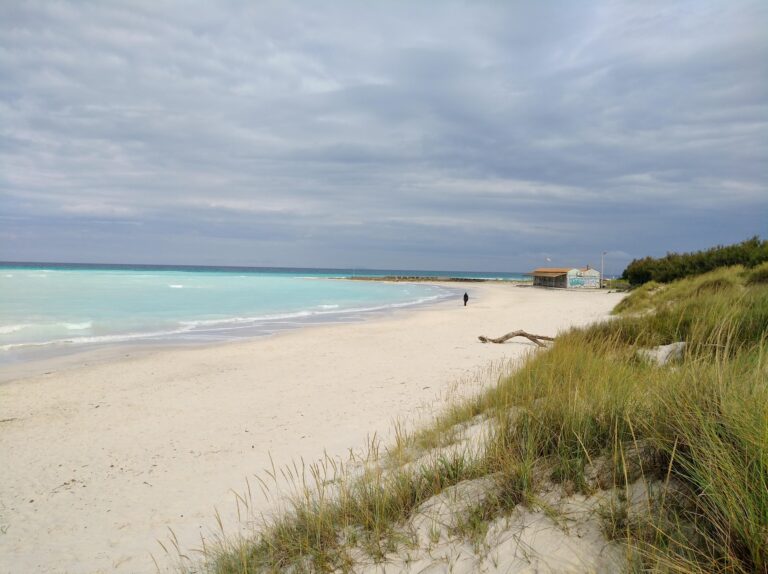
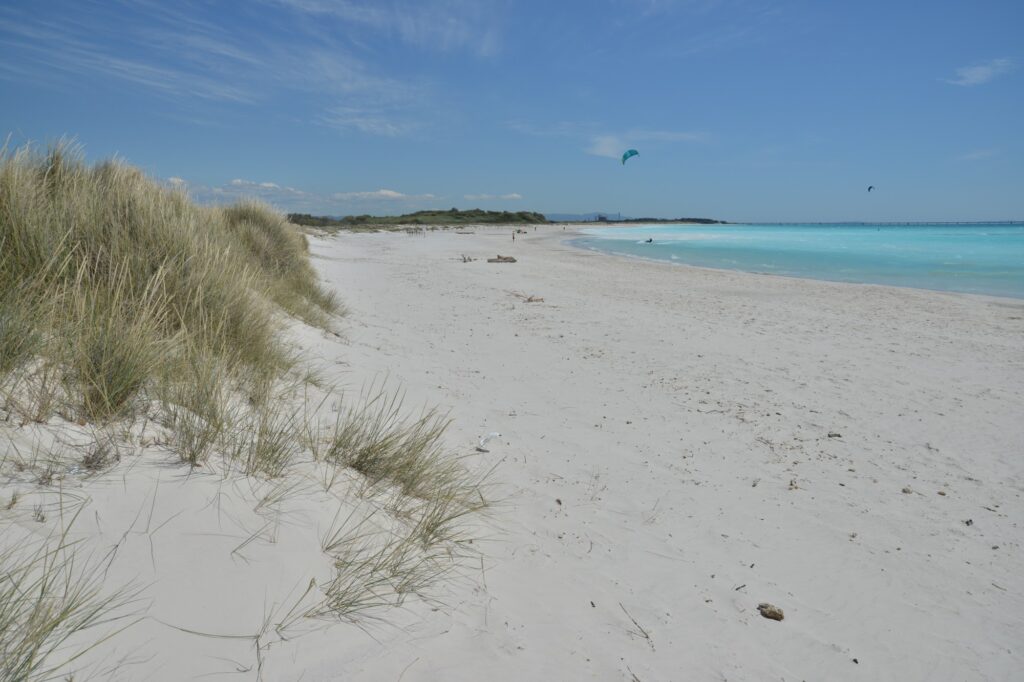
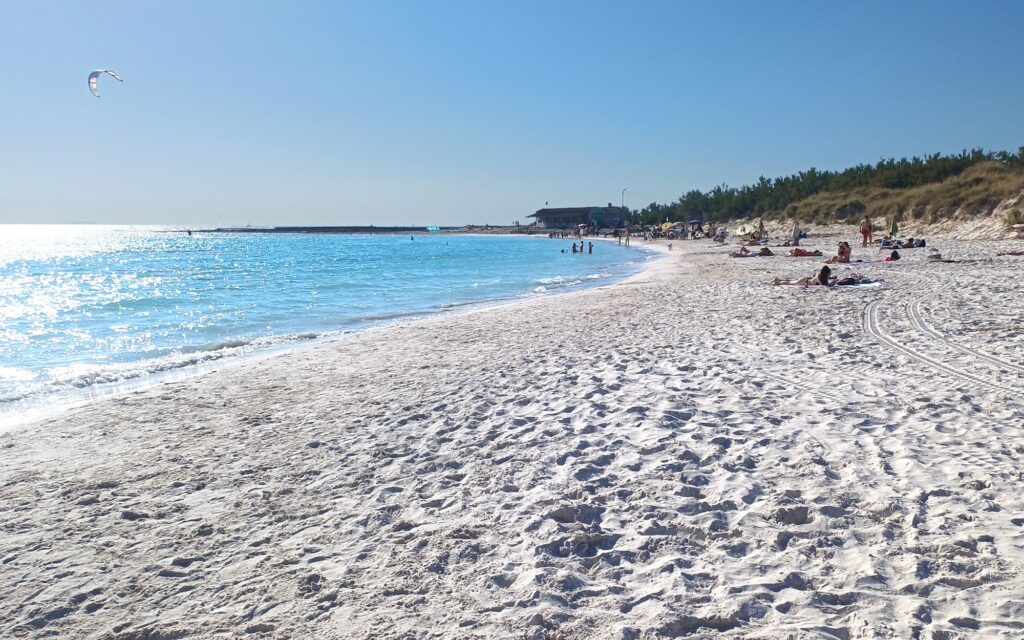
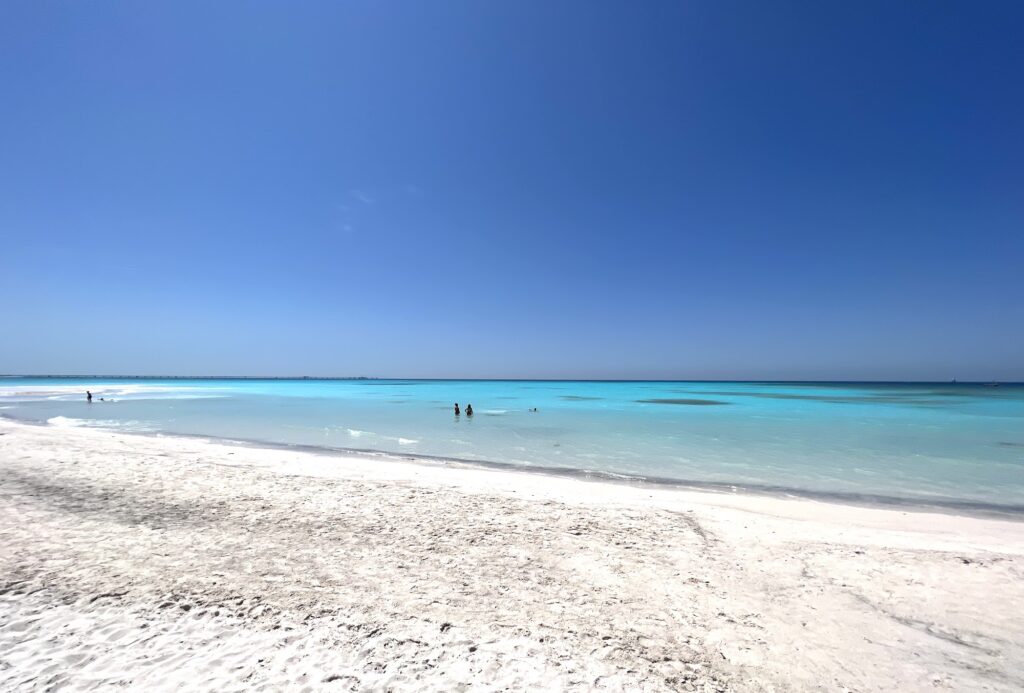
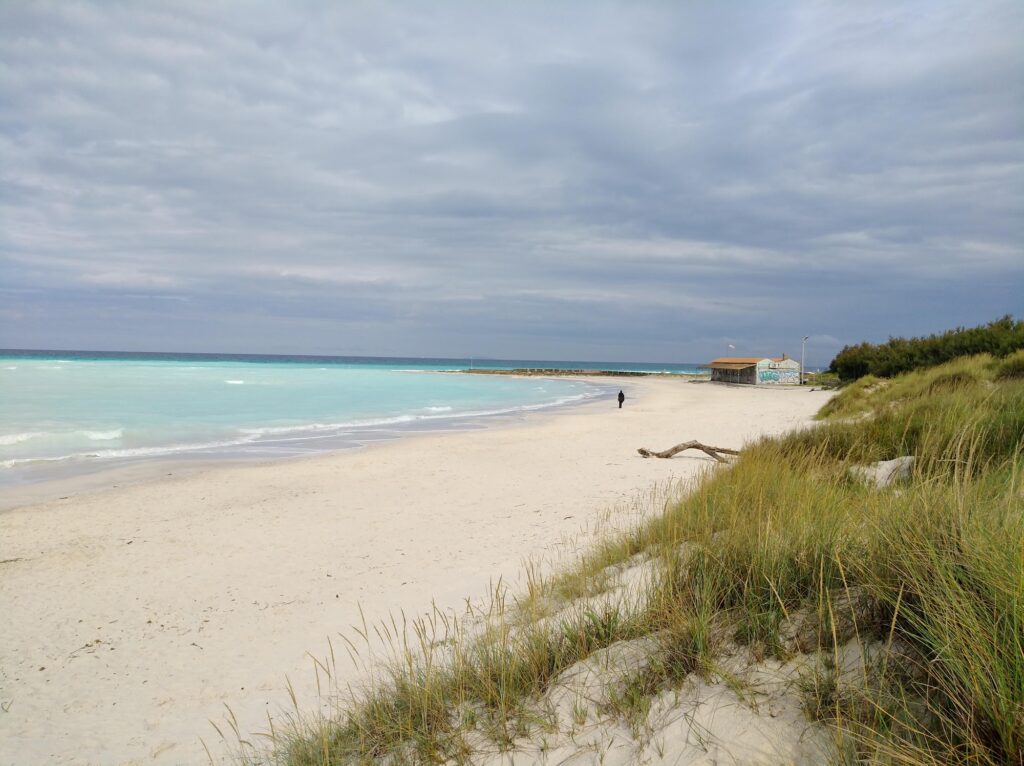
Whatever its industrial origin, I found the visual effect at Spiagge Bianche genuinely startling, fine powdery white sand running roughly four kilometers between Rosignano Solvay and Vada, backed by dunes and a green belt of Mediterranean pine. The water took on a neon turquoise and electric blue I hadn’t quite matched at any other Tuscan beach, the pale seabed reflecting sunlight through the water column to produce color considerably more saturated than the coastline’s actual latitude would suggest.
A Genuine Hub for Wind and Water Sports
Local rental stations and kiteboarding schools have built a real following here, windier days bringing out genuinely serious wind sports activity, and I found stand-up paddleboards and pedal boats readily available for anyone wanting calmer water time instead.
Mostly Free Sand Along an Enormous Stretch
The vast majority of this four-kilometer beach remains completely free and open, and I found genuine space to spread out even during peak season, with managed lido sections available for anyone preferring organized sunbeds. Given how much of this beach stays unorganized, dogs would likely be fine on a leash following Italy’s standard rule for public beaches, with the managed stabilimenti requiring separate permission.
Caprese Salads and Sunset Aperitivo
Colorful beach bars along the main access routes served genuinely easy, refreshing coastal food, caprese salads and cold rice salads well suited to the heat, and as evening approached, the same bars filled with music and an Aperol Spritz crowd watching the sun drop into water that never quite stopped looking artificially blue.
Getting There and Settling In
Spiagge Bianche sits along the SS1 Aurelia between Rosignano Solvay and Vada, with paid parking along the main road and near the pine groves leading a short walk onto the sand; regional trains stop at either Rosignano or Vada station, roughly twenty to thirty minutes on foot or a quick summer shuttle ride from either, and flat cycling paths connect both towns directly to the pine forest access points.
Standing on Ground a Company Built From Nothing
By the time I left Spiagge Bianche on my last evening, the factory’s chimneys were still visible against the darkening sky behind the pines, and I thought about how thoroughly this entire stretch of coast, town, beach, and industry alike, owes its existence to a decision made by two Belgian brothers in a boardroom over a century ago, the tropical-looking sand in front of me a direct, still-visible consequence of exactly that choice.
Map
Sorry, no records were found. Please adjust your search criteria and try again.
Sorry, unable to load the Maps API.