Spiaggia della Gaiola Naples: Booking and Access
Profile
Spiaggia della Gaiola, Posillipo: The Reserved Pebble Beach Beside the Cursed Islets
Italy | Campania | Naples | Posillipo | Gaiola Underwater Park Marine Protected Area
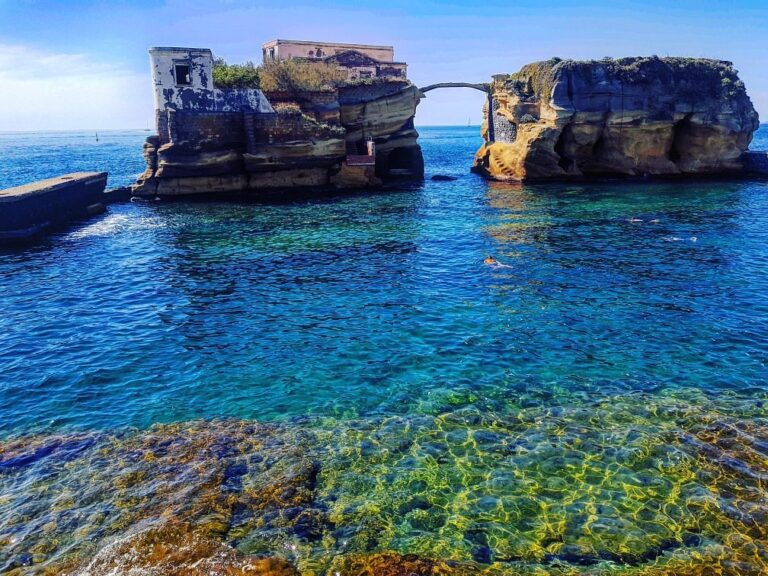
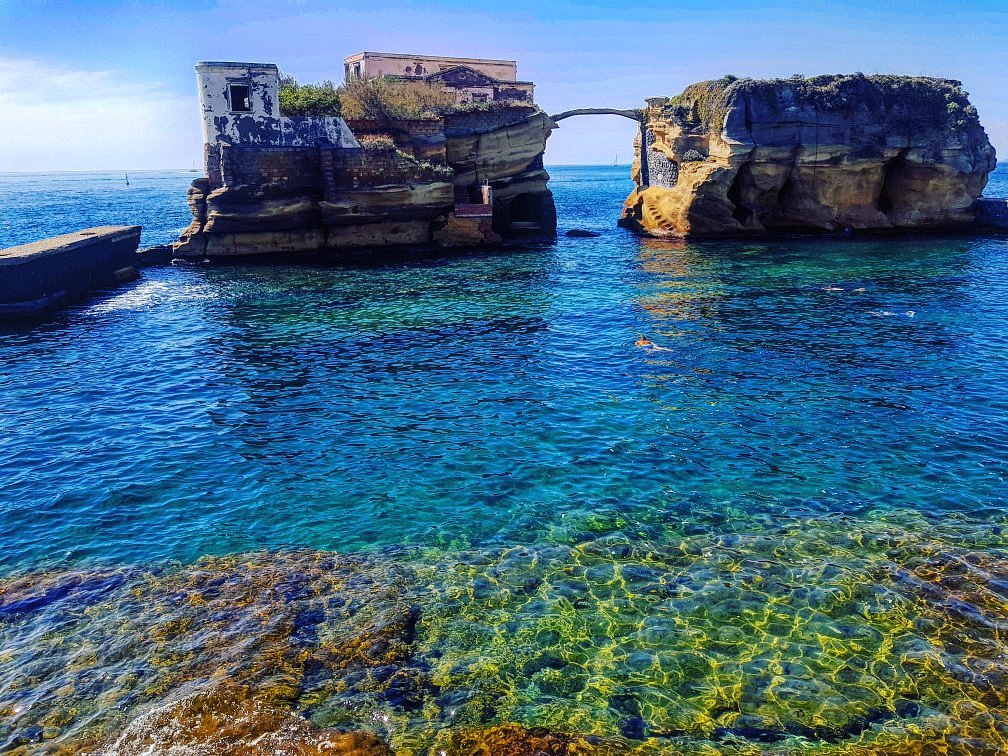
The villa that stands on the Gaiola islet has a reputation. Italian travel writers repeat that since the nineteenth century almost every owner of the house has suffered sudden deaths, financial ruin or family tragedies, and the story is known in Naples as the curse of Gaiola. Spiaggia della Gaiola lies on the mainland directly opposite the two islets, and visitors usually hear the legend before they hear anything about the beach itself. What matters for planning is that this is a reserved beach, in a protected marine area, and that it has to be booked.
The Two Islets and the Legend Attached to Gaiola
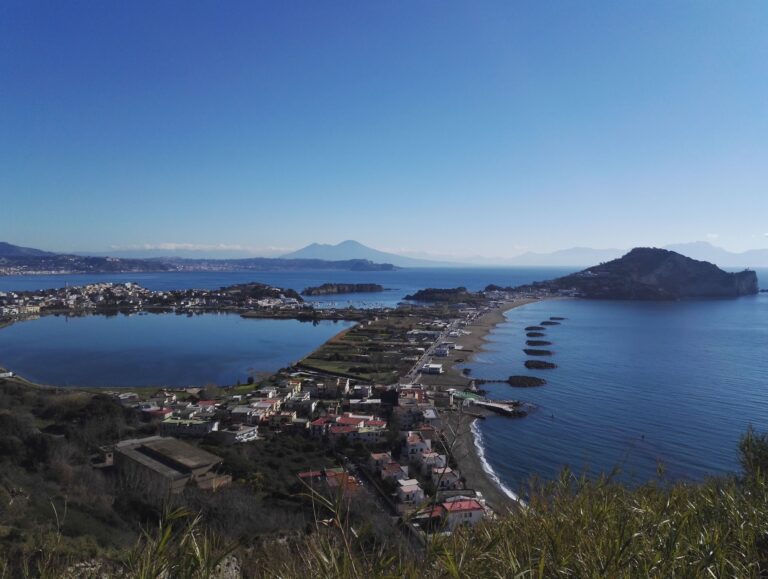
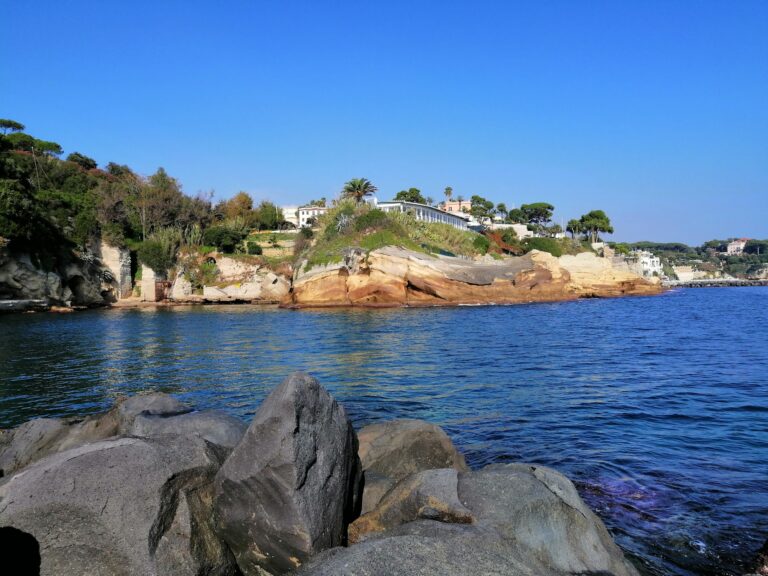
The islets lie only a few metres from the Posillipo coast, and local descriptions say that the nearer one can almost be reached by swimming from the beach below the Parco Virgiliano. A bridge connects the two islets. The house on the larger one is private, and the curse story is a piece of urban legend repeated in guides, not a documented fact.
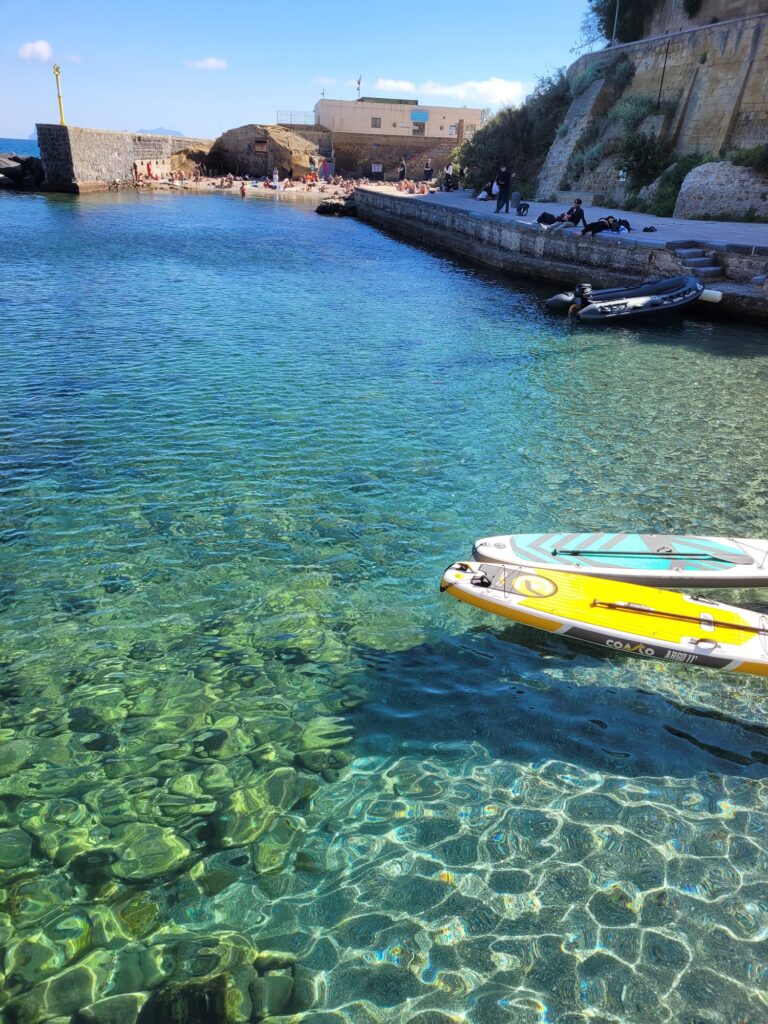
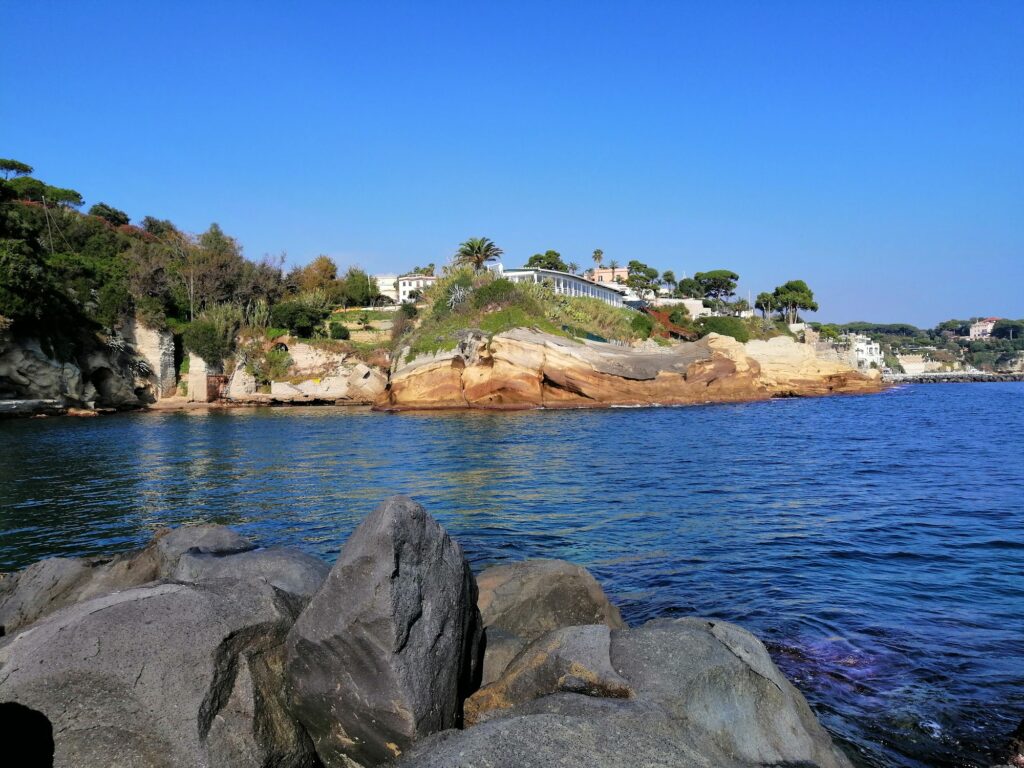
For most visitors the islets are the scenery, and the real draw is the sea around them, which a Naples travel guide describes as the clearest in Campania.
The Villa of Vedius Pollio Beneath the Surface
The seabed holds the remains of the maritime villa of Publius Vedius Pollio, a wealthy Roman knight close to the emperor Tiberius. The Gaiola Underwater Park marine protected area was established in 2002, covers 42 hectares from the village of Marechiaro to the Bay of Trentaremi, and protects remains of maritime villas, tuff quarries, landing places, nymphaea and fish ponds. Because of bradyseism, the slow rise and fall of the ground, those remains are visible above and below the surface.
The park forms part of the wider archaeological park of Posillipo, which includes Roman villas, an amphitheatre and an odeon, and the Grotta di Seiano, the tunnel that links the Bagnoli side to the Gaiola valley.
Reserving a Place at Spiaggia della Gaiola
Access is controlled and free, with online booking required through the park’s official reservation page. The rules reported by different sources vary: one guide gives the mandatory booking period as generally 1 May to 30 September, while another says booking is required in the busiest periods. The capacity figures disagree too. A tourism guide gives 400 people a day in two shifts on a beach of 420 square metres, with entry guaranteed for disabled visitors and people over seventy, while the Ministry of Culture page for the park cites a maximum capacity of 200 people. The park is closed on Mondays according to one guide.
Because the numbers, season and shifts change from year to year, check the official park page before you go. For another reserved free beach on the same coast, see Spiaggia delle Monache, and for the Donn’Anna beach, which is reached through Bagno Elena and Bagno Ideal, the same booking logic applies.
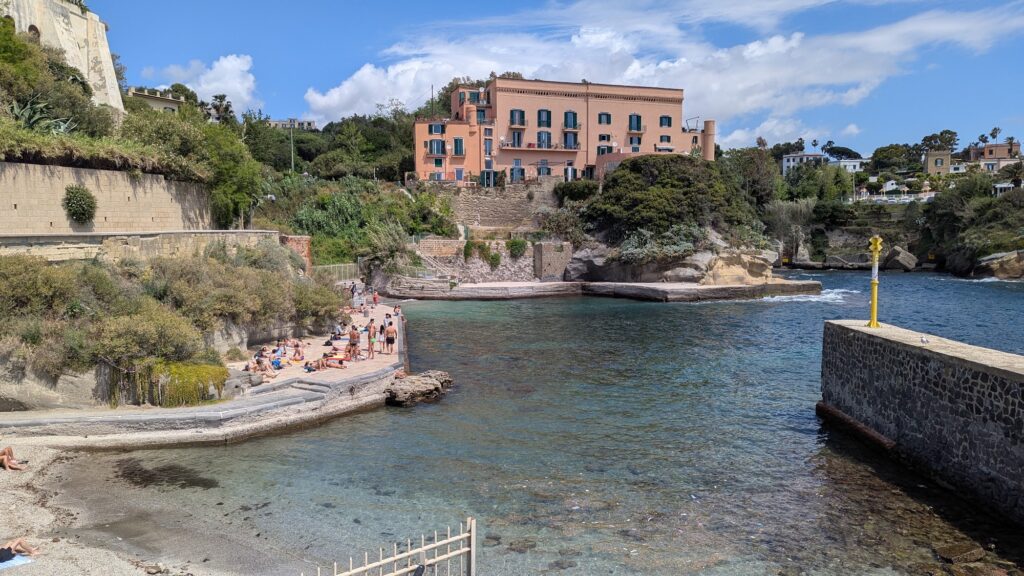
A Small Pebble Beach at the Bottom of Discesa Gaiola
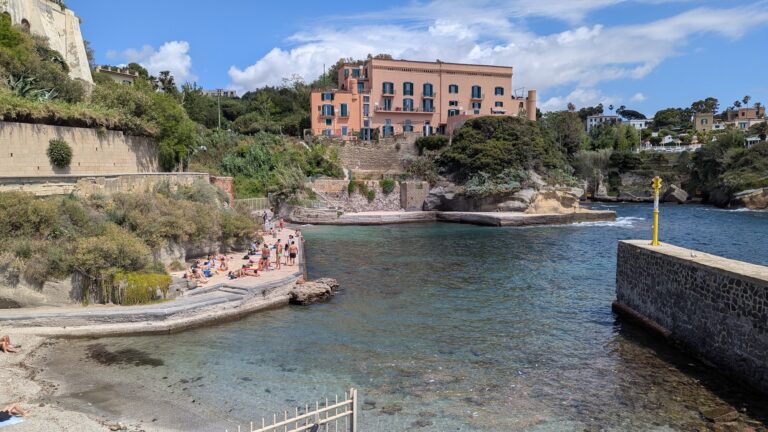
The beach is small and made of pebbles, according to guides, and another says the whole area consists of rocks. It is reached by a long descent from the road, described as a steep path and a long flight of steps. Discesa Gaiola is a limited-traffic zone, so vehicles cannot use it, and visitors walk the whole way down.
The water is deep and the shore is rocky, which suits swimmers and snorkellers more than small children, and the stairs make strollers impractical. Water shoes are needed. I could not find a rule on dogs, and a marine protected area may add restrictions, so ask the park.
Walking In From Via Tito Lucrezio Caro or Through the Seiano Grotto
The access is at the start of Discesa Gaiola, a panoramic road that begins at Via Tito Lucrezio Caro on the Posillipo hill. Guides say city buses stop near Discesa Coroglio at the Istituto Denza or at the Capo Posillipo terminus, and that visitors continue on foot along Via Tito Lucrezio Caro and Discesa Gaiola. The source’s metro and bus line numbers could not be confirmed. Many visitors combine the beach with the Pausilypon archaeological park, reached through the Grotta di Seiano, a rock-cut corridor that leads to terraces, theatres and villa remains, before finishing with the sea.
Services and Supplies
The park, managed by the Gaiola research and education association, runs guided visits and educational activities, and details are on the park website. There are no lidos, and I could not verify showers, toilets, lifeguards or any food on the beach, so carry water and supplies and take rubbish with you.
Check the park’s website the day before you travel, since opening days and capacity are the things most likely to change.
Map
Sorry, no records were found. Please adjust your search criteria and try again.
Sorry, unable to load the Maps API.
Near by places: