Le Dune Massa: Dunes Below the Marble Peaks
Profile
Spiaggia Libera Le Dune: Sand Where Fascist Italy Sent Its Workers’ Children
Italy | Tuscany | Massa-Carrara | Apuan Riviera
The northern stretch of Marina di Massa, right around Partaccia where Le Dune sits, once hosted some of Fascist Italy’s most ambitious summer colonies, purpose-built complexes where the children of factory workers from northern Italy’s major industrial cities were sent for weeks at a time. Torre Fiat, built in 1933 and now renamed Torre Marina, still stands as the most visible survivor of that era, alongside the former Colonia Torino and Colonia Ettore Motta. I hadn’t expected a beach known today for its preserved sand dunes and laid-back aperitivo culture to sit this close to a genuinely strange chapter of twentieth-century Italian social policy, thousands of children shipped to this exact coastline as part of a state project that mixed genuine public health concerns with considerably darker propaganda ambitions.
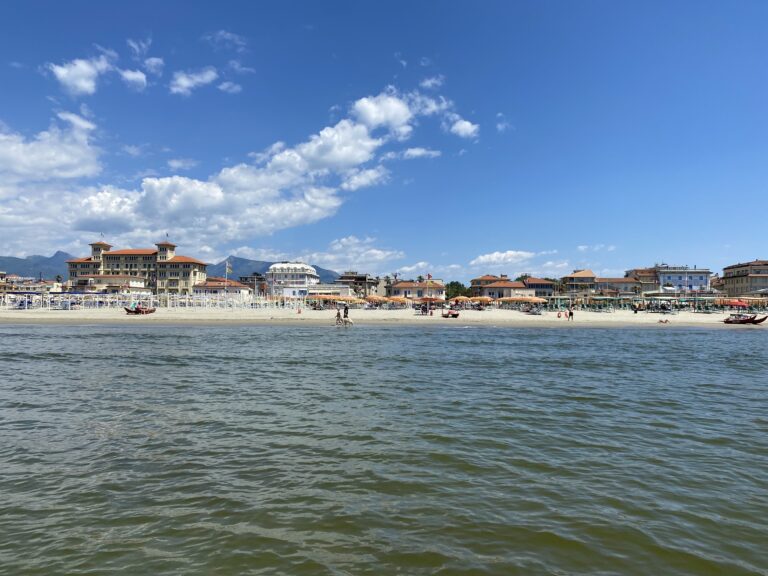
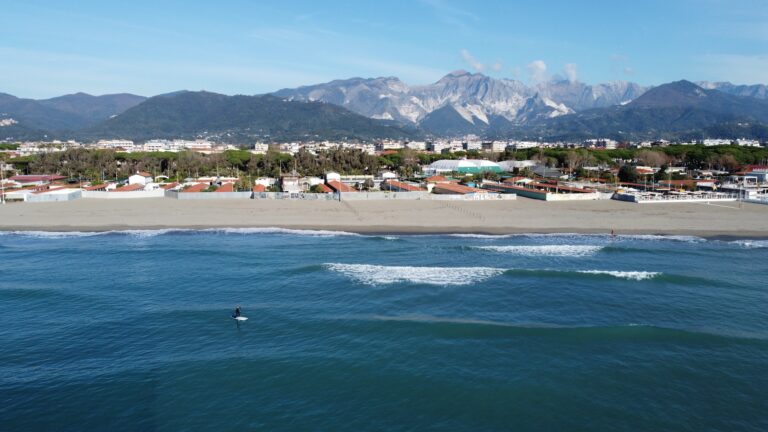
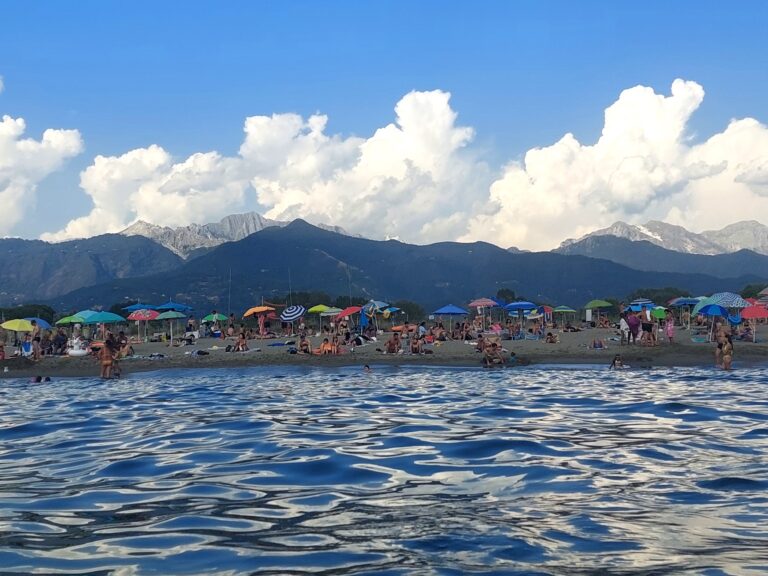
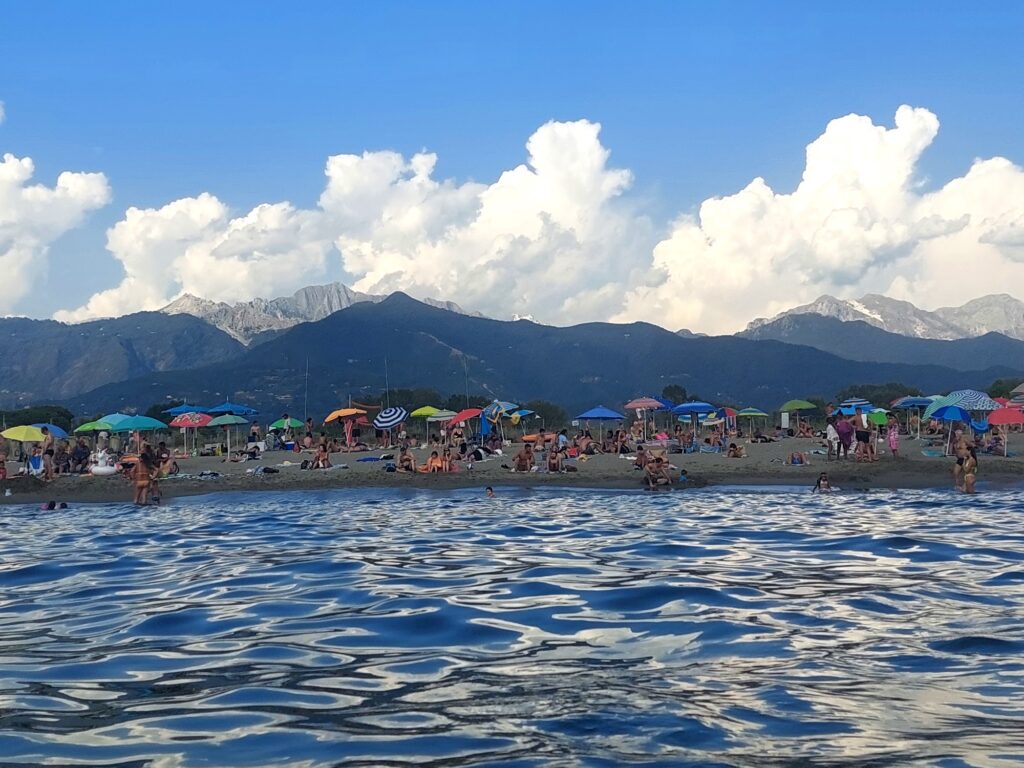
Le Dune itself has nothing to do with that history directly, a free public beach defined by preserved natural dunes rather than any built infrastructure, but the Apuan Alps rising behind it, marble-streaked and genuinely dramatic, have shaped this coast’s identity for far longer than any twentieth-century colony ever did.
Wide, Golden Sand Backed by Marble Mountains
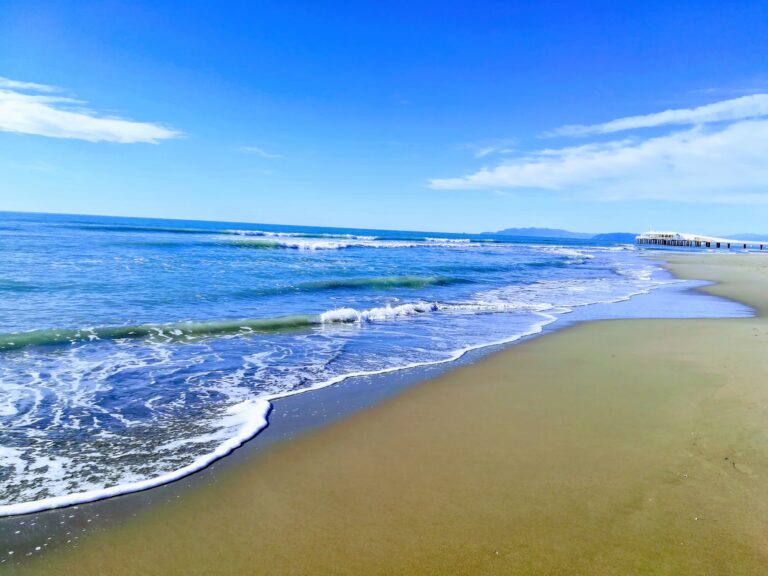
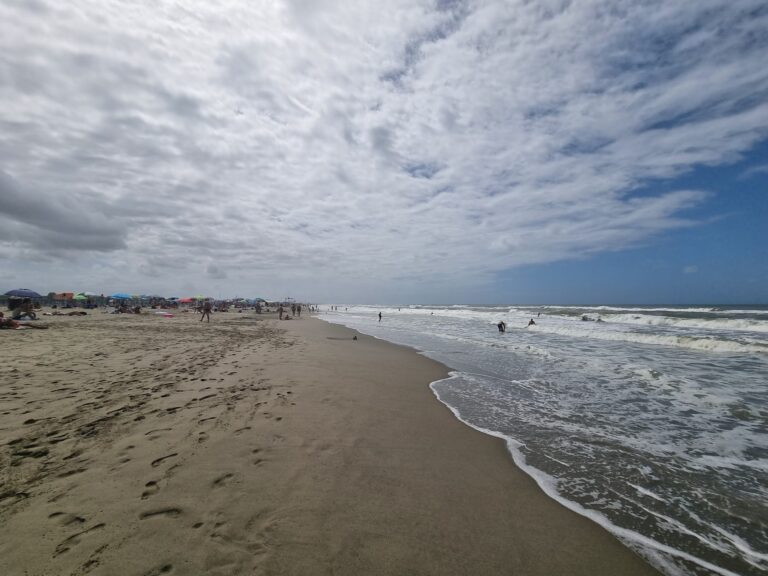
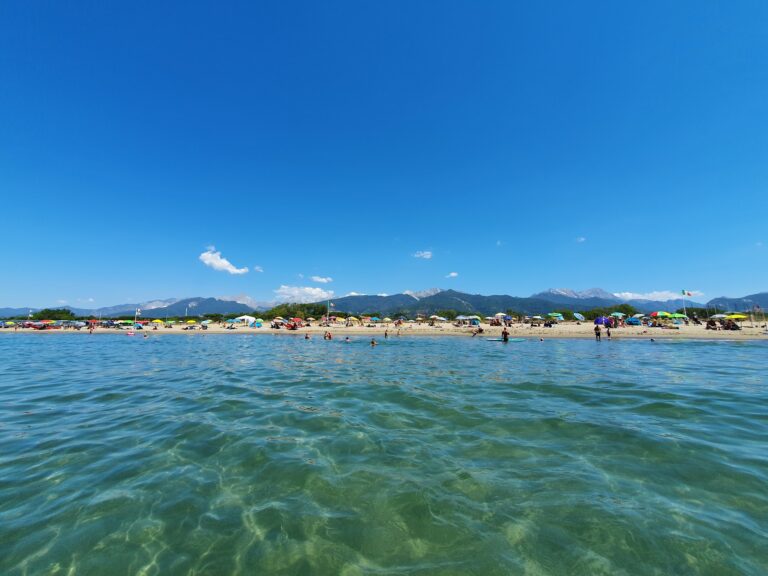
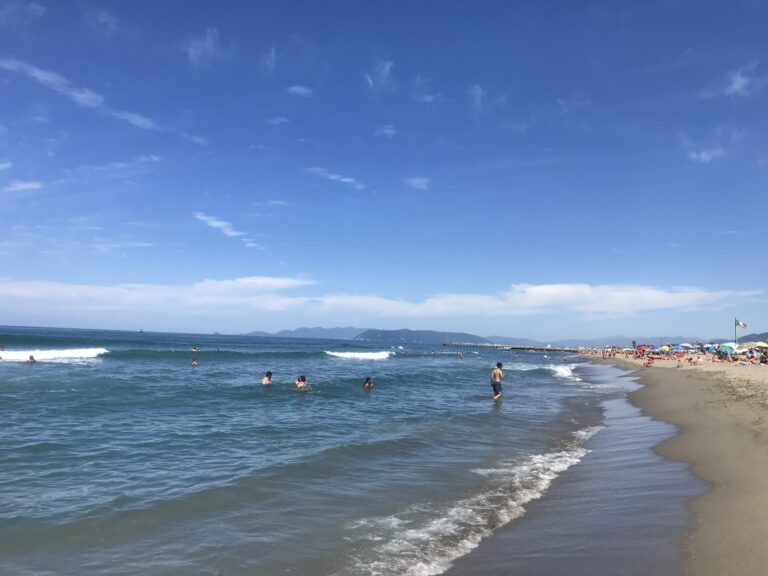
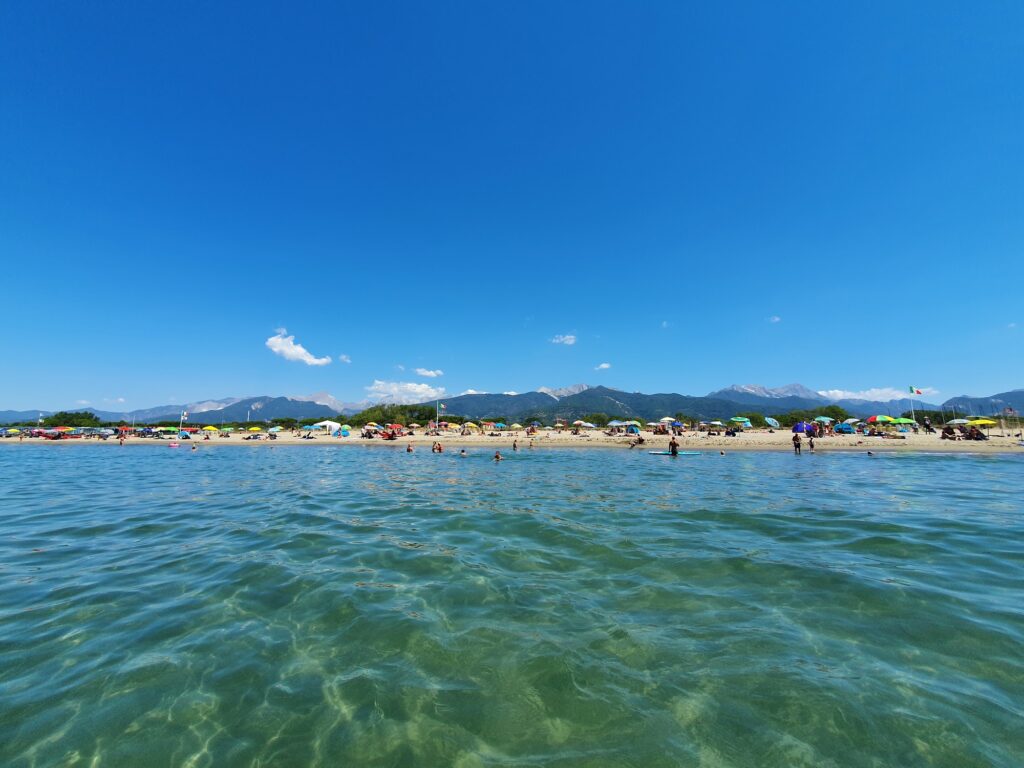
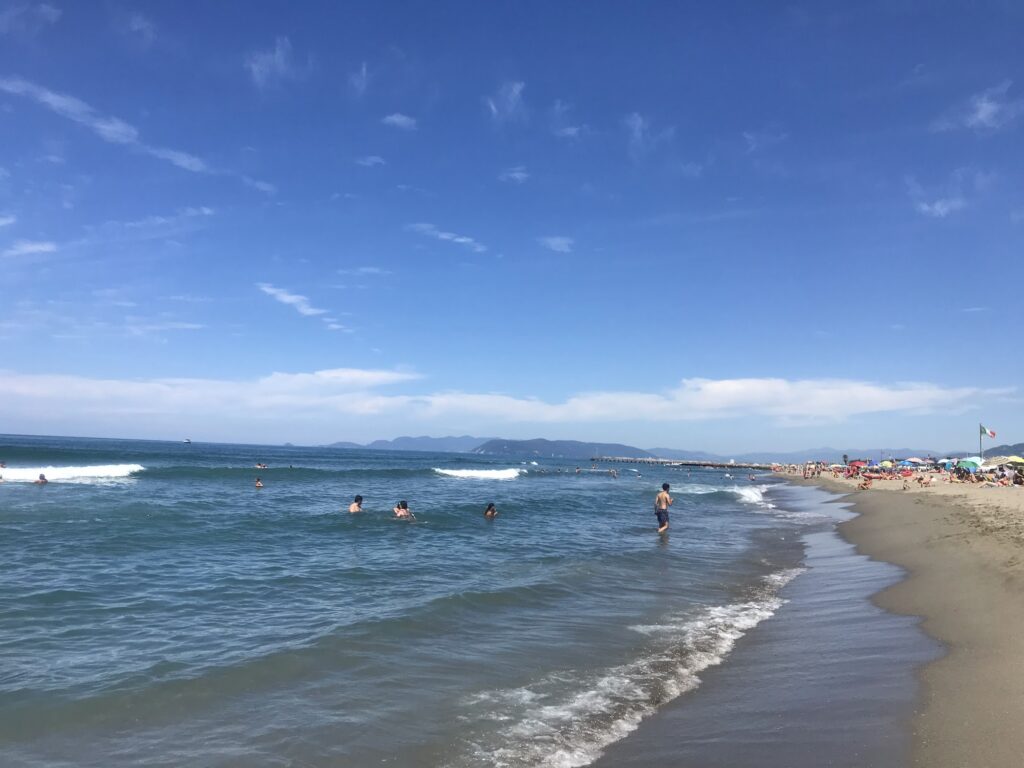
The beach runs wide and deep, fine golden sand shelving gradually into the Tyrrhenian Sea, and I found the water consistently clear on calm days, shifting from pale cerulean near shore to cobalt further out. What genuinely sets Le Dune apart is its system of preserved sand dunes, an increasingly rare feature on this stretch of Tuscan coast where most beaches have long since been flattened for commercial development. Raised wooden walkways cross the fragile dune areas, keeping foot traffic from eroding what remains, and I found the whole approach considerably more thoughtful than I’d expected from a completely free public beach.
A Genuinely Practical Choice for Families
Given the gradual slope and the level wooden boardwalks running straight from the roadside parking to the sand, I’d call this one of the more manageable beaches on this coast for families with strollers, no cliffside stairs or awkward terrain to navigate. The wide-open layout means kids have real room to build sandcastles and run without crowding other visitors, though I’d pack a proper sun shelter given the total absence of trees or built shade structures across the dunes; the afternoon coastal breeze that draws windsurfers and bodyboarders here also means little relief from direct sun during peak hours. Given how thoroughly free and unmanaged this beach remains, dogs would likely be fine on a leash following Italy’s standard rule for public beaches, though I’d confirm locally given the ecological sensitivity of the dune areas themselves.
Marble Peaks That Shaped an Entire Region’s Identity
The Apuan Alps framing Le Dune aren’t simply scenic backdrop. Marble from these mountains built the Roman forum, and Michelangelo himself traveled here to personally select blocks for his sculptures, spending months among the quarries according to Vasari’s own account. Massa itself served for centuries as the capital of an independent principality ruled by the Malaspina and Cybo-Malaspina families, and I found the contrast genuinely striking, standing on an open, democratic public beach with a view toward mountains that once defined the wealth and power of an entire ruling dynasty.
A Pier With a Bronze Horse and a Blessing of the Sea
A short walk south, Marina di Massa’s pier extends out toward open water, ending in a circular platform marked by a bronze sculpture of a small horse, and each June the town holds its Blessing of the Sea, a genuinely well-attended procession that draws much of the local community down to the water. I hadn’t planned my visit around the festival, but locals described it with real affection, the kind of tradition that’s survived considerably better than the fascist-era colonies just up the coast.
Frittura Mista and an Aperitivo Toward Sunset
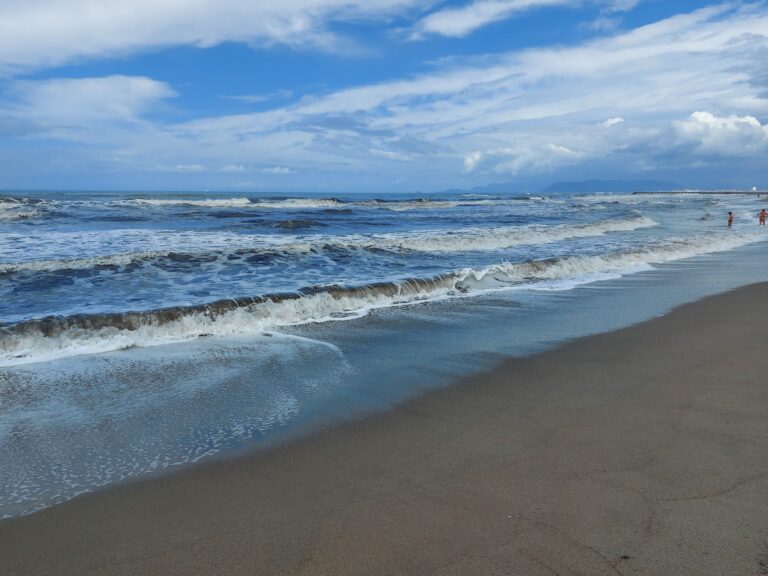
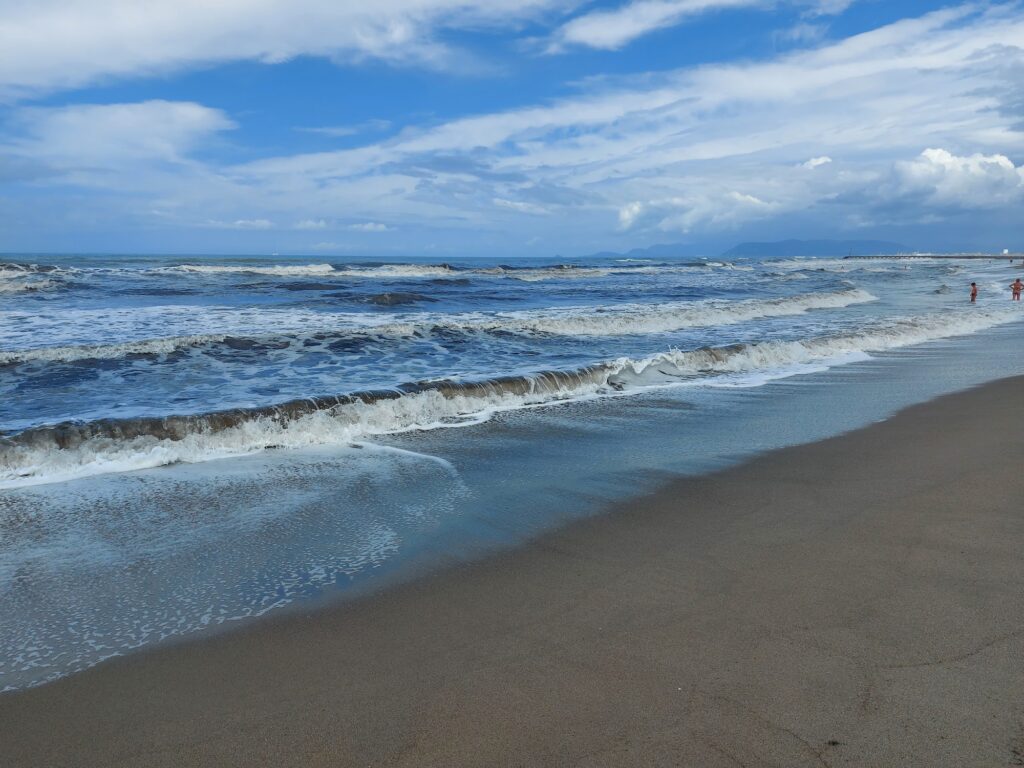
Just beyond the dunes, the main coastal avenue offers casual cafés and traditional seafood restaurants, and I ate well more than once on fried calamari and shrimp eaten straight from the paper cone. As the afternoon wound down, beachfront bars filled for aperitivo, the sky turning a genuinely dramatic orange behind the rolling waves.
Getting There and Settling In
Le Dune sits along Viale Vespucci, the coastal avenue connecting Marina di Massa with Partaccia, with paid blue-line parking directly across from the main dune entry points, arriving before nine-thirty essential on hot summer weekends; the CTT Nord bus network connects from Massa’s central train station and city center with stops just two minutes from the wooden walkways, and the flat Versilia cycle path offers a genuinely scenic way to arrive by bike, with parking racks available right at the beach entrances.
Standing Between the Dunes and the Fascist Watchtower’s Ghost
By the time I packed up on my last afternoon, the wind had picked up enough to send a few kites and windsurfers out toward open water, and I looked back once toward Partaccia, where Torre Marina still stands under its renamed identity, a genuine piece of difficult history quietly absorbed into an otherwise ordinary stretch of Tuscan coastline, the dunes in front of me protected now by wooden walkways rather than anything resembling the ideology that once sent children here by the thousands.
Map
Sorry, no records were found. Please adjust your search criteria and try again.
Sorry, unable to load the Maps API.
Near by places: