Beach of Fetovaia: Granite That Built the Pantheon
Profile
Beach of Fetovaia: Sand Quarried by Hand, Named for Leaping Dolphins
Italy | Tuscany | Elba Island | Tuscan Archipelago
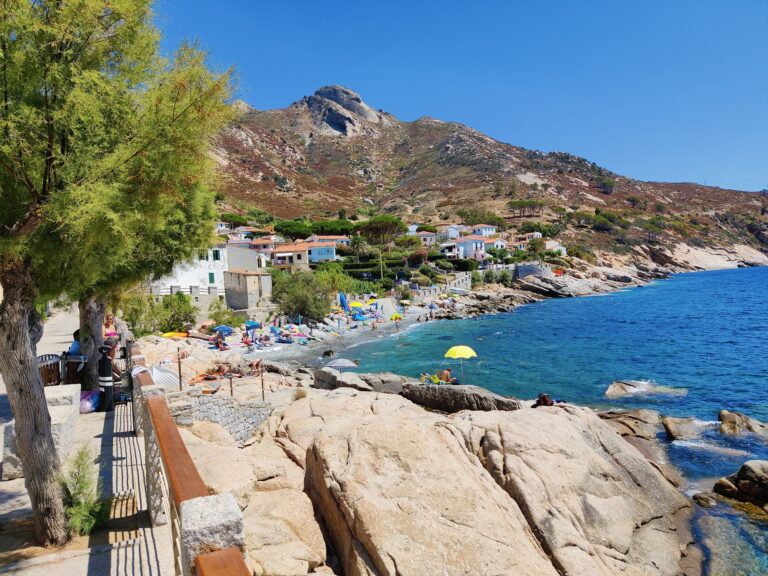
The granite that colors Fetovaia’s famous white sand once represented genuinely hard, dangerous labor rather than scenic backdrop. Quarrymen in this same corner of southwestern Elba, working the granite deposits around San Piero, Seccheto, Vallebuia, and Fetovaia itself, spent generations extracting stone by hand with chisels and hammers, hauling blocks and columns down to the coast on wooden slides pulled with heavy rope before loading them onto ships bound for the mainland. That same Elban granite eventually found its way into some of Italy’s most significant buildings, contributing stone to both the Pantheon in Rome and the Cathedral in Pisa, a genuinely striking legacy for material that began its journey being dragged down these exact hillsides by hand.
The beach’s own name carries a considerably more whimsical possible origin. Local tradition holds that Fetovaia derives from the many “fetching” dolphins once seen leaping in these shallow waters, ideal conditions, apparently, for the kind of playful surfacing that gave this cove its name long before anyone thought to build a resort around it.
A Crescent of Fine Granite Sand, Genuinely Rare on This Coast
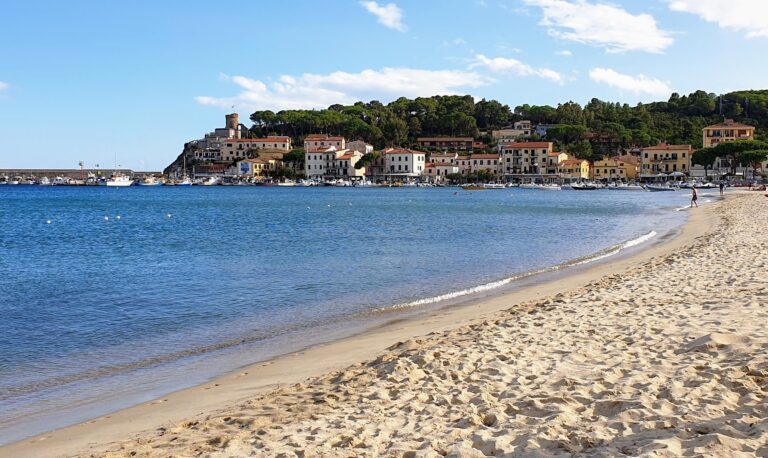
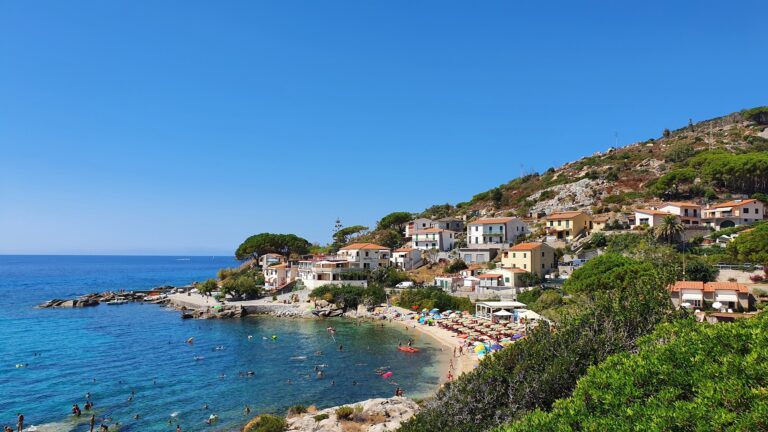
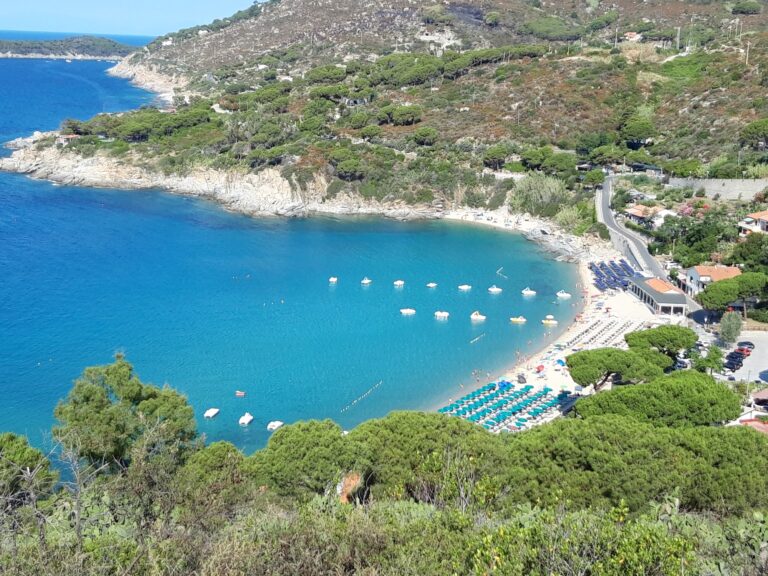
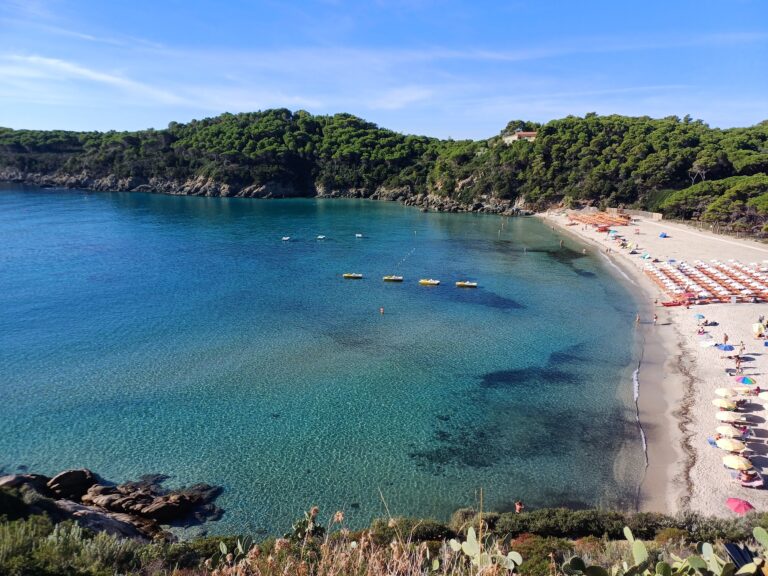
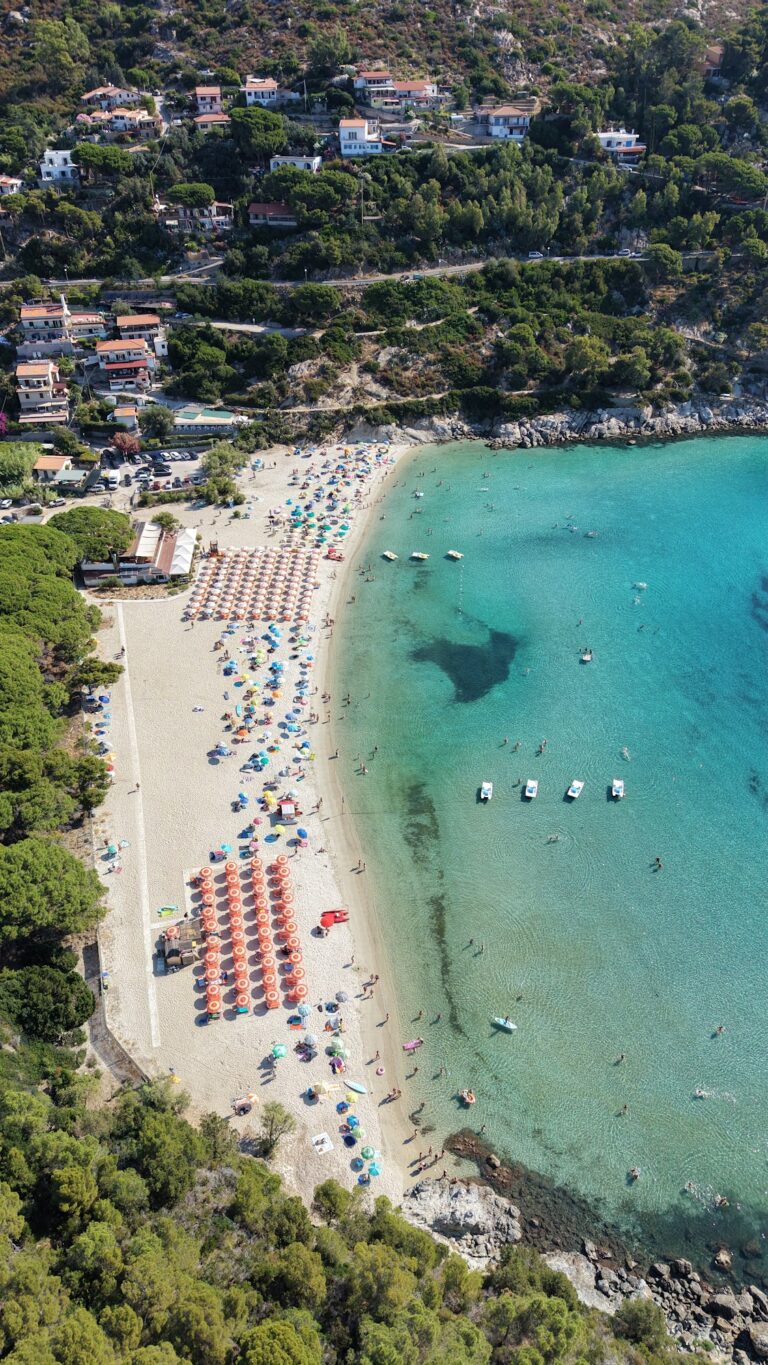
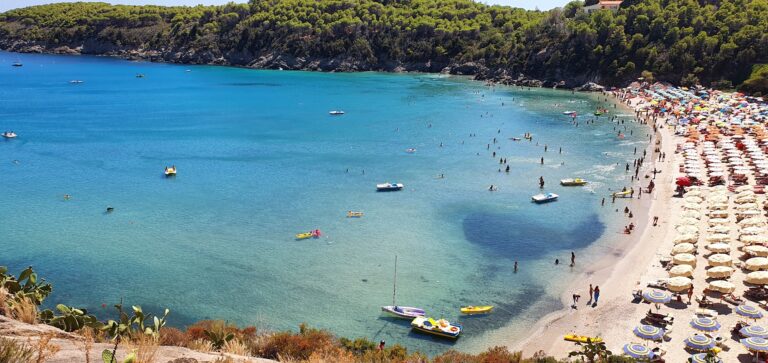
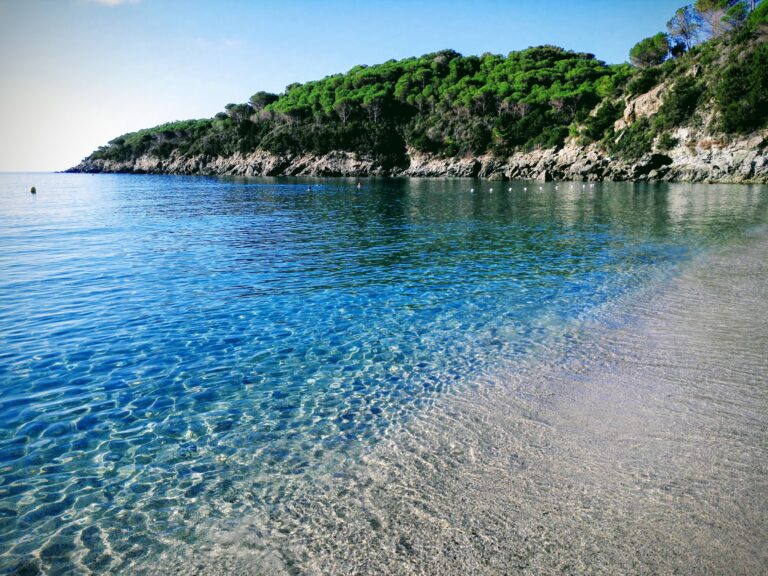
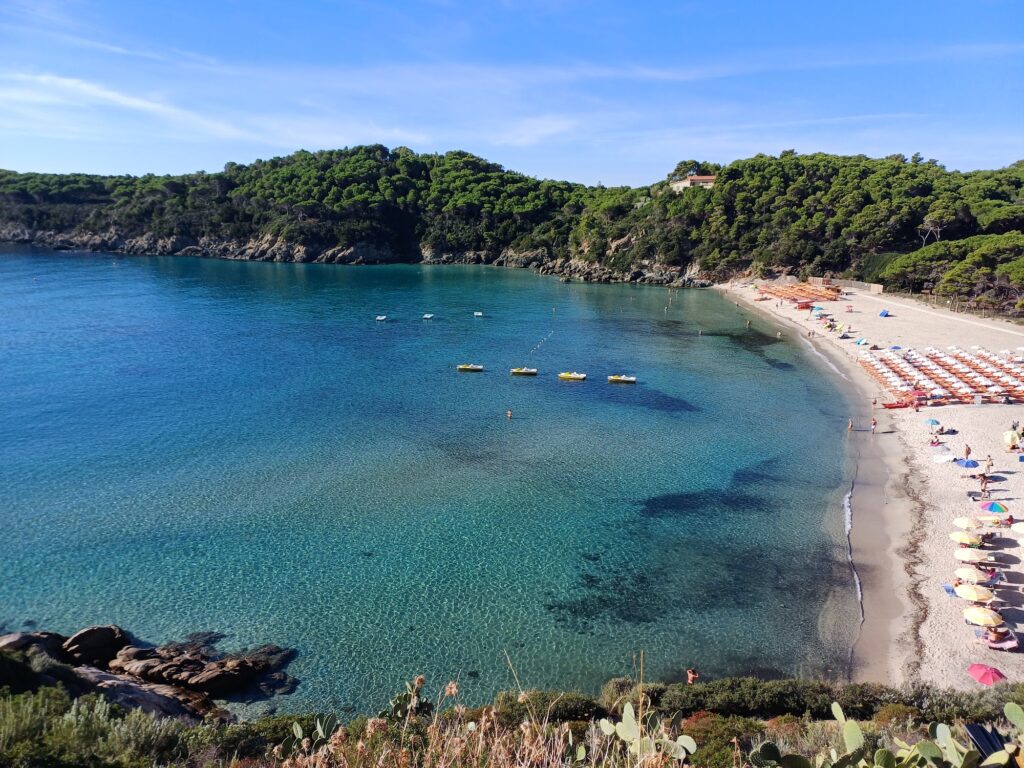
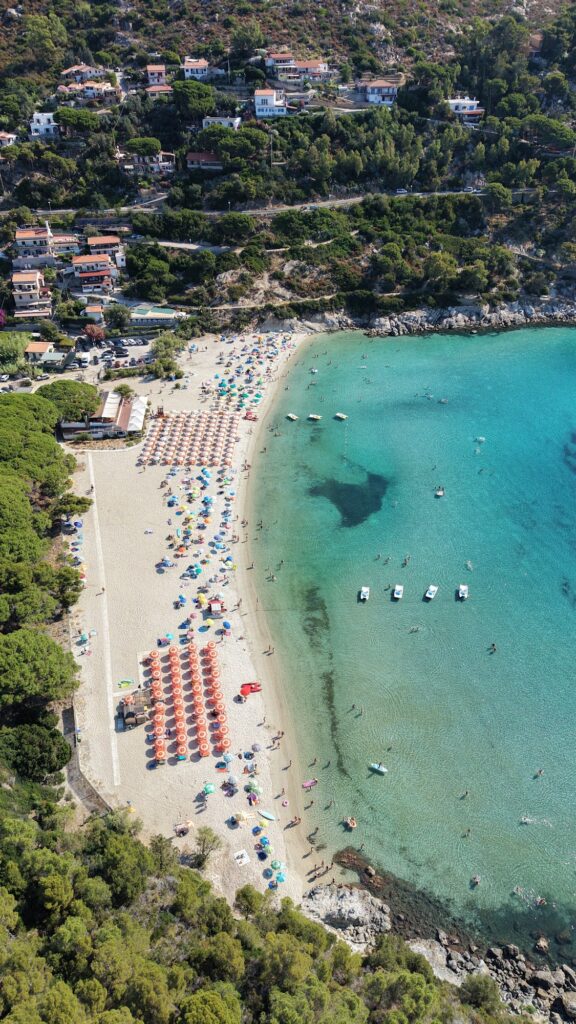
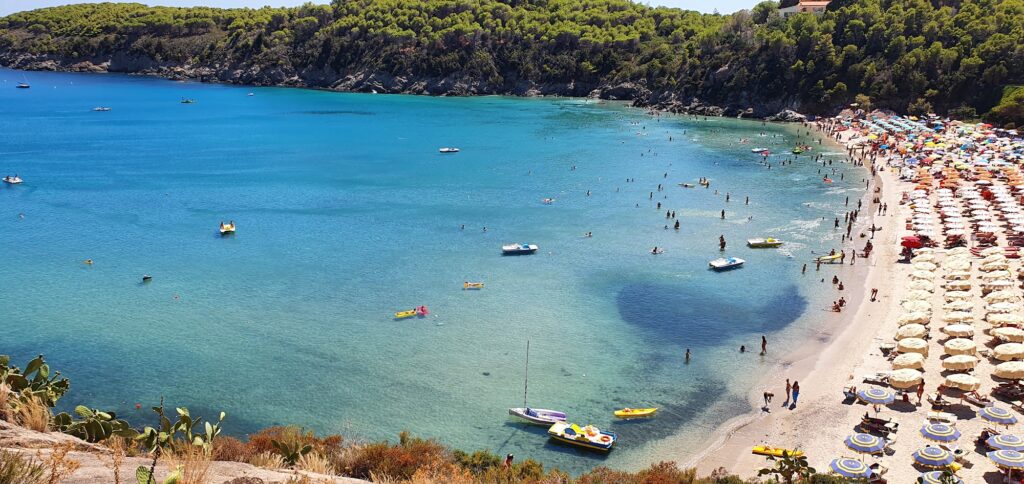
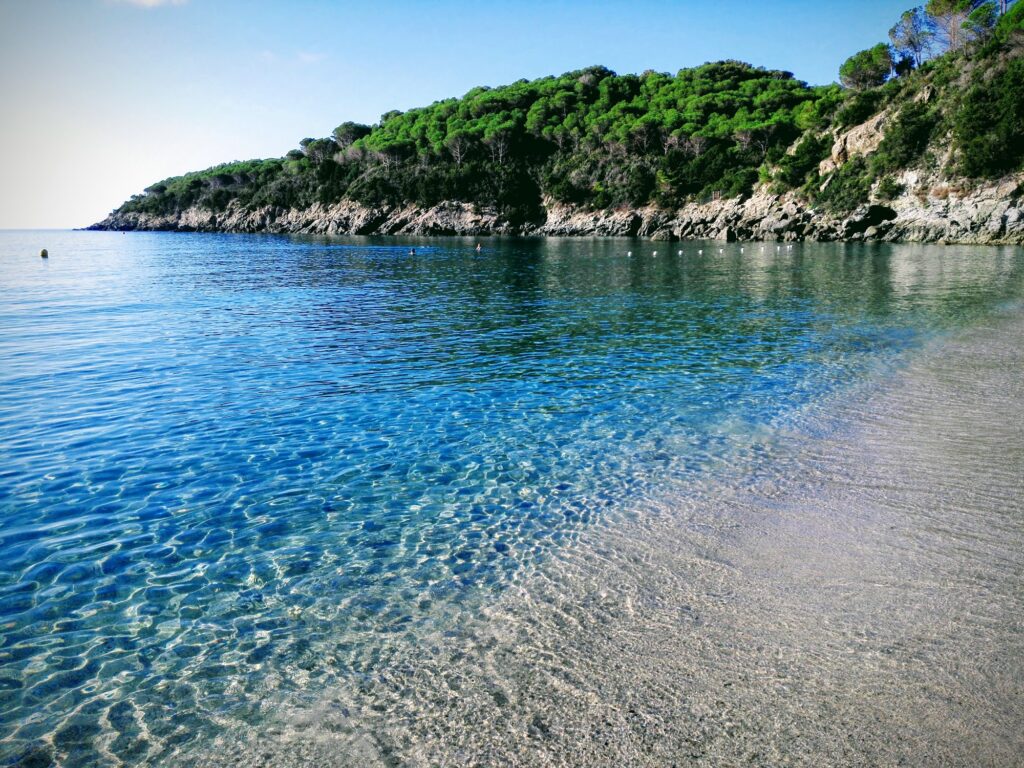
Fetovaia stretches nearly 420 meters, fine, brilliant white-gold sand derived directly from granite erosion, a genuinely soft, walkable surface that stood out clearly against the pebbled and shingled beaches I’d visited elsewhere on Elba’s western coast. An extended green headland reaching nearly 800 meters out into the sea shelters the bay almost completely from wind and swell, and I found the water here staying remarkably calm and mirror-like even on breezier days, shifting through pale glass, aquamarine, and brilliant sapphire depending on the depth.
A Protected Flower Growing Directly on the Sand
The sea daffodil, Pancratium maritimum, grows right on Fetovaia’s beach, protected through a collaboration between the local Costa del Sole association and Legambiente, and I found it worth watching for specifically, a genuinely delicate native species clinging to exactly the kind of sand most visitors walk straight over without noticing.
A Fully Organized Bay Built for a Full Family Day
Several well-run lidos line the sand with cushioned sunbeds and umbrellas, and I found the accessibility here genuinely comprehensive, wooden boardwalks, gentle ramps, and mobility assistance chairs making this one of the more thoroughly barrier-free beaches I encountered on the island. Certified lifeguards patrol through the season, and the gradual, sandy seabed made this a beach I’d recommend confidently for families with young children. Given how thoroughly organized this beach is, I’d expect dogs to need explicit permission at the managed lido sections, consistent with organized Italian beaches generally.
Spaghetti alle Vongole With a View of the Headland
Beach kiosks and open-air seafood restaurants line the sand from early morning through late evening, and I found the spaghetti alle vongole and grilled sea bass genuinely excellent, eaten on a wooden terrace overlooking water that shifted color as the afternoon wore on. As evening arrived, the same bars filled for aperitivo, the sky turning pink over the bay while I lingered over a last glass of local white wine.
Getting There and Settling In
Fetovaia sits about 10 kilometers west of Marina di Campo along the SP25, a fifteen-minute drive with paid and unpaved parking a short flat walk from the sand; from Portoferraio, the SP24 toward Procchio connects to the SP25 south through Marina di Campo and Seccheto for a drive of thirty-five to forty minutes, and the CTT Nord island bus drops passengers at a roadside stop above the beach for a gentle hundred-and-fifty-meter walk down. Anyone touring this stretch of granite coast will find Spiaggia di Chiessi Elba and Spiaggia di Pomonte Elba both further along the same coastal road, each offering a genuinely different character from Fetovaia’s soft, family-friendly sand.
Standing on Sand That Once Built a Roman Temple
By the time I left Fetovaia on my last evening, I found myself thinking about those quarrymen dragging granite blocks down these same slopes by hand, never knowing some of that stone would eventually help hold up a building nearly two thousand years old in Rome, the beach around me now simply offering an ordinary, sun-warmed afternoon to whoever happens to be lying on it.
Map
Sorry, no records were found. Please adjust your search criteria and try again.
Sorry, unable to load the Maps API.
Near by places: