Spiaggia di Sant’Agostino Gaeta: Beach and Via Flacca
Profile
Spiaggia di Sant’Agostino, Gaeta: Where the Roman Via Flacca Walk Begins
Italy | Lazio | Riviera di Ulisse | Gaeta | Via Flacca
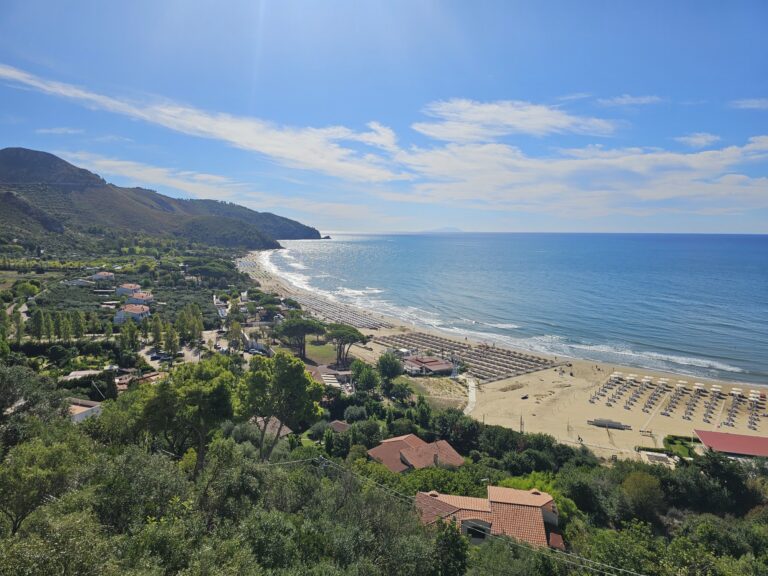
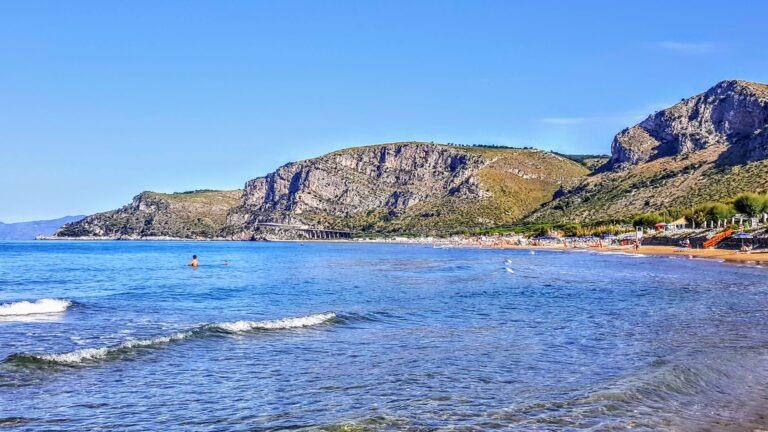
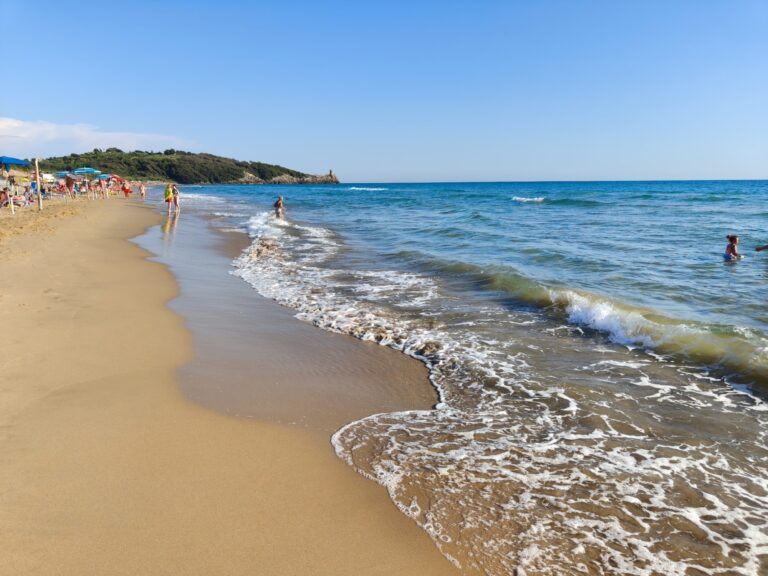
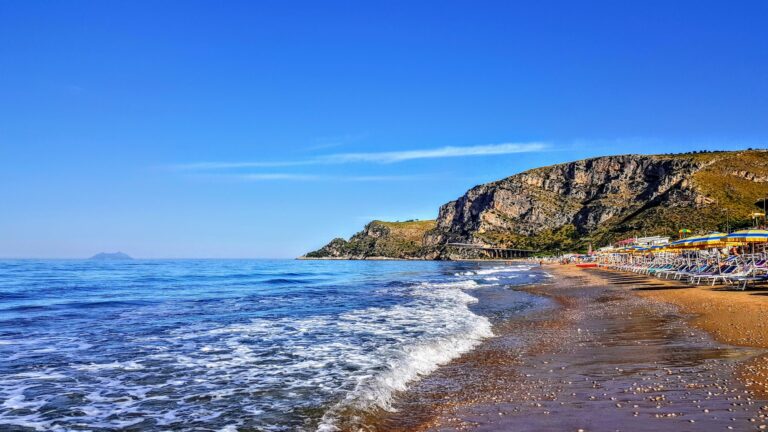
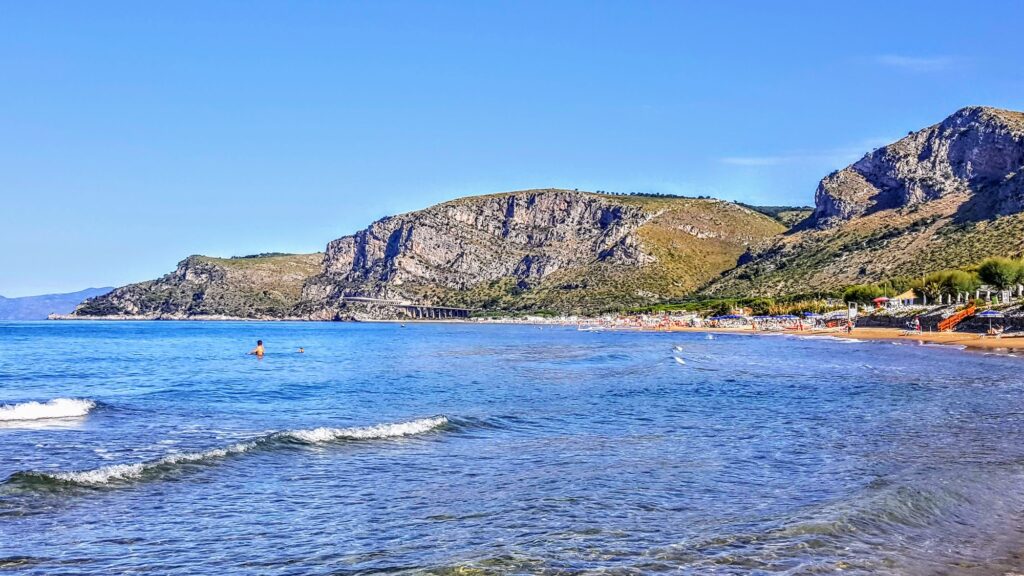
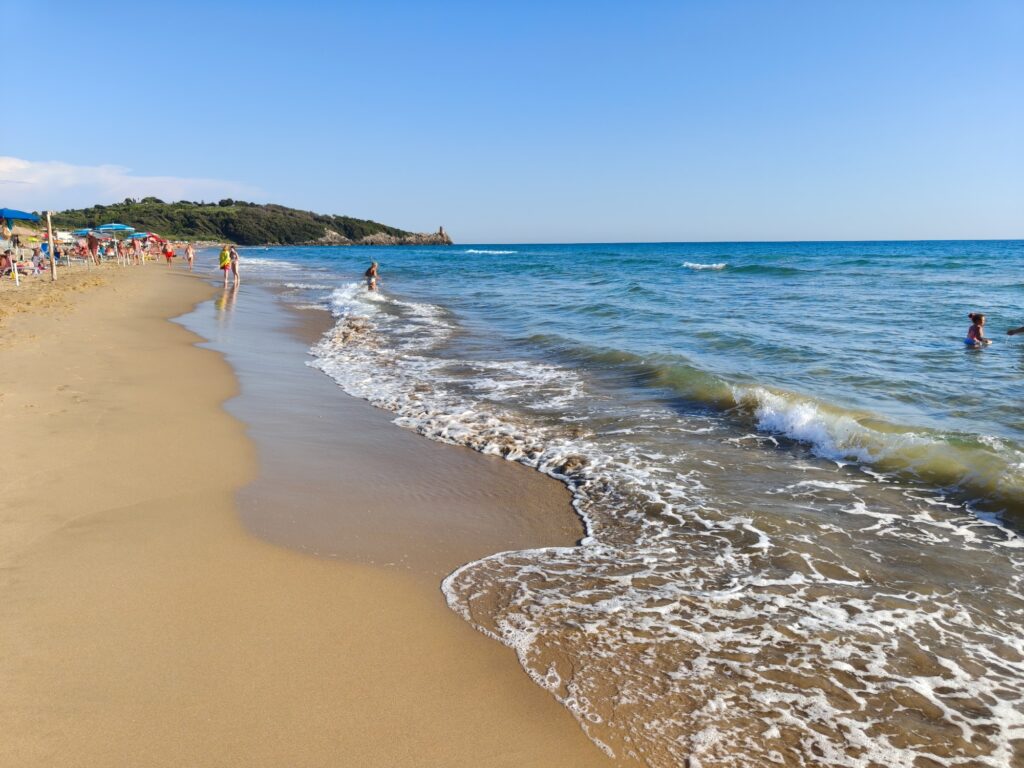
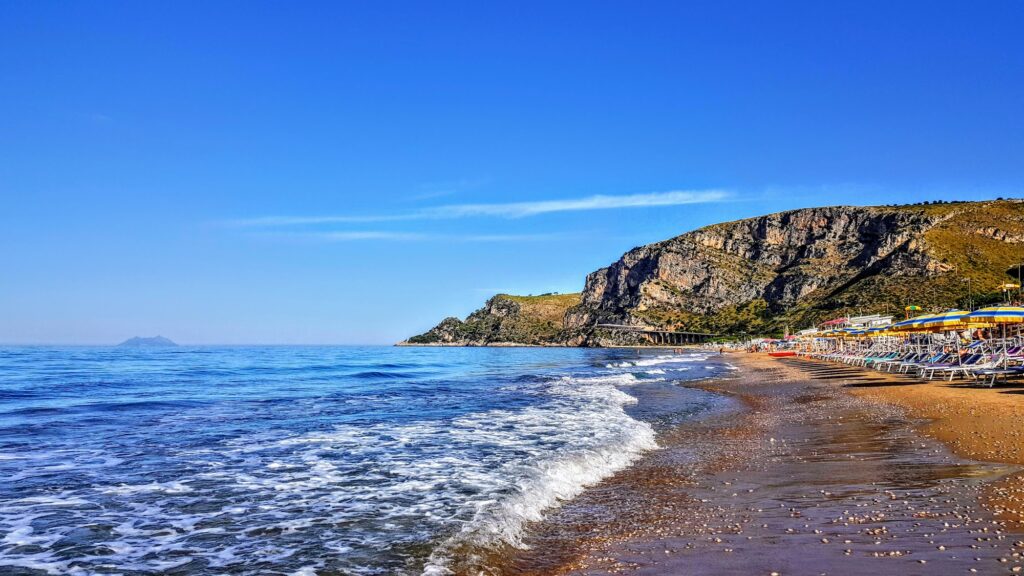
Between Gaeta and Fondi, the ancient Roman road known as the Via Flacca ran through country so scenic that the Roman aristocracy built summer villas along it. A stretch of that road was brought back to light after the regional park Riviera di Ulisse was created in 2003, and it is now a trekking route. The walk begins at Spiaggia di Sant’Agostino, which a regional guide calls the longest and most frequented beach of Gaeta, lapped by deep blue water and enclosed by dramatic rock walls.
The Roman Via Flacca Begins at Spiaggia di Sant’Agostino
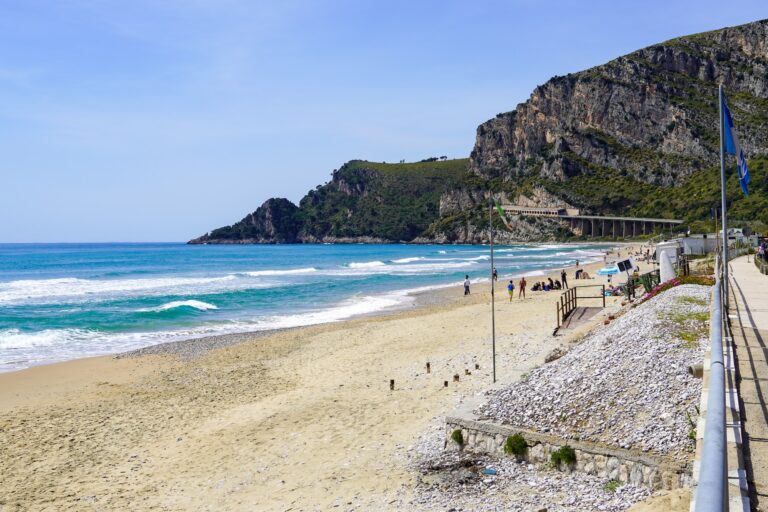
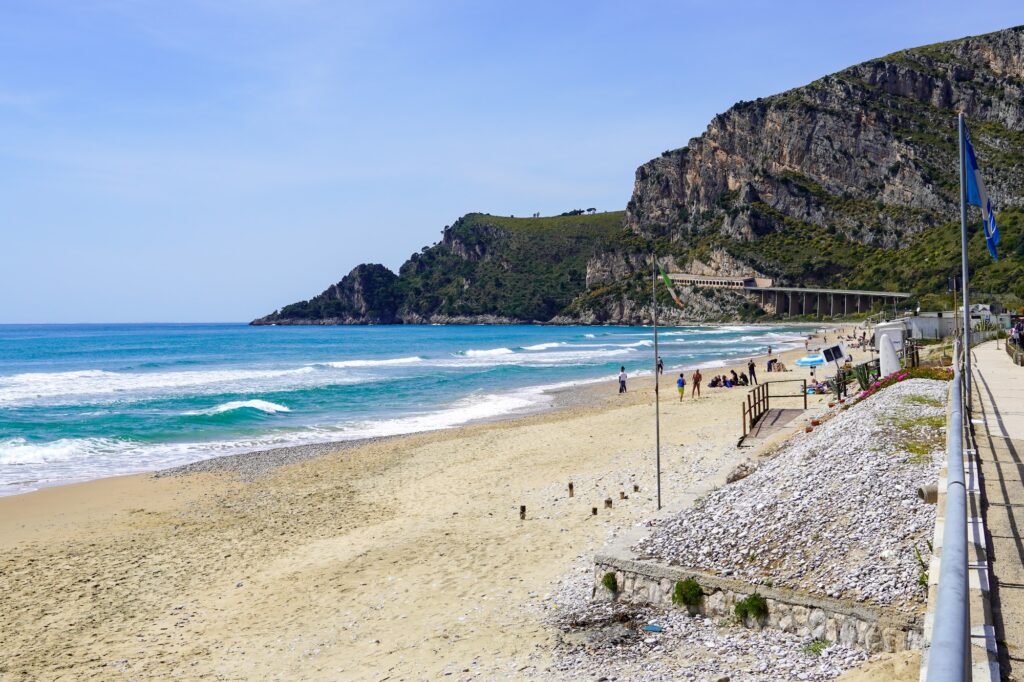
The route leaves the beach toward the rock of Monte Vannellamare, passes under the viaduct of the state road, and follows the verge of that road with care before the ancient stretches of the Via Flacca appear. The guide that describes it is a walking feature, so I have not given distances or durations, and walkers should look up the route before setting out, since part of it runs along a busy road.
The Roman history is the reason to see the beach as more than a bathing spot. The area lies within the Sperlonga natural monument, established in 2002, and the park of the Riviera di Ulisse, established in 2003.
The Longest Beach in Gaeta, Sheltered by Rock Walls
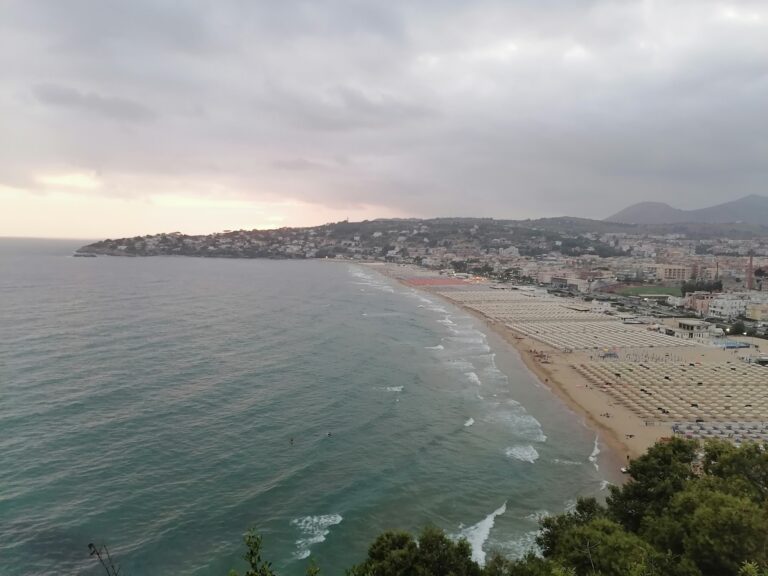
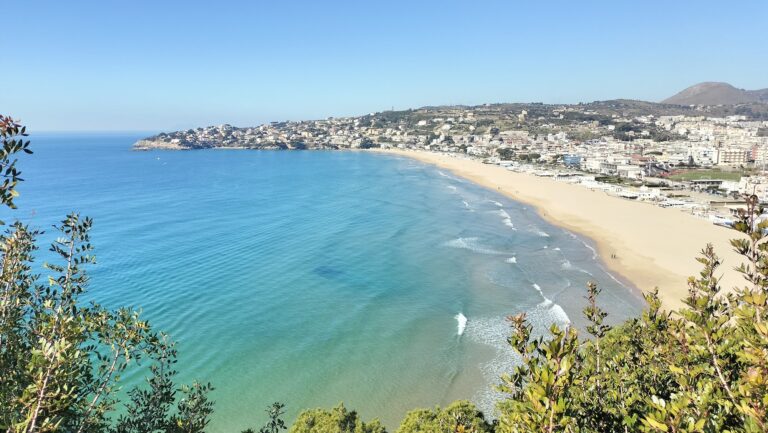
Spiaggia di Sant’Agostino lies along the coast road that runs from Gaeta toward Sperlonga, where the coast is described as becoming even more beautiful, with cliffs plunging into the sea. A family guide to Lazio describes the beach as calm, with a spectacular view over the gulf.
The beach appears with Arenauta and Ariana in the list of Gaeta beaches awarded the Blue Flag in the 2025 edition, and also in 2021, so the record is consistent. Check the current year’s list before quoting it, since the flag is awarded annually.
I could not verify the source’s figure of more than two kilometres, or its claim to be the widest beach on the Riviera di Ulisse, so I have left both out.
Fine Sand and a Gently Sloping Seabed
The family guide describes very fine sand and a particularly gentle seabed, and says the beach is more suited to families than some of the busier ones nearby. That fits the source’s account of a gradual entry, but I could not confirm the depth profile independently, so parents should check where they settle and watch small children.
The source describes the backdrop as volcanic mountains, which is wrong. Guides describe limestone cliffs and rock falls on this coast.
Lidos and Free Sand: What Is Documented
Most of the facilities in the source, such as watersports rentals, volleyball courts, lifeguard stations and shaded parking, could not be confirmed for this beach, and I could not find a lido directory listing for it. Visitors should expect a mix of lidos and free sand, as on the neighbouring Serapo bay, and should ask each lido what it provides.
I could not find a rule on dogs. Italy has no national ban on dogs at beaches. Access is set by municipal and regional ordinances, and a private lido sets its own rules, so check the notices at the entrance and ask before paying.
Reaching the Beach Along Via Flacca
The beach lies on the coastal Via Flacca, the road that links Gaeta with Sperlonga, and the road is a state highway, SR213. In high season, guides to the neighbouring Sperlonga beaches warn that parking along Via Flacca fills quickly, so arrive early. I could not verify the journey times, the bus stops, the rail connections or the roads from Rome and Naples described in the source, so use a navigation app with the beach name. For the main beach and lidos of Gaeta itself, see Spiaggia di Serapo Lido Miramare and ###Palm Beach Gaeta Serapo.
An Hour Before Leaving
Look up at the rock wall behind the sand and think of the Roman road that ran above it.
Map
Sorry, no records were found. Please adjust your search criteria and try again.
Sorry, unable to load the Maps API.
Near by places: