Balzi Rossi: A 144-Year Mistake Finally Corrected
Profile
Balzi Rossi: A 2016 Study Finally Corrected What a 1872 Excavation Got Wrong About Who Was Buried Here
Italy | Ventimiglia | Liguria
In 1872, the French doctor and amateur prehistorian Émile Rivière excavated a skeleton from the Cavillon cave, one of the caverns directly above this beach, and identified the remains as a robust man — a finding that stood essentially unchallenged for more than a century, under the name “Man of Menton.” It took until 2016, when a team led by French archaeologist Henry de Lumley completed a fresh anatomical study, to establish that the skeleton actually belonged to a woman of about 37, who had given birth at least once. She’s known properly now as the Dame du Cavillon, the Lady of Cavillon, and her face has been reconstructed and put on display in the museum a short walk from where I stood on the pebbles below. I find something quietly important about a 144-year gap between a discovery and getting the basic facts of it right.
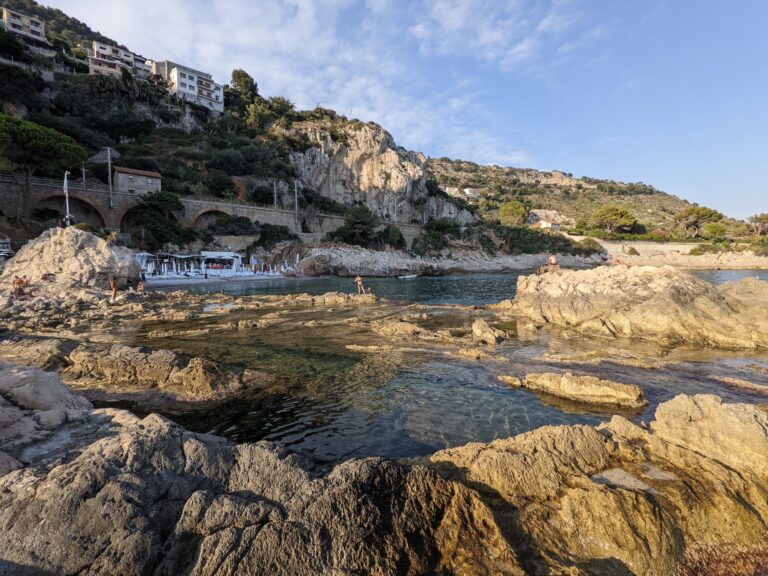
The caves themselves, called baussi rossi — red rocks — in the local Ligurian dialect, sit at the foot of a dolomitic limestone cliff dating to the Jurassic period, divided into two groups by the railway line that was built straight through the site in the 1870s. Riparo Mochi, one of the shelters here, holds evidence considered the earliest known presence of modern humans anywhere in Europe, dated to roughly 35,000 years ago. Beyond that, the caves have produced burials spanning from around 230,000 years ago to the most recent prehistory, including a genuinely striking triple burial discovered in 1892 — an adult and two younger men laid to rest together with flint blades, perforated sea shells, fish vertebrae, and deer-tooth pendants, work that the British patron Sir Thomas Hanbury later helped fund a proper museum building for, completed in 1898.
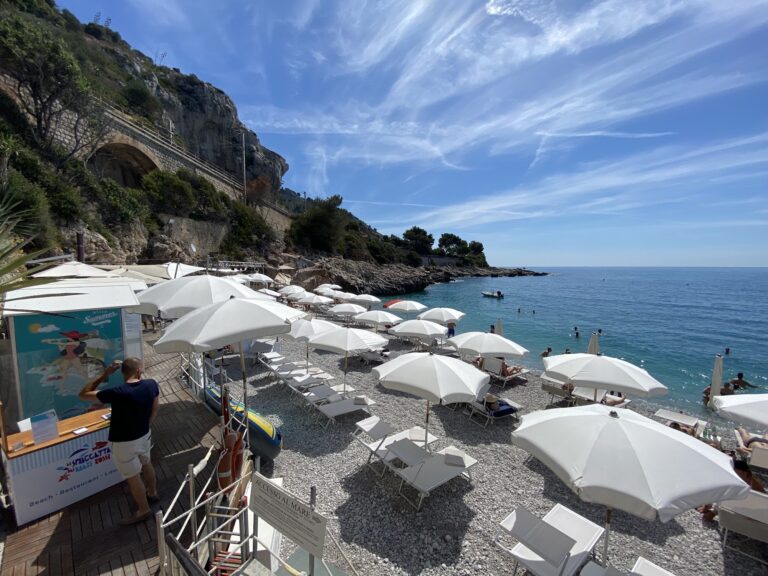
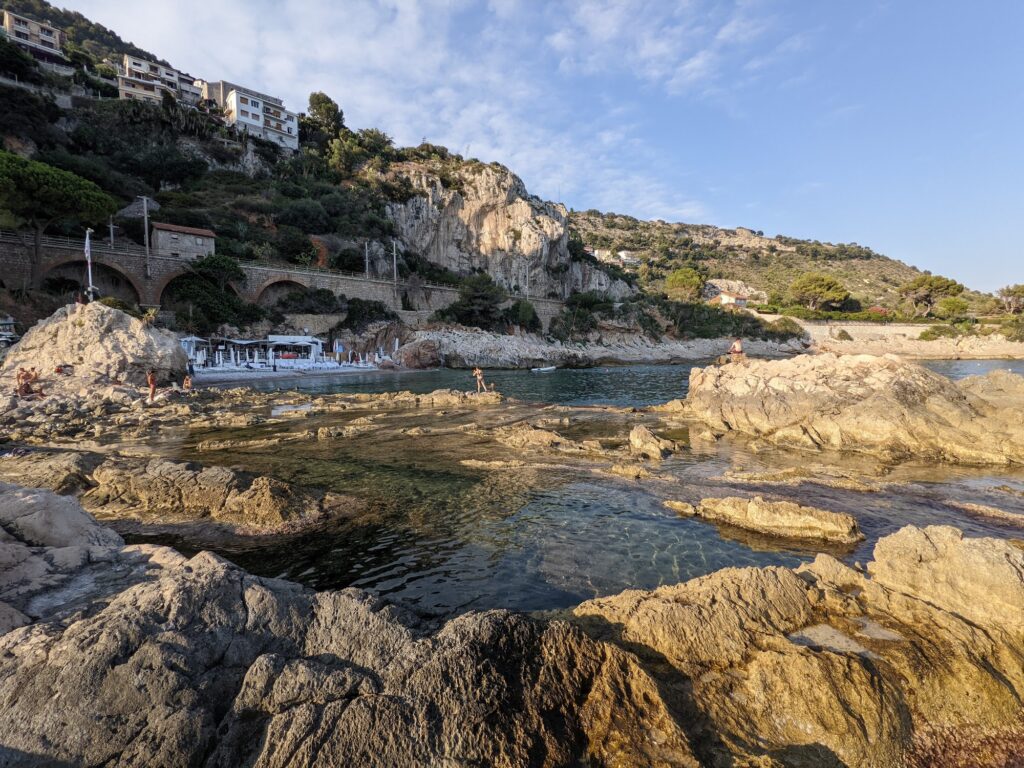
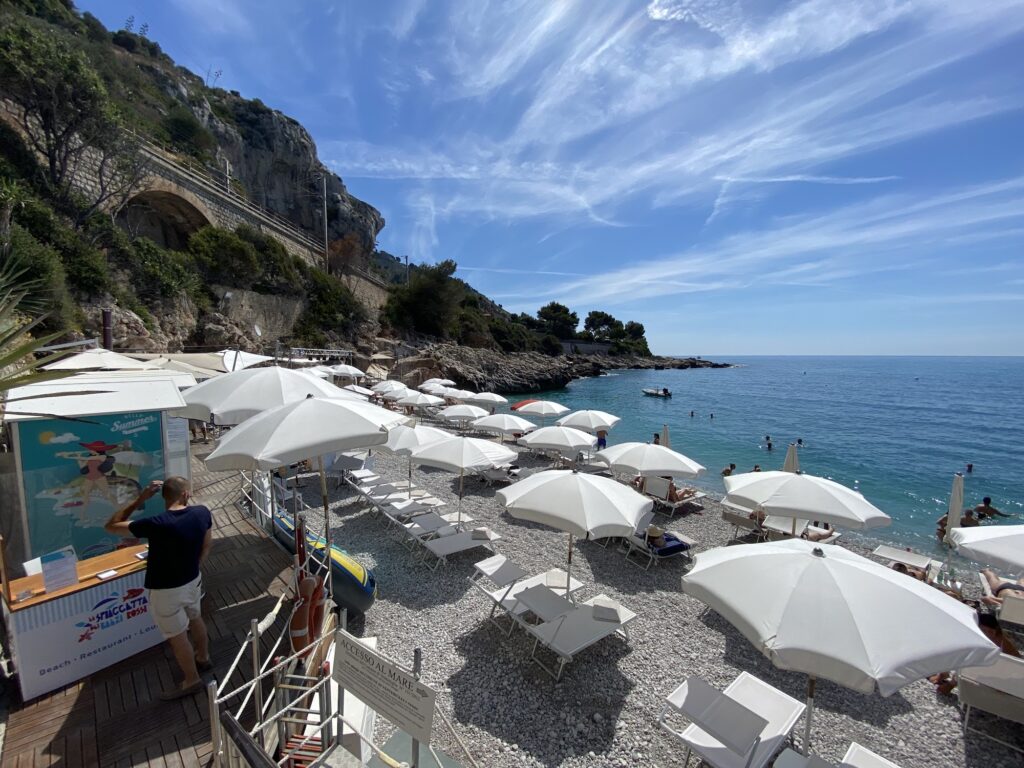
Locally, the beach itself carries its own much simpler name: la spiaggia delle uova, the beach of eggs, for the smooth, oval white pebbles that cover the shore — a far less grand title than anything tied to the prehistoric finds, and one I actually preferred once I’d heard it, since it described exactly what was under my feet rather than anything I had to take on faith.
Getting There: Right on the Italian Side of the French Border
I drove west from Bordighera along the SS1 Via Aurelia, the coastal road tracing the cliffs almost the whole way, watching for the sign toward the Balzi Rossi prehistoric museum just before the Menton border crossing. A parking area sits above the cliff path, a short walk from the beach itself.
By train, Ventimiglia’s central station connects easily by local taxi or a short walk to the Balzi Rossi area, the route running along the old Via Iulia Augusta, a genuine Roman road, for the final stretch — a detail that struck me on the walk in, realising I was approaching a 230,000-year-old archaeological site along a road that was itself already ancient by most ordinary standards.
The Beach: Smooth White Pebbles, Deep Clear Water, the Cliffs as Shelter
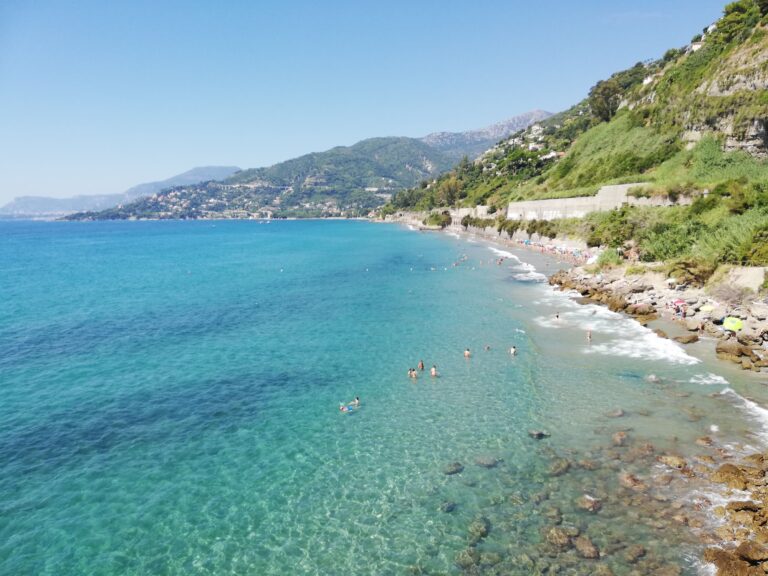
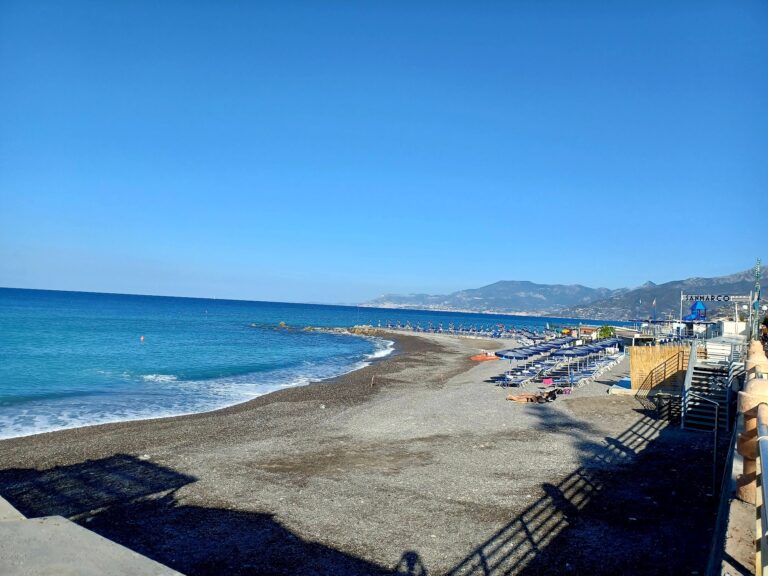
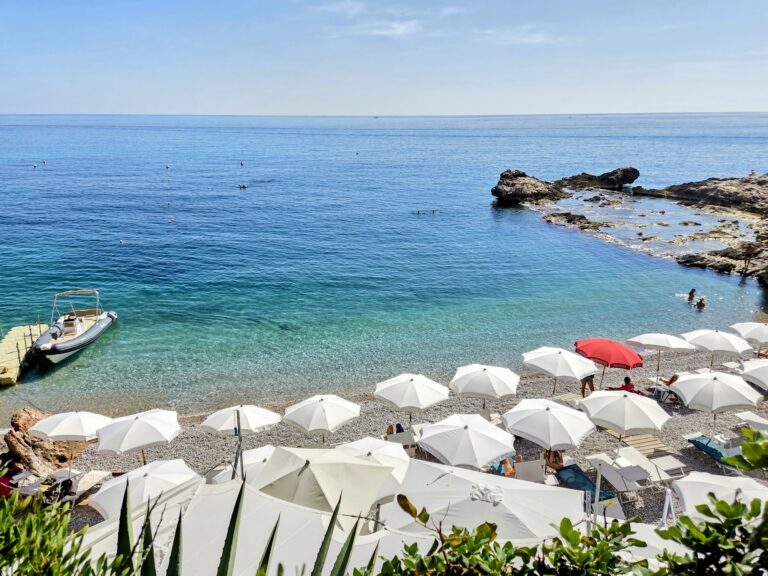
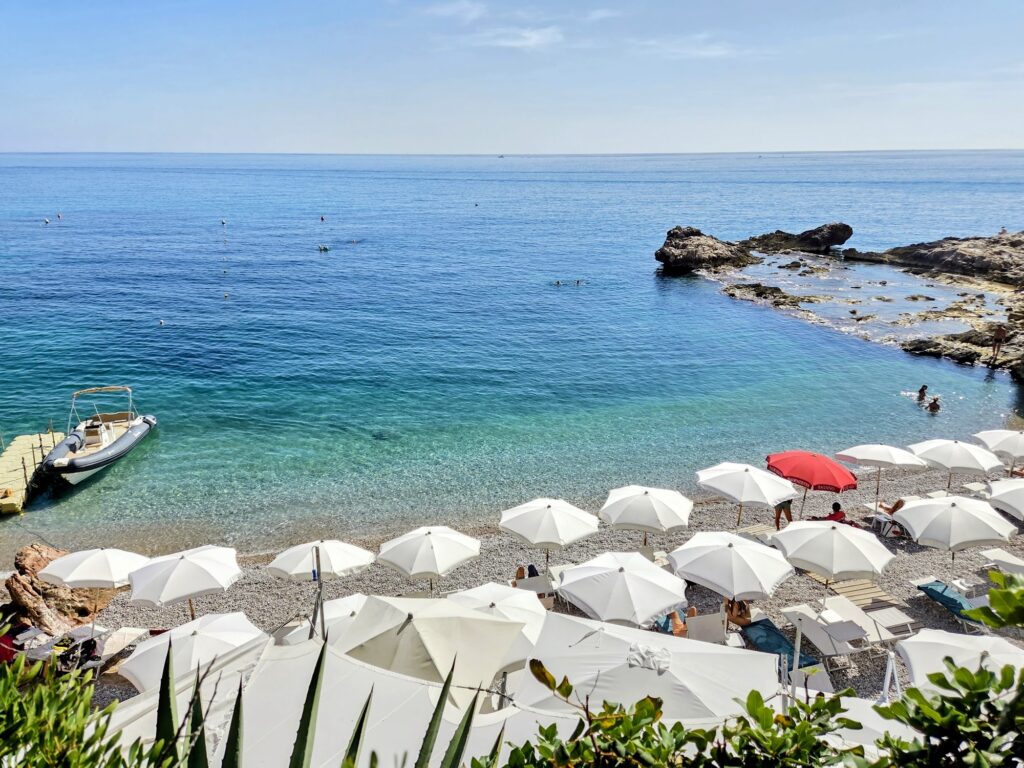
The shore is entirely pebble, the oval stones smooth enough underfoot that I didn’t bother with water shoes, sloping into water that deepened more quickly than I expected so close to shore. The cliffs shelter the cove well from wind, and the water held a clarity I hadn’t anticipated this close to a working railway line and a border crossing — clean, clear, genuinely good for snorkelling along the rockier edges where the museum’s protected zone keeps motorised boats well offshore.
The Museum and the Caves Themselves
The Balzi Rossi Prehistoric Museum, redesigned in 1994, sits a short walk from the beach and includes a marked path through several of the caves themselves — the Cave of Conte Costantini, the Children’s Cave, the Florestano Cave, and Cavillon, where the Lady’s remains were found. Many of the original artefacts, including a series of small female figurines known as the Balzi Rossi Venuses, are now held in Paris rather than on site, scattered across European collections as a result of the border location and the international teams who worked here over nearly two centuries — a detail I found a little sad, walking through galleries that described finds I couldn’t actually see in person.
The beach at Balzi Rossi, on Italy’s border with France near Ventimiglia, sits beneath caves that have produced evidence of human habitation stretching back roughly 230,000 years, including the earliest known presence of modern humans in Europe at Riparo Mochi, and a 1872 burial discovery whose sex was misidentified for over a century until a 2016 study finally confirmed the skeleton belonged to a woman. Locally, the cove is known more simply as the beach of eggs, for the smooth white pebbles covering the shore. Clear, deep water, sheltered by the cliffs, with the prehistoric museum and several of the original caves a short walk away.
Take the SS1 west from Bordighera, or the train to Ventimiglia and a walk along the old Via Iulia Augusta. Visit the museum and the Cavillon cave before or after the swim. Look for the oval white pebbles that gave the beach its local name.
Map
Sorry, no records were found. Please adjust your search criteria and try again.
Sorry, unable to load the Maps API.
Near by places: