Paralia Myrodatou: Thrace's 1km Blue Flag Sandy Shore
Profile
Paralia Myrodatou, Xanthi, Greece: The 1km Blue Flag Sandy Shore in Thrace, Where Democritus Was Born and the Egnatia Odos Is 25 Minutes Away
Greece | Myrodato | Xanthi Regional Unit, Thrace
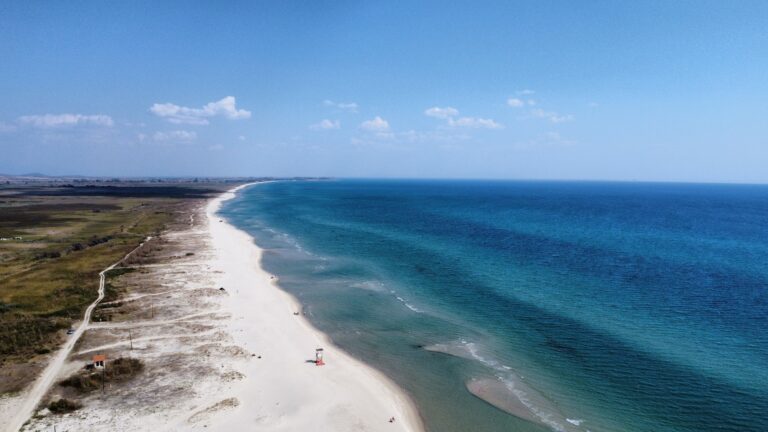
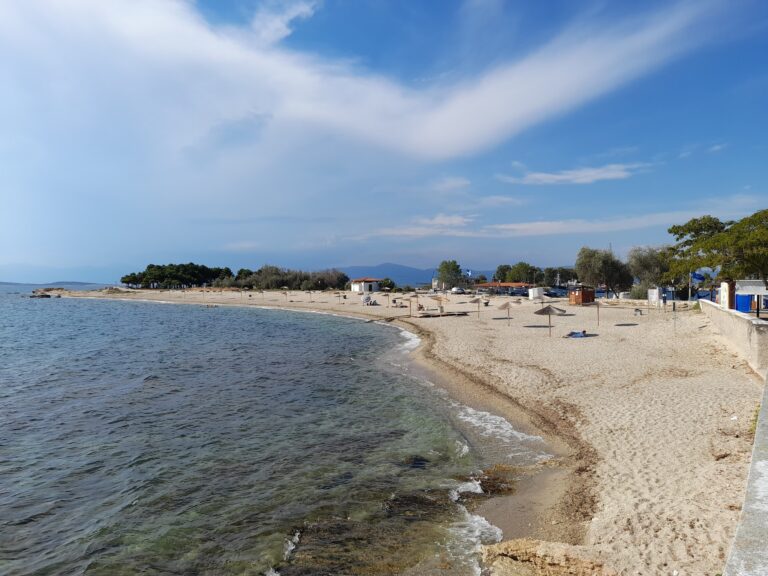
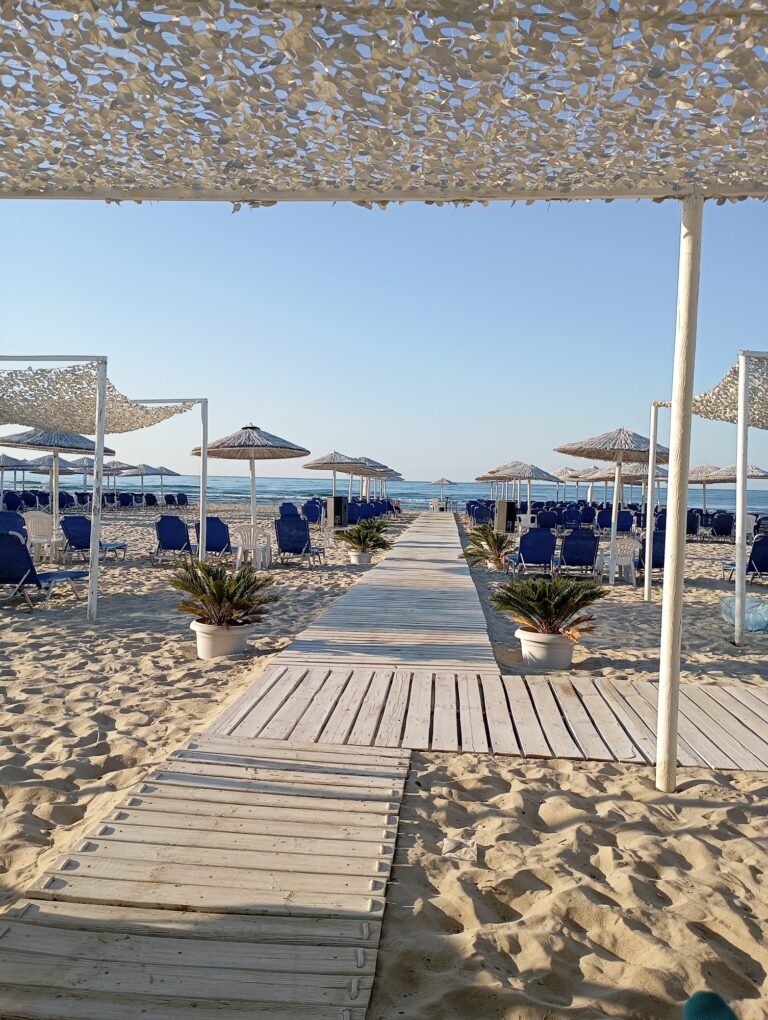
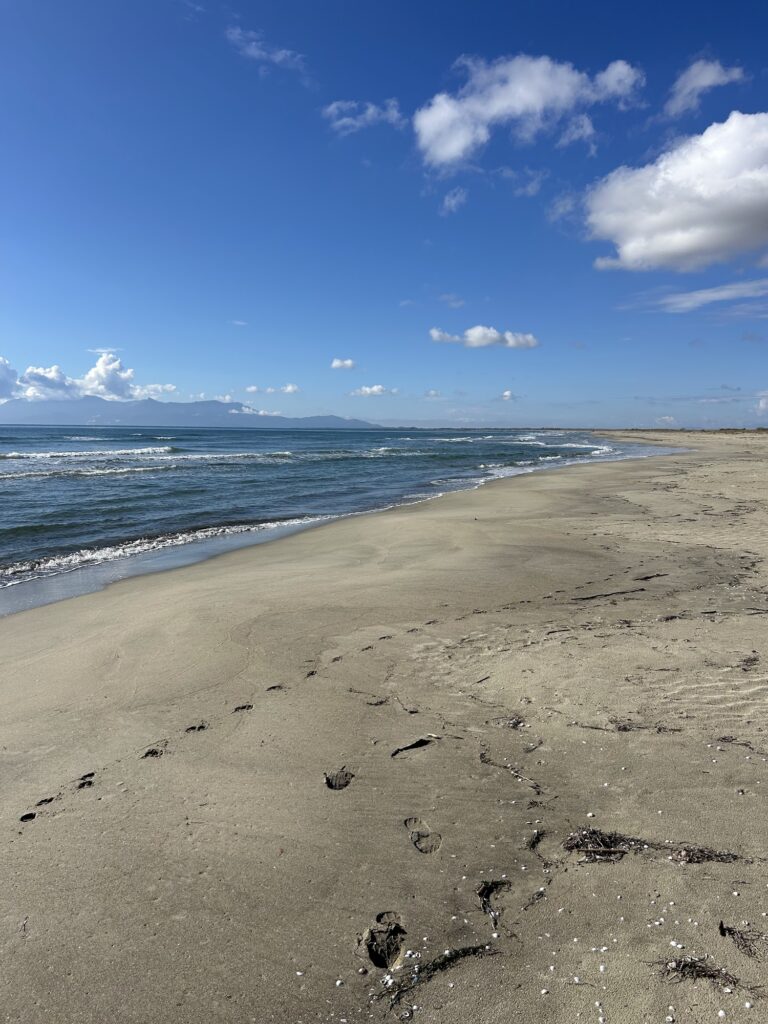
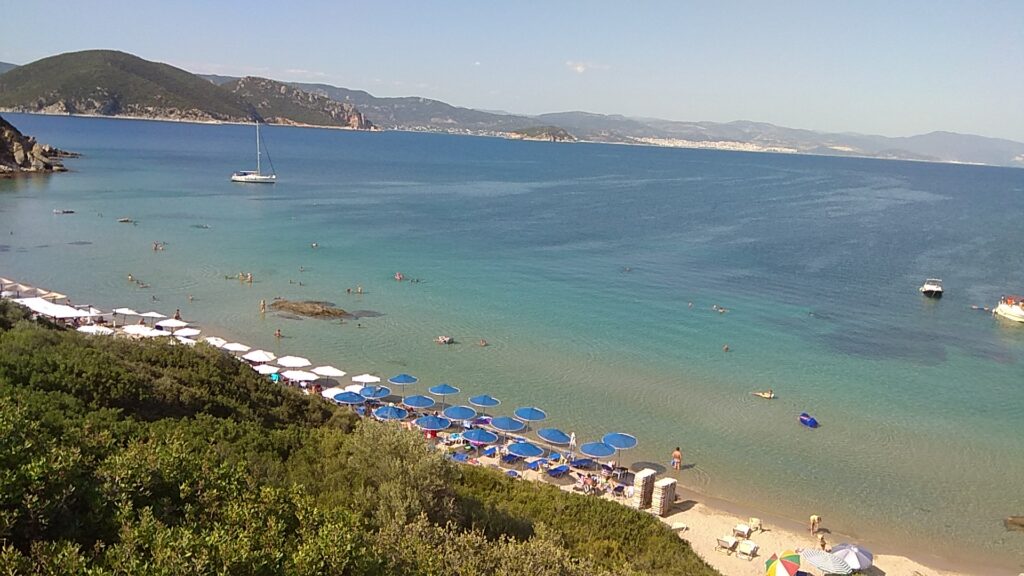
Myrodato Beach has a length of 1,000 metres and a width of 50 metres. It lies in a rural area grown with acacias, poplars, mulberries, and planes as well as bulrush.
The botanical description of the hinterland is the specific sense-memory of Paralia Myrodatou: the acacia, poplar, mulberry, and plane trees that form the shade belt behind the beach are the agricultural and semi-wild woodland of Thrace’s coastal plain, different from the pine forests of Halkidiki and the Aegean island landscapes. Myrodato Beach carries the Blue Flag consistently — the water quality in this stretch of the Thracian Sea is reliably clean, and the municipality of Avdera maintains the facility standards that the award requires.
Paralia Myrodatou is 26 kilometres south of the city of Xanthi and is administered by Avdera Municipality — named after the ancient city of Avdera that sits on the promontory to the west. Avdera is the birthplace of Democritus (c.460–370 BC), the philosopher who first proposed the atomic theory of matter, and of Protagoras (c.490–420 BC), whose dictum “Man is the measure of all things” is the founding statement of relativist philosophy. The archaeological site of Avdera is one of the most significant in Thrace.
Getting There: 26km South of Xanthi, Exit off the Egnatia Odos, Road Through Agricultural Landscape
From Xanthi, the drive south takes approximately 25 minutes. Follow the road toward Myrodato village, then continue to the coast. The road is well-paved throughout and passes through the flat agricultural plain of the Thracian coast — the tobacco fields, sunflower plantations, and woodland patches that characterise the landscape between the Egnatia Odos and the sea.
From the Egnatia Odos (A2), take the Xanthi/Abdera exit and follow signs for the coast. From Kavala to the west, the journey takes approximately 45 minutes. From Alexandroupoli to the east, approximately 1 hour.
There is road access through the local road network. During the summer season there are frequent bus routes to the beach that fulfil all requirements.
There is an organised parking area directly behind the beach bars, described as large enough for camper vans. The beach’s mainland position means there are no ferry crossings, no island pricing, and no boat schedule to manage.
The Beach: 1km Sandy, 50m Wide, Shallow, Acacia Woodland, Organised and Free Sections
It is a sandy beach, 100 metres from which one can find rooms to let.
The 1,000-metre length is the primary quality. The width of 50 metres means a spacious beach even on busy summer weekends. The seabed slopes almost imperceptibly in the shallow entry zone — there are no sport facilities or cars and motorbikes for hire in the area.
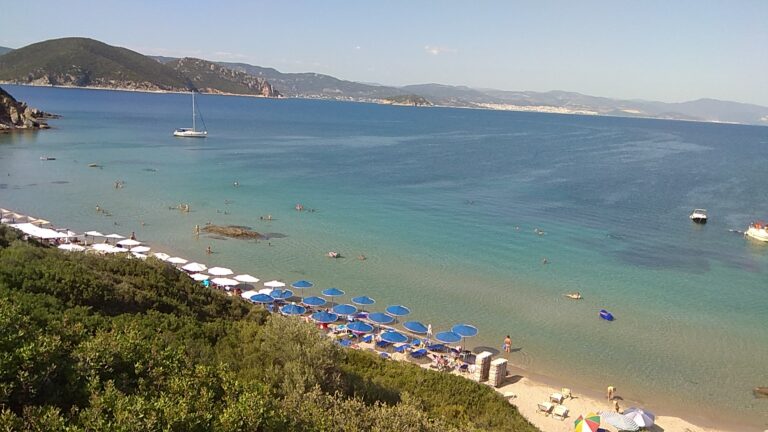
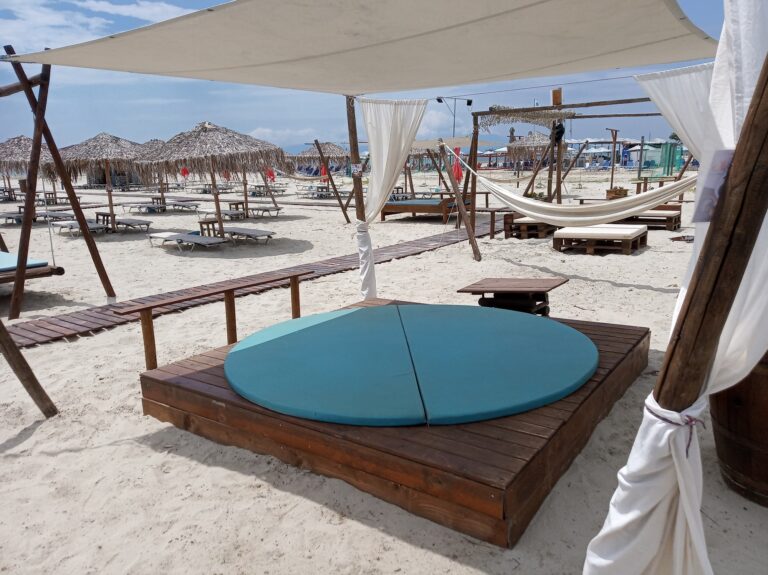
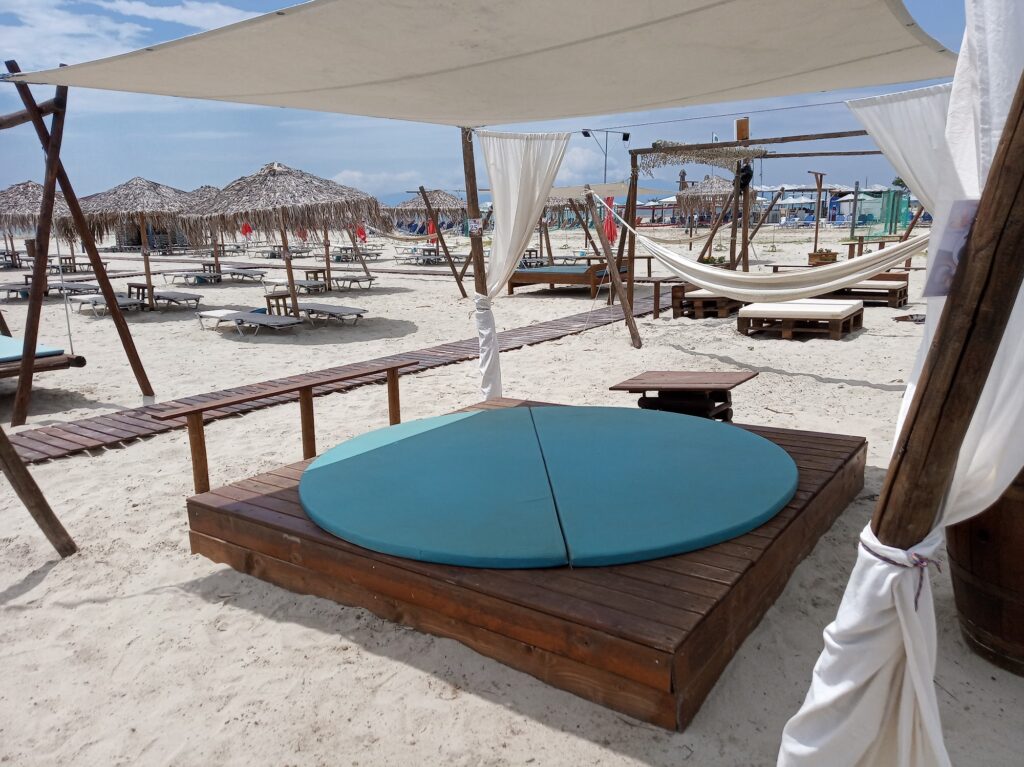
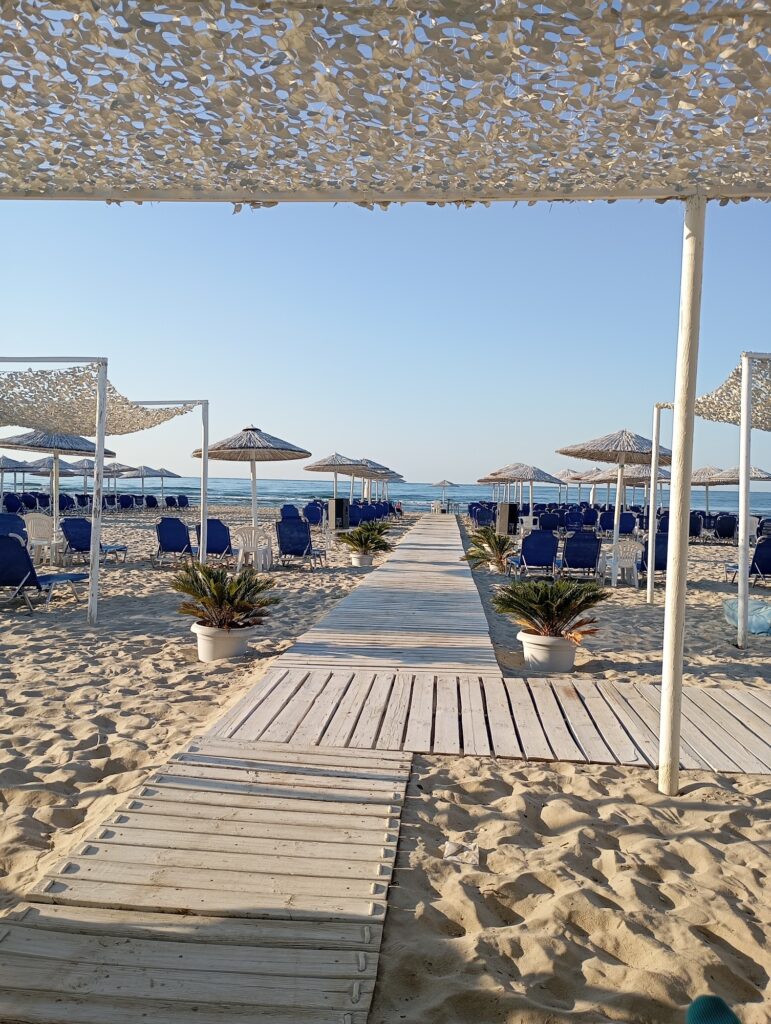
The organised beach clubs provide sunbeds, umbrellas, and bar service on the central section. The sections north and south of the organised zone are free and uncluttered — the scale of the beach means the organised section occupies a fraction of the full length and the majority remains open space.
The acacia woodland behind the beach is the natural shade provision. The bulrush wetland at the beach’s edge is the specific natural transition zone between the agricultural plain and the sea — the habitat that gives Myrodato its character as a mainland coastal beach rather than a resort strip.
Avdera: The Birthplace of Democritus and Protagoras
The municipality of Avdera that administers the beach takes its name from the ancient city built on the coastal promontory approximately 5 kilometres west. Ancient Avdera was founded in the 7th century BC and became one of the most significant cities of ancient Thrace — a member of the Delian League, a major commercial port, and the birthplace of two of the most important philosophers of the ancient world.
Democritus proposed that all matter is composed of indivisible particles called atomos (atoms) in the 5th century BC — the first formulation of atomic theory. Protagoras’ claim that “Man is the measure of all things” was the philosophical provocation that Plato and Aristotle spent significant effort refuting, which is part of why it survives. The Archaeological Museum of Avdera and the excavation site of the ancient city are accessible from the beach.
The Thracian Sea and the Vistonida Lagoon
The Thracian Sea — the northern part of the Aegean between the Greek mainland coast and the island chain of Samothrace, Lemnos, and Thassos — produces the specific conditions at Myrodato: shallower than the open Aegean, warmer in summer, less exposed to the main Meltemi swell, and with the specific clarity that the limited river input and the clean marine environment of this coast maintains.
Vistonida Lagoon — one of the most ecologically important wetlands in Greece, a Ramsar-listed site and Natura 2000 habitat — is approximately 20 kilometres west of Myrodato in the Rodopi Regional Unit. The lagoon is the summer feeding habitat for flamingos and a year-round Important Bird Area. The combination of the beach day at Myrodato and a lagoon birdwatching programme at Vistonida is the specific northern Thrace natural history programme.
The Culinary Context: Thracian Seafood, Ouzo, Tobacco Country
Thrace is Greece’s tobacco country — the flat fertile plain between the Rhodope mountains and the sea was developed for tobacco cultivation under Ottoman and then Greek governance, and the landscape remains dominated by tobacco fields even as the crop’s commercial importance has declined. The agricultural character of the hinterland translates into a restaurant culture that favours fresh local produce and freshly caught fish from the Thracian Sea over the tourist-menu format.
The fish tavernas behind the beach — the Thracian tradition of fresh-caught Aegean fish served with locally produced ouzo and the northern Greek white wines — is the specific culinary programme that makes Paralia Myrodatou a destination for Greek domestic food tourism as well as a beach.
Paralia Myrodatou in Xanthi, Thrace, is the 1-kilometre Blue Flag sandy shore in the rural acacia woodland behind the Thracian Sea — 50 metres wide, shallow warm water, 26 kilometres south of Xanthi and 25 minutes from the Egnatia Odos, in Avdera Municipality named after the birthplace of Democritus and Protagoras, the Vistonida flamingo lagoon 20 kilometres west, and the archaeological site of Ancient Avdera 5 kilometres east.
Drive south from the Egnatia. The acacia woodland announces the coast before the sea appears.
Map
Sorry, no records were found. Please adjust your search criteria and try again.
Sorry, unable to load the Maps API.
Near by places: