Agii Saranta Beach Pelion: The Rock With No Way Down
Profile
Agii Saranta Beach, Pelion: A Rock Called the Monk, Where the Climb Permits No Return Except by Diving
Greece | Zagora | Magnesia, Pelion, Thessaly
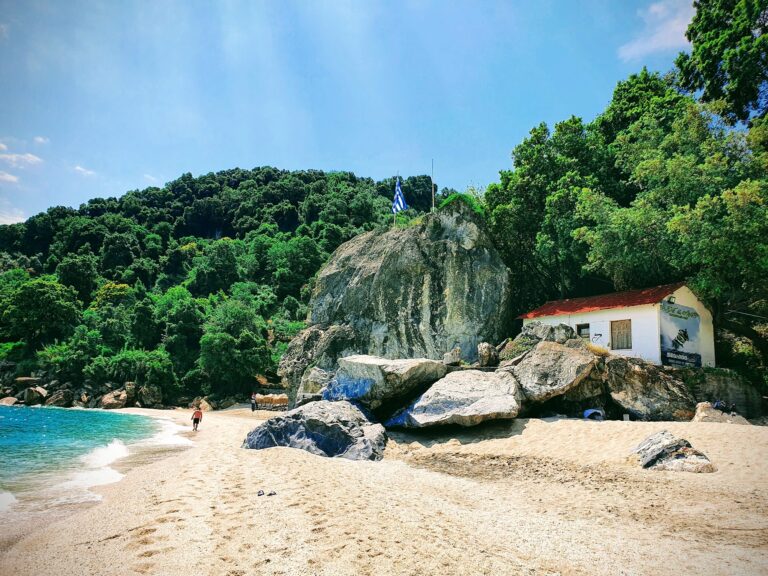
The name Agii Saranta — the Forty Saints — derives from a small chapel of that dedication standing near the beach. The same naming convention applies to the rock formation that has become the beach’s defining feature: Kalogeros, meaning the monk, also takes its name from a nearby chapel rather than from the rock’s resemblance to a robed, kneeling figure, though that resemblance is what most visitors notice first and remember longest.
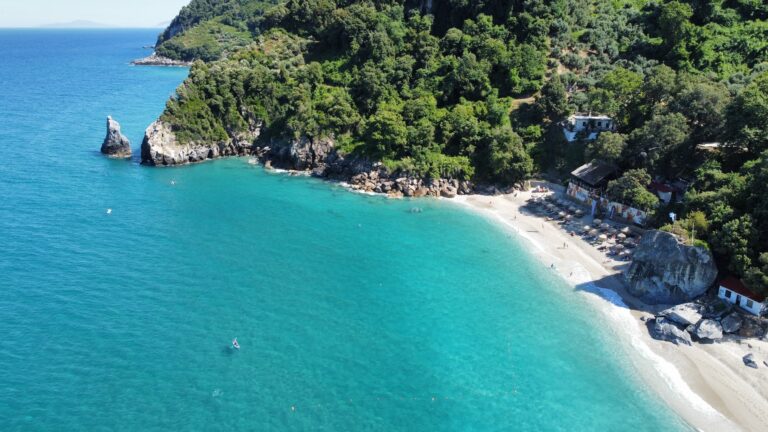
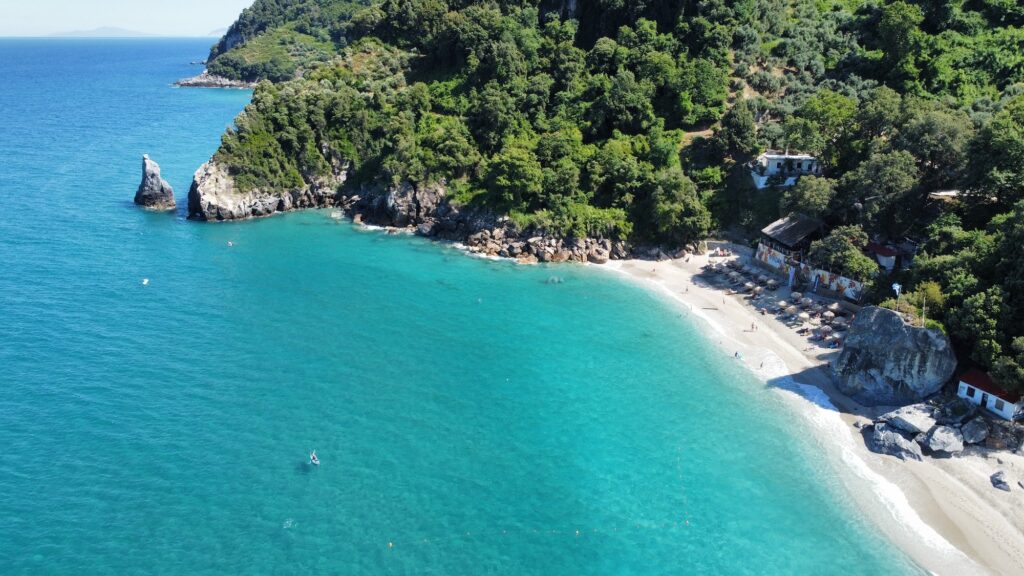
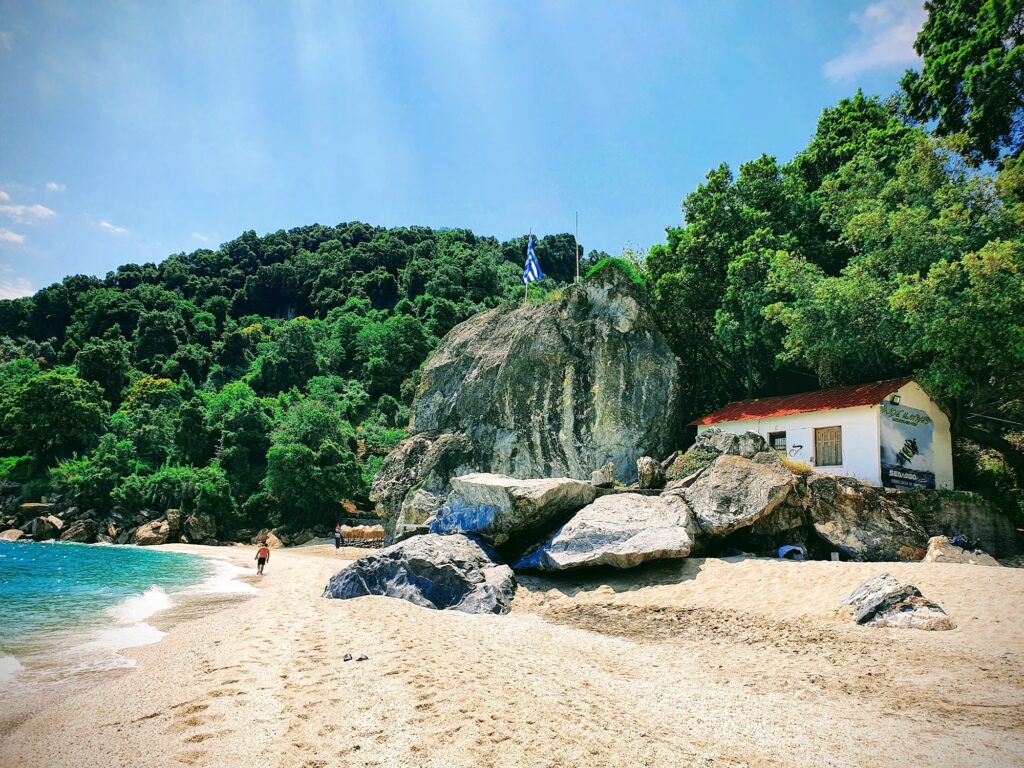
The rock itself sits at the southern end of the cove, rising directly from the water, and functions as the local site for cliff diving. The arrangement is unambiguous once undertaken: a visitor who begins the climb has committed to descending by diving into the sea below, since the rock offers no practical route back down on foot. Multiple independent accounts of the beach describe this same condition in near-identical terms, suggesting it is a point of genuine local consensus rather than an exaggeration for effect.
The beach lies on the northeastern coast of the Pelion peninsula, close to the village of Chorefto, whose own history is tied to maritime trade rather than tourism. Chorefto’s harbour was, in earlier centuries, the departure point for ships built and owned in Zagora that carried local produce across the Mediterranean to the ports of Constantinople and Smyrna, a detail that situates this stretch of coast within a longer commercial history than its current identity as a beach destination might suggest.
Getting There: Fifty Kilometres From Volos via Zagora, an Eight-Kilometre Descent on a Narrow Road
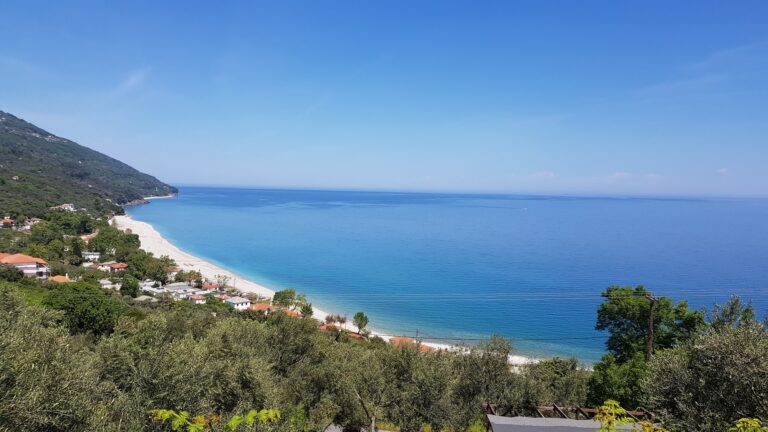
The drive from Volos covers approximately fifty kilometres, ascending the mountainside toward Zagora and passing through the village’s well-known apple orchards before descending eight kilometres on a winding, paved road to the coast. As of 2023, a one-way traffic control system manages the most difficult section of this descent, a measure introduced in response to the road’s narrow width and the volume of summer traffic. Careful driving is advised throughout.
From Agios Ioannis, the beach is approximately ten minutes by car to the north, or a more demanding thirty-minute walk along the coastal path for those who prefer it. By public transport, a bus runs from Volos to Zagora in roughly an hour to ninety minutes, with a taxi covering the remaining distance to the beach for approximately ten to fifteen euros.
Parking exists along the road parallel to the beach, though space is limited and a small fee, generally two to three euros, applies during peak season. Arriving before eleven in the morning on summer weekends is advisable for securing a spot near the water.
The Beach: Golden Sand and Fine Pebbles, Deepening Quickly, Limited Shade
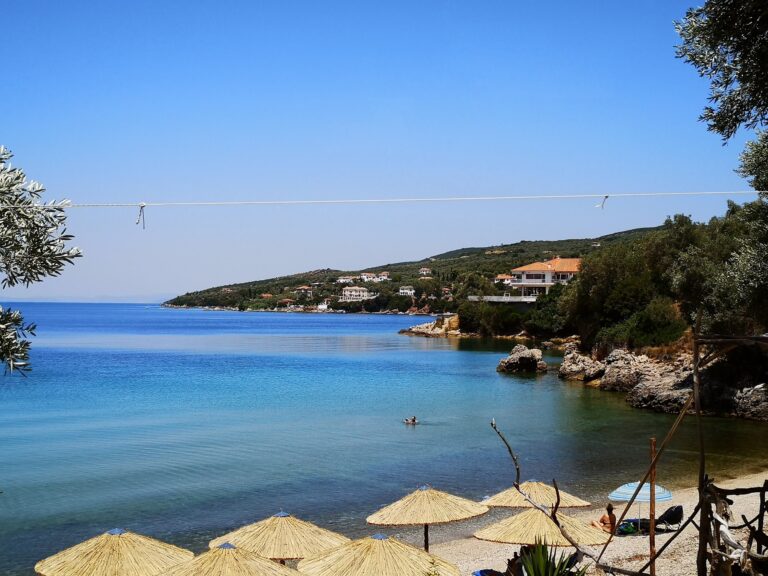
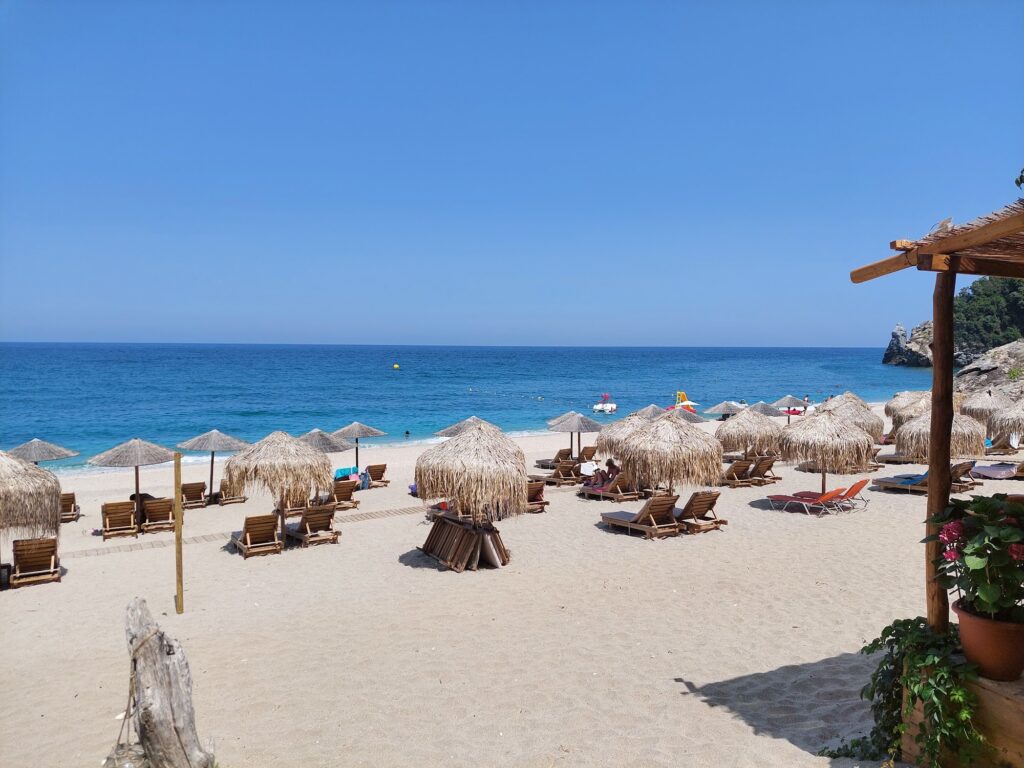
The shore combines golden sand with small, smooth pebbles, and the dense vegetation of the surrounding hillside reaches close to the waterline in places, giving the cove a notably green backdrop relative to more exposed stretches of the Pelion coast. The water deepens at a comparatively quick rate once past the shoreline, a characteristic better suited to confident swimmers than to small children requiring a gradual entry.
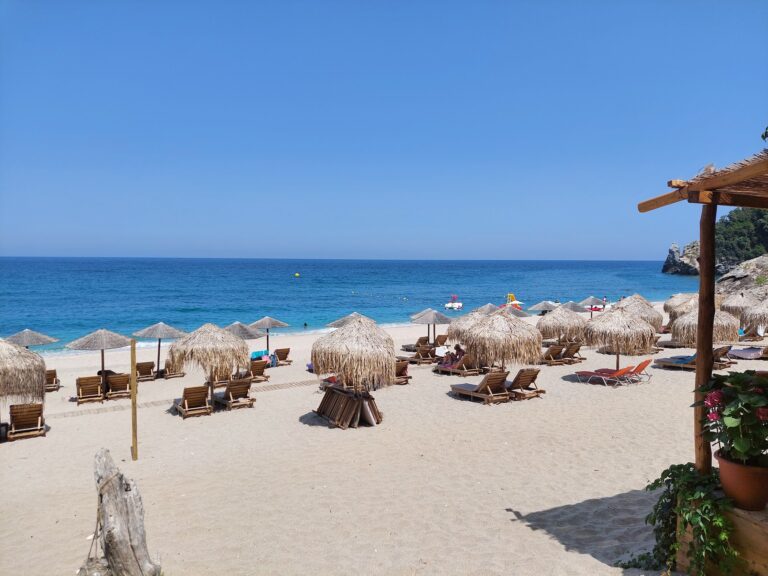
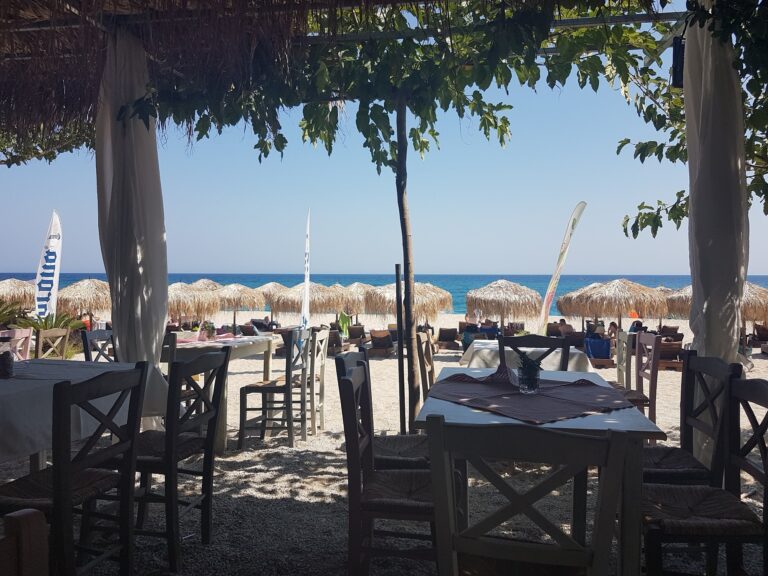
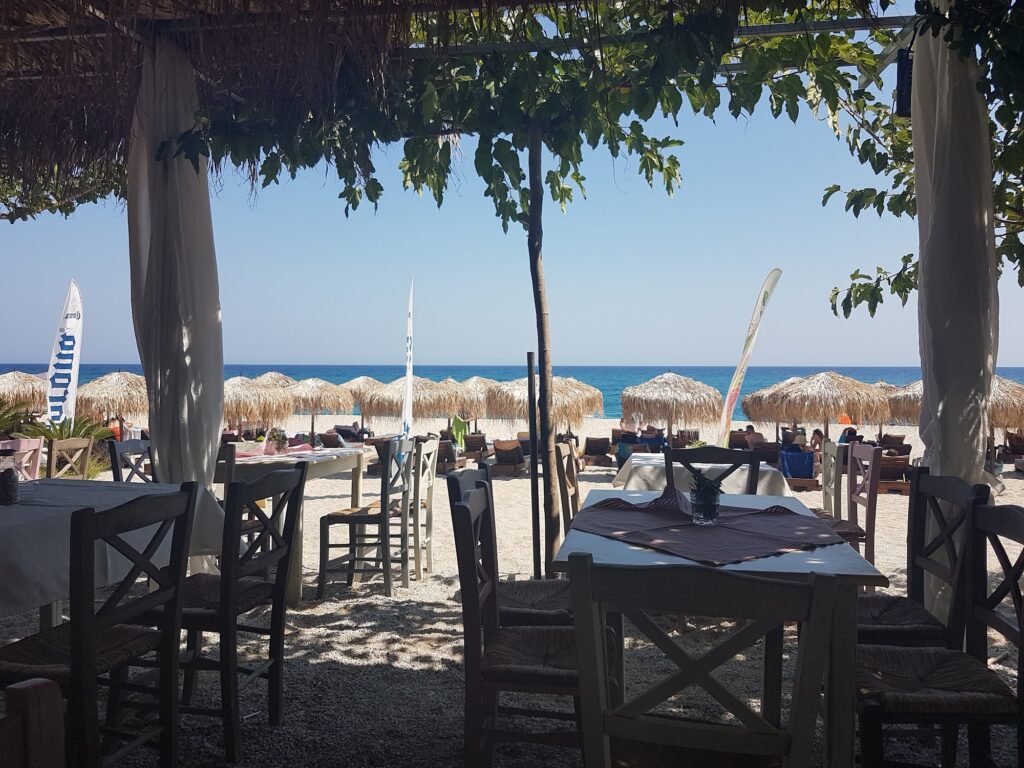
Shade is limited across most of the beach, and visitors are advised to bring their own sun protection regardless of the umbrellas available for rent from the beach bars operating along the shore. A taverna and a well-regarded local beach bar provide food and drink, concentrated mainly toward the southern section near the Kalogeros rock. During the Meltemia winds of August, the open exposure to the Aegean can produce a noticeably rougher surface, and visitors are advised to take this into account before swimming.
Agii Saranta Beach in northeastern Pelion takes its name from a chapel dedicated to the Forty Saints, and its defining feature, the Kalogeros rock, from a separate chapel of the same naming pattern. The rock permits only one route down once the climb begins — by diving into the sea. Golden sand and fine pebbles, water that deepens quickly, limited natural shade, and a narrow descent road from Zagora now regulated by one-way traffic control since 2023. Fifty kilometres from Volos, ten minutes by car from Agios Ioannis, with the maritime history of nearby Chorefto adding context to a stretch of coast now defined primarily by its beach.
Descend the road from Zagora with care. Decide before climbing the rock whether you intend to dive. Bring shade of your own.
Map
Sorry, no records were found. Please adjust your search criteria and try again.
Sorry, unable to load the Maps API.
Near by places: