Paralia Ditikos: The Beach of the Lion Cape
Profile
Paralia Ditikos: The Beach Named for a Lion That Cured the Sick
Greece | Crete | Heraklion | Libyan Sea
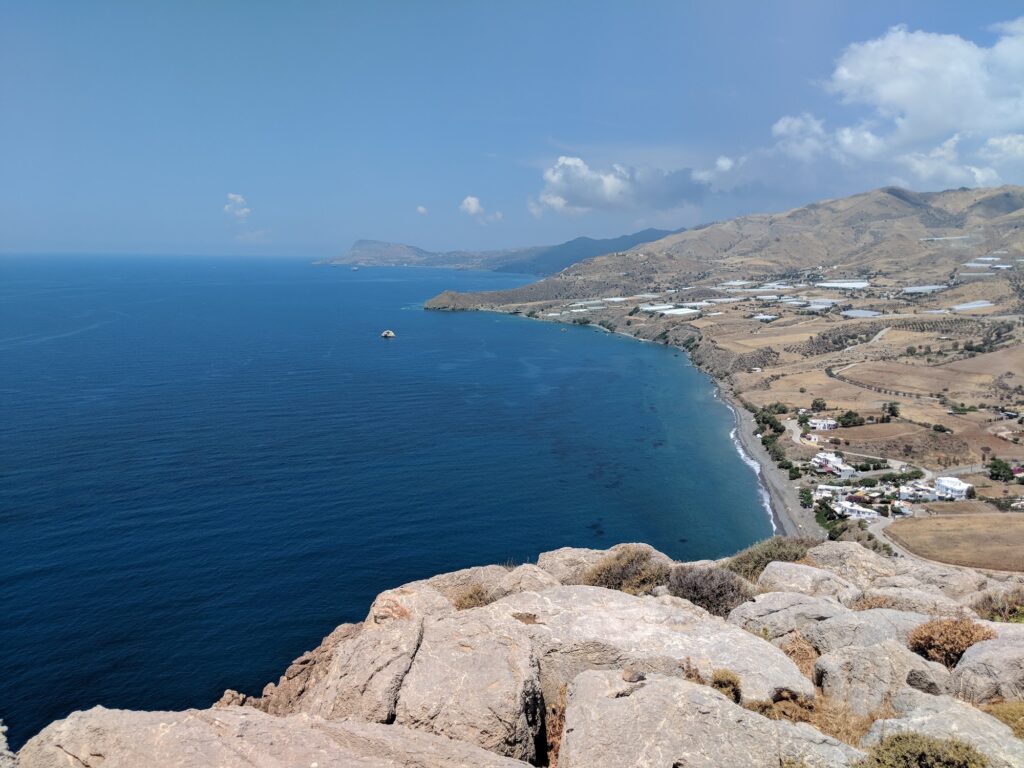
The name Lebena, the ancient city that once stood where Lentas sits today, most likely comes from the Phoenician word labi, meaning lion, a reference to how the peninsula just west of the modern village resembles a lion’s head from certain angles, the same rock formation Ditikos Beach still uses as its own defining landmark. I hadn’t expected a beach known today mainly for its bohemian, clothing-optional reputation to trace its most striking feature back to a name given by Phoenician sailors centuries before anyone built a temple here, but ancient Lebena had already earned real fame as a healing sanctuary by the time the Romans arrived, patients traveling from as far as Libya and North Africa to drink from a mineral spring believed to treat stomach and blood ailments.
The sanctuary, dedicated to Asclepius, god of medicine, operated for over six centuries starting in the fourth century BC, and a Roman-era mosaic depicting a dog still survives among the ruins, a small, oddly charming detail from a site that spent hundreds of years treating wealthy visitors’ actual illnesses long before anyone came here simply to disconnect from modern life.
Dark Sand Beneath the Lion’s Silhouette
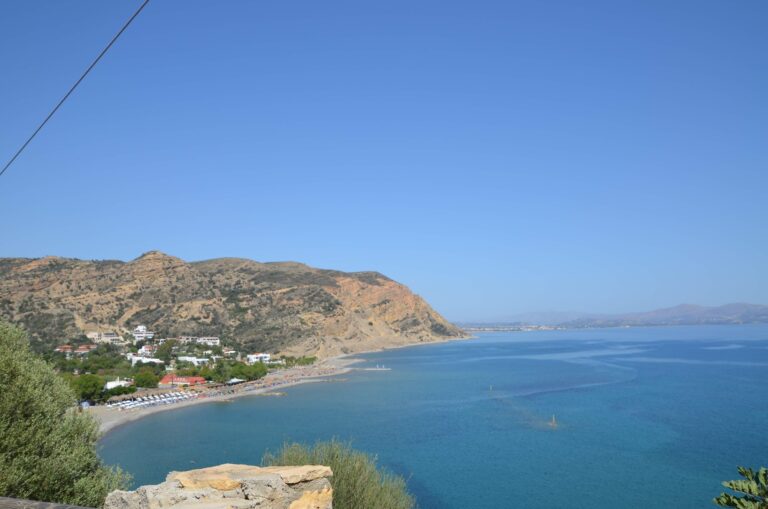
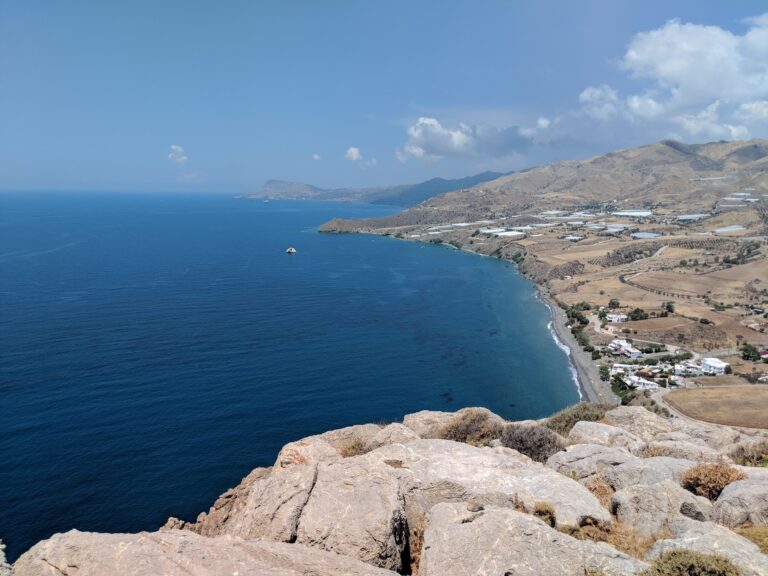
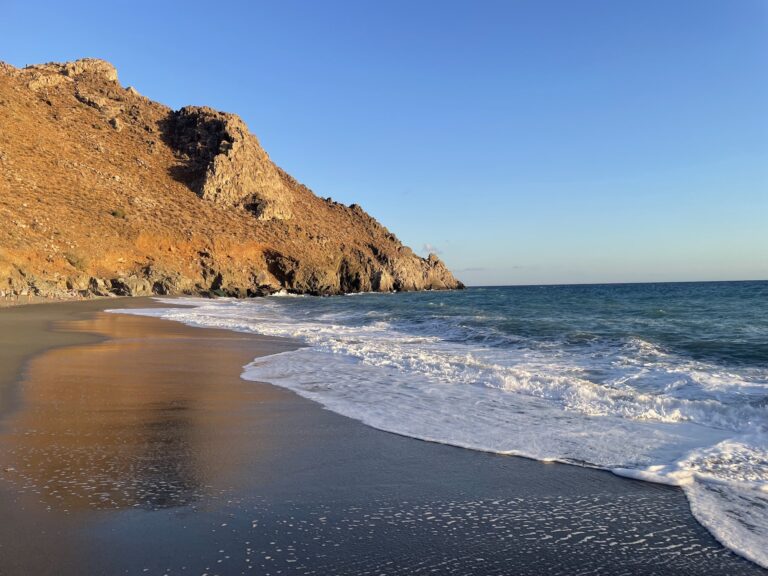
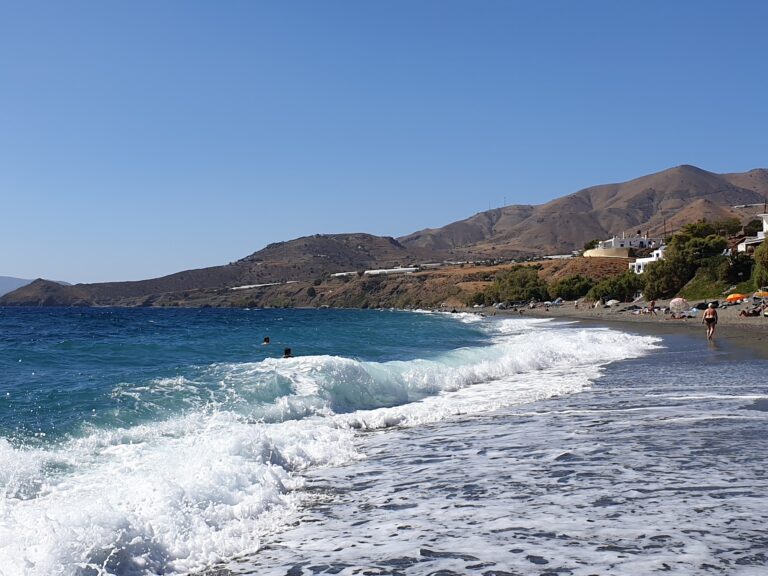
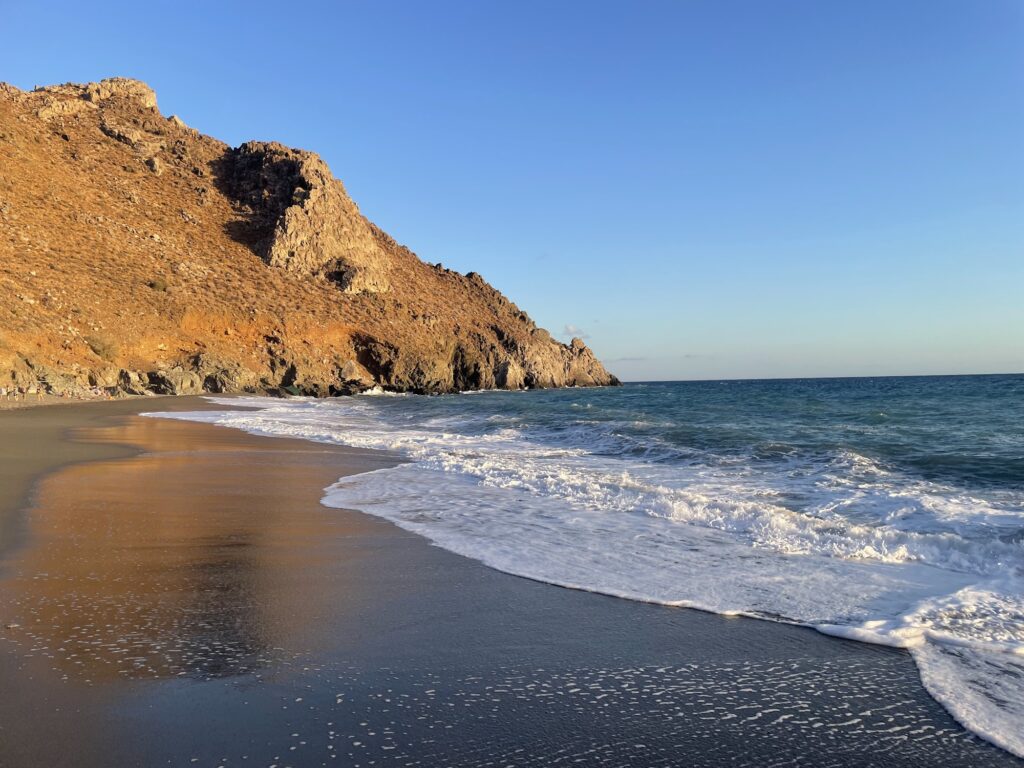
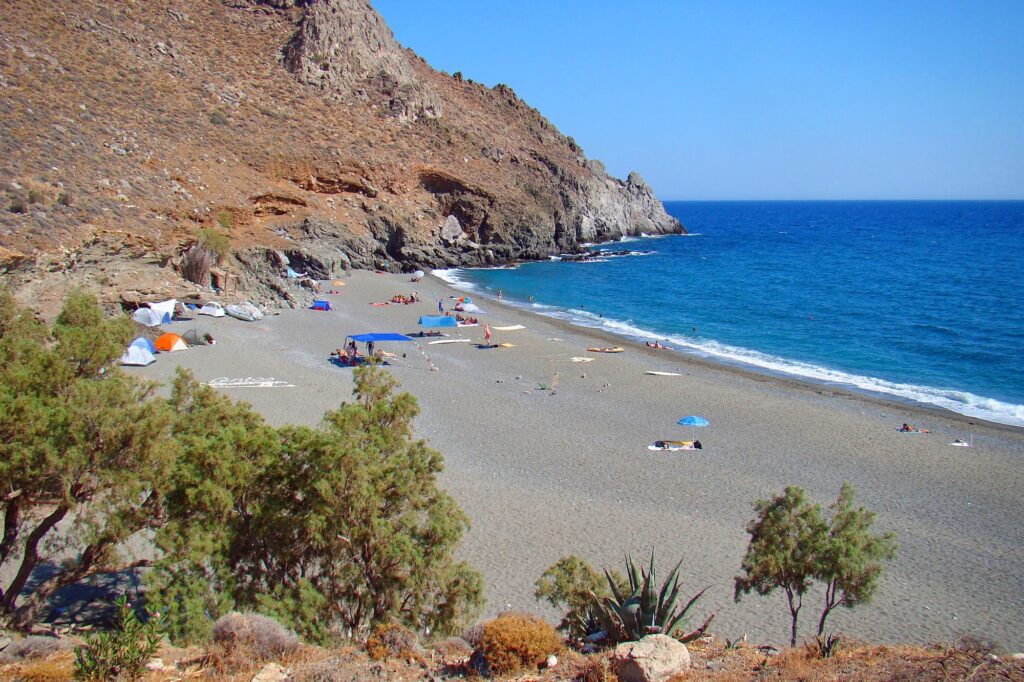
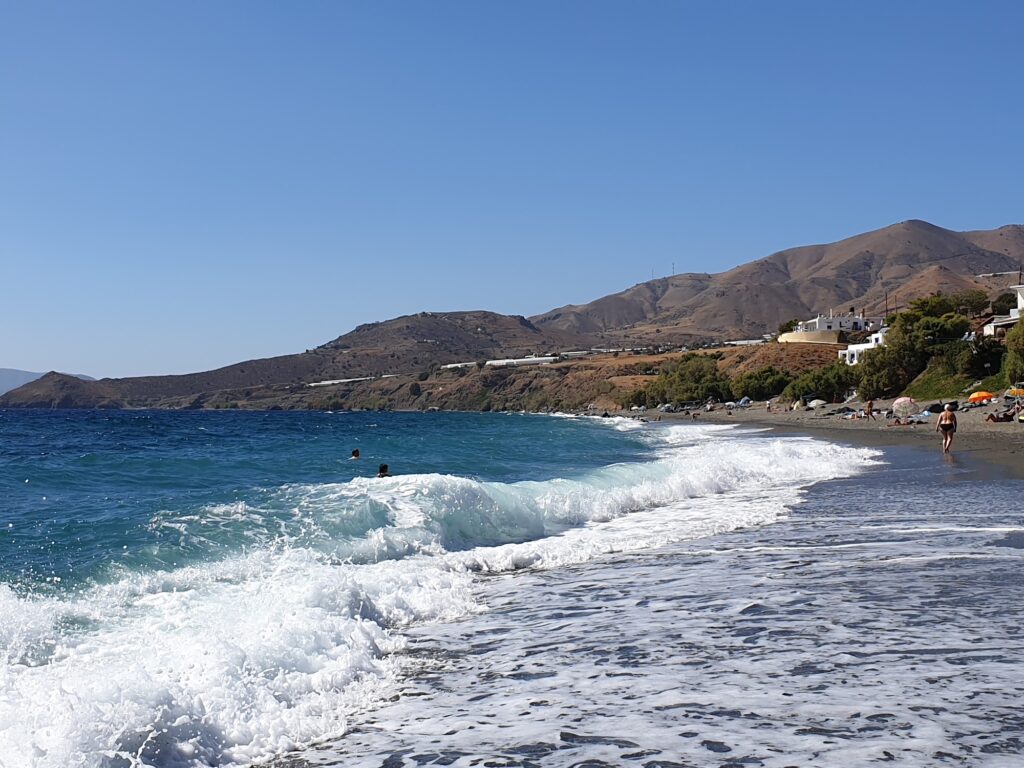
Ditikos runs wide and genuinely long, dark, fine sand mixed with smooth grey pebbles, and I found the water exceptionally clear, a benefit of the volcanic composition that keeps sediment from clouding the shallows. The Lion Rock frames the beach’s eastern edge, and I found the formation most striking during golden hour, when the low light caught the silhouette at an angle that made the resemblance genuinely obvious rather than something requiring much imagination.
A Beach That’s Stayed Deliberately Undeveloped
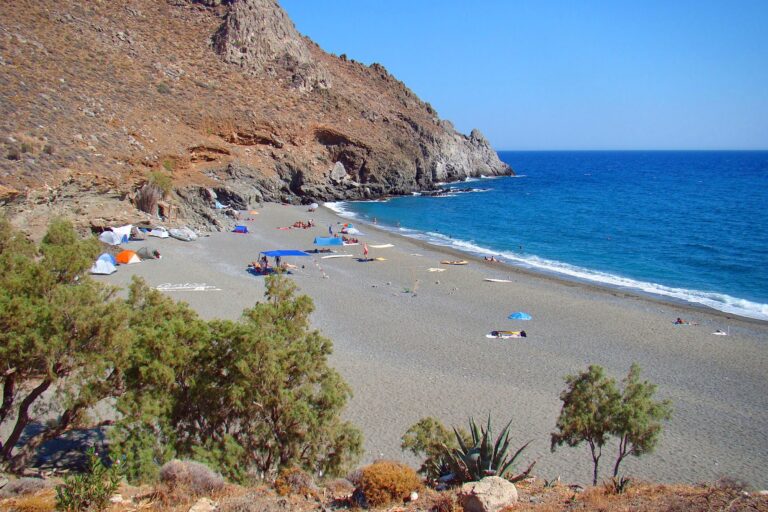
Ditikos has built its modern reputation around the same instinct for retreat that once drew ancient patients to Lebena’s mineral spring, just secularized considerably. There are no rows of commercial sunbeds here, and I found most visitors either using the natural shade of tamarisk trees or bringing their own gear entirely. Given how thoroughly unorganized this stretch remains, dogs would likely be fine on a leash following the standard rule for Greek beaches without formal management, and I’d expect families to find the wide, open sand genuinely workable for younger children, though the water does deepen at a fairly steady pace once past the initial shallows, worth watching closely with less confident swimmers.
One of Greece’s Best-Known Free-Spirit Beaches
Ditikos carries a long-standing reputation as one of Greece’s more prominent nudist-friendly beaches, and I found the atmosphere genuinely respectful rather than anything performative, visitors treating the arrangement as simply one more way of engaging with the landscape rather than making any particular statement about it.
Slow Food From Family Tavernas Behind the Sand
A small cluster of family-run tavernas sits just behind the beach, and I ate well on fresh Libyan Sea fish and organic vegetables grown in the surrounding Asterousia foothills, the pace of service matching the general unhurried character of the place. Small eco-conscious studios nearby offer overnight stays for anyone wanting to extend beyond a single afternoon, prioritizing quiet and sea views over anything resembling resort amenities.
Genuinely Dark Skies Once the Sun Goes Down
With minimal light pollution reaching this stretch of southern Crete, Ditikos offers some of the clearest night skies I’ve found anywhere on the island, and more than one visitor I spoke with described the Milky Way view here as the actual highlight of their stay, ahead of the beach itself.
Getting There and Making the Descent
Ditikos sits roughly 75 kilometers south of Heraklion, a drive that climbs through Agioi Deka and over the winding Asterousia mountain passes before descending toward Lentas, from which a short, well-maintained unpaved road runs west for one to two kilometers to reach the beach directly; a standard rental car manages the route comfortably at a slower pace, and parking is genuinely stress-free in the open clearings behind the tavernas, the beach’s length meaning it rarely feels crowded even in peak season.
Standing Where the Sick Once Came to Be Healed
By the time I packed up on my last evening, the Lion Rock had gone dark against a fading sky, and I thought about the wealthy Romans who once made a considerably more difficult journey than mine specifically to drink from a spring near this exact stretch of coast, hoping for a cure modern medicine would eventually make unnecessary, the beach itself somehow still functioning, in its own quieter way, as a place people come to feel better.
Map
Sorry, no records were found. Please adjust your search criteria and try again.
Sorry, unable to load the Maps API.
Near by places: