Vathi Beach: Sand From a 1,200-Year Quarry
Profile
Vathi Beach: Swimming in the Dust of a 1,200-Year Quarry
Greece | Thassos | North Aegean | Aegean Coast
The white marble that gives Vathi Beach its sand and its brilliant turquoise glow traces back to quarrying operations that ran on this island for roughly twelve continuous centuries, beginning around the seventh century BC and continuing until the Slavic invasions of the seventh century AD finally shut them down. Thassian marble carried real weight across the ancient world, exported by boat to build the Arch of Galerius in Thessaloniki, contributing stone to structures on the Acropolis in Athens, and reportedly reaching as far as Rome’s Colosseum. The workforce behind all of this was rarely voluntary, carpenters, blacksmiths, and sculptors working alongside slaves, prisoners of war, and criminals sentenced to labor in the quarries for life, cutting and hoisting blocks onto boats that carried Thassos marble across the entire Mediterranean world.
I found it genuinely strange to float in water this brilliant, colored almost entirely by ground stone from an industry with that much forced labor behind it, the same marble dust that once represented empire-scale construction now simply making an ordinary swim look considerably more dramatic than the water itself would otherwise manage.
Two Kinds of Marble, One Island
Most of the ancient quarrying activity concentrated at Aliki, on Thassos’ southern coast, where calcitic marble was extracted directly beside the water so blocks could be loaded straight onto waiting boats. The northeastern coast, where Vathi sits, holds a different variety entirely, dolomitic marble, quarried at several sites in this part of the island and still worked today near the village of Panagia. I found this distinction worth knowing before assuming Vathi’s sand is simply a leftover byproduct of the more famous southern quarries. It isn’t. The marble underfoot here comes from a genuinely separate deposit, geologically distinct from the stone at Aliki even if both share the same brilliant white reputation that made this island’s name synonymous with quality marble across the ancient Mediterranean.
Turquoise Water Reflected Off Ground Stone
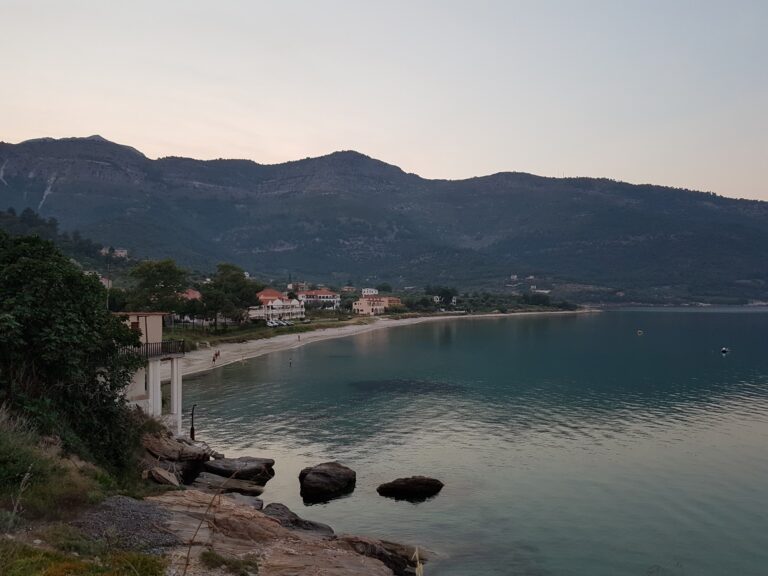
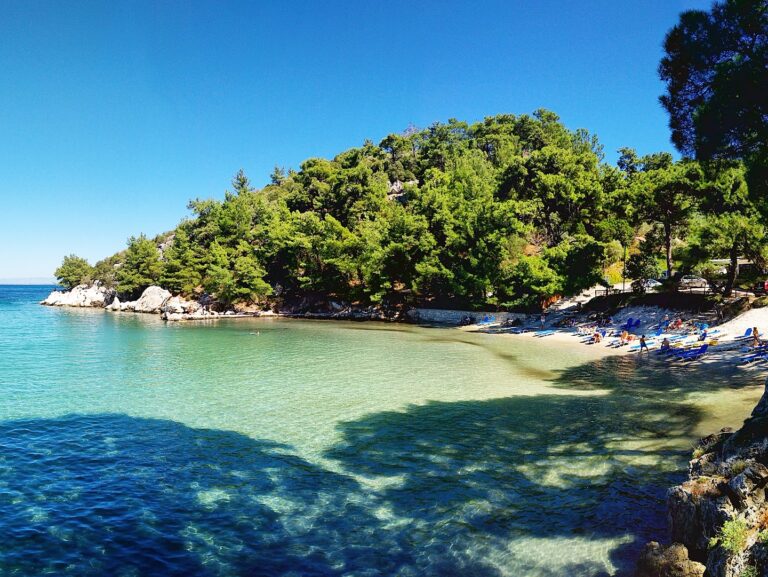
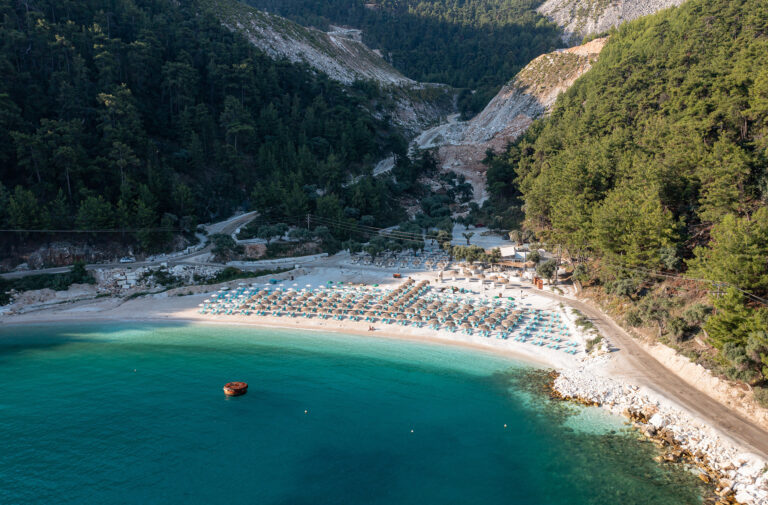
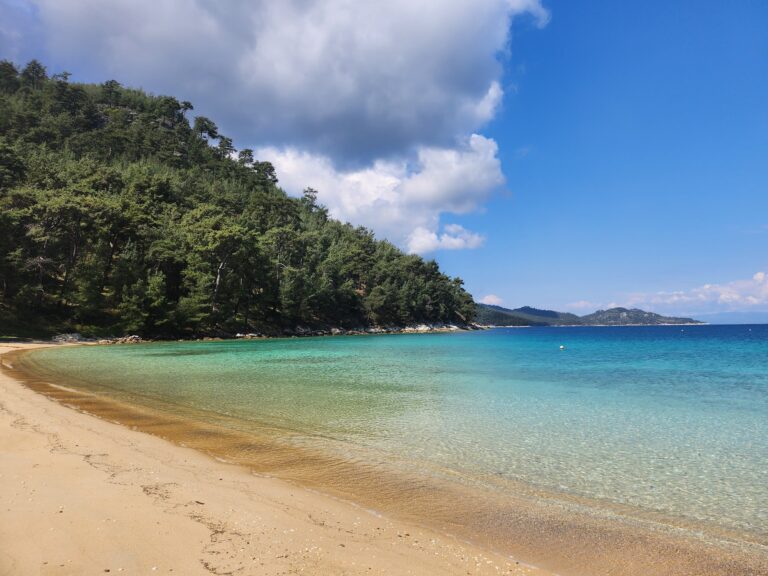
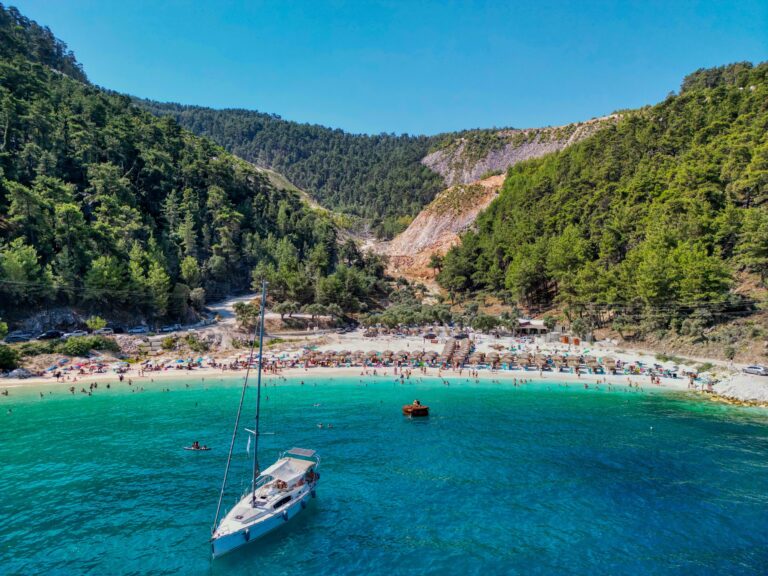
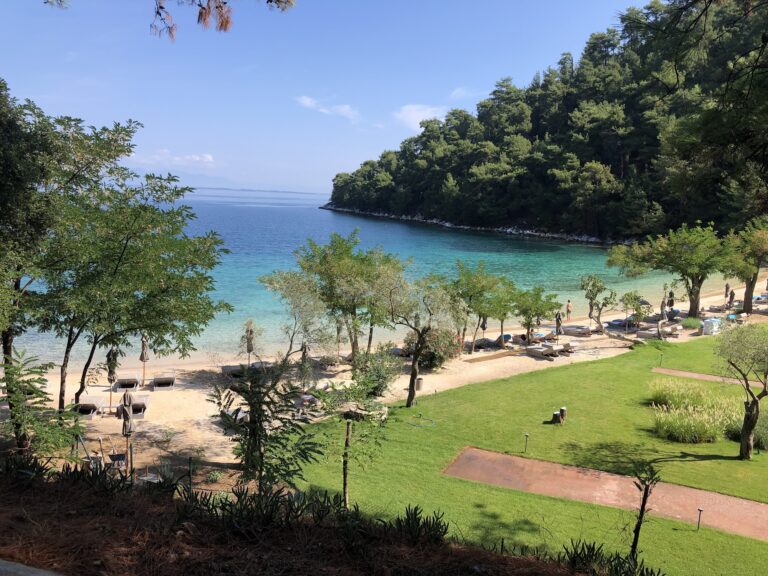
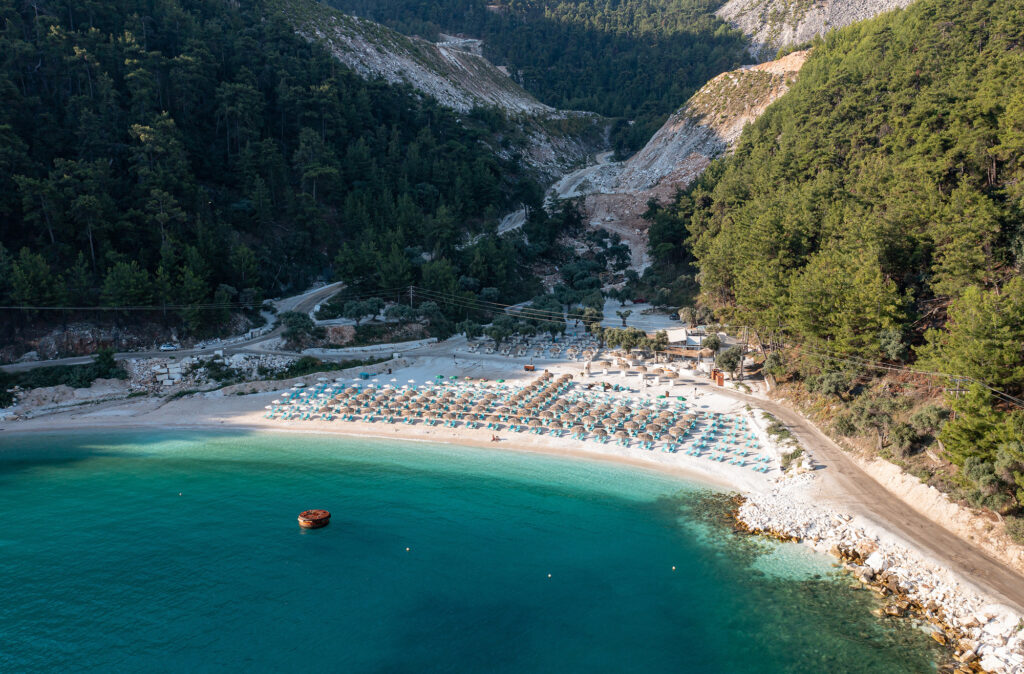
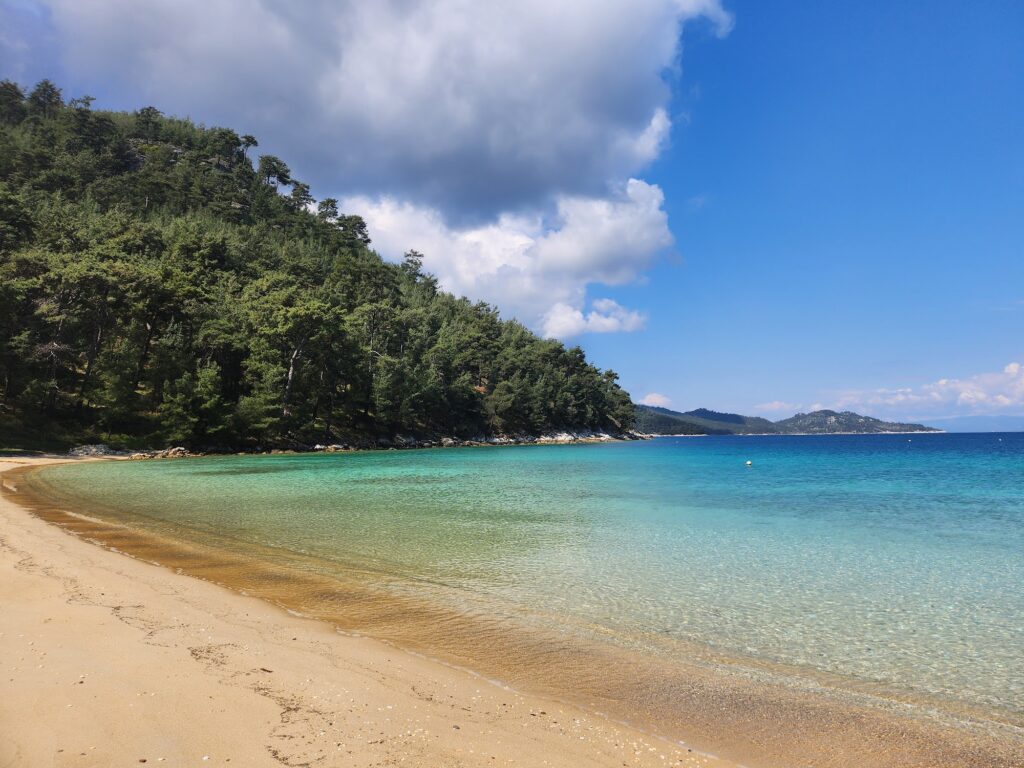
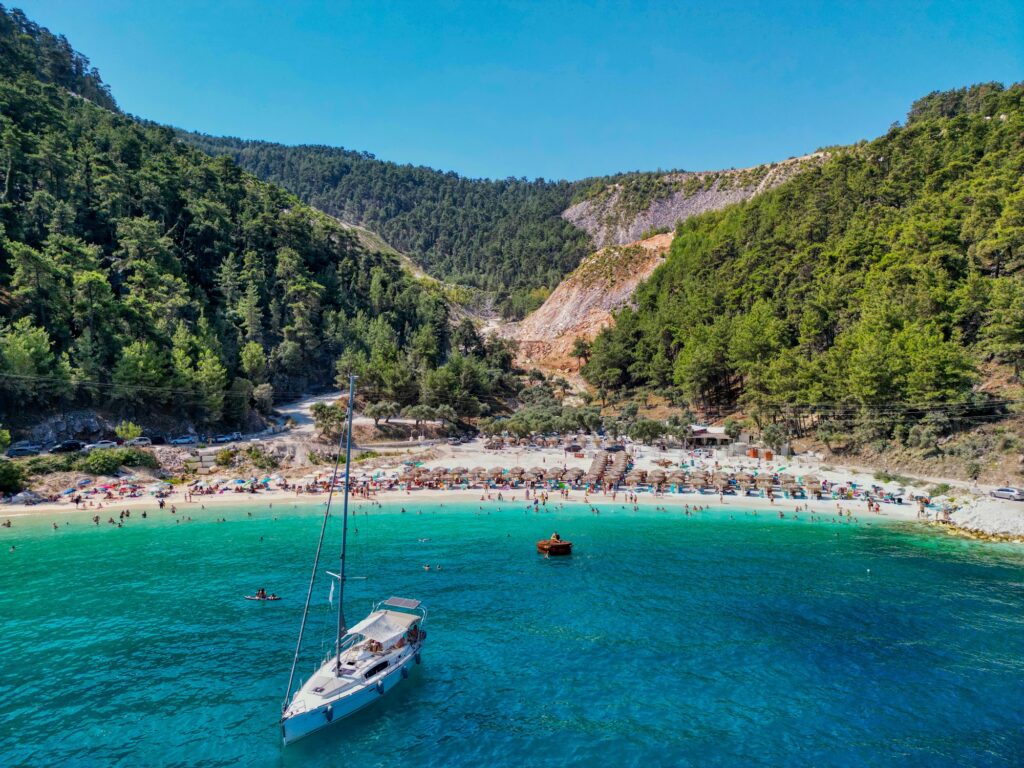
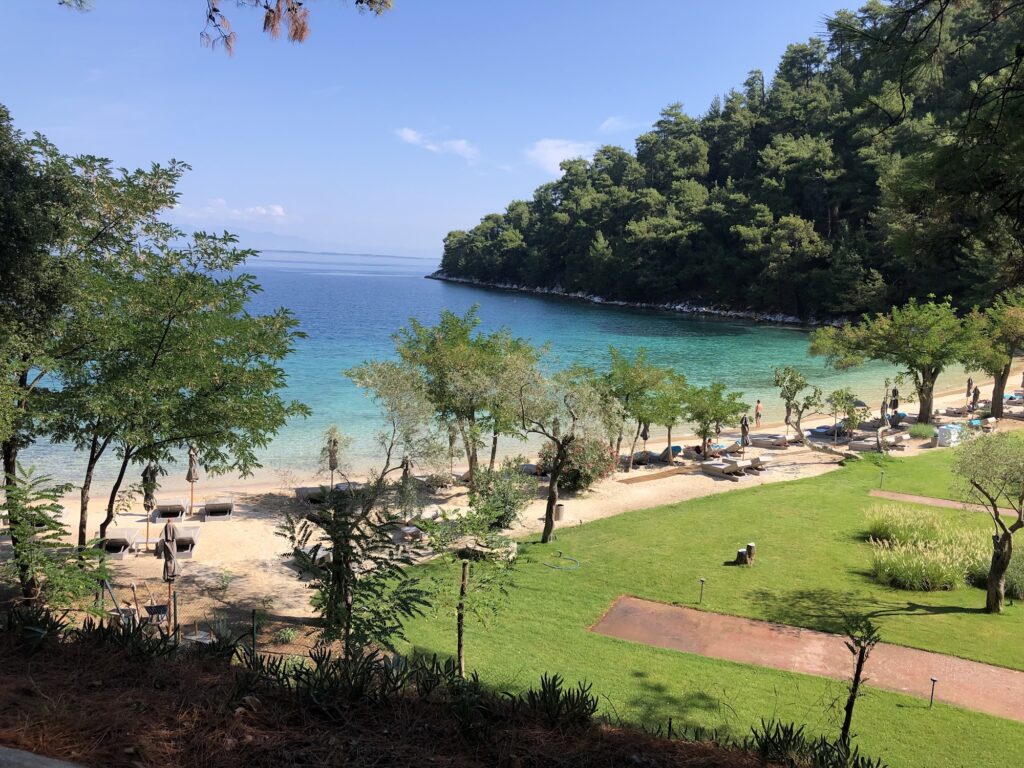
Vathi’s defining feature is genuinely its color, tiny polished marble pebbles and dust standing in for conventional sand and acting as a natural reflector that keeps the water glowing an electric turquoise even under overcast skies. I found the bay sheltered enough to stay mirror-calm on most visits, ideal for long-distance swimming, the kind of stillness that let me swim well past the point where I’d normally turn back at a more open, wave-exposed beach. Snorkeling around the rocky edges of the cove revealed a seabed genuinely worth the effort, small fish moving between white-streaked boulders that seemed to hold onto the light longer than ordinary rock would. Dense pine forest descends nearly to the waterline on both sides, casting real shade along the shore and giving the whole cove a sense of enclosure that made it feel considerably more private than its growing popularity would suggest.
A Cove Better Suited to Planning Than Spontaneity
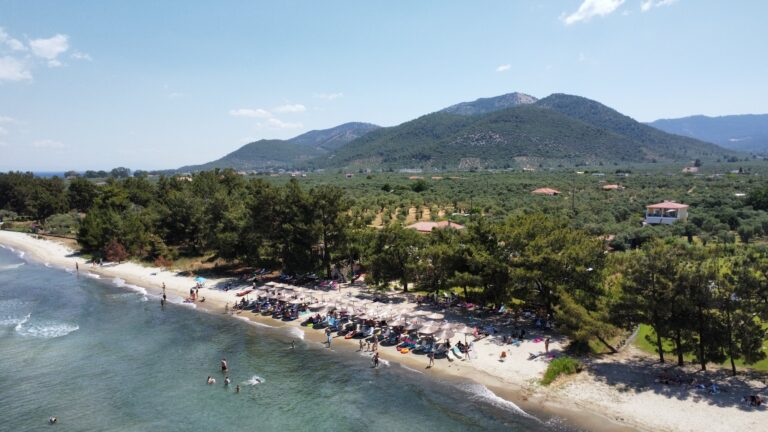
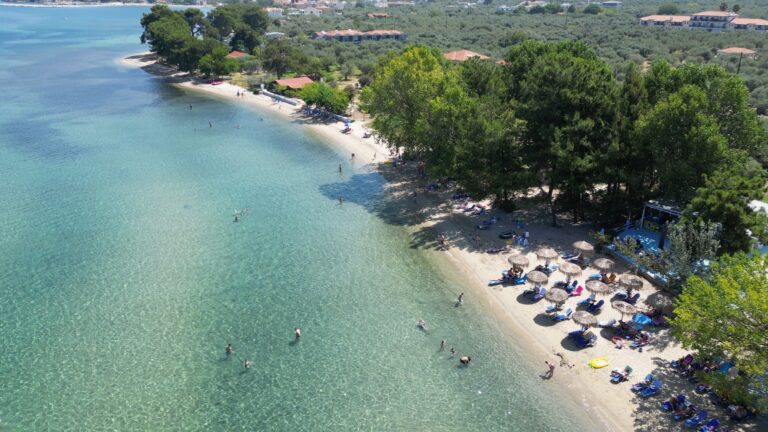
Given how remote and lightly developed Vathi remains, I found very little in the way of organized infrastructure here, no rows of sunbeds, no beach bar competing for attention, just the marble sand, the pines, and the water itself. Given how unmanaged this cove stays, dogs would likely be fine here on a leash following the standard rule for Greek beaches, though I’d think carefully before bringing one given the loose, dusty terrain on the approach by road. I’d call Vathi better suited to visitors willing to plan the journey properly rather than anyone hoping for a casual, spontaneous stop between other errands on the island, the reward considerably greater for the extra effort required to get here.
Arriving by Water for the Easiest Approach
The most comfortable way to reach Vathi is by boat, and daily tours depart from both Limenas and Golden Beach, gliding directly into the turquoise bay without any need to navigate the quarry roads at all. I took one of these tours on my second visit and found the approach from the water genuinely spectacular, the bay opening up gradually as the boat rounded the headland, marble-streaked cliffs catching the light in a way the road approach simply doesn’t offer.
Driving the Dusty Road From Limenas
For anyone driving, Vathi sits roughly seven kilometers from Limenas, though the final stretch runs over unpaved, genuinely dusty roads typical of this marble-quarry region, and I found a sturdy SUV considerably more comfortable than a standard rental for the last few kilometers. The coastal route runs from Makryammos past Saliara Marble Beach Thassos, itself carved from the same broader marble landscape, before continuing north at a slow, careful pace given the loose surface underfoot. Anyone touring Vathi is well placed to stop at Saliara along the same drive, the two beaches sharing enough of a family resemblance, white stone, turquoise water, that visiting both back to back gives a genuinely fuller sense of just how much this island’s identity has been shaped by what’s been cut out of its own hillsides. A designated parking area sits near the Vathi beach entrance, and arriving before ten-thirty made a genuine difference during peak July and August weeks, when both the parking and the boat tours fill considerably faster than the cove’s remote reputation might suggest.
What to Bring Given How Little Is Provided
Since Vathi offers essentially no facilities beyond the beach itself, I packed my own water, food, and shade for a full day here, and I’d recommend the same to anyone planning more than a quick swim. Water shoes are worth the extra bag space too, since the marble pebbles underfoot, while smooth, can still be uncomfortable to walk across barefoot for any real distance, especially near the rockier edges where the best snorkeling tends to be.
Standing in Water Colored by an Empire’s Ambition
By the time I left Vathi on my last visit, the marble dust underfoot had turned the shallows a color I hadn’t quite seen matched anywhere else on this island, and I found myself thinking about how much forced labor sits quietly behind that particular shade of turquoise, an industry that once helped build monuments across three continents now simply providing the backdrop for an ordinary, unhurried afternoon swim.
Map
Sorry, no records were found. Please adjust your search criteria and try again.
Sorry, unable to load the Maps API.
Near by places: