Porto Germeno Beach: Fortress, Pines, Tallest Greek Tower
Profile
Porto Germeno (Aigosthena), West Attica: The Four Unorganised Beaches Below the 4th-Century BC Fortress With the Tallest Surviving Ancient Greek Tower, 65km From Athens Through the Pine Forest of Mount Pateras
Greece | Porto Germeno | Vilia Municipality, West Attica
The tallest surviving tower of ancient Greece is at Porto Germeno. The southeast corner tower of the Aigosthena fortress acropolis stands 18 metres after its full restoration — a 4th-century BC military structure of cut stone that survived more than 2,300 years, an earthquake that measured 6.7 on the Richter scale in 1981, and a multi-decade restoration programme completed in 2026. Eight artillery towers are incorporated into the fortress perimeter wall. The acropolis sits on a low hill 450 metres from the sea; long walls extend from it down to the ancient harbour, making Aigosthena simultaneously a hilltop fortification and a fortified port.
Aigosthena is what the ancients called the place. The fortress was the northernmost city of the Megaris — the territory of Megara, the city-state between Athens and Corinth. It served as a fortified port on the eastern end of the Gulf of Corinth, guarding the coastal route and providing harbour facilities for Megarian and later Corinthian trade. The modern village below it, with a permanent population of approximately 80 people, is called Porto Germeno — a name whose origin is debated but probably Venetian or Frankish in period, from the medieval occupation of the area. The village is part of the Vilia municipal unit in West Attica.
The descent to Porto Germeno from Vilia is through the pine forest of Mount Pateras — one of the more dramatic approach drives to any beach near Athens. The forest is dense on both sides of the road, the mountain curves provide successive views of the Alkyonides Gulf opening below as the road descends, and the fortress towers are visible from the approach. The village and the four beaches appear at the bottom of the descent, the sea between Mount Cithaeron (north) and Mount Pateras (south) — the specific enclosed mountain geography that gives the bay its character.
Getting There: 65km From Athens (1h15 Min), Route Through Eleusis and Vilia, Spectacular Pine Forest Descent, No Sunbeds — Bring Everything
From Athens, take the A1/E75 motorway toward Elefsina (Eleusis), then follow the signs northwest toward Vilia. From Vilia, the descent road to Porto Germeno winds through the pine forest of Mount Pateras for approximately 10 kilometres. The total journey is approximately 65 kilometres and 1 hour 15 minutes.
The alternative route via Mount Pateras directly from the Athens–Thebes road also provides spectacular views.
Porto Germeno is genuinely unorganised — no sunbeds, no umbrellas, no beach bar guaranteed at every section. Bring a personal umbrella, adequate water, food, and sun protection for a full day. Some local shops and tavernas in the village can supplement supplies. The pebble shore makes water shoes comfortable.
The Four Beaches: Agios Nikolaos, the Main Beach, the Middle, and a Fourth — Naturally Divided by Rocks
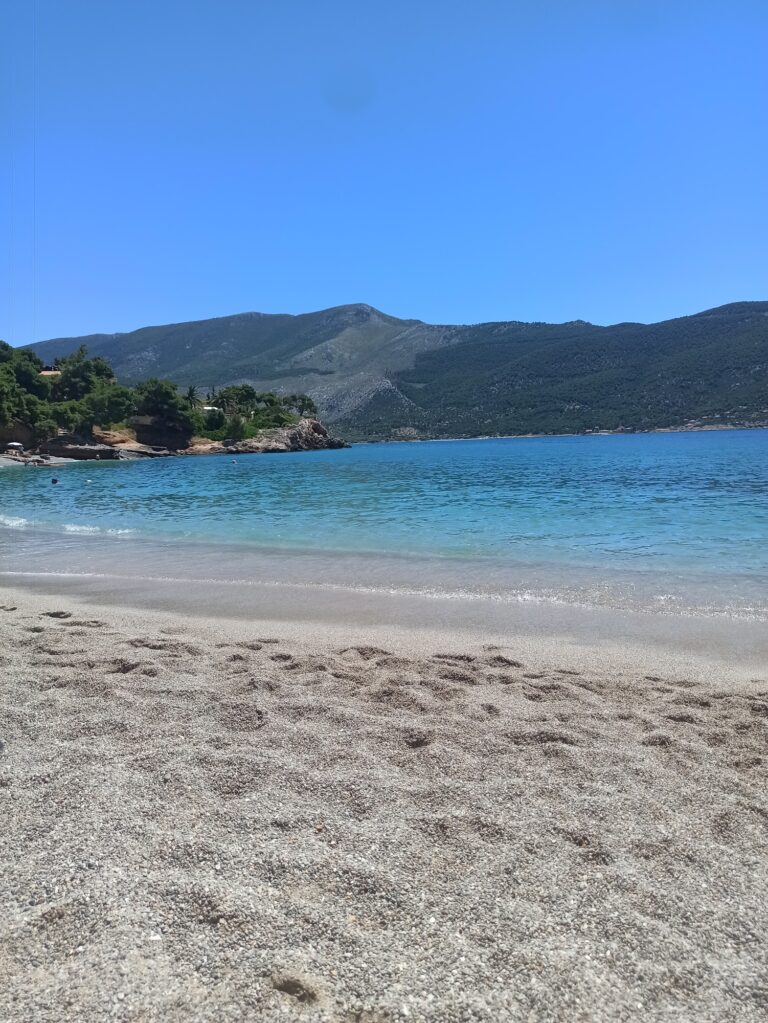
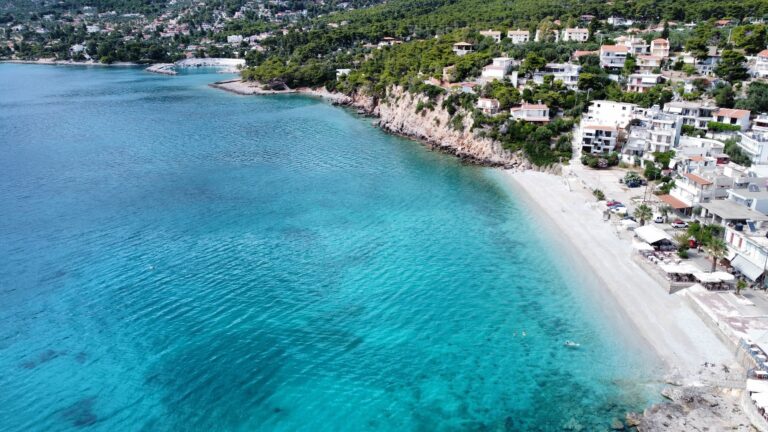
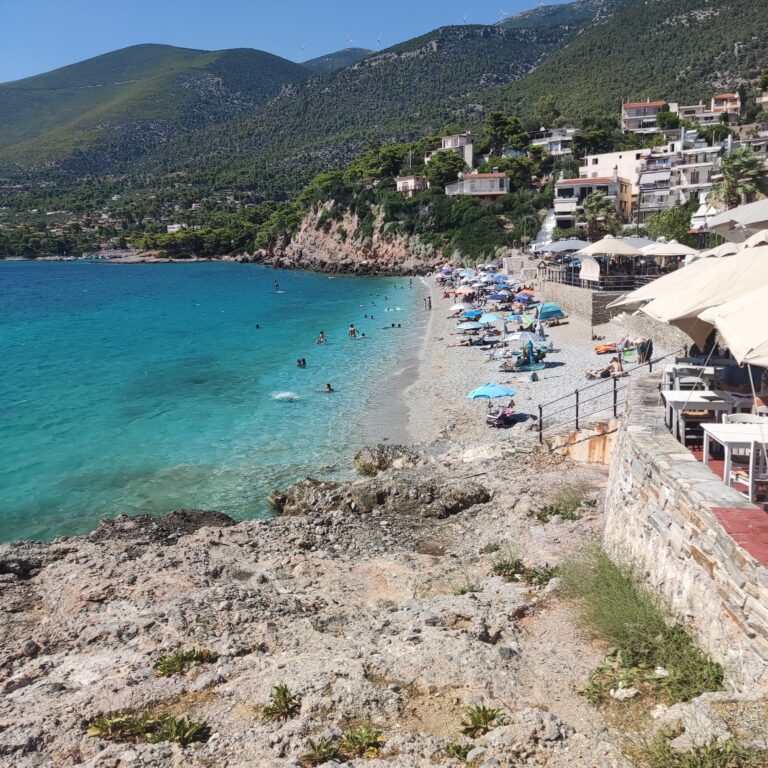
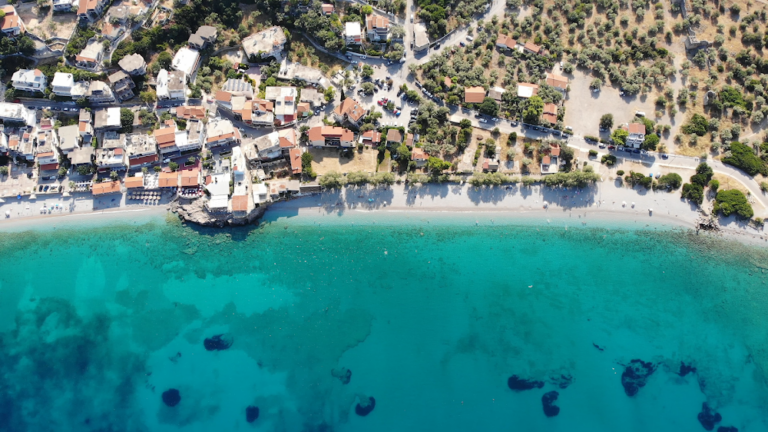
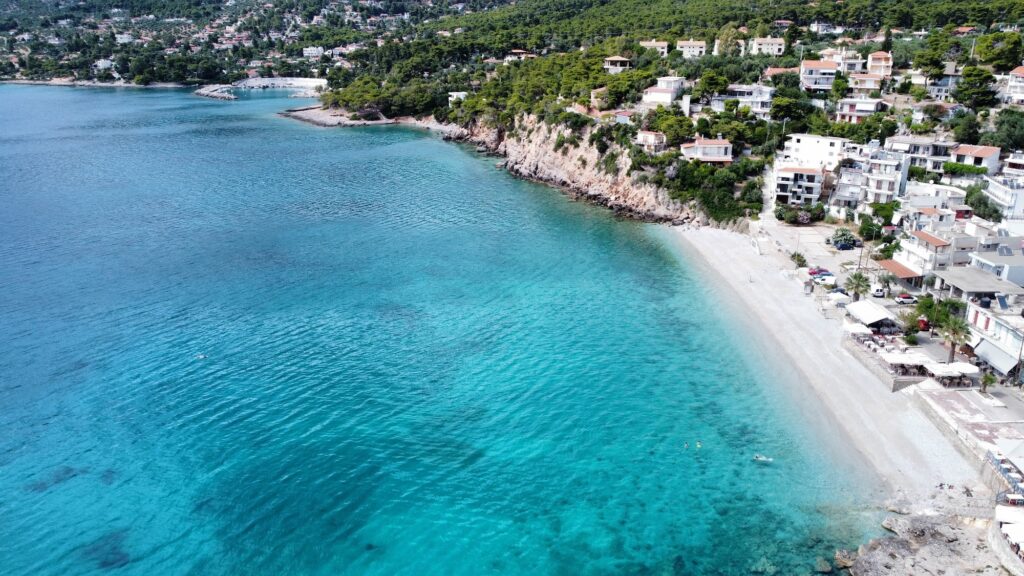
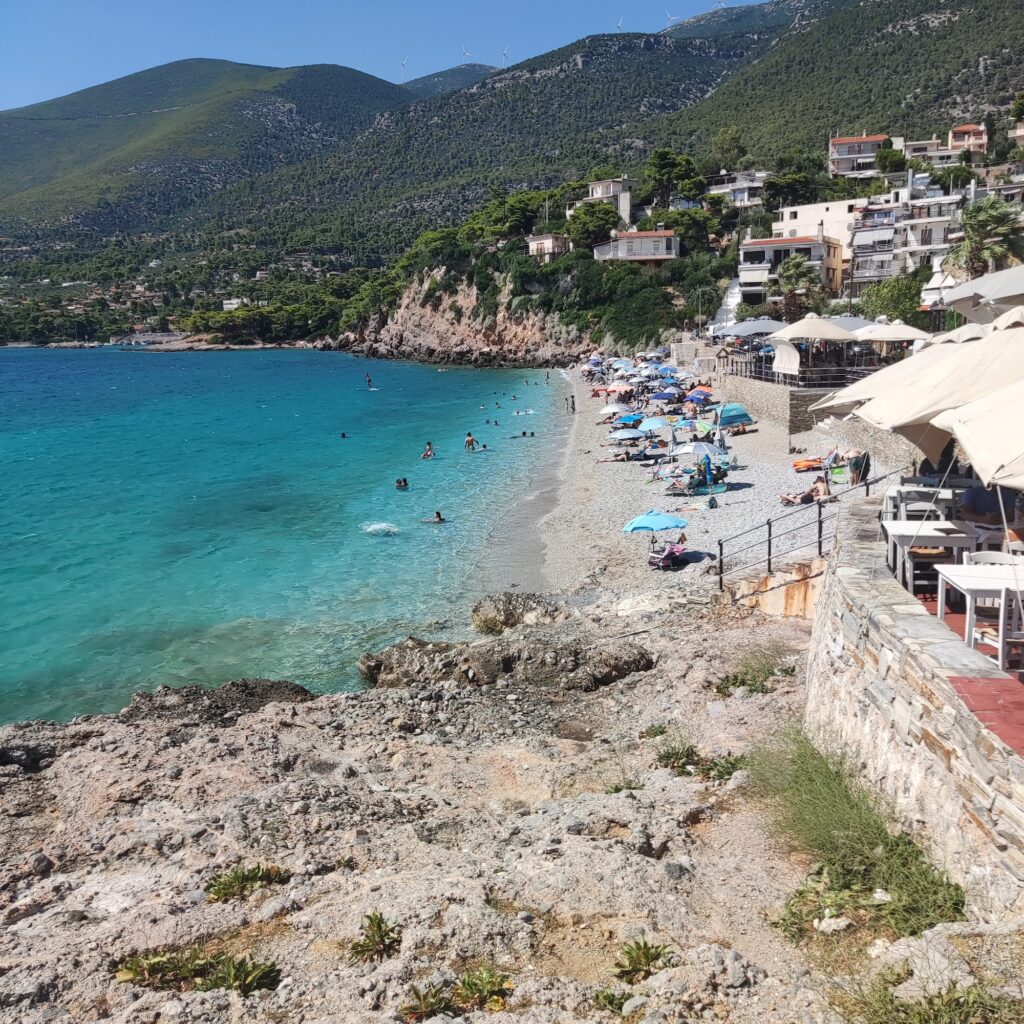
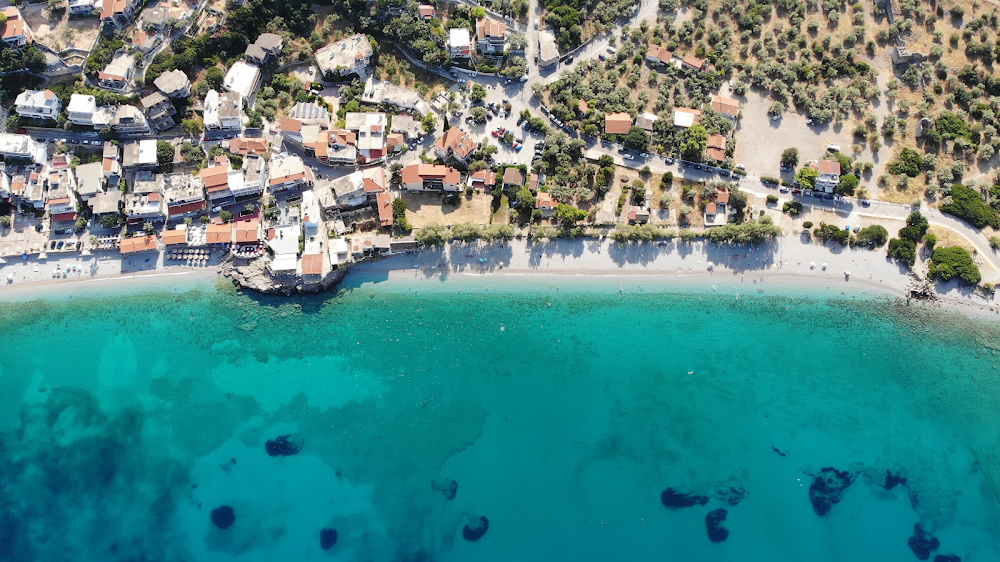
Porto Germeno has four beaches naturally separated by rocks and small trees. The names vary depending on who is describing them: Agios Nikolaos has a chapel with a mosaic floor, an outdoor area with vases and flowers, and a veranda; the main beach is the most accessible and has the tavernas and cafes nearby; the “Middle” beach is consistently described as busiest with regular swimming visitors; the fourth is quieter and more removed.
None of the four sections has provided sunbeds or umbrellas — visitors lay towels on the pebble shore. Some sections have small tables from local cafes. The water throughout is clear, turquoise, and calm — the enclosed bay geometry and the surrounding mountain walls protect the water from wind.
The Aigosthena Fortress: 4th Century BC, Eight Towers, Fully Restored 2026, Open to the Public
The Aigosthena fortress was built in the second half of the 4th century BC and is one of the most imposing ancient military installations in Greece. The fortress consists of the acropolis citadel on the hill and the lower town, connected by long walls to the ancient harbour. The acropolis is rectangular, surrounded by a circuit wall with towers; the east side is preserved to great height with four towers and a small postern gate.
The 1981 Alkyonides Islands earthquake — magnitude 6.7, the most destructive in Greece since 1953, which caused extensive damage throughout West Attica and the Perachora peninsula — severely damaged the fortress. Restoration works began under the Ministry of Culture in 2011, directed by Evgenia Tsalkou, Archaeologist of the Ephorate of Antiquities of West Attica. The full restoration was completed and the interior of the main tower — three floors — was opened to the public.
The fortress is free to visit. Walking from the beach to the fortress takes approximately 10 minutes. The view from the tower over the Alkyonides Gulf, the four beaches, and the mountain bowl is the elevated perspective that the beach itself cannot provide.
The 1981 Alkyonides Earthquake and the Restoration
The 1981 Alkyonides Islands earthquake (24 February 1981, 6.7 magnitude) is the specific historical event that connects Porto Germeno to modern Greek seismic history. The earthquake caused 20 deaths and significant structural damage across the northern Peloponnese and West Attica. The Aigosthena fortress, which had survived more than two millennia of weathering and minor seismic activity, suffered extensive structural collapse in its towers and walls. The 2011–2026 restoration programme reversed this damage and has brought the fortress to a state of preservation arguably better than at any point since antiquity.
Mount Cithaeron: Mythology, Marathon Battle, Oedipus, Dionysus
Mount Cithaeron to the north of Porto Germeno is one of the mythologically richest mountains in Greece. It is the mountain where the infant Oedipus was left to die by his parents. It is where the Maenads — the female followers of Dionysus — performed their rites and where Pentheus was torn apart in Euripides’ Bacchae. The Battle of Plataea (479 BC), the decisive land battle of the Persian Wars, was fought at the foot of Cithaeron. The mountain’s mythology and military history are the backdrop for the beach below.
Porto Germeno (Aigosthena) in West Attica is the four unorganised pebble beaches below the 4th-century BC fortress with the tallest surviving ancient Greek tower (18m, fully restored 2026, open to the public) — 65km from Athens through the pine forest of Mount Pateras (spectacular descent, panoramic Alkyonides Gulf views), permanent population of 80, bring everything (no sunbeds, no umbrellas provided), clear turquoise calm water, four sections naturally divided by rocks (Agios Nikolaos, main, middle, fourth), tavernas and cafes in the village, the 1981 Alkyonides earthquake damaged the fortress (restored 2011–2026), Mount Cithaeron (Oedipus, Dionysus, Battle of Plataea) directly above.
Drive from Athens through Vilia. Descend through the pine forest. Visit the tower first. Choose a beach section.
Map
Sorry, no records were found. Please adjust your search criteria and try again.
Sorry, unable to load the Maps API.
Near by places: