
Pollonia Beach Milos: Kimolos Ferry, Tamarisk, Fishing
Profile
Pollonia Beach, Milos: The 500m Sandy Fishing Village Shore Where the Ferry to Kimolos Departs, the Temple of Apollo Once Stood on the Headland, and Boats Return Daily With Octopus and Lobster
Greece | Pollonia | Milos, Cyclades
The headland at the south end of Pollonia bay is where the Temple of Apollo stood. The temple is gone — the stone was reused across the centuries, as happened to virtually every ancient structure in the Cyclades — but the position is identifiable and the headland retains the specific elevated aspect that made it an appropriate location for a god of light and the sun: the southern Milos channel opens below it, Kimolos island is visible directly north, and Polyaigos — the largest uninhabited island in the Aegean — closes the view to the east.
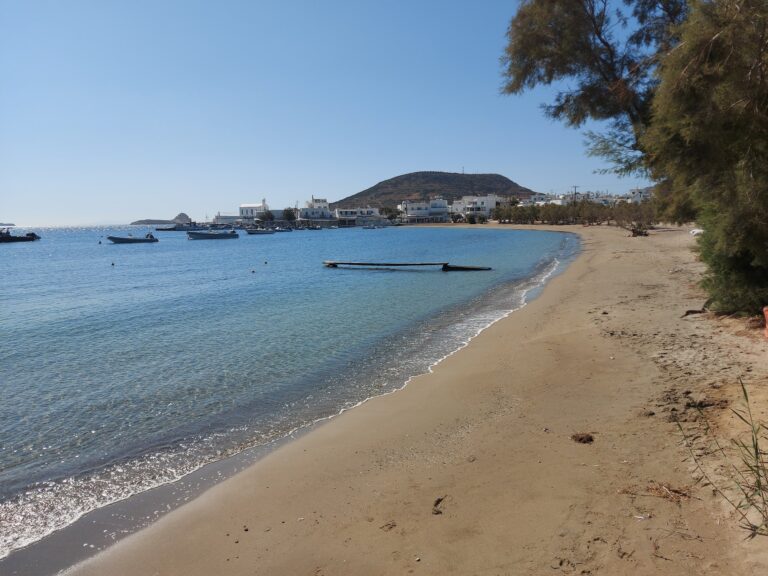
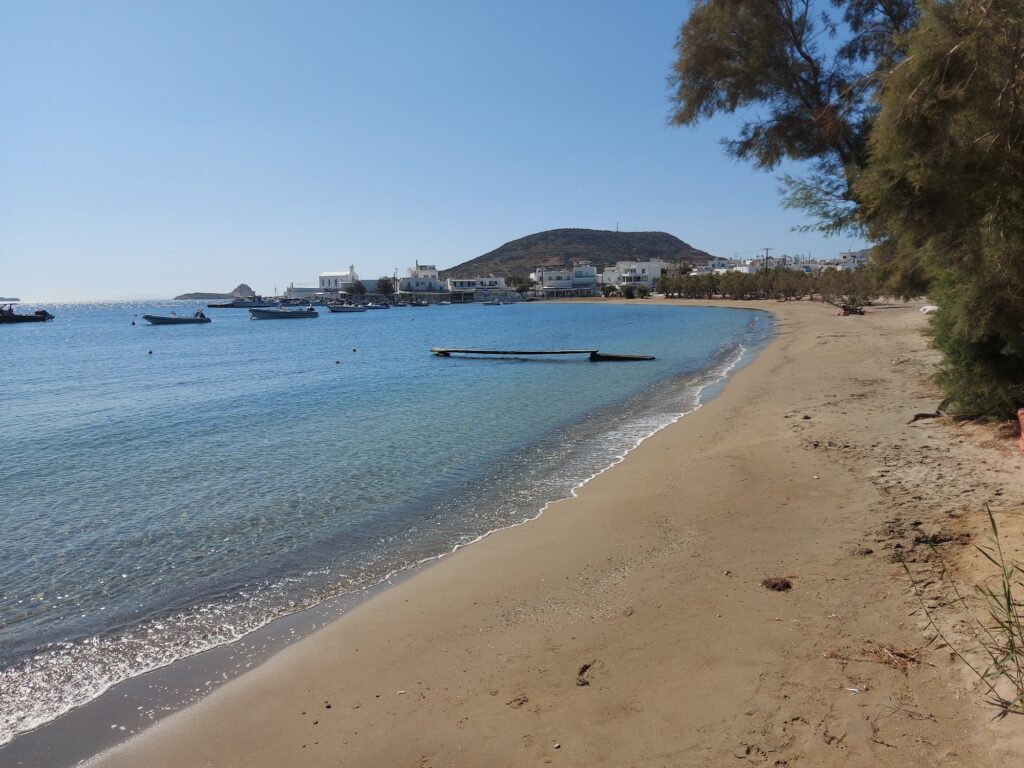
The beach below this headland is Pollonia — the village’s own beach, 500 metres of sand and shingle along the front of the bay, lined with tamarisk trees providing natural shade, shallow and sheltered from the Meltemi by the position of Kimolos to the north. The small ferry pier to Kimolos sits at the beach’s northern end. Every morning the fishing boats return to the quay loaded with what the northern Milos channel produced overnight — octopus, lobster, and fresh fish that go directly to the tavernas along the waterfront promenade before the lunch service begins.
Pollonia is the second port of Milos after Adamas. It is quieter than the main port, more immediately pleasant as a place to stay, and the base from which more of the island’s external attractions are accessible by boat. The drive from Adamas takes approximately 20 minutes on the paved road northeast.
Getting There: 10km From Adamas, 20 Minutes by Car, Bus Hourly, Kimolos Ferry From the Beach Pier
From Adamas, follow the main road northeast for 10 kilometres — approximately 20 minutes by car or scooter. The road passes through the central Milos plateau and descends toward the northeast coast. The bus from Adamas to Pollonia runs hourly throughout summer. Milos Airport is approximately 10 kilometres from Pollonia, making arrival direct from Athens by domestic flight a realistic option for shorter stays.
Kimolos ferry: the small ferry crossing from Pollonia to Psathi (the Kimolos port) takes 20 to 30 minutes. Multiple daily crossings in summer, with the first departure in the morning and the last return in the late afternoon. Day trips to Kimolos from a Pollonia base are entirely straightforward.
The Beach: 500m Sandy and Shingle, Tamarisk Shade, Wheelchair Accessible, Shallow, Fishing Boats at the Pier
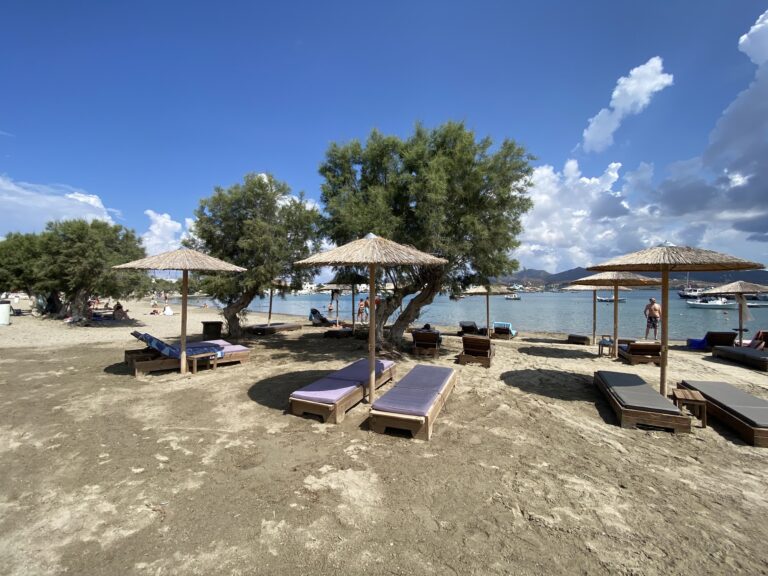
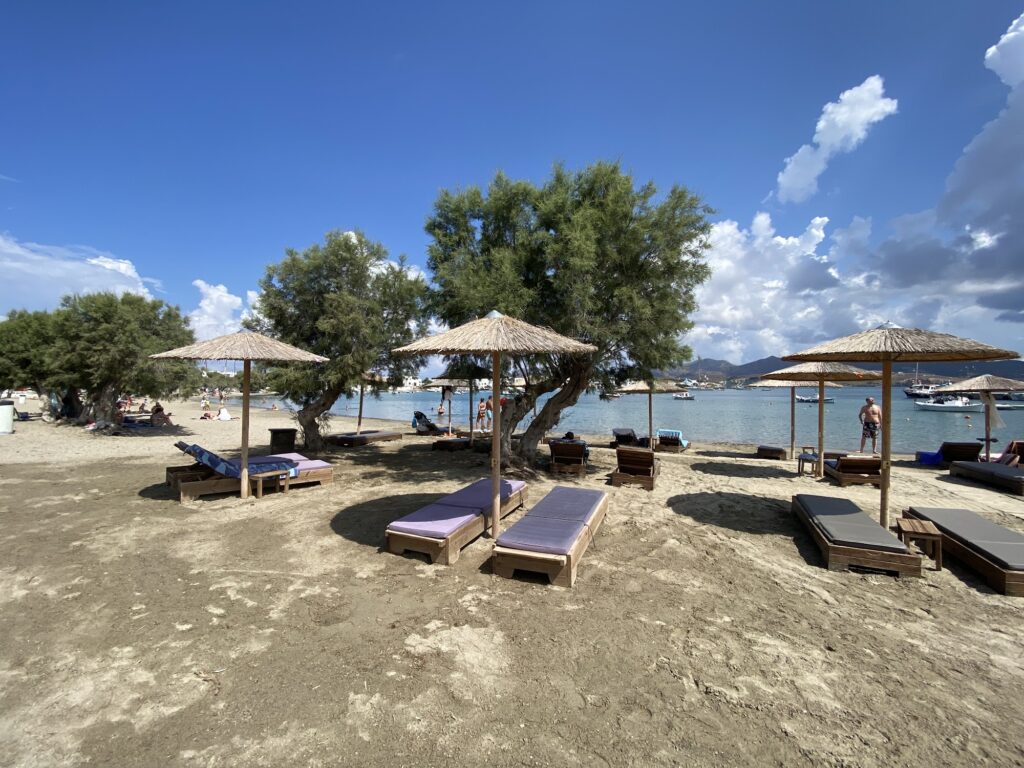
The beach is long and gently curved. The tamarisk trees run the full length behind the sand — the specific natural shade that makes Pollonia comfortable for a full day. Sunbeds and umbrellas are available from the waterfront tavernas. The beach is wheelchair accessible — specifically noted in visitor accounts and one of the few beaches on Milos where this applies reliably.
The water is shallow throughout — the bay’s position inside the Kimolos–Milos channel creates the sheltered conditions that make it the most reliably calm family beach on the island’s northeast coast. The fishing boats moor directly at the beach-adjacent pier, which means the quay has a specific working-harbour character on top of the resort beach character.
A playground is in the village near the beach. The promenade behind the sand is largely pedestrianised near the waterfront. The church of Agia Paraskevi is at the right (south) end of the settlement.
The Kimolos Ferry: 20–30 Minutes, Day Trips Easy, Chalk and Mineral History
The ferry from Pollonia to Kimolos is the specific short crossing that makes Pollonia a natural base for Kimolos exploration. Kimolos — whose name comes from the Greek word for chalk (kimolos) — has its own extraordinary geology: the island was a major source of fuller’s earth (used to clean wool) and bentonite in antiquity, and the chalk-white landscape on the north side of the island has a specific visual character. The island has far fewer tourists than Milos despite its proximity and the ease of crossing.
The boat excursions from Pollonia pier also serve Polyaigos — the largest uninhabited island in the Aegean, with dramatic beaches accessible only by sea and a Mediterranean monk seal population — and Glaronissia, the vertical basalt column sea caves north of Milos famous among divers.
The Temple of Apollo Headland and the Fylakopi Archaeological Site
The southern headland where the Temple of Apollo stood has views that explain the temple’s location better than any written description. Ancient Greeks generally built temples to Apollo in elevated positions with commanding views of the sea and the horizon. This headland has both.
Fylakopi — the major Bronze Age archaeological site on Milos — is a short drive from Pollonia on the northeast coast. It was continuously occupied from approximately 3000 BC, developed through three phases of Cycladic, Minoan-influenced, and Mycenaean occupation, and its excavations in the late 19th century produced some of the most important evidence for Aegean Bronze Age civilisation then known. The Lady of Phylakopi — a painted terracotta figurine — is among the significant finds. The site is open and visible from the road; the excavations are ongoing.
The Diving: Polyaigos, Kimolos Reefs, Sea Caves
Pollonia is the northeast coast base for diving on Milos. The dive centre in the village offers excursions to the Polyaigos reefs, the sea caves and volcanic arches along the northern Milos coast, and the underwater topography created by the same volcanic geology that produces the above-water landscape. The clear water of the northern channel is the specific quality that makes north Milos diving productive — visibility is high, the geological formations are varied, and the Mediterranean monk seals that inhabit Polyaigos are an occasional sighting for experienced divers.
The Tavernas and the Daily Catch
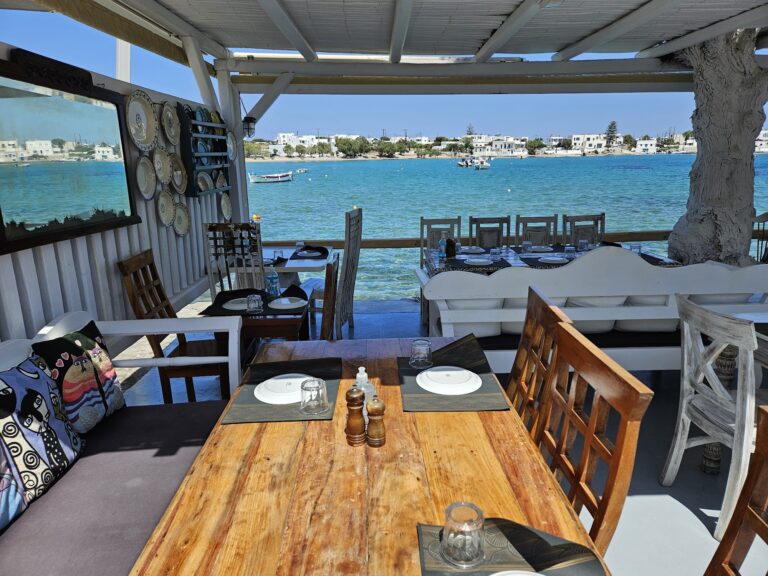
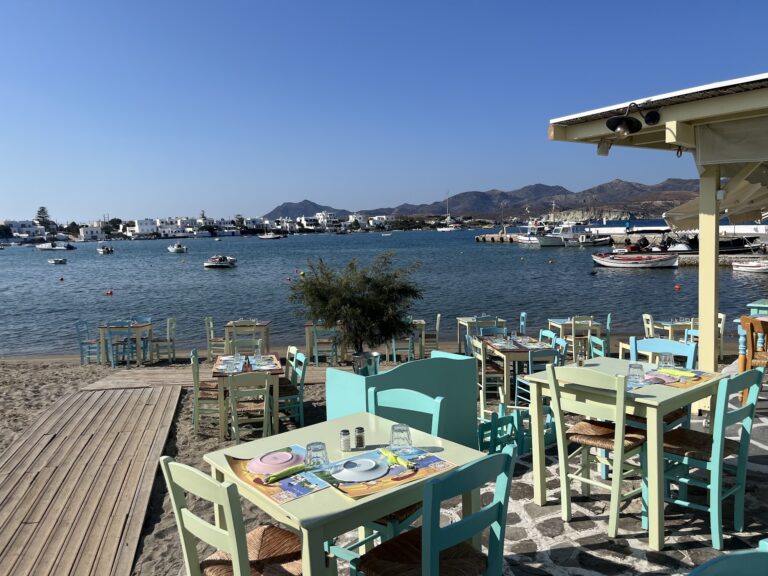
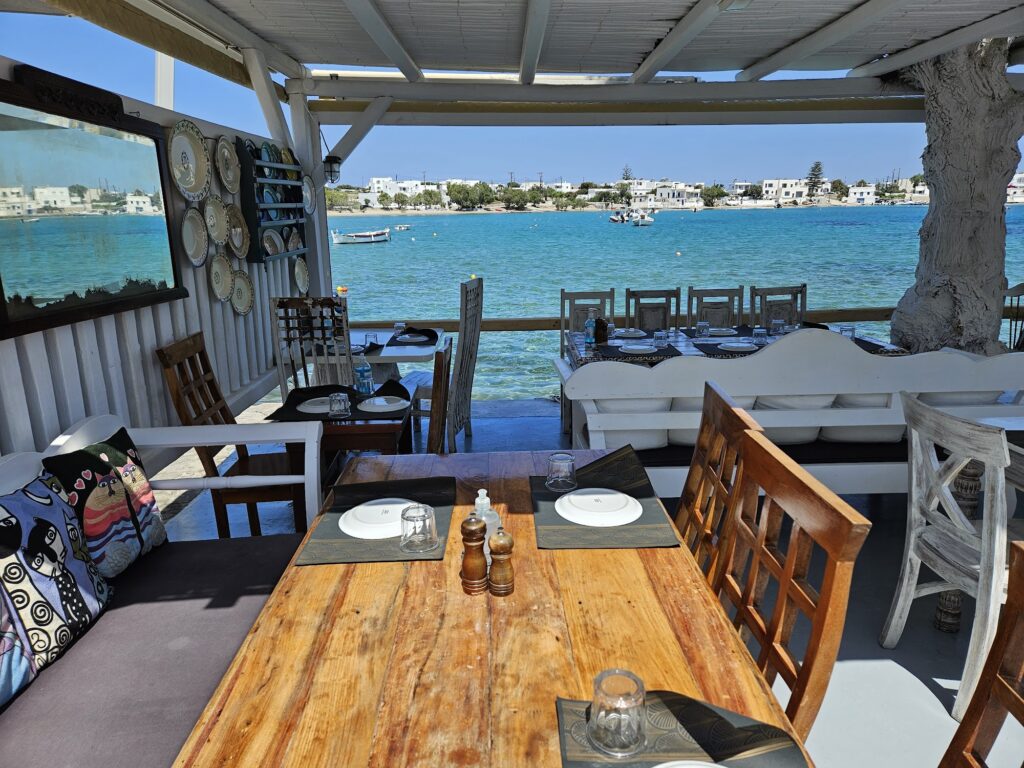
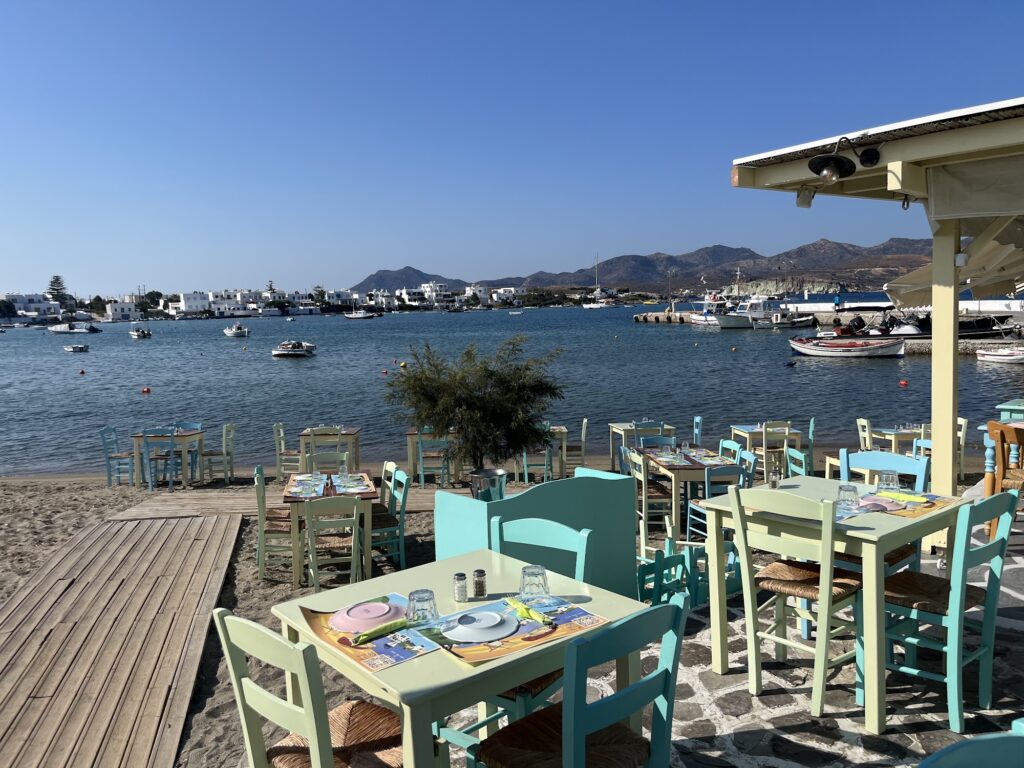
The waterfront tavernas at Pollonia receive the fishing boats in the morning and serve what arrived. Rifaki taverna is specifically and consistently named by multiple sources as one of the best on Milos — small plates, local ingredients, outdoor seating, the kind of operation that becomes the specific reason visitors return to Pollonia. The sunset from the Pollonia waterfront over Kimolos is the evening programme.
Pollonia Beach on Milos is the 500-metre tamarisk-shaded sandy shore at the second port of the island — the ferry to Kimolos departs from the northern pier (20–30 minutes, day trips easy), the Temple of Apollo headland at the southern end (gone, but the position remains), the Fylakopi Bronze Age site a short drive away, daily fishing boats returning with octopus and lobster, wheelchair accessible, shallow and sheltered, Rifaki and other waterfront tavernas, boat excursions to Polyaigos and Glaronissia, diving centre in the village, playground, 10 kilometres from Adamas by paved road, hourly bus, and the sunset over Kimolos from the promenade.
Drive northeast from Adamas. Walk straight from the car to the water. Take the morning ferry to Kimolos. Return for the sunset.
Map
Sorry, no records were found. Please adjust your search criteria and try again.
Sorry, unable to load the Maps API.