
Agios Isidoros Beach Lesvos: Ouzo Shore Near Plomari
Profile
Agios Isidoros Beach, Lesvos: The 700m Blue Flag Pebble Shore 2km From Plomari, Where the Barbayianni Ouzo Distillery Has Been Operating Since 1860 and the Car Park Fills by 11am on Sundays
Greece | Agios Isidoros | Plomari, Lesvos, Northeast Aegean
Lesvos produces approximately half the world’s ouzo supply. The tradition is concentrated in the south of the island, around the town of Plomari — a port settlement of tile-roofed houses, small factories, and a harbour where fishing boats and ouzo deliveries share the same waterfront. Plomari has four operating ouzo distilleries. The oldest of them, Barbayianni — founded in 1860 by the Varvayiannis family and still family-run — is located not in Plomari itself but two kilometres west, at Agios Isidoros, directly beside the beach. The Barbayianni ouzo factory is the specific detail that makes Agios Isidoros beach different from every other Blue Flag beach in the Northeast Aegean: the scent of anise from the distillery drifts on warm days, and the ouzo in the taverna glasses has been produced metres from where you are sitting.
The beach is named after the chapel of Agios Isidoros that stands nearby — a small Greek Orthodox church that was the settlement’s original landmark before the ouzo industry and the summer visitors arrived. The village of Agios Isidoros exists because of the beach and the distillery, in that order. It is a working place as much as a holiday one, and the combination gives it an atmosphere distinct from the purely tourist villages elsewhere on the south coast.
The beach holds a Blue Flag award and has done so continuously since 1992 — one of the longest-running Blue Flag designations in Greece. It has been voted seventh best beach in Greece in clean beach polls. The water is warmer and more sheltered from the wind than the north coast beaches of Lesvos, because the south coast faces the Aegean between Lesvos and the Turkish mainland, where the sea has more time to heat before reaching the shore.
Getting There: 60 Minutes From Mytilene, 2km From Plomari, Arrive Before 10am on Sundays for Parking and Sunbeds
From Mytilene — the capital of Lesvos — follow the main road south toward Plomari. The drive takes approximately 60 minutes. Agios Isidoros is signposted and appears 2 kilometres before you reach Plomari town. The free car park is small and fills by 11am on Sundays in peak season — a widely noted visitor frustration. Arriving before 10am on Sundays solves the problem directly. On weekdays the car park is less pressured.
KTEL buses run from Mytilene to Plomari with a stop at Agios Isidoros beach. The bus is the alternative for visitors without a hire car, though services are less frequent than on the north coast routes.
From Plomari town, the beach is 2 kilometres west — a 20-minute coastal walk.
The Beach: 700m of Sand and Fine Pebbles, Blue Flag Since 1992, Organised Central Section, Sea Urchins on the Rocky Margins
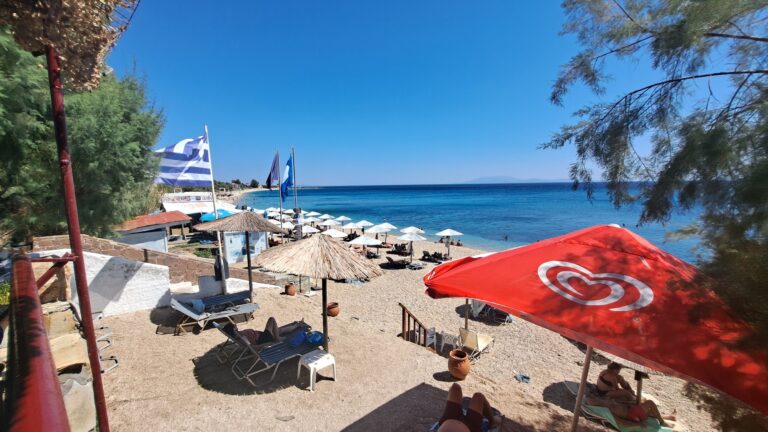
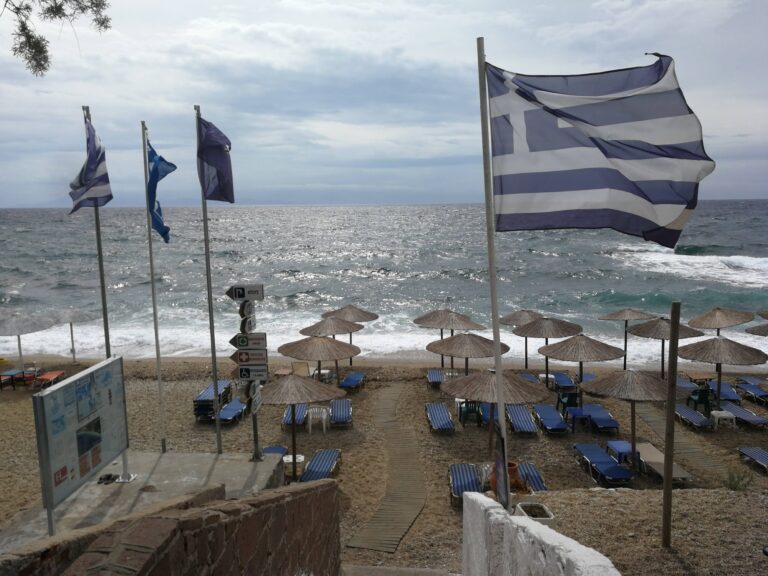
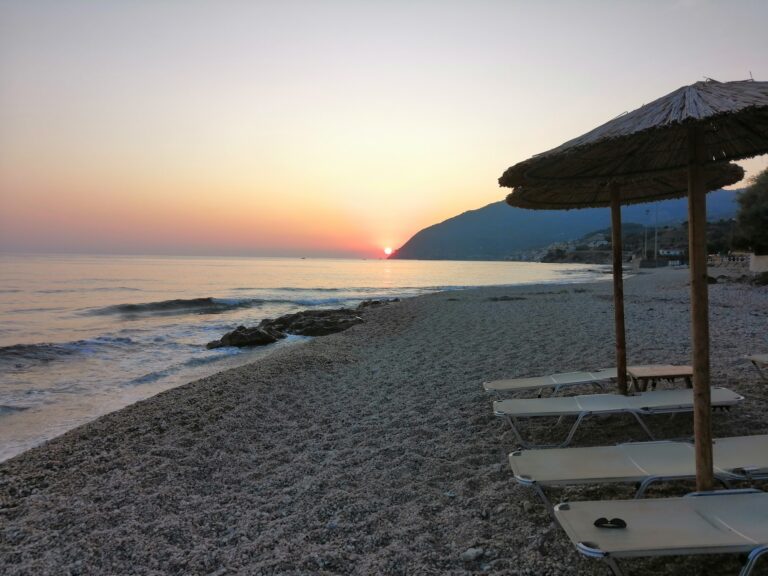
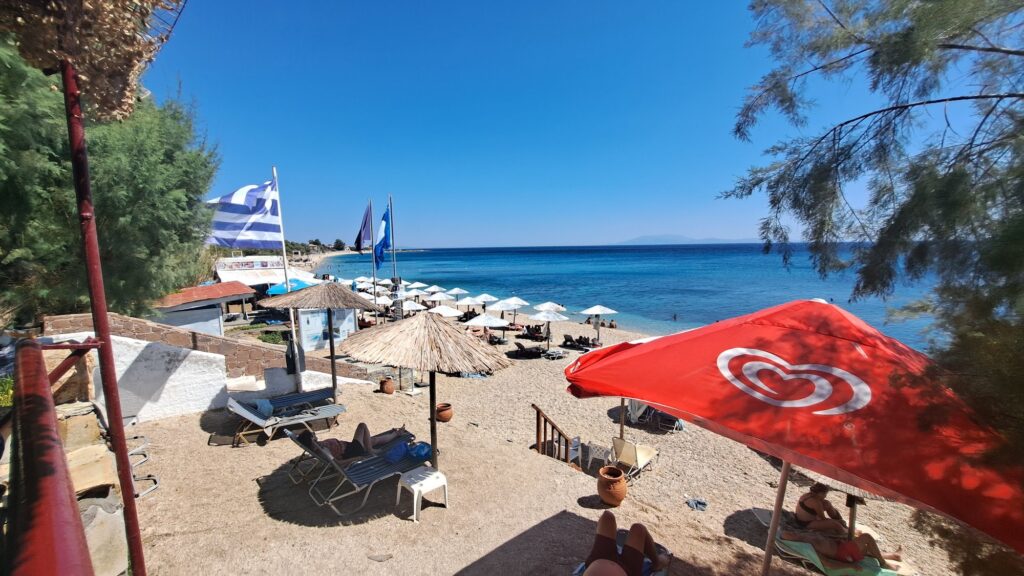
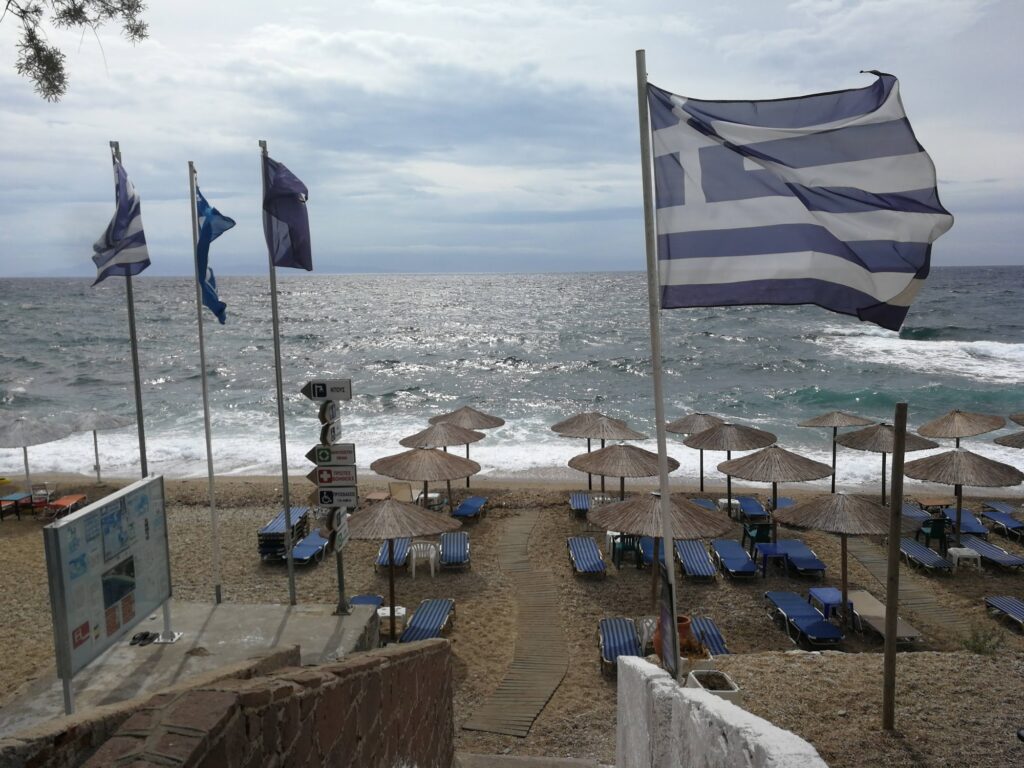
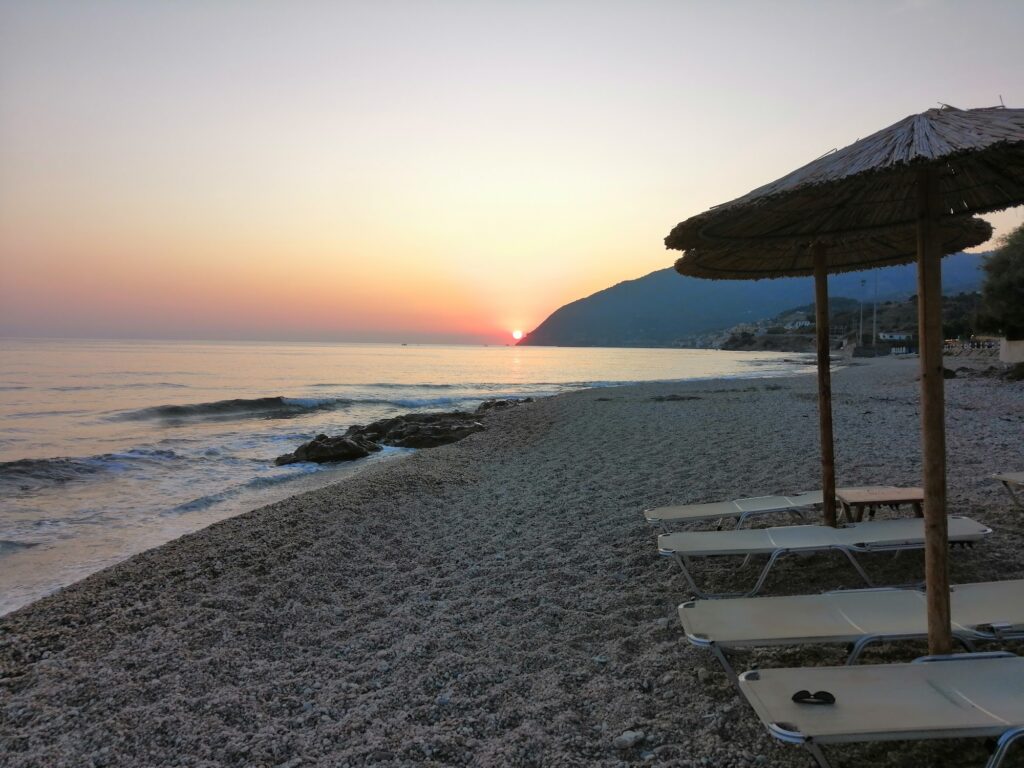
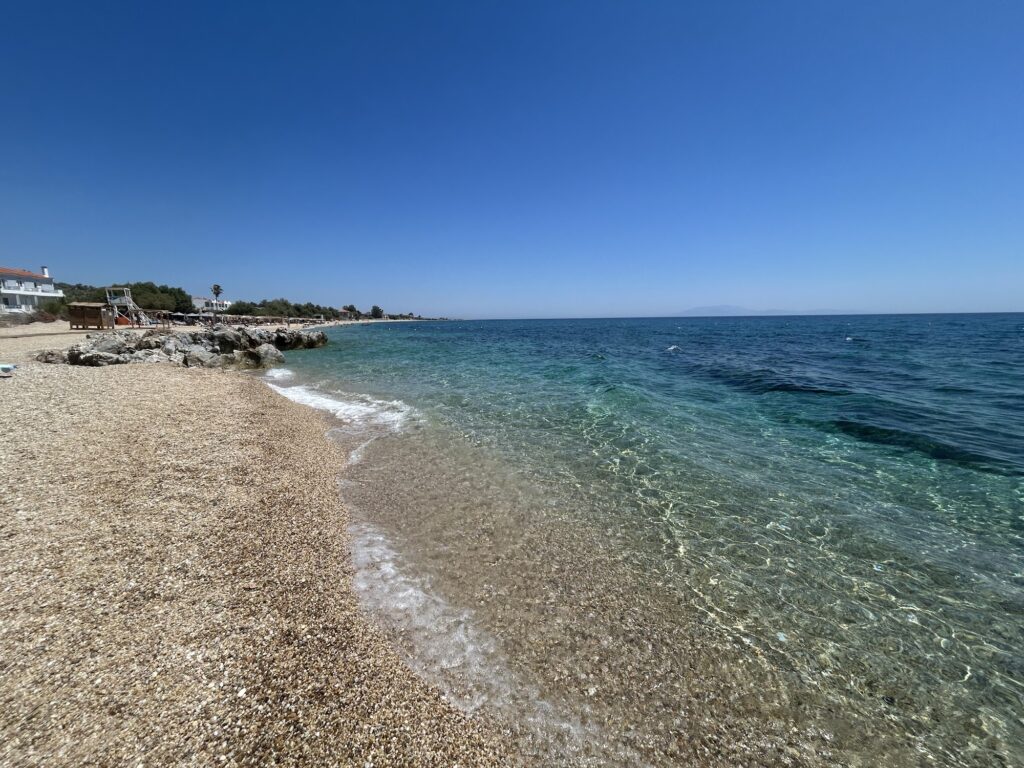
The beach is approximately 700 metres long, a mix of fine pebbles and sand that varies in texture along its length — sandier in the central organised section and more pebble-dominant toward the rocky outcrops at either end. The central section has sunbeds, umbrellas, showers, changing rooms, and a beach volleyball court. The seabed slopes slowly from the shore, which makes it suitable for families with children during calm conditions.
Sea urchins are present in the rocky sections at the edges of the bay. Water shoes are recommended if you plan to explore beyond the sandy central entry zone. The central entry itself is clear of serious sea urchin hazard but the rocky outcrops that make the snorkelling interesting also concentrate the sea urchin population.
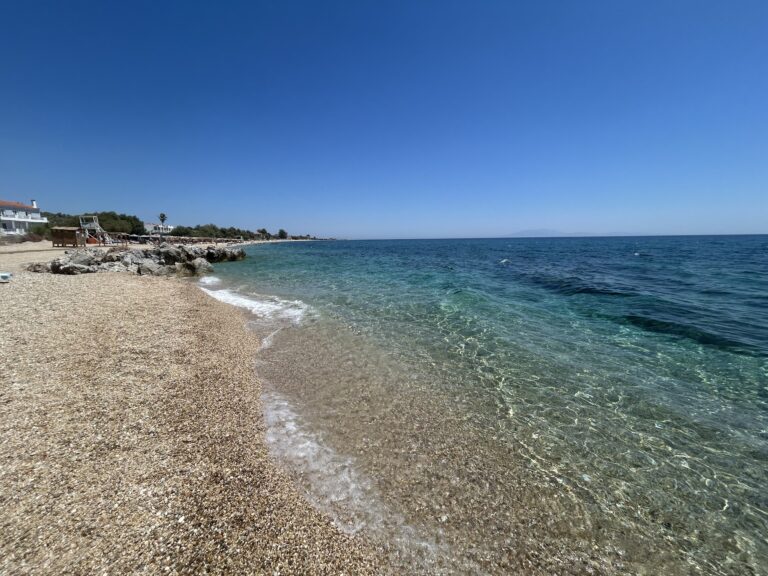
The water is described consistently by visitors as crystal clear and warmer than the island’s north coast beaches. The south-facing orientation and the sheltering effect of the bay keep wave action minimal even on days when the north wind is blowing across the island.
The Barbayianni Distillery: Operating Since 1860, Tours Available, the Source of Plomari Ouzo
Barbayianni ouzo is the most internationally recognised Plomari brand — the bottle with the blue label and the Varvayiannis family name is distributed throughout Europe and exported globally. The distillery at Agios Isidoros began production in 1860 and has not stopped since. Tours of the distillery are available, providing direct access to the copper pot stills, the anise-infusion process, and the ageing methodology that defines this specific ouzo character.
The Barbayianni tasting room is open to visitors in summer. The combination of a beach morning, a distillery tour, and lunch at one of the harbour-front tavernas with a glass of the local product and grilled octopus is the specific Agios Isidoros day programme.
The Plomari Ouzo Festival: Late July, Four Days, the Most Significant Ouzo Event in Greece
The annual Plomari Ouzo Festival takes place in late July, typically over four days. The festival celebrates Plomari’s status as the ouzo capital of Greece with music, dancing, food, and extensive ouzo tasting from all four local distilleries. It is the largest ouzo-focused cultural event in the country and draws visitors from across Greece and from the Greek diaspora in particular. For visitors planning a Lesvos summer trip, the Plomari Ouzo Festival is the specific reason to be in the south of the island in the last week of July rather than any other week.
Plomari Town: The Ouzo Museum, Traditional Architecture, the Harbour
Plomari town, 2 kilometres east of the beach, has a character shaped by the ouzo industry and the fishing heritage of the south coast. The Ouzo Museum in the town centre presents the history of Lesvos ouzo production with equipment, documents, and context. The town’s neoclassical houses and the waterfront harbour area are the architectural legacy of the prosperous period in the late 19th and early 20th centuries when Plomari ouzo exports made fortunes for the distillery families.
Eating at a Plomari harbour taverna rather than at the beach tavernas is the consistent recommendation for visitors wanting the best food at the best price. The Kalloni sardines from the inland Gulf of Kalloni — cured in salt and served with ouzo — are the specific food pairing that has been a Lesvos tradition for generations.
The Lesvos South Coast Context: Warmer, Sheltered, Different Character From the North
The south coast of Lesvos is significantly different in character from the north, which has the famous resort of Molyvos (Mythimna) and the dramatic Petra rock church. The south is quieter, more local-facing, and less developed for international tourism. Agios Isidoros and Plomari are the primary draws for the south coast, alongside the medieval village of Agiasos inland and the natural harbour of Skala Eressou in the southwest. For visitors based in Mytilene, the south coast road through Plomari is a full day’s circuit.
Tsamakia Beach Mytilene Lesvos Greece — the municipal Blue Flag beach below Mytilene’s castle, covered in this series — is the comparison point for the urban beach on the same island. Agios Ermogenis Beach Lesvos Greece, the pine-to-waterline cove 14 kilometres south of Mytilene, is the quieter north-facing alternative. Agios Isidoros is the warmer, longer, more organised south coast version with the ouzo dimension that neither of the others has.
Agios Isidoros Beach on Lesvos is the 700-metre Blue Flag pebble and sand shore 2 kilometres from Plomari — Blue Flag continuously since 1992, voted 7th best clean beach in Greece, the Barbayianni ouzo distillery operating beside it since 1860 (tours available), water warmer and more sheltered than the north coast, sea urchins on the rocky margins (bring water shoes), arrive before 10am on Sundays for parking and sunbeds, the Plomari Ouzo Festival in late July, the Ouzo Museum in Plomari 2 kilometres east, and Kalloni cured sardines with ouzo at the harbour tavernas.
Drive south from Mytilene. Arrive before 10am on Sundays. Tour the distillery first.
Map
Sorry, no records were found. Please adjust your search criteria and try again.
Sorry, unable to load the Maps API.