
Diros Beach Laconia: Cave Entrance at Waterline, Neolithic
Profile
Paralia Dirou (Diros Beach), Deep Mani: The White Pebble Shore Where the Cave Entrance Is at the Waterline, Neolithic Bones Are in the Rock Above, and the 14km Underground River Is Only Accessible From the Sea
Greece | Pyrgos Dirou | Areopoli Municipality, Laconia, Deep Mani, Peloponnese
The cave entrance is at the waterline. From the Diros beach, standing at the edge of the white pebbles and looking south along the base of the cliff, the opening of the Vlychada cave system is visible at the water’s edge — a dark arch in the limestone where the subterranean river that carved the cave system meets the sea. This geographical fact makes Paralia Dirou unlike any other beach in this series: the specific geological feature that draws 150,000 visitors a year begins at the tideline of the beach where those visitors also swim.
The Diros Caves were inhabited from the Palaeolithic through the Neolithic periods. Inside, archaeologists found the remains of people who lived there approximately 5,000 years ago — pottery, tools, bones, the physical record of human occupation in a cave that was subsequently sealed by geological movement and opened again only when the Petralona cave discoveries in northern Greece prompted renewed surveys of Mani limestone formations in the 1950s. Neanderthal bones and bear remains from much earlier periods were also found in the deeper, currently inaccessible sections. The cave’s total mapped length is approximately 14 kilometres; the 1.5 kilometres currently open to visitors are navigated by flat-bottomed boat in 30 to 45 minutes, floating through chambers of stalactites and stalagmites with the underground river below.
The cave system is on UNESCO’s Tentative List for World Heritage designation. The beach beside it is simply where you swim before or after the boat tour.
Getting There: 10km South of Areopoli (15 Minutes), 20 Minutes From Limeni, Large Shared Parking for Beach and Caves
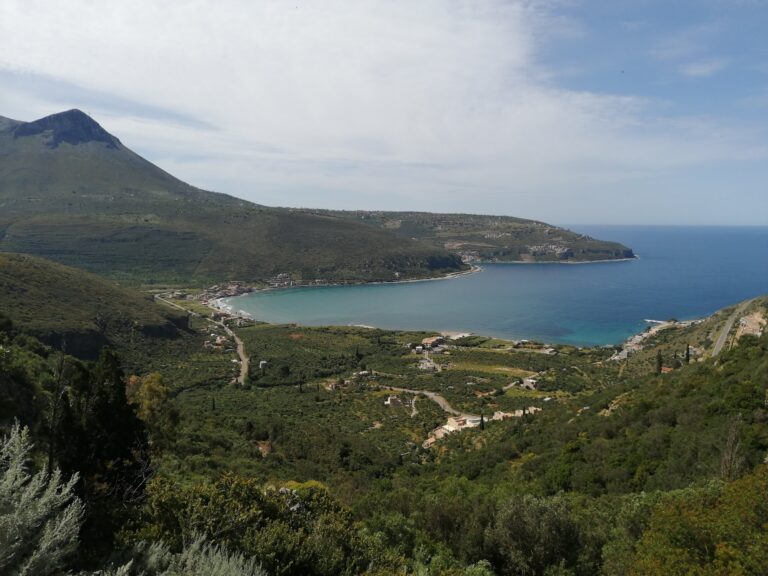
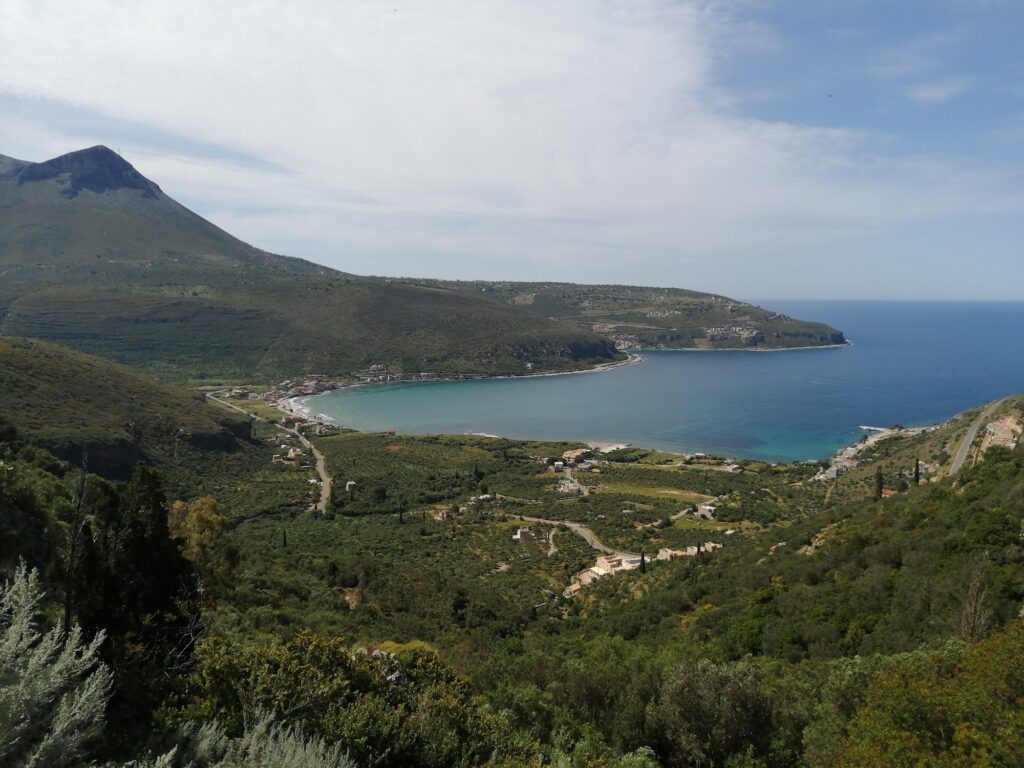
From Areopoli — the capital of the Deep Mani, 10 kilometres north — the descent to Pyrgos Dirou and the cave site takes 15 minutes on the winding road. From Limeni (where Dexameni Beach and the Mavromichalis tower house are — covered in Dexameni Beach Limeni Greece), the drive south takes approximately 20 minutes.
A large free parking area serves both the cave complex and the beach. From the car park, a short walk reaches the beach and the cave ticket office simultaneously. The ticket office queue in peak July and August is the specific challenge — booking in advance is the practical recommendation for those who want to combine the morning beach with the afternoon cave tour without waiting.
The Beach: White Pebble, Calm Laconian Gulf Water, Cave Entrance Visible From the Shore, No Facilities Beyond the Cave Complex Infrastructure
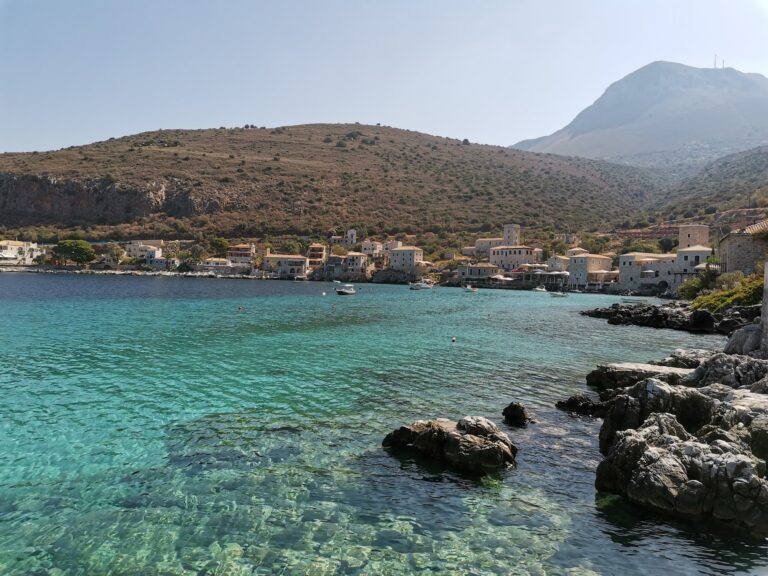
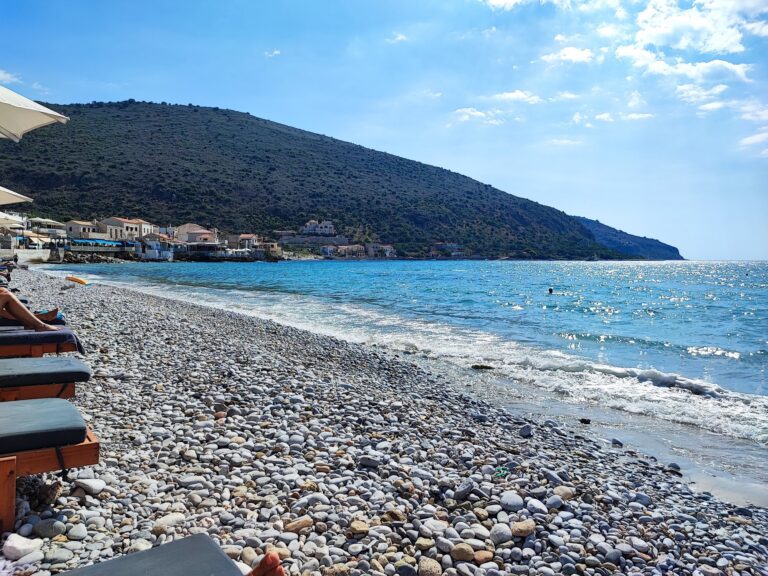
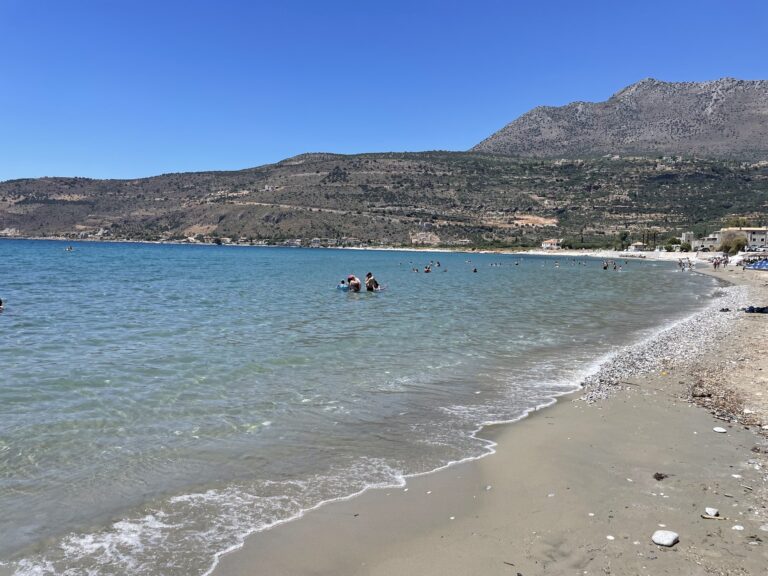
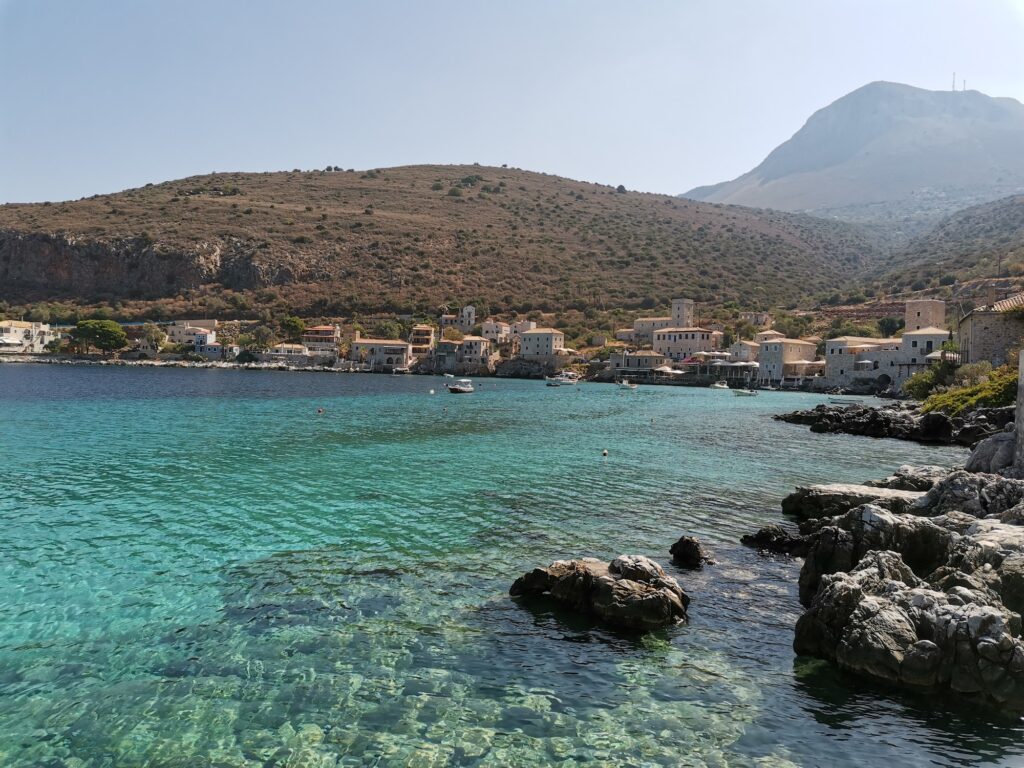
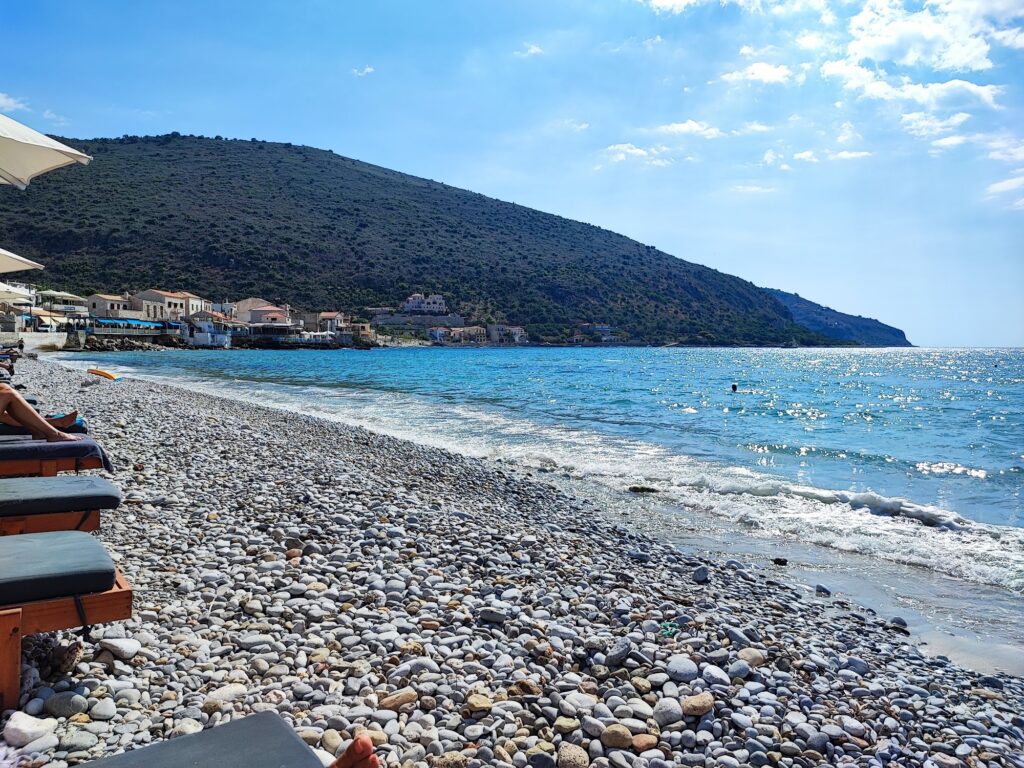
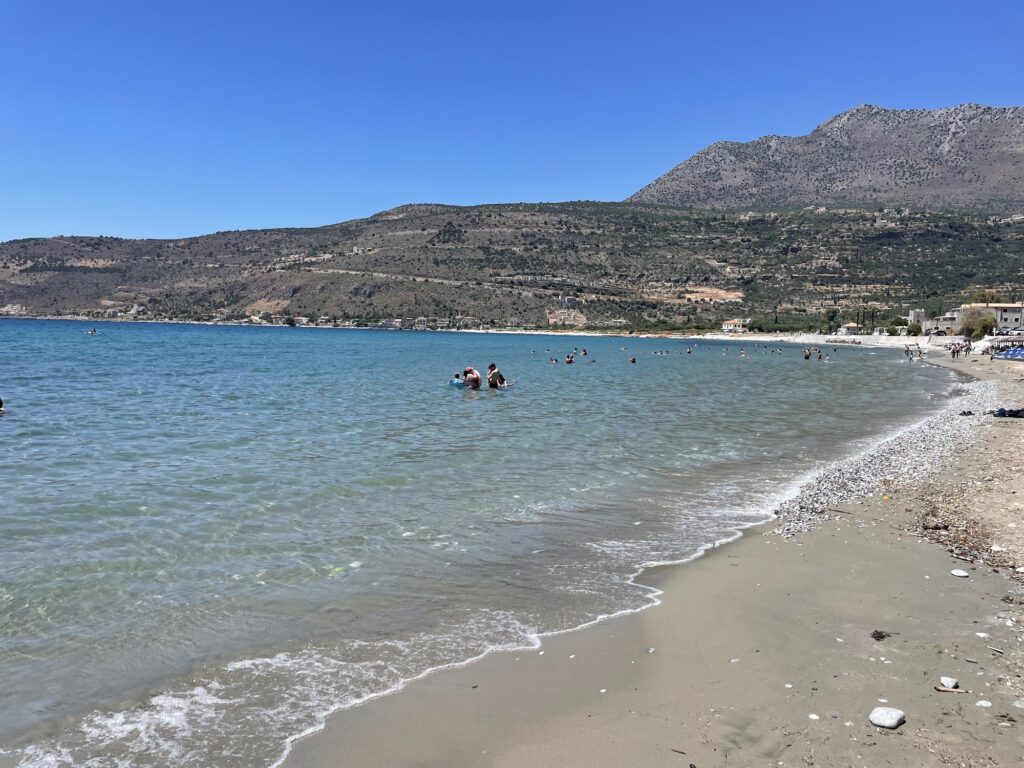
The beach is white pebble — the characteristic Deep Mani beach composition that produces the neon turquoise shallows visible in every photograph of this coast. The water is calm, the bay semi-enclosed, the entry gradual for a pebble beach. Water shoes are the standard recommendation. The depth increases at a steady rate.
The cave complex infrastructure — ticket office, café, souvenir shop — is the closest facility. Sunbeds are available from the adjacent businesses in season. The cave entrance itself is visible from the beach looking south, and at low water the specific arch at the waterline is the most photogenic single element of the Diros coastal scene.
The Diros Caves: Neolithic Bones, Neanderthal Remains, the Boat Tour, the Chambers
The boat tour enters through the low cave arch, immediately entering a passage where the ceiling is close and the water is the river that carved the cave over hundreds of thousands of years. As the passage opens into larger chambers, the scale becomes apparent — domes of stalactites 20 metres above the water surface, columns where stalactites and stalagmites have merged over millennia, the specific colour of the limestone where the mineral deposits have accumulated in layers.
The Neolithic remains inside indicate that the cave was a place of habitation and probably of ritual — pottery and human bones from communities that lived between 3,000 and 4,000 BC, in the period when the cave was accessible before geological movement closed the original entrance. The Neanderthal remains and the bear bones are from tens of thousands of years earlier, deposited in the deeper sections not currently open to visitors.
The cave was rediscovered in 1949 when a dog fell into a hole that led to the underground passages. The first archaeological surveys followed immediately. The site was opened to visitors in 1967.
Pyrgos Dirou and the Maniot Tower Architecture
Pyrgos Dirou — the village above the cave and beach — has the specific tower house architecture that defines the Deep Mani. The towers were built by clan families during the Ottoman period as both residences and fortifications; the Deep Mani was never fully pacified, and the towers were the physical expression of family power and the constant low-level warfare between clans. The Pikoulas Tower in the area is among the oldest surviving examples — a structure that predates the main period of tower construction that characterises the Deep Mani villages visible from the coastal road.
Paralia Dirou in the Deep Mani is the white pebble beach where the Vlychada cave entrance opens at the waterline — the Diros Caves above (Neolithic remains 3000–4000 BC, Neanderthal and bear bones deeper, 14km total, 1.5km open, boat tour 30–45 minutes, UNESCO Tentative List, cave rediscovered 1949 by a dog), 10km south of Areopoli, 20 minutes from Limeni, large shared parking, calm Laconian Gulf water, white pebbles (water shoes), the cave entrance the most photogenic single element at the tideline, Pyrgos Dirou tower houses above.
Drive from Areopoli. Buy the cave ticket. Swim first. Queue early.
Map
Sorry, no records were found. Please adjust your search criteria and try again.
Sorry, unable to load the Maps API.