Nea Peramos Beach Kavala: Asia Minor Refugee Town Shore
Profile
Nea Peramos Beach, Kavala: The Sandy Town Beach of the Asia Minor Refugee Settlement Founded in 1924, With the Byzantine Castle Above and Ammolofoi’s Dunes 3km West
Greece | Nea Peramos | Pangaio Municipality, Kavala Regional Unit, Eastern Macedonia
Nea Peramos was founded in 1924, when the Convention Concerning the Exchange of Greek and Turkish Populations implemented the compulsory population transfer that followed the Greco-Turkish War. The Greeks who had lived in Peramos — the village near Bursa in northwestern Asia Minor — were expelled. They came to Macedonia and were settled on the coast 17 kilometres west of Kavala, on land that had been Ottoman territory until the Balkan Wars of 1912–13. They named their new settlement after the village they had left. Nea means new. The whole name means “the new Peramos” — the permanent reminder that the original village was taken, burned in 1915, and is now in Turkey.
The town’s population in the 2021 census is 3,516. It is a functioning small town — not a purely seasonal resort — with the specific year-round character that a refugee settlement community built for permanence rather than tourism tends to have. The town’s history connects to the ancient settlement of the area from the 7th century BC, when Thasian colonists established themselves on Mount Isimi above the coast to exploit the gold of Mount Pangaio. The Byzantine castle on the hill above the modern town is the medieval layer between the ancient settlement and the refugee town below.
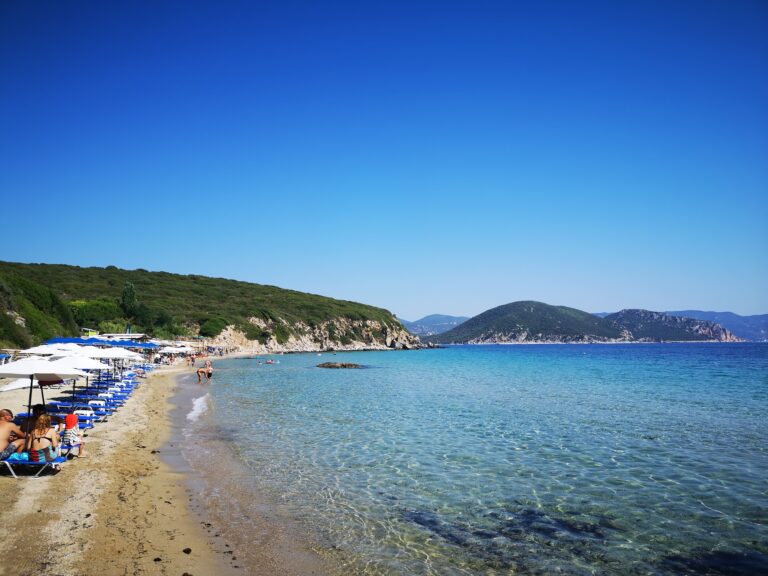
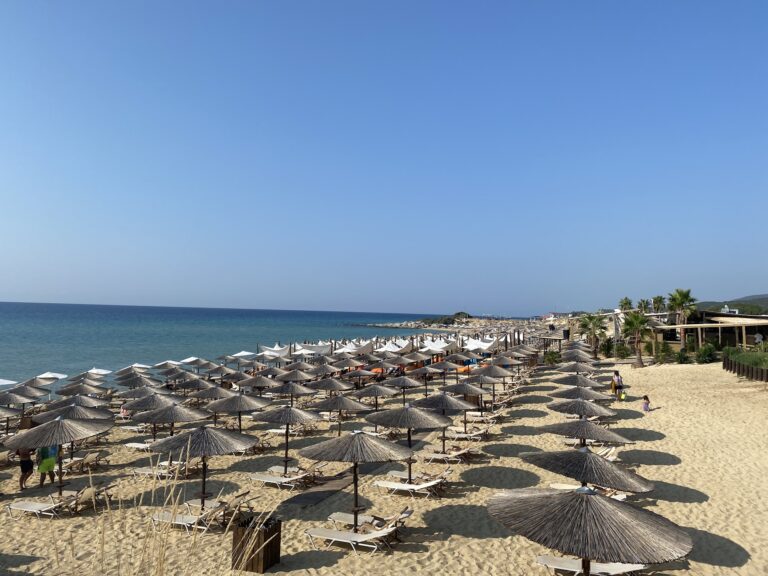
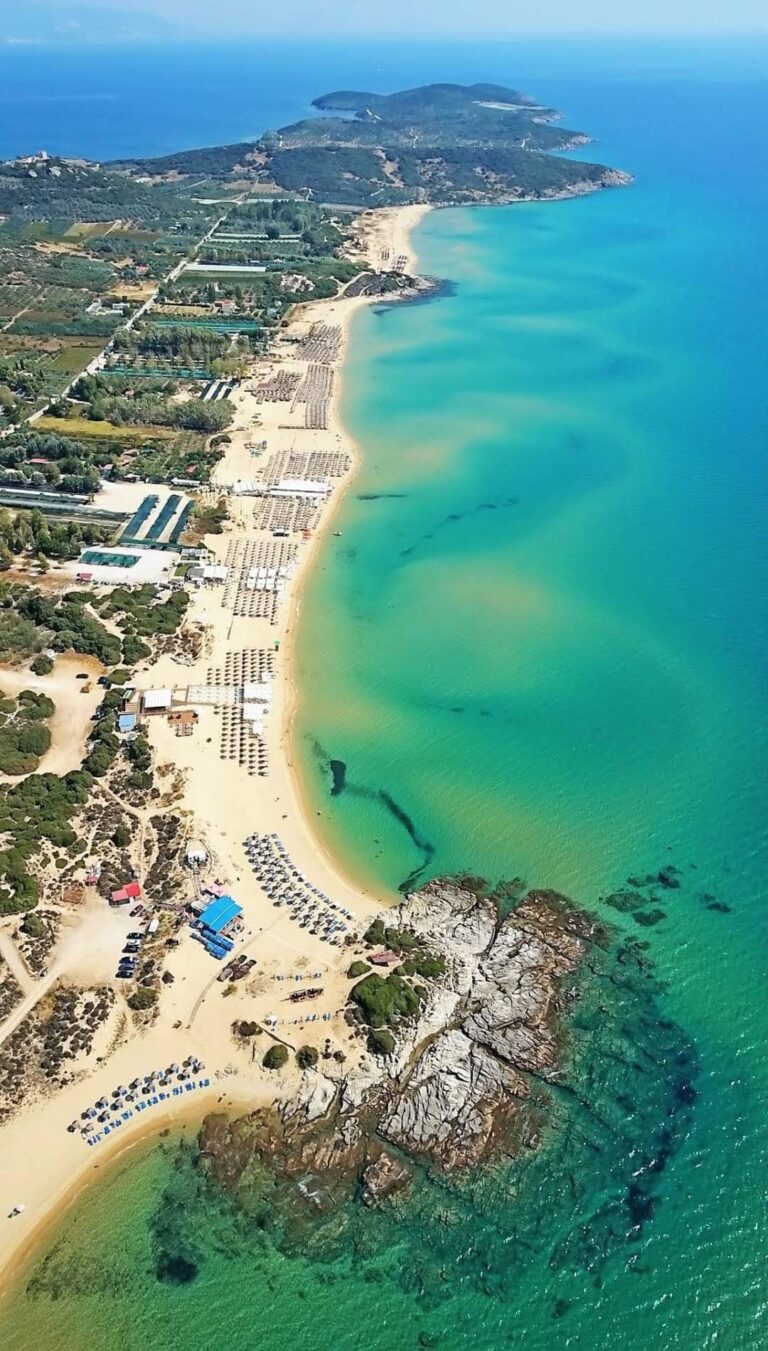
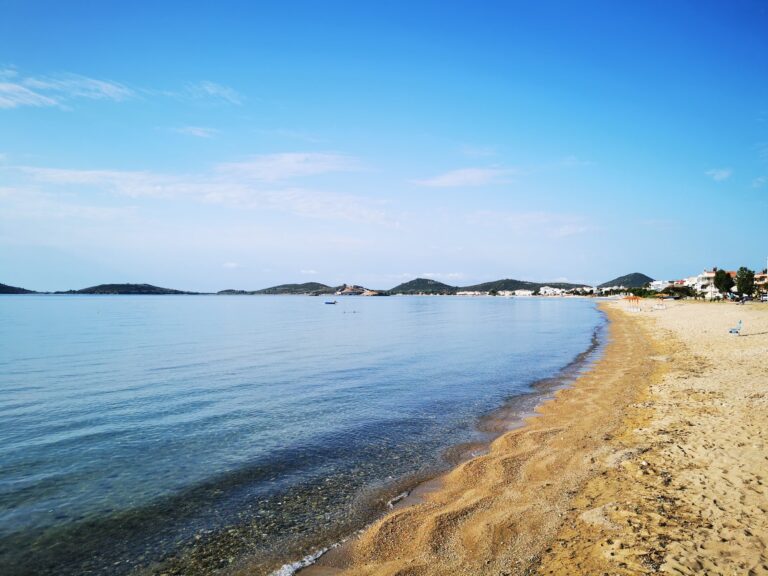
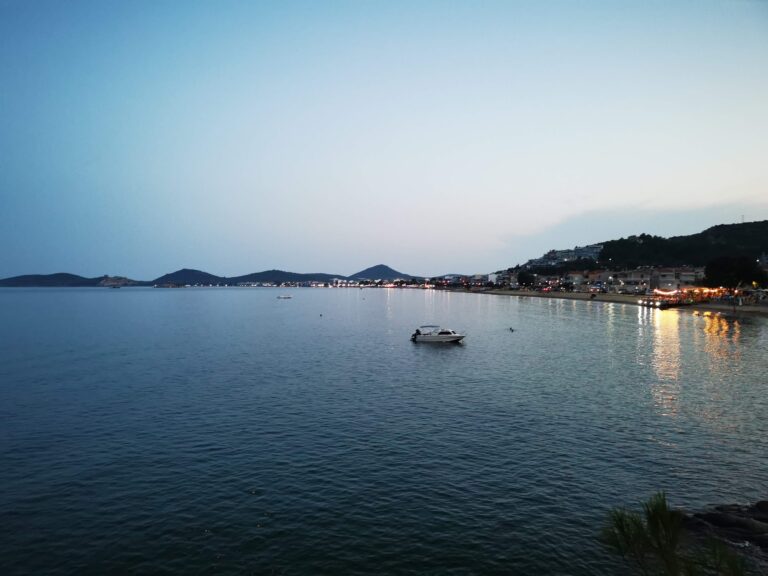
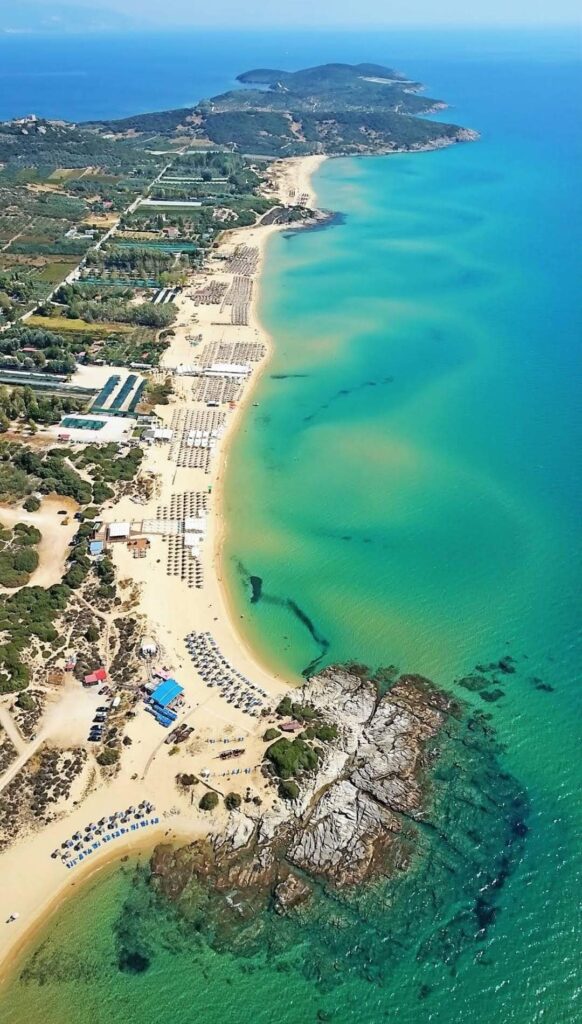
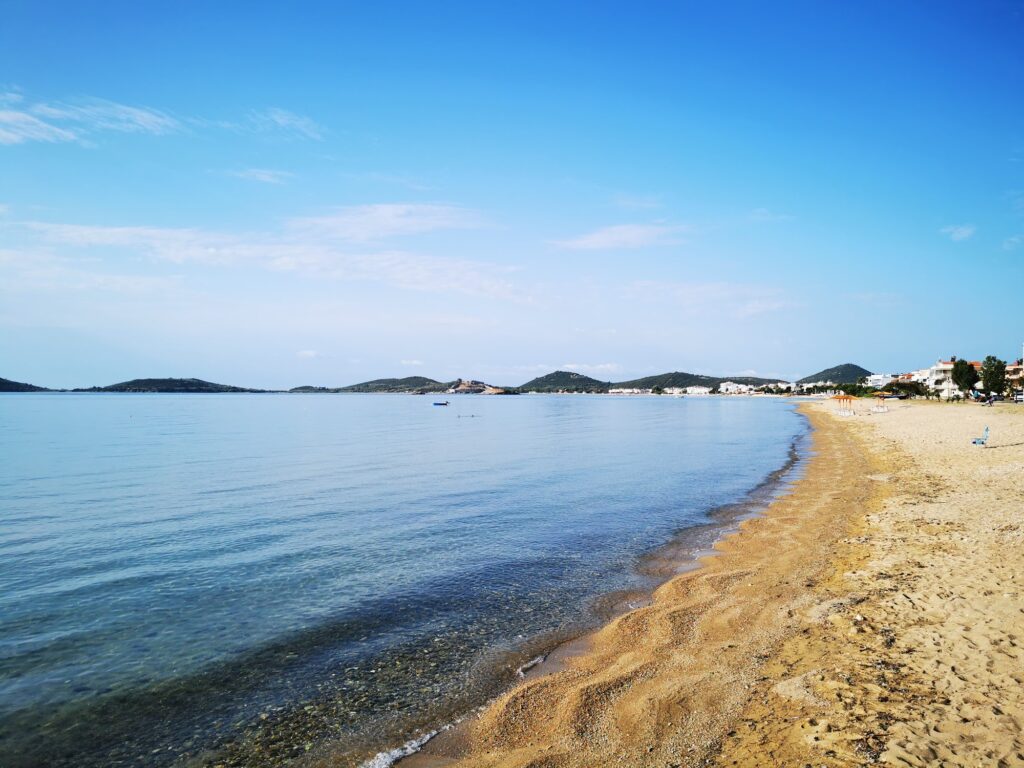
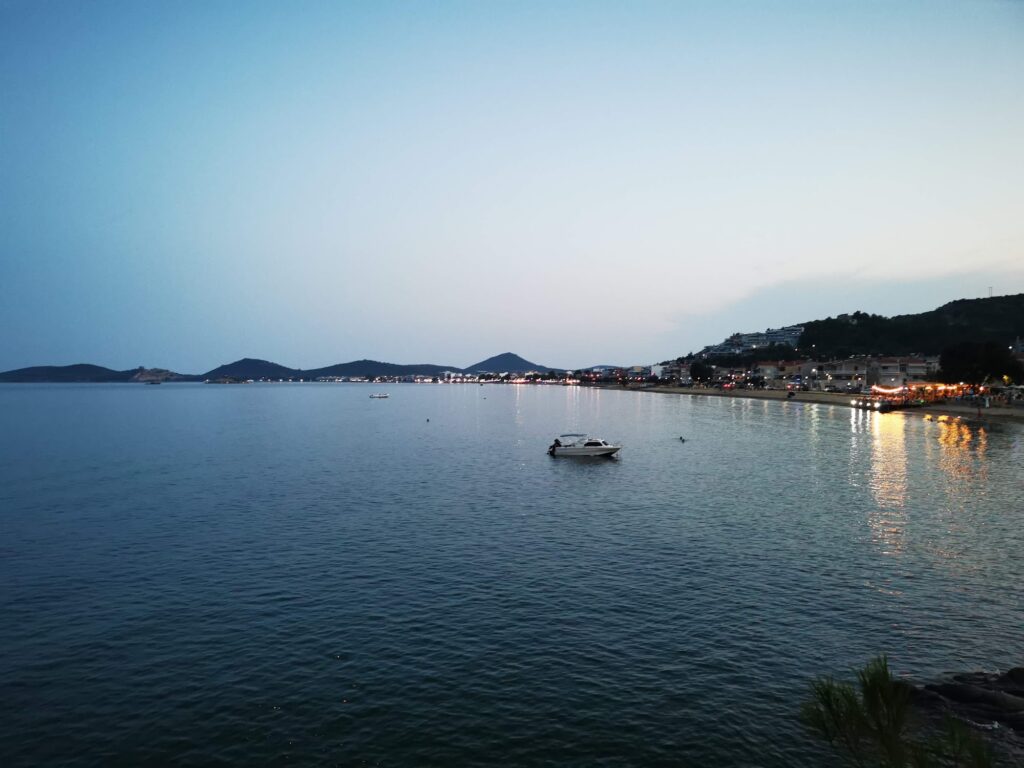
The beach runs along the waterfront of the town — long, sandy, narrow, with gradual depth increase and mostly organised sections. Free entry. Pedestrian areas and pleasant walks with food, coffee, and tables at the water’s edge, as the official visitkavala description puts it: “with everything at hand: food and coffee, with your feet just to the edge or even in the waves.”
Getting There: 17km West of Kavala on the A2 or Old Coastal Road, KTEL Bus From Kavala, Free Parking Along the Promenade
From Kavala, take either the A2 (Egnatia Odos) west and exit at Nea Peramos, or the old scenic coastal road that runs parallel. The drive takes 15 to 20 minutes. The old coastal road passes through the village directly; the A2 exit requires a short descent to the town.
KTEL buses connect Kavala central station directly to Nea Peramos — the journey is approximately 25 minutes. The bus is a practical option for visitors staying in Kavala who want a day trip without a car.
Free parking is available along the main coastal road and in lots at both ends of the beach. The promenade is pedestrianised in summer, and the beach is within a few steps of anywhere in the town.
The Beach: Long, Sandy, Narrow, Gradual Depth, Mostly Organised, Free Entry, Clean and Adequate Without Driving Elsewhere
The official description from nikana.gr is accurate and honest: “The beach in this resort is very beautiful, long, and sandy. We really liked it. It is a bit narrow, with gradual depth, and mostly organised. It is clean and beautiful enough to spend time on it without the need to drive around in the hot sun.”
The beach is the town’s waterfront — not a destination beach reached by a separate journey, but the edge of a functioning settlement. That proximity produces a specific quality: the fish tavernas that the town’s fishing history supports are steps from the water, the promenade is the social space in the evenings, and the market and shops are immediately behind. The experience is closer to eating in a fishing village restaurant than eating at a beach bar.
Thassos is visible on the horizon — the same view that Perigiali Beach Kavala Greece has to the east and that Ammolofoi Beach Nea Peramos Greece has 3 kilometres to the west.
The Byzantine Castle of Nea Peramos: Above the Town, Panoramic Views, the Medieval Layer
The Byzantine Castle of Nea Peramos stands on the hill above the modern town. It dates to the medieval period and was used as a fortified strongpoint during the successive Byzantine, Ottoman, and Bulgarian administrations of the region. The panoramic view from the castle over the town, the beach, the Aegean, and the island of Thassos is the elevated perspective on the entire Nea Peramos geography.
The castle is connected to the ancient site of Oisymi — the Thracian and later Greek city that occupied the heights in antiquity, associated with the Byzantine fortress ruins that also appear at Anaktoroupolis (the “Palace City”) behind Ammolofoi beach. The archaeological layer connects the medieval castle to a settlement that goes back to the 7th century BC.
The Vrasida Peninsula: Between Nea Peramos and Ammolofoi, Named After a Spartan General
Between the town beach of Nea Peramos and the Ammolofoi dunes 3 kilometres to the west, the Vrasida peninsula extends into the sea with its own small beaches and coves. The peninsula is named after Brasidas — the Spartan general who campaigned through Macedonia during the Peloponnesian War in 424 BC, capturing Amphipolis for Sparta in one of the most significant military operations of the war. His tower — Vrasida’s Tower — was built on this peninsula to control the coastal passage. Brasidas died in Amphipolis the following year, 422 BC.
The same Amphipolis that the Kasta Tomb is near — the same Amphipolis that the Lion stands beside — was taken by this general, whose tower stands on the peninsula between these two beaches 2,500 years later.
Loutra Eleftheron: Thermal Baths Near Nea Peramos
Loutra Eleftheron — the thermal baths of Eleftheroupoli — is in the foothills of Mount Pangaio, accessible from Nea Peramos in approximately 20 to 25 minutes. The thermal springs produce water at elevated temperatures with therapeutic properties and are used for the treatment of rheumatic and skin conditions. The combination of a morning beach visit at Nea Peramos and an afternoon at the thermal baths is the specific inland-complement programme that the beach’s proximity to the mountain enables.
The Asia Minor Refugee Community: The 1924 Foundation and What It Means for the Town’s Character
The 1924 settlement gives Nea Peramos a specific character visible in the town’s layout and identity. The refugees came from a coastal town in Asia Minor and were given a coastal location in Macedonia — the deliberate geographic matching that characterised several refugee resettlements of the period. The community built the town with the permanence of people who have lost one home and are determined not to lose the next. The Orthodox church, the town square, the fishing harbour — all were built within years of arrival.
The population exchange of 1923–24 involved approximately 1.5 million Greeks from Turkey and 500,000 Muslims from Greece. Nea Peramos is one of hundreds of communities in northern Greece whose entire population descended from this displacement.
Nea Peramos Beach near Kavala is the long sandy town beach of the Asia Minor refugee settlement founded in 1924 — free entry, narrow and mostly organised, gradual sandy depth, the Byzantine Castle above for the panoramic view, the Vrasida Peninsula named after the Spartan general between the town and Ammolofoi dunes 3 kilometres west, the Loutra Eleftheron thermal baths 20 minutes inland, Thassos visible on the horizon, KTEL bus from Kavala (25 minutes), fish tavernas from the town’s fishing heritage at the water’s edge.
Drive 17km west from Kavala. Park at the promenade. Eat in the fishing village tavernas.
Map
Sorry, no records were found. Please adjust your search criteria and try again.
Sorry, unable to load the Maps API.
Near by places: