Aliki Beach Thassos: Twin Bays and Marble Under the Sea
Profile
Aliki Beach, Thassos: The Two-Bay Peninsula Where Marble Was Shipped to Rome from the 6th Century BC and a Kouros Now Sits in Istanbul
Greece | Aliki | Southeast Thassos
Marble was extracted and barged into ships from 6th century BC until 6th century AD. Today, huge volumes of stones are still visible on the seabed. The peninsula of Aliki on the southeastern coast of Thassos was the port from which completely white, high-quality Thassos marble — sought throughout the ancient world for its purity and its coastal-access extraction — was exported to Rome, to Constantinople, and throughout the Aegean and Mediterranean for 1,200 years. The marble quarry on the peninsula’s tip still exists; its remnants are half-buried in the sea, visible from the surface while swimming.
The area has been inhabited since the 7th century BC and, for a millennium up to the 7th century AD, saw significant economic growth due to the exports of white Thassian marble. Aliki was part of the Roman and Byzantine empires and thriving until it was suddenly abandoned, most likely due to the appearance of pirates that plagued the island’s coastlines.
The story of the abandonment is specific. Probably, a great earthquake was the reason of the abrupt evacuation in Alykes. Two theories compete — pirate raid and earthquake — and the archaeological record has not yet resolved the question definitively. What is certain is that a functioning marble-export port and the communities that sustained it were gone within a relatively short period, and the peninsula was not resettled.
In 1896, excavations revealed a well-preserved Kouros that is now exhibited in the museum of Istanbul — the specific archaeological artefact from Aliki that left the island before the modern era of heritage conservation that would have kept it in Greece.
Getting There: 32km from Limenas, 24km from Potos, Bus to Main Road Then Walk, Limited Parking
Aliki is 32 kilometres from Limenas Thassos and 45 kilometres from the port in Skala Prinos. It is about 24km from Potos, the nearest major settlement.
From Limenas, the drive follows the ring road southeast — approximately 45 minutes. From Potos or Limenaria, the drive is shorter, approximately 20 to 25 minutes.
KTEL Thassos buses on the ring road stop at the main road above Aliki, from which a short descent on a stone-paved path leads to the beach. The bus stop and the path are clearly signed.
There are parking spots for those staying at nearby hotels, but most people park at the sideroad. Along the road there are extensions for parking. The parking challenge is the consistent visitor note for Aliki — the combination of its reputation and its limited road-side parking means arriving before 10am is the minimum for peak season, and the advice to visit in the late afternoon when the day-trip crowds have left is worth taking.
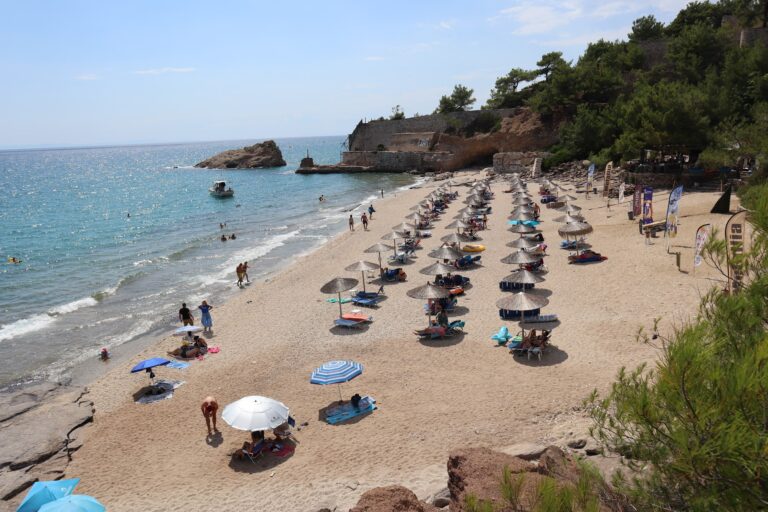
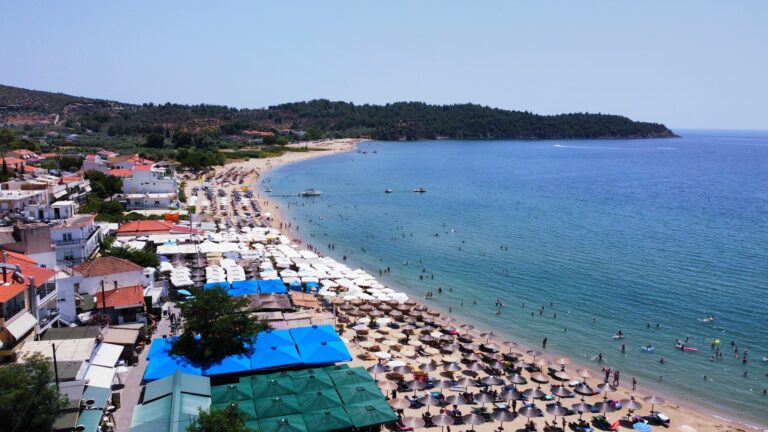
Some visitors might find the western beach crowded and commercialised. A recommended strategy for a more peaceful experience is to visit in the late afternoon and relax on the cliffs with a foldable chair. Avoid visiting on weekends during July and August if you seek serenity.
The Two Bays: Southern (Organised, Crowded, Sunbeds) and Northern (Quieter, Rocky, Archaeological)
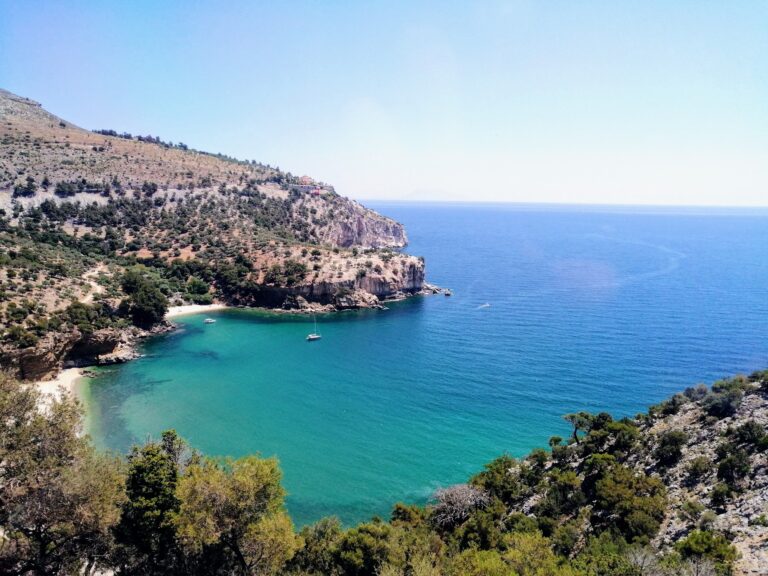
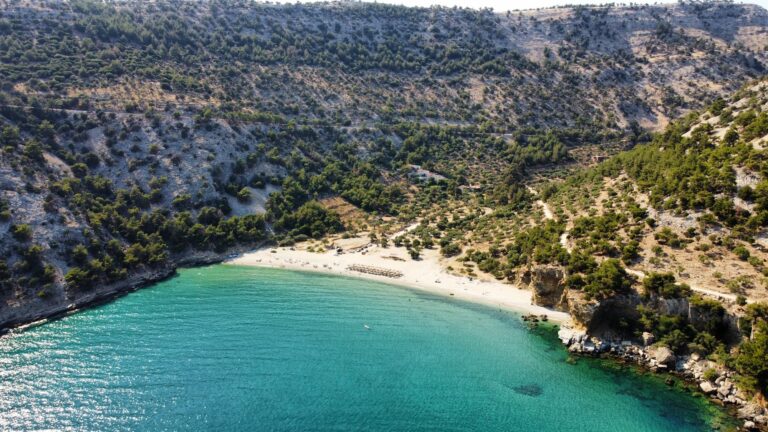
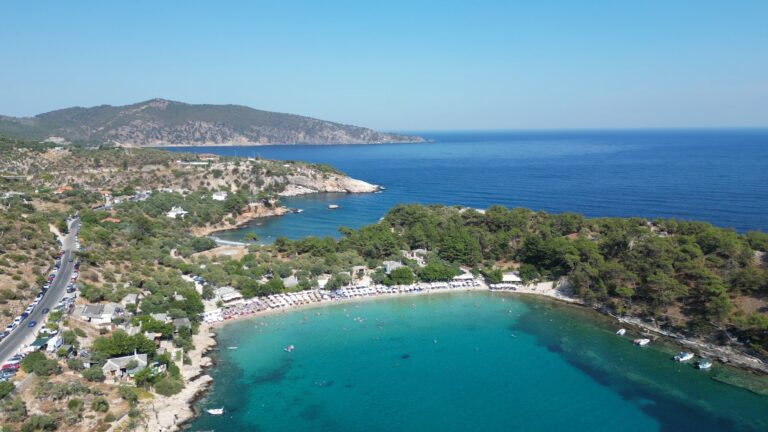
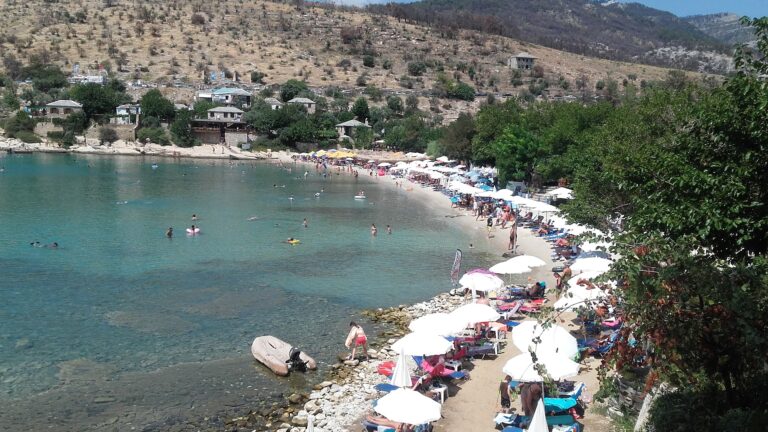
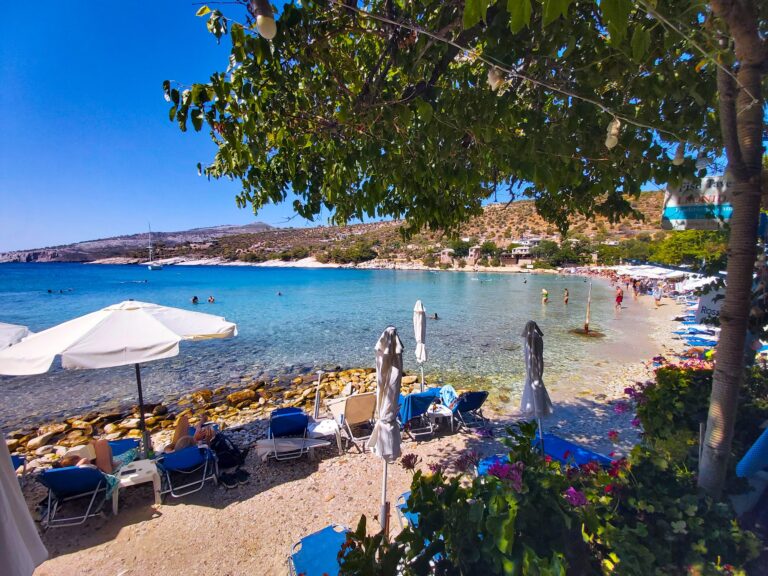
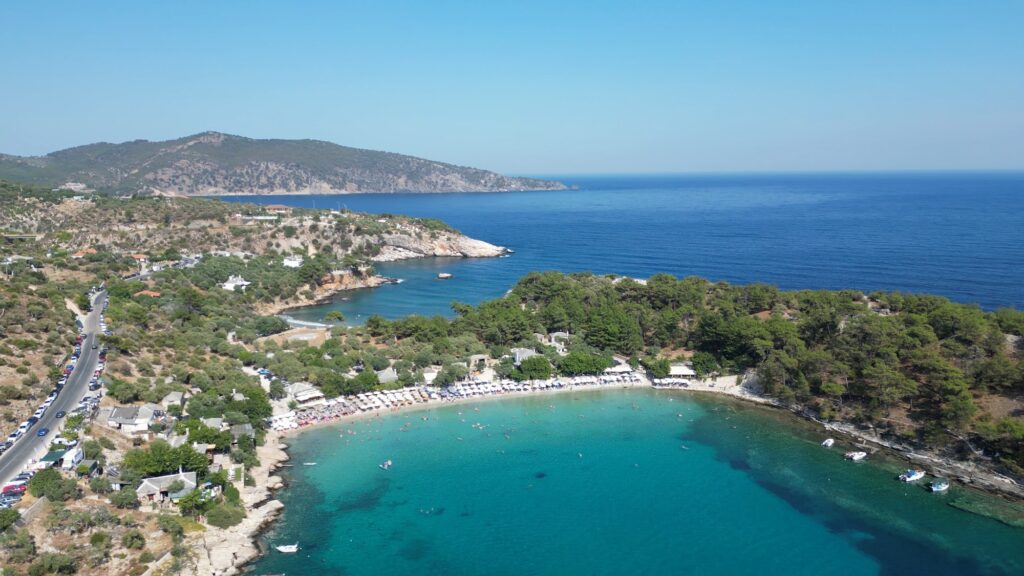
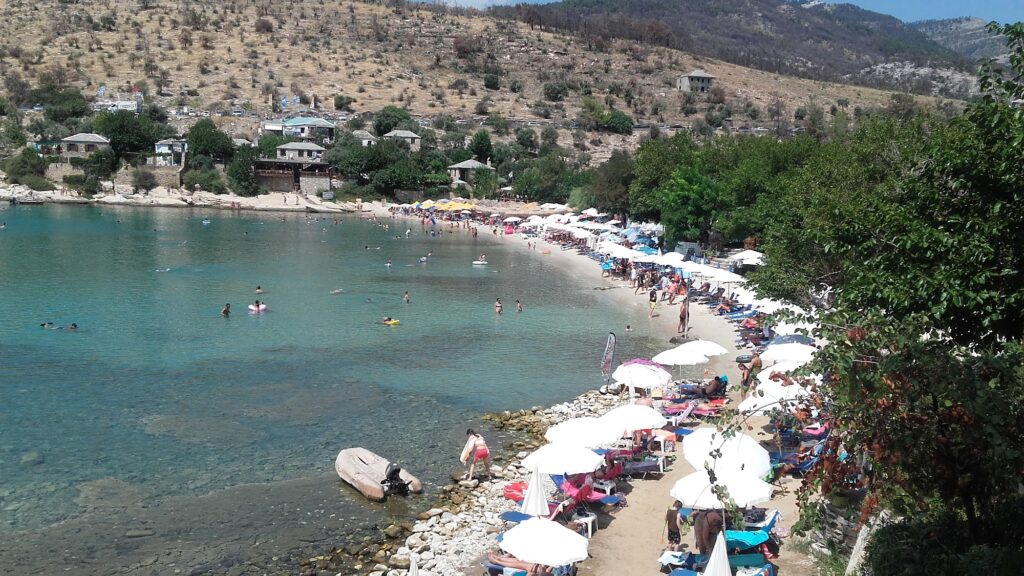
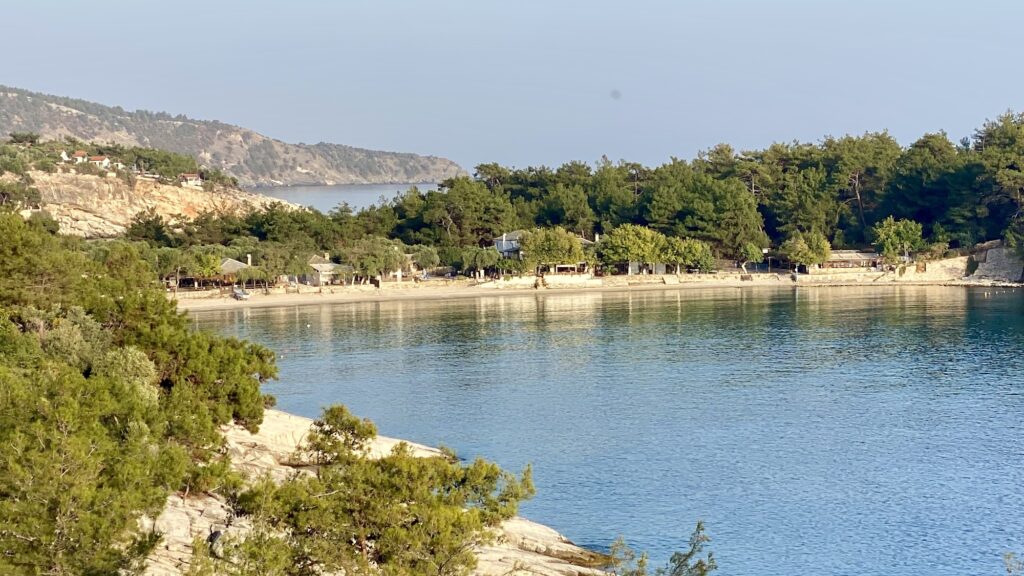
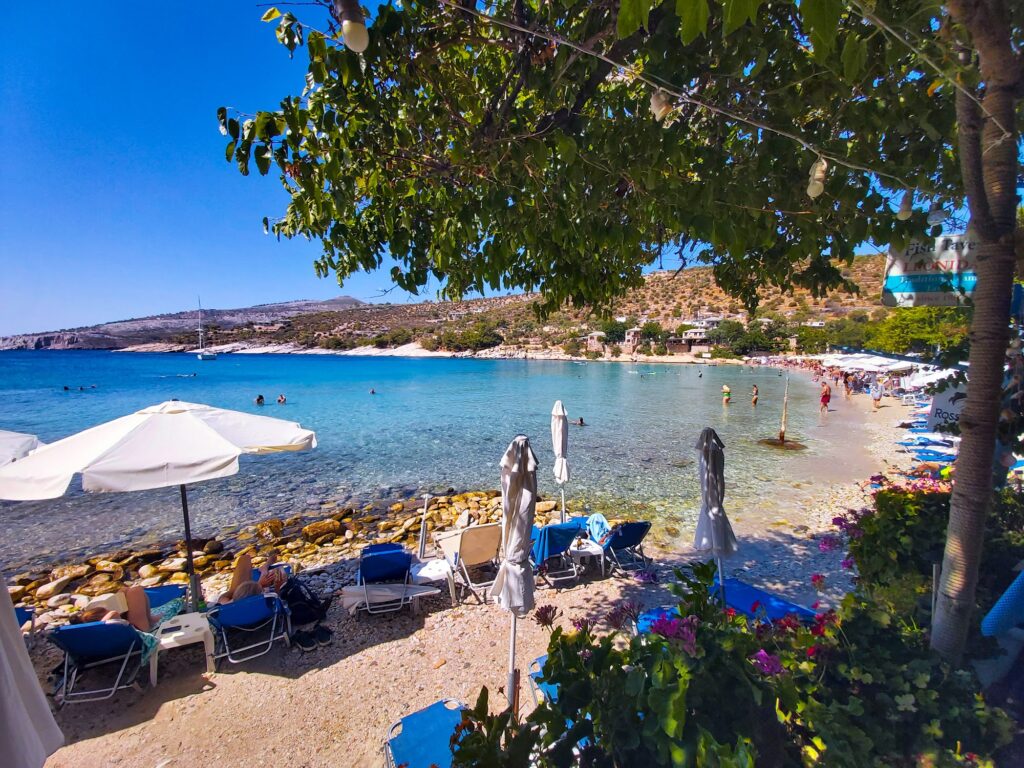
Aliki Beach in Thassos is actually a peninsula with two bays with the same name: Aliki. The one has emerald waters, sunbeds, and amenities, while the other is quieter. Both bays have calm and transparent waters, making them an ideal spot for snorkelling and swimming.
The southern bay — the main, more accessible beach — is the organised side: sunbeds and umbrellas with the beach taverna arrangement, fine pale sand mixed with marble fragments, and the specific turquoise colour that the white seabed below the water produces. The swimming quality here is the combination of the marble-pale water clarity and the gentle entry that the bay’s sheltered position provides.
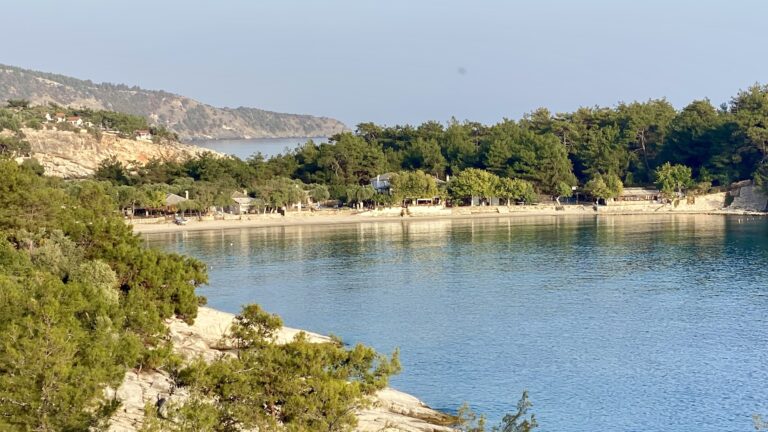
The second beach is right next to the archaeological site, which gives it a special charm. It is partly sandy and partly rocky with much fewer visitors than the popular Alyki bay. The northern bay is the quieter alternative — fewer visitors, rockier shoreline, and directly adjacent to the archaeological site ruins that the peninsula’s circuit path passes through.
The Archaeological Site: Apollo Sanctuary, Two Basilicas, Underwater Marble, Guard Towers
The archaeological site of Aliki includes the remnants of an ancient quarry, which lies partially submerged in the island’s crystal-clear turquoise waters. Additionally, visitors can see traces of ancient temples dedicated to the Dioscuri and the god Apollo, who protected the sailors.
The marble quarry was active from ancient times to Byzantine. The remnants of the quarry are half buried in the water on the peninsula’s tip. Numerous abandoned, partially completed marble statues, columns, and enormous blocks can be seen in the quarry and the shallow water at the location. You can still see the remains of hundreds of guard towers that were built along the quarry’s perimeter in order to keep slave labourers there as well as to keep thieves and pirates away from the workers and the marble.
Remarkably, the first Christians on Thassos repurposed these sacred sites, building two basilicas atop the second temple using materials from the original pre-Christian shrines — establishing Christian sites atop ancient ones highlights a continuity of sacred spaces through time.
The sailors who visited the Apollo sanctuary inscribed the names of their loved ones on the stepping stones. The inscriptions are still visible.
The Peninsula Circuit Path: Both Bays, the Quarry, the Basilicas, Sea Views
Along the cape there is a path that connects the two bays, leading throughout the important historical sites and offers stunning views of the sea. On the south side of the cape is a small, easily accessible Christian chapel, with a small path leading to it.
The circuit path around the full peninsula takes approximately 30 to 45 minutes at a walking pace, passing both beaches, the archaeological ruins, the underwater marble visible from the path edges, the two basilica remains on the highest point, and the chapel at the cape. This is the full Aliki experience — the beaches as the swimming destination and the path as the cultural programme in the same half-day.
The Archontisa restaurant above the main road above Aliki has a spectacular view over the whole peninsula from its garden — the elevated position giving the full twin-bay view that the beach level cannot provide.
The French Archaeological School and the Ongoing Excavation
Aliki Beach’s bay is celebrated worldwide as a source of high-quality crystalline white Thassian marble, a legacy that the French Archaeological School has worked diligently to uncover and present.
The École Française d’Athènes (French Archaeological School at Athens) has conducted the excavations at Aliki since the mid-20th century. The school’s work is the reason the site is systematically documented and partially preserved rather than simply eroded. The marble quarry’s operational history spanning 1,200 years — from the 7th century BC to the 7th century AD — is the specific archaeological legacy that the school’s work has established.
Giola and the Monastery of the Archangel Michael
The two most visited natural and cultural sites accessible from Aliki are both within 10 kilometres. Nearby attractions include Giola, Paradise Beach, and Thimonia Beach. For those interested in religious tourism, the women’s Holy Monastery of Archangel Michael is a must-visit.
The Giola Natural Pool — the rock pool connected to the sea — is south of Aliki on the same ring road. The Monastery of the Archangel Michael is the active women’s monastery on the southeastern tip of Thassos, with the specific setting of the monastery walls at the cliff edge above the sea.
Aliki Beach on the southeastern coast of Thassos is the twin-bay peninsula where marble was shipped to Rome for 1,200 years — the quarry visible on the seabed, the Apollo sanctuary inscribed by the sailors who came for the stone, the two basilicas on the ruins of the temples, the circuit path connecting both bays and all the ruins, the Kouros found in 1896 now in Istanbul, the organised southern bay and the quieter northern bay, crowded on summer weekends and best in the late afternoon.
Drive 32km from Limenas. Walk the peninsula circuit. Swim in both bays.
The marble blocks are visible through the water. Don’t stand on them — they’re slippery.
Map
Sorry, no records were found. Please adjust your search criteria and try again.
Sorry, unable to load the Maps API.
Near by places: