Kalogria Beach Stoupa: Zorba's Beach, Cold Springs, Cave
Profile
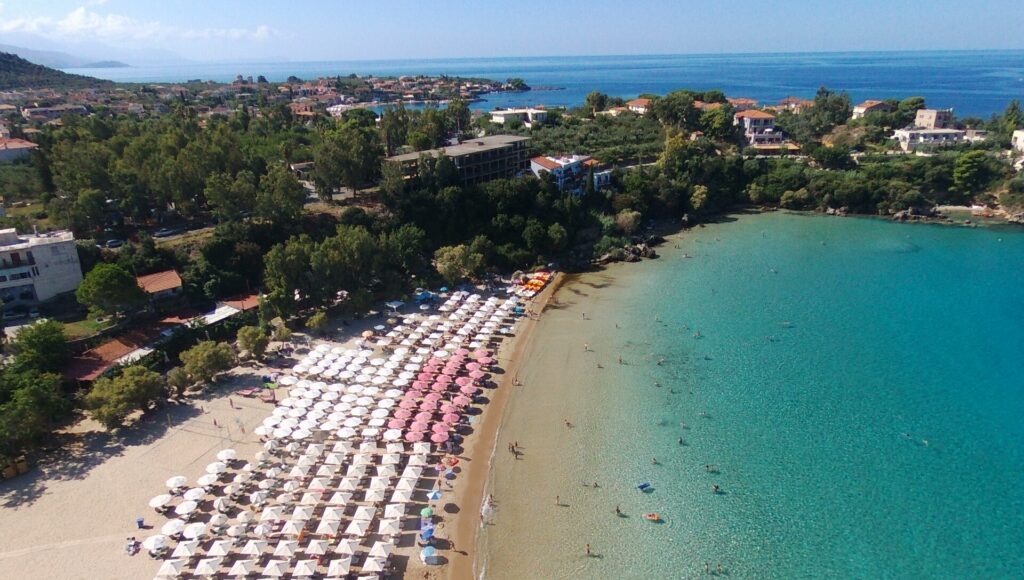
Kalogria Beach, Stoupa: The 150m Sandy Mani Beach Where Kazantzakis Lived With Zorbas in 1917, the Taygetos Freshwater Springs Make the Water Invigoratingy Cold, and the Kazantzakis Cave Is Only Accessible by Swimming
Greece | Stoupa | Municipality of West Mani, Messenia, Peloponnese
Nikos Kazantzakis arrived at Stoupa in 1917. He was 34 years old and had not yet written the works that would make him famous. He had bought the rights to the Prastova lignite mine in the hills above the bay — a business investment that failed because the coal was of poor quality. To manage the mine, he hired an engineer named Giorgos Zorbas, a man from Macedonia with a specific character: exuberant, physical, philosophical in an unacademic way, a player of the santouri (a hammered dulcimer), and a storyteller of extravagant capability. The two men lived together on Kalogria beach from 1917 to 1918 — the small house at the northern end of the beach is still standing. The lignite mine failed. The friendship did not.
Twenty years later, Kazantzakis wrote The Life and Times of Alexis Zorba — the novel based on what he observed and remembered of Zorbas at Stoupa. The novel was published in Athens in 1946. The English translation appeared in 1952. The 1964 film — directed by Michael Cacoyannis, with Anthony Quinn as Zorbas and Alan Bates as the writer character — won three Academy Awards and made Zorba and Sirtaki (the dance composed by Mikis Theodorakis for the film) globally famous. The film’s final scene, with Zorba teaching the writer to dance on a Cretan beach, is one of the most recognisable scenes in European cinema.
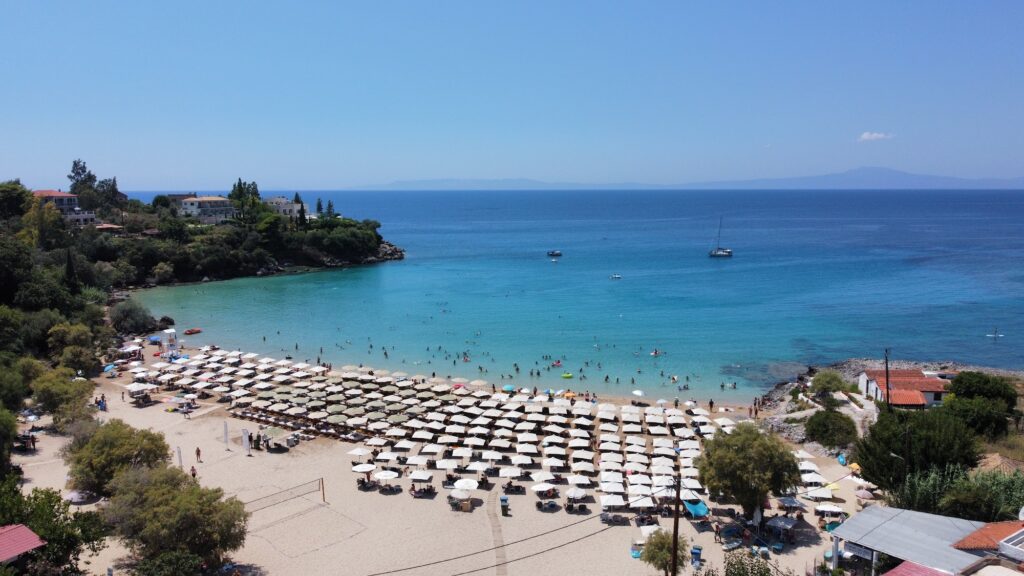
The beach where it all started is 150 metres long.
Getting There: 45km From Kalamata (1 Hour), 6.5km From Kardamyli, 10-Minute Walk From Stoupa Village, 2 Hours 15 Minutes From Athens Via Kalamata
From Kalamata, drive south toward Areopoli on the main Mani road. After 45 kilometres (approximately 1 hour), follow signs for Stoupa. Kalogria is the first bay north of Stoupa village — a 10-minute walk or 2-minute drive from the main Stoupa beach.
From Kardamyli — the village where Patrick Leigh Fermor spent his last decades and wrote his Mani travel books — Kalogria is 6.5 kilometres south on the coastal road.
From Athens, the drive to Kalamata via the A8 motorway takes approximately 2 hours 15 minutes; Kalogria is then 1 hour further. Kalamata International Airport serves Kalamata with direct summer charter flights from multiple European cities.
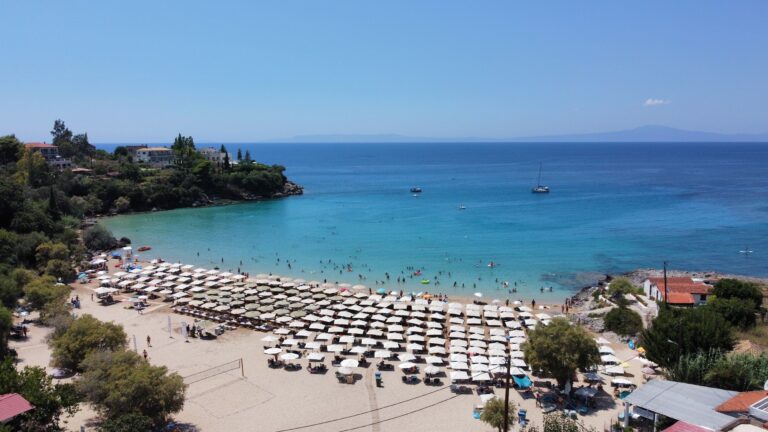
The Beach: 150m Sandy, Taygetos Freshwater Springs Make the Water Cold (Invigorating), Organised, Beach Volleyball, Restaurants Adjacent, Small Monument to Kazantzakis
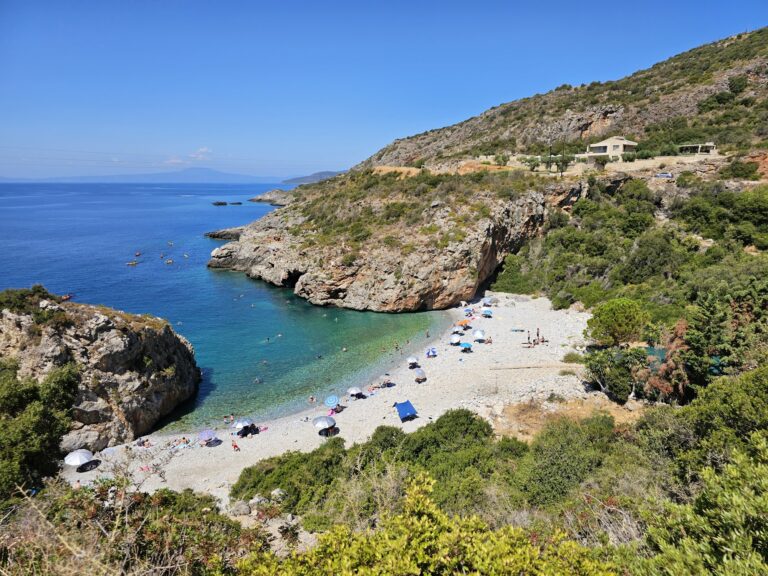
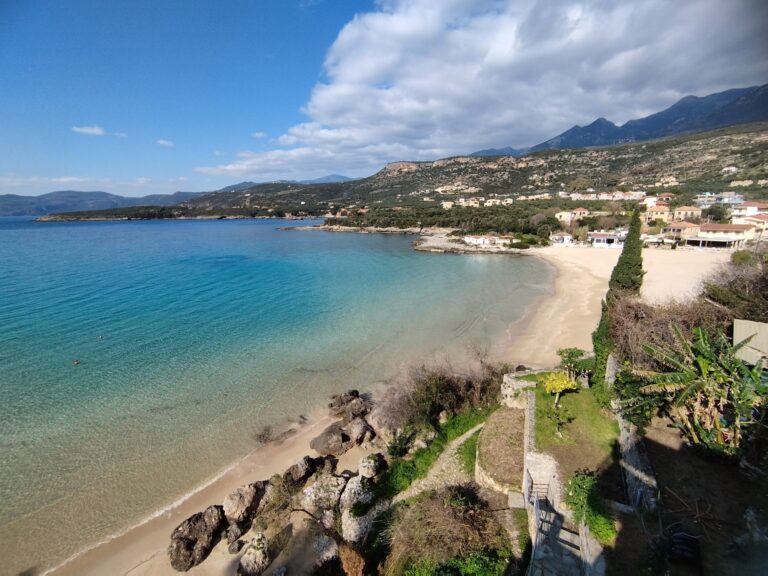
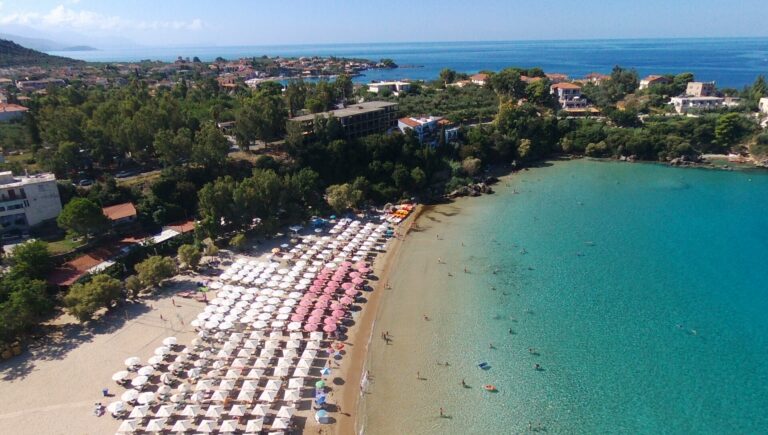
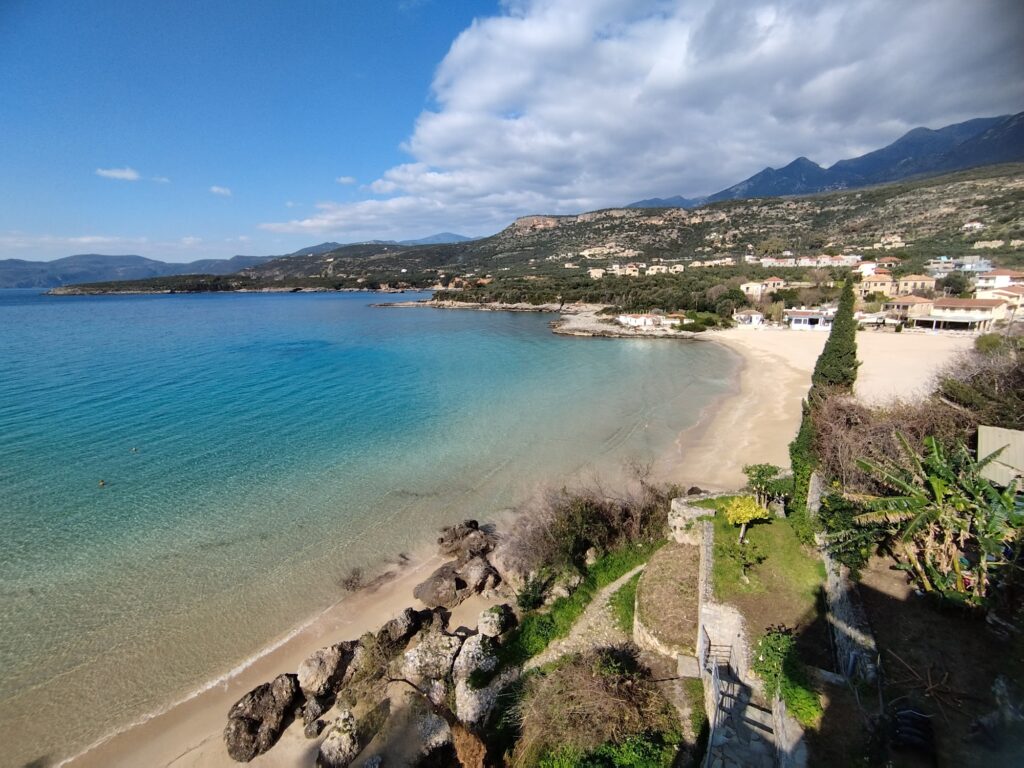
Kalogria is 150 metres long and sandy throughout — light brown sand, described by one visitor as “velvety.” The tamarisk trees at the rim of the bay provide the shade that the Sandee guide’s “shaded by tamarisk trees” description accurately notes.
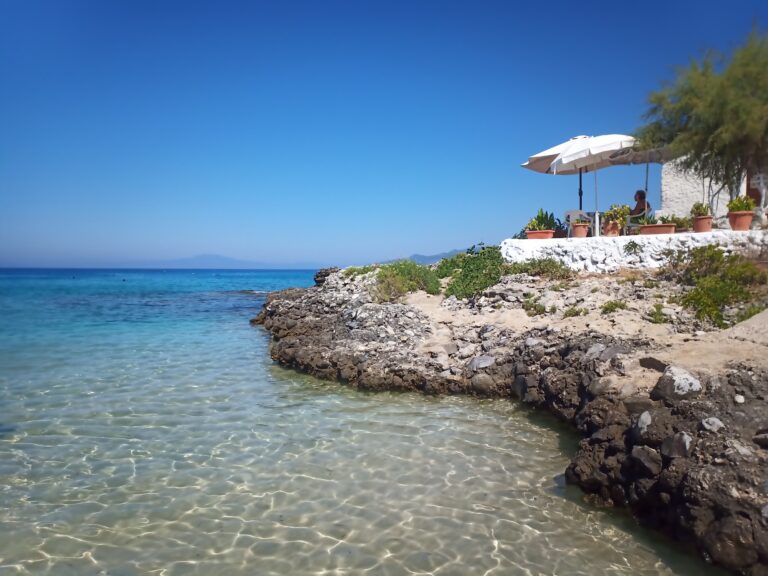
The water temperature at Kalogria is specifically lower than at Stoupa beach next door. The reason is the underground freshwater springs from Mount Taygetos that bubble up through the seabed — cold mountain water mixing with the warm Messenian Gulf sea water, producing the “invigorating” temperature that one resident describes specifically. The springs are visible as ripples on the surface in calm conditions. The beach is shallow for some distance even when the sea roughens after a storm.
A small monument to Kazantzakis is hidden among the rocks at one side of the beach — a modest marker for the place where the novel started.
The Kazantzakis Cave: Southern End, Accessible Only by Swimming or Boat
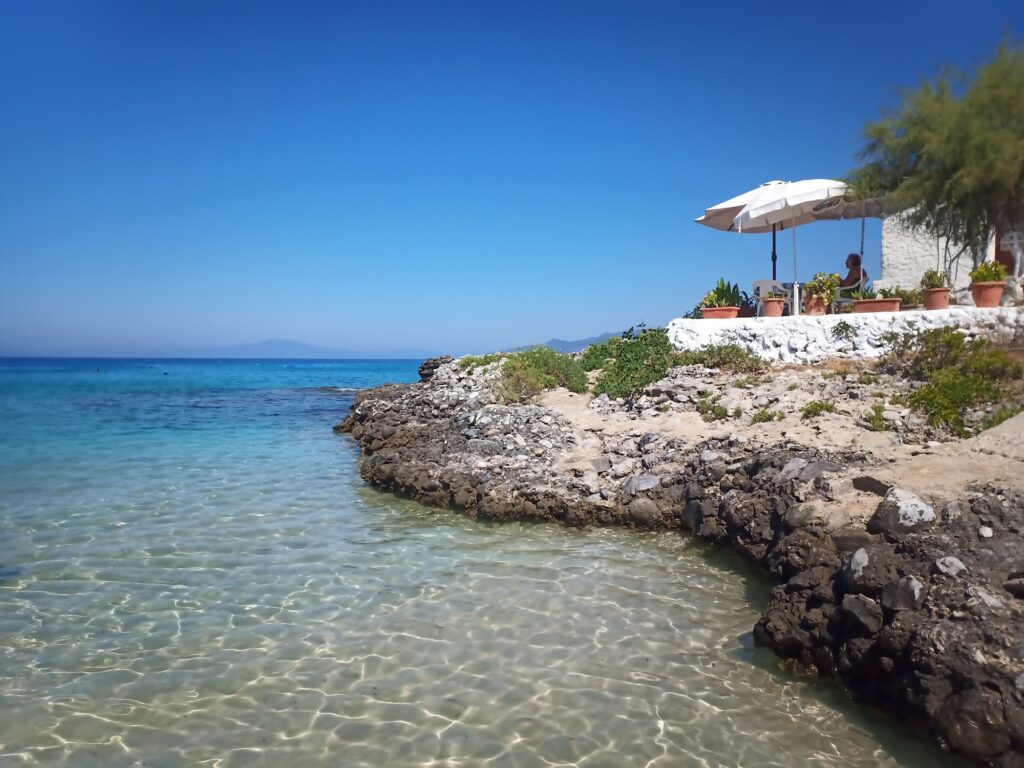
At the southern end of Kalogria beach, the cliff face contains the Kazantzakis Cave — a cave accessible only by swimming from the beach or arriving by boat. Local tradition holds that Kazantzakis wrote inside the cave. Whether this is historically documented or evolved into local mythology is less certain than the cave’s existence and its inaccessibility. The swim to the cave is the specific activity that the beach’s water sports section recommends alongside kayaking: reaching the southern cave by water rather than land.
The House Where Kazantzakis and Zorbas Lived: Northern End of the Beach
The house at the northern end of Kalogria where Kazantzakis and Zorbas lived in 1917–1918 is described in multiple Stoupa guides as still standing. It is a small structure at the beach edge — not a museum, not a formal monument, but a surviving building that connects the beach’s literary identity to a specific physical structure. Walking to the northern end of the 150-metre beach and locating the house is the specific literary pilgrimage that the Kazantzakis connection enables.
The Castle of Lefktro (Beaufort): 13th Century Frankish, Built on the Ancient Acropolis of Leuktra
The Castle of Lefktro — called Beaufort (beautiful castle) by the Frankish prince William II Villehardouin who built it in 1250 AD — stands above Stoupa on the ancient acropolis of Leuktra. Pausanias records seeing a statue of Athena at the ancient Leuktra site. Homer mentions Kardamyli as one of the cities Agamemnon offered to Achilles as a dowry — the same coastal area that Kazantzakis chose for his mining venture. Villehardouin ceded the castle to the Byzantines in 1262 in exchange for his release after capture at the Battle of Pelagonia. The castle is now ruinous but offers views of the coastal Messinia that justify the climb.
Syrtaki, Anthony Quinn, and the Global Reach of Zorbas
Mikis Theodorakis composed the Sirtaki for the 1964 film Zorba the Greek. The dance became globally associated with Greek culture — one of the most recognised Greek cultural exports of the 20th century — despite being a composite created for the film rather than a traditional dance. Anthony Quinn‘s portrayal of Zorbas is the visual reference for most non-Greek audiences. The film was shot largely in Crete rather than the Mani — the final dance is on a Cretan beach. But the novel and its human subject belong to Kalogria beach.
Kalogria Beach at Stoupa in West Mani is the 150m sandy beach where Kazantzakis and Zorbas lived in 1917–1918 — the house at the northern end still standing, the Kazantzakis Cave at the southern end accessible only by swimming or boat, the small monument hidden in the rocks, the underground Taygetos freshwater springs making the water cold, tamarisk tree shade, beach volleyball and organised amenities, the Castle of Lefktro above, 45km from Kalamata (1 hour), 6.5km from Kardamyli, 10 minutes from Stoupa village.
Drive from Kalamata. Walk 10 minutes from Stoupa. Swim to the cave at the southern end.
Map
Sorry, no records were found. Please adjust your search criteria and try again.
Sorry, unable to load the Maps API.
Near by places: