
Golden Beach Chrysi Island: The Place Agnelli Wanted
Profile
Golden Beach (Belegrina), Chrysi Island: Gianni Agnelli Reportedly Wanted to Buy This Island, and the Locals Said No
Greece | Chrysi Island (Gaidouronisi) | Ierapetra, Crete
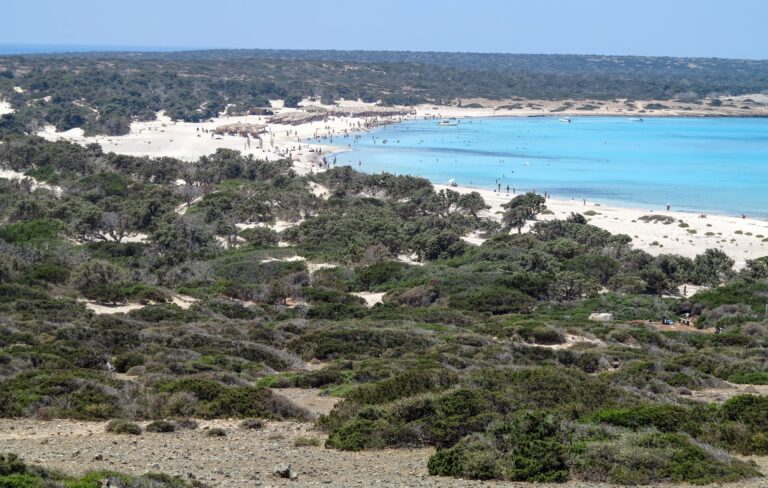
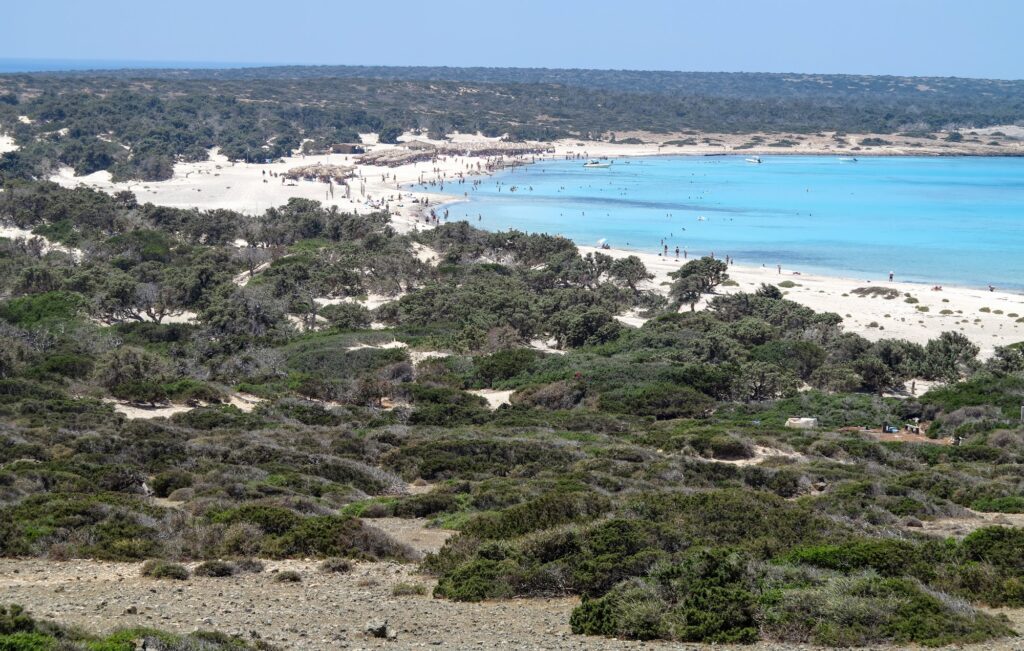
The trees that border Golden Beach, more properly called Belegrina, are frequently and incorrectly described as Lebanese cedars. They are in fact Juniperus macrocarpa, and the forest they form is the largest naturally occurring stand of this species anywhere in Europe — a detail worth getting right, since the misidentification has spread widely enough that I found it repeated across multiple otherwise careful sources. The trees average around two hundred years old, some reaching three hundred, their roots spreading visibly across the sand in a way that genuinely does look closer to fairy tale than botany.
Chrysi, also called Gaidouronisi — Donkey Island — takes its more common name from the Greek word for golden, a reference to the shell-flecked sand covering the island, while the donkey name reportedly stems from the older local practice of bringing aged donkeys here to live out their final years. According to a story repeated by more than one source, Gianni Agnelli, the long-time chairman of Fiat and Ferrari, once wanted to buy the island and develop it as a tourist resort; the residents of Ierapetra, who refer to Chrysi simply as “the Island,” reportedly refused, and it has remained undeveloped since. Archaeological excavation has confirmed a genuine Minoan settlement dating to between 1800 and 1500 BC, along with later Roman-era activity, including buildings and carved tombs near the Church of Saint Nicholas, and evidence suggesting the island was used for producing Tyrian purple dye from Murex sea snail shells — the same prized, labour-intensive pigment historically associated with imperial status across the ancient Mediterranean.
As of 2025, access to Chrysi is governed by strict conservation rules, extended from earlier protections: visitors cannot walk freely on the island or land on beaches outside the designated points, and camping, fires, and overnight stays remain firmly prohibited, enforced by the Port Authority of Ierapetra and Greece’s environmental agencies. The measures respond to decades of pressure on a genuinely fragile ecosystem, and I’d treat them not as bureaucratic obstruction but as the reason the island still looks the way it does at all.
Getting There: Boats From Ierapetra, 45 to 60 Minutes, No Overnight Option
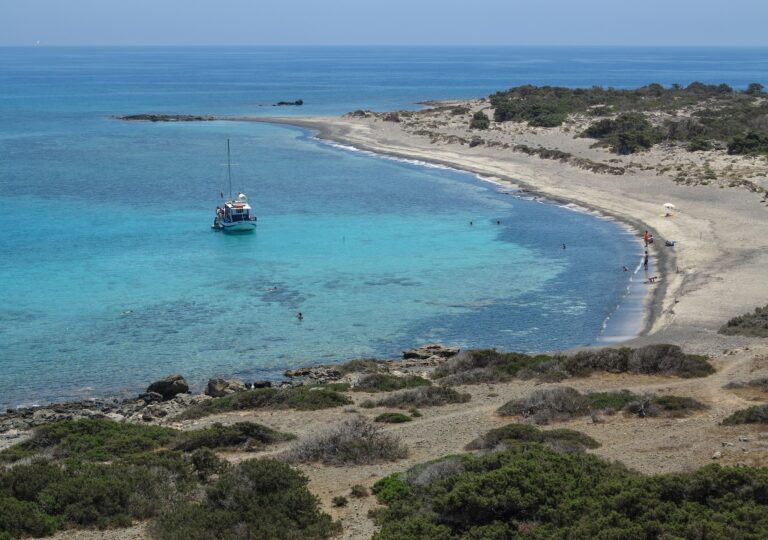
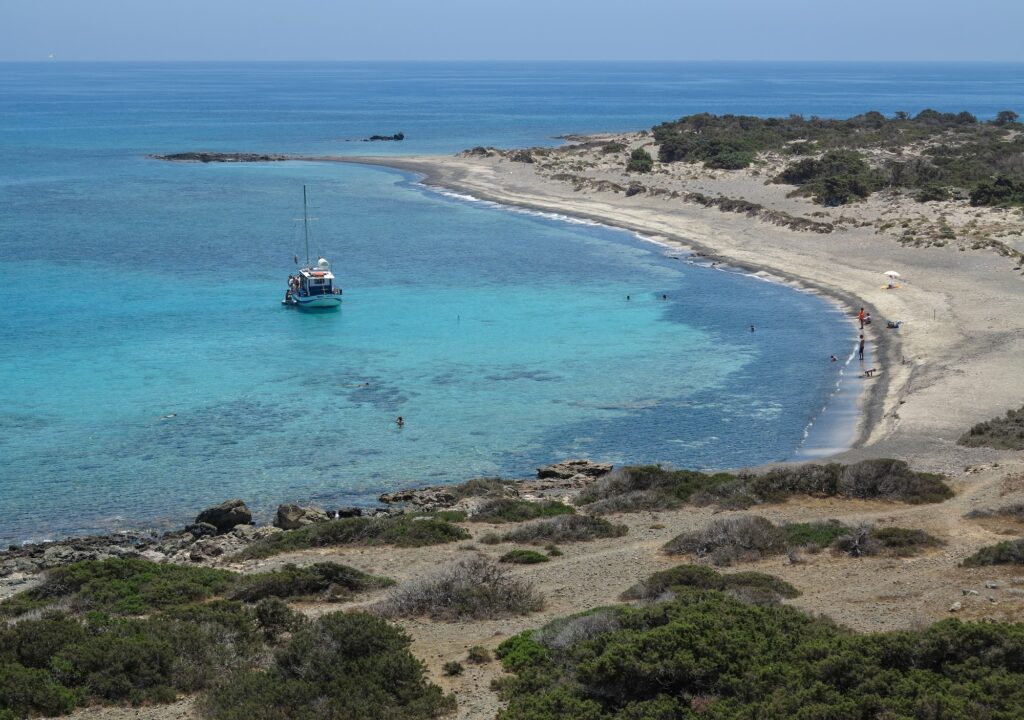
Daily excursion boats depart from Ierapetra, generally from mid-morning, the crossing taking forty-five minutes to an hour depending on the vessel and conditions. Private boat or RIB rental can shorten this considerably for those wanting a more independent visit. Most boats now dock at Chiona, on the island’s southern side, from which a marked path through the juniper forest leads north to Belegrina in a walk of around five minutes — though under the 2025 rules, confirming the current permitted route before setting out is worth doing directly with the boat operator, since access arrangements have shifted in recent seasons.
There is no possibility of staying overnight. Every visit to Chrysi is, by design and by law, a single-day excursion, with the last boats returning to Ierapetra in the afternoon.
The Beach: Shell-Pink Sand, Shallow Warm Water, the Juniper Roots at the Tree Line
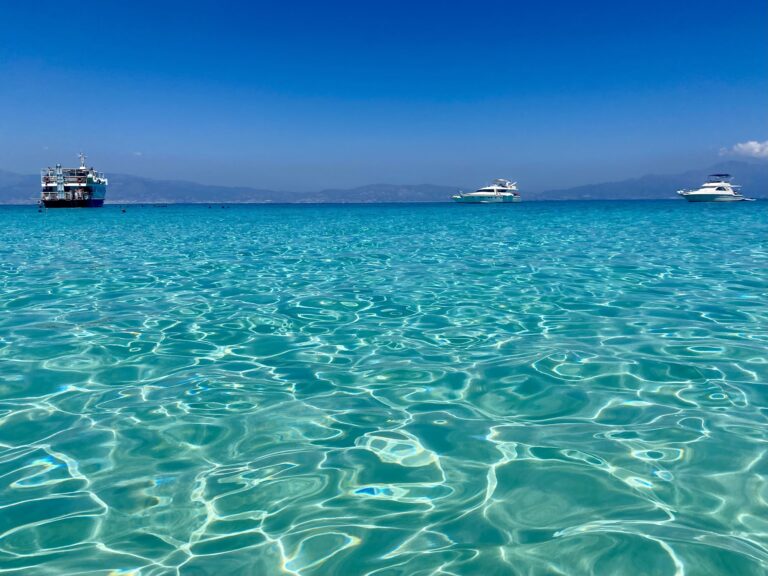
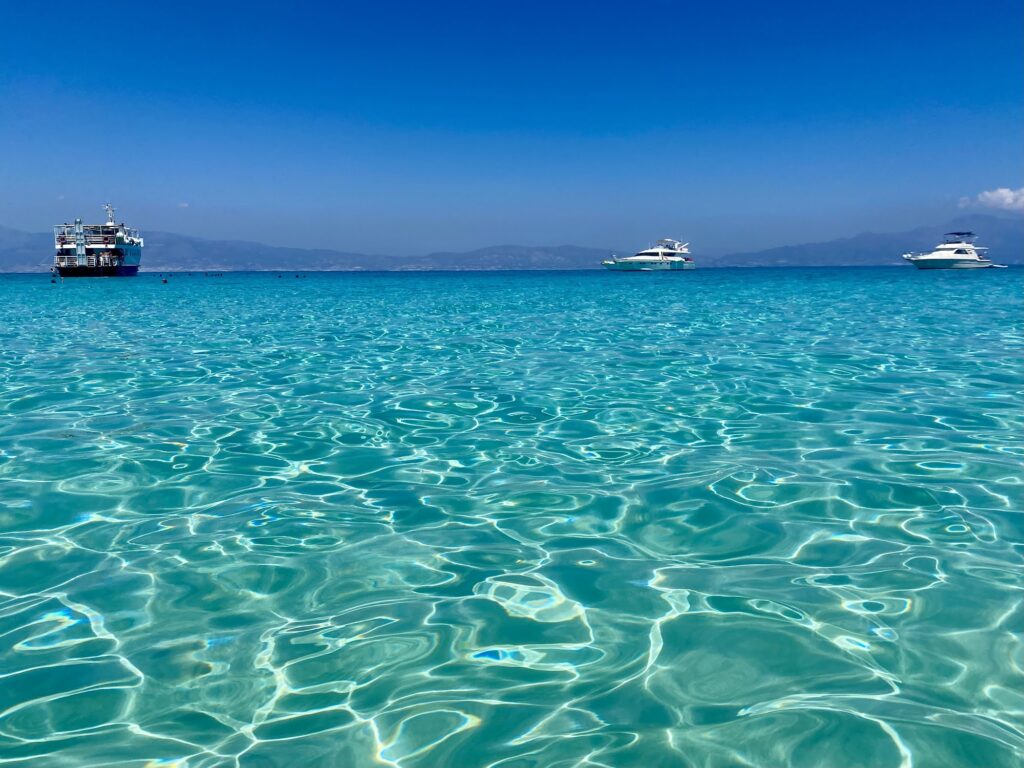
Belegrina’s sand is a genuine mix of white and pink, the colour coming from thousands of crushed shell fragments rather than any mineral content, the effect strongest right at the water’s edge where the finer particles concentrate. The water itself is shallow and warm for a considerable distance from shore, calm enough that families consistently rate this among the better swimming spots in southern Crete, and clear enough that the rocky margins of the bay reward snorkelling without requiring any particular skill or equipment beyond a mask.
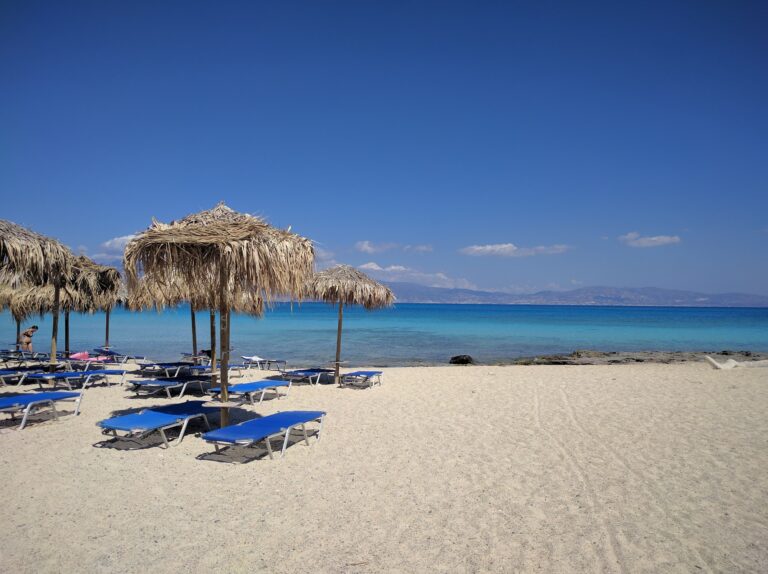
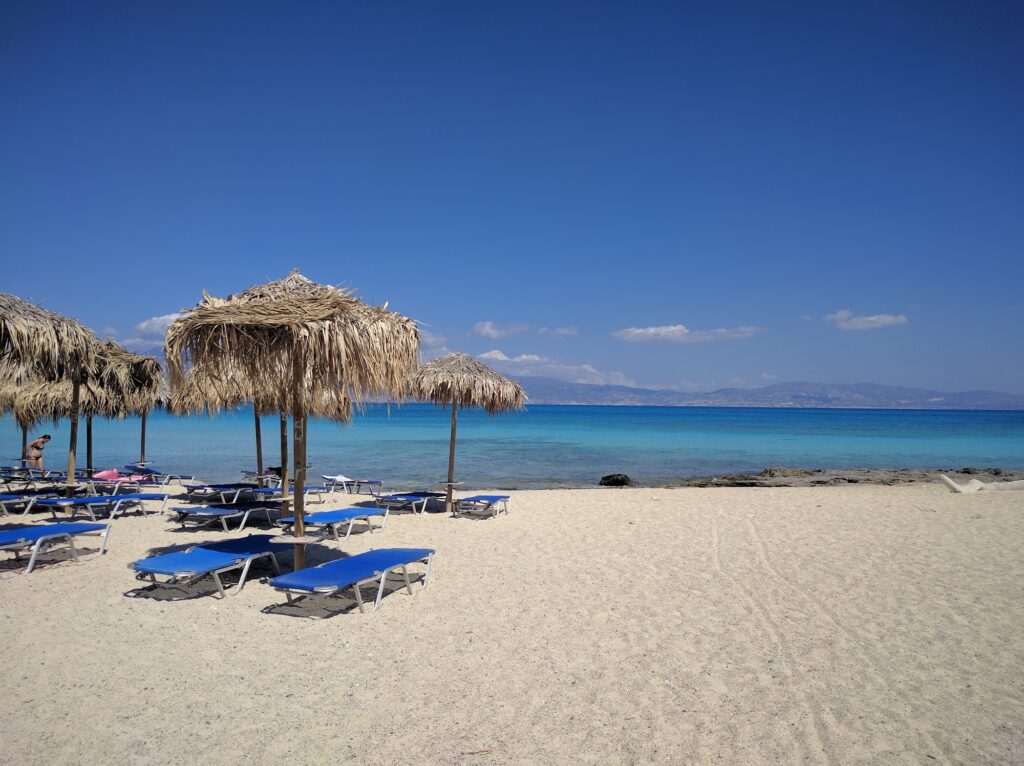
Facilities are deliberately minimal: basic amenities near the boat landing, no restaurants, no permanent structures of any kind on the island. Visitors are expected to bring their own water and food and to carry every piece of rubbish back out with them. Taking sand, shells, or any plant material from the island is strictly prohibited, a rule enforced seriously rather than nominally.
Golden Beach, properly Belegrina, sits on the uninhabited island of Chrysi, also called Gaidouronisi, roughly forty-five minutes to an hour by boat from Ierapetra on the southern coast of Crete. The pink-tinted sand comes from crushed shell fragments rather than any mineral source, and the surrounding forest of Juniperus macrocarpa — not Lebanese cedar, despite the persistent misidentification — is the largest naturally formed stand of its kind in Europe. A genuine Minoan settlement has been excavated here, and the island carries a documented role in ancient purple dye production. Strict 2025 conservation rules now limit access to designated landing points and beaches, with camping, fires, and overnight stays prohibited entirely. No facilities beyond the basics near the boat landing; bring everything, take everything back out.
Book the boat from Ierapetra in advance. Confirm the current landing point and permitted route before you go. Leave the sand and shells exactly where you found them.
Map
Sorry, no records were found. Please adjust your search criteria and try again.
Sorry, unable to load the Maps API.