Apothikes Beach Andros: Named After Fishermen's Sheds
Profile
Apothikes Beach, Andros: The Small Golden Bay Named After the Fishermen’s Stone Sheds Still Visible in the Cliff, 15km From Chora via Stavropeda, Where the Beach Bar Takes Up Two Thirds of the Space
Greece | Stavropeda Area | Andros, Cyclades
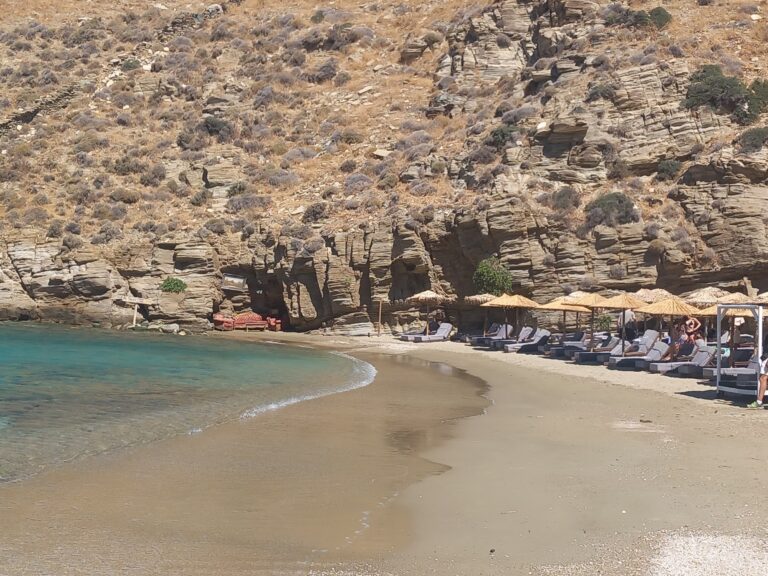
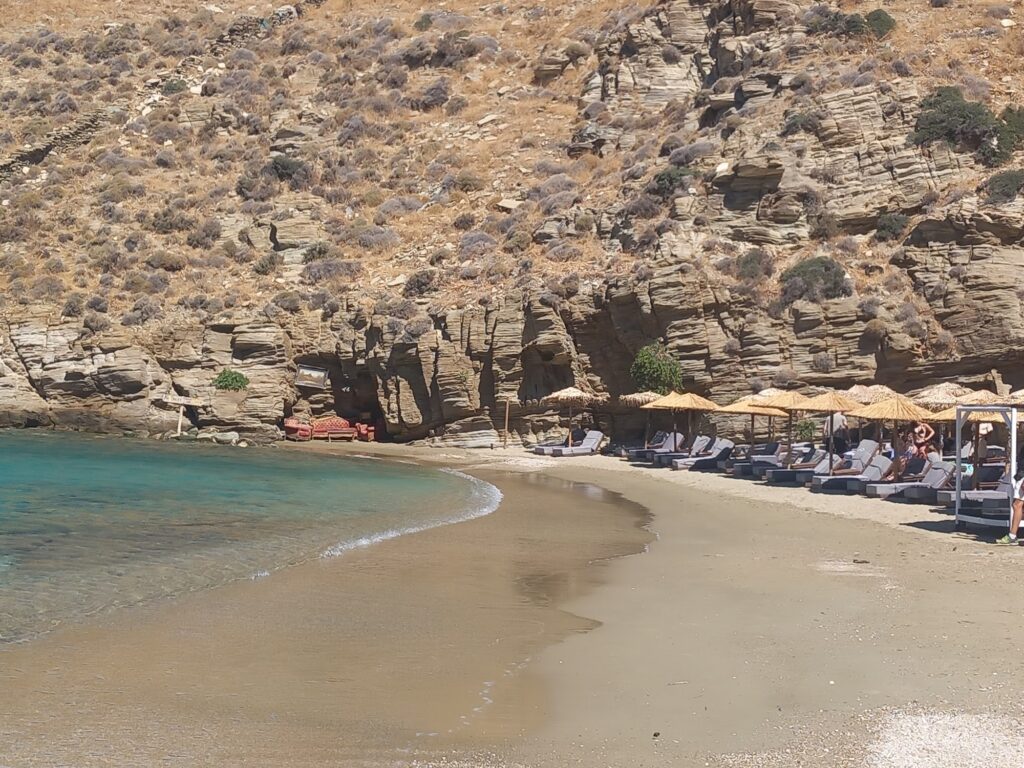
The name comes from the sheds. Apothikes means warehouses in Greek, and the small stone storage structures that fishermen used to shelter their boats from winter weather during the months when the sea made fishing impossible are still visible in the rock faces around the bay. They are carved or built into the cliff, identifiable as purposeful structures rather than natural formations, and walking around the beach looking for them is the specific activity that connects the visitor to the place’s pre-tourist identity. Before the beach bar arrived and the sunbeds filled two thirds of the sand, this was a working fishermen’s anchorage with a name that described what they kept there.
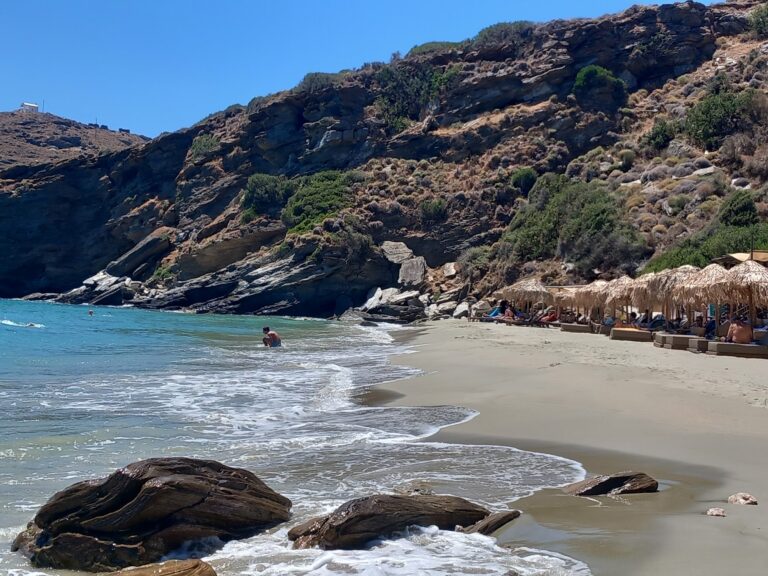
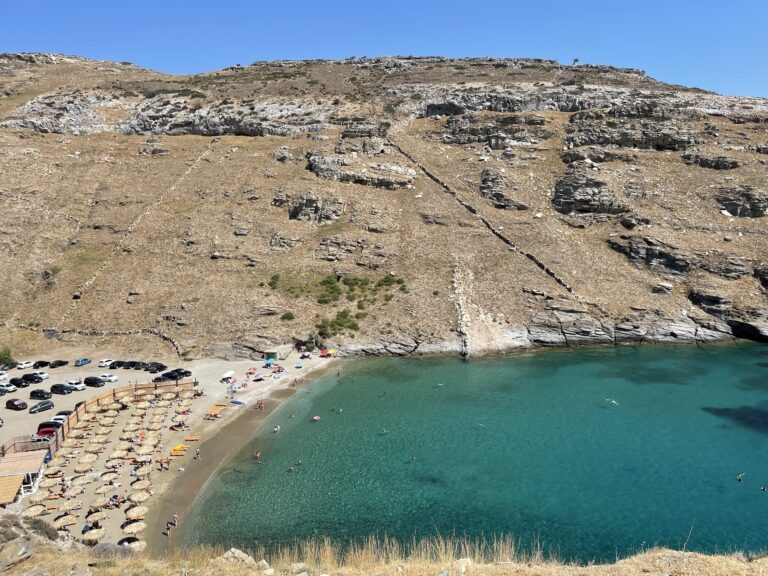
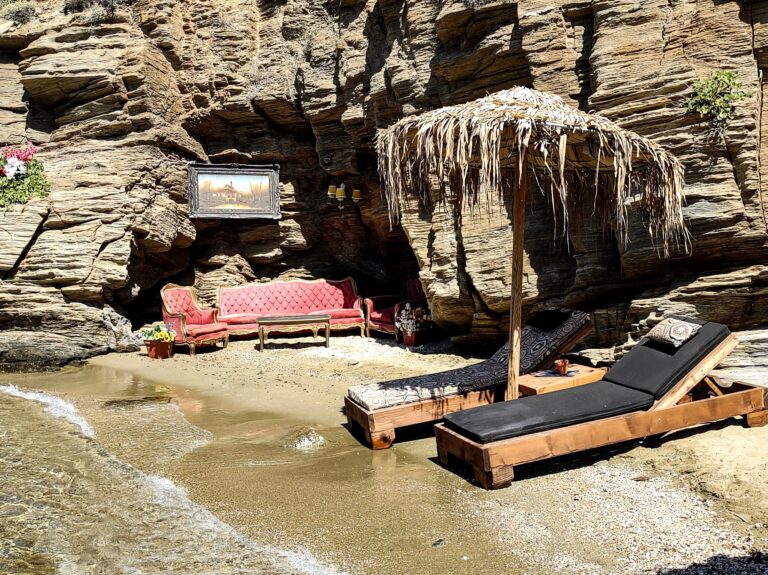
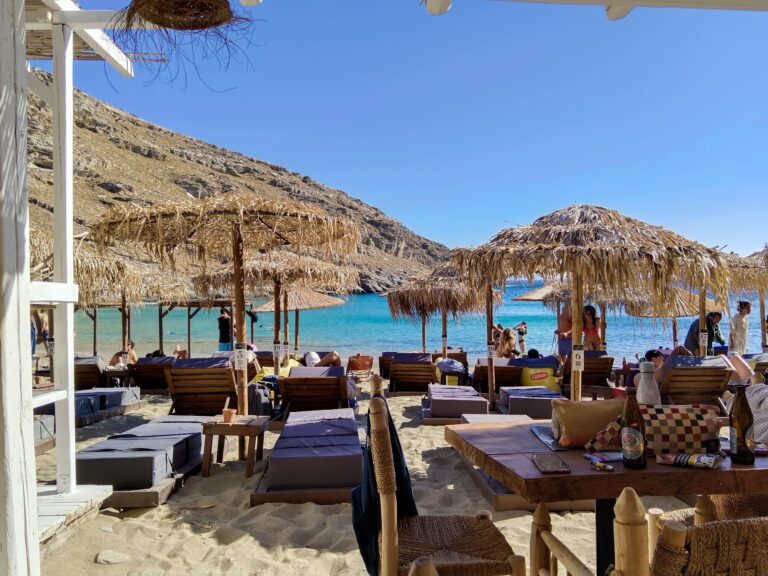
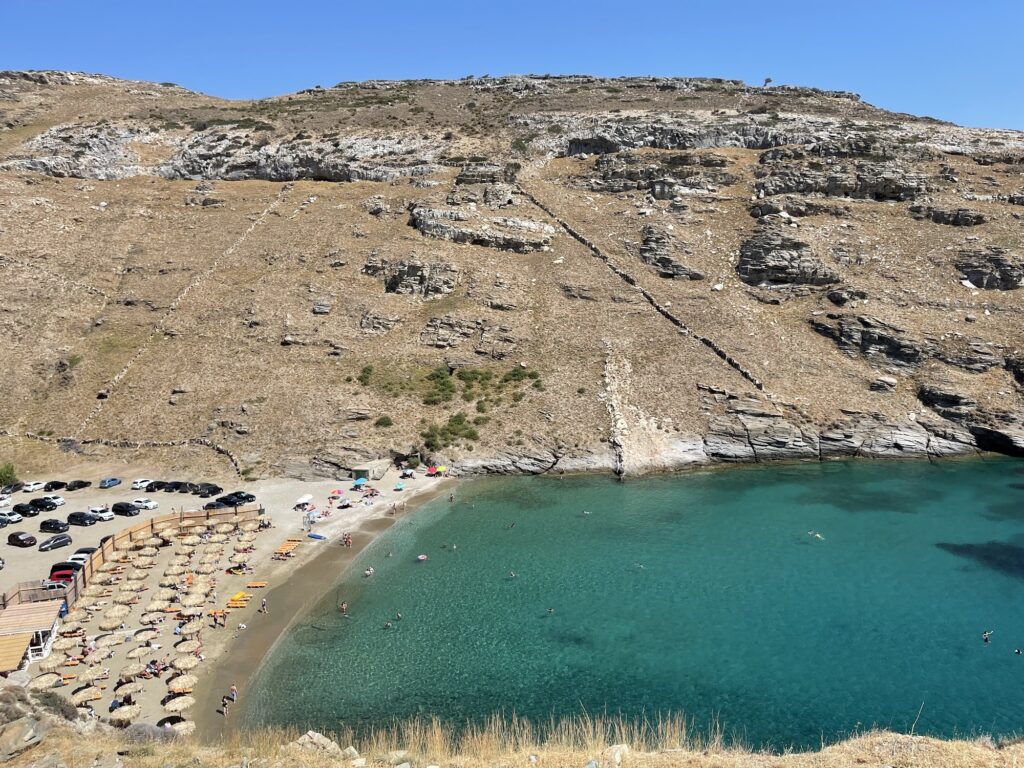
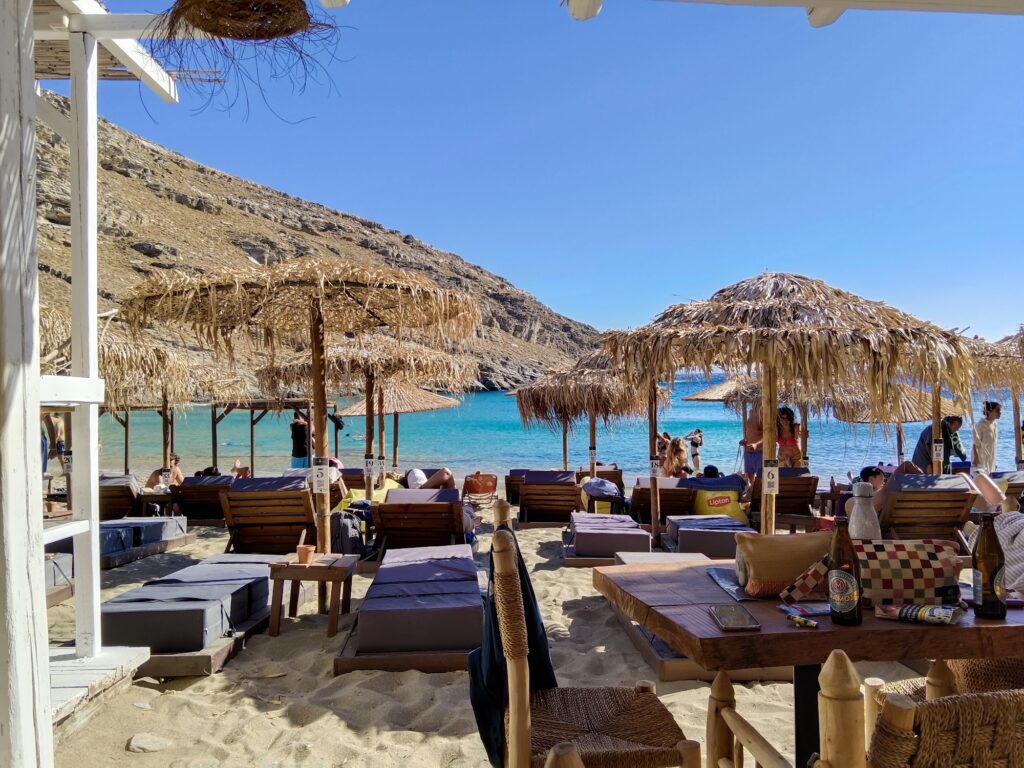
Apothikes is on the west side of Andros, in the Stavropeda area, 15 kilometres from Chora and 24 kilometres from the main port of Gavrio. The beach is a small golden bay — genuinely small, with a fast-deepening seabed and emerald water. The beach bar that occupies roughly two thirds of the usable beach space is the honest central fact about the current visitor experience: Apothikes is a small beach with a large beach operation on it. The remaining third of the sand is the free section. Visitors who arrive specifically for the wild isolated cove experience may find the organisation level higher than expected.
The water is the consistent justification for the trip regardless of the organisation level: clear, emerald, with an extraordinarily rich fish population in the rock formations at the edges of the bay. Snorkelling here is specifically recommended by every guide that covers the beach. The seabed drops off faster than at the sandy family beaches on the island, which is the honest note for anyone planning to bring young children.
Getting There: 15km From Chora via Stavropeda, Turn Before Chalkolimionas, Dirt Road Final Section, Free Parking
From Chora, drive west toward Messaria and Menites and continue to the Zagora archaeological site area and Stavropeda. At Stavropeda, take the road toward Chalkolimionas beach. Approximately half a kilometre before Chalkolimionas, there is a left fork onto a dirt road — follow this to Apothikes. Free parking is at the end of the road.
From Gavrio port, the distance is 24 kilometres. From Batsi (the main tourist resort on the west coast), the drive is shorter — approximately 15 to 20 minutes.
The dirt road section is described as rough in places but preserved — manageable in a standard rental car at a steady pace. A high-clearance vehicle is more comfortable but not essential in dry summer conditions.
The Stone Sheds: Still in the Cliff, Still Identifiable, the Specific Heritage Detail
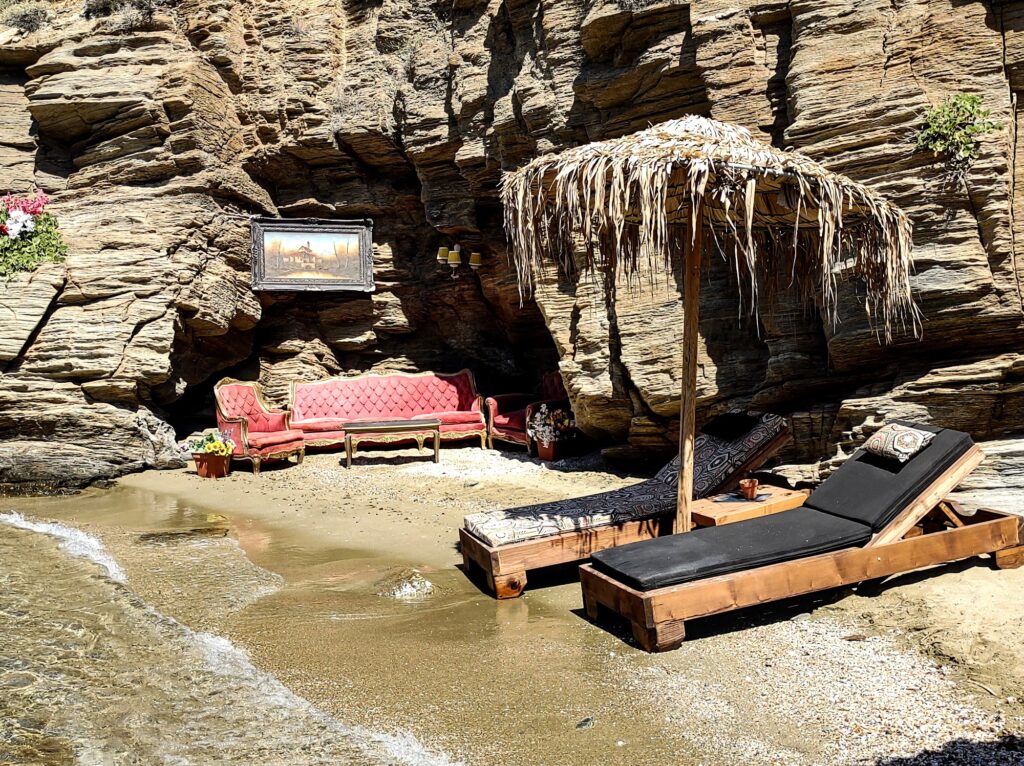
Walking around the bay and looking at the rock faces reveals the fishermen’s storage sheds — small stone structures built into or carved from the cliff, the specific feature that gave the beach its name and the specific detail that distinguishes it from any other small golden bay in the western Cyclades. They are not formally marked or signposted. They are simply there, for anyone who looks.
The sheds were used in winter when boats needed storage above the waterline and out of the weather. The fishermen who built them — from villages in the Stavropeda area — have largely gone; the boats are now hauled elsewhere or the fishing tradition has diminished. The sheds remain.
The Zagora Archaeological Site: 900–700 BC, One of the Most Important Iron Age Sites in Greece, 2km from Apothikes
The Zagora archaeological site is approximately 2 kilometres from the Apothikes turnoff on the same road — a Greek settlement occupied continuously from approximately 900 to 700 BC, then completely abandoned. The reason for the abandonment is not definitively known. The site sits on a rocky promontory above the sea with natural cliff defences on three sides and a fortification wall on the fourth side — the landward approach. The discovery of the site in the 1960s and excavations in the 1970s revealed a complete Iron Age settlement with houses, storage rooms, a sanctuary, and the specific architectural character of an early Greek community before the Classical period.
Zagora is listed among the most important archaeological sites in Greece from this period and was added to the Tentative List for UNESCO World Heritage consideration. Visiting it on the same day as Apothikes beach requires only a short detour on the same road.
Chalkolimionas Beach: 500m Further Down the Same Road
Chalkolimionas (also spelled Halkolimnionas) is the beach at the end of the road that Apothikes branches off from — 500 metres further along, accessible by continuing past the Apothikes turnoff. It is described as larger and less organised than Apothikes. The two beaches share the same road and can easily be visited together, giving the visitor the choice between the smaller organised bay with the beach bar and the larger more open beach at the road’s end.
The West Coast Context: Batsi, Gavrio, the Less Visited Side
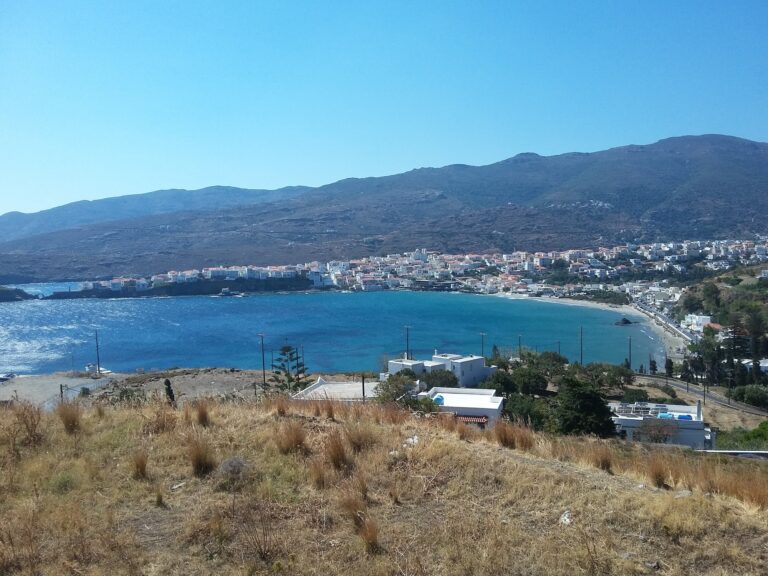
The west coast of Andros — where Apothikes is located — is less visited than the east coast where Chora and the captain’s village beaches are concentrated. Batsi is the main tourist resort on the west coast: a port village with a sandy beach, water sports, and the island’s most developed tourist infrastructure for non-Chora visitors. Gavrio is the main ferry port, functional and useful rather than scenic. Apothikes and Chalkolimionas are the west coast beaches that reward the drive from Batsi for visitors who want clear water and rock formations rather than the organised beach club experience.
Piso Gialos Beach Andros Greece on the east coast near Chora and Stenies is covered in this series as the liveliest beach near the capital — the social energy contrast between the east and west coast of Andros is one of the island’s specific characters.
Andros: The Second Largest Cycladic Island, 176km of Coastline, 30+ Beaches
Andros is the second largest island in the Cyclades with 176 kilometres of coastline and over 30 beaches. The island’s diversity — east coast neoclassical Chora with its shipowner mansions and museums, west coast fishing villages and archaeological sites, the interior walking trail network connecting them — is the specific quality that distinguishes it from the purely beach-focused smaller Cycladic islands. Andros rewards the visitor who goes for more than one day.
Apothikes Beach on Andros is the small golden bay named after the fishermen’s stone sheds still visible in the cliff — 15 kilometres from Chora via Stavropeda, turn left before Chalkolimionas onto the dirt road, free parking at the end, the beach bar takes up two thirds of the sand (the remaining third is free), fast-deepening water with extraordinary fish population in the rocks for snorkelling, the actual sheds visible in the cliff faces (look for them), the Zagora Iron Age archaeological site 2km back on the same road, Chalkolimionas 500 metres further for a larger less organised alternative, and Gavrio port 24 kilometres north.
Drive from Chora or Batsi. Turn before Chalkolimionas. Look for the sheds in the cliff.
Map
Sorry, no records were found. Please adjust your search criteria and try again.
Sorry, unable to load the Maps API.
Near by places: