Anatoliki Plaz Amfilochias: Gulf Town Beach, Troy Myth
Profile
Anatoliki Plaz Amfilochias (Eastern Beach), Amfilochia: The Town Waterfront Beach Inside the Amphitheatre-Shaped Bay That Named a King Who Returned From Troy, Where the Ottoman Caravan Station Once Stood
Greece | Amfilochia | Aetolia-Acarnania, Western Greece
Amfilochia is named after a king who survived Troy. According to Pausanias, the geographer of the 2nd century AD, the settlement took its name from Amphilochos, son of Amphiaraus — the seer who foresaw his own death at Thebes but went to war anyway. Amphilochos himself fought at Troy, survived, and returned to the western Greek mainland, where he founded a settlement at the innermost point of the bay that would eventually bear his name. The ancient city of Amphilochian Argos — a Greek colony distinct from the more famous Argos in the Peloponnese — occupied the area. The ancient city of Limnaia was here too. The amphitheatre that stands in Amfilochia is a remnant of that ancient settlement.
Under Ottoman rule, the town was called Karvasaras — from kervansaray, the Turkish term for a caravanserai, the inn and staging point on a caravan route. The name reflects the town’s position on the main passage between the Ionian coast and the interior of Epirus — a geographic bottleneck where trade and movement converged. Traders and their animals rested here before crossing the mountains north or before loading goods onto boats for the Ambracian Gulf crossing. The current name Amfilochia was restored in the modern period.
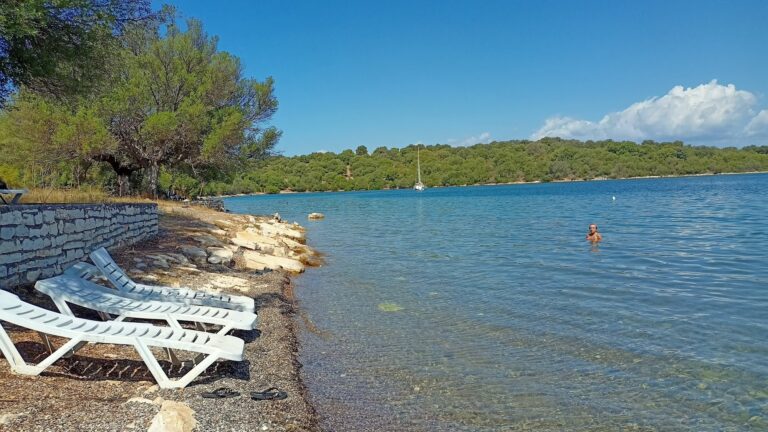
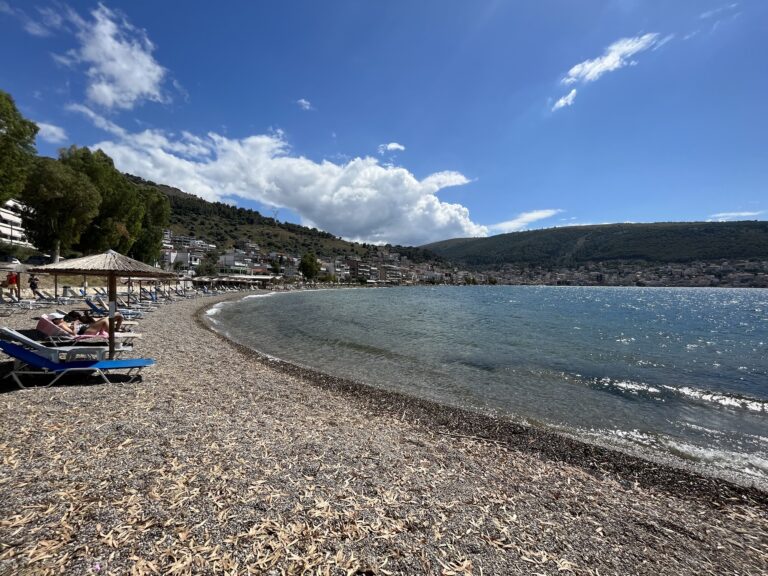
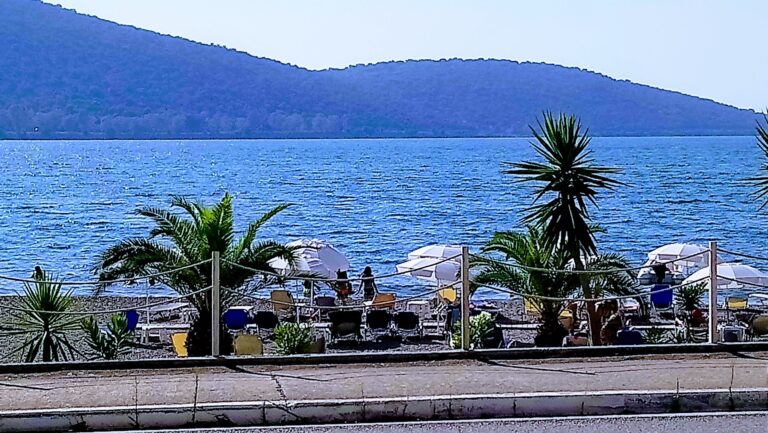
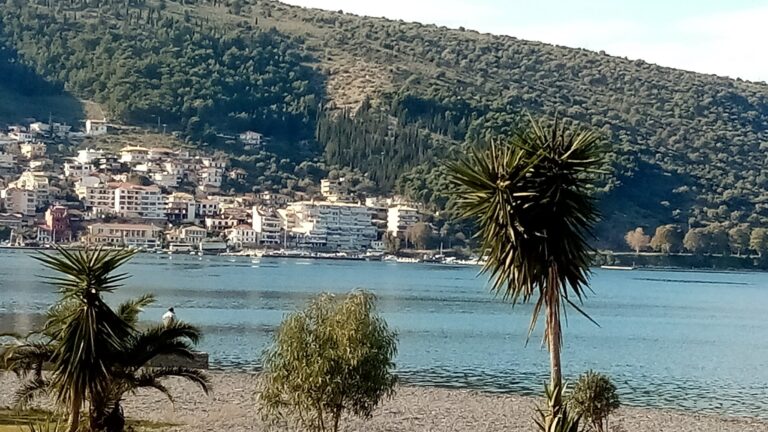
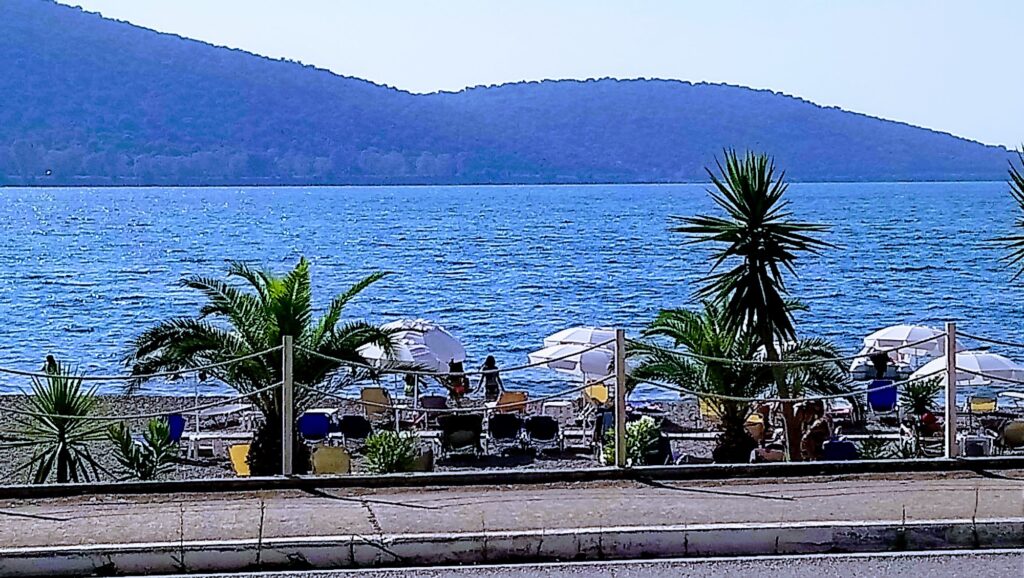
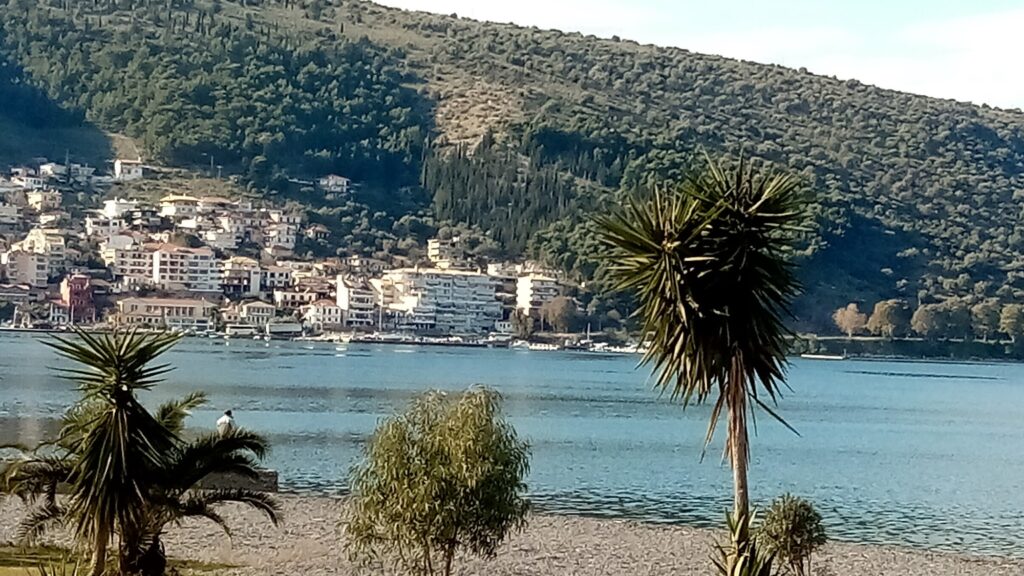
The Eastern Beach is the town’s primary waterfront — the beach along the inner face of the Ambracian Gulf at the head of the bay, where the water is at its warmest and calmest. The hills behind the town rise in the specific semicircular pattern that gives Amfilochia its amphitheatre character. From the water, the town looks like a gathering of white and terracotta buildings arranged in tiers on the bowl of the hillside — a visual that is specific to this innermost gulf position where the enclosing topography and the water meet.
Getting There: KTEL Connections From Agrinio, Arta, and Patras, Main E55 Road, 5–10 Minutes’ Walk From Town Centre
Amfilochia sits on the E55 national road that connects western Greece — the route from Patras through Antirrio and Nafpaktos to Arta and Ioannina passes through the town. KTEL bus services connect Amfilochia with Agrinio (30 minutes south), Arta (40 minutes north), Patras (1 hour 40 minutes south), and Lefkada (40 minutes west via the national road and the bridge).
The Eastern Beach is 5 to 10 minutes’ walk from the town centre along the coastal promenade. By car, it is at the eastern edge of the waterfront road. Parking is available along the promenade.
The Beach: Pebble and Sand, Pool-Like Ambracian Gulf Water, 26°C by August, Organised With Sunbeds and Shade Trees, Town Promenade Behind
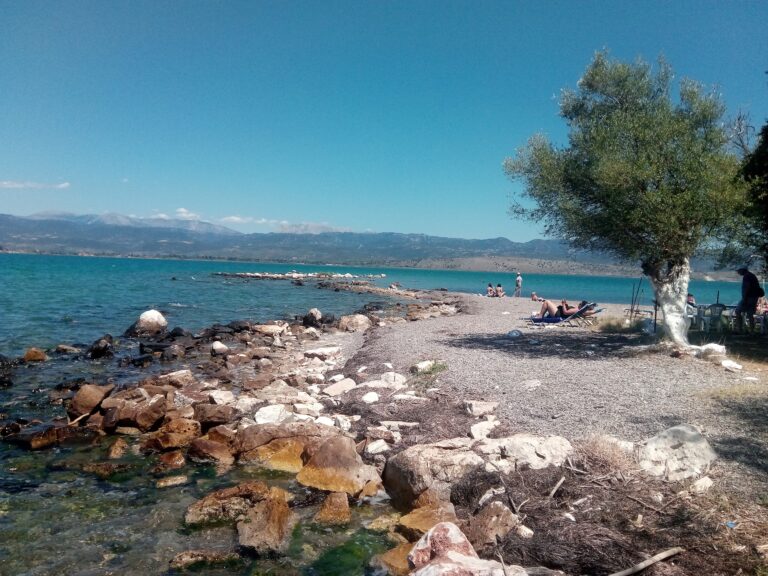
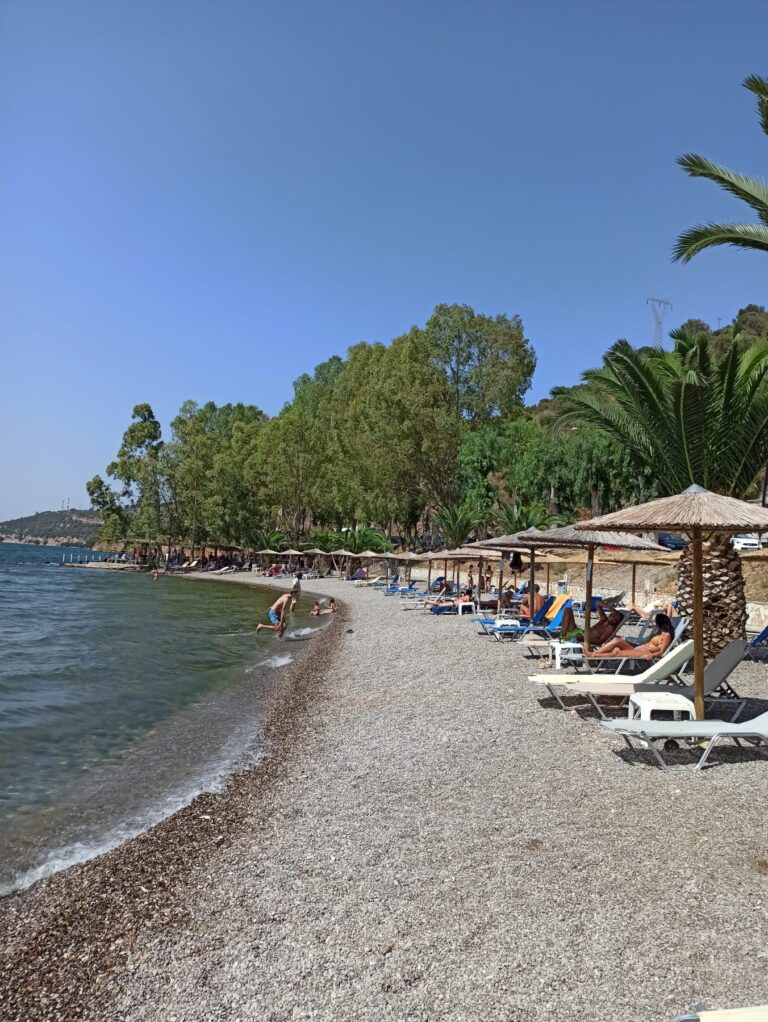
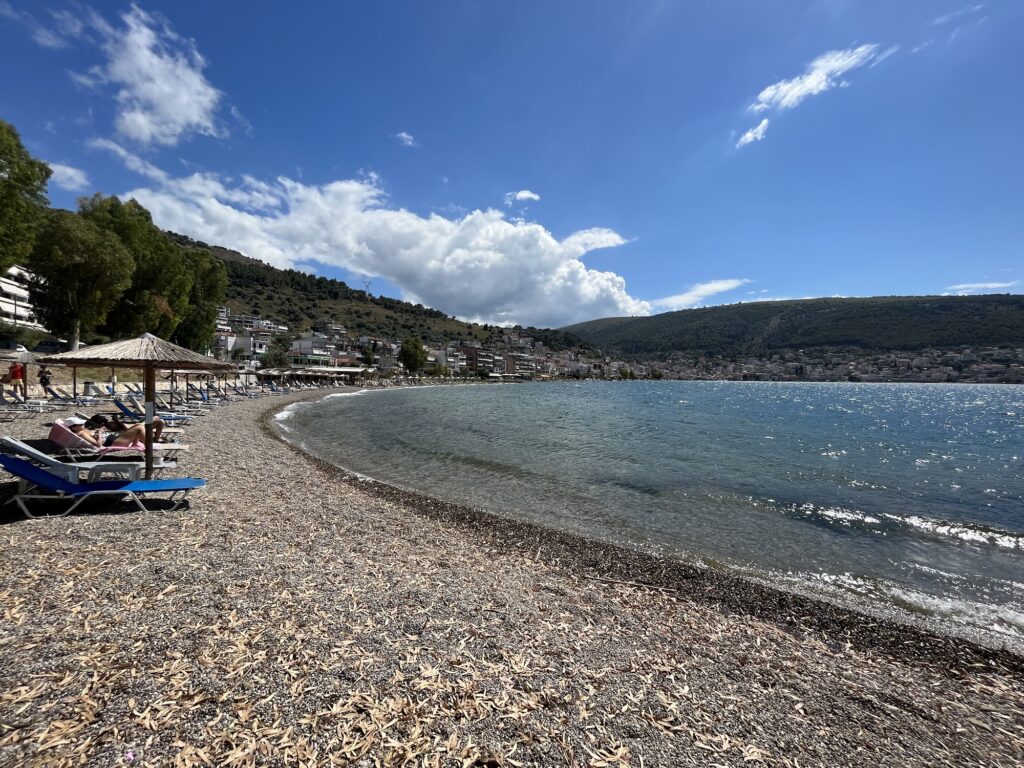
The Eastern Beach has the specific qualities of the Ambracian Gulf’s innermost shore. The gulf is 40 kilometres long and 15 kilometres wide; at Amfilochia, the water is at the head of the bay where the enclosure is greatest. The average gulf depth is 22 metres — shallow for a body of this size — and the solar heating of a shallow enclosed sea produces water temperatures of 26°C by August, warmer than the open Ionian at the same time of year. The water is calm year-round. There are no waves of any consequence. Swimming in the Ambracian Gulf at the town beach is swimming in conditions closer to a warm lake than an open sea.
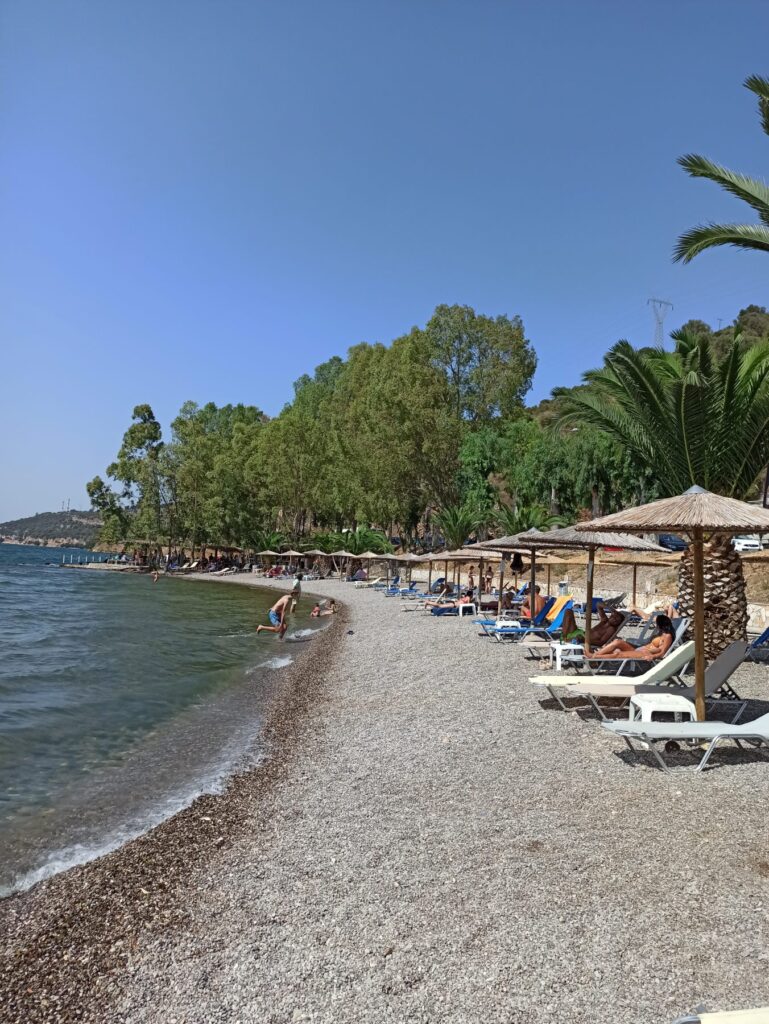
The beach surface is pebble and sand. Sunbeds and umbrellas are available from the municipal and cafe operations along the beach. Trees line the promenade behind, providing shade between swims. The promenade is the town’s social strip — cafes, tavernas, and bars from the beach road toward the harbour.
The Amphitheatre and the Ancient Settlement
The amphitheatre in Amfilochia is a genuine ancient structure, from the settlement that Amphilochos is credited with founding. The Amphilochian Argos was a significant enough settlement to appear in Thucydides — the historian records the Ambraciots (from the city of Ambracia, present-day Arta) fighting against the Amphilochians in the Peloponnesian War period. The connection between Troy, the returning hero, the western Greek colonial settlements, and the quiet modern town on the gulf is one of those specific historical accumulations that a town’s name carries without advertising.
The ancient amphitheatre is the physical remainder of the settlement’s civic life — a structure built for public performance and assembly, now in the context of a modern town that has grown around it.
The Ambracian Gulf National Park: 290 Bird Species, Dolphins, Caretta Turtles, Dalmatian Pelicans
The Ambracian Gulf is a National Park of Greece and a Ramsar designated wetland (since August 1975). The 20+ intact lagoons around the gulf support over 290 bird species, bottlenose dolphins, loggerhead sea turtles, and Dalmatian pelicans — the largest European colony of this species is in the gulf’s northern margins. The Koronisia island in the middle of the gulf is a refuge for quiet and a bird observation point. Swimming at the Eastern Beach is swimming in a National Park.
Katergaki Beach Amfilochia Greece — the 80m pebble cove 10km north with the Protected Designation of Origin shrimp and the Friday live music. Koulouri Beach Amfilochia Greece — the golden sand south-side gulf bay with the 1538 Battle of Preveza connection and the EU seagrass restoration project underway below the surface — is also near the town.
The Ambracian Gulf Shrimp and the Waterfront Tavernas
The Amvrakiotikes garides — the shrimp of the Ambracian Gulf — carry Protected Designation of Origin status and are available at the waterfront tavernas within a few minutes’ walk of the beach. The specific combination of the gulf’s shallow depth, salinity, and temperature produces a shrimp flavour that cannot be replicated elsewhere. The sardines, the eel, and the grey mullet from the gulf’s traditional fish farms complete the specific local seafood that Amfilochia’s tavernas are known for throughout western Greece.
The waterfront promenade from the beach to the harbour — the town’s primary social space — has the fish tavernas interspersed with cafes and bars that make the evening meal straightforward after a beach day at the Eastern Beach.
Arta: 40km North, the Ancient Ambracia, the Byzantine Churches
Arta — 40 kilometres north at the head of the Ambracian Gulf — is the city built on the site of ancient Ambracia, the city of King Pyrrhus of Epirus (of Pyrrhic victory fame, 319–272 BC). The Byzantine churches of Arta — including the Panagia Parigoritissa, the largest Byzantine church in the region — are the medieval architectural inheritance. The ancient small amphitheatre found in the centre of Arta is the smallest of its kind in Greece, located directly within a modern settlement.
Anatoliki Plaz Amfilochias (Eastern Beach) at Amfilochia on the Ambracian Gulf is the town waterfront beach in the National Park — named for Amphilochos who returned from Troy, formerly Karvasaras (the Ottoman caravanserai on the caravan route), ancient amphitheatre in the town, pool-like 26°C gulf water by August with no waves, pebble and sand, sunbeds and umbrella shade trees, the promenade behind with the PDO shrimp tavernas 5 minutes’ walk, 290 bird species in the gulf, dolphins, Dalmatian pelicans, the Koronisia island refuge, KTEL buses to Agrinio (30 min), Arta (40 min), Patras (1h40), Lefkada (40 min).
Walk from the town centre. Swim in the calm gulf. Order the shrimp.
Map
Sorry, no records were found. Please adjust your search criteria and try again.
Sorry, unable to load the Maps API.
Near by places: