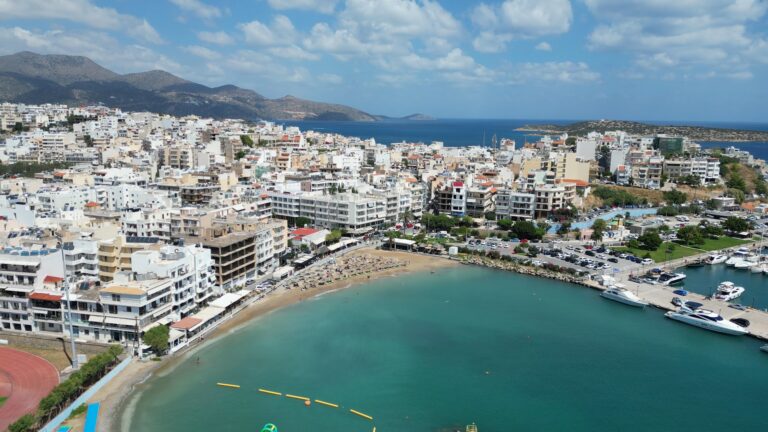
Kitroplateia Beach Agios Nikolaos: Citrus Square Shore
Profile
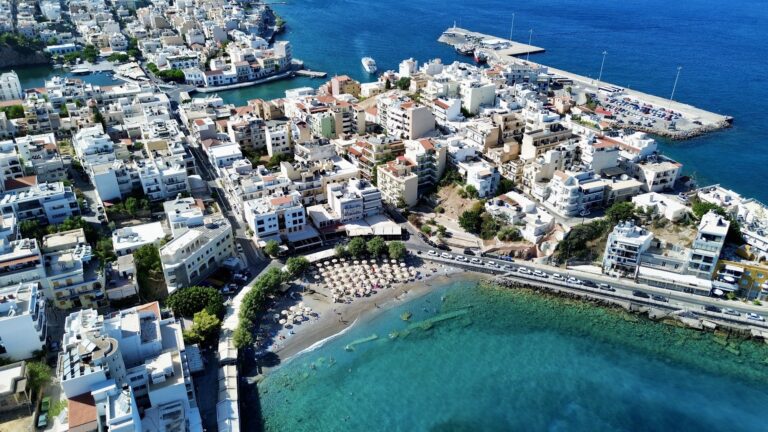
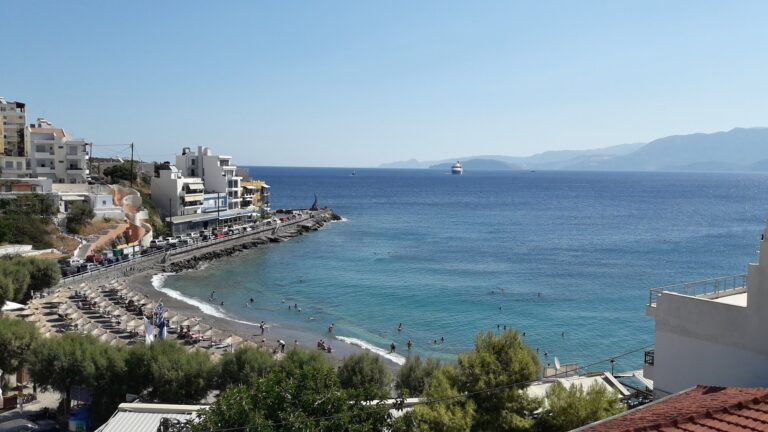
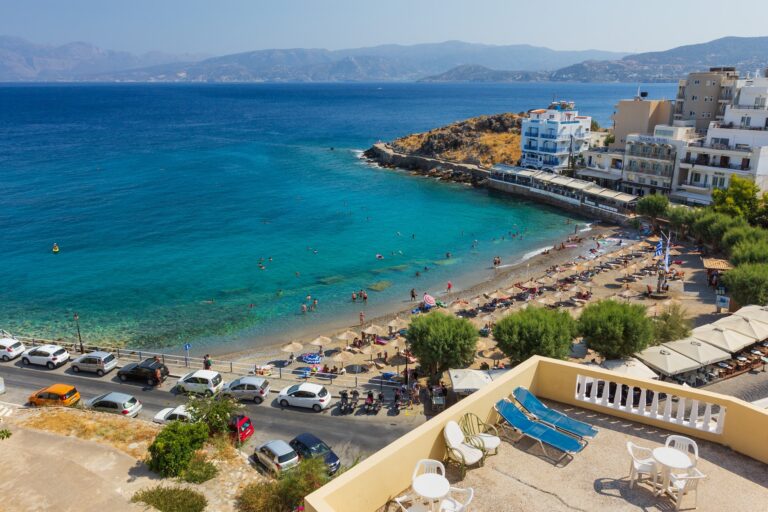
Kitroplateia Beach, Agios Nikolaos, Crete: The 70m Town Beach Named After the Citrus Trade That Founded Modern Agios Nikolaos, Where the Water Deepens Fast and the Horn of Amalthea Sculpture Stands at the Square Above
Greece | Agios Nikolaos | Lassithi, East Crete
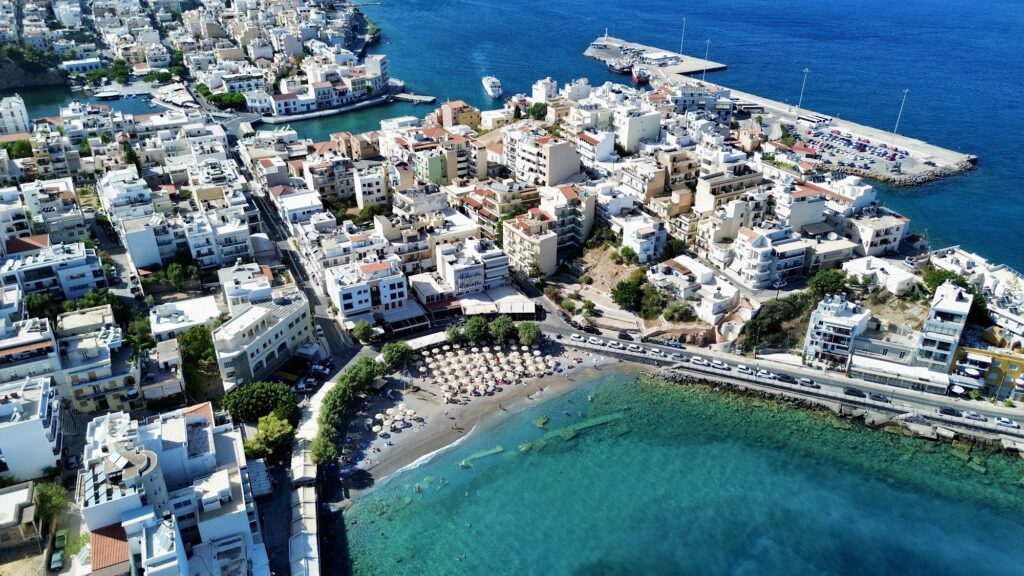
Before Agios Nikolaos had a port, merchants loaded citrus fruit directly from the beach at Kitroplateia onto small boats anchored offshore. The citrus trade was the economic foundation of the modern town — when people began resettling at the ruined village of Mandraki after the 1866 Cretan uprising against Ottoman rule, they came from Kritsa and eastern Crete and they made their money from citrus. The name Kitroplateia preserves this history in the Greek that means approximately “citron square” — kítro (citron/citrus) and plateia (square). The square that bears the name sits above the beach, connected by steps. The beach and the square are a single social unit at the western edge of the town, 200 metres from Lake Voulismeni.
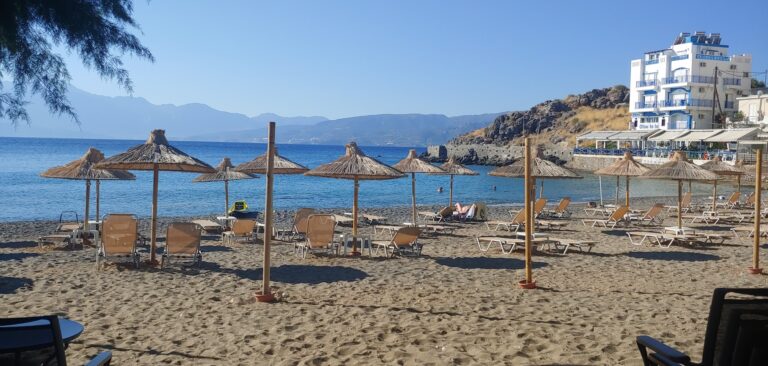
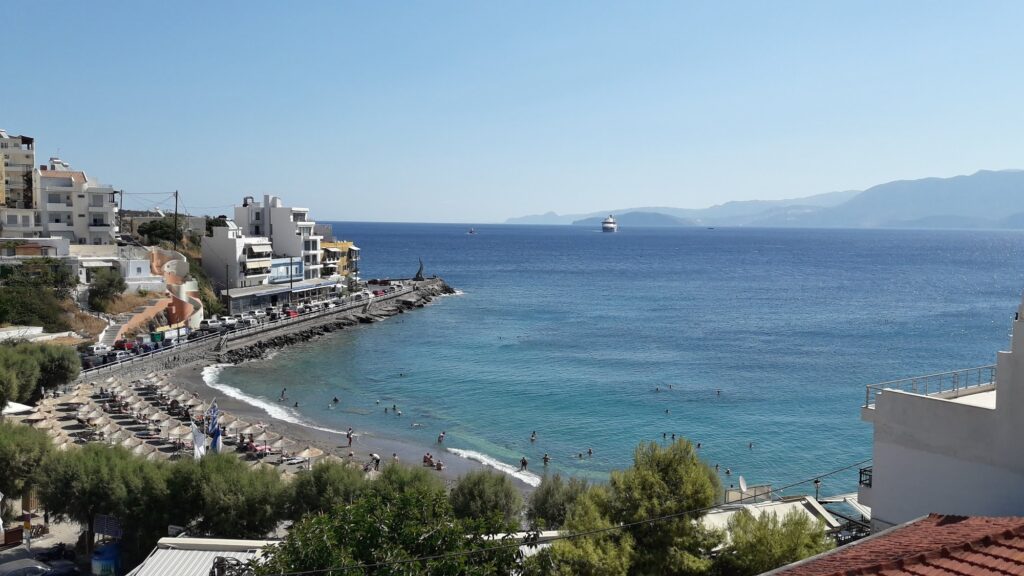
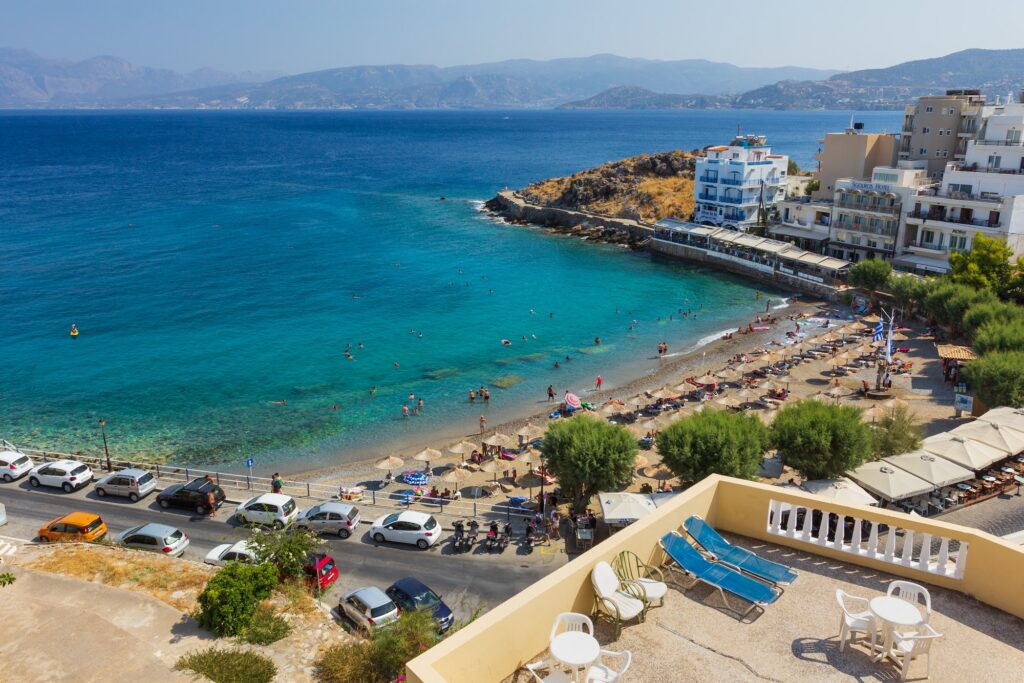
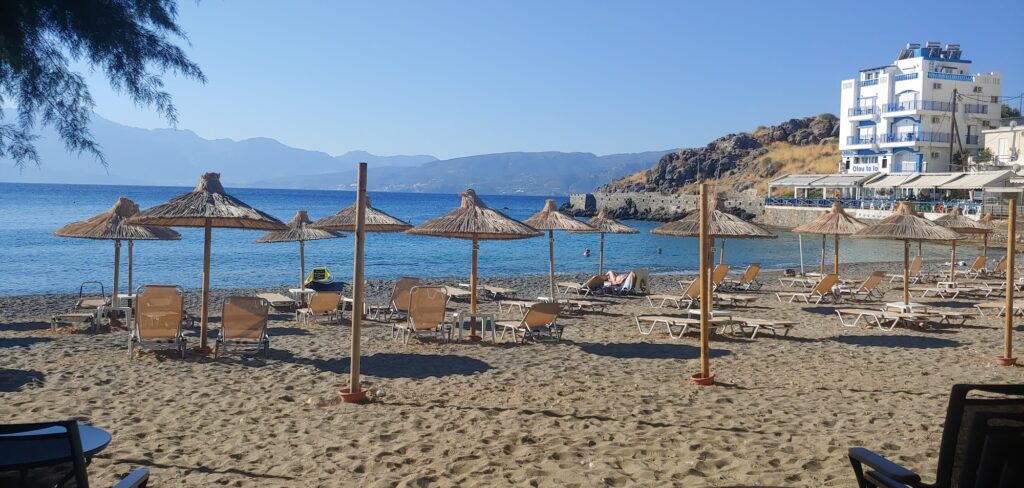
The beach itself is approximately 70 metres long — small even by urban-beach standards, notably smaller than Ammos Beach Agios Nikolaos Crete Greece to the south at the marina. What Kitroplateia has that Ammos does not is enclosure: the cliffs and buildings that surround the cove on three sides give it the specific atmosphere of a place contained within the town rather than extending it. The water deepens more quickly here than at Ammos, which is the honest note for families with very young children — the calm is consistent and reliable (no waves, no currents), but the entry requires attention in a way that the ultra-shallow Ammos does not.
The beach holds a Blue Flag award. Sunbeds and umbrellas are available for hire. Showers are on site. Dogs are permitted — one of the few town beaches in Crete with a confirmed dog-friendly policy. Street parking nearby is described consistently as challenging in peak season; arriving on foot from the town centre is the practical approach for most visitors.
Getting There: 200m From Lake Voulismeni, 5-Minute Walk From the Town Centre, Street Parking Difficult in Season
From the centre of Agios Nikolaos, walk west from Lake Voulismeni for approximately 200 metres to reach Kitroplateia square, then descend to the beach by the steps. The walk from the main bus station is approximately 10 minutes. From the marina and Ammos Beach, the walk is slightly longer — around 10 to 15 minutes north and west along the coastal path.
By car, street parking is available in the streets adjacent to the beach but fills quickly on busy days. The municipal car park near the marina is the more reliable option, with a 10-minute walk to the beach.
From Heraklion Airport, Agios Nikolaos is 59 to 69 kilometres east depending on the route — approximately one hour by car. The KTEL bus from Heraklion to Agios Nikolaos takes approximately 1.5 hours.
The Beach: 70m, Pebble and Coarse Sand, Water Deepens Relatively Fast, Blue Flag, Dog-Friendly
The 70-metre length is honest — this is a small beach. The sand is mixed with coarse pebbles and some rocks. The water is clear and calm throughout the season, the Mirabello Bay providing consistent shelter. The speed at which the depth increases is the specific characteristic that distinguishes Kitroplateia from the other Agios Nikolaos town beaches: one Danish travel site specifically notes “the water deepens rather abruptly” and flags that the beach is “not very child-friendly” for this reason. This is the minority view but it reflects a real condition that parents of toddlers should factor in.
Snorkelling at the rocky edges of the bay is the water activity that the conditions support well. The clear water and the underwater rock formations make it a viable snorkelling location despite the small beach size.
The Horn of Amalthea Sculpture: The Landmark Above the Beach
The Horn of Amalthea sculpture stands in the square above the beach — a bronze work by brothers Nikos and Pantelis Sotiriades, installed in 2000. The myth of Amalthea connects to the Zeus origin story: Amalthea was the goat who nursed the infant Zeus in Crete (on Mount Dikti or Mount Ida depending on the version). When she broke off one of her horns, Zeus gave it the power to provide endless nourishment to whoever held it — this is the origin of the cornucopia, the horn of plenty. The sculpture at Kitroplateia represents this horn, and its placement in the square above the beach that built the modern town through its citrus trade is a specific Agios Nikolaos piece of historical layering.
The Citrus Trade That Named the Square: The Settlement History of Agios Nikolaos
The modern town of Agios Nikolaos began as a resettlement of the abandoned village of Mandraki after 1866. People came from Kritsa village in the hills, from Sfakia, and from elsewhere in east Crete. The economic activity that made the settlement viable was the export of citrus — the fertile land around the town produced citrons and other citrus varieties that found markets across the Mediterranean. Without a built port, the merchants used the beach at Kitroplateia as the loading point, bringing small boats close to the shore.
The port was built later; the beach square retained the citrus name even after the trade that created it had moved on. Agios Nikolaos became the first major tourism destination in Crete in the 1960s — the first major hotel opened in 1965 — which is why the town has the “Paris of Crete” reputation that dates from that era of cosmopolitan visitor rather than from the modest fishing village it was a century earlier.
Kitroplateia Square: The Cliff-Ringed Social Space Above the Beach
The square above the beach is the evening social hub of Agios Nikolaos — cafes, tavernas, and bars look down over the cove, with the cliff walls rising on the other sides and the town’s pedestrian streets leading away behind. The specific atmosphere at Kitroplateia in the evening is the enclosed, lit-cliff version of the Agios Nikolaos experience, different from the marina promenade of Ammos or the lakeside cafe ring of Voulismeni.
The restaurants at Kitroplateia — at the water’s edge and up the steps in the square — are the specific dining option for visitors who want to eat within metres of the sea while being in the town centre.
Lato: The Ancient Dorian City in the Hills Above Agios Nikolaos
Lato — the major Dorian city built on a dramatic hillside 12 kilometres west of Agios Nikolaos near Kritsa village — was one of the most powerful cities in ancient Crete, founded around the 7th century BC. Its port was the settlement that became Agios Nikolaos — called Lato pros Kamara in antiquity. The archaeological site at Lato has the prytaneion, the agora, temples, and towers intact — an exceptionally well-preserved Dorian hilltop city with panoramic views. The round trip from Kitroplateia beach to the Lato site takes half a day.
Kitroplateia Beach at Agios Nikolaos, Crete is the 70-metre town beach named after the citrus trade that founded modern Agios Nikolaos — the merchants loaded citrons from this shore onto small boats before a port was built, the square above retains the name today, Blue Flag awarded, water deepens fast (not recommended for unsupervised toddlers despite the calm), dog-friendly, showers and sunbeds, the Horn of Amalthea sculpture in the square above (2000, Zeus myth, brothers Sotiriades), 200 metres from Lake Voulismeni, 70 metres from the restaurants of the square, and Ammos Beach at the marina a 10-minute walk south for the shallower, longer alternative.
Walk from Lake Voulismeni west. Descend the steps to the beach. Swim in the morning. Eat at the square in the evening.
Map
Sorry, no records were found. Please adjust your search criteria and try again.
Sorry, unable to load the Maps API.
Near by places: